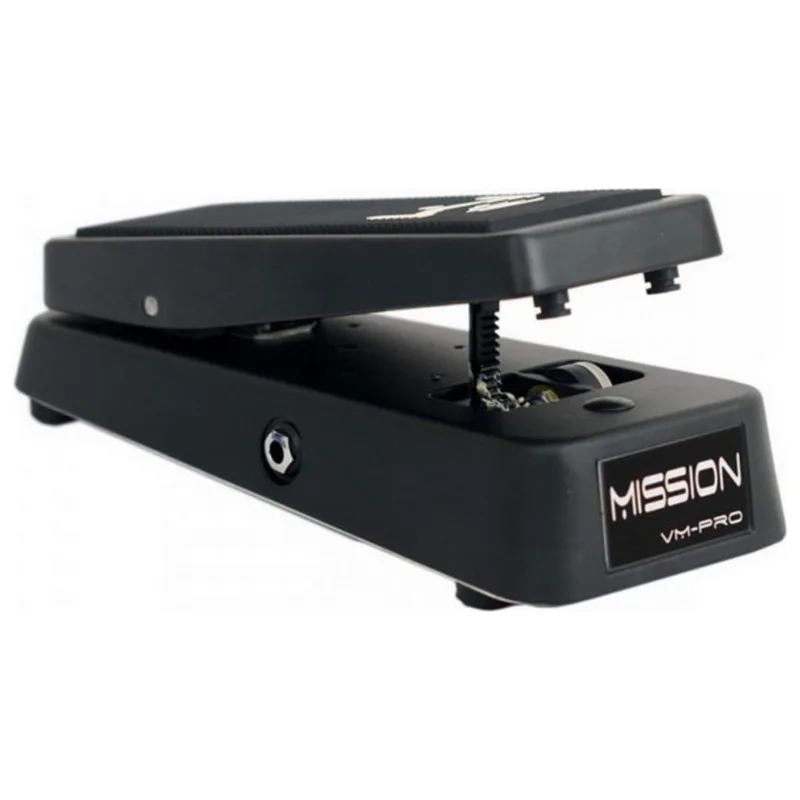


The Mission Engineering VM-PRO is a buffered volume pedal aimed at players who want more than a passive treadle in their signal chain. Mission Engineering announced the VM-PRO series in May 2013, pitching it as a volume pedal with a built-in buffer and line driver, a set of internal switches, and an isolated tuner output1. Where a passive volume pedal can load down long cable runs and big pedalboards, the VM-PRO's onboard buffers are designed to keep your frequency response intact through multiple stompboxes and long cables1.
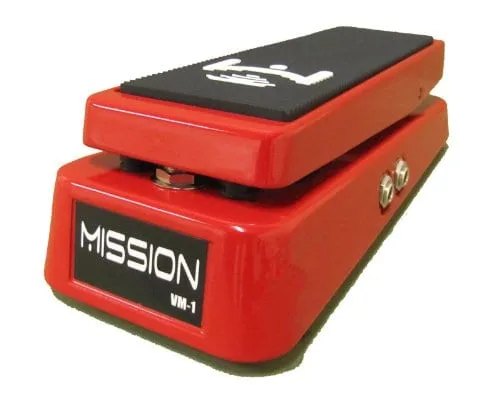
The pedal is built around a wah-style enclosure: an all-metal chassis with a powdercoat finish, smaller than many volume pedals and close to a Dunlop Cry Baby wah in form factor, which saves board space23. Unlike a wah's narrow sweep, the treadle has a much longer throw, which reviewers found gives detailed control over swells and fade-outs23.
What the buffer does, and the tuner output
The VM-PRO is a fully buffered volume pedal: a buffer circuit inside the pedal isolates what is plugged into the input from what is on the output, which is what the battery or external supply drives3. The buffered output is there to ensure proper frequency response through your pedals and long cable runs, so you avoid signal loss and tone suck1. Premier Guitar's review noted the pedal actually includes two buffer/boosters2.
The output is a single stereo TRS jack carrying two separate channels off the buffer amplifier: your signal chain on the tip and a tuner feed on the ring3. Plug in a TRS Y-cable or stereo insert cable and one leg feeds your amp while the other goes to a tuner2. If you skip the tuner out, a regular mono guitar cable works and the tuner output simply stays inactive3.
The useful part for gigging is that the tuner feed is isolated from the sweep. As Premier Guitar put it:
"Sweeping the expression pedal has no effect on the volume going to the tuner. The result is silent tuning directly from your volume pedal."
Mission's announcement also noted the isolated tuner output allows tuning silently or at any volume level1. For players who normally dedicate a tuner pedal input or a separate split, this folds that job into the volume pedal itself.
Controls and setup
Most of the VM-PRO's configuration lives on internal switches and a trimmer, set once for your rig rather than stomped on the fly:
| Control | What it does |
|---|---|
| Input switch (Switch 1) | Sets the pedal for active or passive pickups; default is passive, move it to active for active pickups to avoid overdriving the input23 |
| Output impedance switch | Default is standard impedance; the other setting presents a different impedance so vintage fuzz pedals accept the buffered signal as if a guitar were plugged straight in13 |
| Sparkle switch | Flat by default; flipped, it adds high frequency as you roll the volume back13 |
| Minimum volume trimmer | A screw trimmer inside the pedal; by default the pedal mutes at heel down, and it can be raised to set a minimum volume instead3 |
The output impedance switch addresses a known problem with buffered signals into vintage fuzz. Fuzz pedals such as a Fuzz Face or its clones expect a guitar pickup plugged directly into them, and a buffered feed can behave badly. Flipping the switch presents a different impedance to the fuzz, in Mission's demo wording, "basically convincing it that it's connected direct to the guitar pickups"3.
The minimum volume trimmer also changes how the pedal mutes. Unlike Mission's VM-1, which mutes with a toe-position switch, the VM-PRO goes to mute automatically at heel down by default; the trimmer lets you raise that floor so the pedal works as a minimum/maximum volume control instead3.
Active pickups, piezo and other instruments
The VM-PRO is compatible with active or passive pickups, with the input switch handling the difference2. The PZ version of the pedal extends the range to passive piezo pickups1, which suits players running an acoustic's undersaddle pickup straight into the pedal.
Versions: standard, PZ and Johnny A. Edition
The VM-PRO shipped in standard and PZ versions from launch1, with the standard pedal available in black and red3. In 2014 Mission added a Johnny A. Edition finished in Johnny's signature vintage gold4.
| Version | What differs |
|---|---|
| Standard (black or red) | The base buffered volume pedal13 |
| PZ | Version for passive piezo pickups1 |
| Johnny A. Edition | Vintage gold finish, released 20144 |
Powering it
The VM-PRO runs on a 9V internal battery or an external supply of anything from 9 to 18VDC through a standard 2.1mm center pin negative barrel connector3.
What reviewers said
Premier Guitar's 2021 review found the pedal has "a nice, wide, mechanical sweep range, giving you detailed control over your volume swells or fade-outs"2, while noting that the extra features make it relatively expensive2. Guitar World's 2025 volume pedal buying guide was more enthusiastic:
"The Mission Engineering VM-Pro is an excellent, feature-rich volume pedal with a robust design. It's a pro-level option if your budget will stretch that far, but it's well worth the asking price."
MusicRadar's Mike Astley-Brown called it "a top-end buffered volume pedal," adding that "few can match the VM-PRO's versatility, not to mention its high-integrity buffer"6.
James Lebihan's 2013 demo video for the pedal walks through the whole feature set: the wah-sized form factor and extended sweep, the buffer and TRS tuner output, the active/passive and impedance switches, the Sparkle switch, and the minimum volume trimmer3.
Where it sits among buffered volume pedals
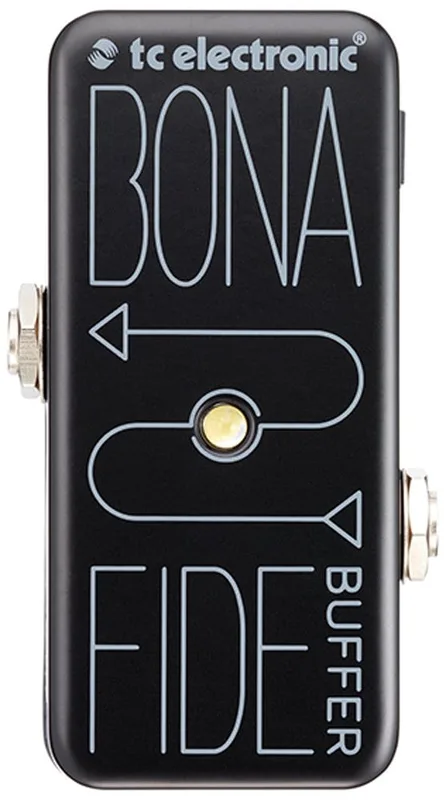
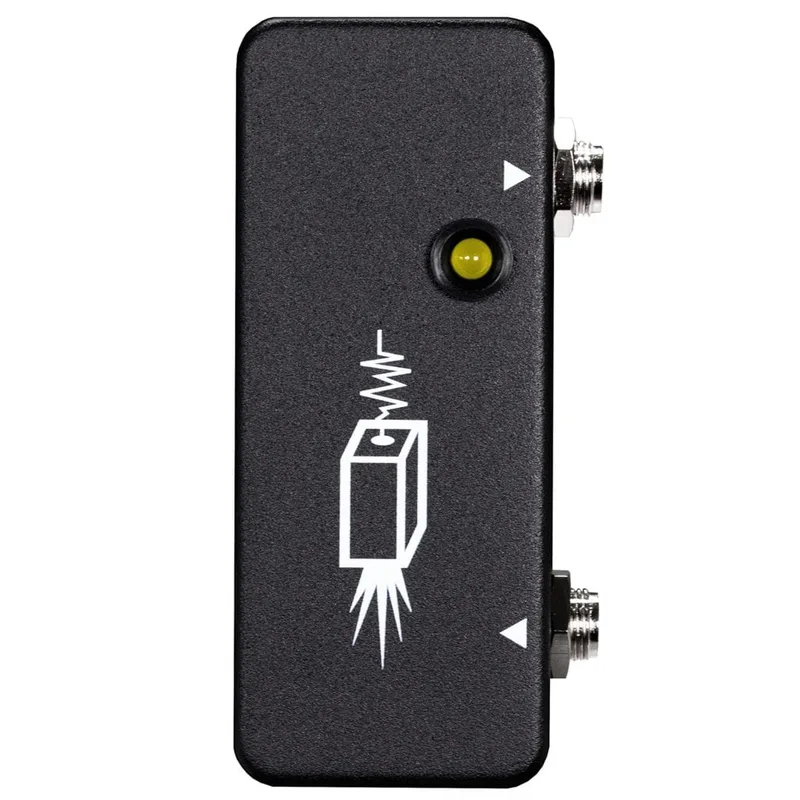
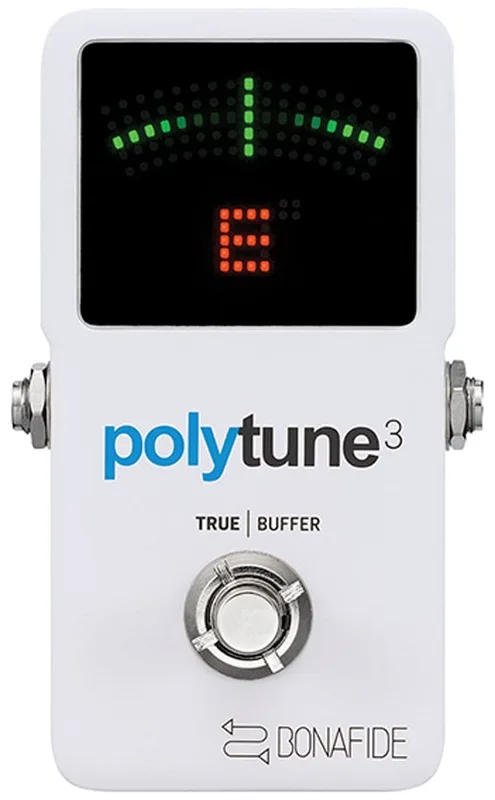
For a player comparing options, the VM-PRO's pitch is consolidation: one treadle that buffers your signal, feeds a tuner silently, and adapts to active pickups, piezo sources and vintage fuzz. Dedicated buffer pedals such as the TC Electronic Bonafide Buffer or JHS Pedals Little Black Buffer solve the signal-loss problem alone, and tuner pedals like the TC Electronic PolyTune 3 build a buffer into the tuning job, but the VM-PRO combines the volume control, the buffer and the isolated tuner split in one unit. The trade-off reviewers pointed to is price: at $189 street, it costs more than a basic passive volume pedal2.
Color variants have their own pages: the Mission Engineering VM-Pro (Black) and the Mission Engineering VM-Pro (Red).
Videos
ProGuitarShopDemos
gearmanndude
Questions
Does the Mission VM-PRO work with active pickups?
Yes. A switch selectable input sets the pedal for passive or active pickups, so one pedal covers both. Leave it in the default passive position for passive pickups, and move it to the active position for active pickups so you do not overdrive the pedal's input. A PZ version extends the range to passive piezo pickups.
What does the Sparkle switch on the VM-PRO do?
Rolling back any volume control usually darkens the tone as high frequencies drop. The Sparkle switch is flat by default, but flipped to its other position it adds high frequency back as you roll the volume down, restoring the brightness you get at full volume. It is one of the internal switches that set the pedal up for your rig.
How do you connect a tuner to the Mission VM-PRO?
The output is a single stereo TRS jack carrying two channels from the buffer: your signal chain on the tip and an isolated tuner feed on the ring. A stereo insert or Y-cable splits the two, and the tuner output is unaffected by the pedal's sweep, so you can tune silently at any volume. A regular mono cable leaves the tuner output inactive.
How much does the Mission VM-PRO cost?
The VM-PRO launched in 2013 at a $189 street price, and Premier Guitar still listed it at $189 street in its 2021 review. Guitar World's 2025 buying guide called it well worth the asking price but noted its extra features make it relatively expensive compared with simpler volume pedals.
Sources (6)
- Mission VM Pro: New Buffered Volume Pedal Revealed, Premier Guitar, 2013-05-02
- VM-PRO Buffered Volume Pedal: In-Depth Review, Premier Guitar, 2013-09-12
- Mission VM Pro Volume Pedal Tutorial, YouTube (channel: James Lebihan), 2013-05-22
- Johnny A. Signature Rewah Pro & VM-PRO Launched, Premier Guitar, 2014-05-01
- Best volume pedals 2025: control your tone with these essential pedal picks, Guitar World, 2023-12-08
- Mission Engineering VM-PRO review, MusicRadar, 2013-10-01