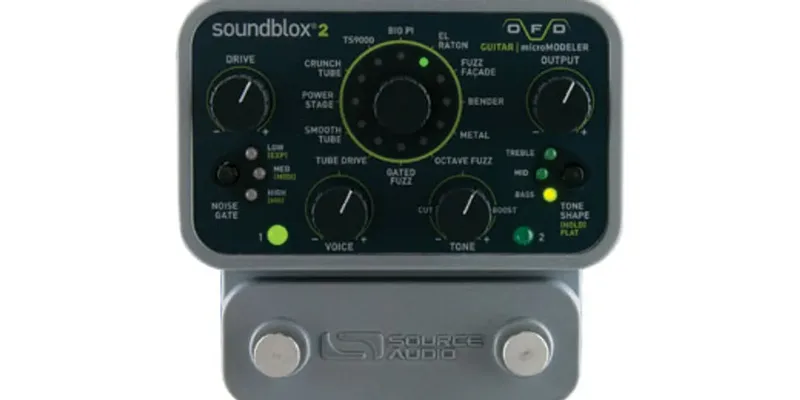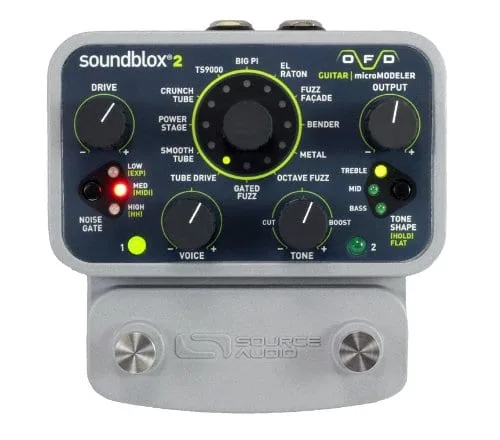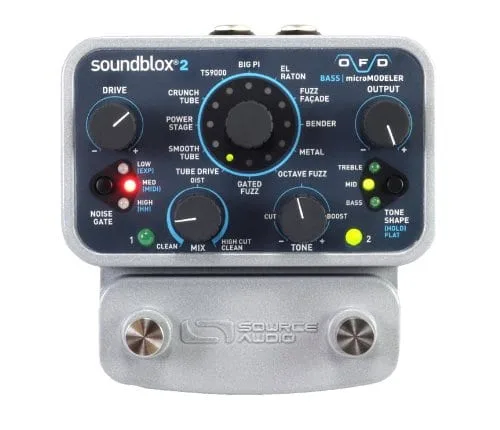
The Source Audio Soundblox 2 OFD Bass microModeler is an effects pedal for electric bass that packs 12 different overdrive, fuzz and distortion sounds into one box1. "OFD" stands for Overdrive, Fuzz, and Distortion, and the pedal was released in 2013 alongside a guitar version, both part of Source Audio's Soundblox 2 line2. Rather than one fixed circuit, it uses digital modeling to offer a range of drive flavors, from mild tube-style overdrive to fuzz based on classic stompboxes.
The pedal is no longer in production: retailer listings mark it as No Longer Available1.
Twelve overdrive, fuzz and distortion sounds for bass
The core idea of the OFD Bass microModeler is variety: instead of committing to one drive character, a player gets 12 tones in a single pedal, each voiced for the frequency range of bass13. The sounds span the whole drive spectrum, from smooth, mild overdrive through to aggressive distortion and fuzz.
Alongside the mode selection, the pedal includes a clean/dirty Mix knob and Source Audio's signature low-end preserving algorithm, Lo-Retain2. For a bassist, that mix control matters: blending the clean signal back in keeps the fundamental intact while the drive layer adds grit on top.
The modes and the circuits they model
Several of the 12 modes are named after the circuits and amps they model. The published descriptions of the modes include1:
| Mode | What it is based on |
|---|---|
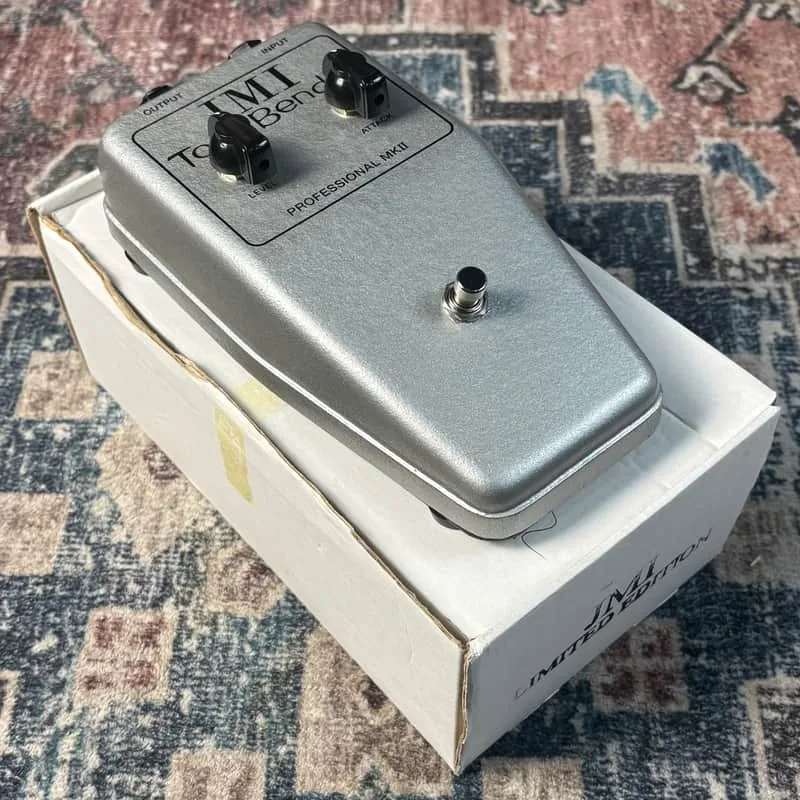
| BENDER | Modeled on the Tone Bender MK II fuzz |
| EL RATON | Based on the ProCo Rat |
| POWER STAGE | Inspired by the Fulltone Distortion Pro |
| SMOOTH TUBE | Based on Mesa/Boogie preamp distortion |
| TUBE DRIVE | A smooth, overdriven tube amp effect similar to a vintage Marshall sound, suited to pleasant mild overdrive |
| METAL | Not an emulation, but a metal distortion with plenty of highs and lows, designed by Source Audio |
The line as a whole also includes models of Marshall and Mesa Boogie amps3. The mix of modeled classics and Source Audio's own designs gives the pedal both familiar reference points and sounds that do not come from any single vintage unit.
Presets, tone controls and MIDI control
The pedal holds 2 selectable and editable user presets1, so a player can keep two contrasting drive settings ready and switch between them. The manual for the guitar version notes that different control assignments can be used for each preset4, meaning an expression pedal or Hot Hand controller can be mapped differently depending on which preset is active.
Both the Guitar and Bass versions include easy-to-adjust internal noise gates and individual Treble, Mid and Bass tone controls2, giving three-band shaping on top of the drive selection.
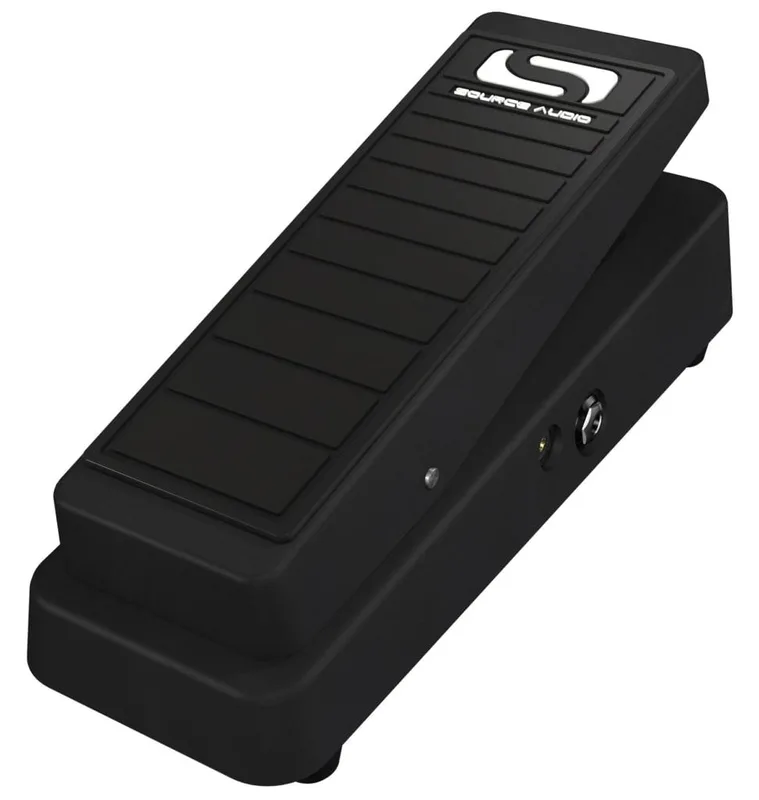
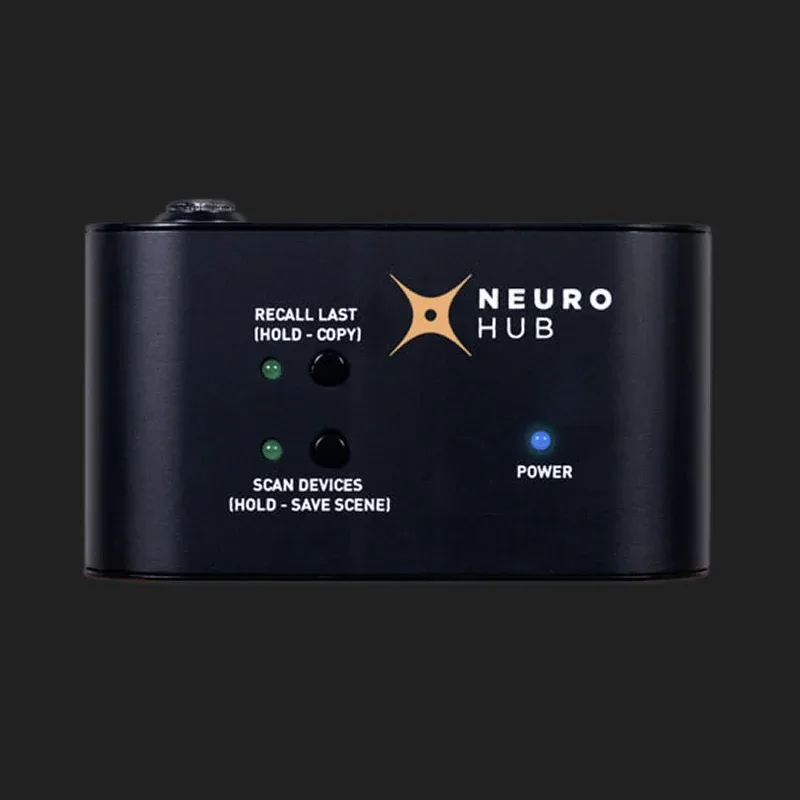
MIDI is available but requires extra hardware. The Multi-Function input connects to wired or wireless Hot Hand accessories, the Source Audio Dual Expression Pedal, or compatible audio MIDI interfaces1. Full MIDI functionality comes through the Source Audio Neuro Hub, sold separately, which provides 5-pin MIDI DIN In and Out, a USB port, a sensor input and a 1/4" expression input, and supports up to 128 multi-pedal presets called scenes4. When the OFDs launched, MIDI compatibility was an option tied to the release of Source Audio's MIDI Control HUB in early 20142.
MIDI control requires the separately sold Neuro Hub. Out of the box, the pedal's external control options are Hot Hand accessories and an expression pedal through the Multi-Function input14.
Guitar and bass versions
The OFD line launched as two pedals: the OFD Guitar microModeler and the OFD Bass microModeler, both available from October 20132. Each offers the same 12 tones, voiced to accommodate the frequency range of guitar or bass3. The Bass version carries the Lo-Retain algorithm and the clean/dirty mix knob aimed at keeping low end under drive2.
The OFD Guitar microModeler shares the same outputs (a 3.5 mm Multi-Function output and a 1/4" instrument output), the same noise gates and three-band tone controls, and its own mode list that overlaps with the Bass version, including BENDER modeled on the Tone Bender MK II and EL RATON based on the ProCo Rat5. Both versions are now listed as No Longer Available15.
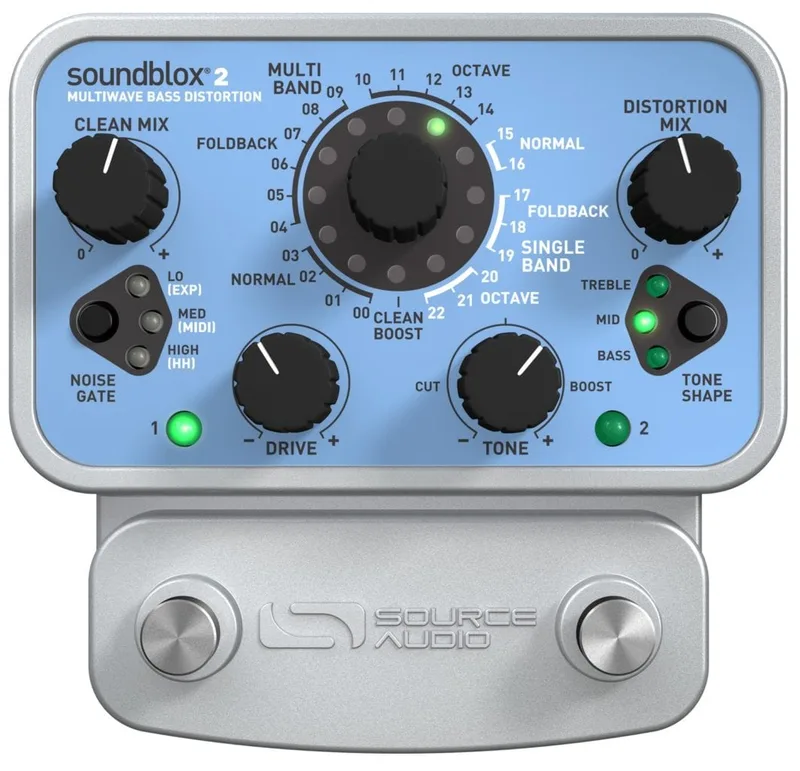
Within Source Audio's bass line, the OFD Bass microModeler sits among several other drive and filter pedals, including the Soundblox2 Multiwave Bass Distortion and the Soundblox 2 MANTA Bass Filter, and it was followed in 2016 by the AfterShock Bass Distortion, which brought Neuro Mobile App compatibility and over 40 downloadable algorithms.
Questions
Is the Source Audio OFD Bass microModeler discontinued?
Yes. Retailer listings mark both the OFD Bass microModeler (model SA228) and the OFD Guitar microModeler as No Longer Available. The pedals were released in 2013 and are no longer carried, so a used unit is the usual route for a player who wants one.
What is Lo-Retain on Source Audio pedals?
Lo-Retain is Source Audio's signature low-end preserving algorithm. On the OFD Bass microModeler it works alongside the clean/dirty Mix knob so that adding overdrive, fuzz or distortion does not strip the bottom end off your bass tone, which is the classic problem with running bass through a drive pedal.
Can the Soundblox 2 OFD be controlled by MIDI?
Yes, with added hardware. The pedal's Multi-Function input connects to compatible audio MIDI interfaces, and full MIDI access to presets and parameters comes through Source Audio's Neuro Hub (sold separately), which offers 5-pin MIDI DIN, USB, a sensor input and an expression input, with up to 128 multi-pedal presets called scenes.
What is the difference between the OFD Guitar and OFD Bass?
The two pedals share the same 12 overdrive, fuzz and distortion tones and the same feature set, including noise gates and three-band tone controls. The difference is voicing: each version is tuned to accommodate the frequency range of guitar or bass, and the Bass version adds the Lo-Retain low-end preserving algorithm and a clean/dirty mix knob.
Sources (5)
- SOURCE AUDIO Soundblox 2 OFD Bass microModeler Pedal SA228 B&H, B&H Photo Video
- The Soundblox 2OFD Micromodelers from Source Audio Now Available, Guitar Interactive Magazine, 2013-10-03
- Source Audio Launches Soundblox Effects, Vintage Guitar magazine, 2013-09-26
- Source Audio SoundBlox 2 OFD Guitar microModeler User Manual PDF, Source Audio (manual hosted on Manualsnet)
- SOURCE AUDIO Soundblox 2 OFD Guitar microModeler Pedal SA227 B&H, B&H Photo Video