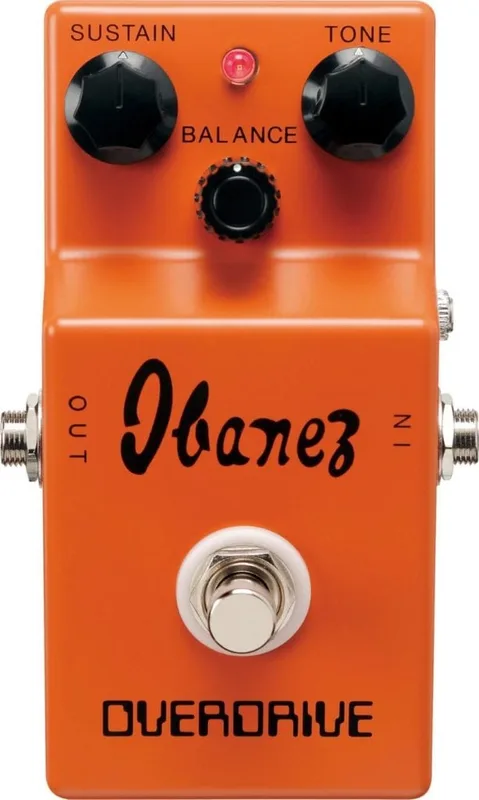


The Ibanez OD850 is a pedal with an identity problem in its name: it is called an Overdrive, but it is a fuzz. Ibanez reissued it in 2016 as a faithful recreation of the original 1970s pedal, in the same style of enclosure, with 100% analog circuitry and true bypass switching added1. Announced as a limited run, it brought a cult 1970s circuit back to pedalboards with the modern conveniences the originals never had23.
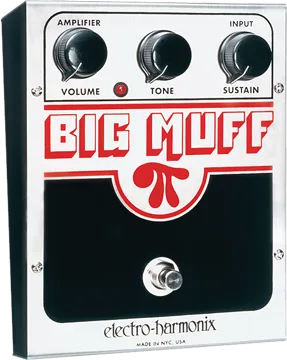
The reason for the odd naming goes back to the original. Contrary to its name, the OD850 was best known for its fuzz tones, which recall the Electro-Harmonix Big Muff3. Gearnews put it plainly when the reissue arrived: the pedal "is actually more of a fuzz pedal than an overdrive"2. For a player shopping in the overdrive lane, that is the first thing to know: this is a fuzz in overdrive clothing.
A fuzz in an overdrive's name
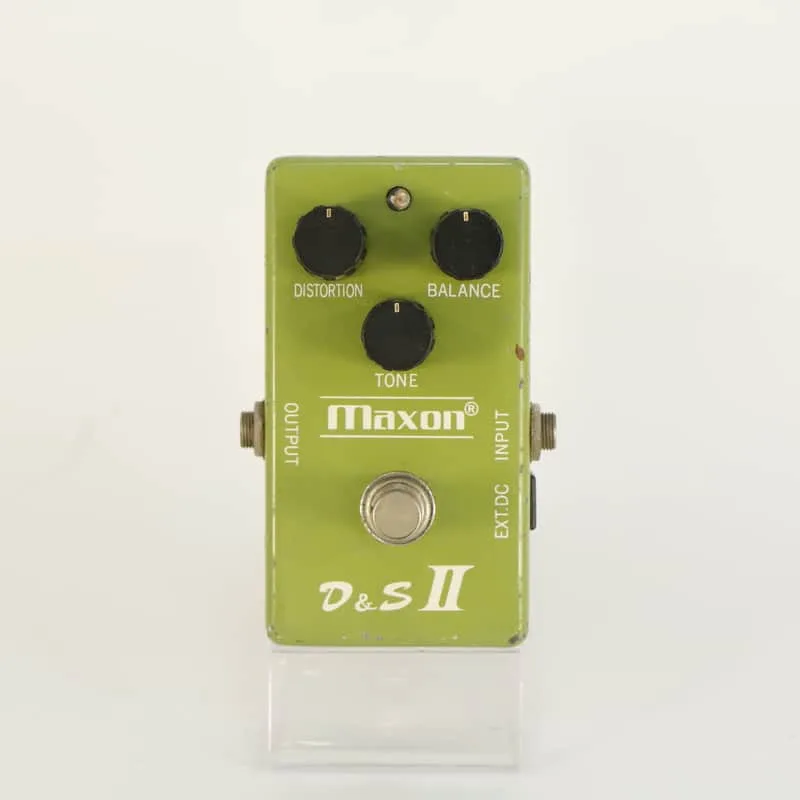
The circuit inside is the story. TONEHOME describes the OD-850 as "a thick, organic fuzz based on the Ram's Head Big Muff circuit," one that "delivers massive sustain, a wide tone sweep and it cleans up well"4. MusicRadar's review traces the lineage further: the original was "a re-badged Maxon clone of a 1973 'violet' era Ram's Head Big Muff made for Ibanez with a couple of tweaks"5. Kit Rae's history of Big Muff clones documents the Maxon D&S (Distortion & Sustainer) OD-801 as one of the early and most popular Japanese versions of the Big Muff circuit, circa 1974, also sold as the Ibanez Overdrive OD-850, both produced by the Nisshin Onpa company67.
So while the panel says Overdrive, the design says Big Muff family. That matters for what to expect: big sustain and a saturated fuzz voice rather than a midrangey, amp-like grind453.
Does it sound like a Big Muff?
Yes, but not identically. Kit Rae notes the pedals "have a somewhat more refined Big Muff sound than other clones of the circuit, due to a modified tone circuit"6. MusicRadar's reviewer found the OD850 "had a slightly more useful tone stack and crunchier character that set it apart from its muffy cousins," which is part of what made it a collector's piece5. Gearnews likewise notes it is known for sounding a bit like the Big Muff2.
"It delivers massive sustain, a wide tone sweep and it cleans up well."
The controls: Sustain, Tone and Balance
The reissue keeps the original simple three-knob layout2. RockBoard's PedalPedia lists the controls as Sustain, Balance, and Tone1, and MusicRadar explains what each does in practice: sustain functions as gain, tone shapes the frequency sweep, and balance functions as volume3.
The knob names shifted across the original's production run: the v1 pedal (1976 to 1978) carried Sustain, Tone and Balance, while the v2 (1978/79) and v4 (1979/80) narrow-box versions labeled the gain control Distortion instead4.
The original OD-850 and its versions
The original OD-850 went through several versions, and collectors track them closely. Kit Rae identifies three editions: the first from circa 1974 on the same PCB as Maxon OD-801 first editions, the second from circa 1978 known as the "Hummingbird" Overdrive due to the bird graphic on the side, and the third from circa 1979 to 1981, made with the same PCB as the OD-801 third edition including a FET electronic bypass system, buffer, and momentary switch6. All three versions are very collectible6.
TONEHOME breaks the narrow-box era down further, with v1 through v4 as narrow boxes and v5 through v7 as standard boxes8:
| Version | Years | Notable details |
|---|---|---|
| v1 | 1976 to 1978 | Script logo, no flying fingers, no power jack4 |
| v2 | 1978/79 | Block logo, flying fingers, no power jack4 |
| v4 | 1979/80 | Block logo, flying fingers, power jack added4 |
| v5 to v7 | 1980 to 1981 | Standard box, made in Japan8 |
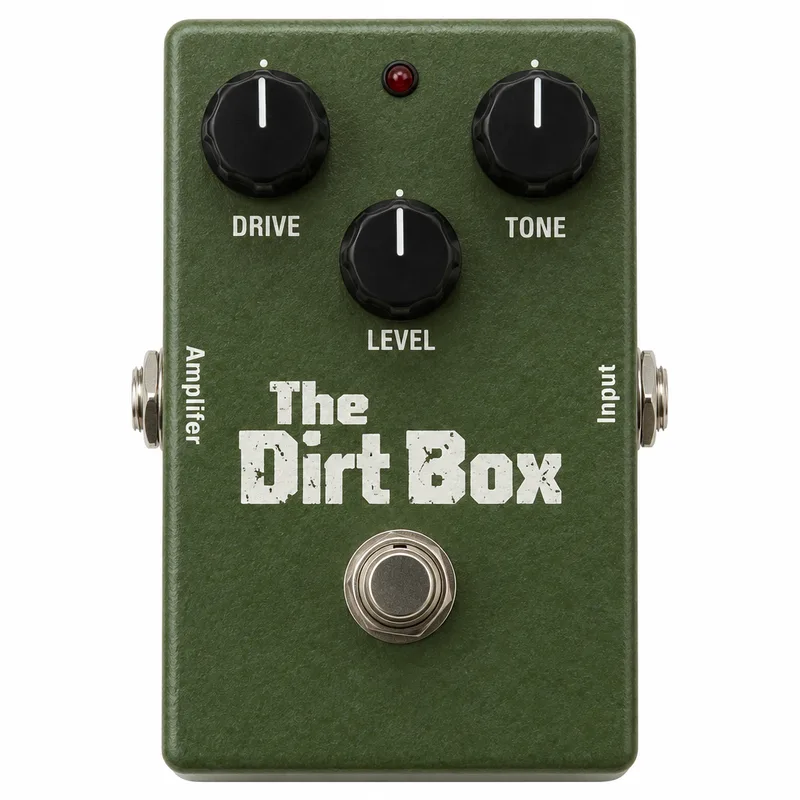
One quirk of the first batch: TONEHOME reports those pedals came in repainted green housings, presumably leftovers of the unbranded Maxon pedal called "The Dirt Box"9.
The reissue: what changed
The 2016 reissue put the circuit back in the original 1974-style enclosure6, but Ibanez updated the practical details. The reissue adds true bypass switching, an on/off LED and a DC power jack3, and runs off a regular 9V power supply2. The originals lacked all of this: no true bypass, no standard 9V operation2. Gearnews also noted the reissue is completely analog, with an LED to indicate when the fuzz is engaged2.
The 2016 reissue was a limited run32, and TONEHOME lists the original OD-850 as not reissued in its ongoing vintage coverage, with availability rated rare to very rare48. Kit Rae also documents an OD-850 Fuzz Mini released in 2017, a reissue of the circuit in a mini-sized enclosure6.
What originals cost
Original OD-850s are collector items. When the reissue was announced in 2016, MusicRadar reported originals going for £300 to £500 online3, and Gearnews noted the same year that originals change hands for lots of money on auction sites and are still sought after2. TONEHOME rates the collectibility of the standard-box versions as extremely high8. The reissue itself carried an RRP of €129 at announcement2. For historical reference, the original's German list price in 1980 was 100 DM for the narrow-box version4 and 145 DM for the standard-box version8.
Videos
WESTBALL FAMILY
WESTBALL FAMILY
Pedal Pom FX
Questions
Is the Ibanez OD850 a fuzz or an overdrive?
Despite the Overdrive name, it is a fuzz. The original OD-850 was built on a Ram's Head Big Muff circuit with a modified tone section, and Gearnews described the reissue as more of a fuzz pedal than an overdrive. TONEHOME calls it a thick, organic fuzz with massive sustain that cleans up well.
Does the OD850 sound like a Big Muff?
Yes, broadly. The circuit is a clone of a 1973 violet-era Ram's Head Big Muff made by Maxon for Ibanez with a couple of tweaks. Kit Rae notes it has a somewhat more refined Big Muff sound than other clones thanks to a modified tone circuit, and MusicRadar found a crunchier character that set it apart.
Is the OD850 reissue true bypass?
Yes. The 2016 reissue adds true bypass switching, along with an on/off LED and a DC power jack. The originals lacked these features, using instead a FET electronic bypass system with a buffer in the third edition.
What power supply does the OD850 reissue use?
It runs off a regular 9V DC power supply, center negative, with a current draw of 50mA. The DC power jack is one of the additions Ibanez made for the reissue, since the original pedals did not run off a standard 9V supply.
How much is an original Ibanez OD-850 worth?
In 2016, when the reissue was announced, MusicRadar reported originals selling for £300 to £500 online. Gearnews noted the same year that originals change hands for lots of money on auction sites and remain sought after. TONEHOME rates the collectibility of the standard-box versions as extremely high.
Was the OD850 reissue a limited run?
Yes. Both Gearnews and MusicRadar described the 2016 reissue as a limited run when Ibanez announced it. Kit Rae also documents a follow-up OD-850 Fuzz Mini in 2017, a reissue of the same circuit in a mini enclosure.
Sources (9)
- OD850 Overdrive 2016 Reissue by Ibanez, RockBoard PedalPedia, 2026
- Ibanez reissues OD850 Overdrive for some '70s orange fuzz, gearnews.com, 2016-10-06
- Ibanez revives OD850 Overdrive guitar effects pedal, MusicRadar, 2016-10-05
- TONEHOME, TONEHOME, 1976
- Ibanez 850 Fuzz Mini review, MusicRadar, 2017-07-23
- The Big Muff History, www.kitrae.net, 2017-01
- The Big Muff History of All Versions Part 1, Kit Rae (www.kitrae.net), 1974
- TONEHOME, TONEHOME, 1980
- TONEHOME, TONEHOME