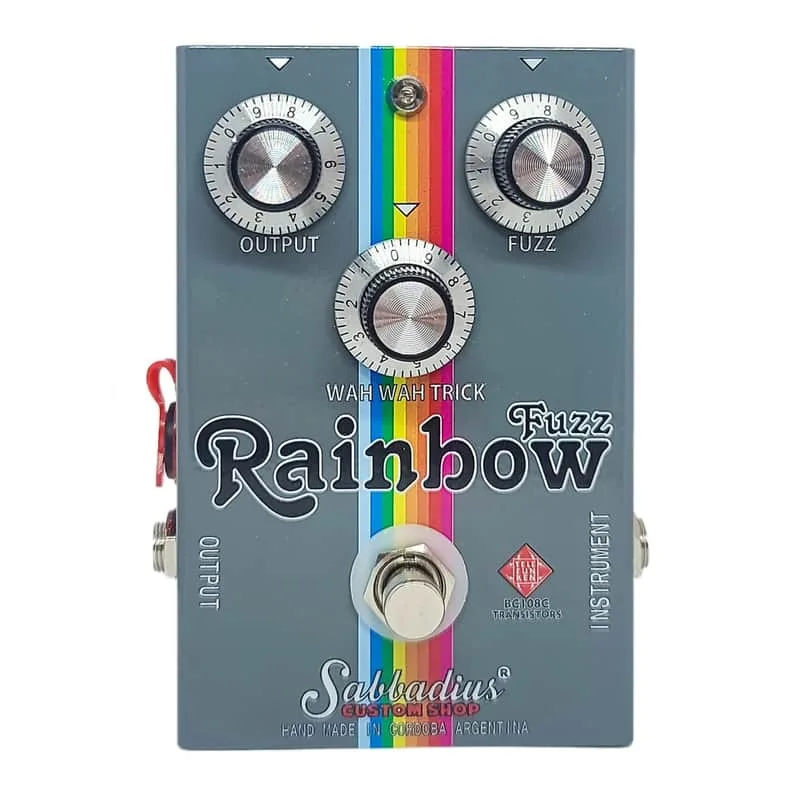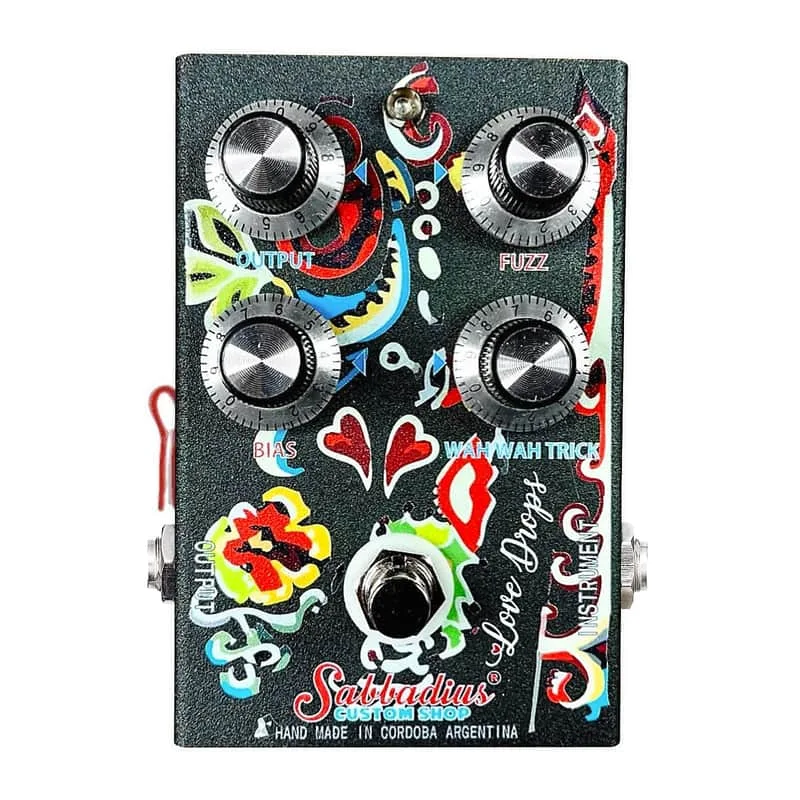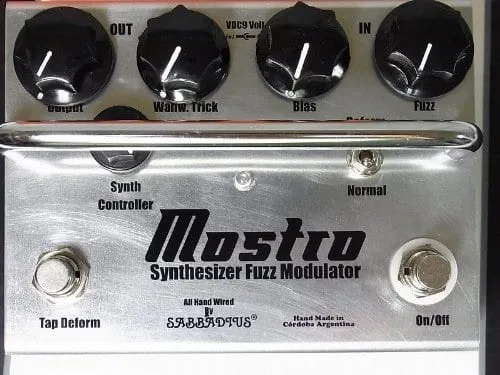


The Sabbadius Mostro Synthesizer Fuzz Modulator is a fuzz pedal built with silicon transistors and a variable oscillator circuit, so it produces fuzz tones that can slide toward synthesizer-like modulation and heavy feedback1. It is made by Sabbadius, the Argentinian builder whose range also includes the Rainbow Fuzz and the Love Drops Fuzz.
The design idea behind it, as the listing describes it, was a pedal that could give off "an explosive Fuzz sound but super deformed"1. The oscillator circuit is what pushes it past a normal fuzz: it lets the pedal generate a large amount of feedback and oscillator character on top of the saturated signal2.
A silicon fuzz with a synth oscillator
Most fuzz pedals clip your guitar signal with transistors and leave it there. The Mostro adds a variable oscillation circuit on top of the silicon fuzz, which the maker's material describes as allowing a large amount of feedback2. In practice that means the pedal can move from a straight fuzz into territory closer to a synth pedal, with the oscillator blended in through its own control.
The choice of silicon matters for how the pedal behaves. Silicon fuzzes are generally more stable and brighter than germanium ones, but here the transistors are calibrated so the sound is more like a germanium fuzz when you tune in the Bias control1. That gives a player a way toward germanium character without the drift and temperature sensitivity germanium transistors are known for.
The controls: Fuzz, Synth Controller, Bias and Tap Deform
The pedal has four main controls, and each one changes a different part of the sound1.
| Control | What it does |
|---|---|
| Fuzz | Sets the amount of saturation1 |
| Synth Controller | Sets the amount of oscillator mixed into the signal1 |
| Bias | Controls the voltage going to the transistors, changing the fuzz character1 |
| Tap Deform | A switchable button that deforms the signal; momentary in Deform mode1 |
The Bias control is the tone-shaping heart of the pedal. Because it controls the voltage that reaches the transistors, it lets the sound change to a fuzz worn or drained battery1, the sagging, gating character players chase from an old fuzz running flat. Turn it the other way and the calibration of the silicon transistors pushes the sound toward germanium fuzz1.
Tap Deform works as a switchable button. In Normal Mode it passes a normal sounding signal, and when stepped it temporarily changes to Deform, deforming the signal for as long as you hold it1. That makes it useful as a momentary effect, kicking the pedal into its more extreme character for a phrase or a single note.
There is also a Wah Wah Trick control, which makes the pedal function better with a wah pedal in the chain and allows you to clean the fuzz sound down to a cleaner overdrive tone1. That gives the Mostro a second personality as an overdrive rather than a pure fuzz box.
Power and build
The Mostro runs on a 9V regulated adaptor with tip negative polarity1, the same standard used by most compact pedals, so it fits a normal 9V center negative pedalboard supply. Each unit is custom hand built one at a time and tested by Nicolas Sabbadin in Argentina1, and the pedal is packaged in a hard box1.
The power requirement is a 9V regulated adaptor with tip negative1. Unregulated supplies or the wrong polarity can affect a hand-built fuzz like this, so match the adaptor to the specification.
Where it came from
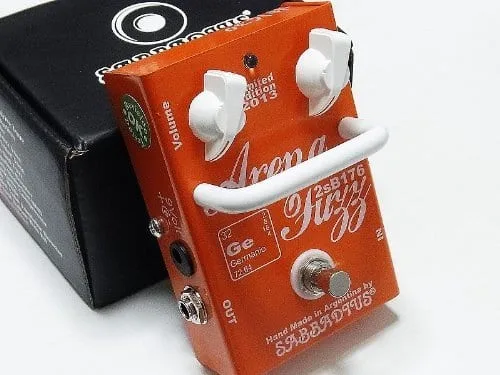
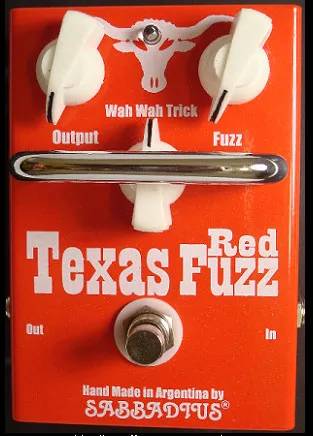
The Mostro had already been out for some time when the Brazilian site Peda Is Efeitos covered it in October 2012, describing it as a silicon fuzz with a variable oscillation circuit from their partners at Sabbadius2. It sits in the builder's wider fuzz line alongside pedals like the Arena Fuzz, the Oct-Up Fuzz Tone and the Texas Red Fuzz.
Videos
SABBADIUS Electronics
SABBADIUS Electronics
SABBADIUS Electronics
Questions
What power supply does the Sabbadius Mostro need?
It runs on a 9V regulated adaptor with tip negative (center negative) polarity. That is the standard boss-style supply used on most pedalboards, so it fits a typical daisy chain or isolated supply with 9V center negative outputs.
Does the Mostro sound like a germanium fuzz?
It is built with silicon transistors, but they are calibrated so the sound is more like a germanium fuzz when you tune in the Bias control. So a player who wants germanium character without germanium temperature and leakage issues can get close by adjusting Bias.
Where is the Sabbadius Mostro made?
It is made in Argentina. Each unit is custom hand built one at a time and tested by Nicolas Sabbadin of Sabbadius before it ships.
Can the Mostro do dying-battery fuzz sounds?
Yes. The Bias control sets the voltage that goes to the transistors, which lets the sound change to a worn or drained battery fuzz, the sagging, splatty character players get from a dying battery in an old fuzz.
Sources (2)
- Sabbadius Effects Mostro Synthesizer Fuzz Modulator, Music Boulevard (MUSIC BOULEVARD CO., LTD.)
- MOSTRO Synthesizer Fuzz Modulator!, Peda Is Efeitos, 2012-10-24