A bass effects rig is everything between your bass and the amp or PA: the pedals, preamps and power supplies that shape your tone, plus the routing that ties them together. Where a guitar rig often lives on color, a bass rig is usually built around protecting the low end, which is why so many bass pedals are preamps, compressors and drive units designed to keep the fundamental of each note intact.
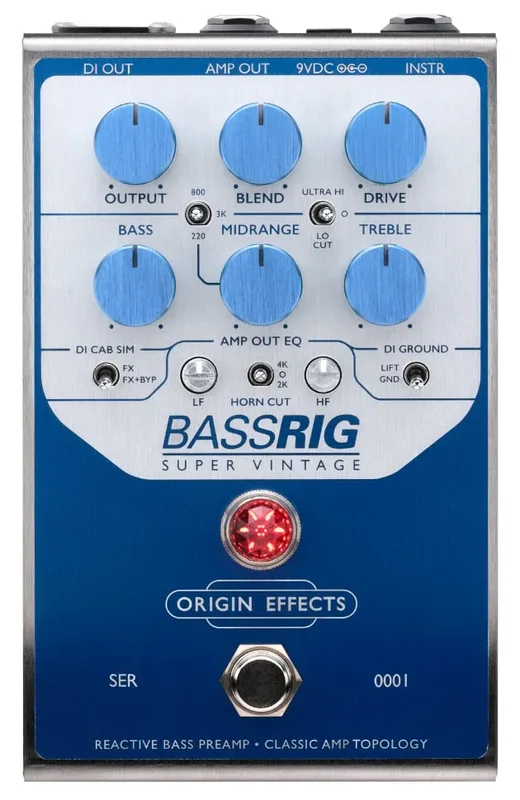
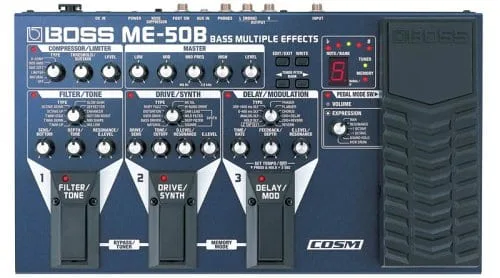
The range of what counts as a bass rig is wide. At one end sits a single pedal like the Origin Effects BASSRIG Super Vintage, which Origin describes as "a complete vintage bass amp in a pedal," with an all-analog cabinet simulator and DI output built in1. At the other end are multi-effects floor units like the BOSS ME-50B, which puts a full set of bass effects in one rugged unit2, and synth systems that replace the bass sound entirely. Origin Effects positions its BASSRIG line as "the new centrepiece of a direct-to-PA bass setup," noting that the analog pedals "take pedals like a real valve amp"3.
What a bass effects rig is made of
Most bass rigs share the same building blocks, whatever the brand on the enclosure:
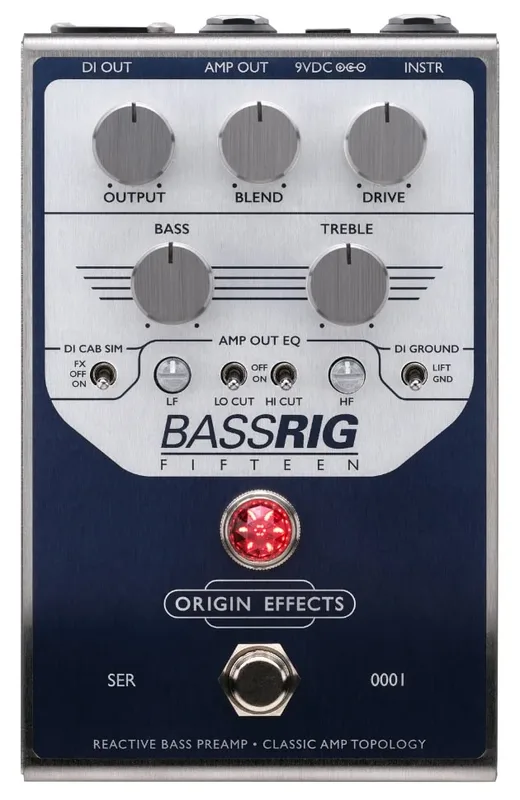
- Preamp and DI pedals, which recreate an amp's front end and feed a PA or interface. The Origin Effects BASSRIG Fifteen is an all-analog amp recreation preamp and DI pedal based on the B15, "a little combo that became a studio staple"45. The BassRig '64 Black Panel, one of two bass overdrive and preamp pedals Origin launched together, is aimed at home, studio and stage players alike6.
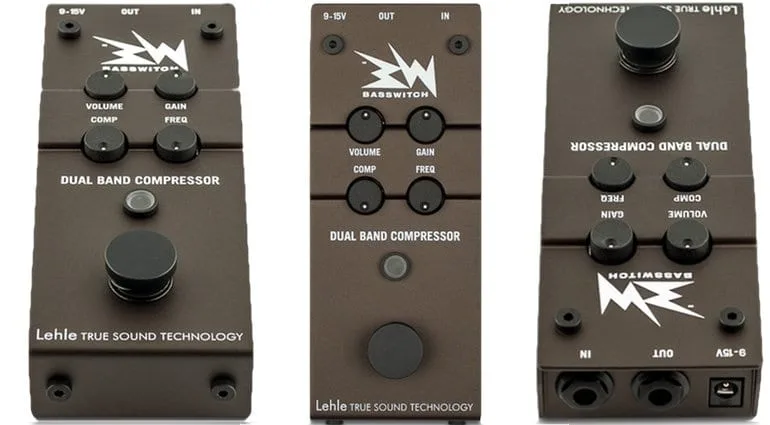
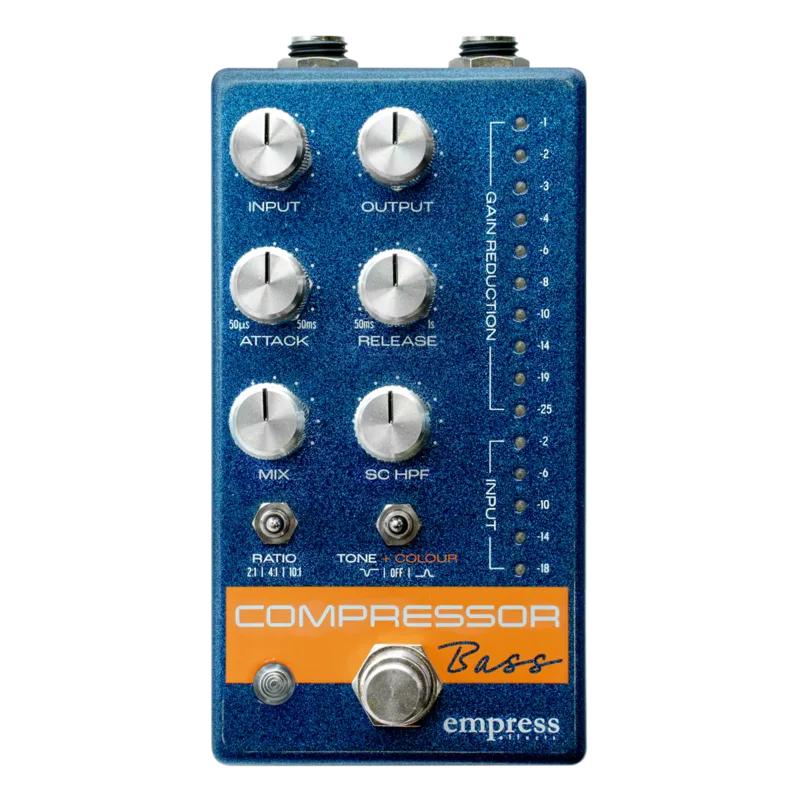
- Compressors, which even out note volume and add sustain. The Empress Bass Compressor uses FET compression "that preserves your instrument's original tone while adding dynamic control"7, and the Lehle RMI Basswitch Dual Band Compressor houses two compressors for dual-band compression, built to process signals from both passive and active pickup systems8.
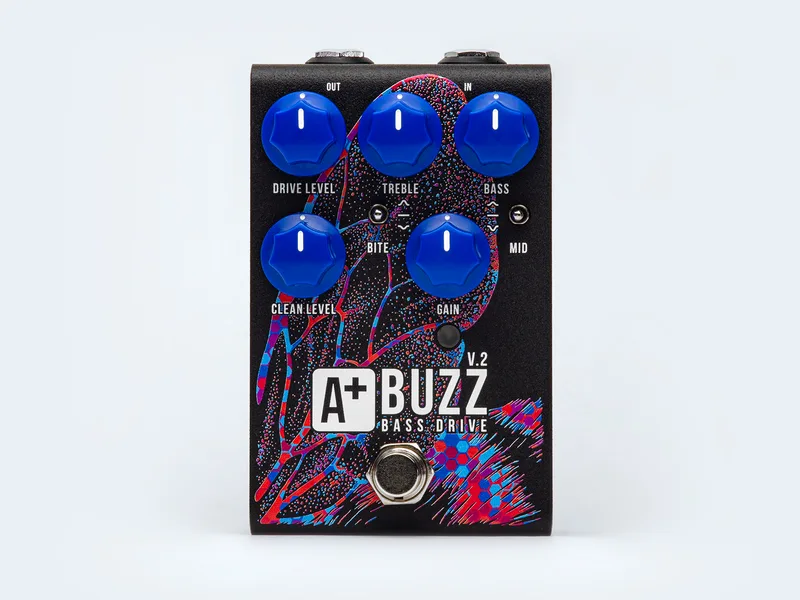
- Drive and distortion, from the Shift Line A+ Buzz V.2 Gray and Deep Blue bass drive pedals910 to fuzz like the GUPtech Bass Babe, a synth fuzz "made for Bass and Guitar"11.
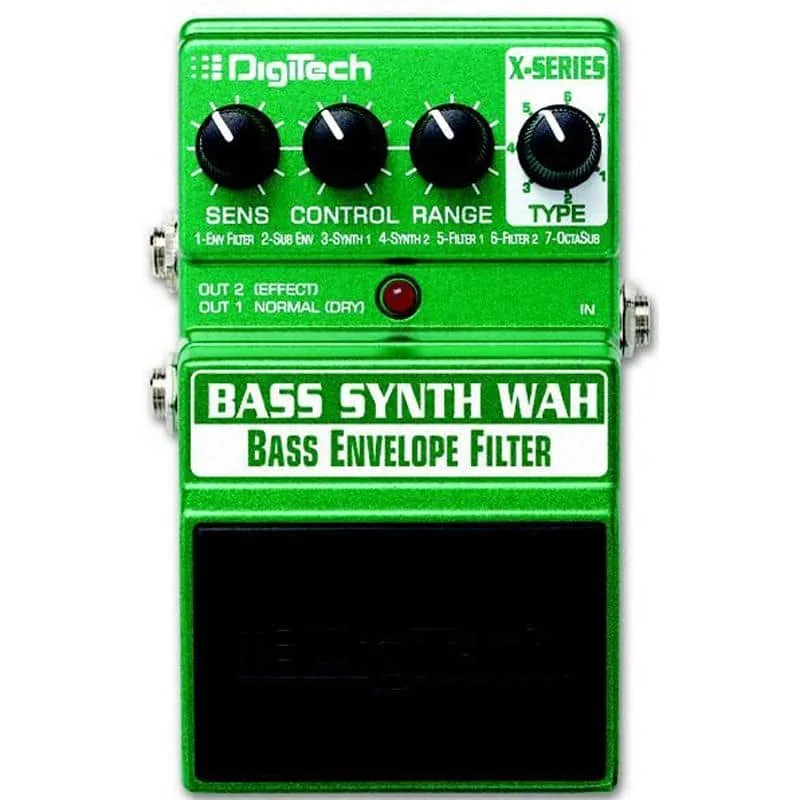
- Filters and synth-style effects, like the DigiTech Bass Synth Wah envelope filter, which can run inline or parallel with your bass tone12.
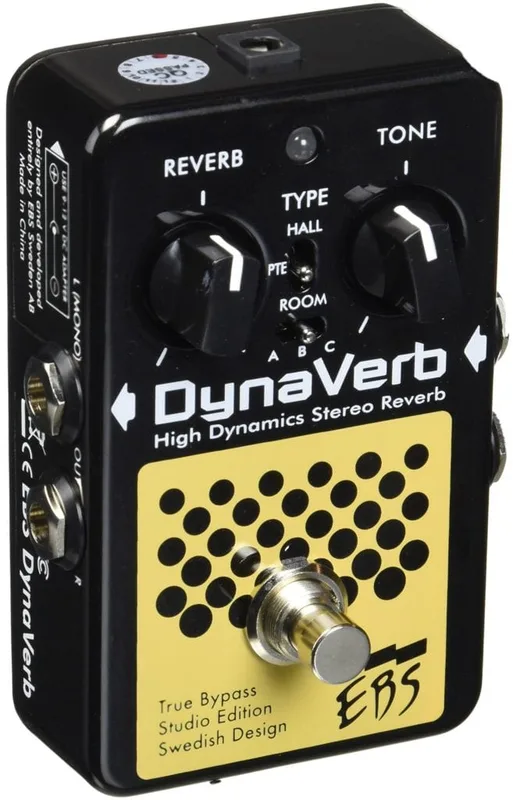
- Reverb and ambience, such as the EBS DynaVerb Studio Edition, whose internal parallel/serial routing switch is designed for amp effects loops and multi-pedal chains13.
- Power supplies, which T-Rex Effects makes alongside its pedals for guitar and bass players14.
| Block | What it does | Examples from makers |
|---|---|---|
| Preamp/DI | Amp front end, cab sim, PA feed | Origin BASSRIG Super Vintage, BASSRIG Fifteen14 |
| Compressor | Levels dynamics, adds sustain | Empress Bass Compressor, Lehle RMI Basswitch Dual Band78 |
| Drive/fuzz | Grit and sustain | Shift Line A+ Buzz V.2, GUPtech Bass Babe911 |
| Filter/synth | Envelope and synth textures | DigiTech Bass Synth Wah12 |
| Multi-effects | Many effects in one unit | BOSS ME-50B2 |
If you are starting from scratch, the guides on building a pedalboard and powering a pedalboard cover the practical side of assembling these blocks.
Signal chain order and parallel routing
The order you plug bass pedals into each other changes the result, just as it does on guitar. The general guide to pedal signal chain order applies, but bass adds one concern of its own: anything that clips or filters the signal can eat the low end, so where a compressor sits relative to your drive pedals matters more than it does for guitar.
A compressor usually goes early, so it evens out the signal before it reaches pedals that track dynamics. The Empress Bass Compressor adds a wrinkle to that: it has a 3.5mm TRS send and return for sidechain compression, which lets you control how the compression is triggered7. Dual-band designs take a different approach. The Lehle RMI Basswitch Dual Band Compressor splits the work between two high-end compressors, which the maker says enables "effective and melodious compression of your bass sound" across the frequency range8.
Parallel routing
Parallel routing splits the signal so one path stays clean while the other goes through effects, then blends them back together. For bass this is a common way to keep the low end solid under heavy distortion or synth effects. The basic shape looks like this:
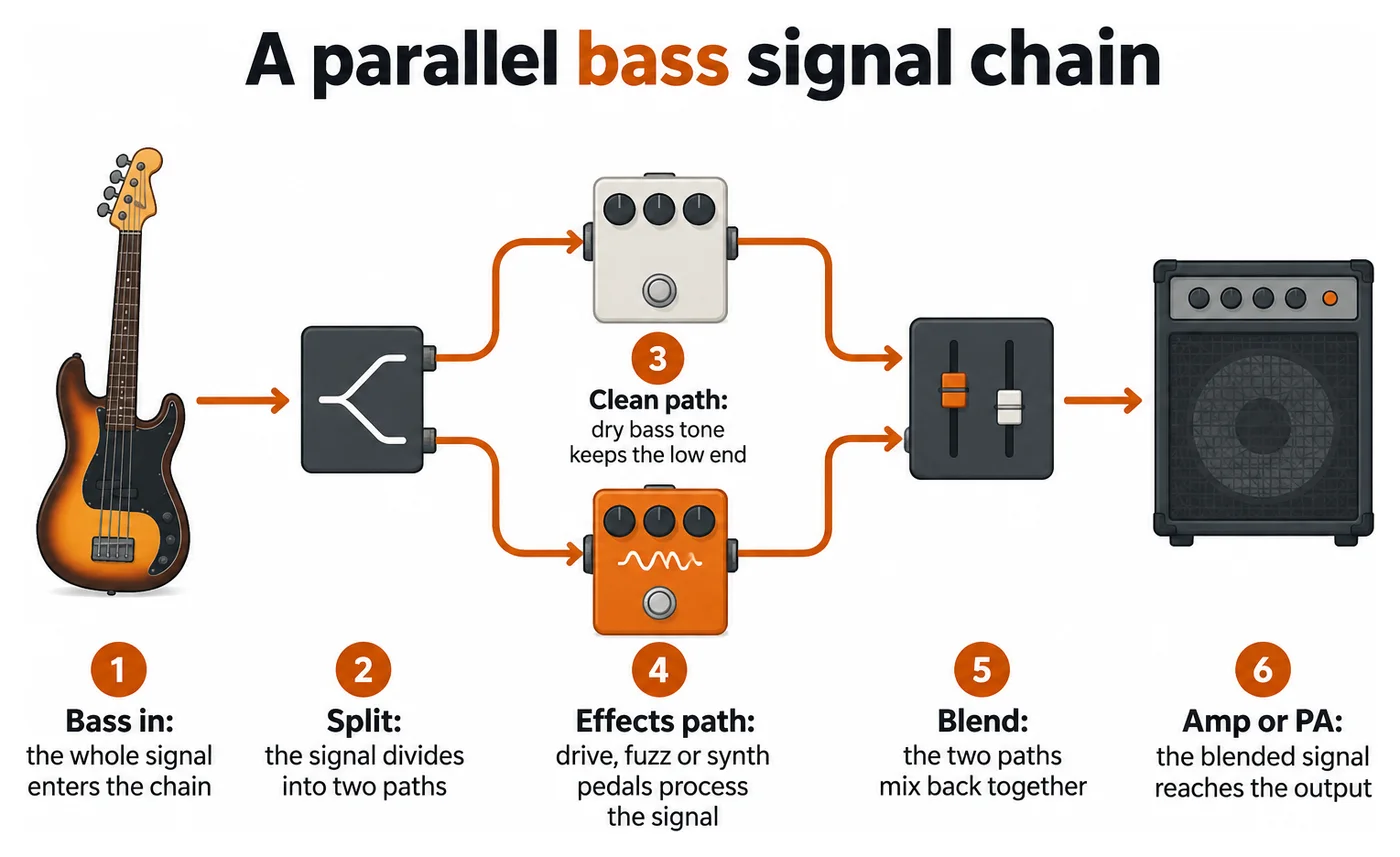
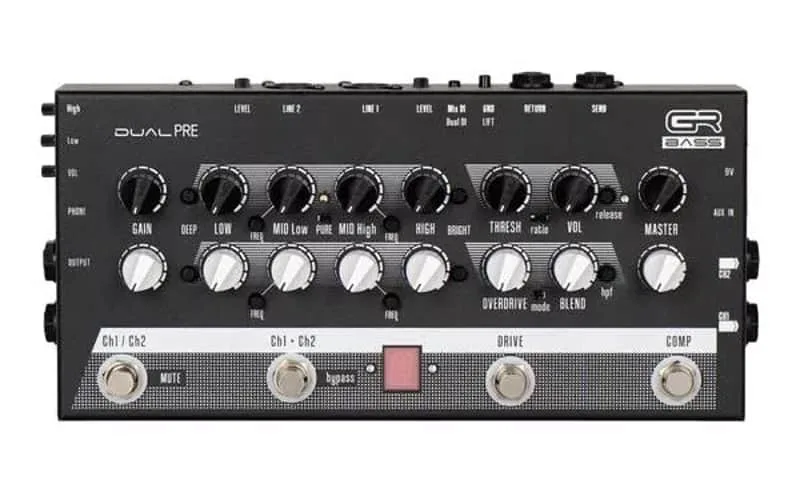
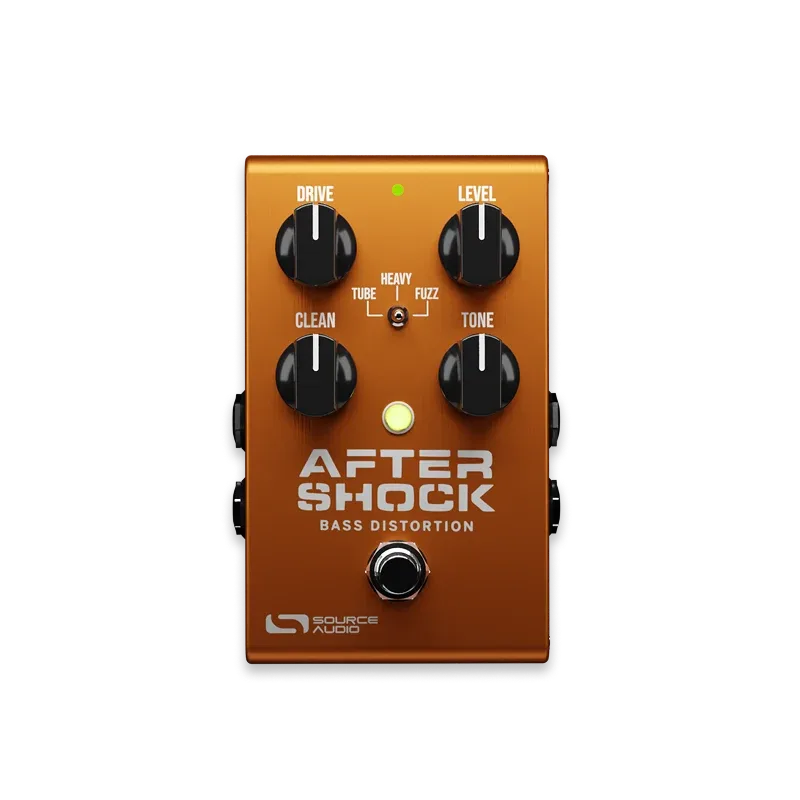
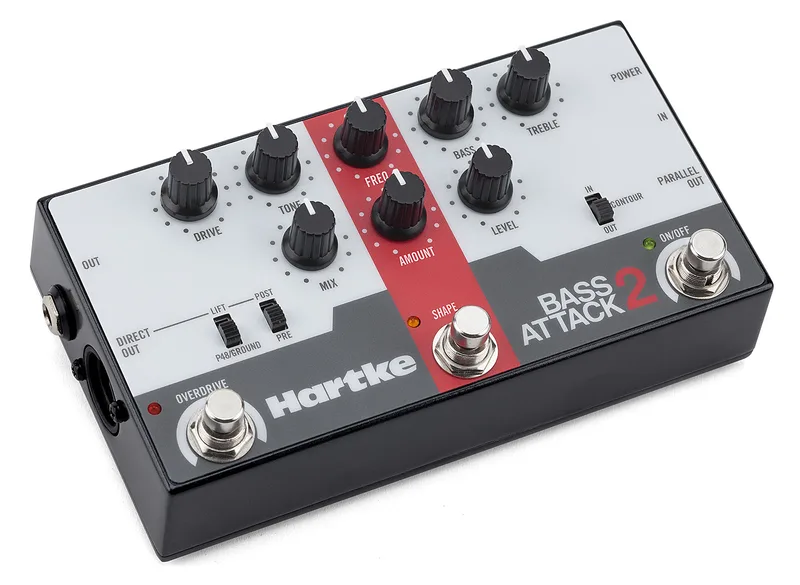
Several pedals and units build this in. The DigiTech Bass Synth Wah "can be run inline with your current pedals, or parallel with your bass tone to create unique combinations of bass and synth sounds"12. The GR Bass DUAL Pre has a parallel output for a clean signal, plus a complete compressor on both channels15. The Source Audio Aftershock Bass Distortion offers "a range of signal routing possibilities like effects send, multi signal mixing, or mono signal splitting"16, and the Hartke Bass Attack 2 carries 1/4" parallel and effect outputs17.
| Product | Parallel feature |
|---|---|
| DigiTech Bass Synth Wah | Runs inline or parallel with the bass tone12 |
| GR Bass DUAL Pre | Parallel output for a clean signal15 |
| Source Audio Aftershock | Effects send, multi signal mixing, mono signal splitting16 |
| Hartke Bass Attack 2 | 1/4" parallel and effect outputs17 |
| MOOER Ocean Machine II | Customizable order of effects in parallel or series chains18 |
| MOOER Prime P1 | Dual effect chains for bass guitar19 |
| IK Multimedia TONEX Rig | Parallel Comp blends compressed and dry stereo signals20 |
| Radial Bassbone OD | Blend switch combines magnetic and piezo pickups like a 2-channel mixer21 |
The Radial Bassbone OD shows another use for blending: connect the TRS stereo output from a dual-element bass and its blend switch combines a magnetic pickup with a piezo, "acting like a mini 2 channel mixer"21. At the software and modeler end, Positive Grid's BIAS X supports dual-amp configurations, stereo rigs and parallel processing chains22, and the TONEX Rig's Parallel Comp mode blends compressed and dry stereo signals "for sustain without losing attack"20. For the wider picture of running two paths, see the guide to stereo pedal rigs.
Divided pickups and bass synth systems
A divided pickup is not a normal pickup. As BOSS's own history article explains, "a Divided Pickup is divided into discrete parts that capture a separate signal for each string. It then outputs them separately" to a guitar synth or V-Guitar unit, and it is not designed to produce sound directly23. That per-string information is what lets a synth or modeling unit track each note cleanly, which matters even more on bass, where low notes are hardest for pitch tracking.
"The GK-5B Divided Pickup is a specialized bass pickup that drives the powerful synthesis and instrument modeling technologies in select BOSS gear."
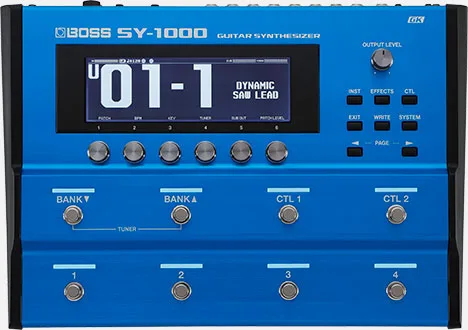
Compatibility is broad. The GK pickup works with all Roland GR models from the GR-1 onwards, BOSS SY-series synths that require a GK pickup, and the Roland VG range25. On the synth side, the BOSS SY-1000 Guitar Synthesizer is the current flagship. BOSS describes it plainly:
"The SY-1000 is the most advanced guitar/bass synth we've ever made, hands down."
Its custom DSP delivers six times the processing muscle of the earlier SY-30027, and it carries refreshed instrument modeling with a large selection of electric, acoustic and bass guitar types2726. It also includes the VIO Guitar instrument, which alters the input signal's envelope and harmonic characteristics to create tones reminiscent of bowed instruments26. Editing happens through a large LCD with knob-based control, where you can change routings and create parallel chains, and Variation libraries save favorite setups26. For players who want a simpler entry point, BOSS's Doug MacArthur suggests "using the simple GK-5 (or GK-5B for a bass) that you can easily attach to the top of your guitar"28. The wider world of these pedals is covered on the synth pedals page.
Guitar pedals, bass pedals and DIY
The line between guitar and bass pedals is thinner than it looks. Recovery Effects says of its Pearl: "This pedal was created for bass, but you can also plug your guitar into it to make your low-end dreams come true!"29. Makers like GUPtech design synth fuzz for bass and guitar together11. The practical difference is usually low-end retention: bass versions of a circuit, or a clean blend, keep the fundamental from disappearing under clipping. The bass pedals page collects the bass-specific versions by effect type.
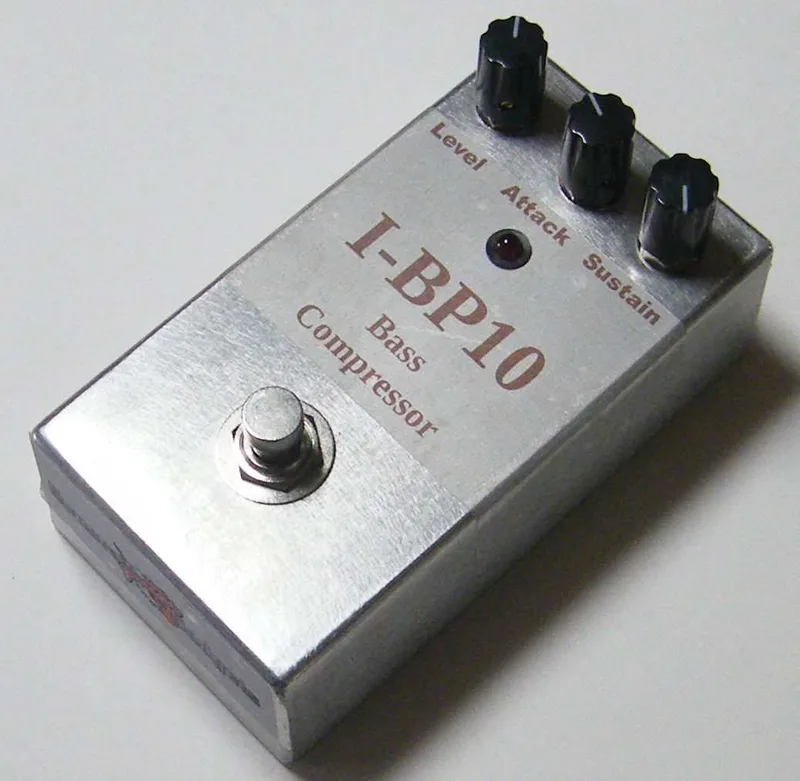
There is also a DIY route. General Guitar Gadgets sells a stompbox kit, project and PCB replica of the Ibanez BP10, which the maker calls "an excellent sounding bass compressor"30. Building one is covered in the guide to DIY pedal kits and mods.
Pedals on this page
Questions
What pedals do bass players consider essential?
A preamp or DI pedal is the most common centerpiece, because it lets you plug straight into a PA or interface and still sound like an amp. Beyond that, a compressor is the effect bass players reach for most, since it evens out note-to-note volume and adds sustain. Drive, fuzz, filter and synth pedals round out the typical board, and a power supply built for the current the pedals draw matters as much as any single effect14.
Where does a compressor go in a bass signal chain?
Most bass players put the compressor early in the chain, right after the tuner, so it evens out the signal before it hits drive, filter or synth pedals that track dynamics. A compressor with a sidechain input, like the Empress Bass Compressor, can be fed a separate signal so the low frequencies trigger the compression differently7. Dual-band designs like the Lehle RMI Basswitch compress the low and high bands separately8.
Can you use guitar pedals on bass?
Often, yes. Many drive, delay and modulation pedals work on bass, though effects that clip or filter the signal can thin out the low end. Some makers build pedals for both instruments: Recovery Effects describes its Pearl as created for bass but equally usable with guitar29. Bass-specific versions usually preserve more low end, and pedals with a clean blend or parallel output keep the fundamental intact15.
How do you run bass pedals in parallel?
Parallel routing splits your signal so one copy stays clean while the other goes through effects, then blends them back together. Some pedals have this built in: the GR Bass DUAL Pre has a parallel clean output15, the DigiTech Bass Synth Wah can run parallel with your bass tone12, and the Source Audio Aftershock offers mono signal splitting and multi-signal mixing16. A small mixer or a pedal with an effects send does the same job.
Does a Roland GK pickup work on a bass?
Yes, but you need the bass version. Roland and BOSS have made divided pickups for bass, and the current model is the BOSS GK-5B31. The guitar version, the GK-5, is a separate product. Install kits like the GK5-KIT-B are designed exclusively for four-, five- or six-string basses3233.
What pedals do bass players consider essential?
A preamp or DI pedal is the most common centerpiece, because it lets you plug straight into a PA or interface and still sound like an amp. Beyond that, a compressor is the effect bass players reach for most, since it evens out note-to-note volume and adds sustain. Drive, fuzz, filter and octave pedals round out the typical board, and a power supply built for the current the pedals draw matters as much as any single effect.
Where does a compressor go in a bass signal chain?
Most bass players put the compressor early in the chain, right after the tuner, so it evens out the signal before it hits drive, filter or synth pedals that track dynamics. A compressor with a sidechain input, like the Empress Bass Compressor, can also be fed a filtered signal so the low frequencies trigger the compression differently. Dual-band designs like the Lehle RMI Basswitch compress the low and high bands separately.
Can you use guitar pedals on bass?
Often, yes. Many drive, delay and modulation pedals work on bass, though effects that clip or filter the signal can thin out the low end. Some makers build pedals for both instruments: Recovery Effects describes its Pearl as created for bass but equally usable with guitar. Bass-specific versions usually preserve more low end, and pedals with a clean blend keep the fundamental intact.
How do you run bass pedals in parallel?
Parallel routing splits your signal so one copy stays clean while the other goes through effects, then blends them back together. Some pedals have this built in: the GR Bass DUAL Pre has a parallel clean output, the DigiTech Bass Synth Wah can run parallel with your bass tone, and units like the Source Audio Aftershock offer mono signal splitting and multi-signal mixing. A small mixer or a pedal with an effects send does the same job.
Does a Roland GK pickup work on a bass?
Yes, but you need the bass version. Roland and BOSS have made divided pickups for bass since the GK-2B in 2002, and the current model is the BOSS GK-5B, a user-installable pickup for external mounting on four-, five- or six-string basses. The guitar version, the GK-5, is a separate product. Install kits like the GK5-KIT-B fit the pickup inside the bass body.
What is the difference between the VB-99 and the SY-1000?
The VB-99 was Roland's V-Bass system released in 2008, building on the original 2002 V-Bass with more processing power and expanded COSM modeling options. The BOSS SY-1000, released in 2020, is the current flagship: BOSS calls it the most advanced guitar and bass synth it has ever made, with custom DSP delivering six times the processing muscle of the SY-300, plus refreshed instrument modeling and the VIO Guitar instrument.
Sources (33)
- BASSRIG Super Vintage, Origin Effects, 2026
- ME-50B Multieffekt by BOSS, RockBoard PedalPedia, 2026
- TECH TIPS: BASSRIG In Your Bass Rig, Origin Effects, 2022-03-11
- BassRig Fifteen by Origin Effects, RockBoard PedalPedia, 2026
- 2026 - Our Bass Guitar Amp Recreation Line Up - Origin Effects, Origin Effects, 2026-08-18
- Press Release, Origin Effects, 2022-02-22
- Bass Compressor, Empress Effects Inc.
- Lehle-RMI-Basswitch-Dual-Band-Compressor_Manual_EN.pdf, Ruppert Musical Instruments, 2023
- A+ Buzz V.2 Gray, Shift Line, 2026
- A+ Buzz V.2 Deep Blue, Shift Line, 2026
- Bass Babe, GUPtech (guptech.ca)
- Bass Synth Wah Envelope Filter by DigiTech, RockBoard PedalPedia, 2026
- DynaVerb Studio Edition by EBS, RockBoard (PedalPedia), 2026
- FuelTank Classic, T-Rex Effects
- DUAL Pre, GRBass, 2026
- Aftershock Bass Distortion, sourceaudio.net
- Bass Attack 2, Hartke
- Ocean Machine II_MOOER Audio, MOOER Audio
- PRIME P1_MOOER Audio, MOOER Audio
- TONEX Rig, IK Multimedia
- Bassbone OD, Radial Engineering, 2026-10-02
- BIAS X | AI-Powered Guitar Tone Creation Software & Plugin | Positive Grid, Positive Grid
- The Ultimate Guide to Roland and BOSS GK-Series Divided Pickups, BOSS (articles.boss.info), 2025-03-18
- BOSS - GK-5B | Divided Pickup, BOSS (boss.info)
- The Complete Guide to Guitar Synthesizers, BOSS (articles.boss.info), 2023-11-21
- BOSS - SY-1000 | Guitar Synthesizer, BOSS (boss.info)
- BOSS - SY-1000 | Guitar Synthesizer, BOSS (www.boss.info)
- Behind the Board: Doug MacArthur with Steve Vai, BOSS (articles.boss.info), 2025-01-30
- PEARL PEDAL (Heavy Low-End Vintage Fuzz), Recovery Effects and Devices
- Ibanez™ BP10™ Bass Compressor Clone: DIY Kit, PCB & Schematic, General Guitar Gadgets, 2015-08-12
- BOSS - VG-800 | V-Guitar Processor, BOSS (boss.info)
- BOSS - GK5-KIT-B | Divided Pickup Kit, BOSS (boss.info)
- BOSS - VG-800 | V-Guitar Processor, BOSS (boss.info)