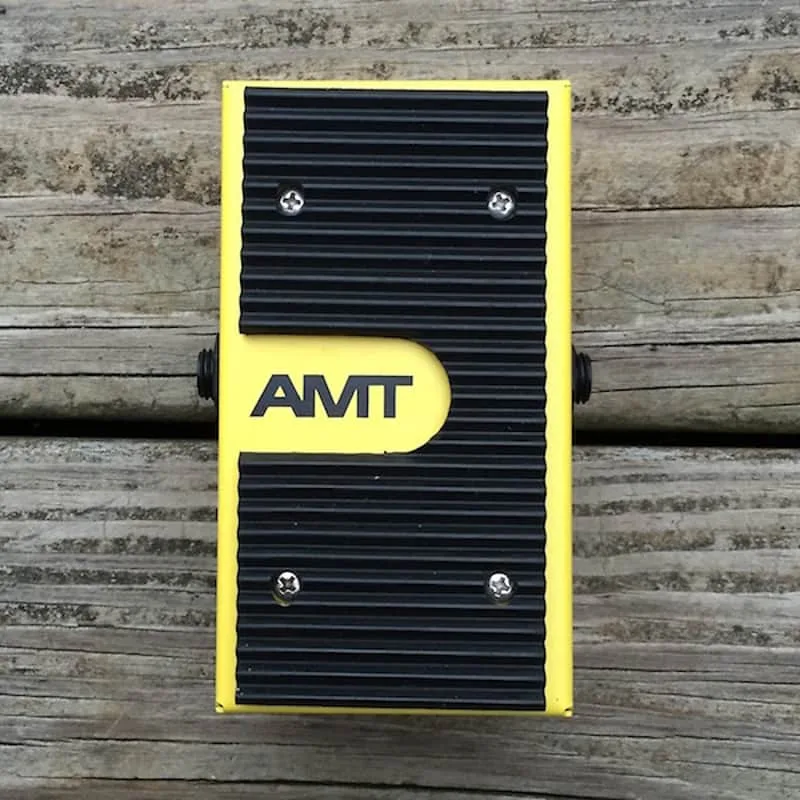
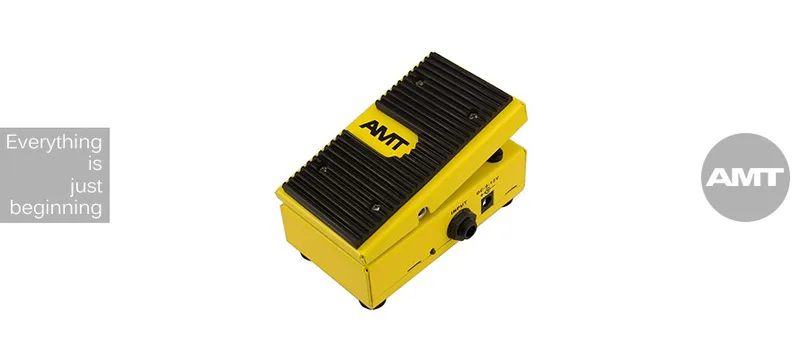
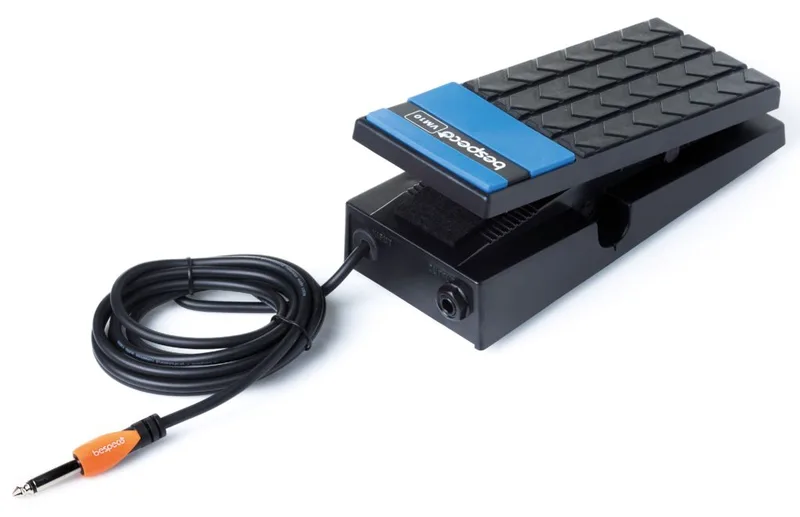
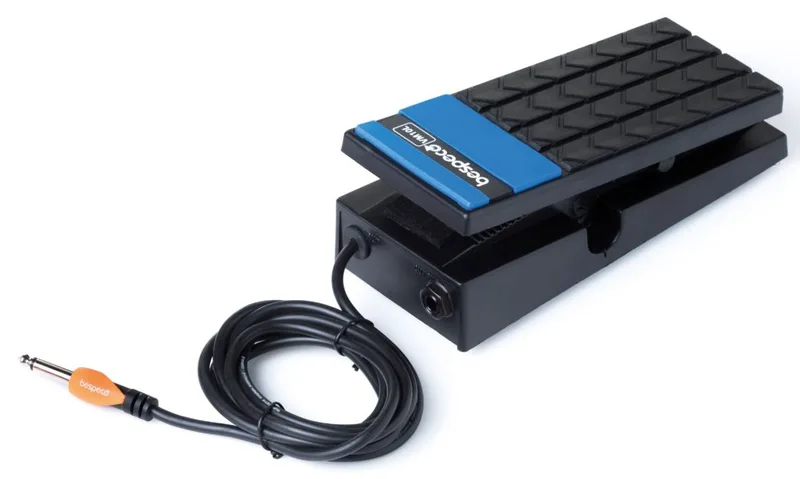
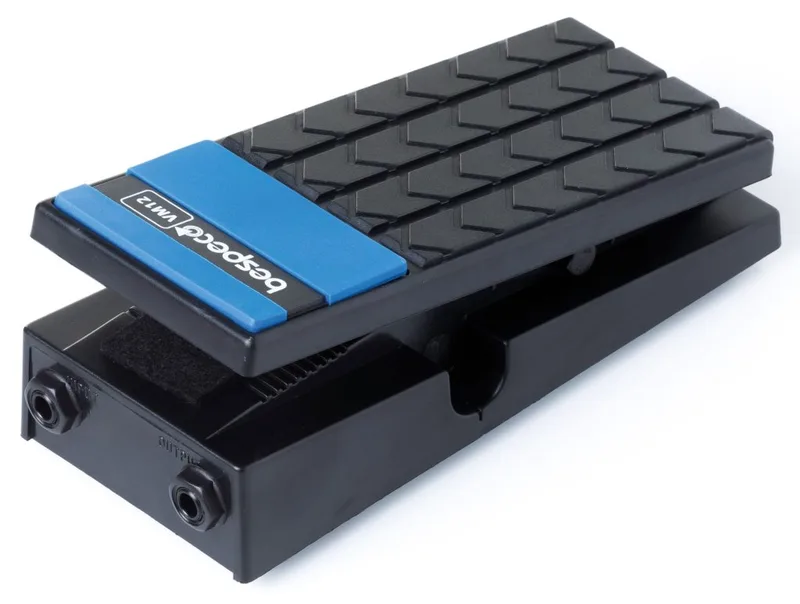
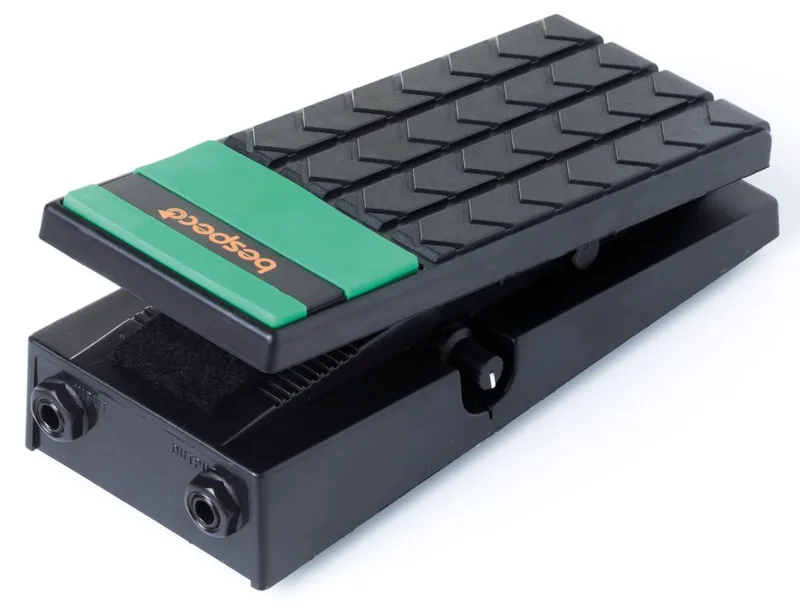
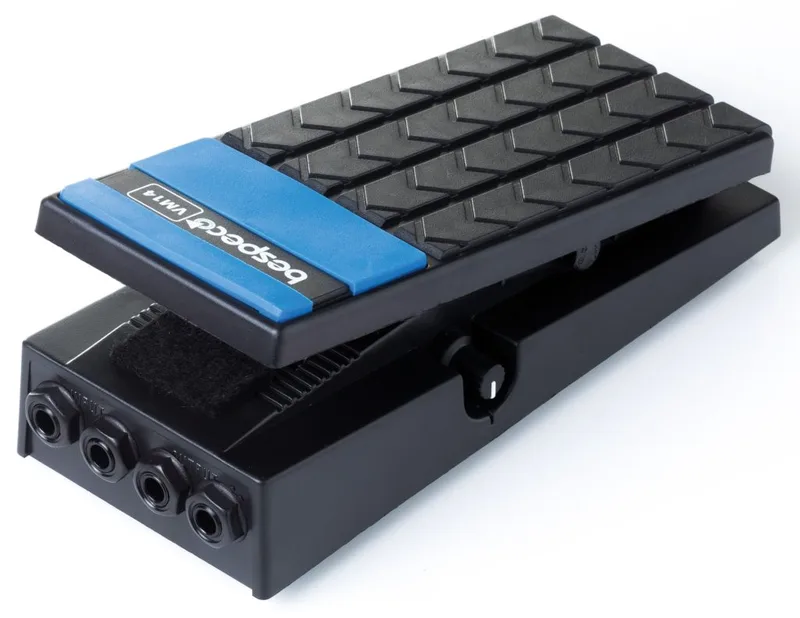
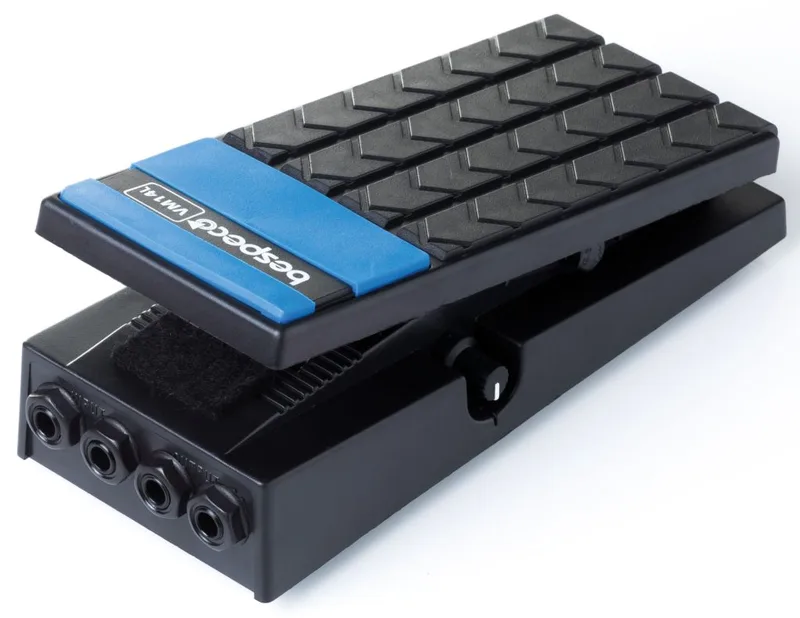
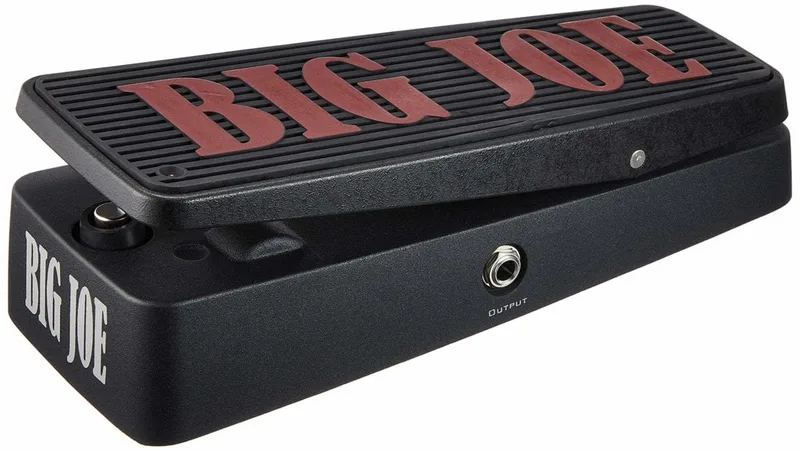
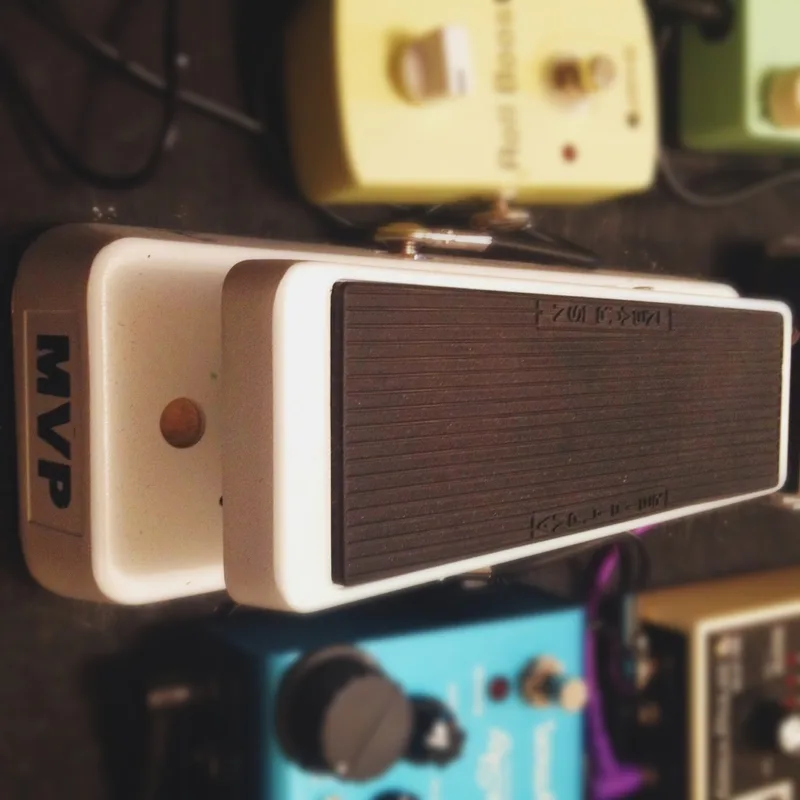
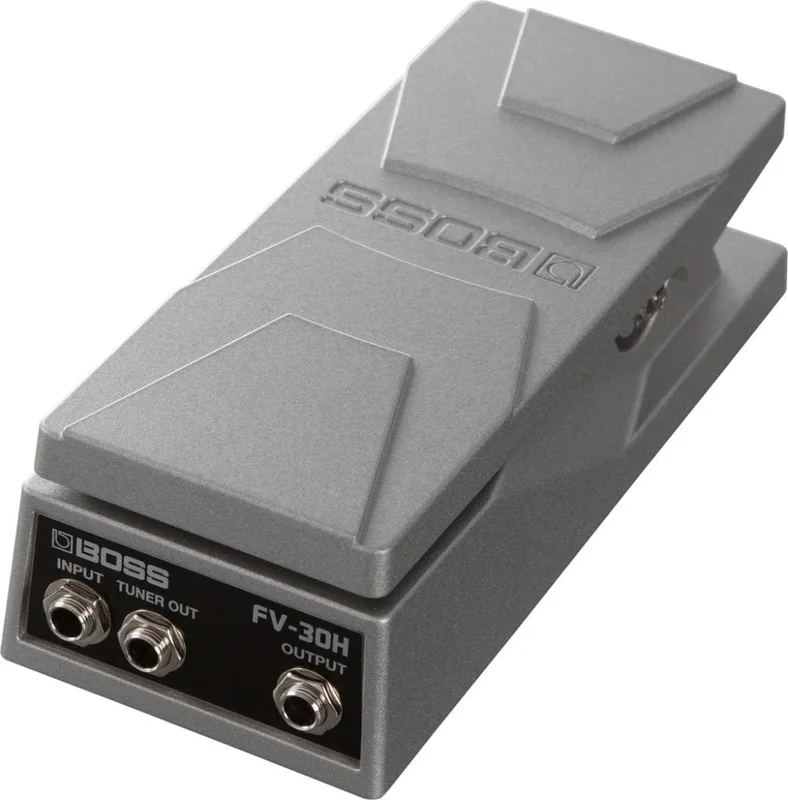
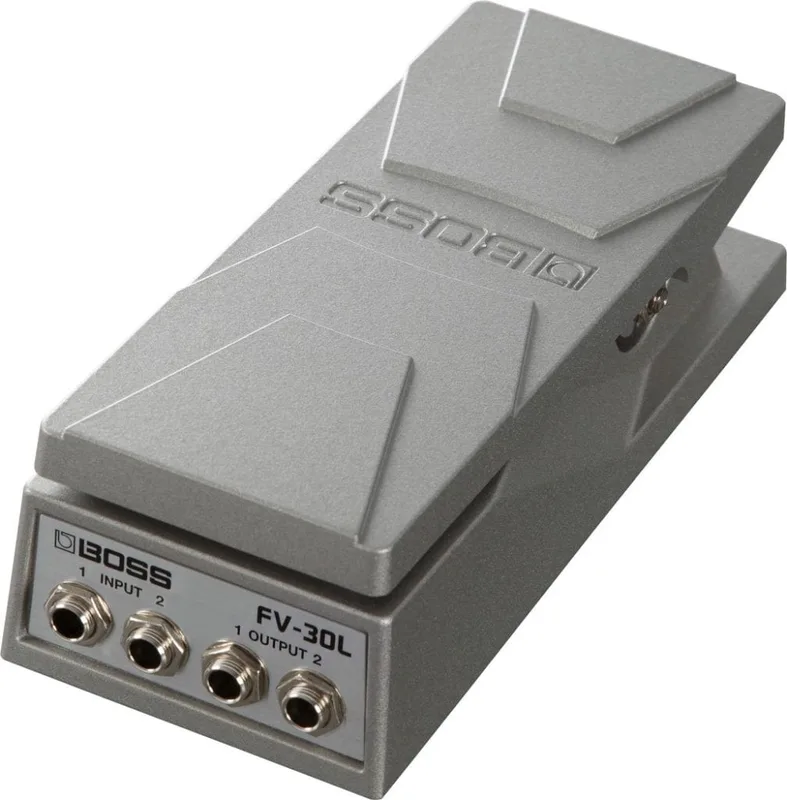
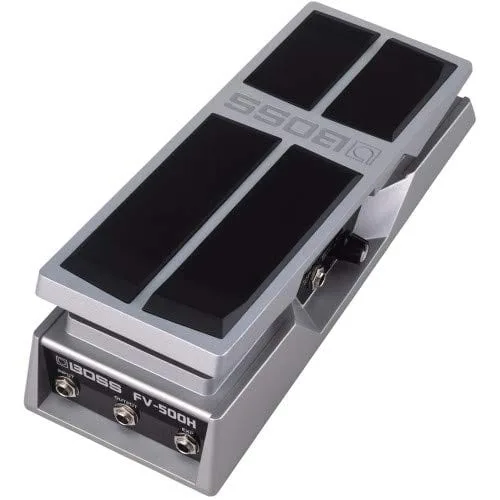
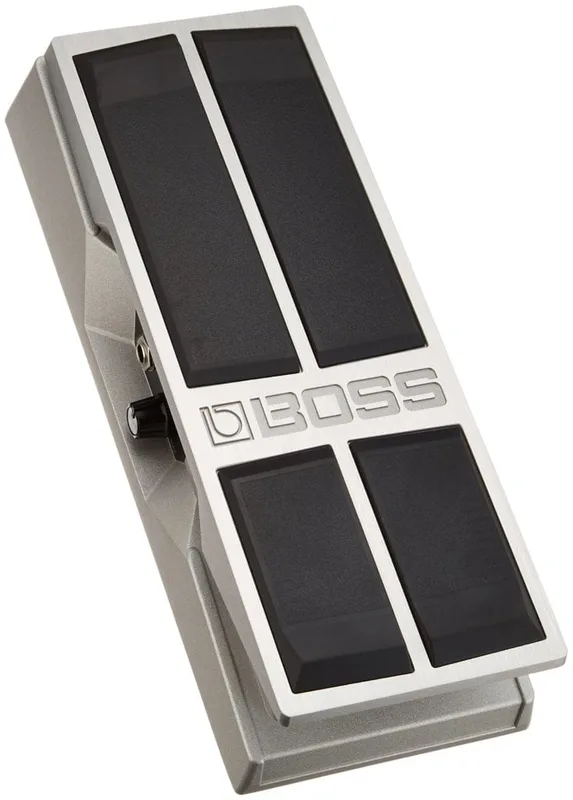
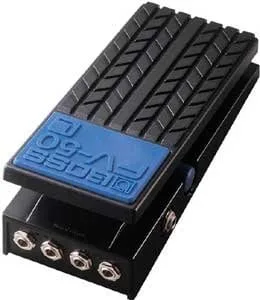
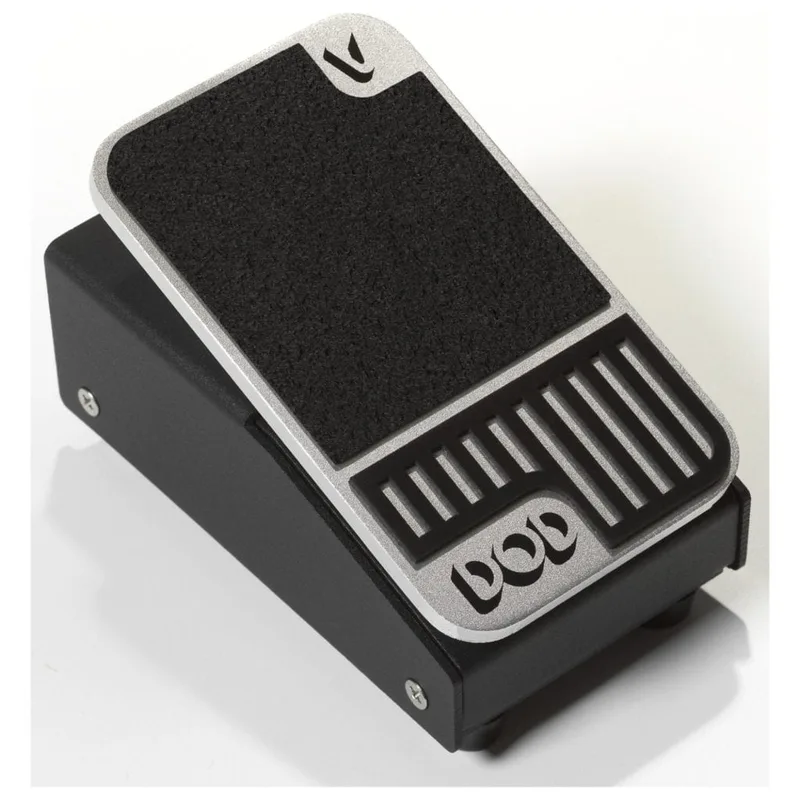
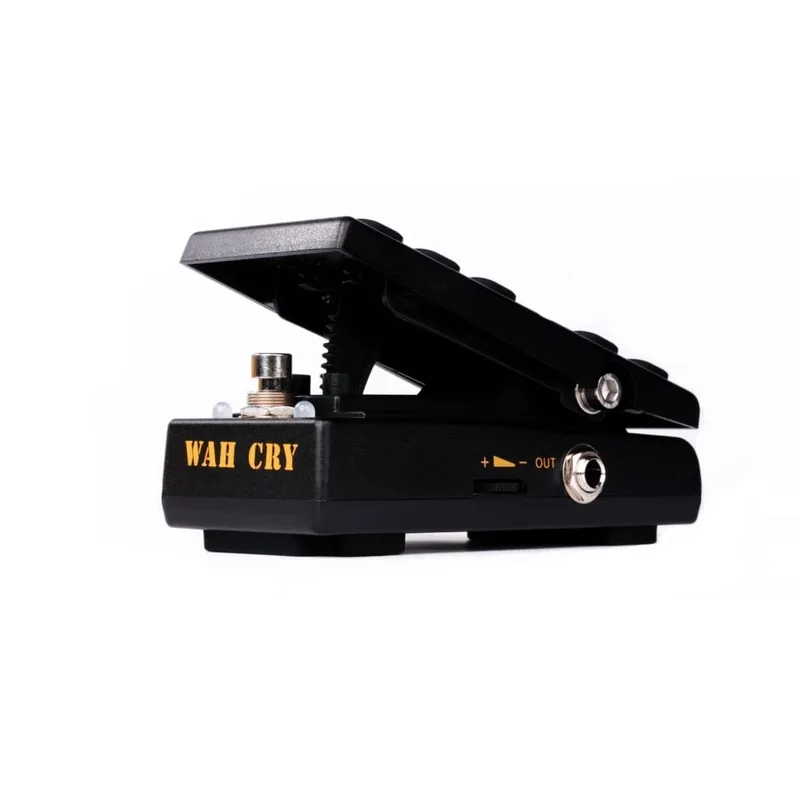
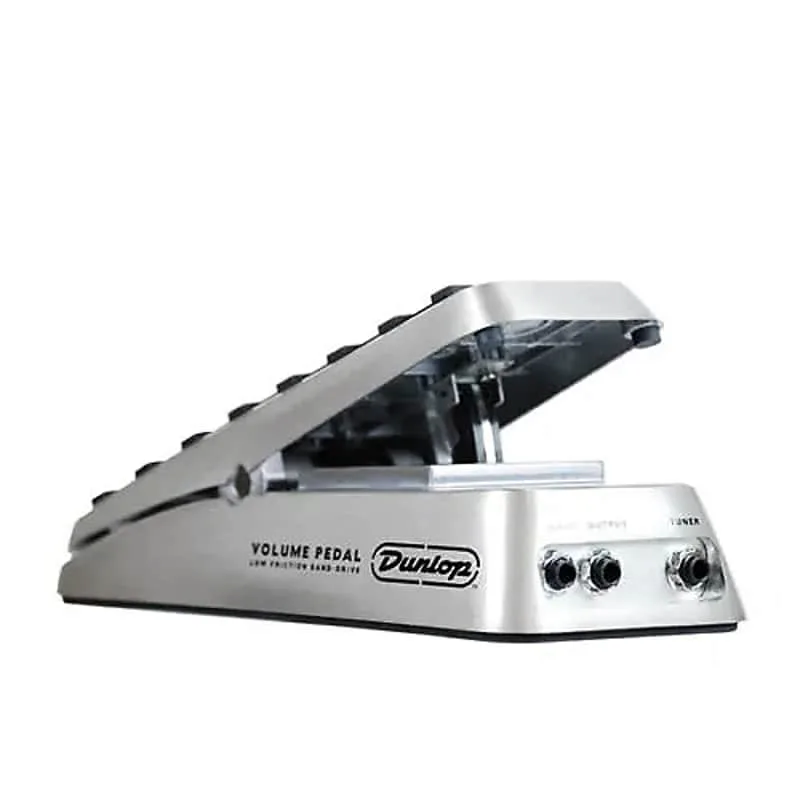
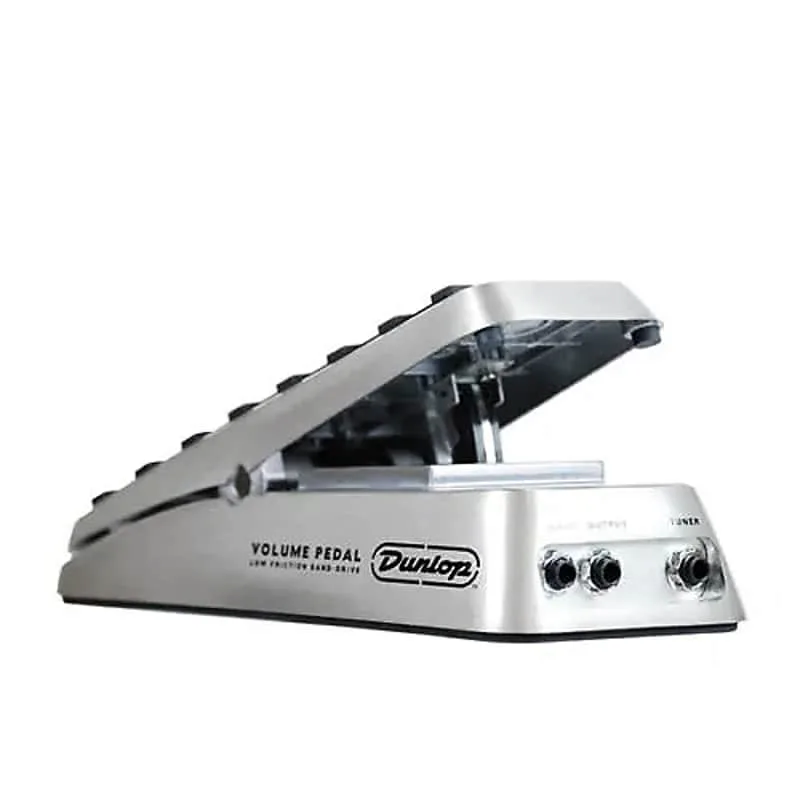
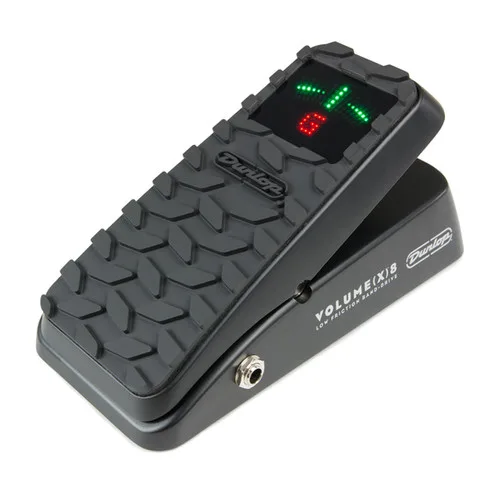
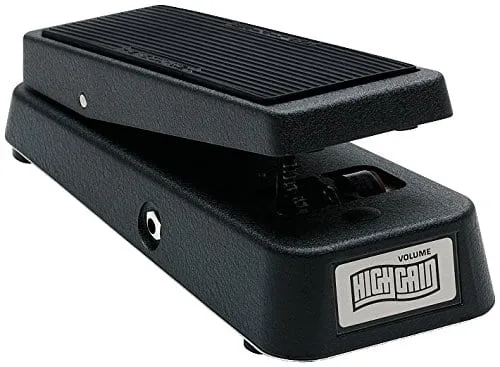
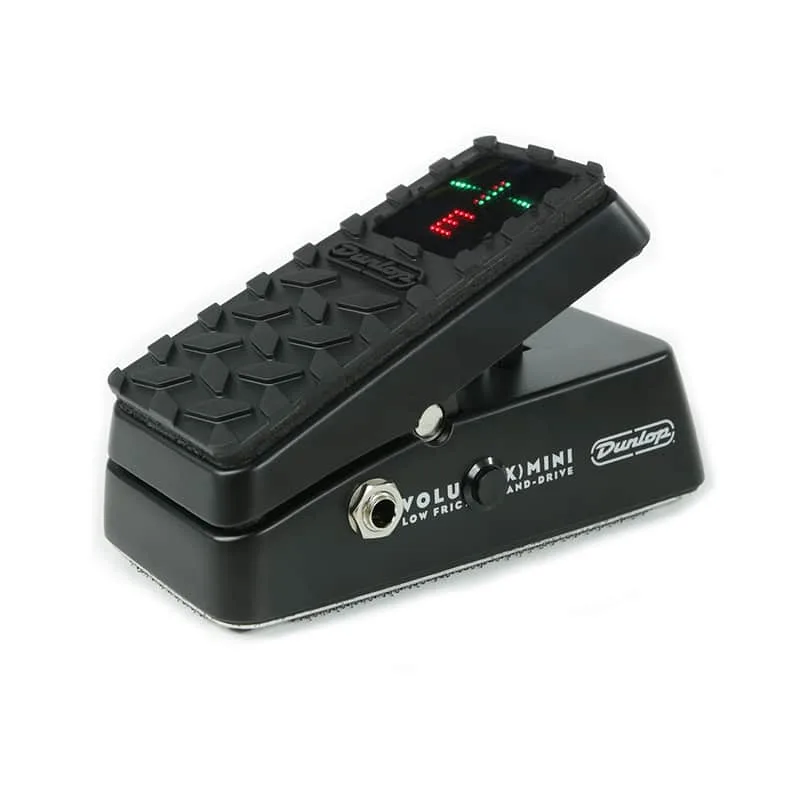
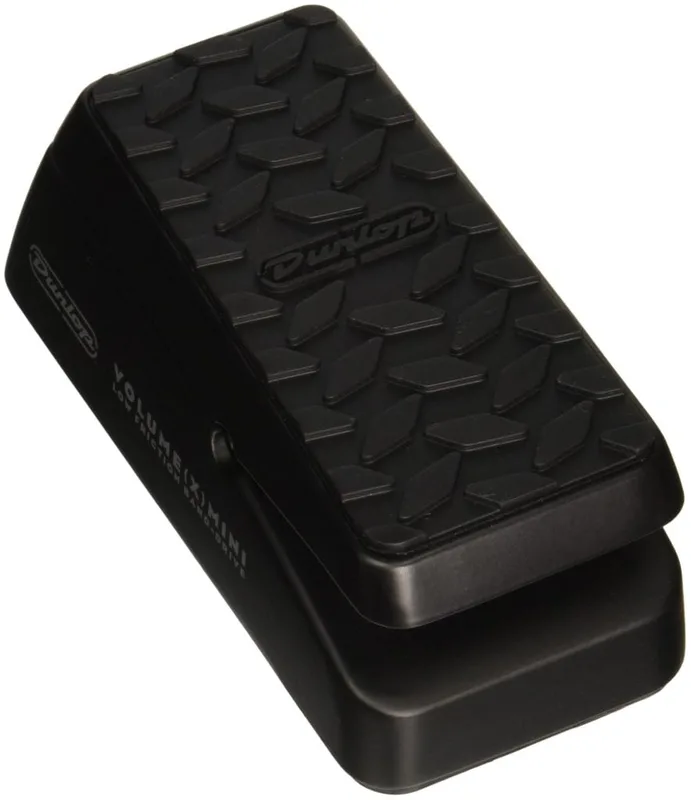
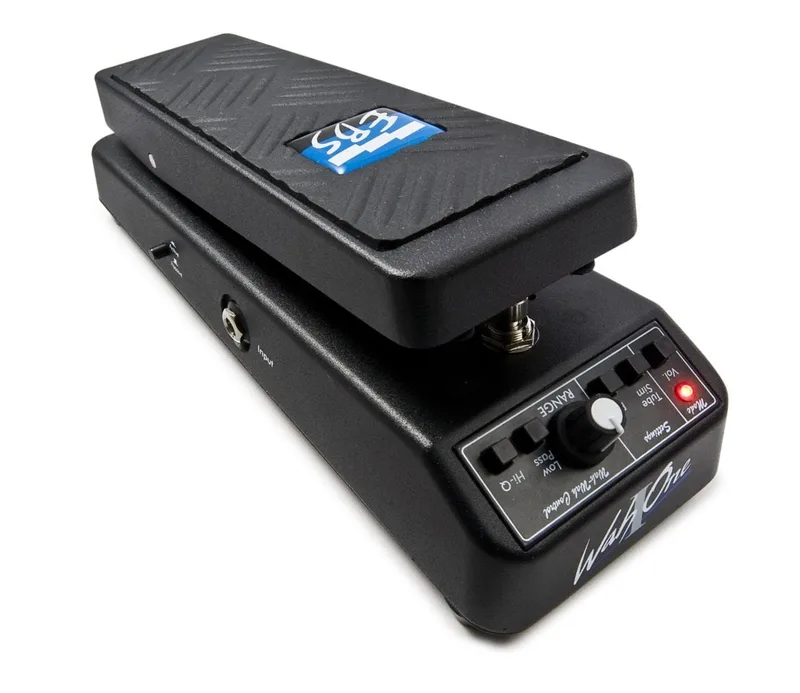
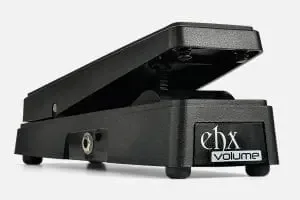
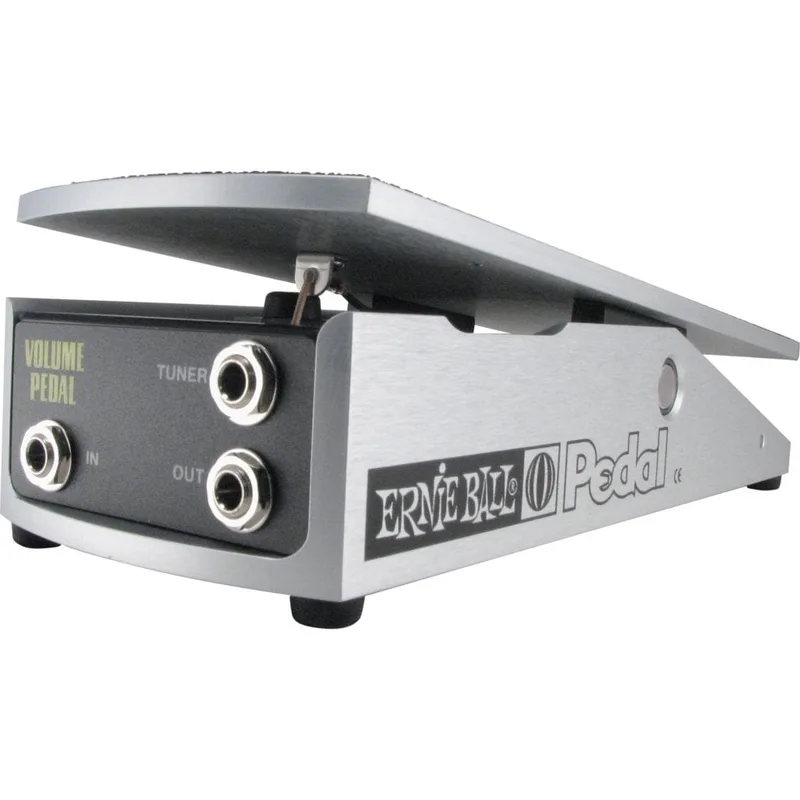
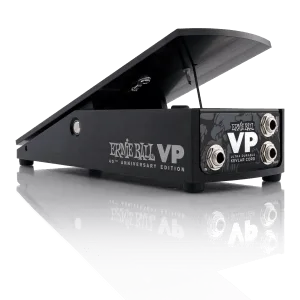

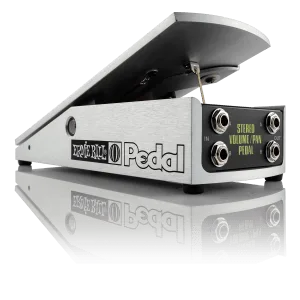
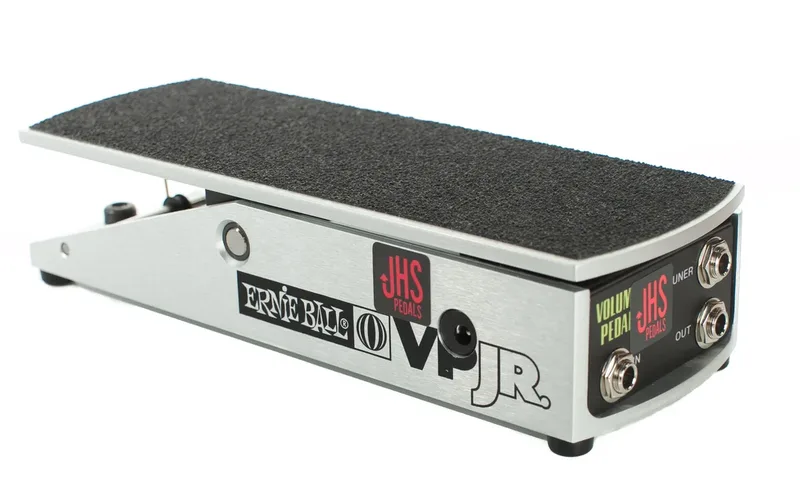
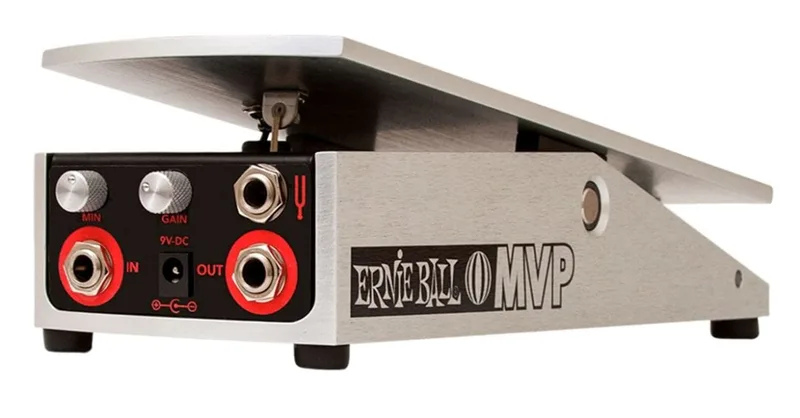
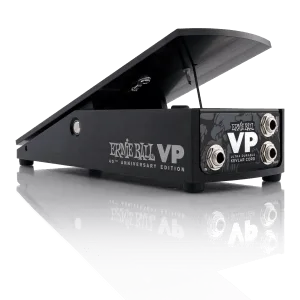
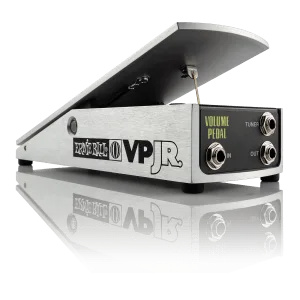
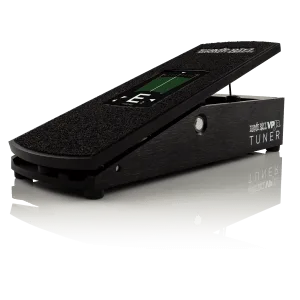
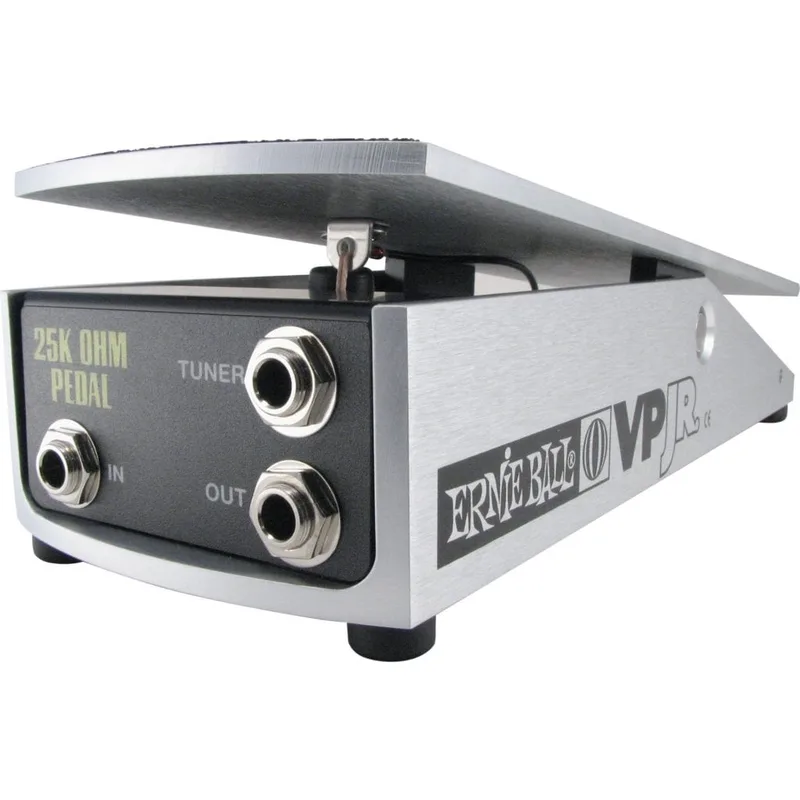
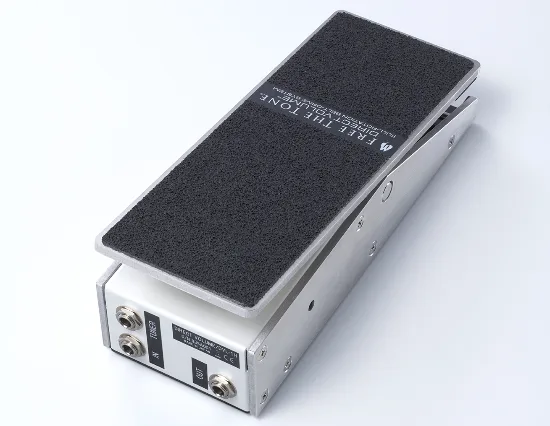
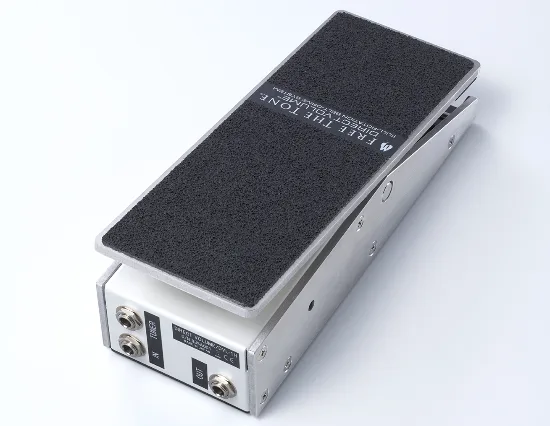
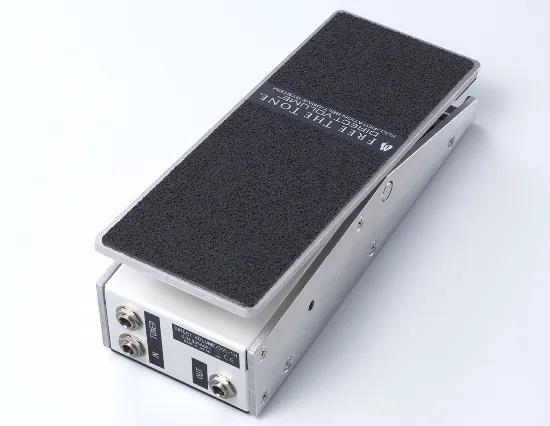
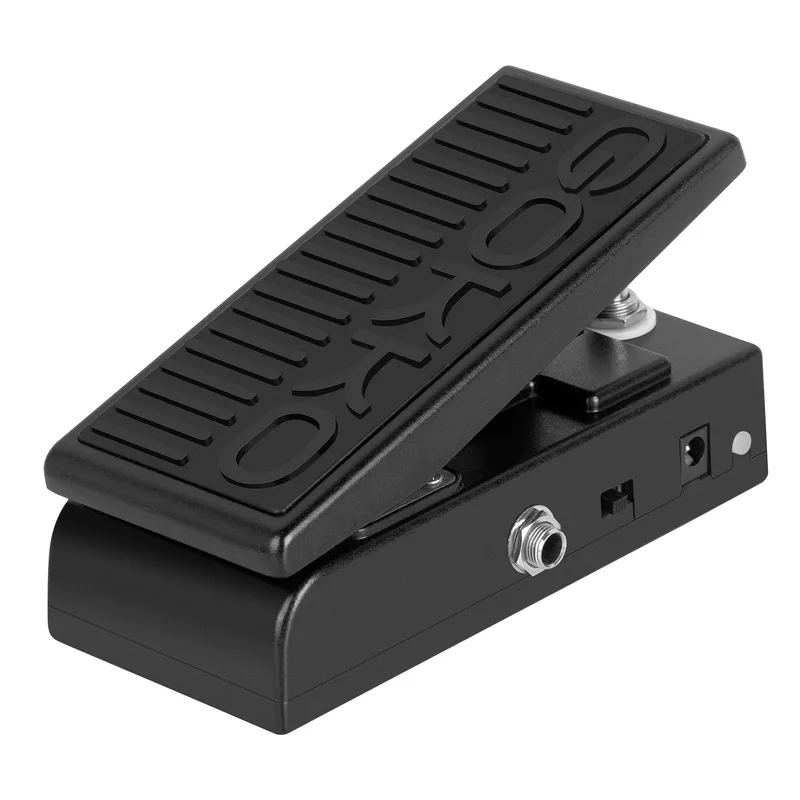
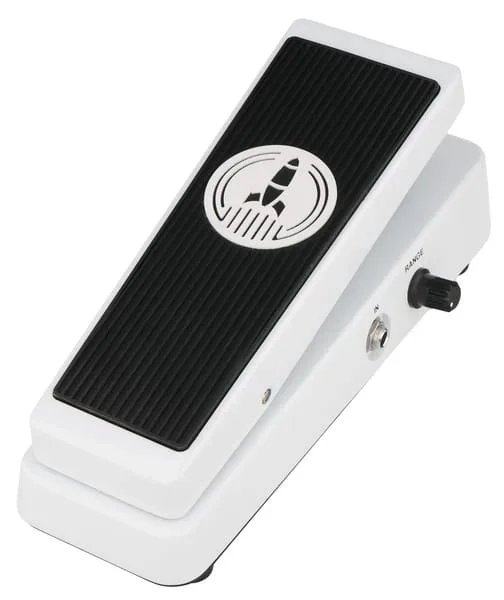
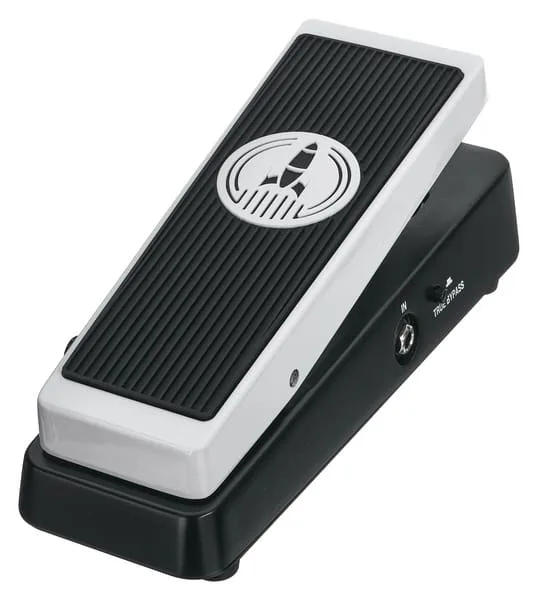
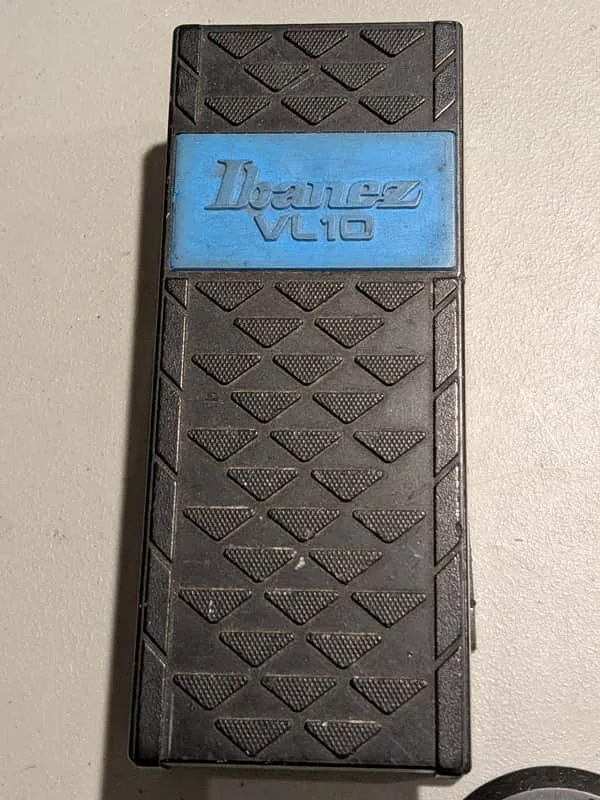
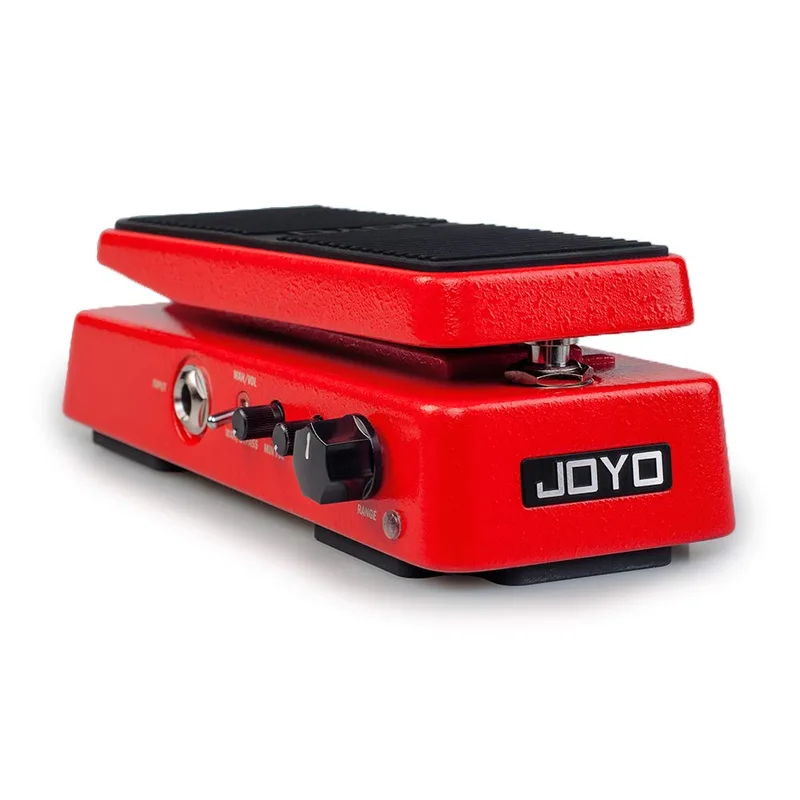
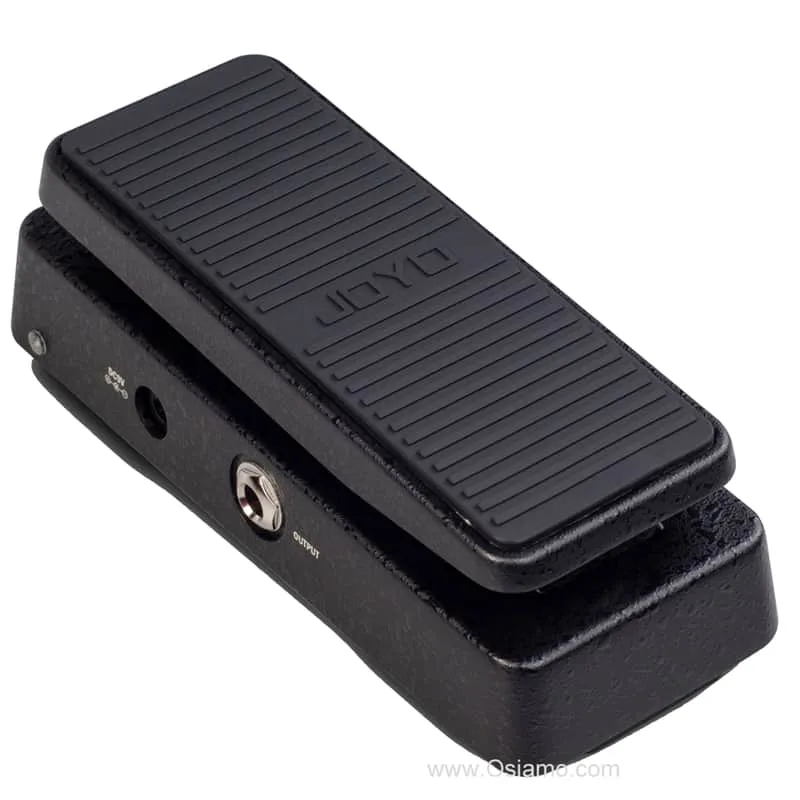
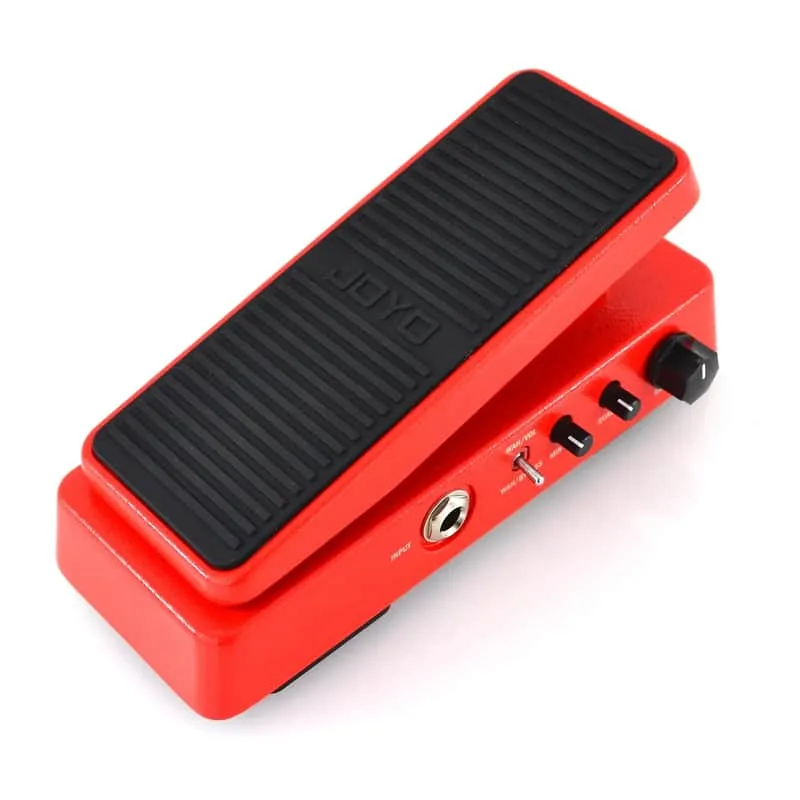
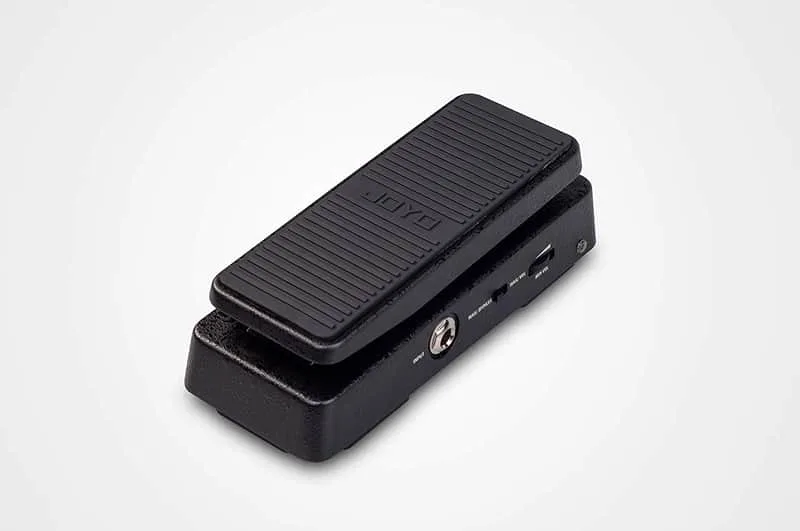
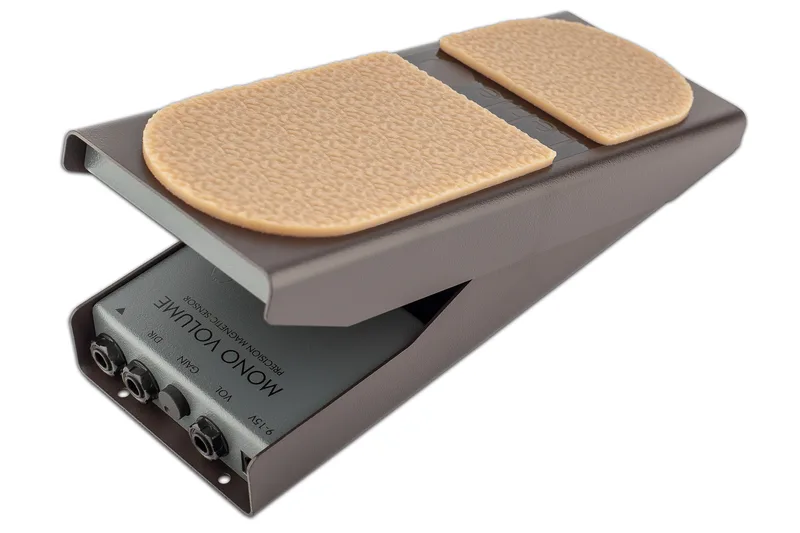


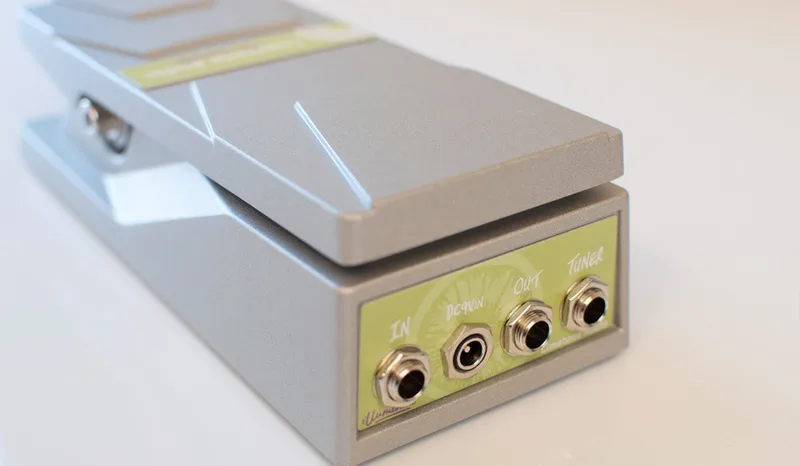
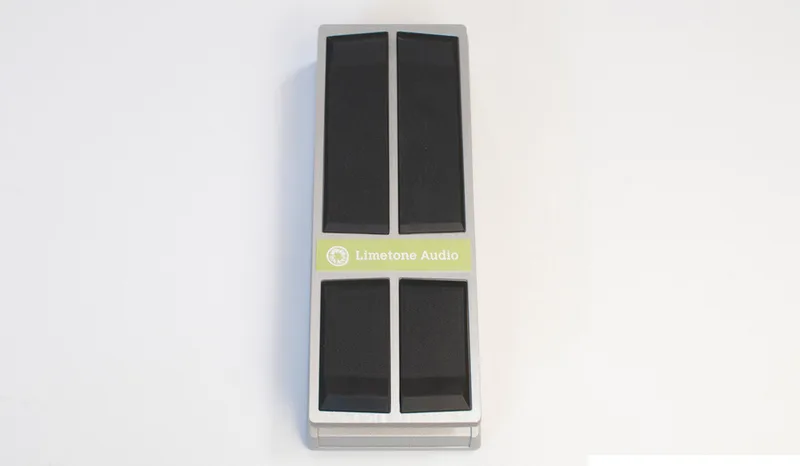
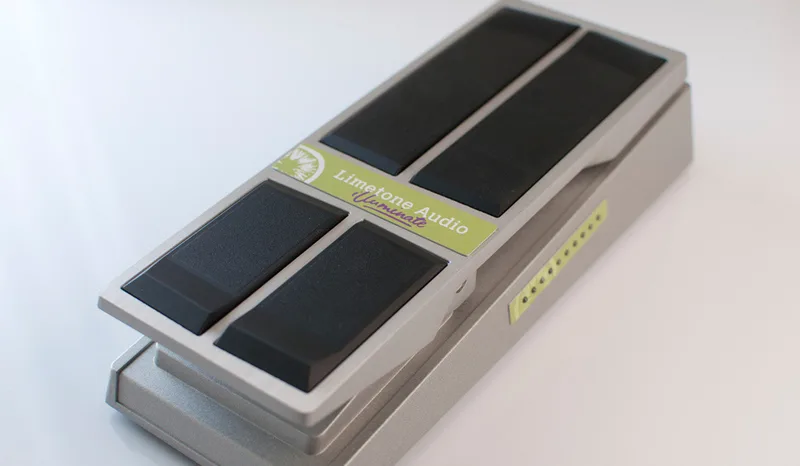
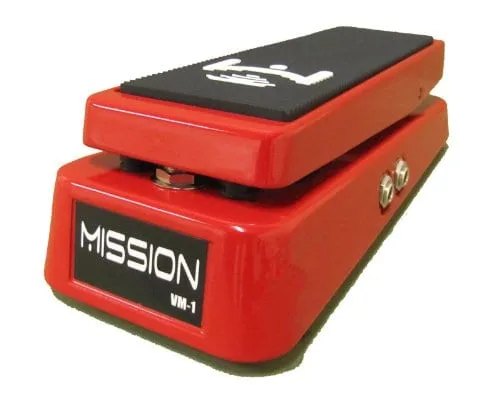
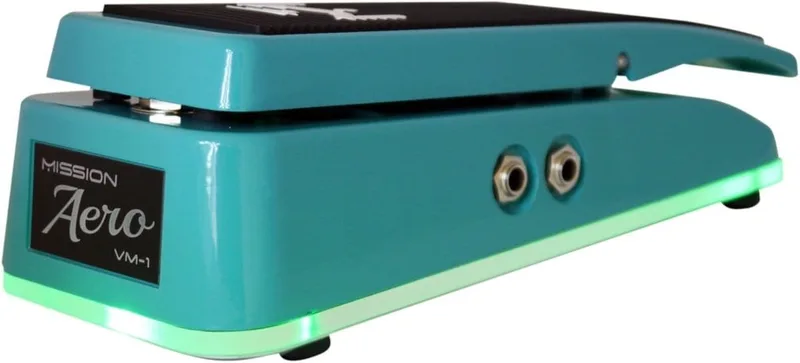
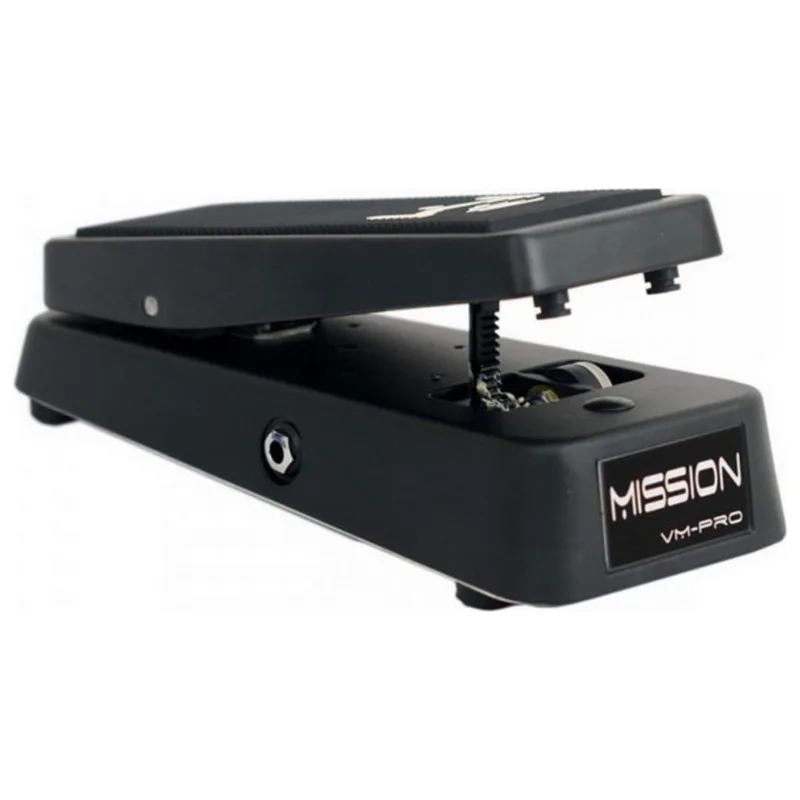
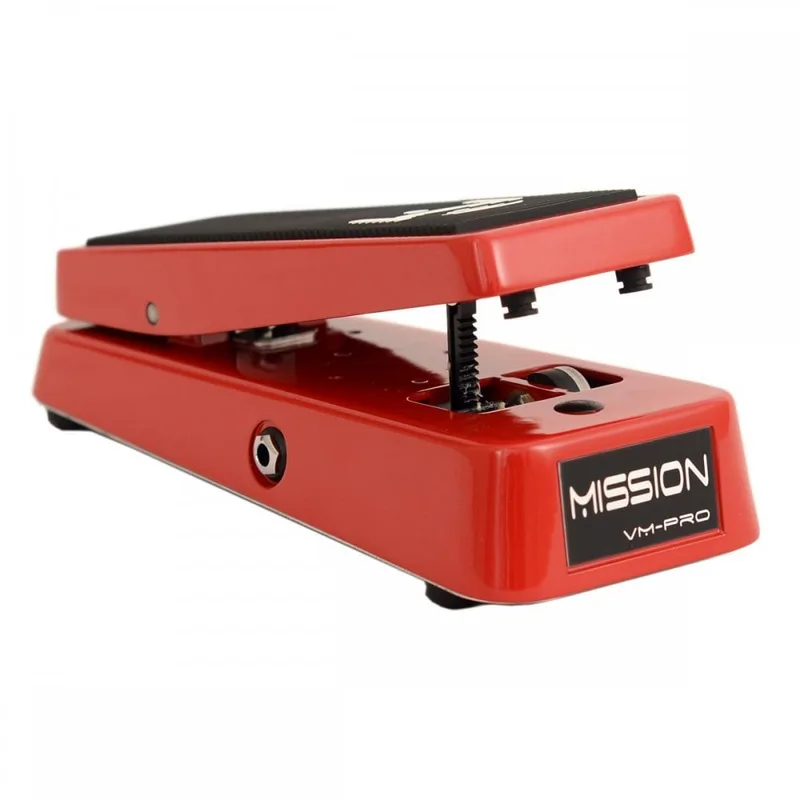
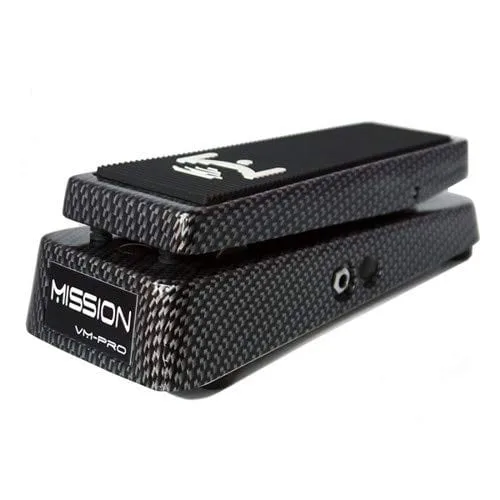
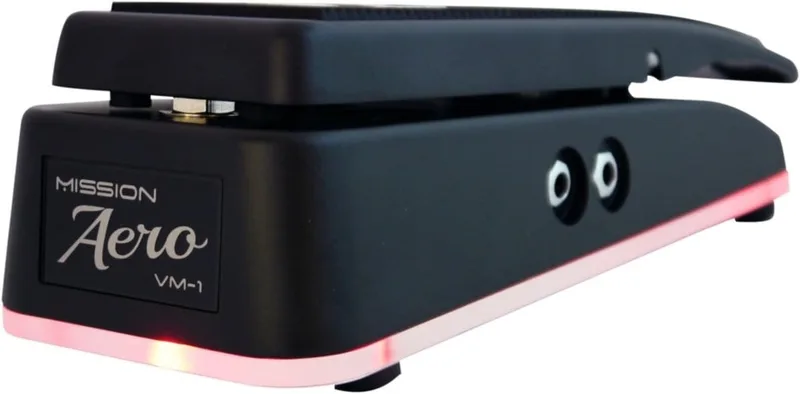
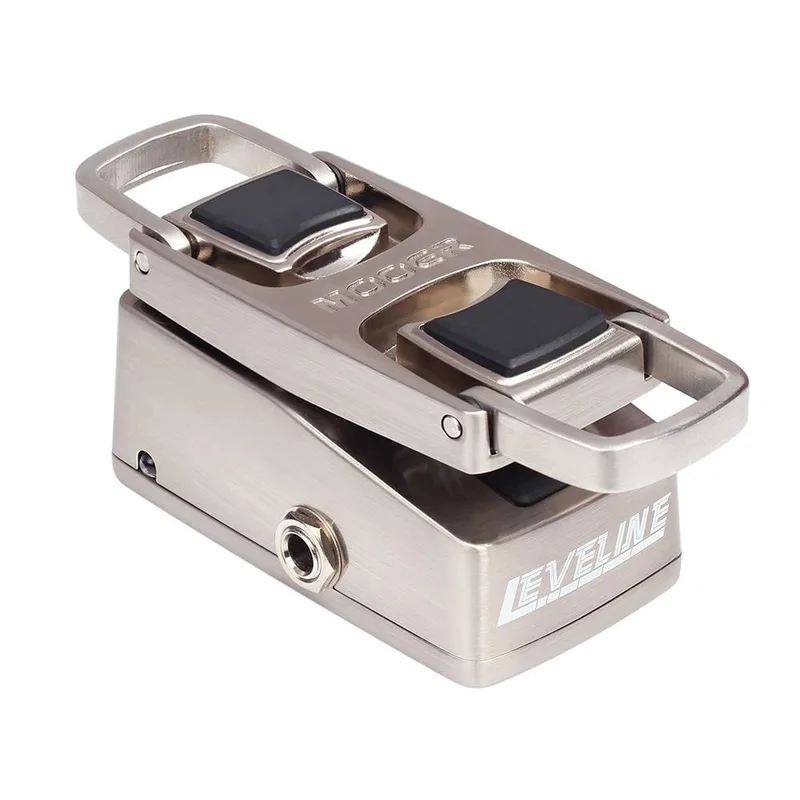
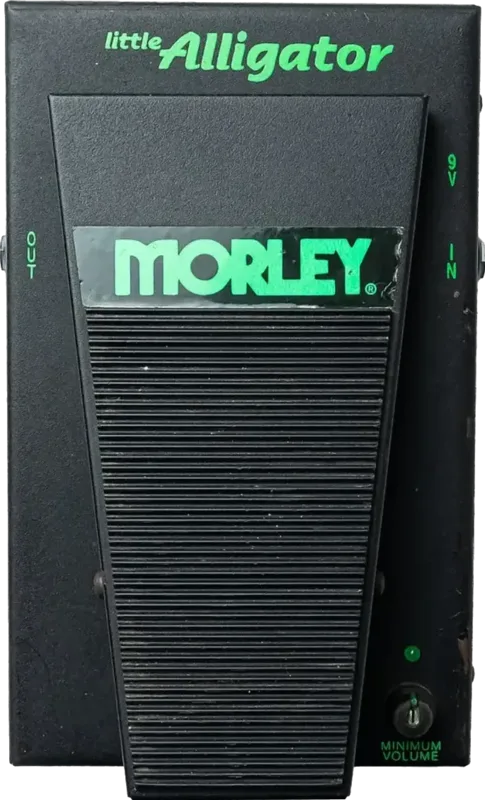
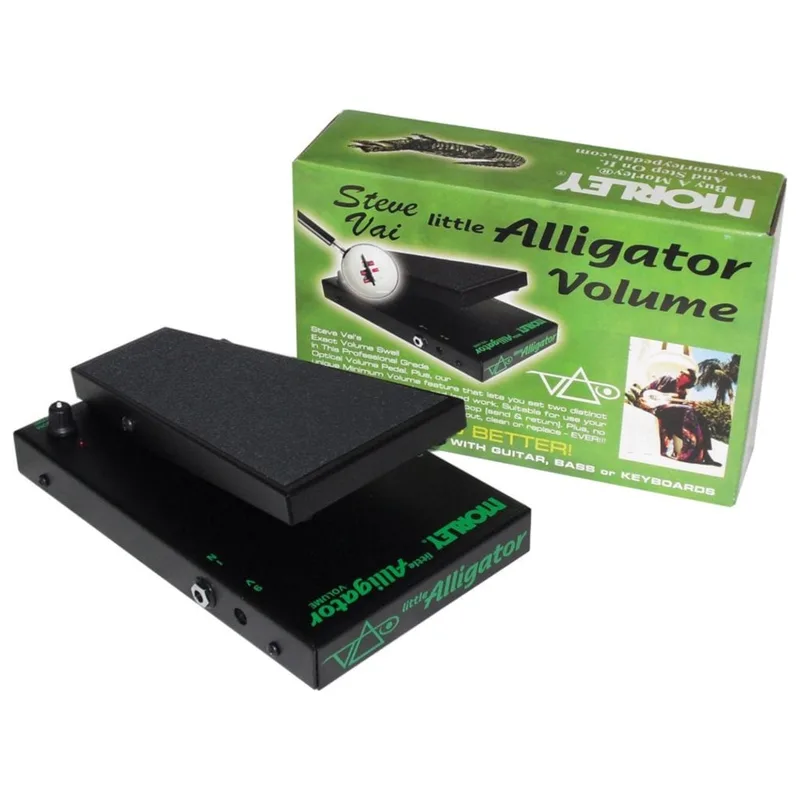
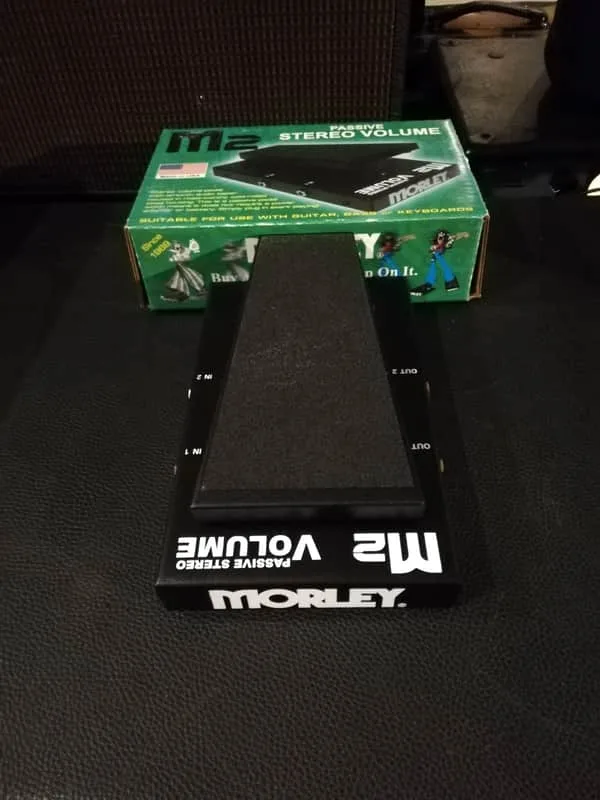
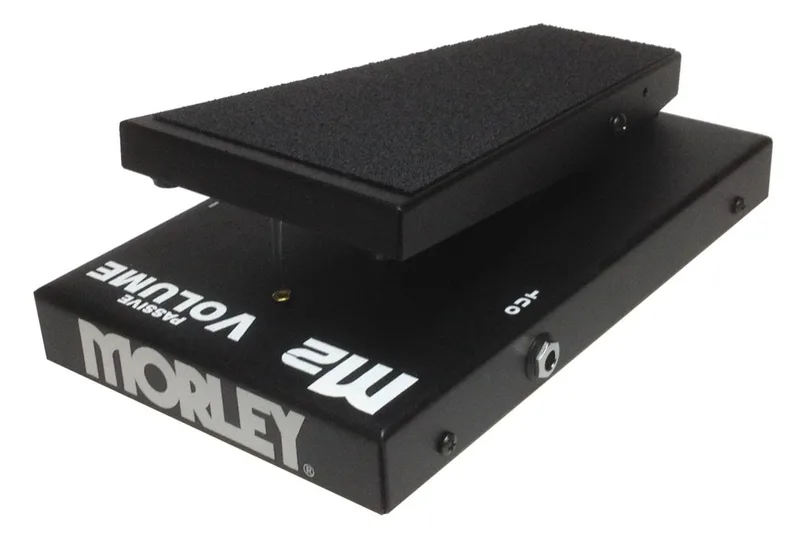
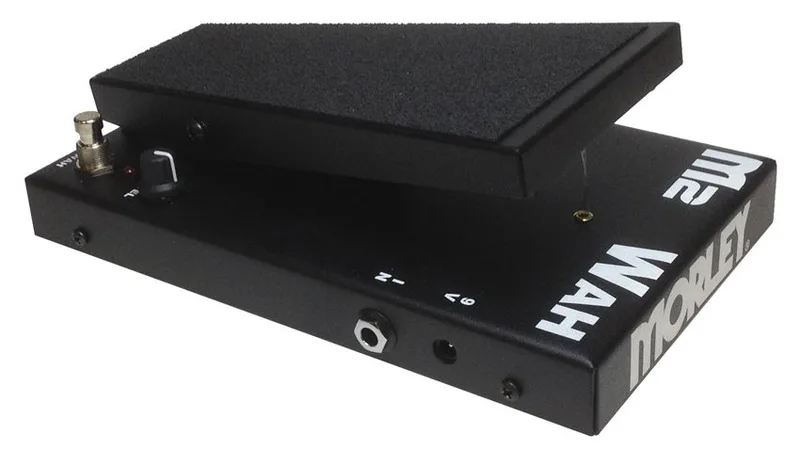
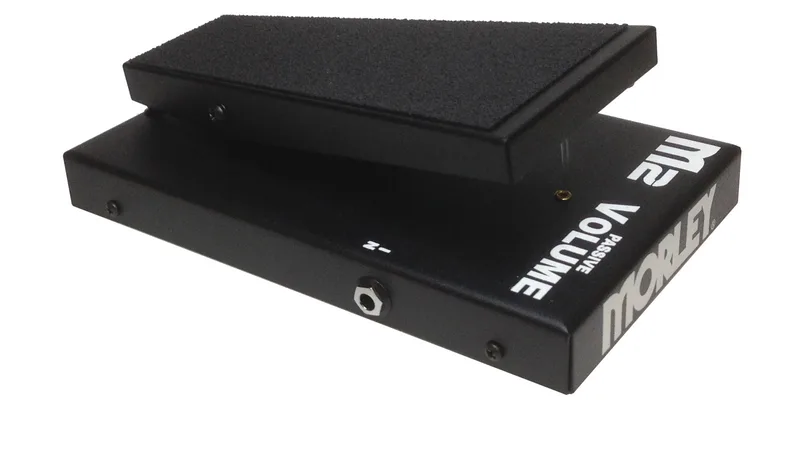
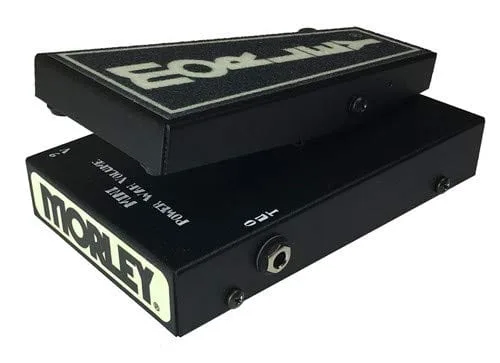
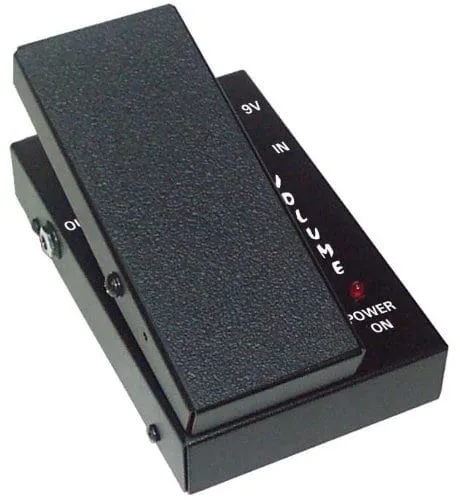
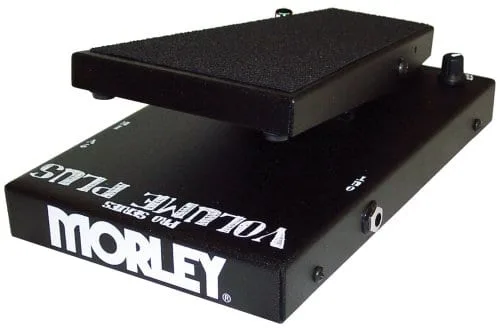
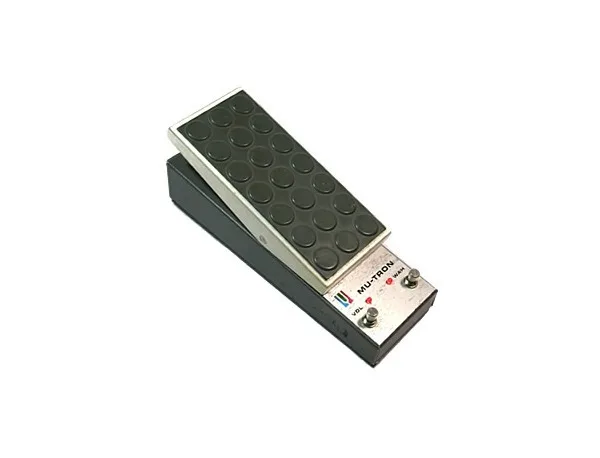
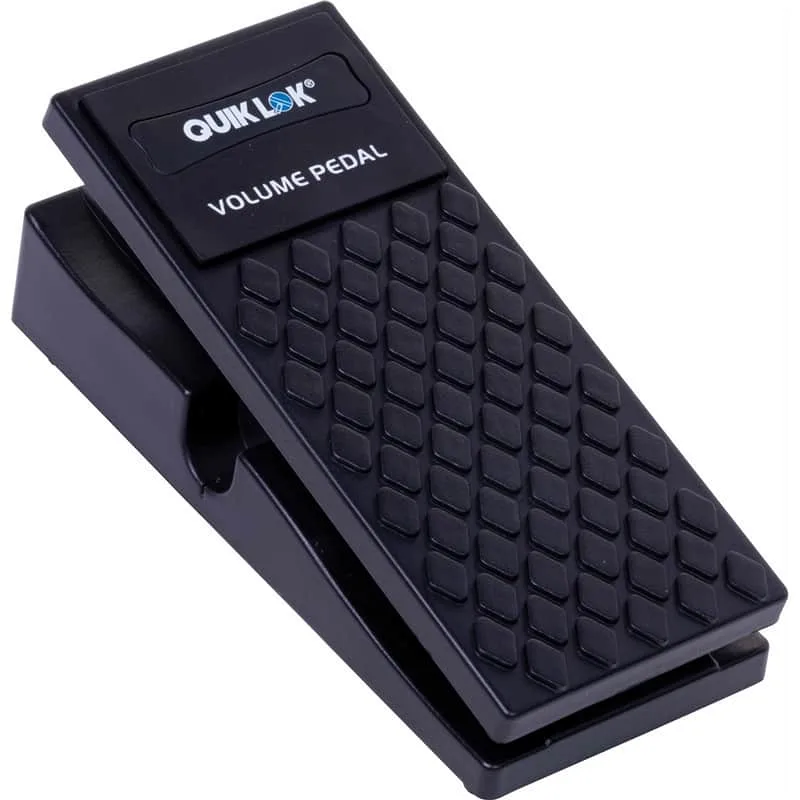
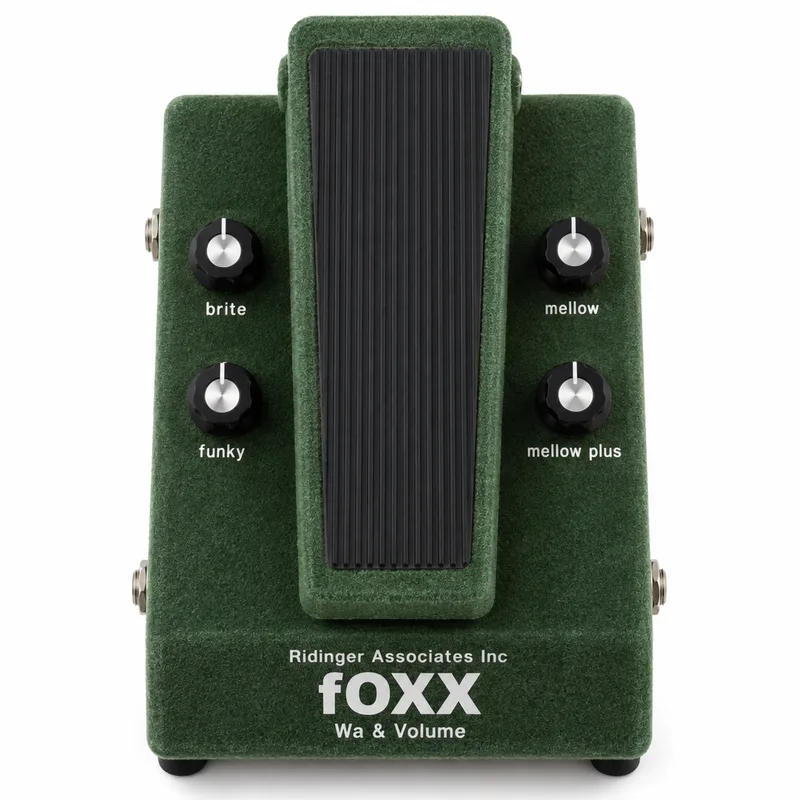
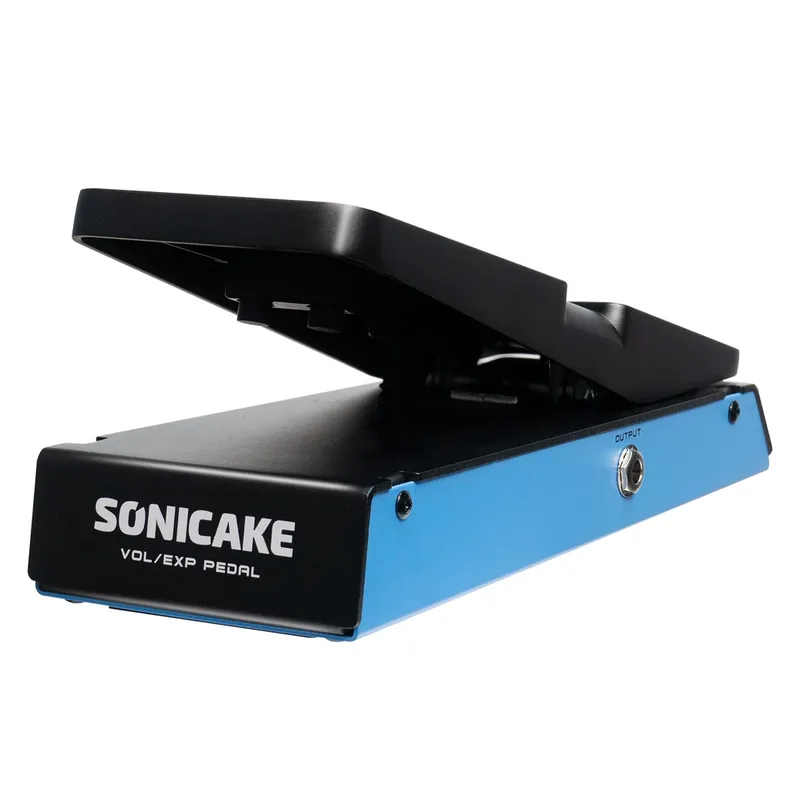
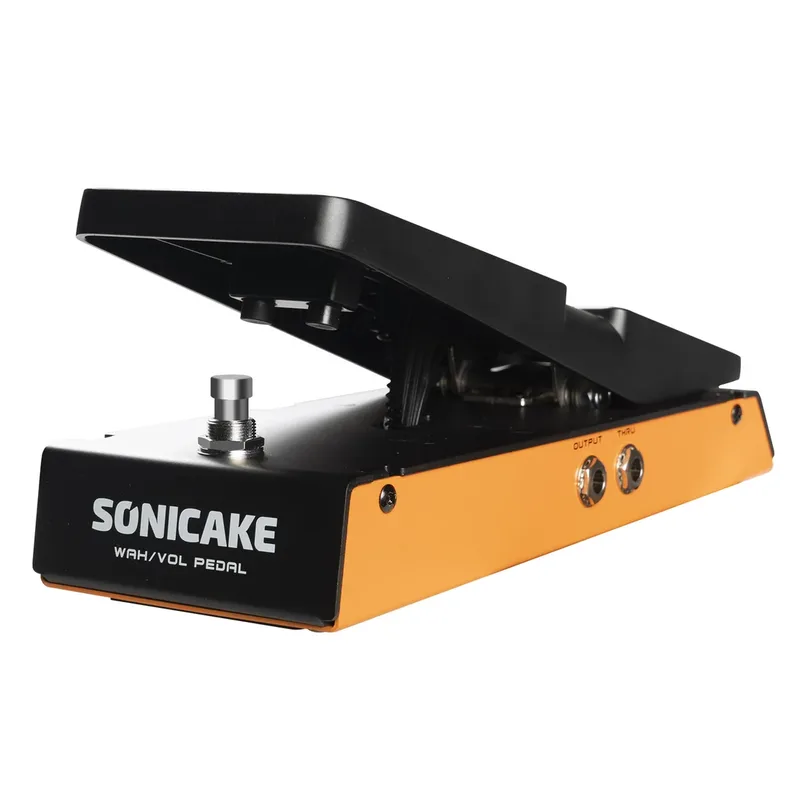
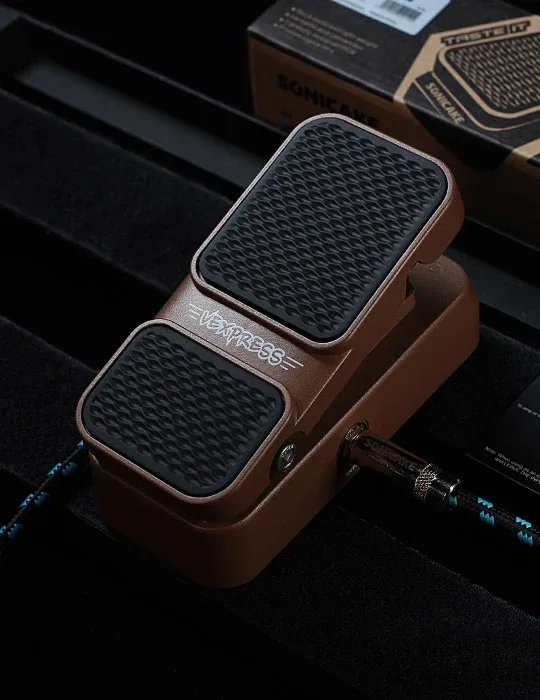
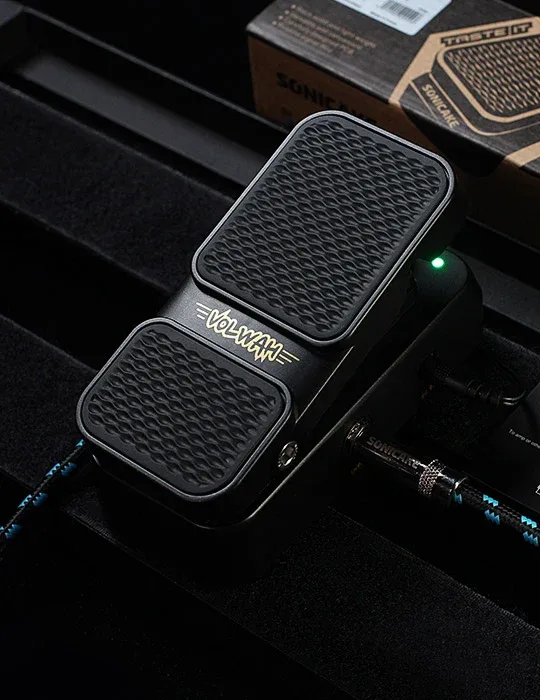
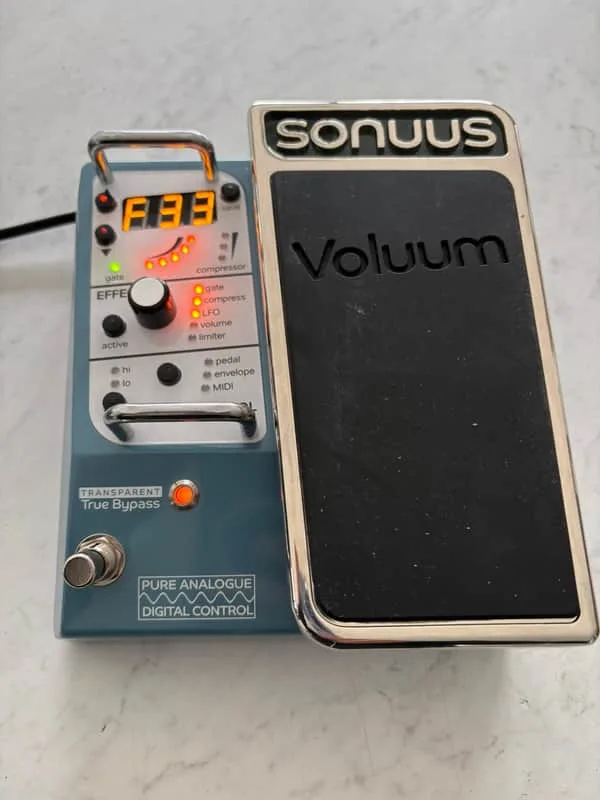
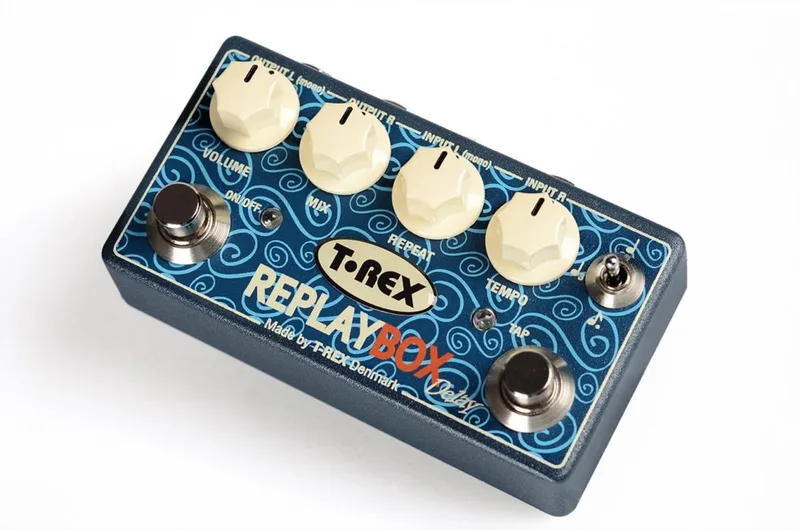
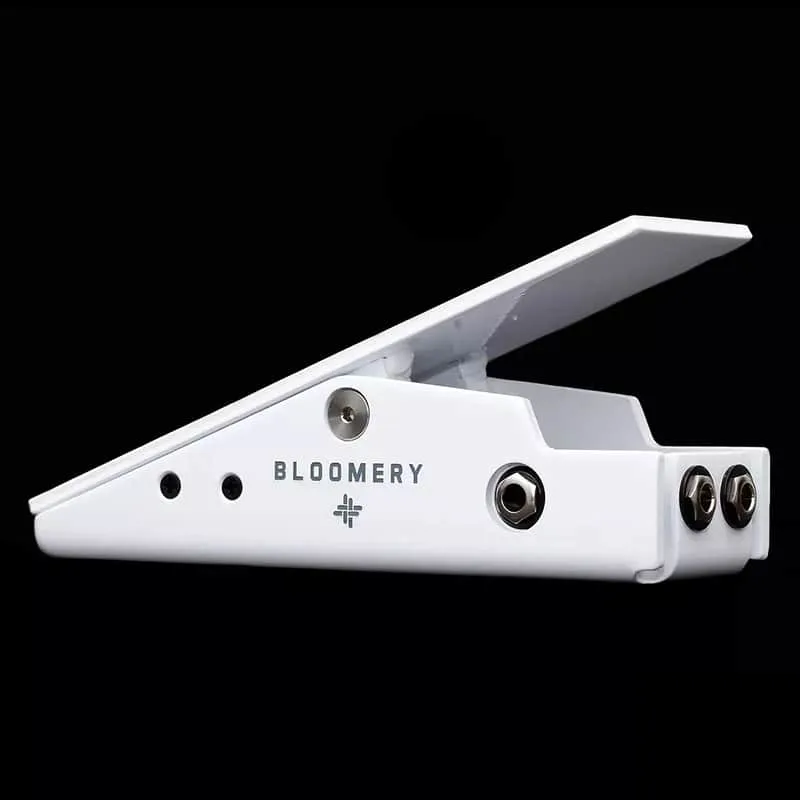
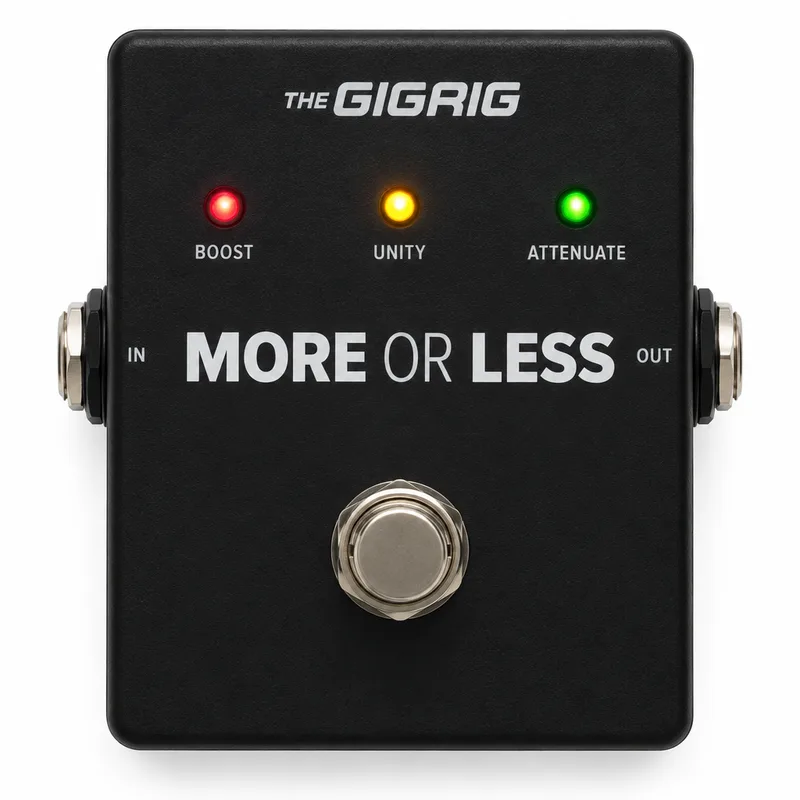
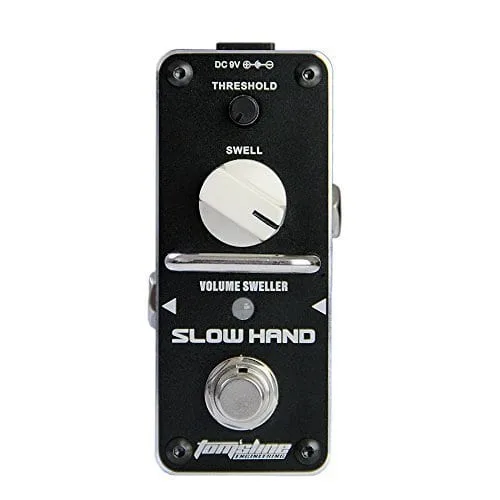
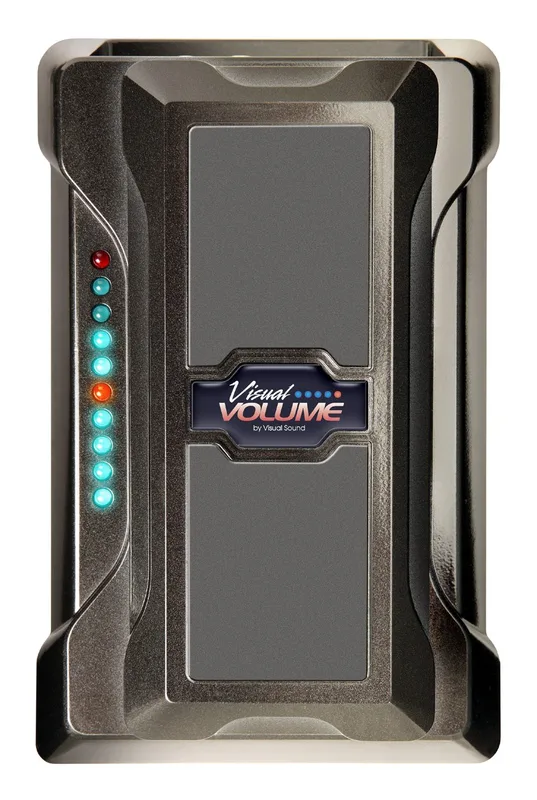
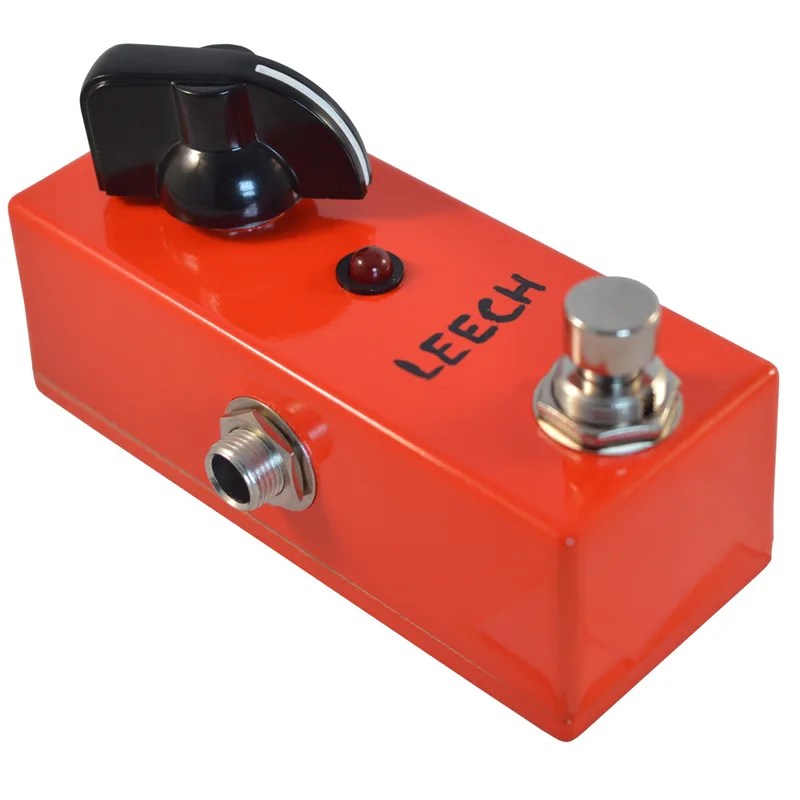
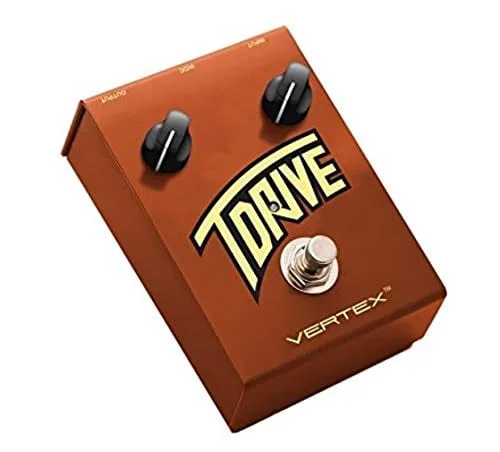
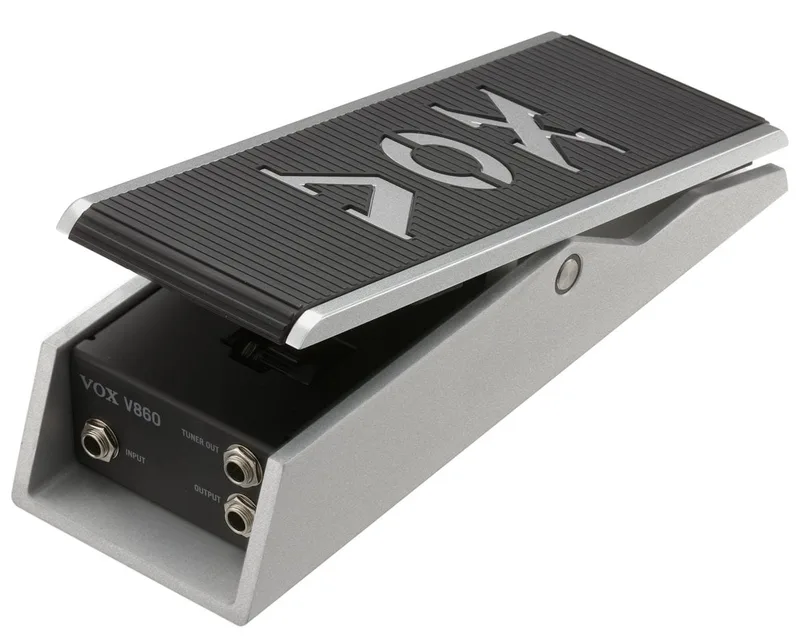
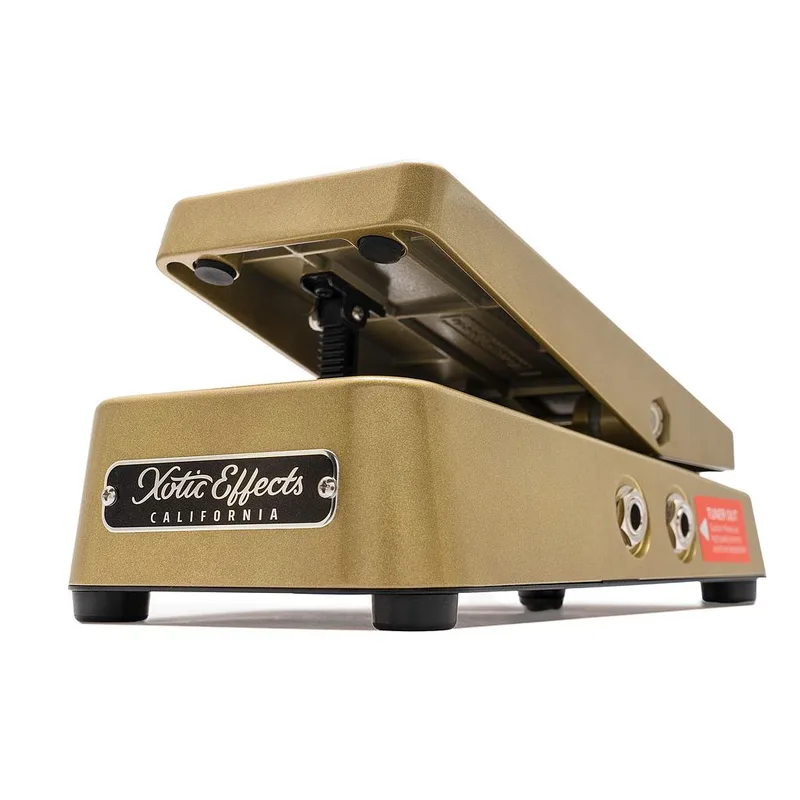
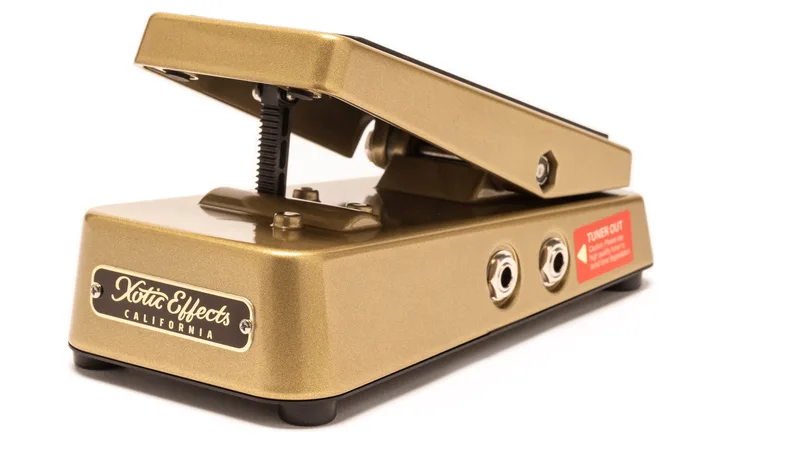
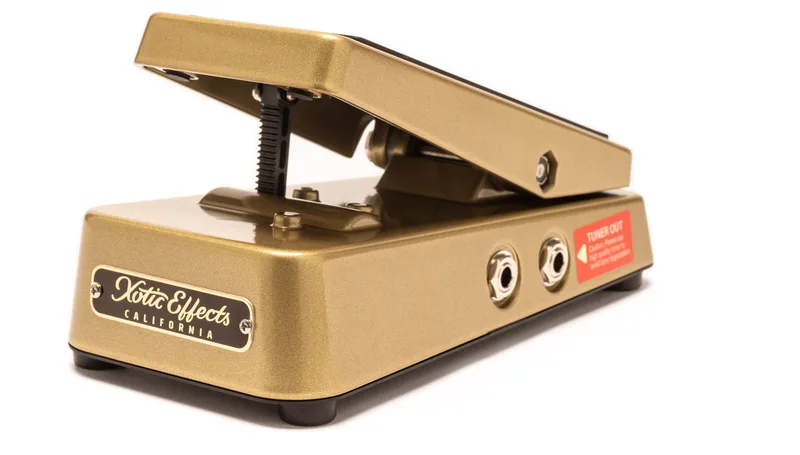
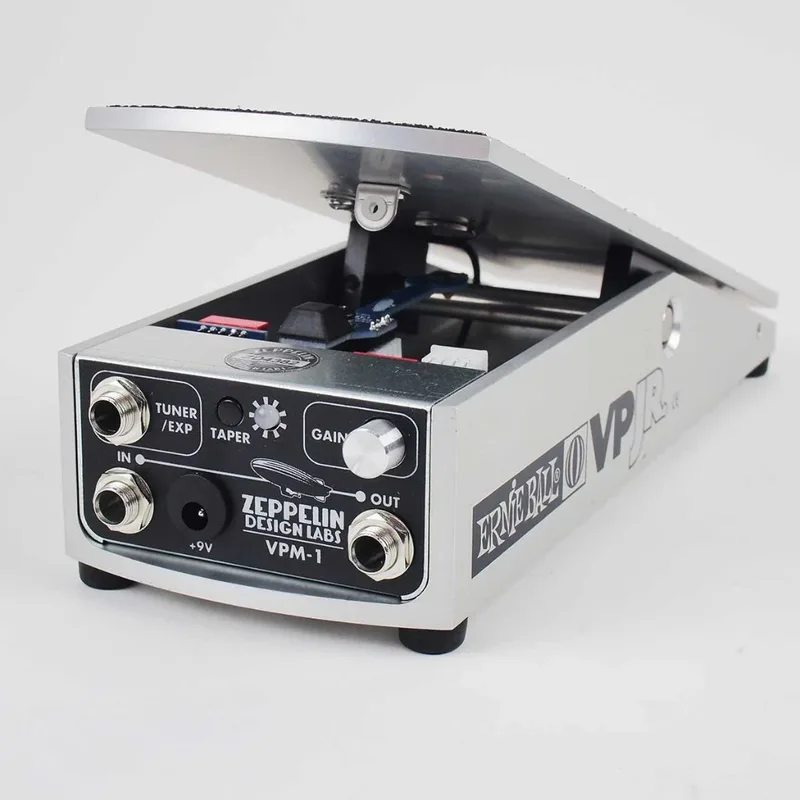
A volume pedal does one simple thing: it lets you control your output level with your foot while keeping both hands on the instrument1. Instead of reaching for the guitar's volume knob mid-phrase, you rock a treadle with your heel and toe and the level follows. Players use them to fade in swells, mute the guitar between songs without touching the amp, clean up an overdriven amp the way rolling back the guitar's volume does, or act as a master volume at the end of a big pedalboard.
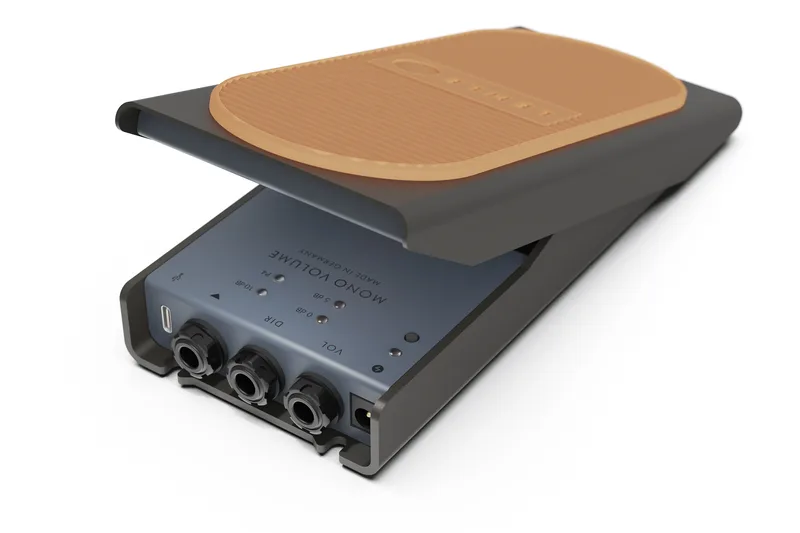
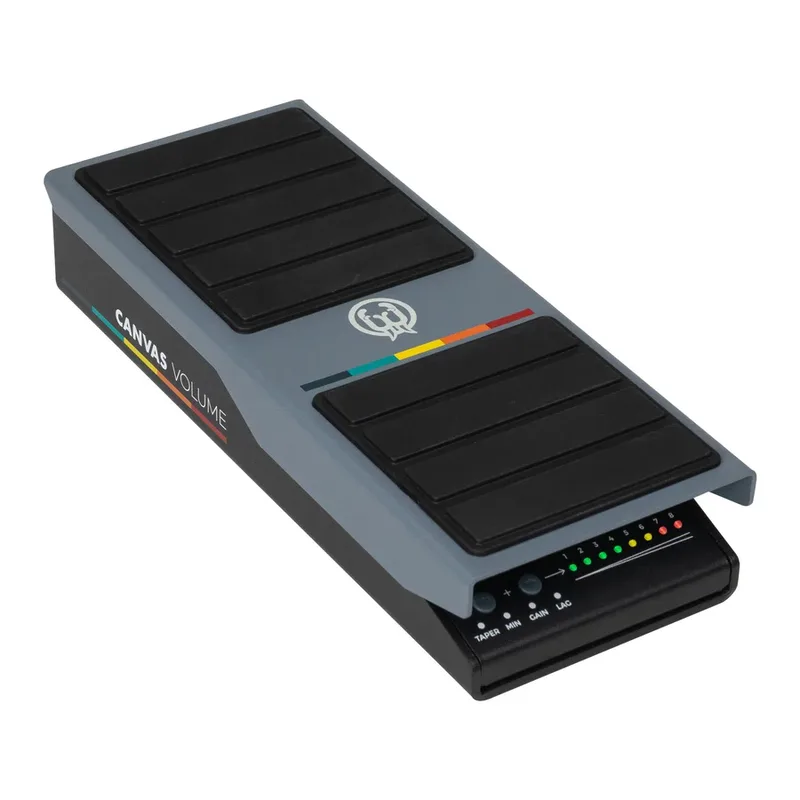
The type is broad. At one end sit simple passive rocker pedals like the Dunlop High Gain Volume and Bespeco VM10; at the other, powered units like the Walrus Audio Canvas Volume, built around a precision position sensor and high-quality VCAs (Voltage Controlled Amplifiers) with an all-analog signal path23. Between them are stereo models, compact micro pedals, and swell-specific pedals that raise the volume automatically.
What a volume pedal is
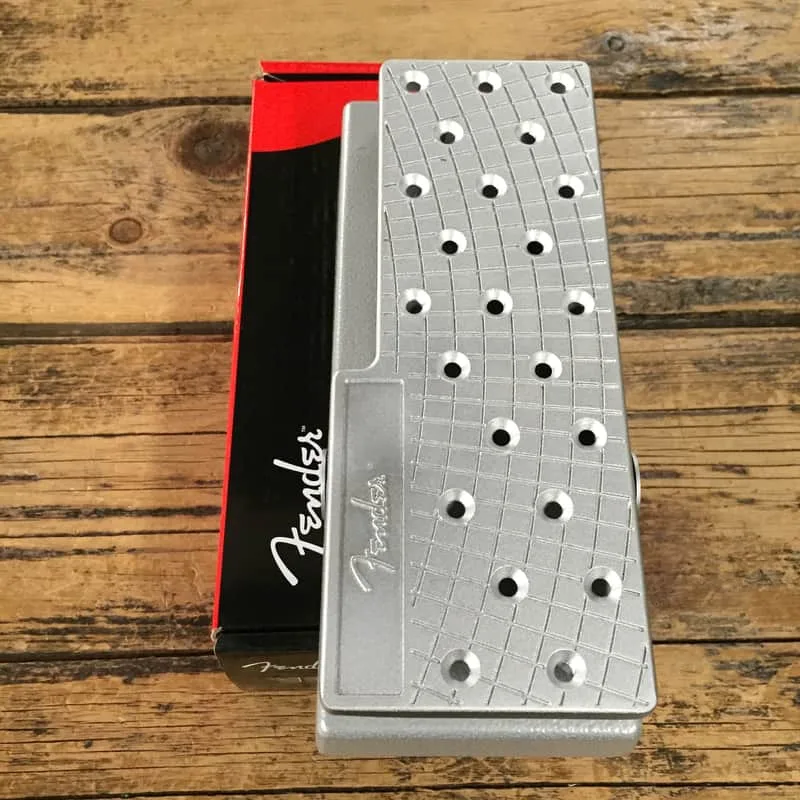
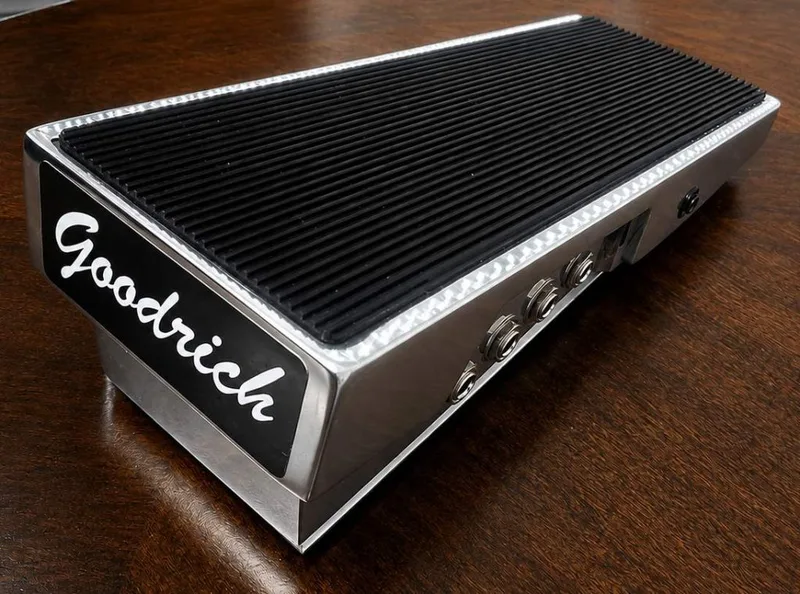
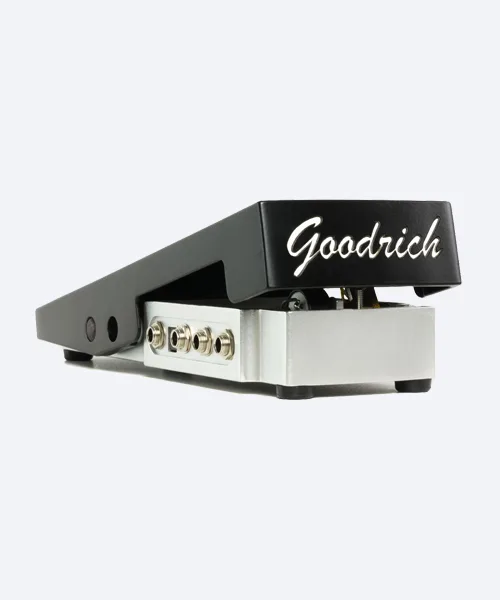
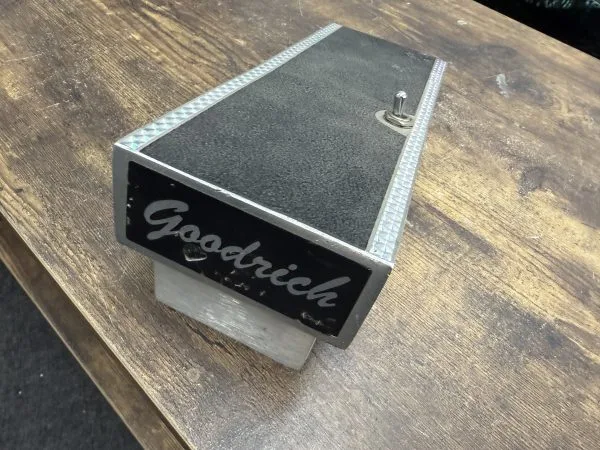
A volume pedal is a rocker or treadle that sits on the floor in your signal chain and varies the level of whatever passes through it. Goodrich Sound Company, a maker with a long history in the type, puts it plainly: "A volume pedal allows a musician to control output level with their foot while keeping both hands on the instrument"1.
The category includes a wide spread of hardware:
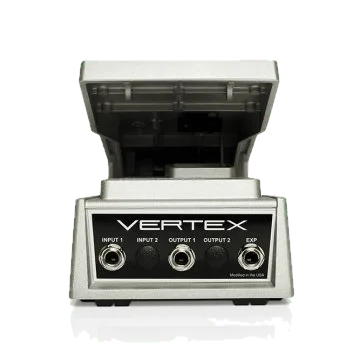
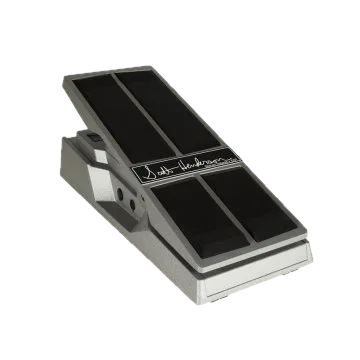
- Passive mono pedals for guitar, such as the Goodrich Classic67 and the Vertex Mono Volume Pedal7
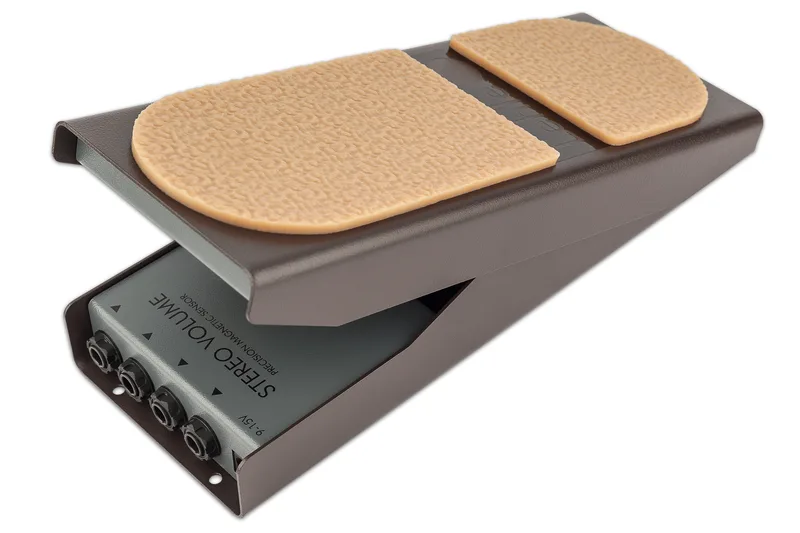
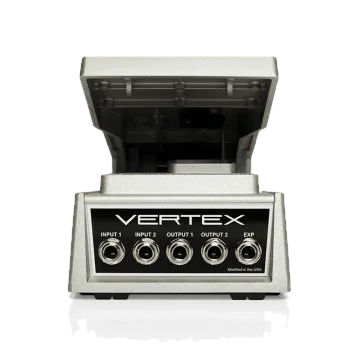
- Stereo pedals like the Vertex Stereo Volume Pedal8
- Keyboard-oriented pedals such as the Bespeco VM10L and Bespeco VM14L910
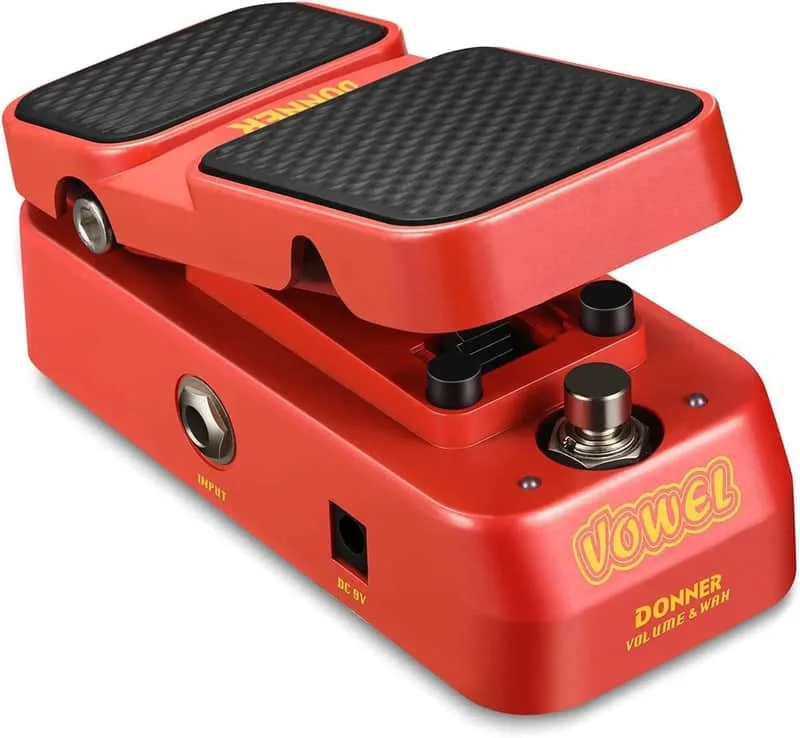
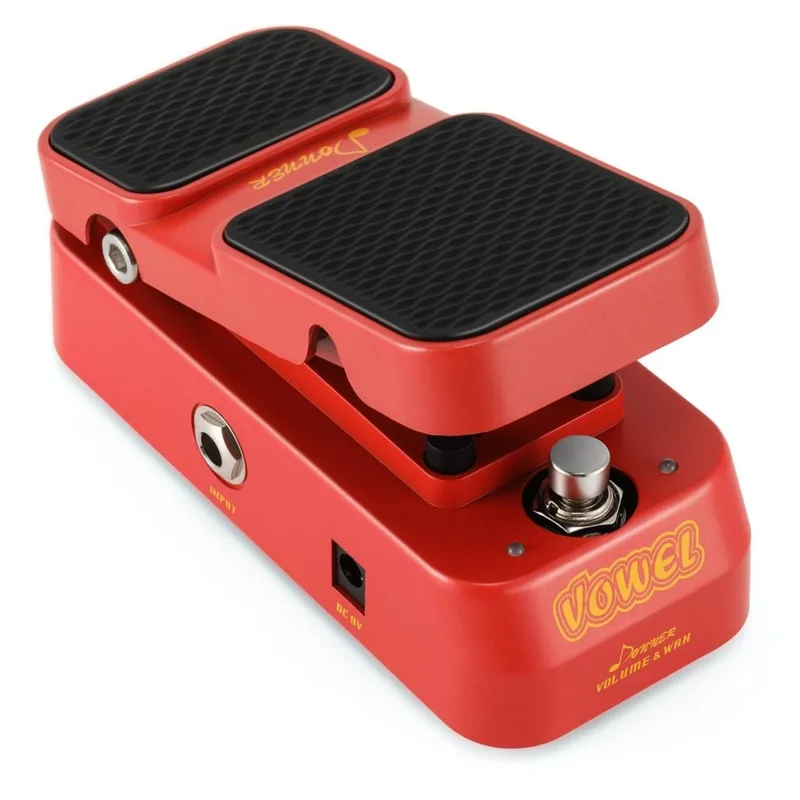
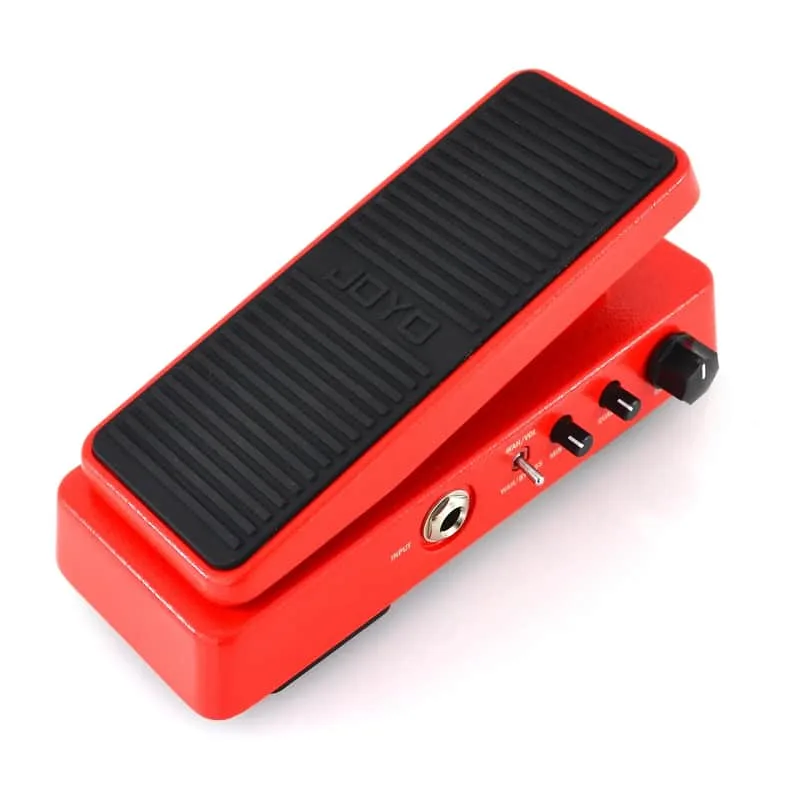
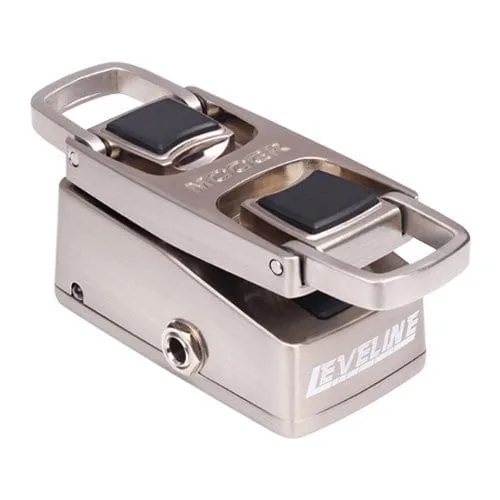
- Compact and micro pedals, like the Donner Vowel, whose small footprint fits a pedalboard11
- Powered pedals with extra features, like the Harley Benton Space Volume, which has a range knob to set your floor anywhere from silence to a +10dB boost12
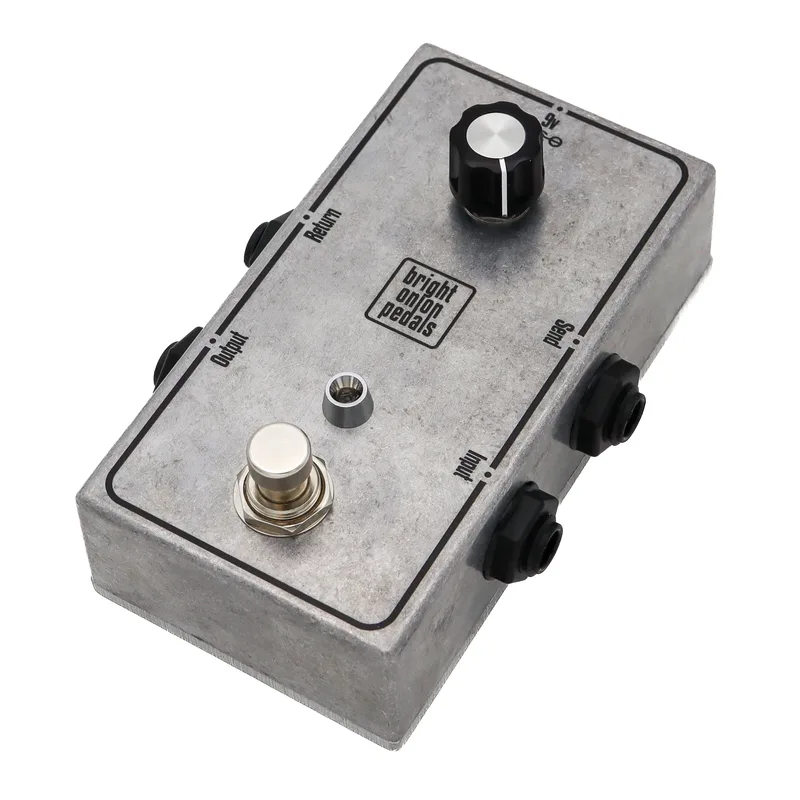
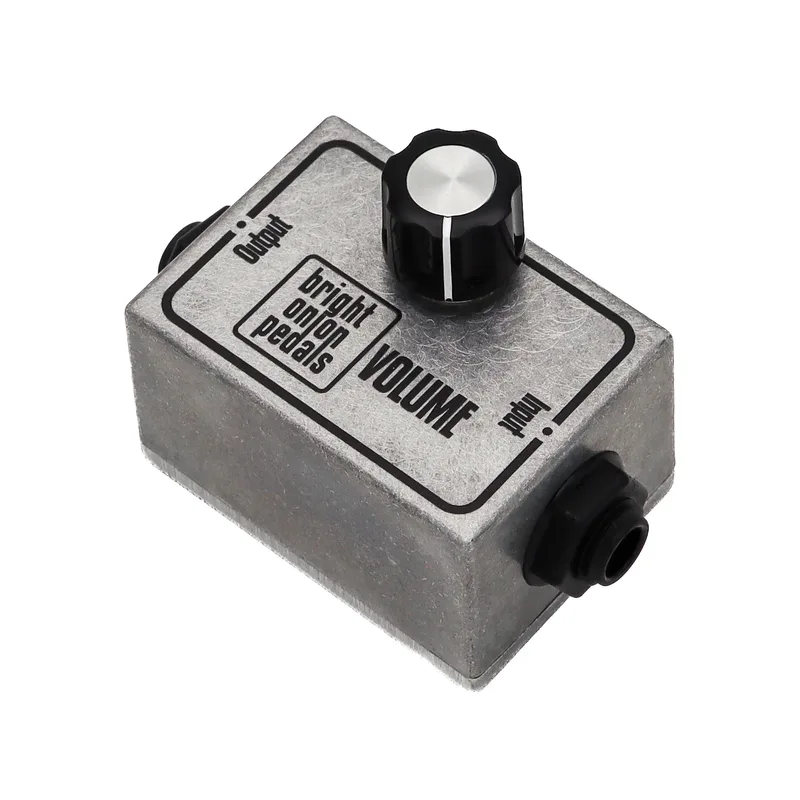
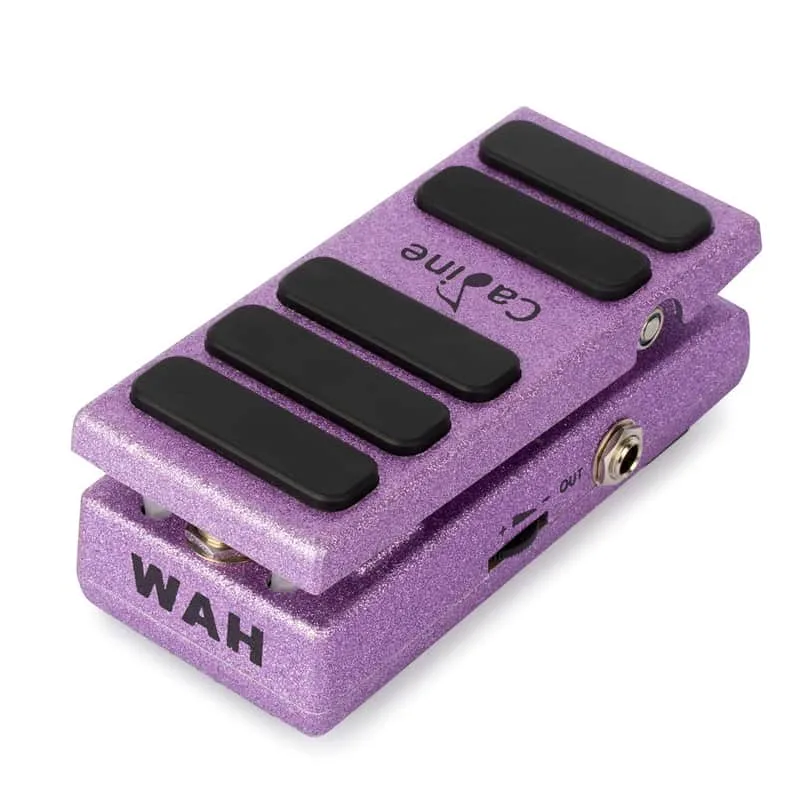
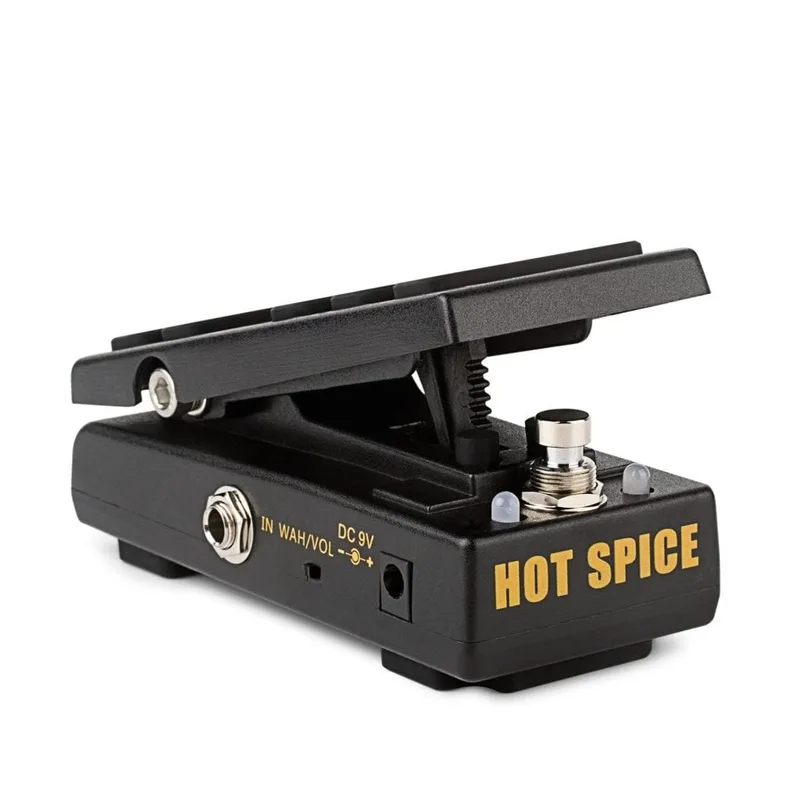
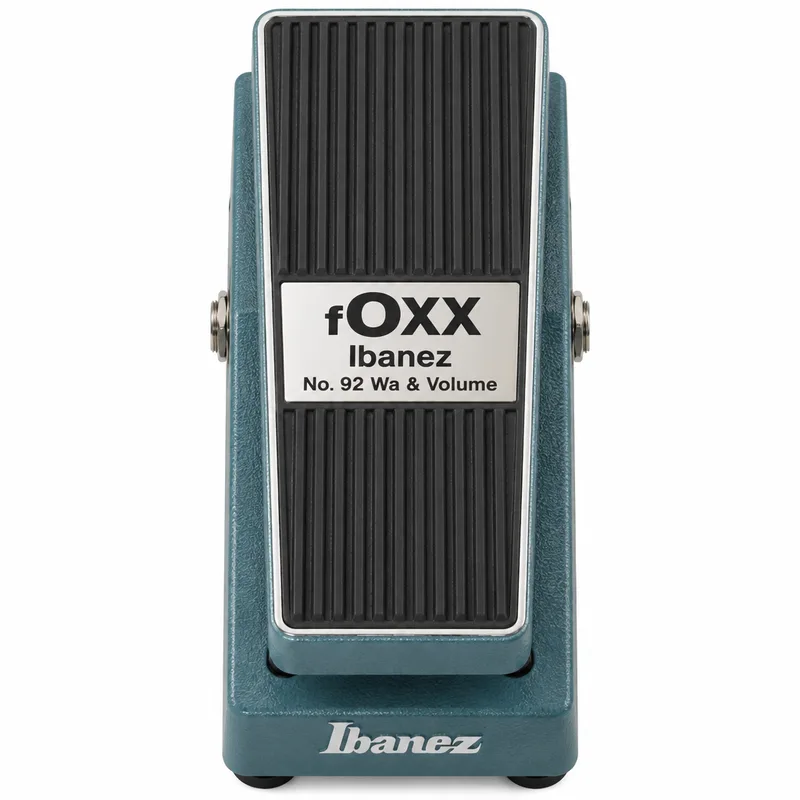
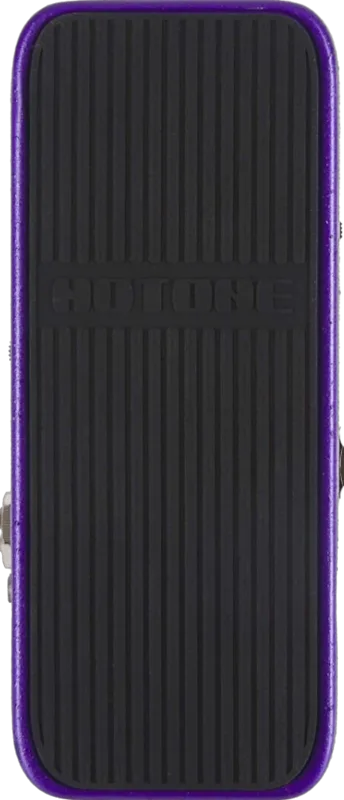
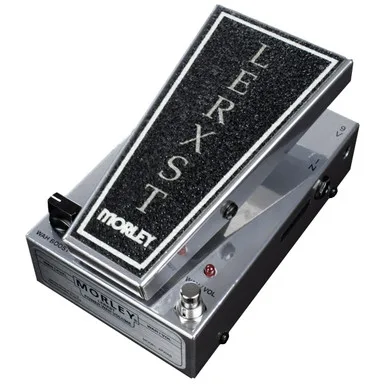
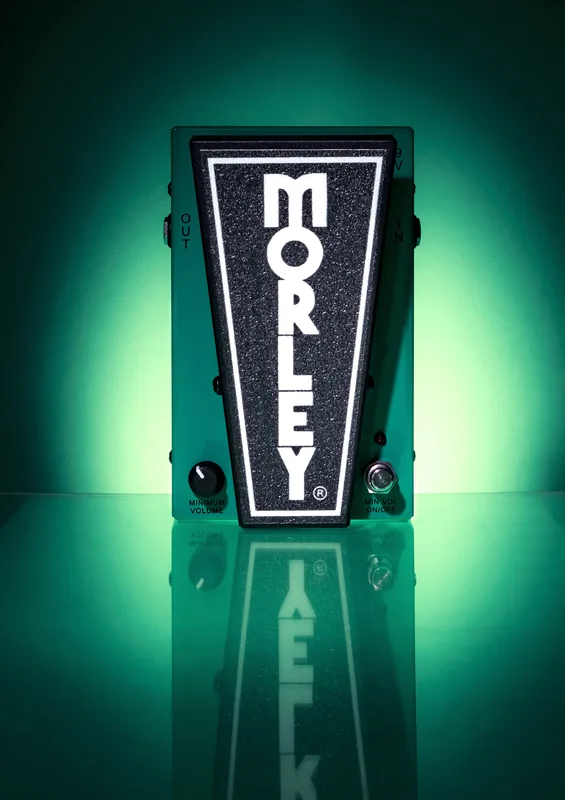
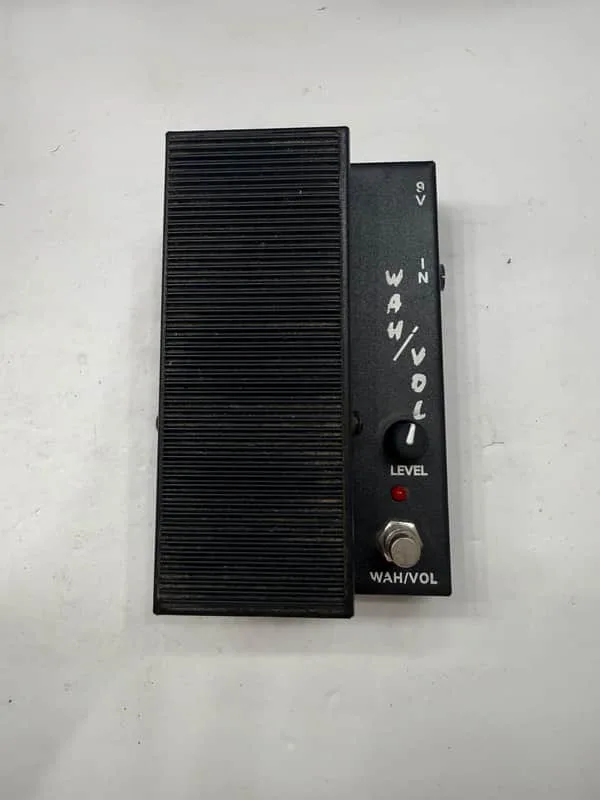
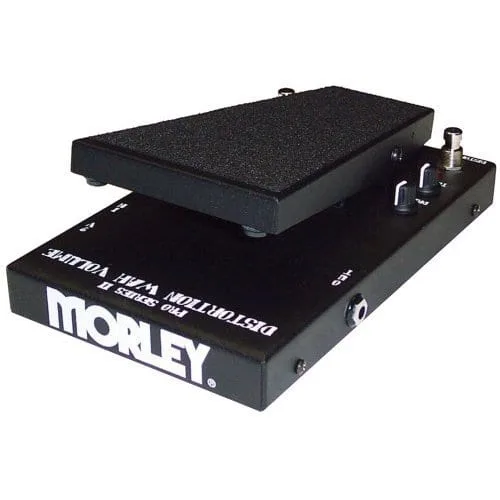
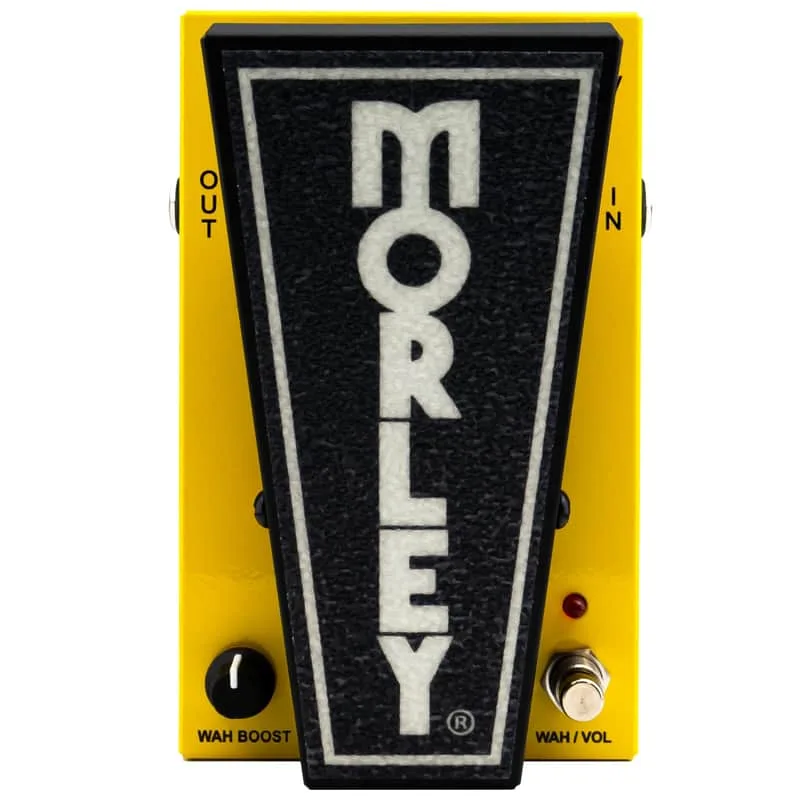
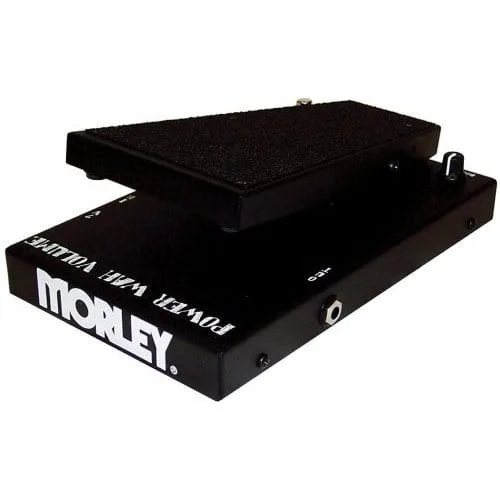
Some pedals combine volume with another function. The Morley Power Wah Volume and Morley Mini Wah Volume put wah and volume in one treadle, and the Hotone Soul Press II is a volume, wah and expression pedal in one. There are also non-treadle options: the Asheville Guitar Pedals Master Volume Box Attenuator is a knob-based volume box, and MAS Effects makes a Volume + Expression Slider that works from a desktop or mic stand13.
How a volume pedal works
Passive pedals: a potentiometer and no power
Most volume pedals are passive. Inside, a potentiometer (a variable resistor, the same component as your guitar's volume knob) is turned by the treadle. Goodrich explains the mechanism: "As the pedal moves under your foot, the potentiometer changes how much signal is sent to the amplifier and how much is reduced to ground"14. Toe-down sends the full signal on; heel-down dumps it to ground, which is silence.
Because there is no circuitry, "passive volume pedals use a potentiometer to control signal level and require no power source"1. That is the appeal: no battery, no power supply, nothing to plug in besides your cables.
The trade-off is loading. A passive pedal interacts with the pickups and the cable around it, which is why passive models come in different pot values. Saturnworks, for example, sells its compact and micro volume pedals in 500k, 250k, 100k, 25k and 10k versions, plus stereo versions from 250k down to 10k15. The rule of thumb among makers is that higher values suit passive pickups and lower values suit active electronics or effects loops, though the choice also affects how the pedal's taper feels.
Active pedals: buffering and electronics
Active volume pedals add powered circuitry. "Active volume pedals use onboard electronics to maintain signal strength and consistency throughout the pedal's travel"1. Goodrich describes the benefit in terms of the whole rig: active pedals "use onboard buffering and active circuitry to maintain signal strength and clarity," and models like the Goodrich H-10K and L-10K "help reduce high-frequency loss from long cable runs, large pedalboards, or multiple effects"4.
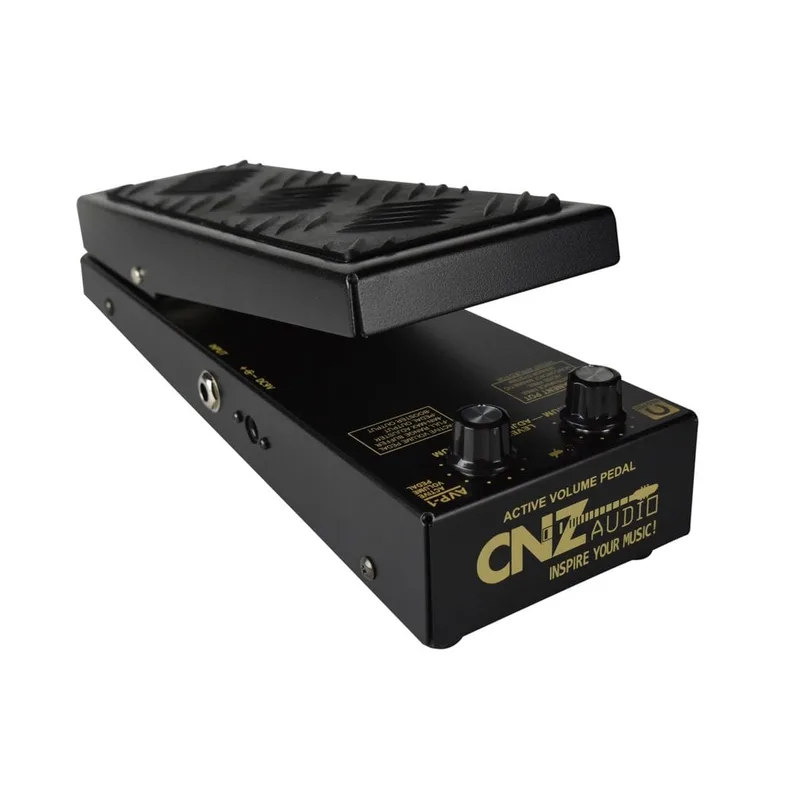
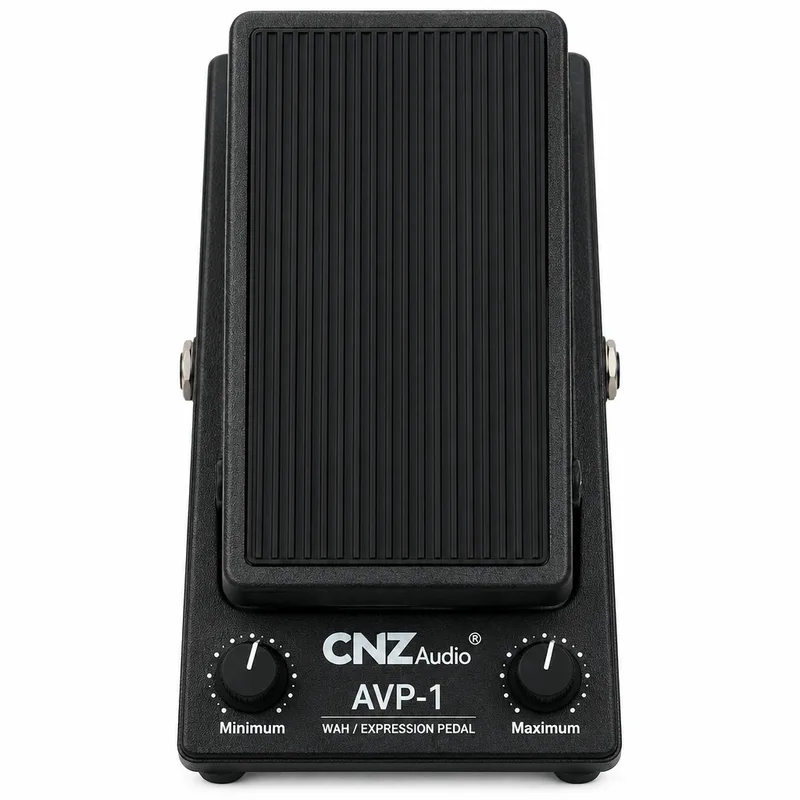
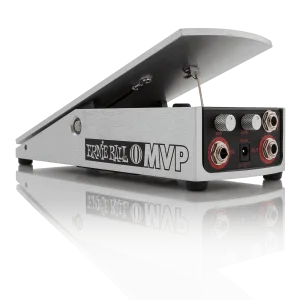
For a player with a long cable run or a crowded board, that is the practical difference: a passive pedal can dull the top end in some setups, while an active one holds the signal intact. The cost is a power requirement and, usually, a higher price. The Ernie Ball MVP, CNZ Audio Active Volume and Saturnworks Active Volume are examples of the active approach1415.
A third approach avoids the potentiometer entirely. The Walrus Audio Canvas Volume is "built around a precision position sensor and high-quality VCAs (Voltage Controlled Amplifiers)" with an all-analog signal path2: the treadle position is measured electronically and a voltage-controlled amplifier does the level change, which removes the pot's loading and wear issues.
Volume swells: from pedal steel to ambient
The volume swell is the technique most associated with this pedal type. By raising the volume as a note sounds, you mask the pick attack and the note seems to bloom out of nothing. Pedal steel players built their playing around foot volume control, and the technique carried into ambient and post-rock guitar, where swells into reverb and delay create pads that no longer sound like a plucked string.
You can swell with any volume pedal by rocking from heel to toe as you pick. Some pedals are designed around the technique:
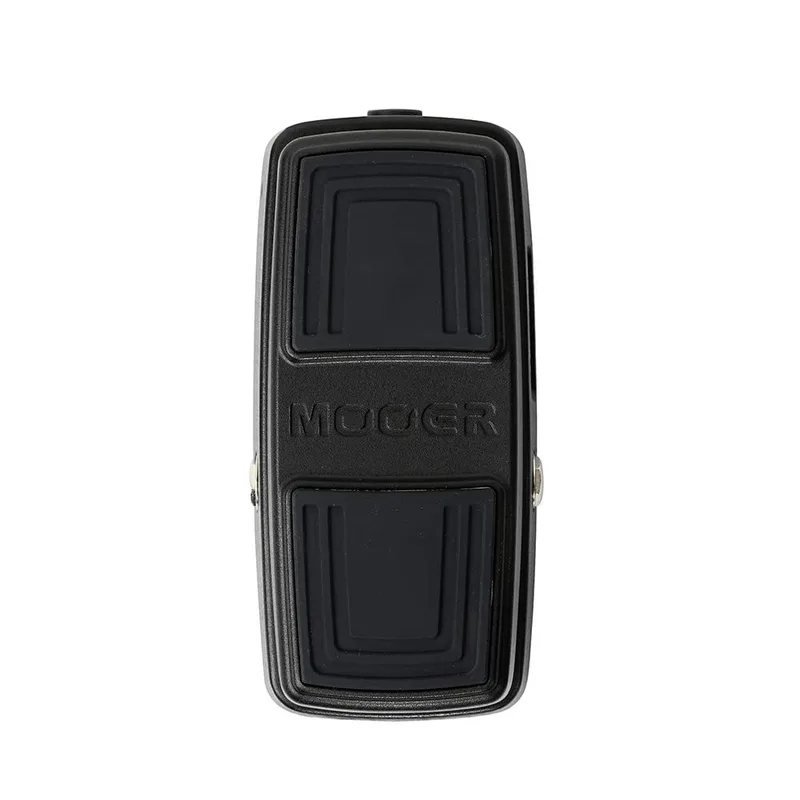
- The Harley Benton Space Volume is "built for silky-smooth swells, with a range knob to set your floor anywhere from silence to a +10dB boost"12, so the heel position can be silence or a set minimum level.
- The MOOER Slow Engine is a swell pedal that does the work for you, cutting the sound's attack the way a guitarist using the volume knob would16.
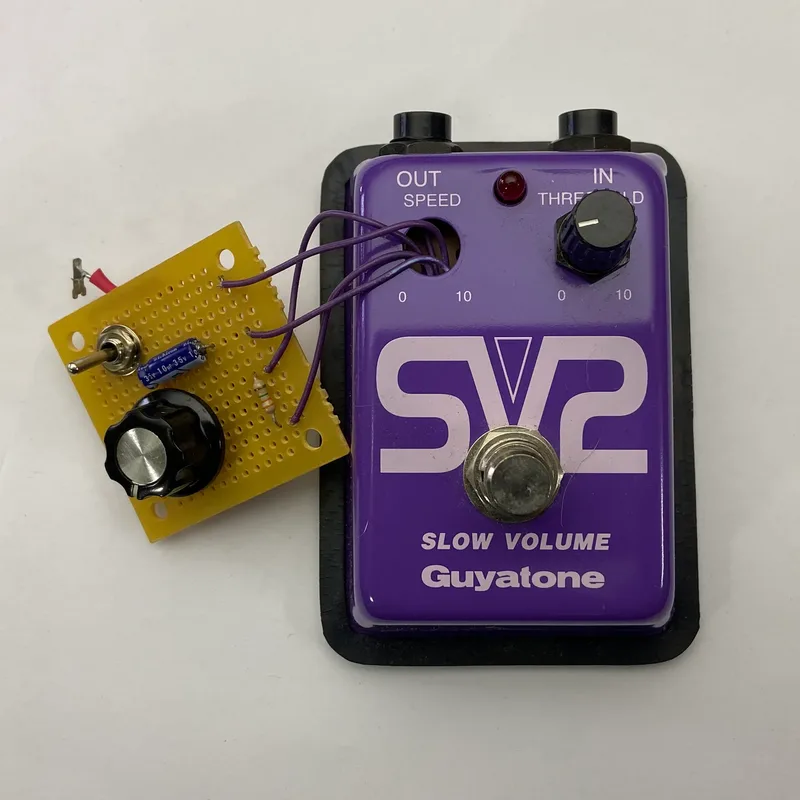
- The Guyatone SV2 Slow Volume is a voltage-controlled, envelope-controlled volume pedal that swells automatically; Godlyke notes it "works best when placed at the front of a signal chain"17, and modified units are sold with an even longer swell time17.
- The VFE Bumblebee is a swell pedal whose LEVEL control "sets the amount of gain in the output section," because "as a swell pedal, a master volume/boost is critical to creating the perfect swell and avoiding volume drops"18.
The Alexander Pedals Rewind takes the idea into digital territory: its DYNAMIC engine is a "clean digital delay with a flexible audio gate and swell generator," with a MODE control selecting gate or swell functions19.
Volume, expression and swell pedals
A volume pedal and an expression pedal look identical on the floor but do different jobs. A volume pedal passes your audio through it and changes its level. An expression pedal passes no audio: it outputs a control signal that another pedal reads, so you can change a delay's feedback, a pitch shifter's interval or a reverb's decay with your foot.
The distinction matters for compatibility. The Neunaber Expanse manual warns that its expression inputs "work only with TRS-plug 'expression' pedals, not TS-plug expression or 'volume' pedals"20: a plain passive volume pedal with a two-conductor TS plug will not drive it. MAS Effects sells its Expression Slider as an expression pedal only, with no volume control13.
Several pedals do both. Dunlop's Volume (X) line is marketed as exactly that: "The Volume (X) Pedal controls volume and FX parameters," letting you "create incredibly smooth volume swells or control your effect pedal parameters"21. The DVP3 manual describes it as a pedal to "control your volume levels or effects pedals with exacting precision"22, and the DVP5 Volume (X)8 manual says you can "step on this pedal to create incredibly smooth volume swells or control your favorite FX parameters"23. Bespeco's VM18LU is likewise listed as a "volume and expression pedal"5. On these, a switch or internal setting routes the treadle either to the audio path or to the expression jack.
What the usual controls do
Most passive volume pedals have no knobs at all: the treadle is the only control. The Dunlop GCB80 High Gain Volume works this way, and its manual describes the calibration: "With the pedal in full toe-down position, set your guitar and amp's maximum desired volume level," after which moving the rocker toward heel-down decreases the volume24.
Pedals that add controls tend to add the same few things:
| Control | What it does | Example |
|---|---|---|
| Range or Minimum | Sets the heel-down level, from silence to a boost | Harley Benton Space Volume, floor settable from silence to +10dB12 |
| Taper curve | Changes how the level responds across the treadle's travel | Walrus Audio Canvas Volume, eight taper curves2 |
| Gain or Level | Sets output level or boost | VFE Bumblebee LEVEL18 |
| Bypass switch | Mutes or removes the pedal from the chain | Saturnworks Compact Volume with Bypass Switch versions15 |
| Tuner output | Splits a fixed signal to a tuner | Walrus Audio Canvas Volume2 |
The Walrus Audio Canvas Volume, launched in January 2026, is the feature-rich end of the type: a powered stereo volume controller with eight taper curves, Taper, Min, Gain and Lag controls, and a tuner output2. Saturnworks illustrates how many variations one maker offers on the basic idea: its range runs from micro pedals to stereo dual-knob models, pan pedals, active versions, and a Passive Volume + Tone model15.
Where a volume pedal goes in the signal chain
Placement is the most debated question about volume pedals, because the same pedal behaves differently in different spots.
At the end of the chain, the pedal becomes a master volume: it changes the actual listening level without touching your gain structure. This is where the trails question comes in. Anasounds advises that placing delay and reverb after the volume effects "will allow you to keep the repeats of the delay and the reverb after having muted the sound with the volume pedal, without making a sharp cut"25. If the volume pedal sits after your delay and reverb, muting it chops the tails off abruptly.
A few placement positions from the makers:
- Dunlop DVP3 and DVP5: beginning of the effects signal chain2223
- Guyatone SV2 Slow Volume: front of the chain, because it is envelope-controlled17
- Delay and reverb: after the volume pedal so trails survive muting25
- Compression: close to the guitar, before the drive section26
Some digital pedals solve the trails problem themselves. The Alexander Pedals Rewind makes its "reverb + delay trails configurable for hard bypass, full trails, or auto trails," with auto trails ramping to zero volume for the lowest operating noise19.
Volume pedals and the rest of the rig
A volume pedal interacts with its neighbors. Before a boost or drive pedal it changes gain rather than level, since boost pedals "transform a low volume signal into a high volume one, by amplifying the signal"27. Some drive pedals invite the combination: Broughton Audio suggests using "your volume control or a volume pedal to further control the dynamics and sensitivity" of its Dystopia pedal28.
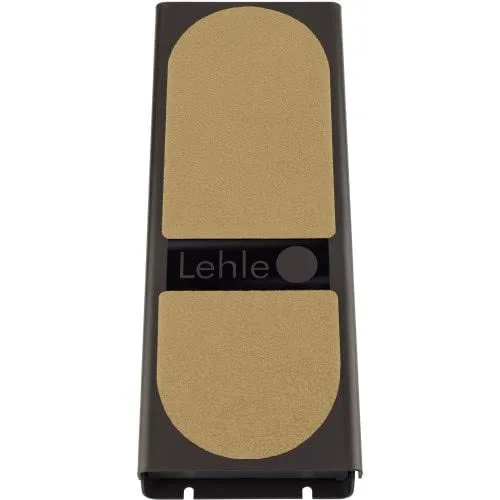
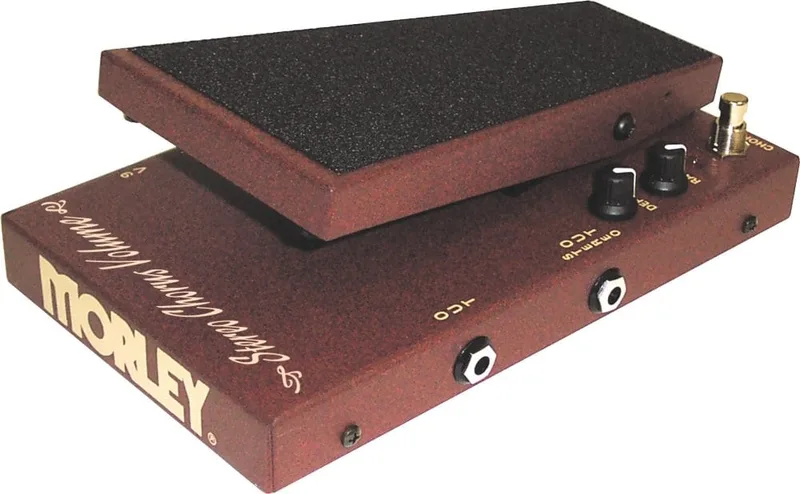
For stereo rigs, stereo volume pedals like the Lehle Stereo Volume and Vertex's stereo model8 control two channels at once, and pan versions route the signal between two destinations. Keyboard players have their own variants: Bespeco's VM10L and VM14L are built for keyboards rather than guitar910.
Questions
Should a volume pedal go before or after distortion?
Before distortion, the pedal acts on the gain of the next stage, cleaning up your drive like rolling back your guitar's volume knob, but it will not change the overall volume much25. After distortion, it changes the actual listening level. Dunlop recommends placing its Volume (X) pedals at the beginning of the effects chain2223.
What is the difference between a volume pedal and an expression pedal?
A volume pedal sits in your audio signal path and controls its level. An expression pedal sends a control signal to another pedal's expression input instead of passing audio. Some devices, like the Dunlop Volume (X) series21 and the Bespeco VM18LU5, do both jobs. The Neunaber Expanse accepts only TRS-plug expression pedals, not TS-plug volume pedals20.
Do volume pedals need power?
Passive ones do not: they use a potentiometer to control signal level and require no power source1. Active volume pedals use onboard buffering and active circuitry to maintain signal strength and clarity over long cable runs or large pedalboards4, and those need power.
How do you do volume swells on guitar?
Rock the pedal from heel to toe as you pick a note or chord, raising the volume gradually so the attack is masked and the note blooms. Pedals built for swells include the Harley Benton Space Volume12, the MOOER Slow Engine16 and the envelope-controlled Guyatone SV2 Slow Volume17.
Does a volume pedal cut delay and reverb trails?
It can, depending on placement. If the volume pedal is after your delay and reverb, muting it cuts the repeats and tails abruptly. Anasounds recommends placing delay and reverb after the volume pedal so the repeats and reverb keep ringing after you mute25. Some digital pedals, like the Alexander Pedals Rewind, offer configurable hard bypass, full trails or auto trails modes19.
Can a volume pedal be used with bass?
Yes. Saturnworks offers a bass mod on its active volume pedals that "allows more lower-range frequencies to enter the circuit" without cutting highs, and the mod applies only to active models, not passive ones15. Harley Benton's Space Volume pedals are also listed for guitar and bass12.
Sources (28)
- Volume Pedals for Guitar & Pedal Steel, Goodrich Sound Company, 2018-04-09
- Canvas Expression Pedal, Walrus Audio
- VM10 - ABS Mono Volume Pedal for Guitar - Bespeco, Bespeco, 2026
- active-vs-passive-volume-pedals, Goodrich Sound Company, 2026-05-14
- VM18LU - Universal Expression Pedal - Bespeco, Bespeco, 2026
- Goodrich H-10K HighTen Active Volume Pedal, Goodrich Sound Company
- Mono Volume Pedal, www.vertexeffects.com
- Stereo Volume Pedal, www.vertexeffects.com
- VM10L - ABS Mono Volume Pedal for Keyboard - Bespeco, Bespeco, 2026
- VM14L - ABS Stereo Volume Pedal for Keyboard - Bespeco, Bespeco, 2026
- Vowel 2-in-1 Wah/ Volume Mini Guitar Pedal Donner, donnerdeal.com
- Harley Benton Space Volume, Harley Benton
- Slider Expression and Volume Pedal by MAS Effects, MAS Effects
- How a Volume Pedal Works, Goodrich Sound Company, 2026-05-15
- Handcrafted Boutiqe Volume Pedals, Saturnworks, 2026-06-20
- Slow Engine_MOOER Audio, MOOER Audio
- GUYATONE SV2 Slow Volume modified (B-STOCK), Godlyke Distributing, Inc.
- VFE_Bumblebee.pdf, Madbean Pedals, 2019
- Rewind - Alexander, Alexander Pedals
- Expanse User Guide, Quilter Labs (Neunaber Technology LLC), 2016
- VOLUME (X)™ PEDAL, Dunlop (www.jimdunlop.com)
- DVP3.pdf, Dunlop Manufacturing, Inc., 2019
- DVP5.pdf, Jim Dunlop, 2021
- GCB80.pdf, Jim Dunlop, 2019
- Learn how to chain your effects pedals, Anasounds, 2020-09-18
- The Ultimate Guide to Guitar Effects Pedal Order and Signal Chain, BOSS (articles.boss.info), 2023-03-01
- Coda Effects, Coda Effects, 2015-05
- DYSTOPIA, Broughton Audio