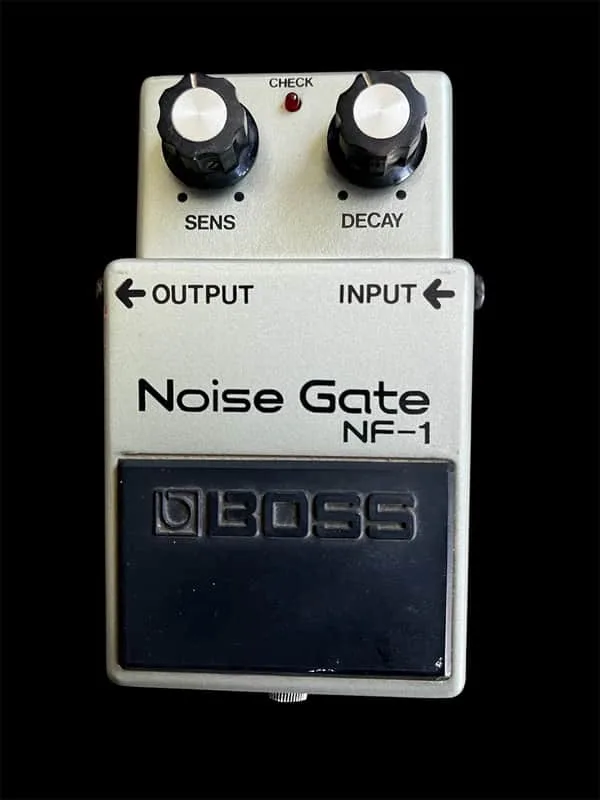
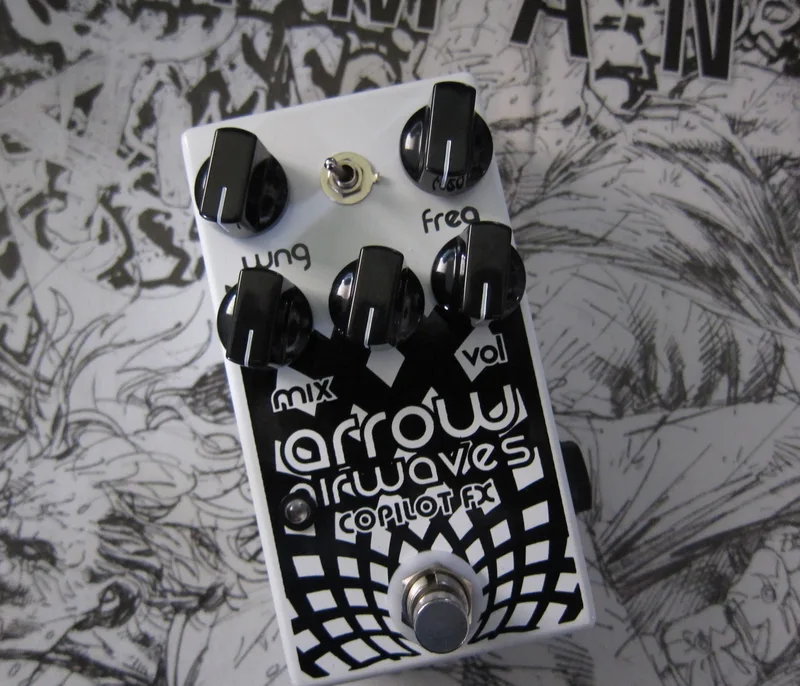
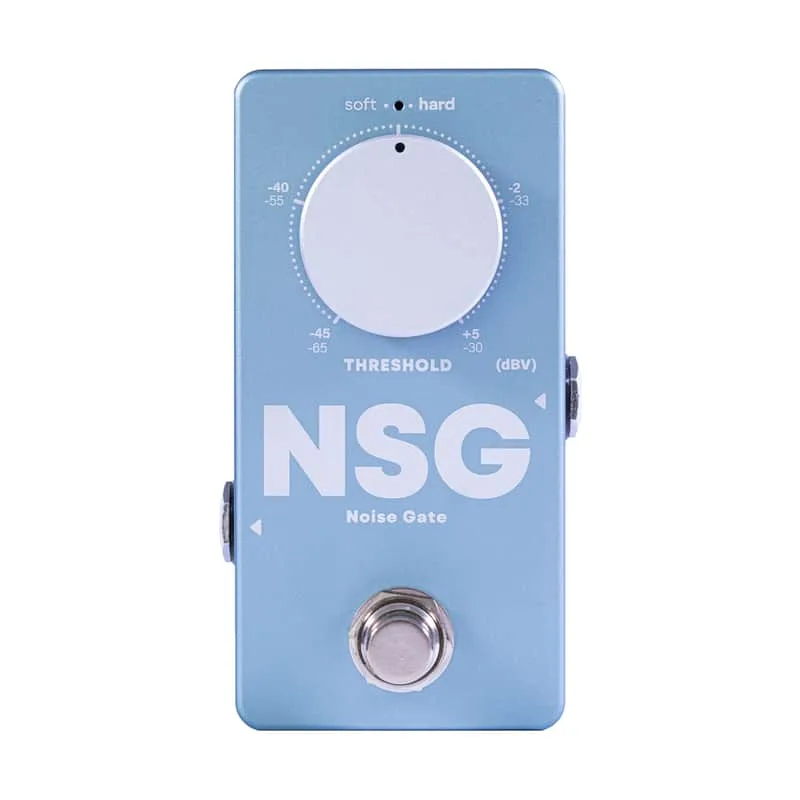
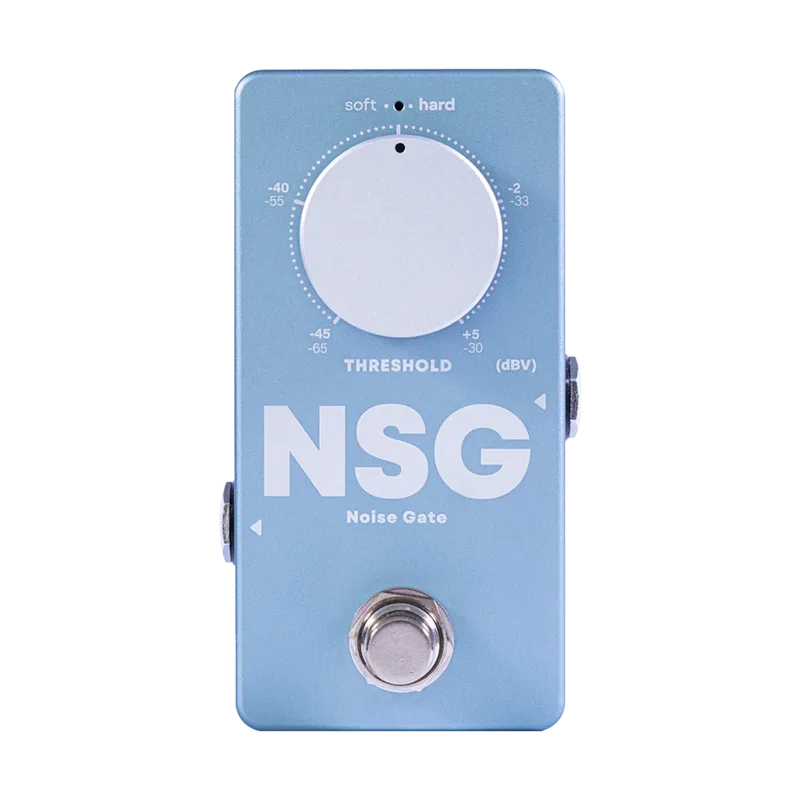
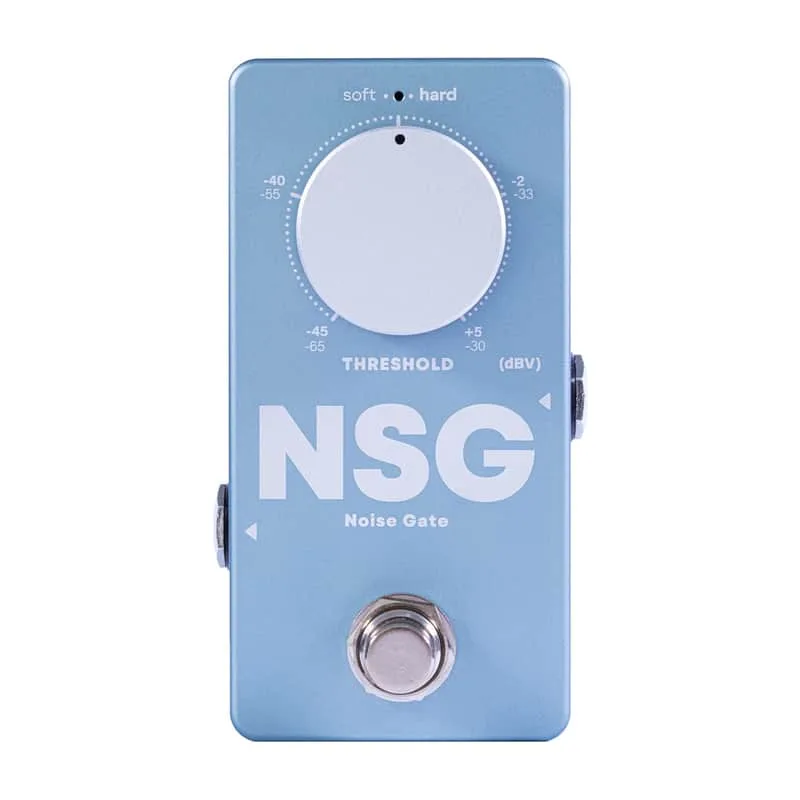
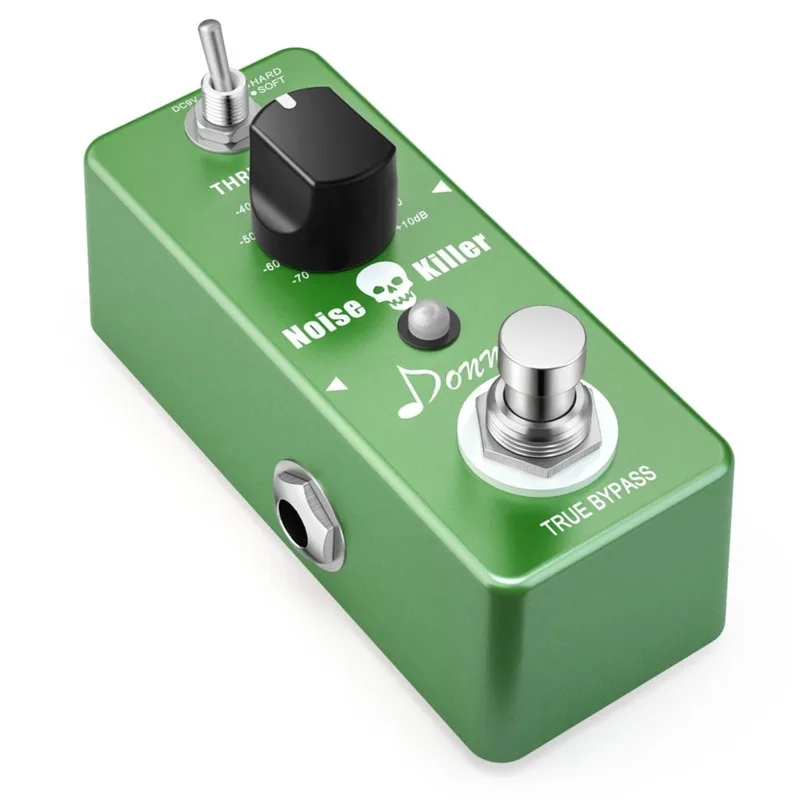
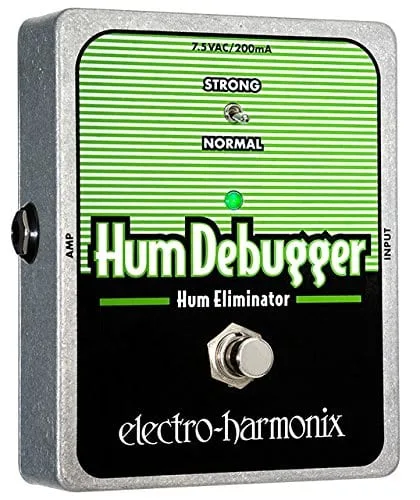
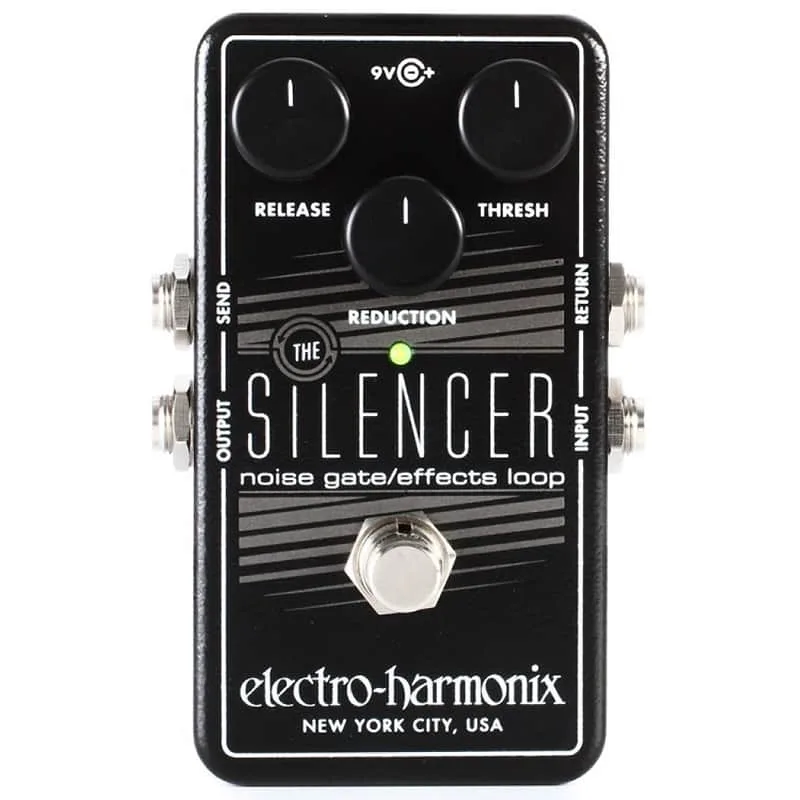
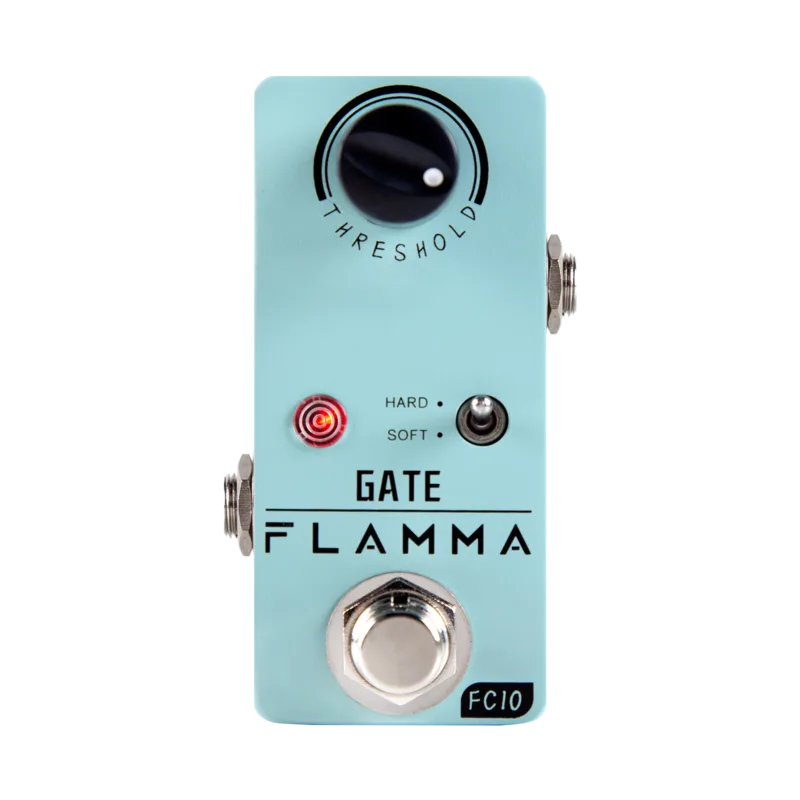
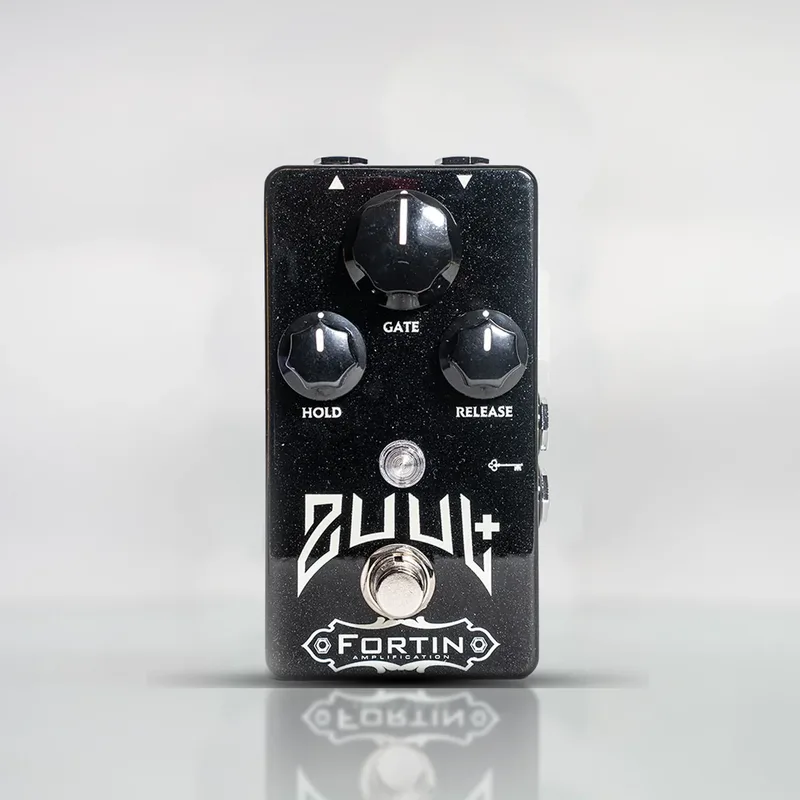
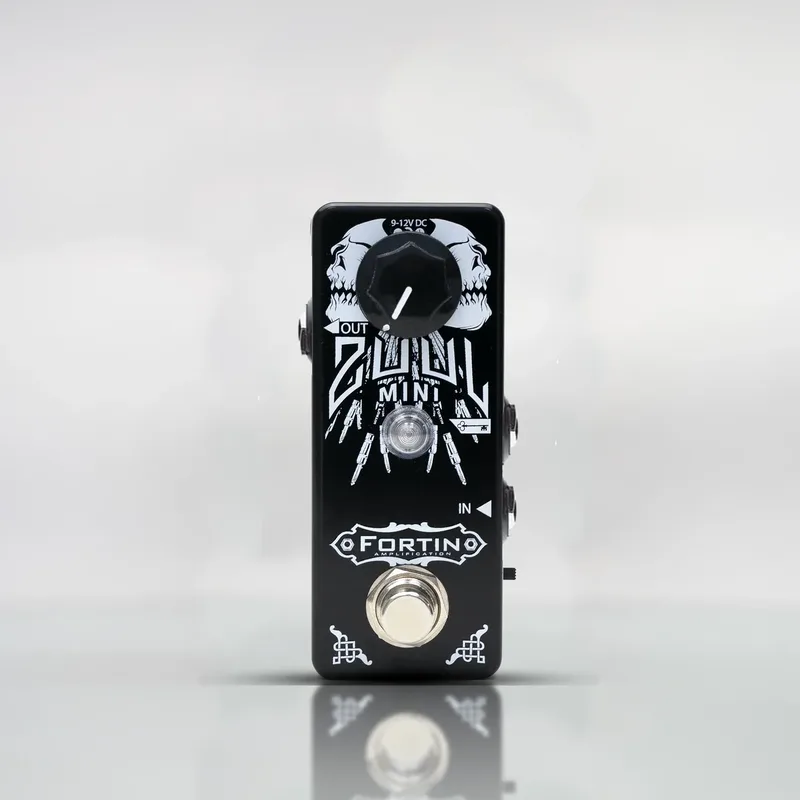
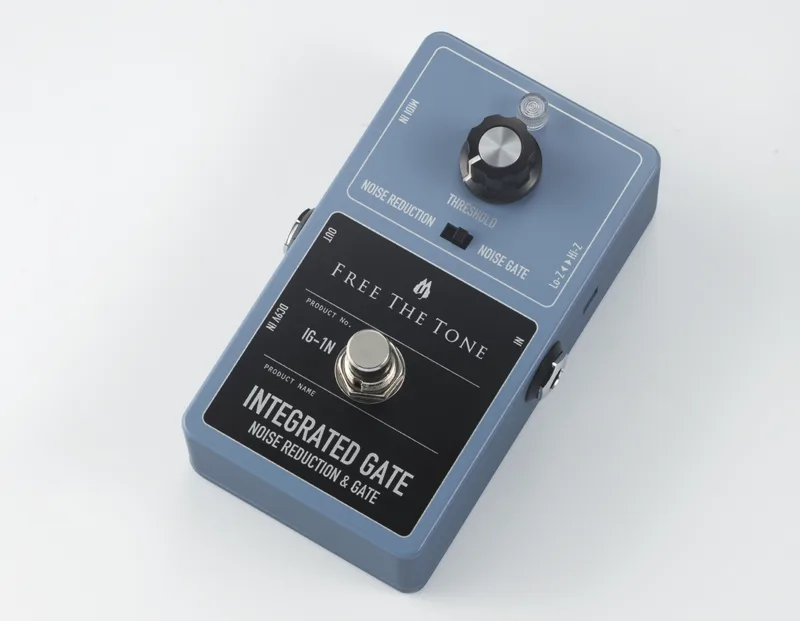
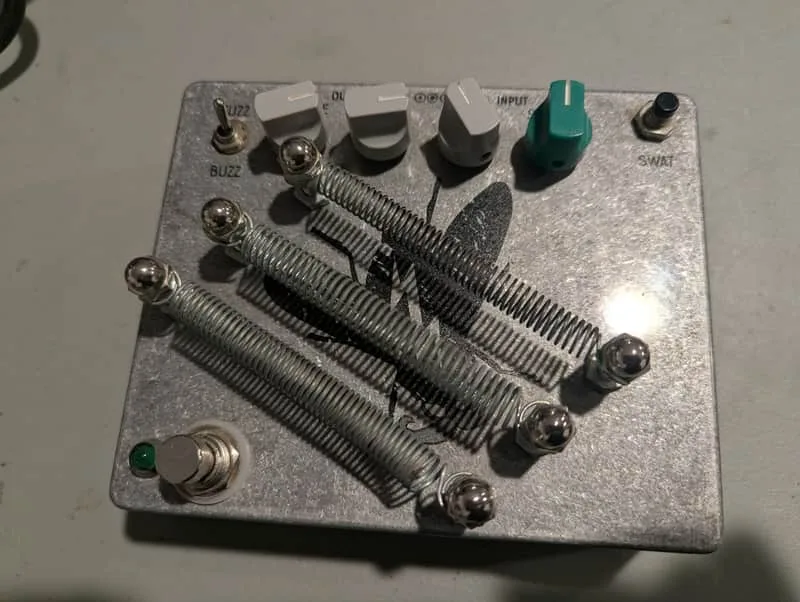
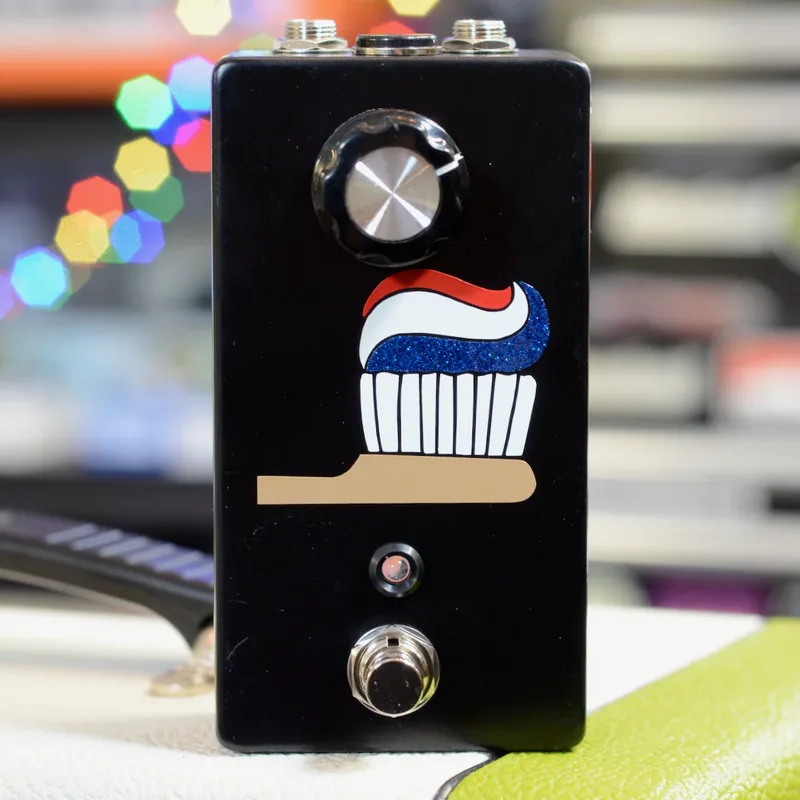










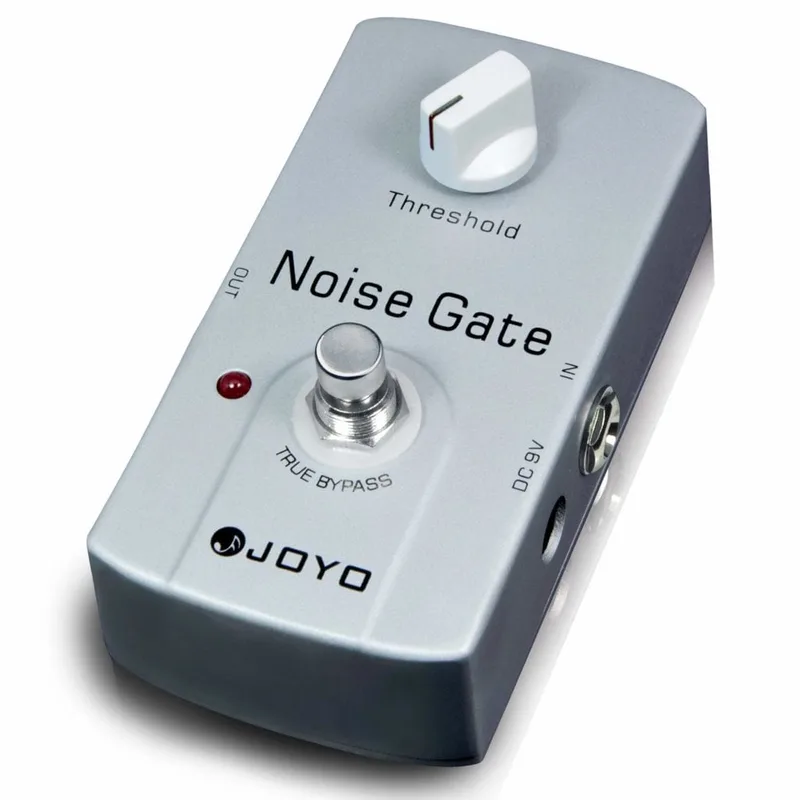
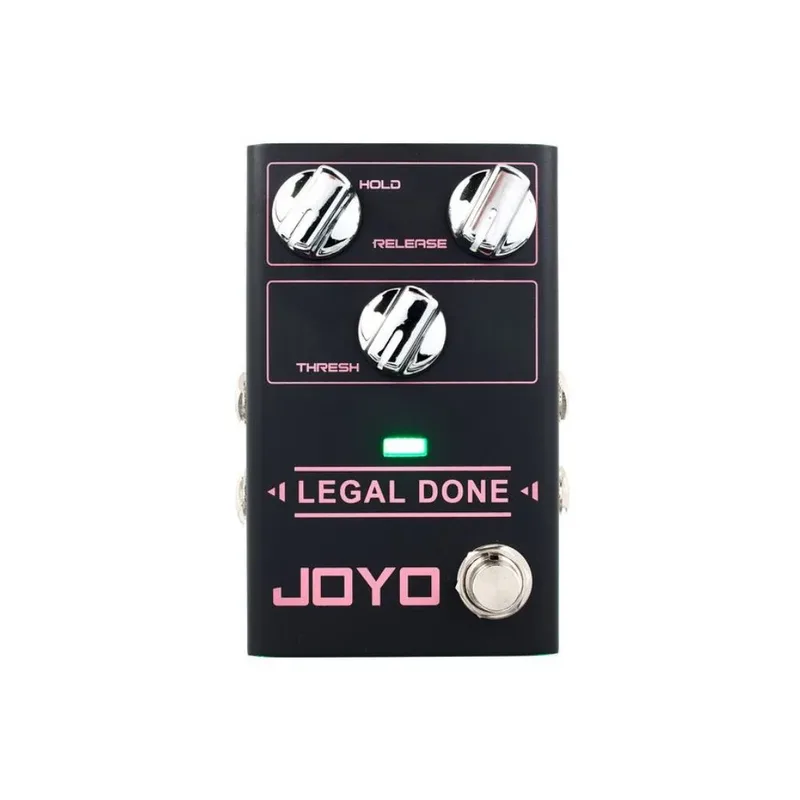
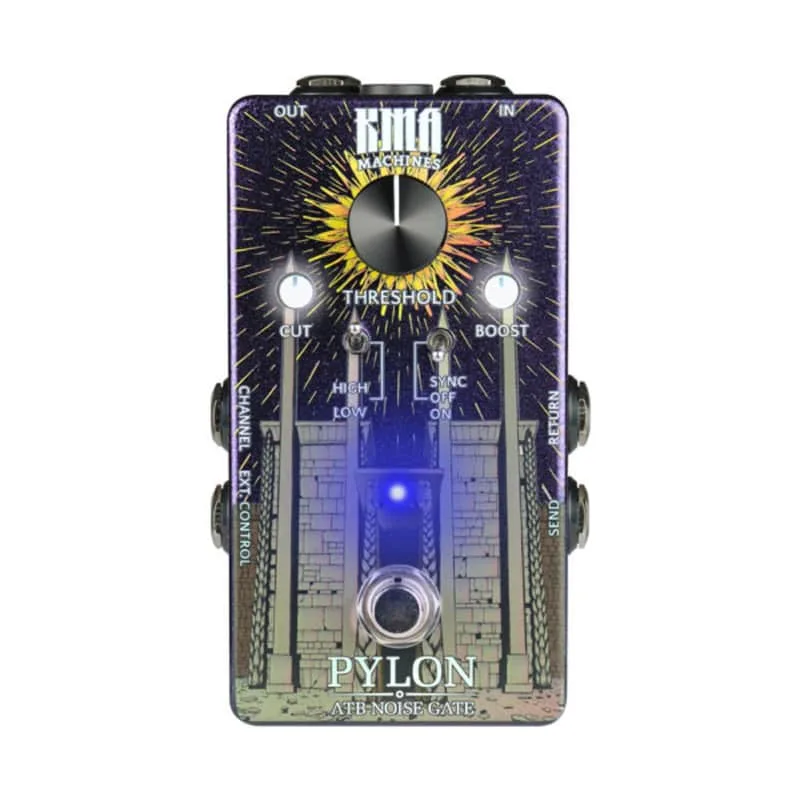
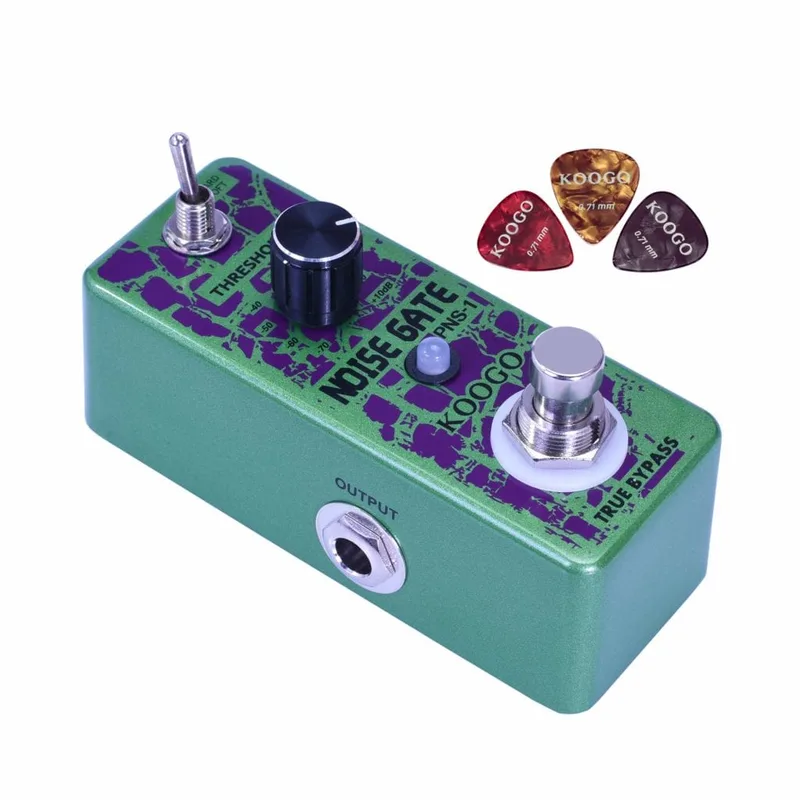
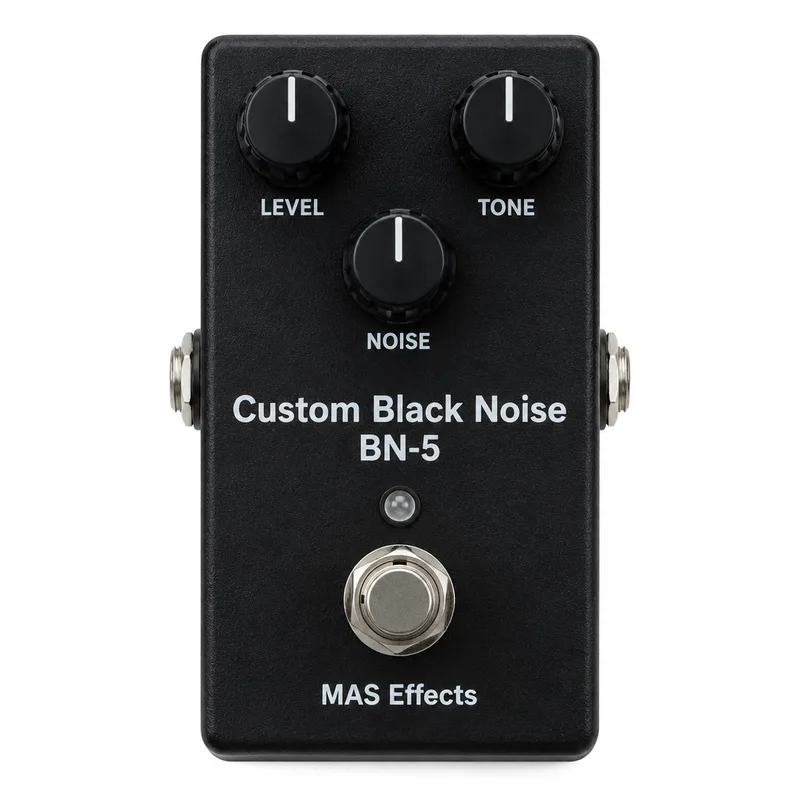
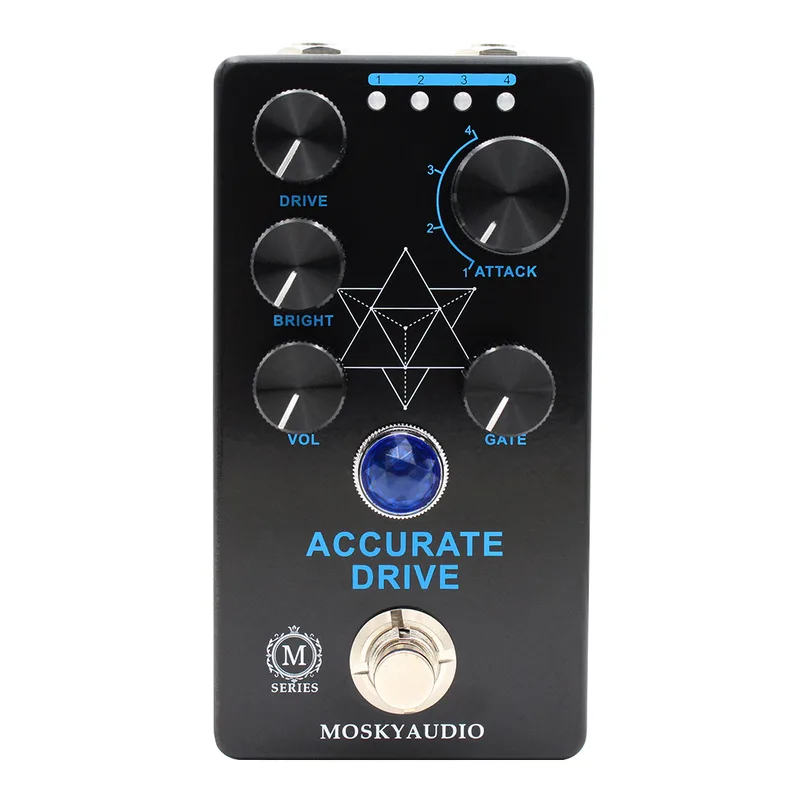
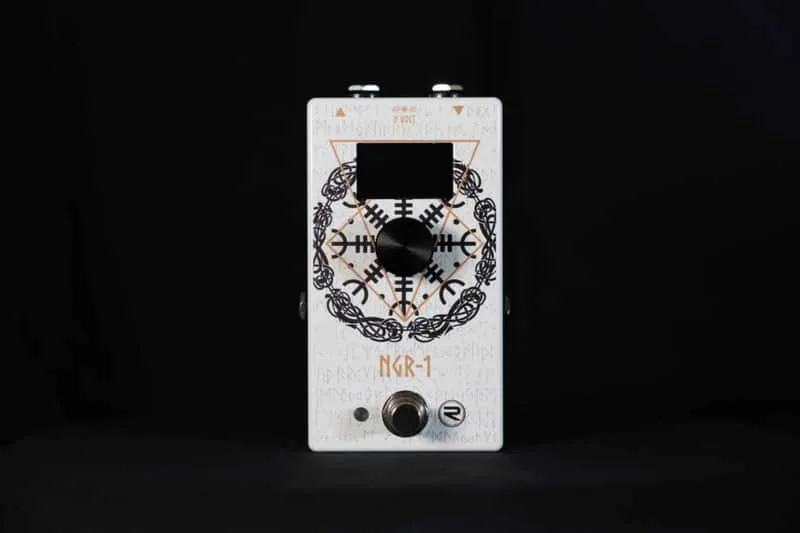

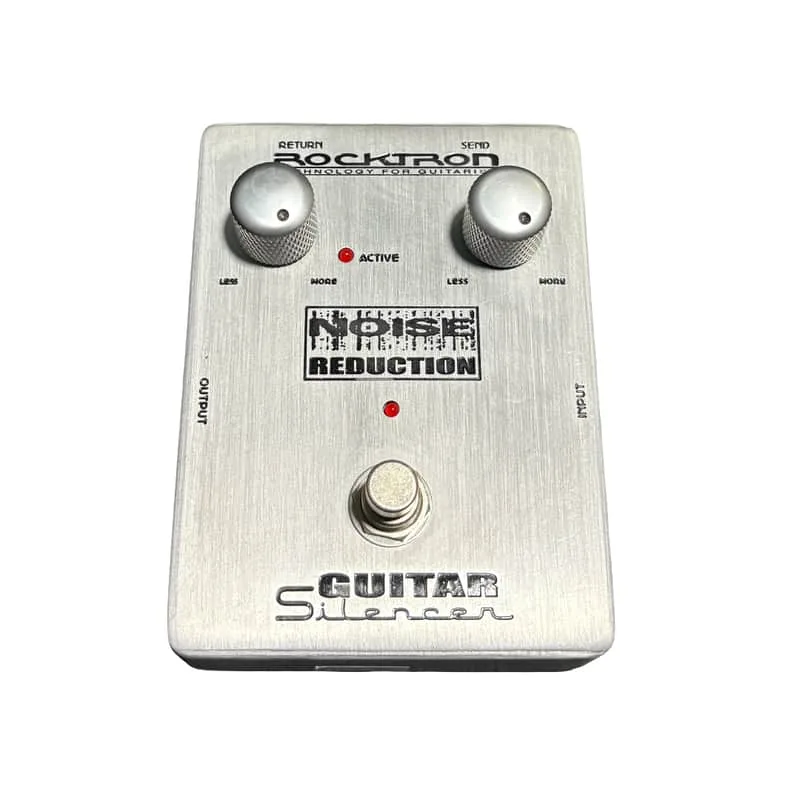
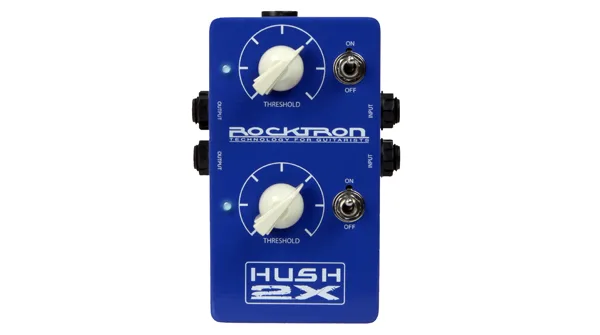
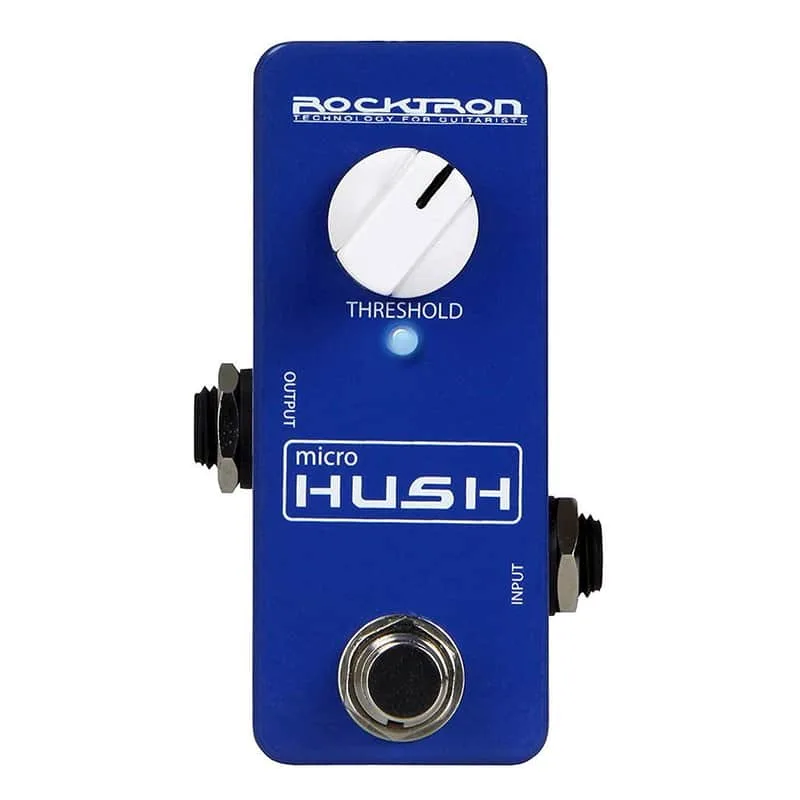
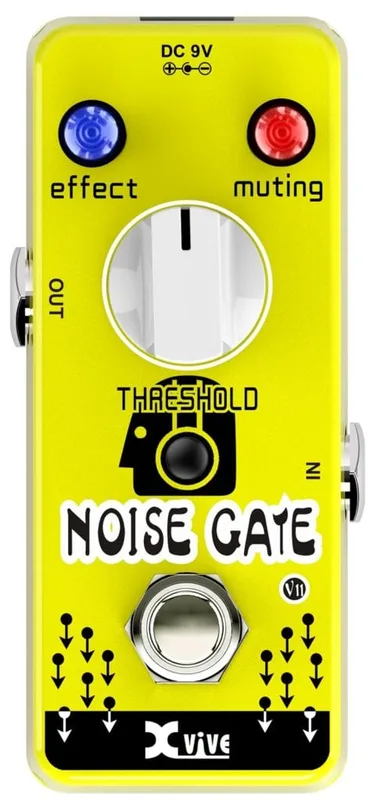
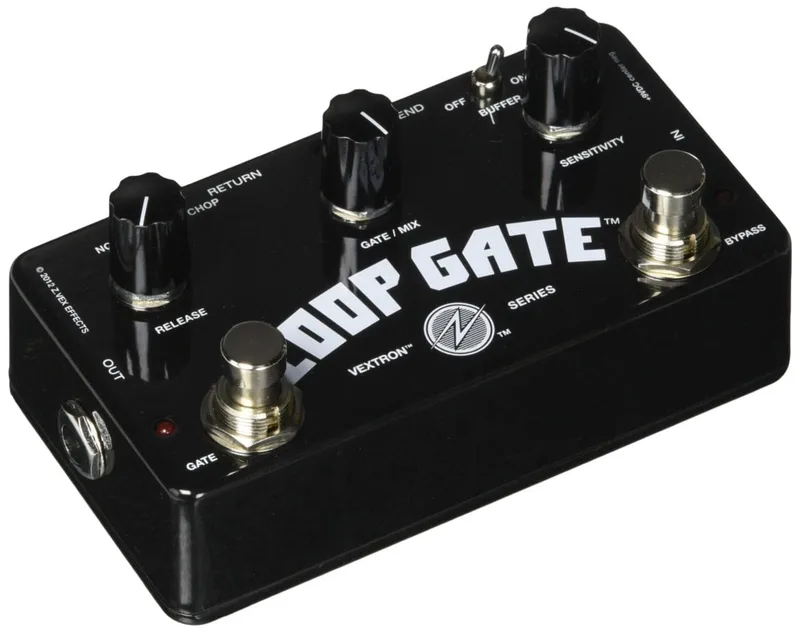
A noise gate pedal is the one pedal on your board that takes something away instead of adding something. As GUP Tech puts it, a gate is not adding a new effect to your setup, it removes something unwanted: noise1. When you stop playing, the gate mutes the signal, and the hiss, hum and buzz of a high gain amp, a chain of drive pedals or a noisy power supply disappears with it. When you play a note, the gate opens and lets your signal through.
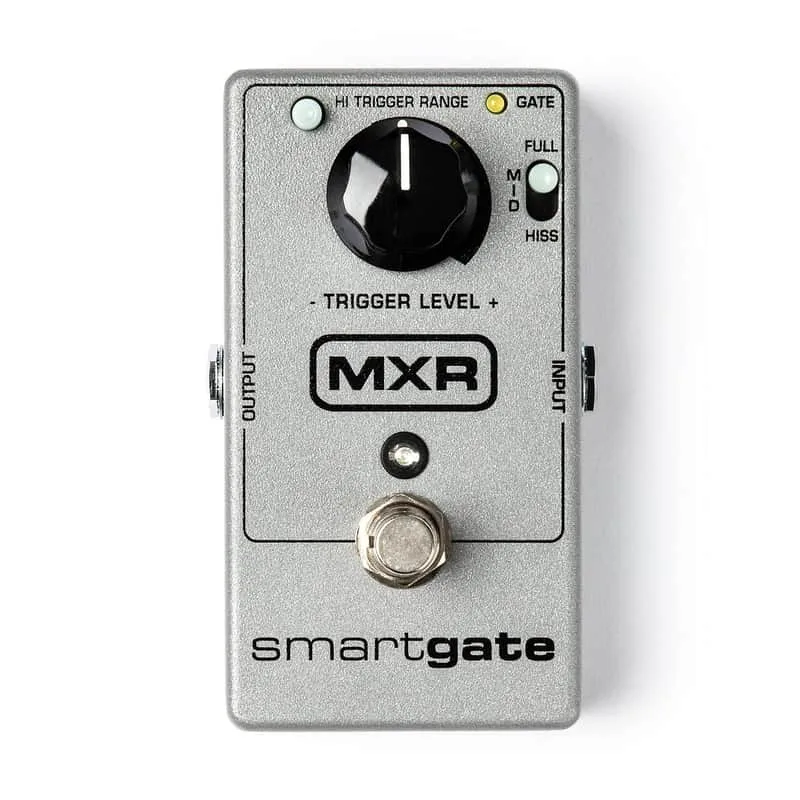
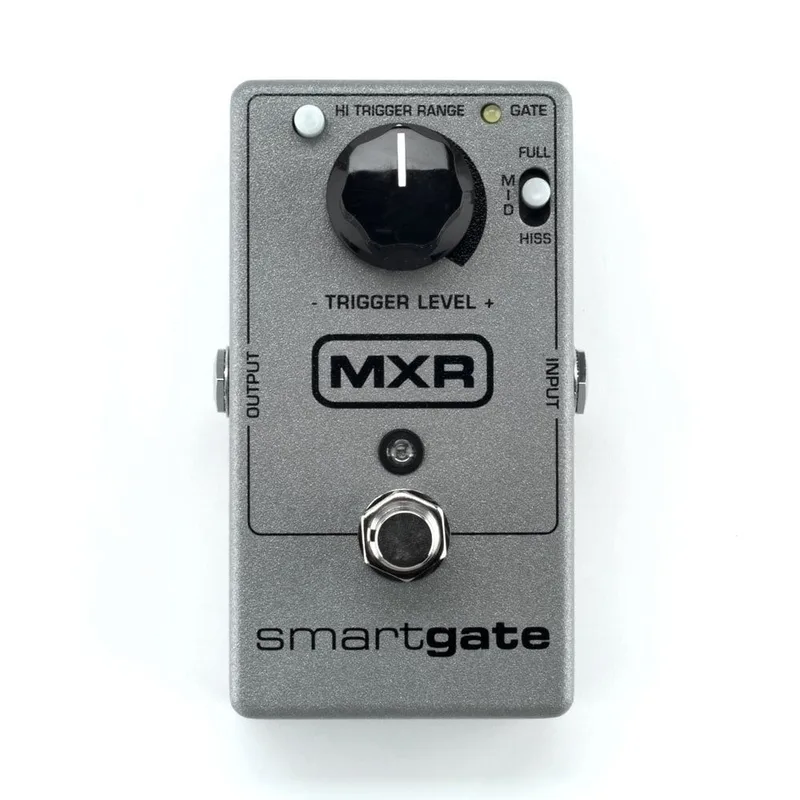
That is the whole idea, and it is why gates sit close to distortion, fuzz and boost pedals in most rigs. MXR describes its Smart Gate as able to "tame your hissing high-gain amp or silence your string of stompboxes"2, and GUP Tech names the players who benefit most: heavy high gain players, players with noisy boost, distortion or fuzz pedals, players with bad or unstable electricity at home, and performers whose venue power may be unclean1.
What a noise gate does
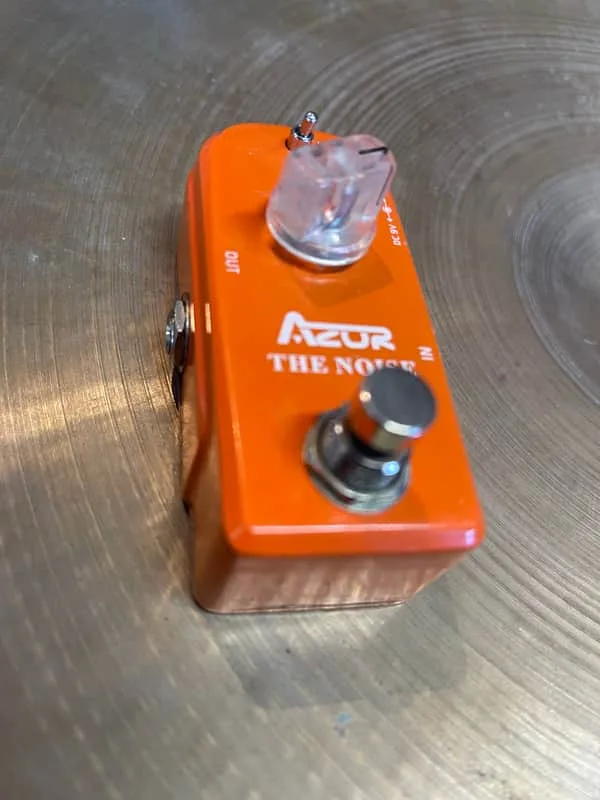
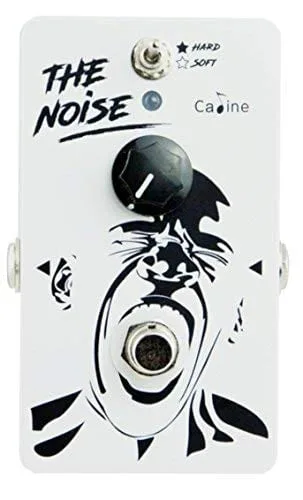
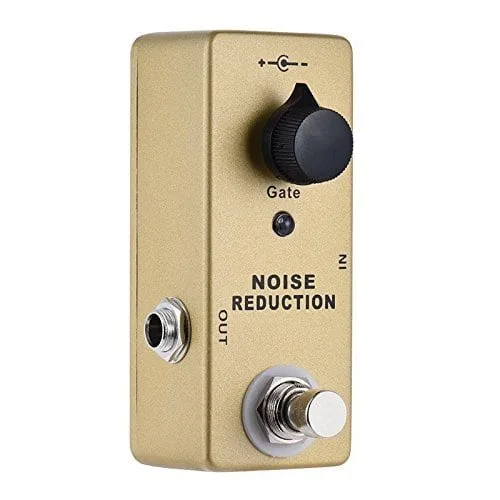
A gate listens to the level of your signal and makes a simple decision: anything louder than a set threshold passes, anything quieter is muted. The effect on your sound is silence where there used to be noise. Azor describes its The Noise pedal as one that "can reduce the noise form input signal and keep the quality of your original signal"3, and that is the goal of every gate on this page: your playing comes through unchanged, the noise between phrases does not.
What a gate will not do is remove noise while you are playing. Because the gate opens whenever your signal is above the threshold, hum and hiss that ride along with your notes still come through. For hum that is present during playing, different tools exist, covered below under hum eliminators.
Gates also appear built into other pedals rather than as standalone boxes. ENGL's EP635 Fireball IR Pedal includes what the maker calls an advanced noise gate "for eliminating unwanted noise at high-gain settings"4, and the MXR EVH Modern High Gain Pedal carries a Noise Gate control that "reins your signal in for maximum clarity at cranked output and gain levels"5.
How a noise gate works
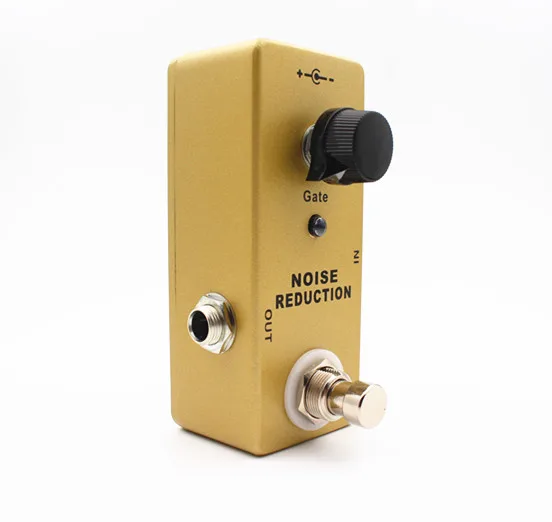
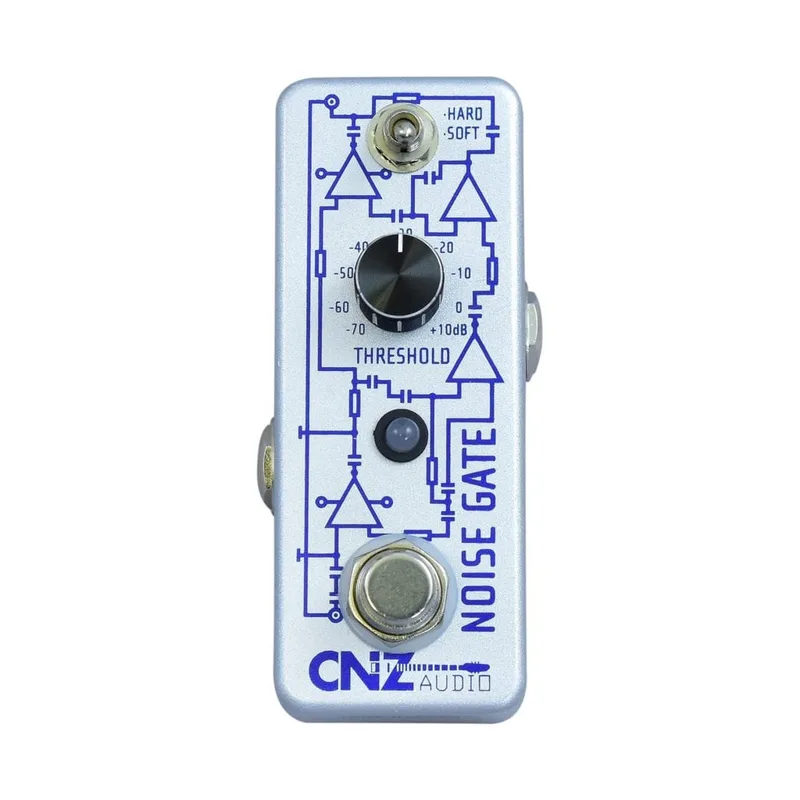
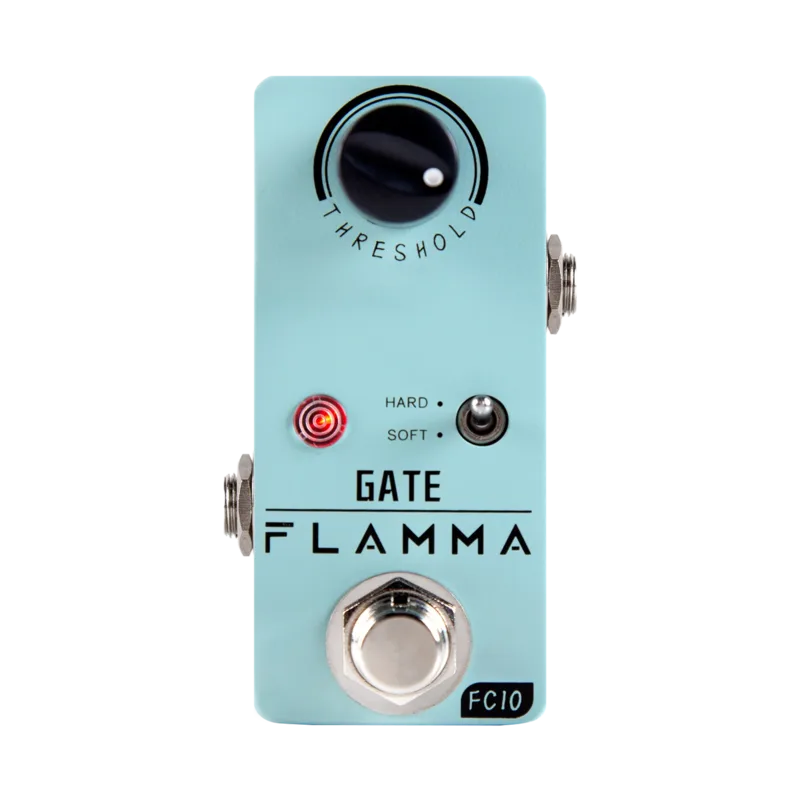
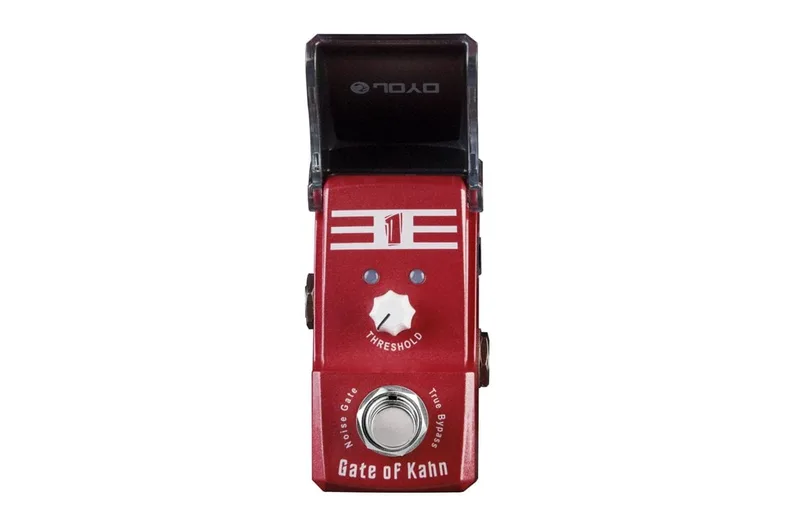
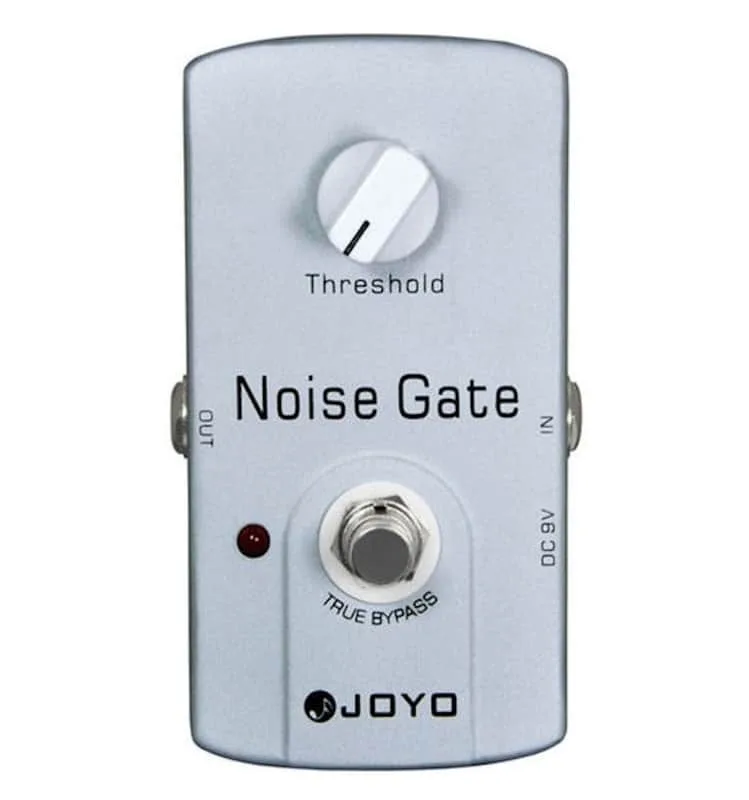
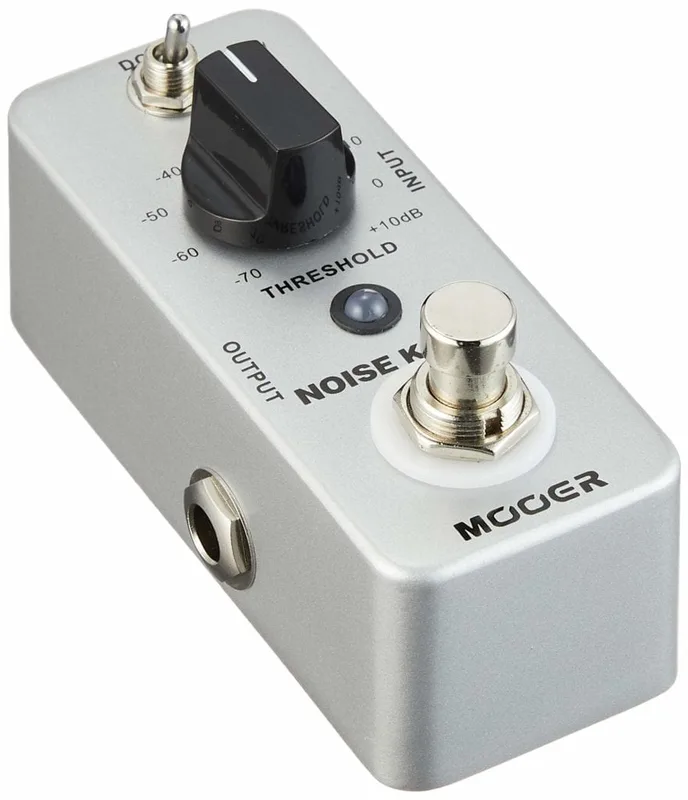
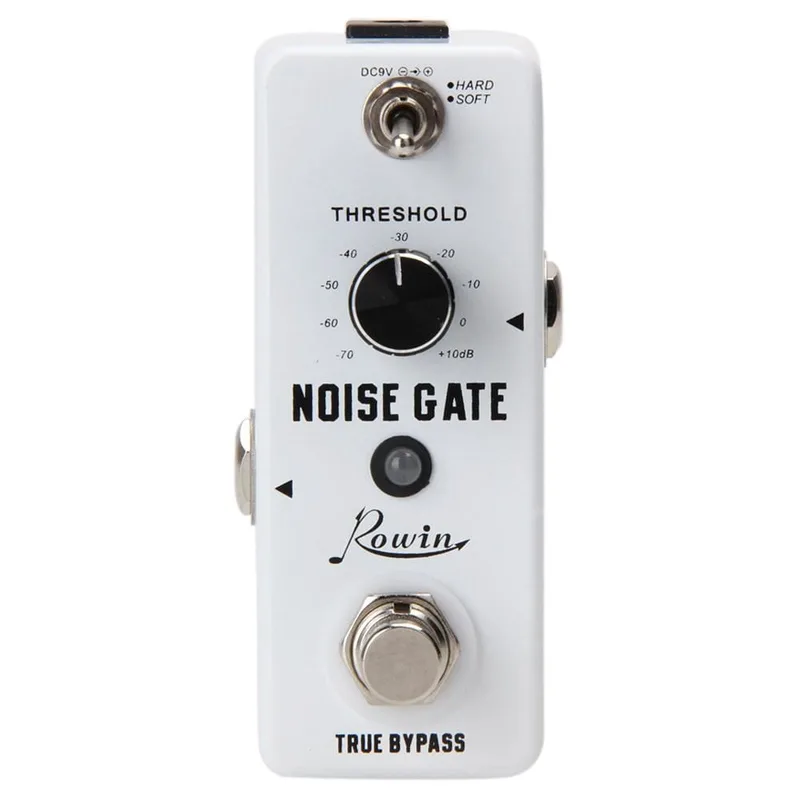
The core of every gate is a threshold. Mosky's Noise Gate makes this explicit: "A single Gate(Trigger) knob allows you to set the volume threshold at which the pedal is active"6. Set the threshold just above your rig's noise floor and the gate stays closed on hiss but opens instantly on a picked note.
Two things follow from that for a player:
- Threshold height trades noise for sustain. A low threshold lets quiet notes and natural decay through but may let some hiss leak. A high threshold kills every trace of noise but can choke the tail of a sustained note.
- The gate reacts to level, not to content. It cannot tell your playing from noise except by loudness, which is why placement and detection wiring matter so much, as covered below.
Some pedals use gating as a creative control rather than a cleanup tool. Parasit Studio's C19 Databus Drive has a Gate knob that "controls how noisy and touch sensitive the pedal is, from making noise on it's own to gated and quiet"7, and the ZVex Fuzz Factory's Gate control "squelches noise after end of sustain" and can be used "to tune in the exact feedback pitch"8. In fuzz circuits, a hard gate can chop notes into staccato chunks, which some players use deliberately.
Gates, suppressors and hum eliminators
These three terms get used loosely, but they describe different approaches to noise.
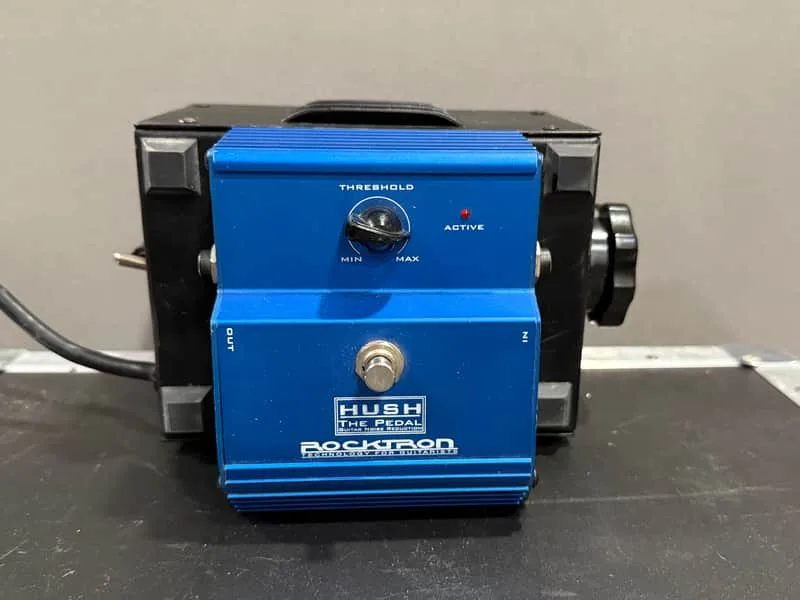
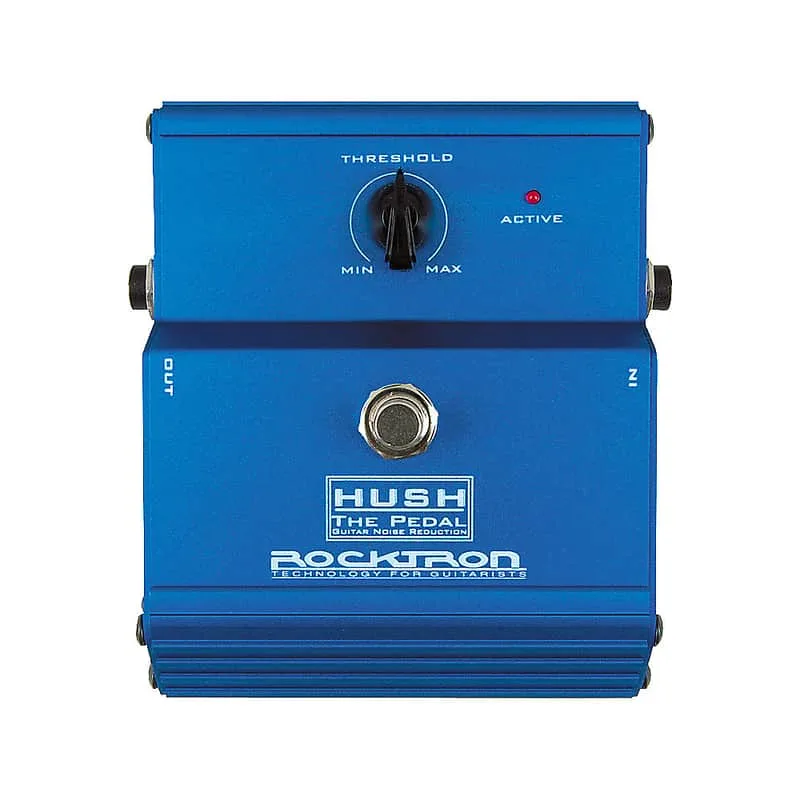
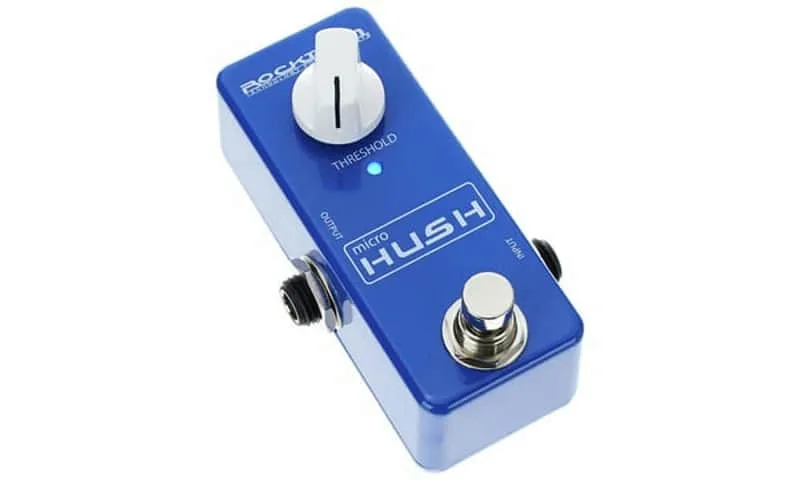
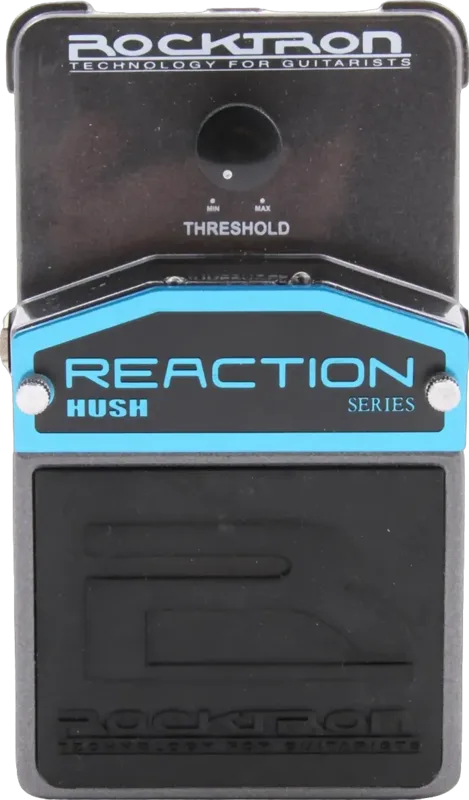
A noise gate pedal does not add a new effect to your setup; it removes something unwanted: noise1. The family is broader than gates alone. The NUX Huminator is a noise gate pedal built to eliminate unwanted noise such as hum, buzz and pedalboard interference, and Rocktron's HUSH The Pedal puts noise reduction circuitry on the floor to wipe out hiss, pickup buzz and unwanted feedback. Hum eliminators take another route entirely: D'Addario's XPND Pedal Power System includes a Noise Isolator that uses galvanic isolation to remove hum from problem pedals9.
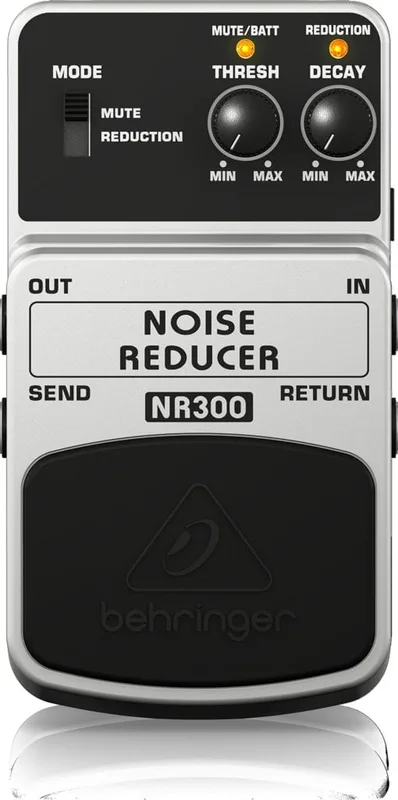
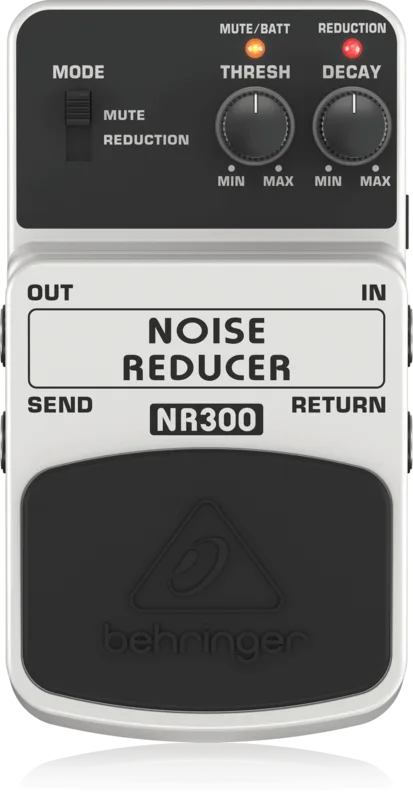
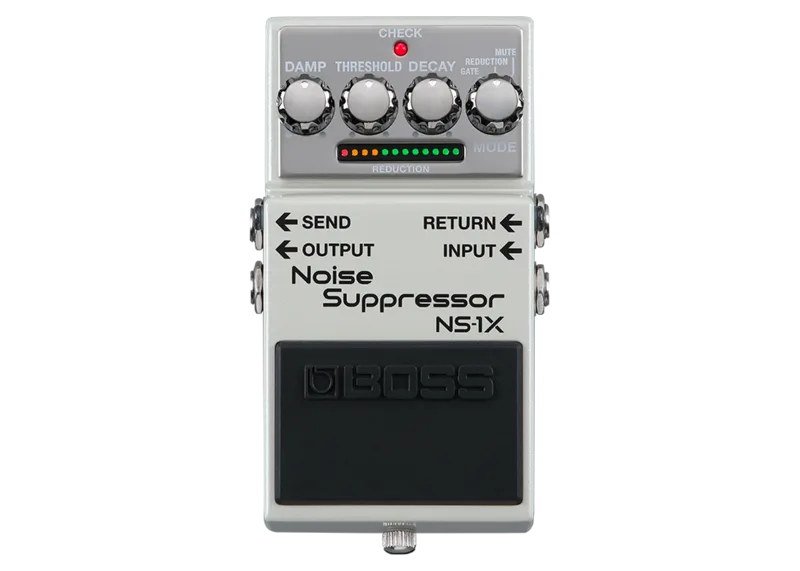
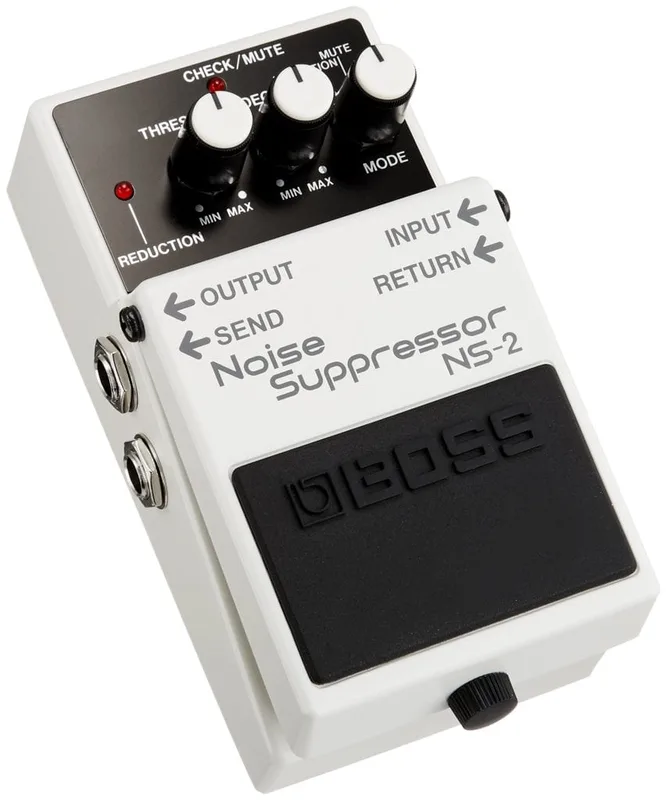
A noise suppressor reduces noise more gradually instead of cutting it dead, which tends to sound more natural on decaying notes. Boss's own noise pedals, the NS-2 and the NS-1X, are suppressors. A hum eliminator targets a specific problem: mains hum, either 60 cycle hum from single coil pickups or hum carried through power. Behringer's NR300 is aimed squarely at players who "love the bite, twang and snap of single-coil pickups, but can't stand the 60-cycle hum that comes along for the ride"10. And some noise problems are power problems: D'Addario's XPND Pedal Power System includes a Noise Isolator whose "galvanic isolation removes hum from problem pedals"9, fixing hum at the supply rather than gating it.
| Type | What it does | Typical examples |
|---|---|---|
| Noise gate | Mutes signal below a threshold | Mosky Noise Gate, GUP Tech SUN, Revv G8 |
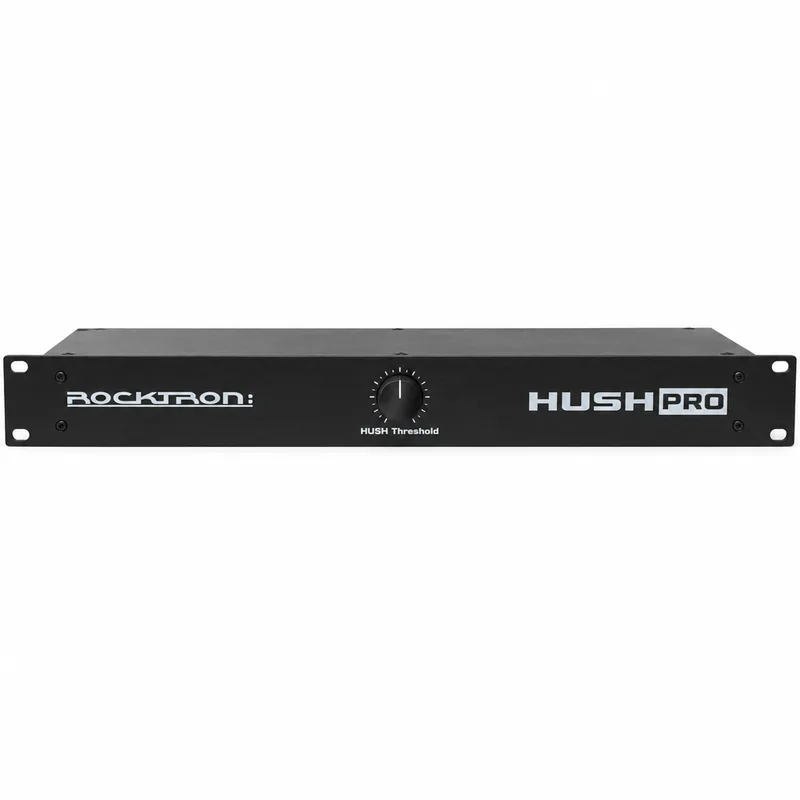
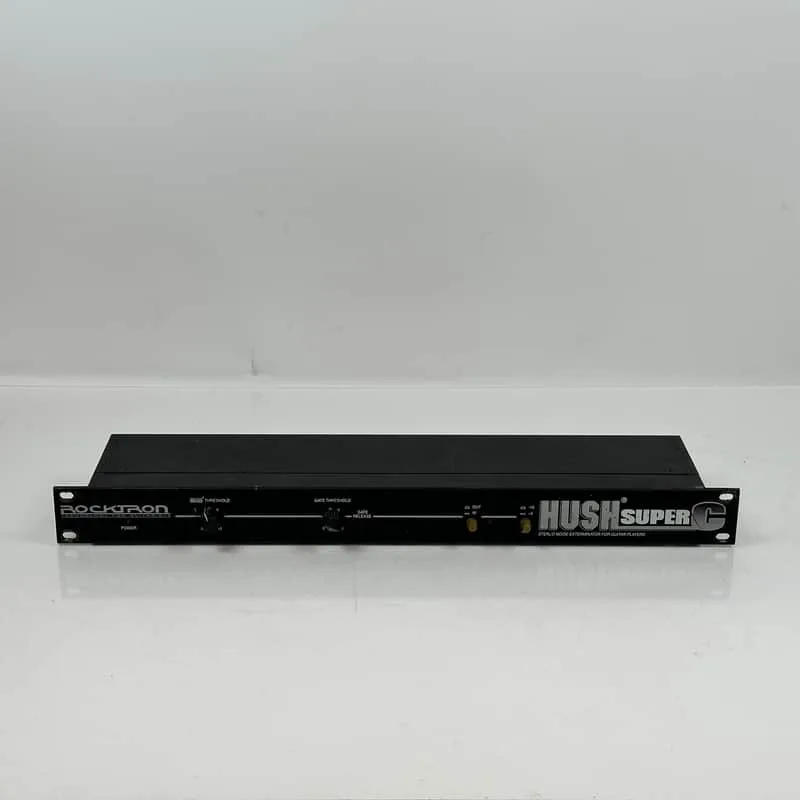
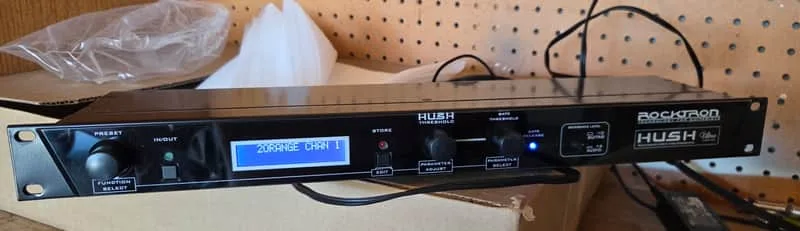
| Noise suppressor | Reduces noise gradually, more responsive | Boss NS-2, Boss NS-1X, Rocktron HUSH |
| Noise reduction pedal | Maker's general term, often a gate or suppressor | ISP Decimator II, NUX Huminator, AMT NG-2 |
| Hum eliminator | Targets mains or single coil hum | Behringer NR300, isolated power supplies |
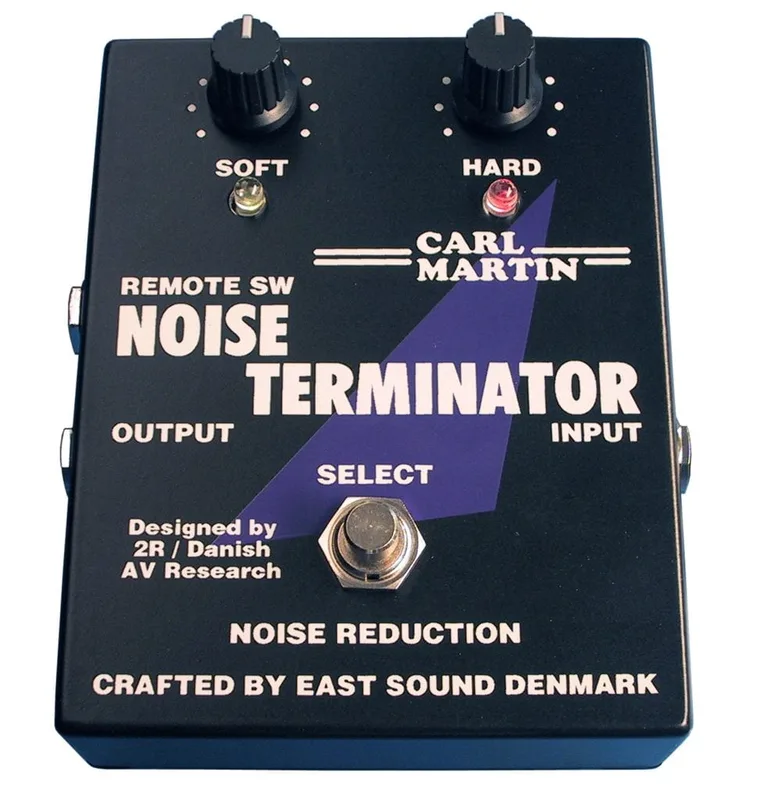
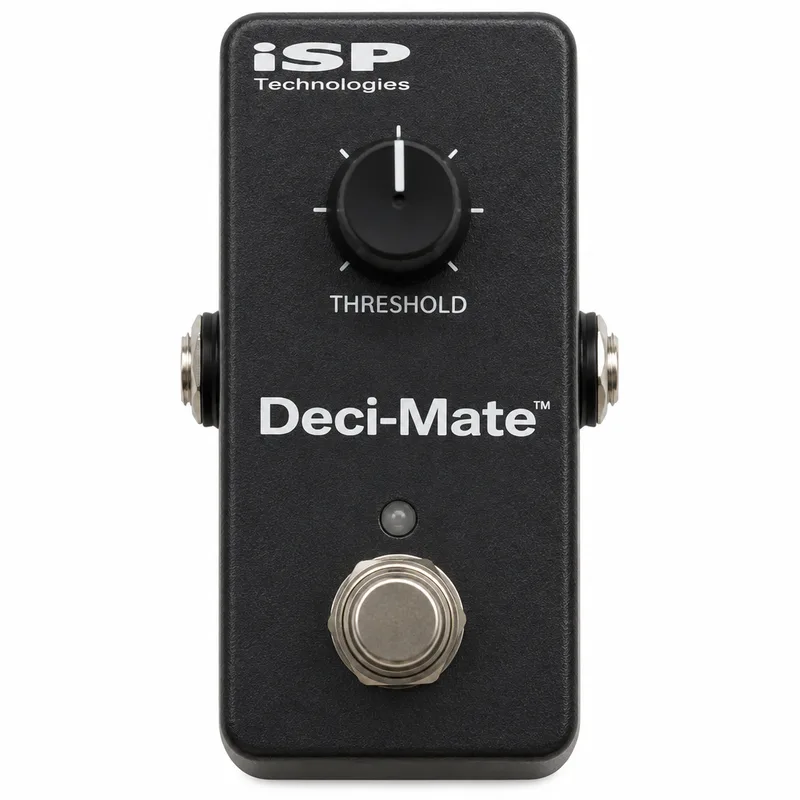
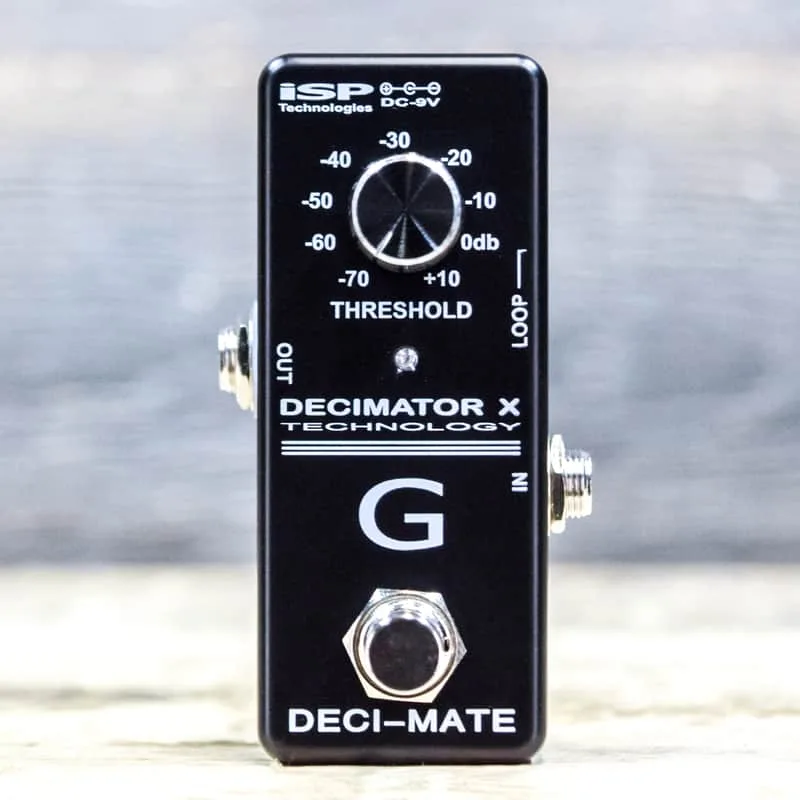
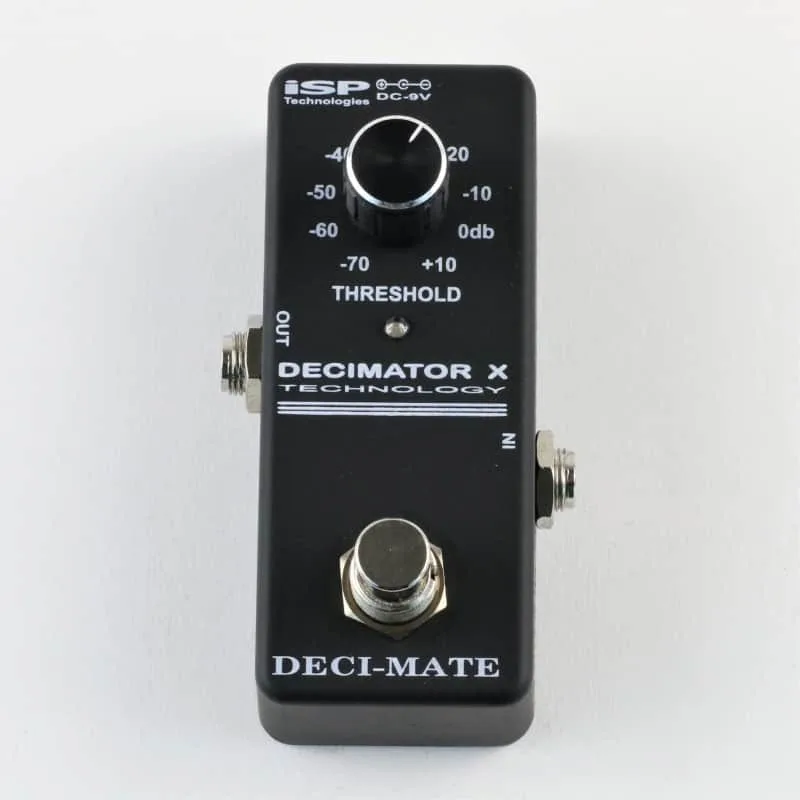
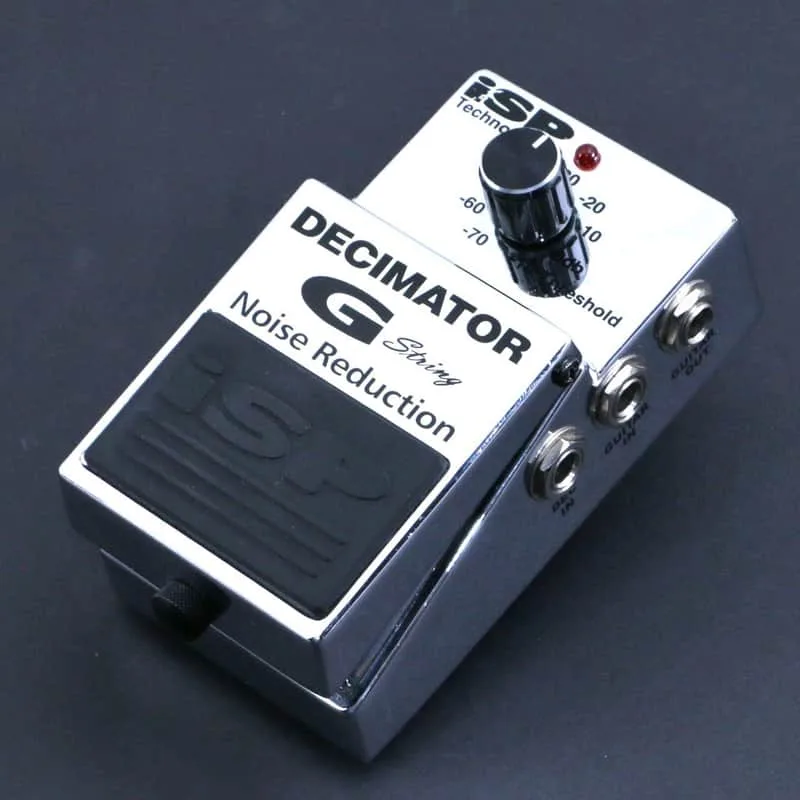
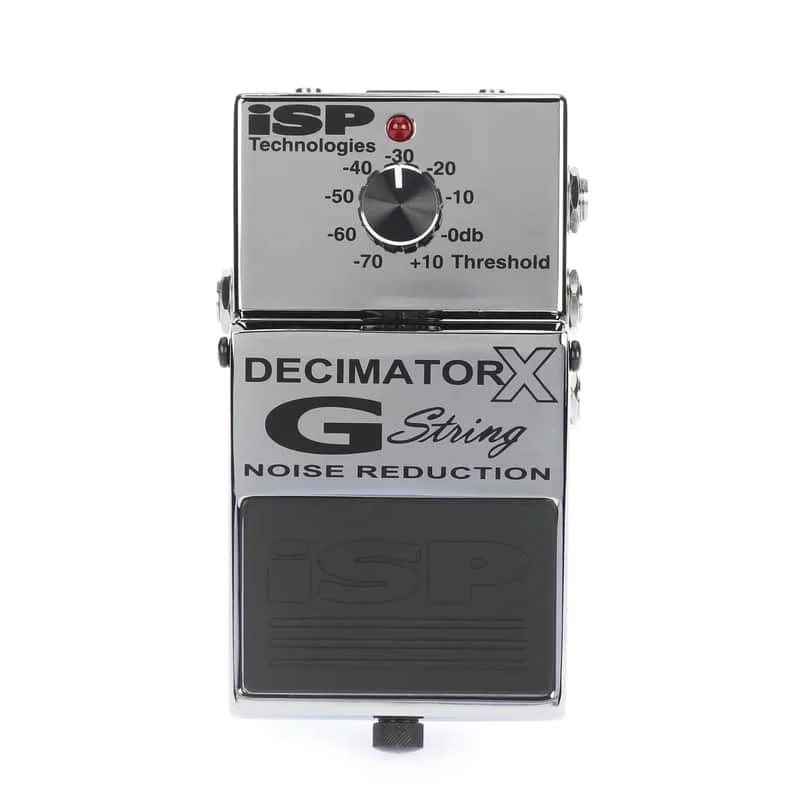
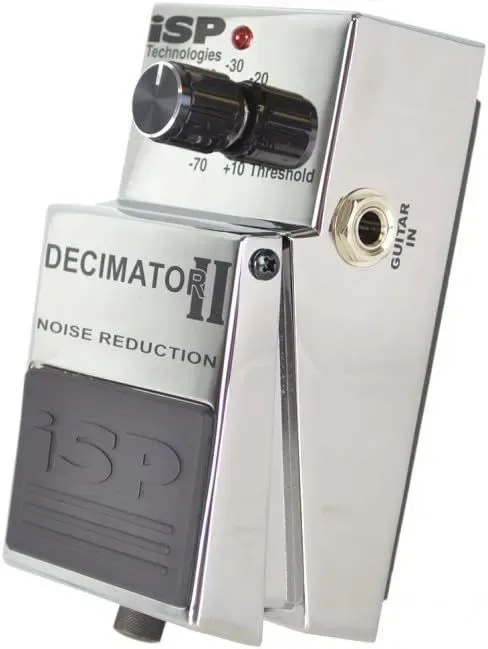
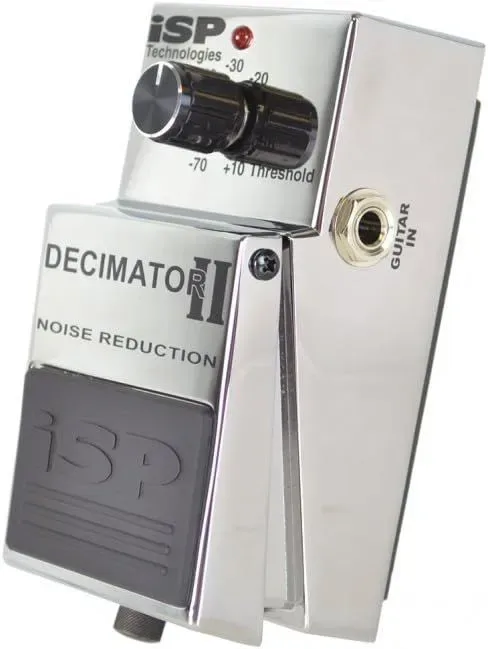
The boundaries are blurry in practice. Rocktron calls its HUSH The Pedal a noise reduction pedal that lets you "wipe out hiss, pickup buzz and unwanted feedback"11. NUX describes the Huminator as "engineered to tackle noise issues, from hum and buzz to pedalboard interference"12. ISP's Decimator II is sold as a noise gate that "ups the ante over the original Decimator design to give you even better noise" reduction13. Reading a maker's own description of how the pedal reacts, hard cut or gradual reduction, tells you more than the label on the box.
The usual controls
Simple gates have one knob. Larger ones add controls for how the gate behaves as it opens and closes.
| Control | What it does | Where it appears |
|---|---|---|
| Gate / Trigger | Sets the volume threshold at which the gate is active | Mosky Noise Gate6 |
| Gate (voicing) | Controls how noisy and touch sensitive the pedal is, from self noise to gated and quiet | Parasit Studio C19 Databus Drive7 |
| Gate (fuzz) | Squelches noise after the end of sustain; can tune feedback pitch | ZVex Fuzz Factory8 |
| Noise Gate | Reins the signal in at cranked output and gain levels | MXR EVH Modern High Gain Pedal5 |
| Reduction, Gate and Mute modes | Three operating modes, from gradual reduction to hard gate to full mute | Boss NS-1X14 |
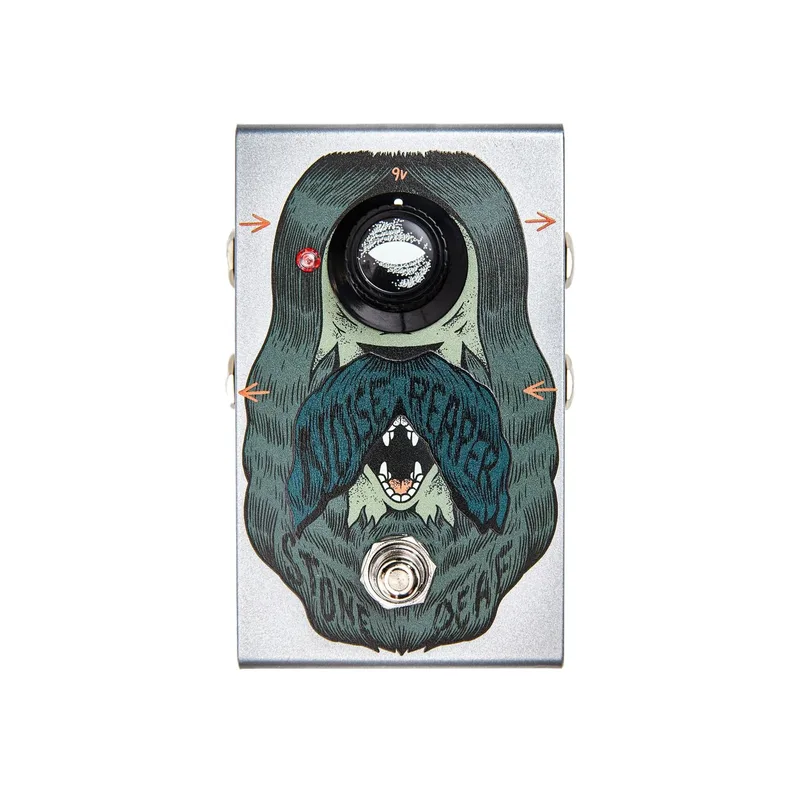
Controls across the category follow a pattern: a threshold that sets where the gate engages. Electro-Harmonix's Battalion has a Gate knob that sets the threshold for the noise gate, and Stone Deaf's Noise Reaper has a Threshold knob that sets the level at which the gate engages, comparing the input sensitivity of the instrument input against the noisy signal source14. Some drive pedals build the gate in and give it its own control: Amptweaker's Bass TightDrive Jr has a manually adjustable noise gate that can be cranked to stop notes hard and fast, affects only the distorted tone, and automatically goes away when the pedal is bypassed, while the C19 Databus Drive's Gate knob runs from making noise on its own to gated and quiet14.
Where a noise gate goes in the signal chain
Placement is where gates get interesting, because a gate can only silence noise that passes through it, and it can only track a signal it can hear.
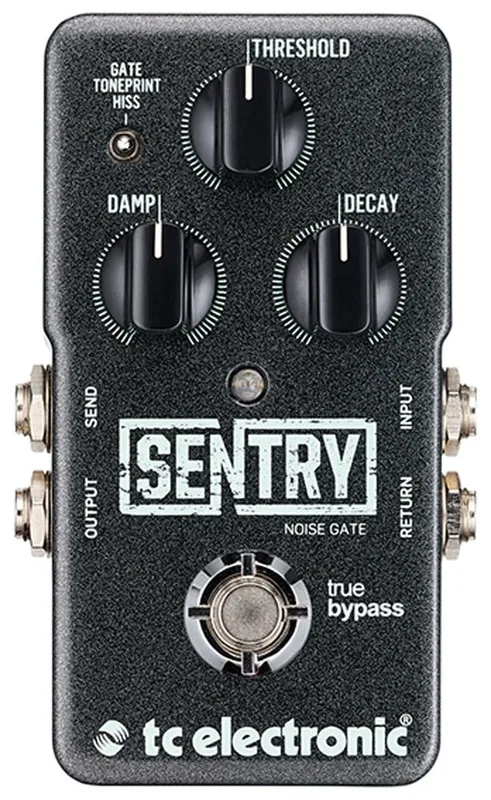
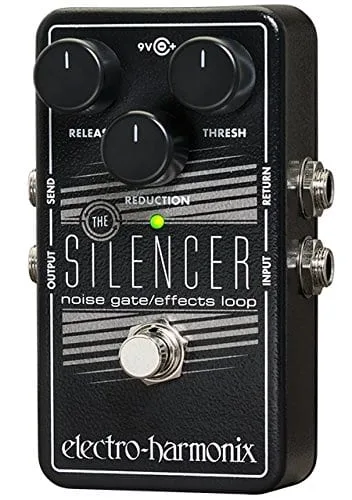
After your gain pedals. Signal chain guidance is direct: the drive section is "also the logical place for a noise gate like the NS-2 to control the unruly pedalboard section"15. That is where noisy gain pedals gather, and noise gate pedals are most useful to players of heavy high gain music and players with noisy boost, distortion or fuzz pedals. Some gates go further than placement alone: TC Electronic's Sentry adds a loop Send/Return for silencing noisy pedals and amps, all without cutting out dynamics or feel16.
The four cable method. Gates with extra jacks let you separate detection from gating. GUP Tech's SUN Noise Gate includes 4 jacks to wire the pedal in a 2, 3 or 4 wire method: the right side jack is the Detection Input and the top right jack is the actual gate input17. GUP Tech's MWAC Noise Gate takes a similar approach to layout, with Guitar In/Thru on the right side of the pedal and gate return jacks on top, so the clean guitar signal and the noisy pedal chain can be handled separately18.
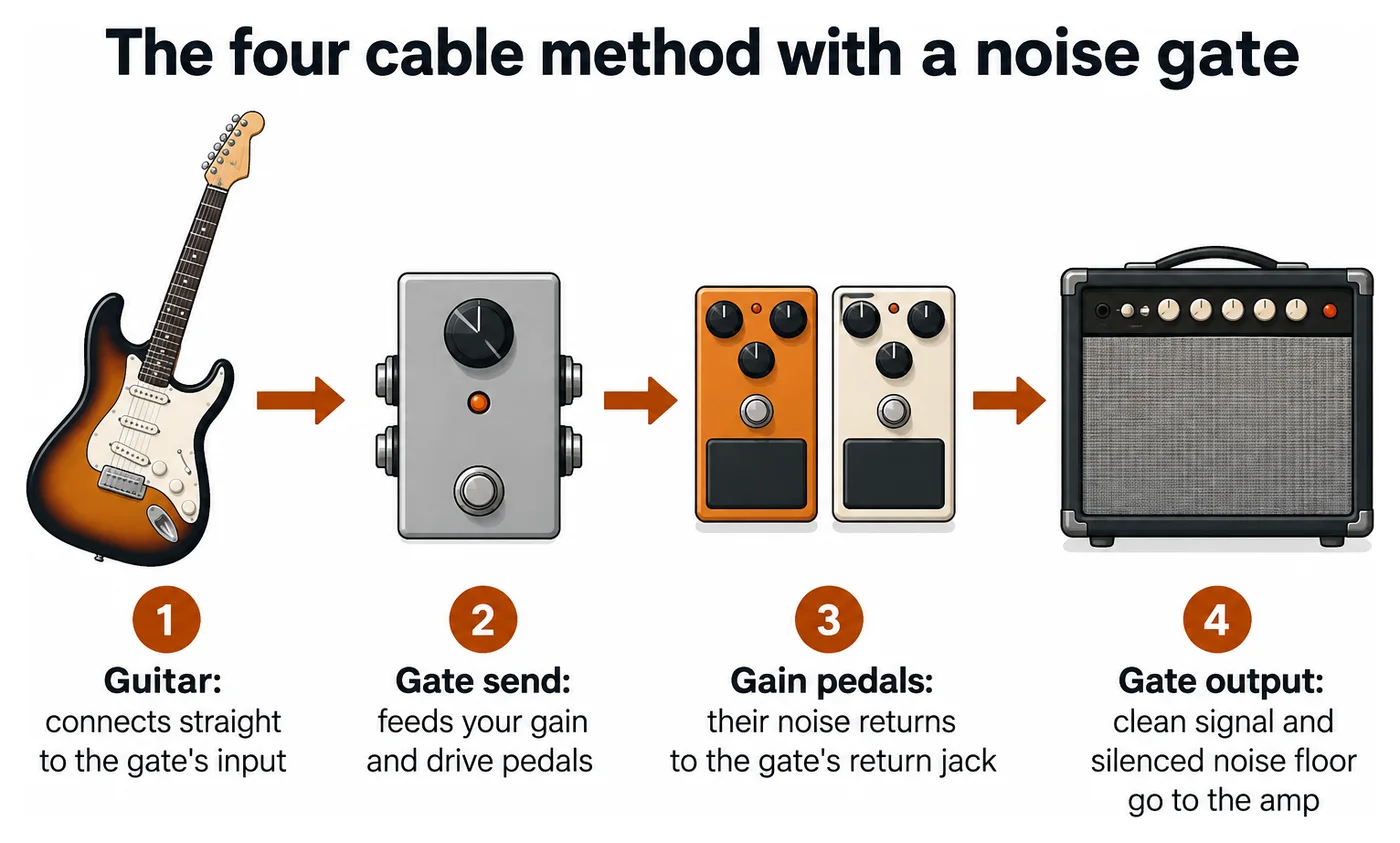
Several pedals are built for exactly this wiring. GUP Tech's SUN Noise Gate "includes 4 jacks to wire the pedal in 2, 3 or 4-wire method," with the right side jack as the detection input and the top right jack as the actual gate input17. The TDS Sun Noise Gate uses the same 2, 3 or 4 wire wiring20. The MWAC puts Guitar In and Thru on the right side of the pedal with gate return jacks on top, and GUP Tech's own placement advice is to wire those "as soon as possible in your signal chain, after your tuner," then "come back for the gate (Top jacks) as late as possible," in the FX loop or just before the amp18. NUX's Huminator likewise "features an integrated effects loop for isolating noisy pedals"21.
A note on buffers. GUP Tech adds that a buffered signal into the gate's detection path is better18, which matches the general principle that a weak or degraded signal makes the threshold harder to set consistently.
A gate can only remove noise that passes through it. Noise from pedals placed after the gate, or from the amp itself, is untouched unless you use the four cable method or put a second gate in the amp's effects loop.
Landmark and notable noise gate pedals
The noise gate world has a clear hierarchy in the press: a few long established names, a wave of compact gates, and a cluster of high end metal oriented designs.
Boss NS-2. The NS-2 stays in the conversation through placement guidance: the drive section is "also the logical place for a noise gate like the NS-2 to control the unruly pedalboard section"15. That is the spot where noisy gain pedals gather, and noise gate pedals are most useful to players of heavy high gain music and players with noisy boost, distortion or fuzz pedals, the very pedals that make a drive section unruly.
Not every notable gate works the same way, and the differences matter to the players who need them most. Noise gate pedals are useful for players of heavy high gain music, players with noisy pedals such as boost, distortion and fuzz, players with bad or unstable electricity at home, and performers where the power may be unclean22. A gate that can separate its detection from its gating, through a loop or multiple jacks, handles those rigs more precisely than one that simply sits in line.
Bypass choice is part of what separates one gate from another. Many players prefer a buffered noise gate pedal, particularly when using the loop, as this involves a lot of cables, and a buffered gate gives a boost at the front of the chain; a true bypass pedal offers no tone boosting23. For players comparing circuits, that difference can matter as much as the gate's threshold behavior.

Revv G8. Revv's G8 Noise Gate is a metal scene favorite with "top-mounted jacks for convenient pedalboard setup"24. Gearnews's 2026 guide gives it the metal and djent slot25.
Whatever the size or price, the job stays the same: a noise gate removes unwanted noise rather than adding an effect26. The choice between buffered and true bypass also crosses the whole category: many players prefer a buffered noise gate pedal, particularly when using the loop, since that involves a lot of cables and gives a boost at the front of the chain, while a true bypass pedal offers no tone boosting26.
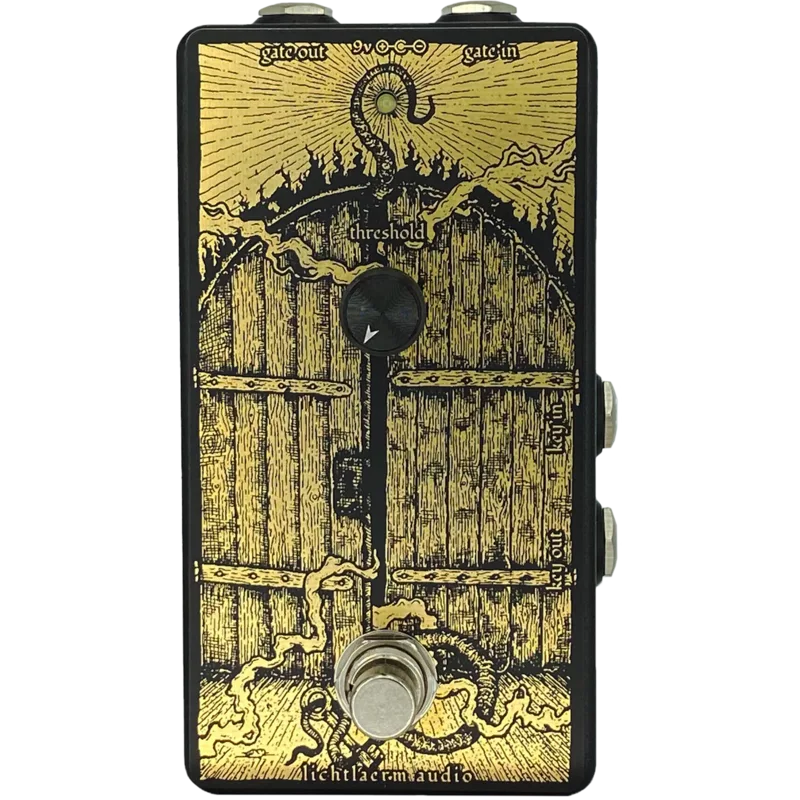
Envelope controlled designs. Lichtlaerm Audio's The Key and the Gate is described by its maker as "a hyper-responsive, envelope-controlled noise gate"27, a design approach that tracks the dynamics of your playing rather than a fixed threshold.
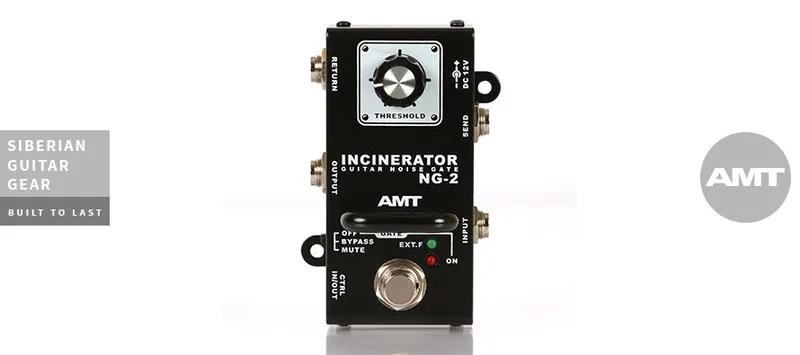
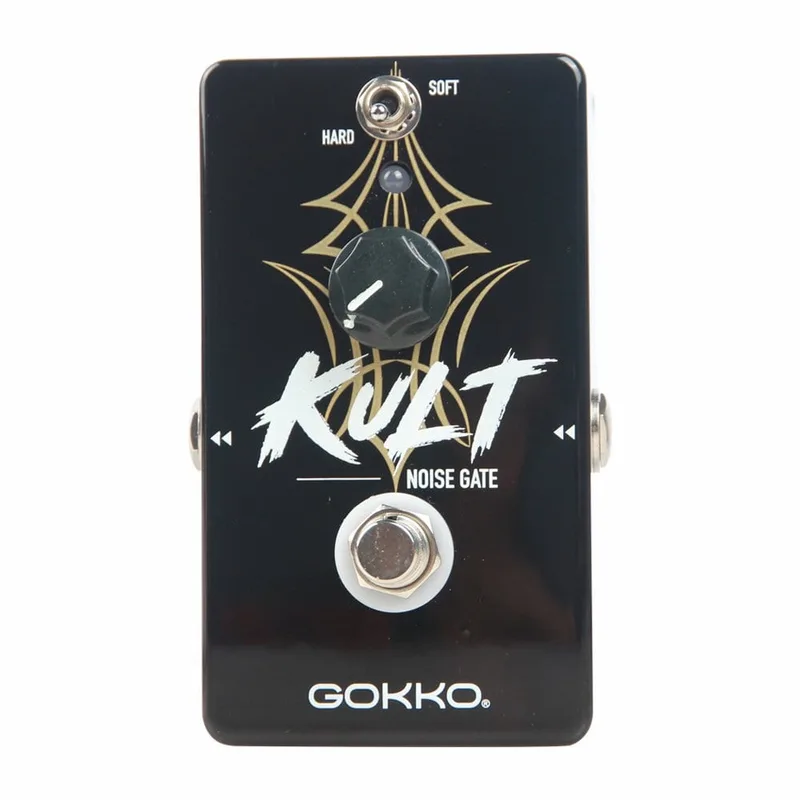
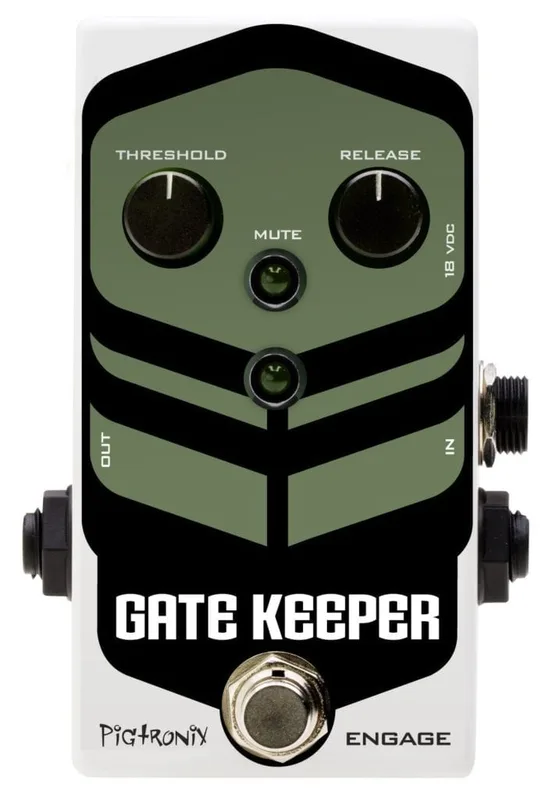
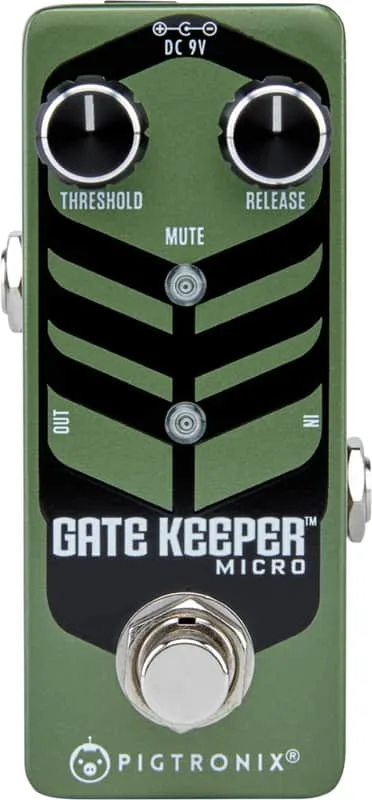
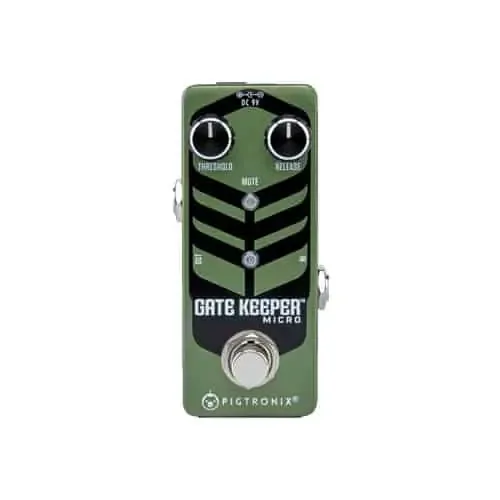
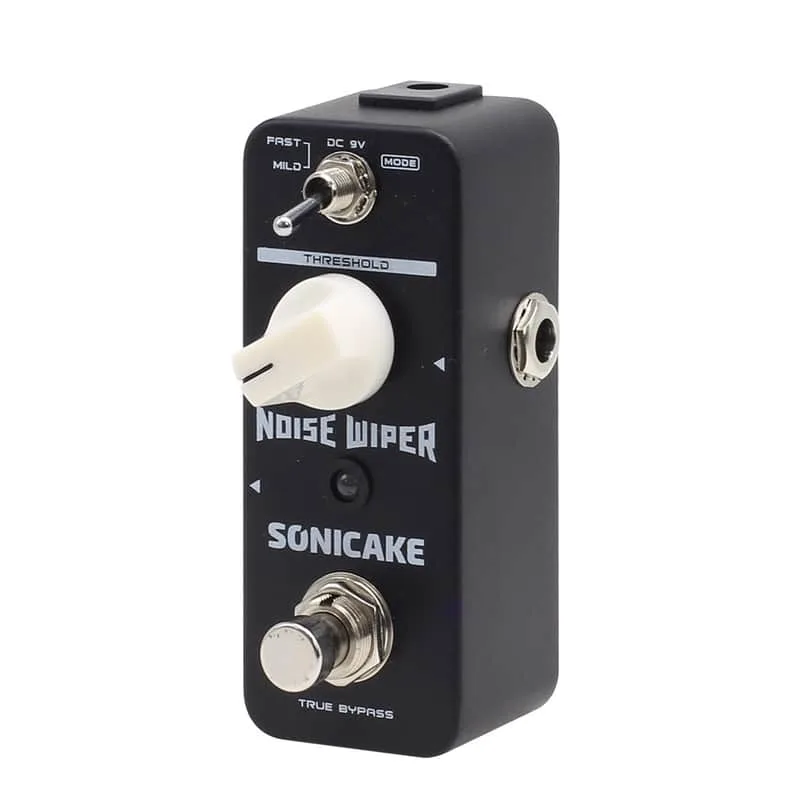
Other named models. The field also includes the GOKKO KULT, which "can help reduce the noise hum and buzz of other pedals (especially high gain distortion) in your pedal chain"28; Sonicake's dual mode Noise Wiper282930; GUP Tech's GUUL and the Vault range of available gate pedals30; AMT's compact Incinerator NG-2 noise reduction pedal282930; and Pigtronix's Gatekeeper, which "cuts out unwanted rig hum"282930.
Gates built into other pedals
Many players never buy a standalone gate because their drive or fuzz pedal already has one. BLAMMO! Electronics' Deth Pedal includes "the internal noise gate with bleeder resistor that REALLY cuts down the hiss and hum between notes but also allows them" to decay naturally31. Even DIY circuits get in on it: Jed's Peds notes of its Pink Mule FV1 board that "some builders have experienced white noise when using this whilst others haven't! A noise gate may solve th[e] problem"32.
What reviewers make of the category
Whatever the individual picks, the category's job is not in dispute: a noise gate removes unwanted noise rather than adding a new effect33. The guides also converge on who needs one: players of heavy high gain music, players with noisy boost, distortion or fuzz pedals, players with bad or unstable electricity at home, and performers where the power may be unclean33. Where they differ is on placement and wiring, with the drive section the commonly recommended spot for a gate.
Questions
Do I need a noise gate for high gain?
High gain is where gates earn their keep. Distortion, fuzz and cranked amps raise the noise floor of everything in front of them, so hiss and hum that are quiet on a clean setting become loud when you stop playing. Makers of high gain pedals, including ENGL and MXR, build gates into their own products for exactly this reason, and GUP Tech lists high gain players among the first groups who benefit from a gate145.
Should a noise gate go before or after distortion?
If you run several gain or EQ pedals, BOSS advises positioning the gate after all of them, so it reduces the noise of every pedal in front of it19. If you want the gate to track your clean guitar signal while still silencing the gain pedals, use the gate's effects loop and the four cable method instead19.
What is the difference between a noise gate and a noise suppressor?
A noise gate clamps down and eliminates any signal below a threshold, which BOSS describes as a more harsh, less responsive option; a suppressor reduces noise more gradually19. Boss's NS-2 and NS-1X are suppressors, while many compact gates from other makers are straight gates.
How do I use the effects loop on a noise gate pedal?
Connect your guitar straight to the gate's input, run the gate's send into your noisy gain pedals, and return them to the gate's return jack. The gate then hears your clean guitar signal and the pedal noise as separate sources19. GUP Tech's SUN and MWAC pedals are built for this 2, 3 or 4 wire wiring1718.
Does a noise gate affect sustain?
It can. A gate mutes everything below its threshold, so a note that decays below that level is cut off rather than fading naturally. BLAMMO!'s internal gate with a bleeder resistor is voiced specifically to cut hiss between notes "but also allows them" to decay naturally31.
Will a noise gate remove single-coil hum?
A gate silences single-coil hum between notes, but the hum returns while you play, because the gate opens with your signal. Behringer's NR300 is intended to eliminate 60 cycle hum from single coil pickups10, but for hum that persists during playing, an isolated power supply such as D'Addario's Noise Isolator addresses the cause rather than the symptom9.
Sources (33)
- Do I Need a Noise Gate?, GUP Tech
- MXR® SMART GATE® NOISE GATE, Jim Dunlop (jimdunlop.com)
- The Noise by Azor, RockBoard PedalPedia, 2026
- ENGL EP635 Fireball IR Pedal, ENGL Amplification, 2026-04-24
- MXR® EVH® MODERN HIGH GAIN PEDAL, Jim Dunlop (jimdunlop.com)
- Noise Gate_Mini Guitar Pedals_Effect Pedals_Products_mosky pedal, moskyaudio.com
- C19-Databus-Drive-doc.pdf, Parasit Studio, 2020-08
- Z.Vex Effects, Analog Man (analogman.com), 2015
- Learn & Earn, D'Addario
- NR300 | Behringer, Behringer
- Hush The Pedal, rocktron.com, 2024-08-28
- HUMINATOR, NUX Audio, 2026-04-14
- ISP Technologies, ISP Technologies
- Tame your gain with the NS-1X: the first new Boss Noise Suppressor pedal in 35 years, musicradar.com, 2023-09-14
- The Ultimate Guide to Guitar Effects Pedal Order and Signal Chain, BOSS (articles.boss.info), 2023-03-01
- TC Electronic Introduces Sentry Noise Gate, Guitar Interactive Magazine, 2015-09-30
- SUN Noise Gate Guitar Pedal, GUP Tech (guptech.ca)
- MWAC Gate, guptech.ca
- The Complete Guide to Noise Gate and Suppressor Pedals, BOSS (articles.boss.info), 2023-11-30
- TDS SUN Noise Gate, GUP Tech (guptech.ca)
- Huminator Noise Gate by NUX, RockBoard PedalPedia, 2026
- The All New Decimator X Adaptive Noise Reduction Pedal, ISP Technologies, 2024-05-31
- Best noise gate pedals 2026: clean up your signal, Guitar World, 2021-03-19
- Revv G8 Noise Gate, Revv Amplification
- The 7 Best Noise Gate Pedals of 2026: Not Hiss Problem (or Hers), gearnews.com, 2026-07-27
- Guitar Pedal X, Guitar Pedal X
- Lichtlaerm Audio The Key & The Gate, Lichtlaerm Audio
- KULT Noise Gate, GOKKO AUDIO
- Legacy - GUUL Noise Gate, GUP Tech (guptech.ca)
- Vault - Noise Gate, GUPtech (guptech.ca)
- Deth Pedal, BLAMMO! Electronics
- Pink Mule FV1, Jed's Peds (jedspeds.co.uk)
- Emerald Ox FX GLTTR! review: not for the faint of heart or ears, guitar.com