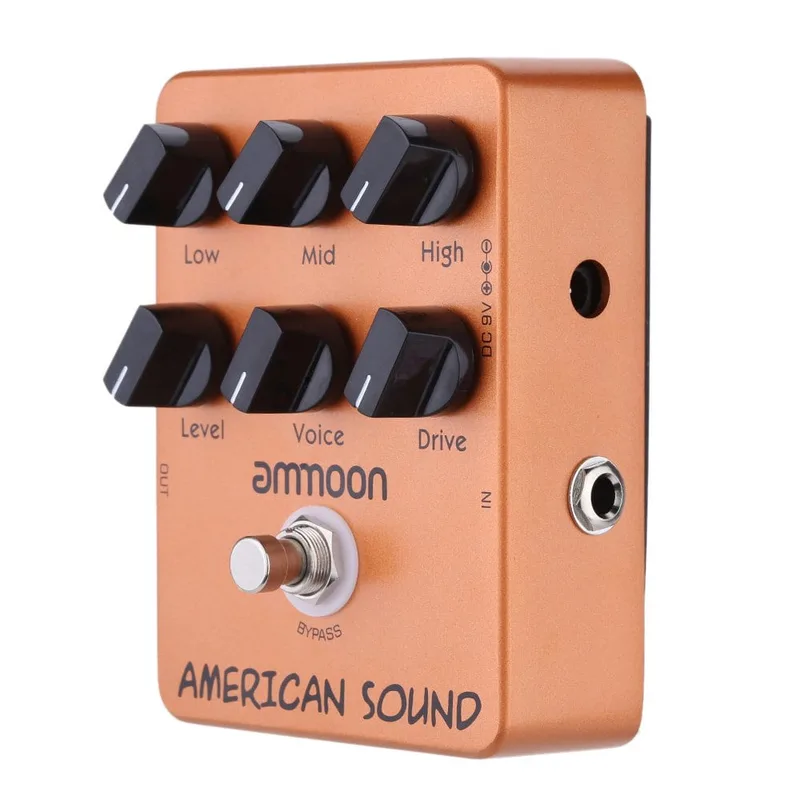
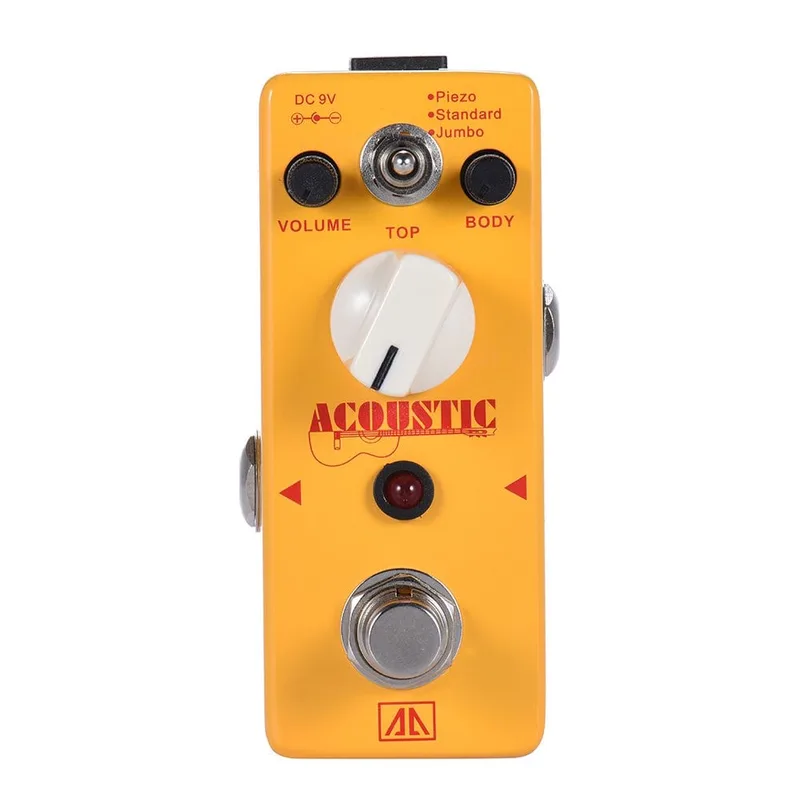
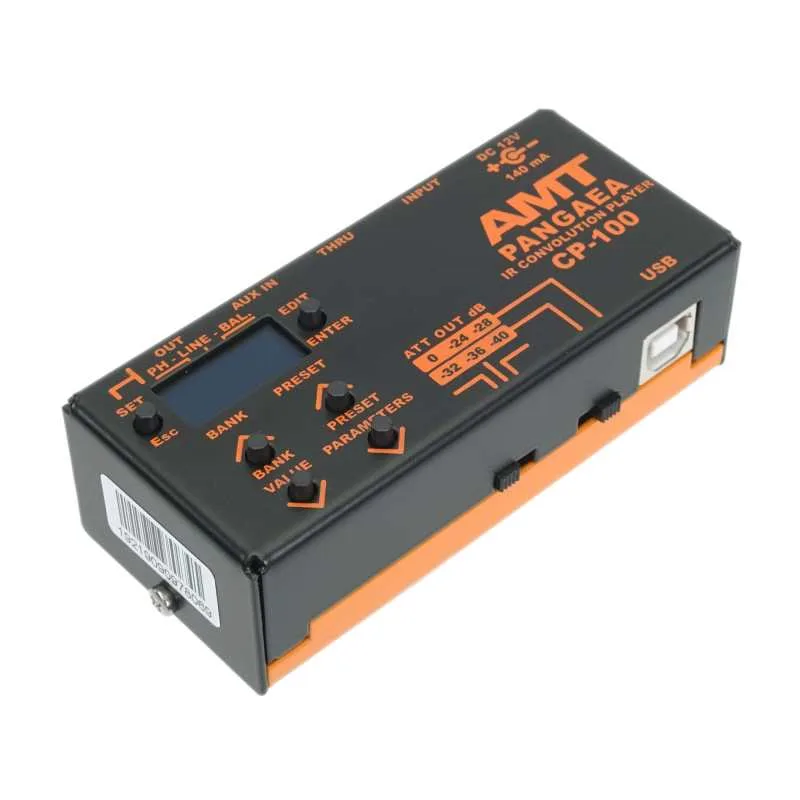
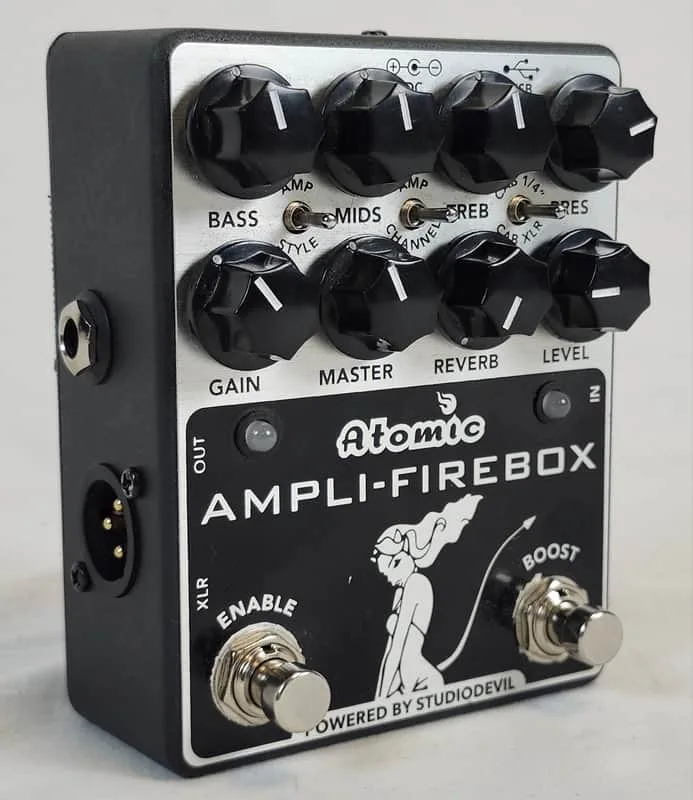
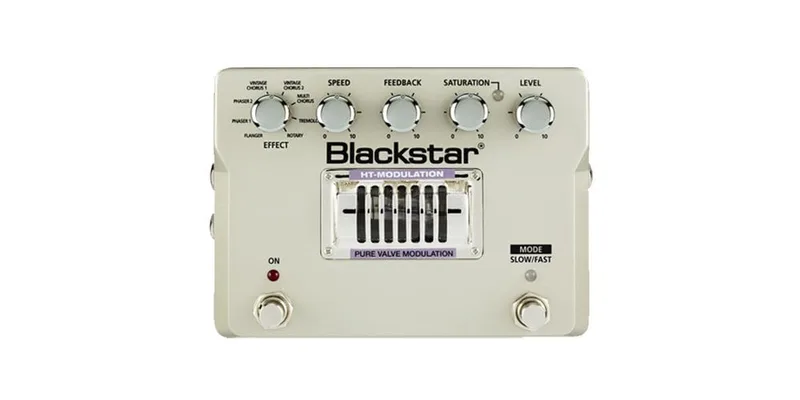
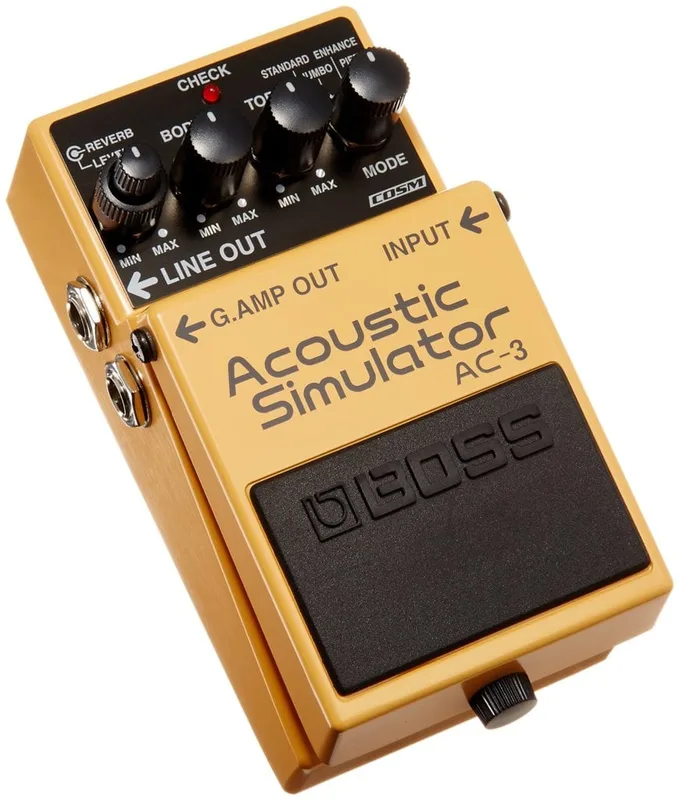
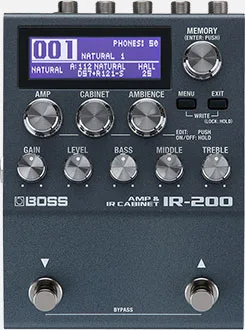
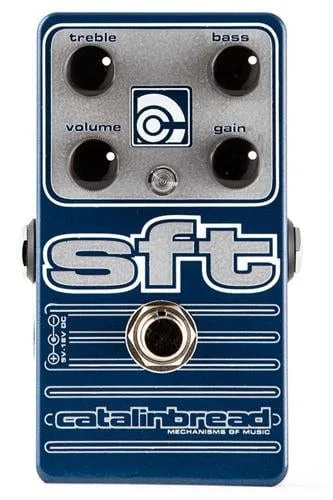
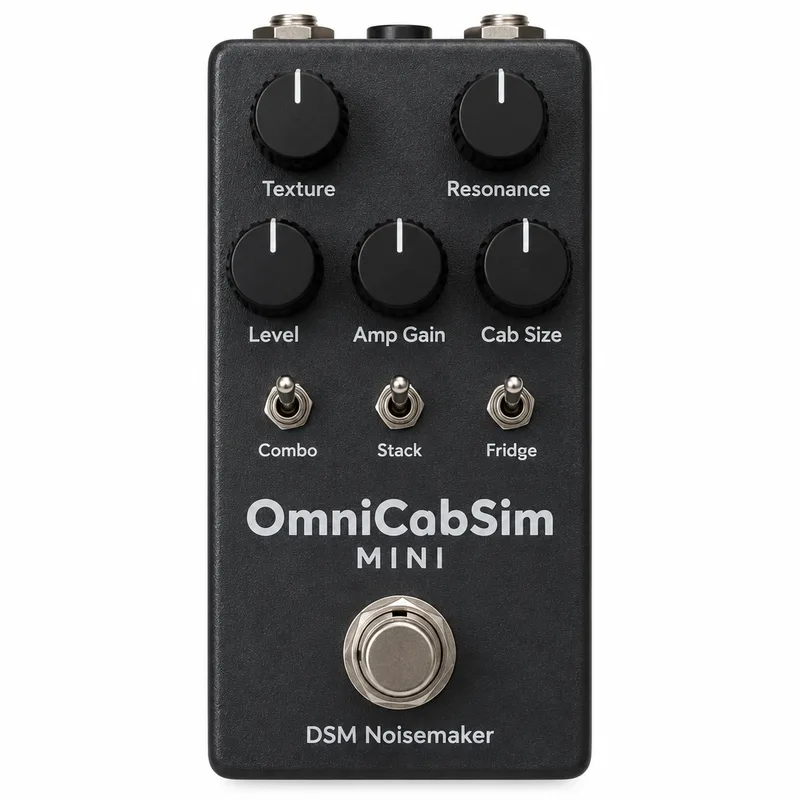
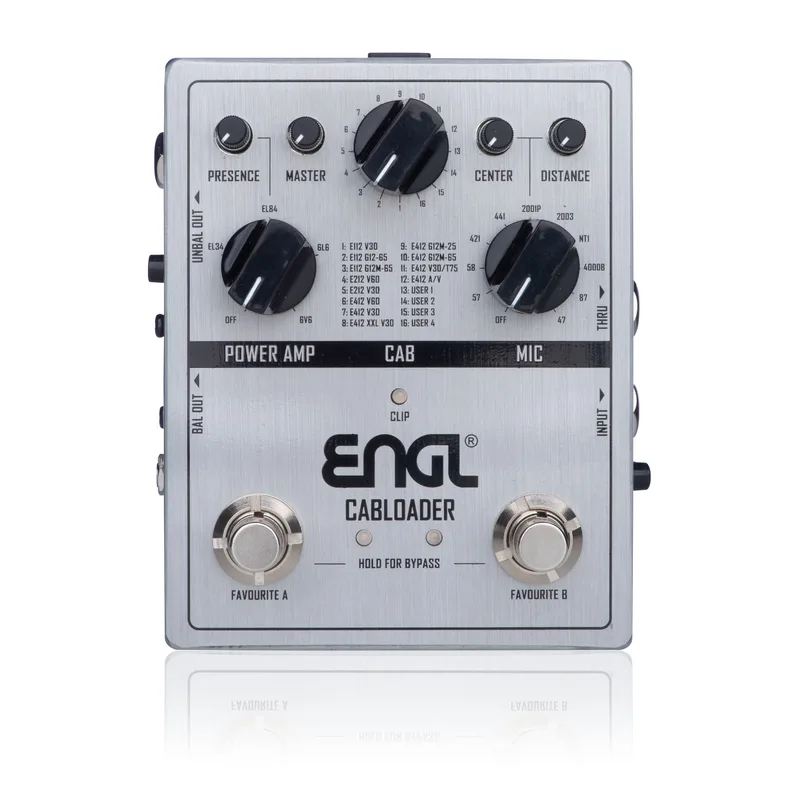
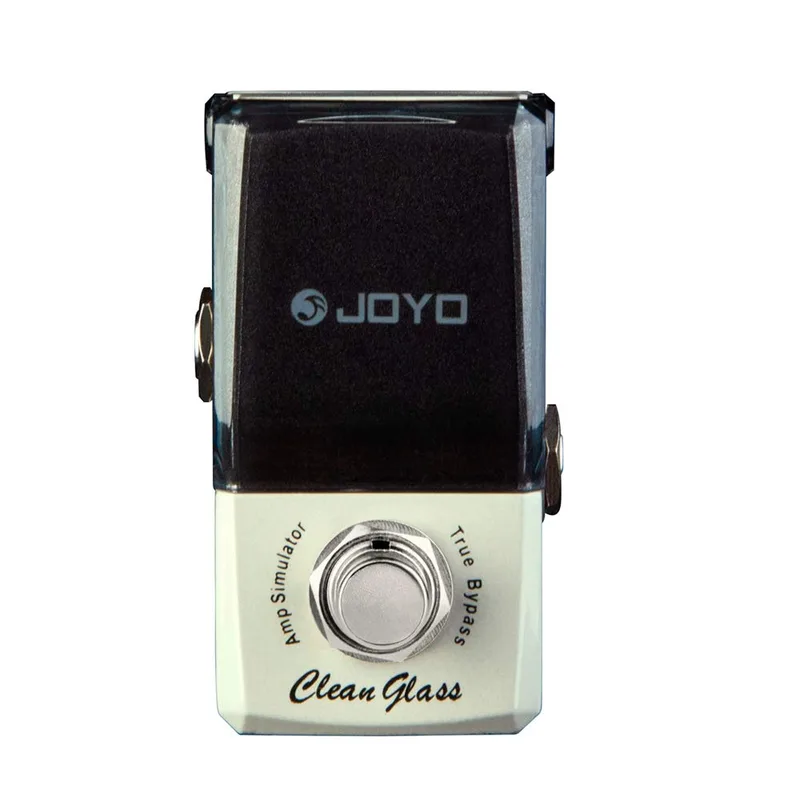
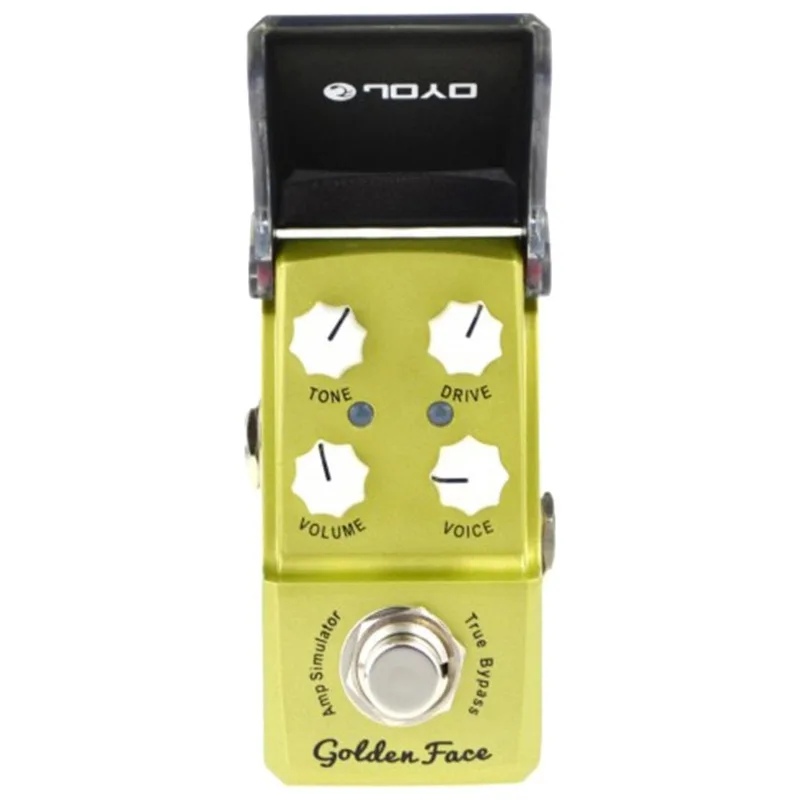
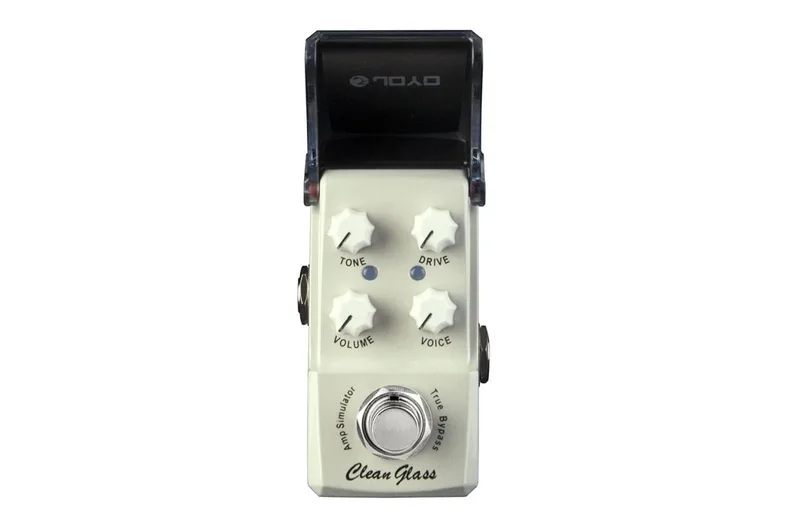
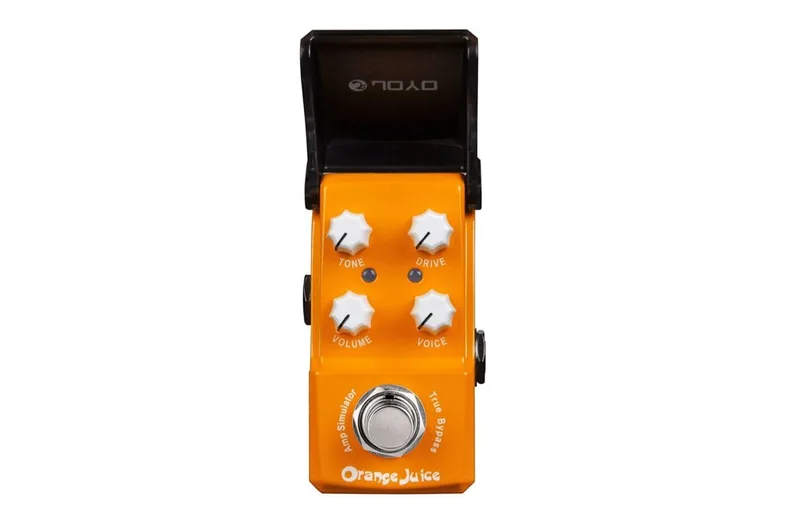
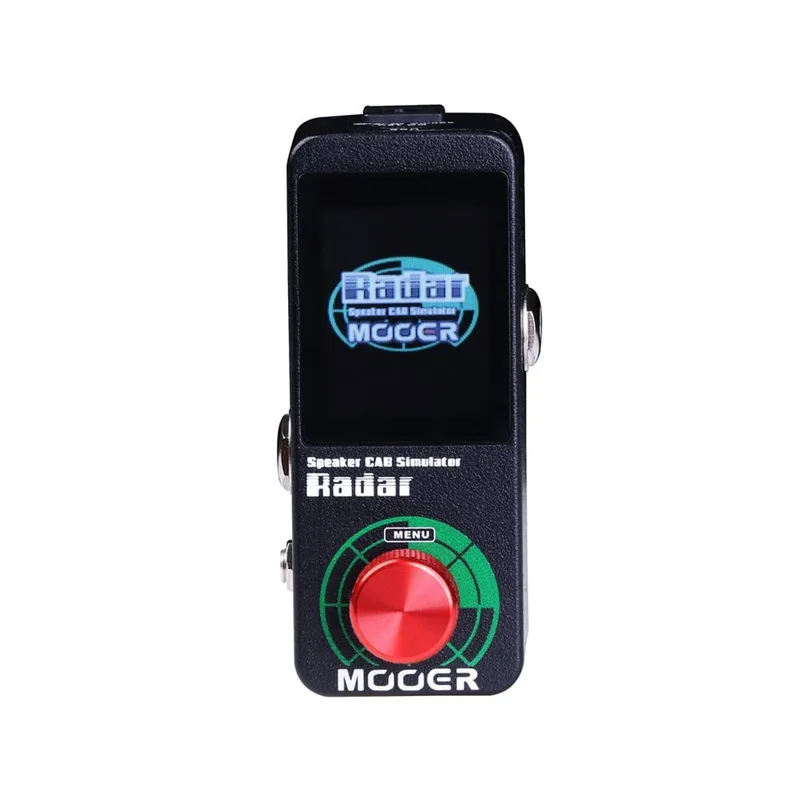
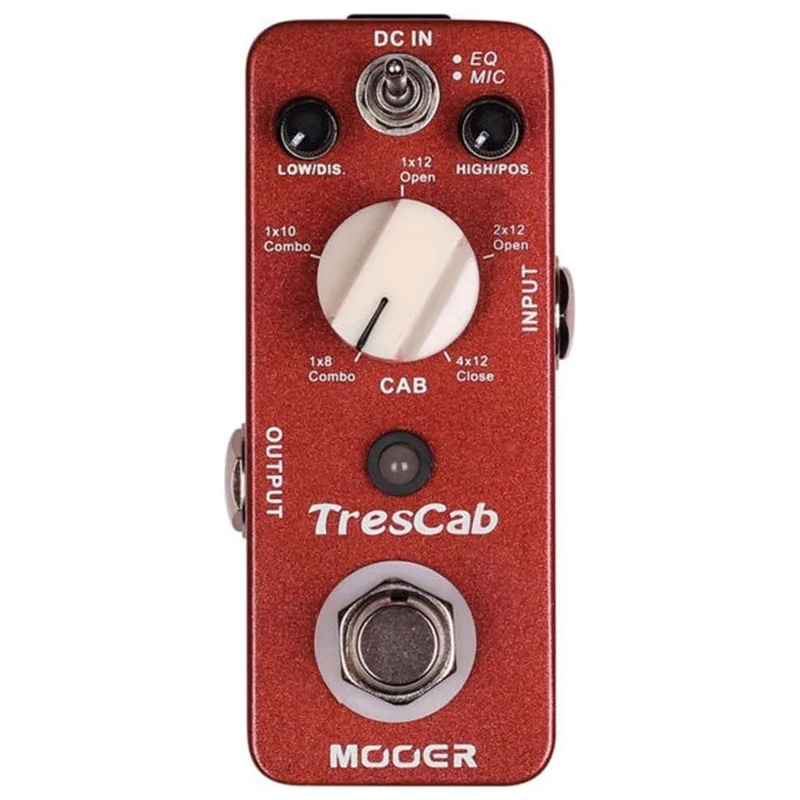
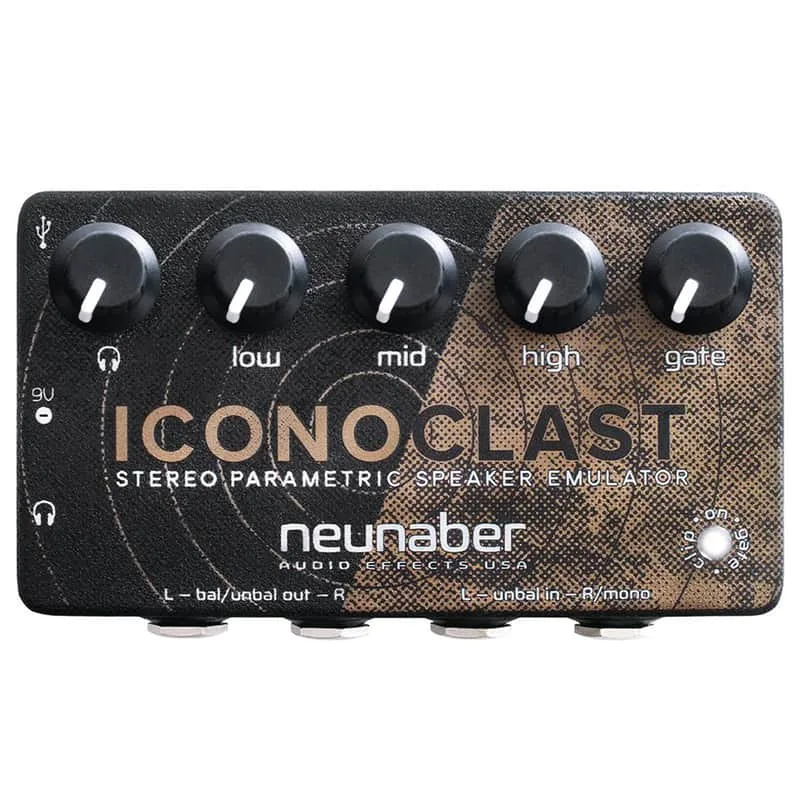
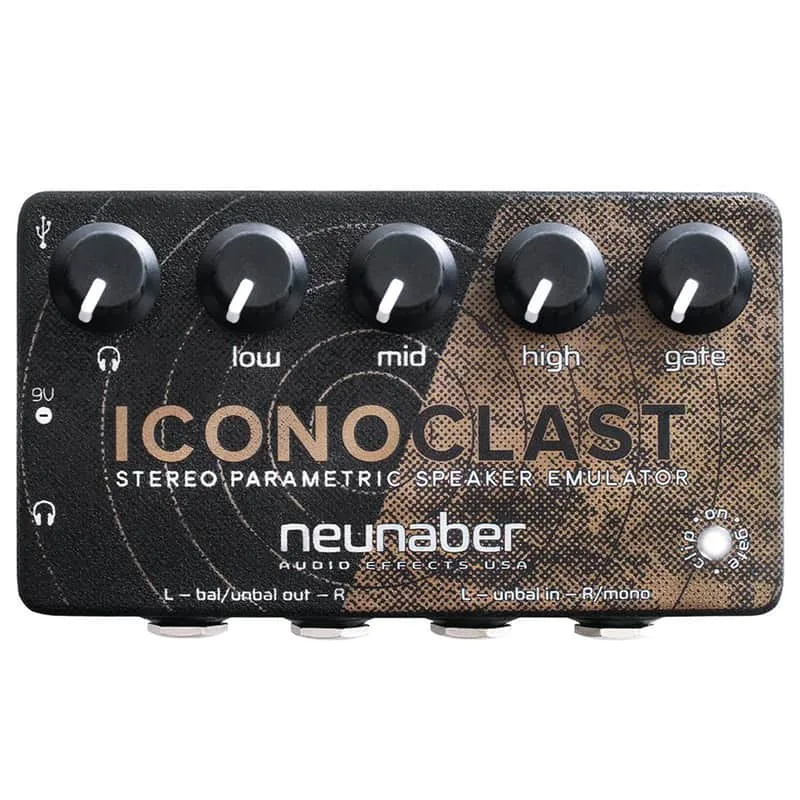
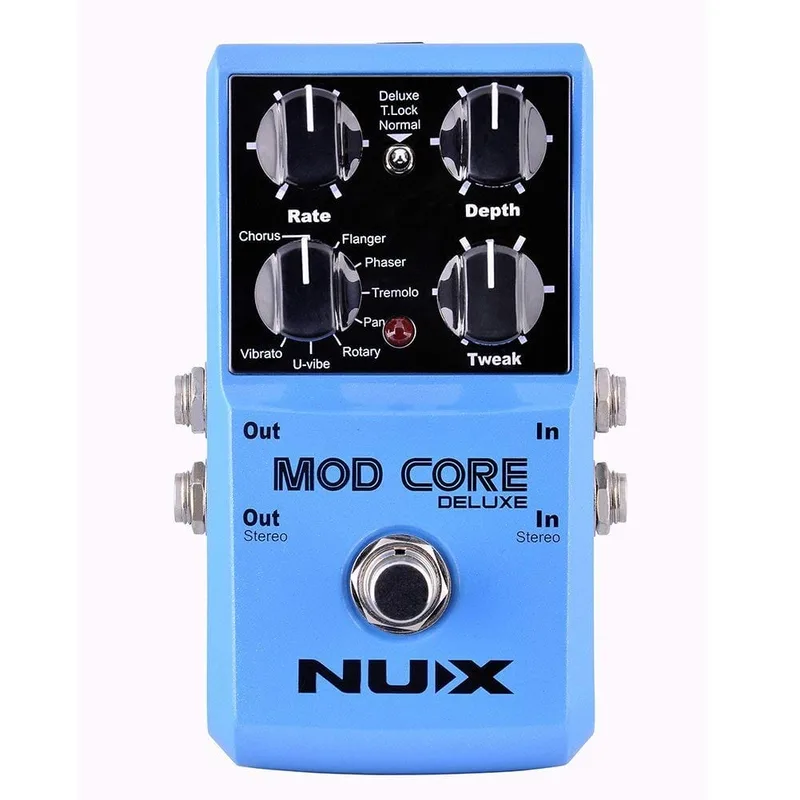
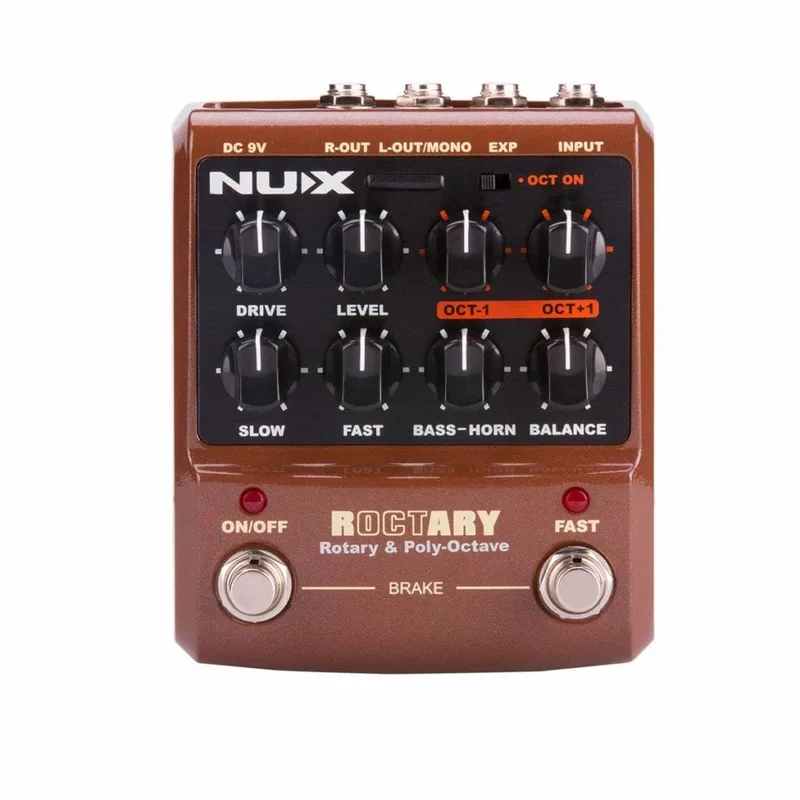
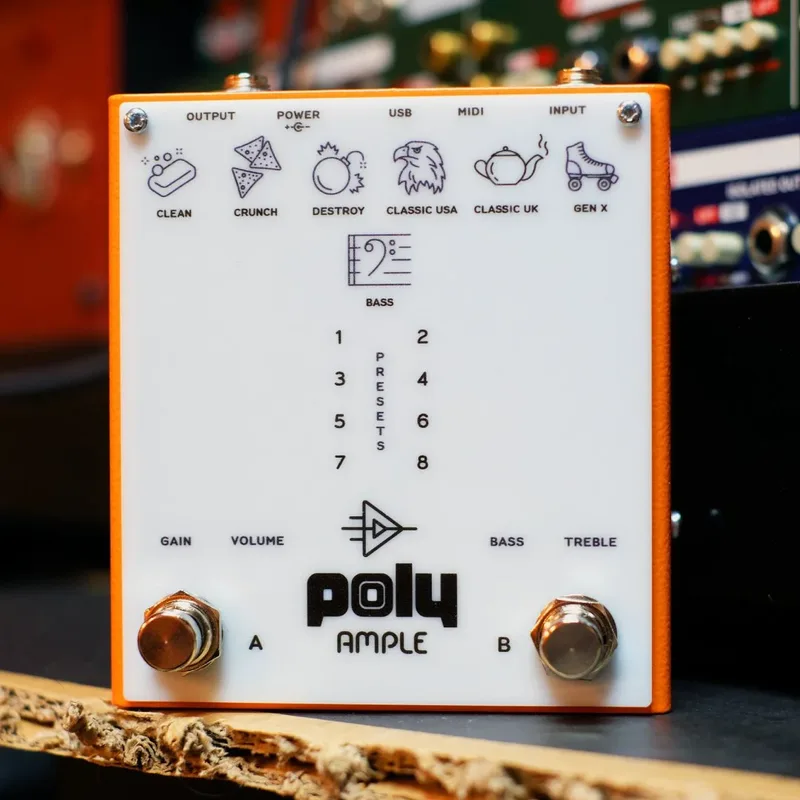
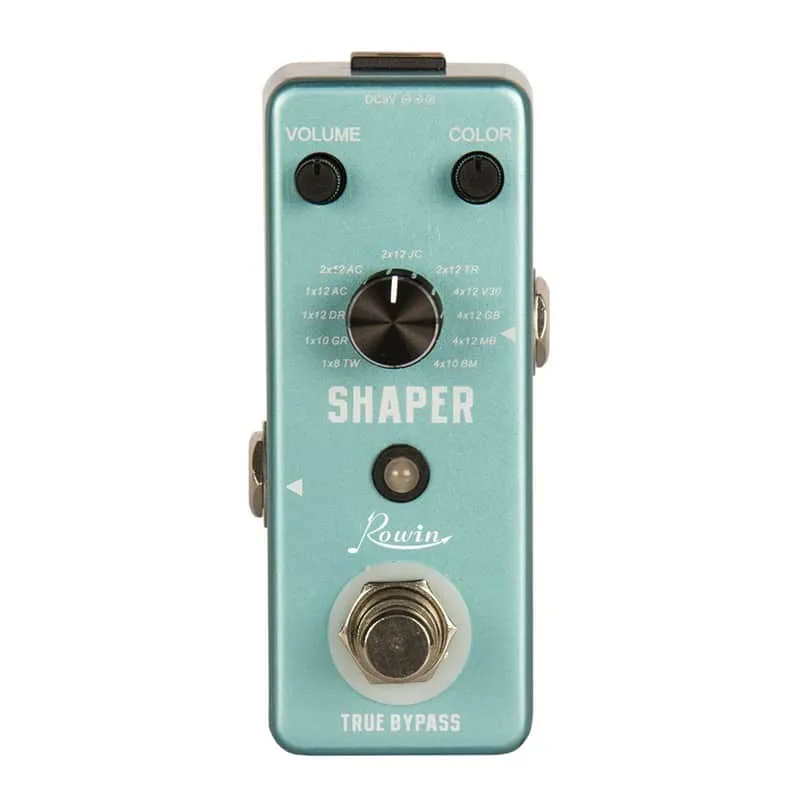
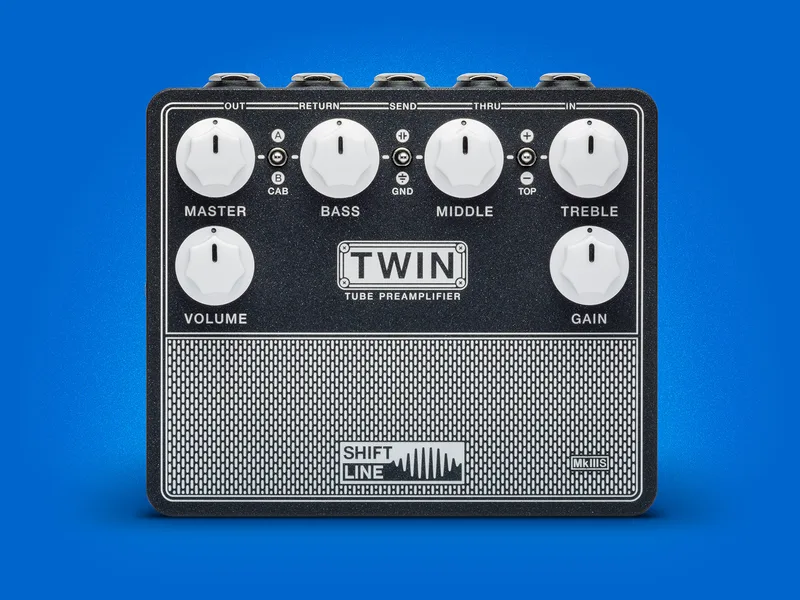
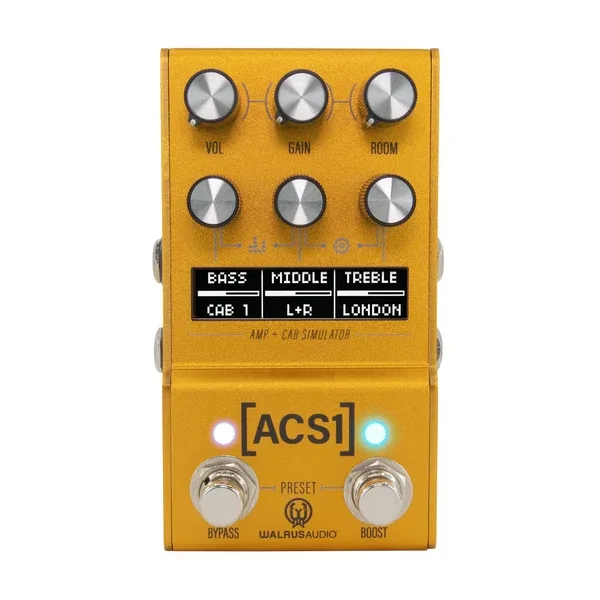
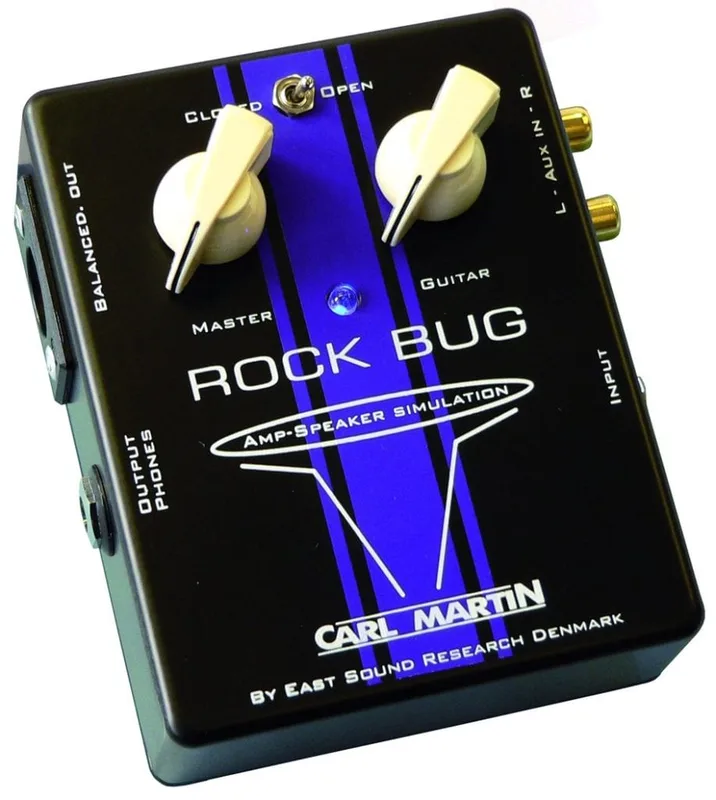
A speaker simulation pedal takes the flat, bright signal from your guitar or pedalboard and shapes it so it sounds like it came out of a guitar speaker cabinet. General Guitar Gadgets describes the purpose plainly: its speaker simulator "modif[ies] the tonal characteristics of your guitar signal to sound somewhat like the sound coming out of a speaker," for recording without an amplifier or for a pleasant headphone practice tone1. That is the whole idea in one sentence: a real guitar speaker rolls off the harsh high frequencies and colors the midrange, and a speaker sim does that job electronically so you can plug into a mixer, a computer, a PA or a pair of headphones instead of lugging a cab.
The category is broader than it first looks. It includes simple analog cab sims, digital IR loaders that replay captured cabinets, rotary speaker emulators that reproduce spinning-speaker systems, tube preamps with speaker simulation built in, and load boxes that let a real tube amp drive a simulator instead of a cabinet. This page covers all of them: what each does, how it works, where it sits on a board, and what to weigh up when choosing one.
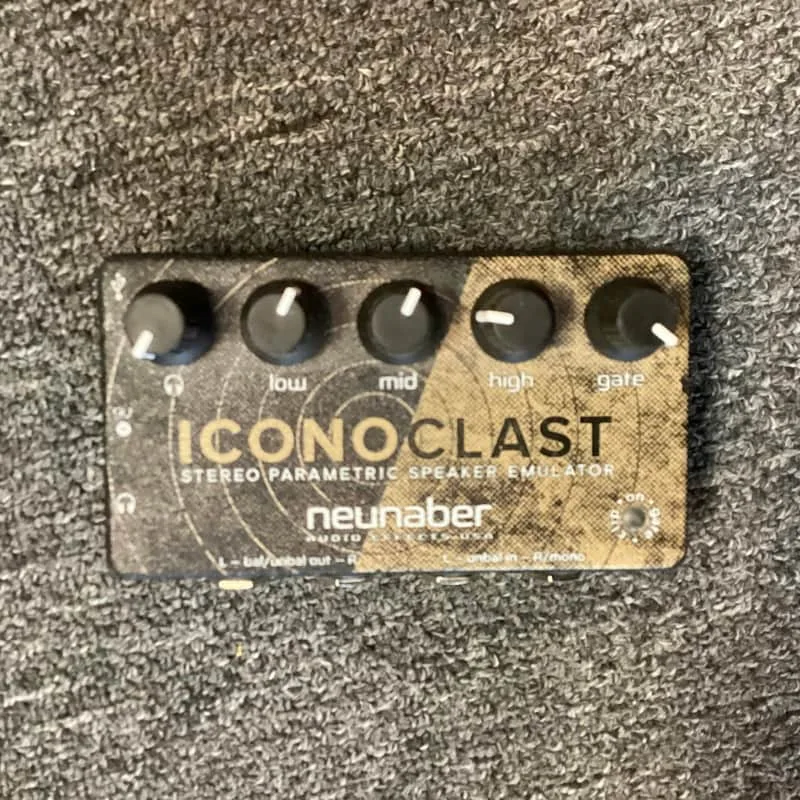
A speaker sim pedal is not a power attenuator. General Guitar Gadgets warns that its unit "Should Not be placed between your amp and speakers"1, and Quilter's Iconoclast manual says the same about that pedal: it is not a load box and must not be connected to an amplifier's speaker output2. Speaker-level signals need a unit specifically built with a load, covered below.
What a speaker simulation pedal does
A guitar pickup outputs a wide-range signal that only sounds "right" after it has passed through a speaker. Drive, fuzz and distortion pedals in particular produce harmonics that a speaker naturally tames. When you skip the amp and cab, that taming has to happen somewhere, and the speaker sim pedal is the box that does it.
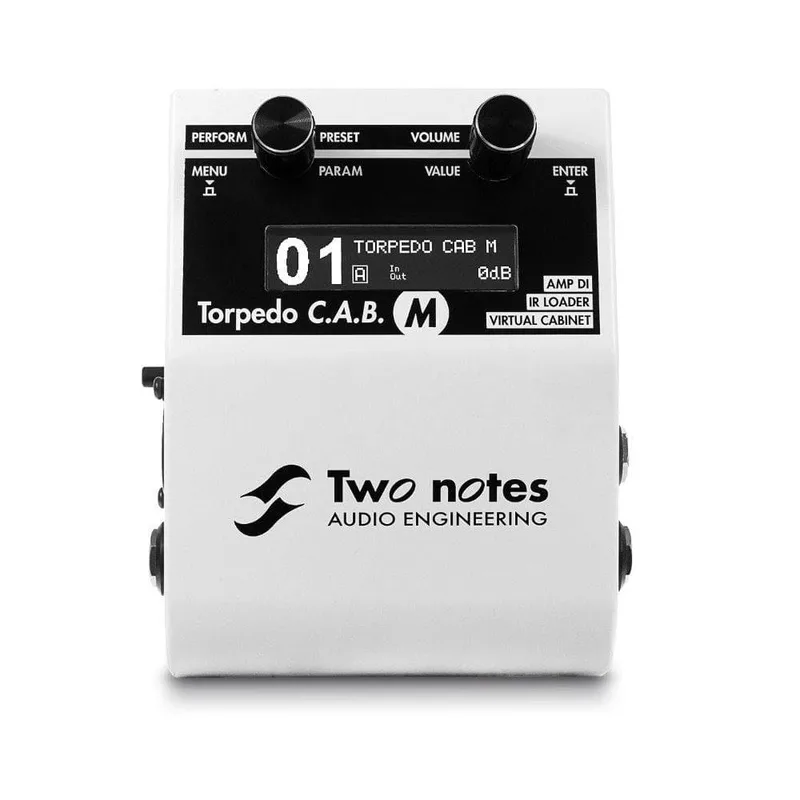
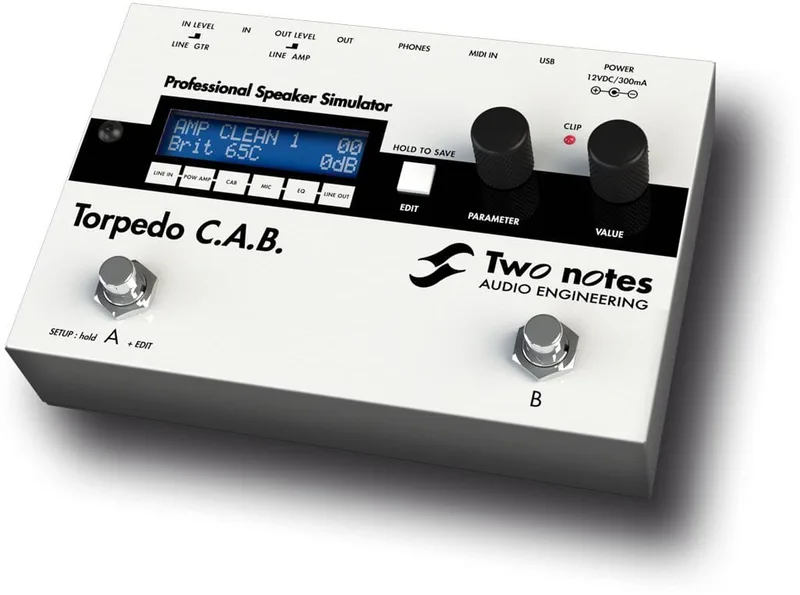
The payoff is portability and silence. A board that ends in a cab sim can go straight to a front-of-house console, an audio interface or headphones. GUP Tech pitches its Taxi Cab exactly this way: "Just plug the output into any Computer Sound card and record your pedalboard straight ahead"3. Two notes, maker of the Two Notes Torpedo C.A.B. M, frames its hardware as the answer to wanting to leave your amp at home, with a cab sim pedal to hand for direct work4.
The idea is old enough to be inside classic amps. General Guitar Gadgets sells a DIY project that is "a replica of a circuit found in some Marshall Amps that precedes the direct-out on the amp to provide a speaker simulation sound"5, and notes that "a very good sounding and easy to build speaker simulator exists inside some Marshall amplifiers (for the direct out)"1. So the pedal version of the effect is, in some cases, literally the same circuit that amp makers used for their DI outputs, pulled out into a stompbox.
How cab simulation and IR loaders work
There are two main approaches, and the difference matters when you are comparing products.
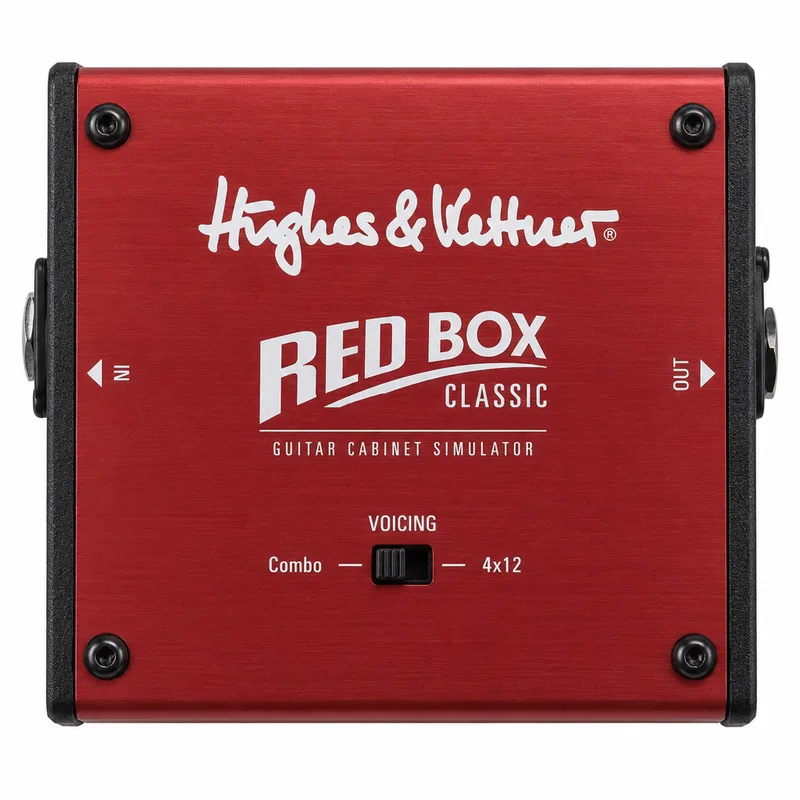
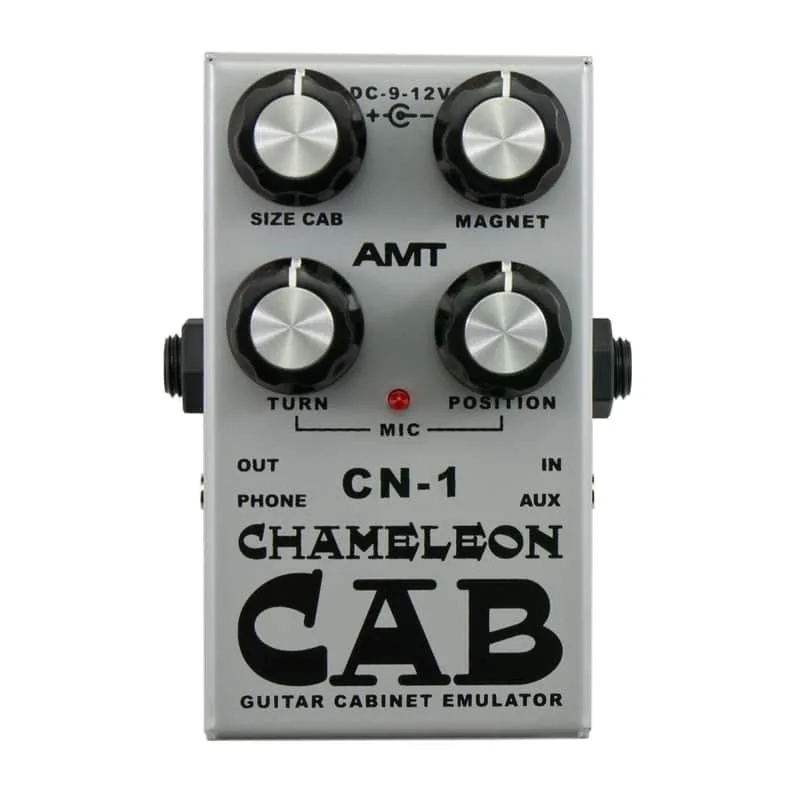
Analog cab simulation uses filters, the same way the Marshall direct-out circuit does, to approximate a speaker's frequency response. It is fixed: the pedal sounds the way it sounds, with maybe a switch or two for voicing. The Hughes & Kettner Red Box Classic and the AMT Electronics Chameleon CAB CN-1 sit in this tradition, as does the DIY General Guitar Gadgets project5.
Impulse response (IR) loading is digital. An impulse response is a recorded capture of a real cabinet, measured with a specific microphone in a specific position. The pedal convolves your signal with that capture, so what comes out is a measurement of an actual speaker and mic rather than a filter designed to imitate one. IRs are also just files, which is why IR loaders usually let you load your own.
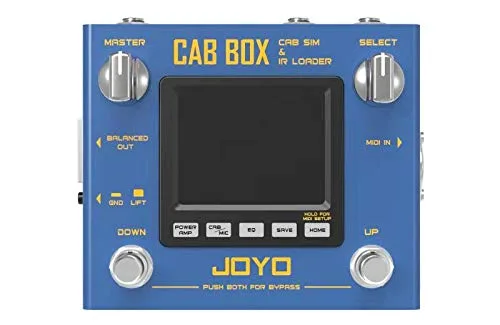
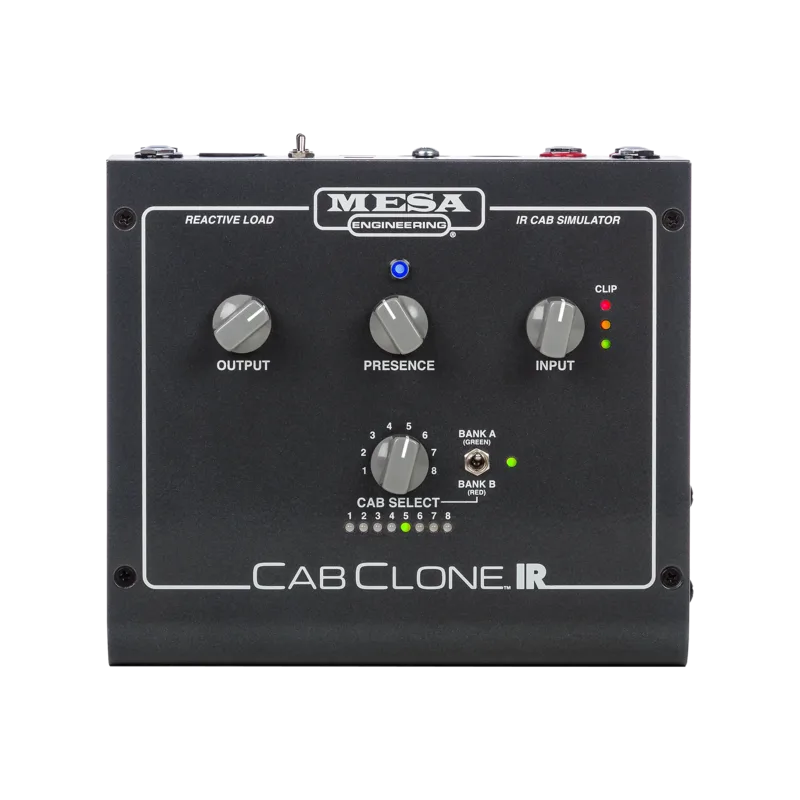
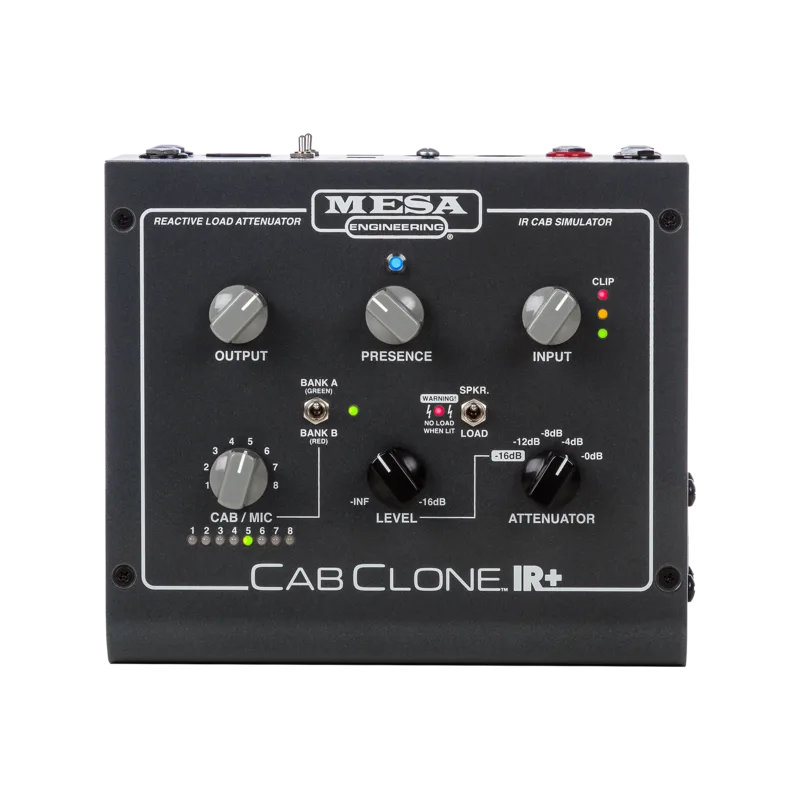
The two terms get used together because most modern products do both jobs. TC Electronic describes its IMPULSE IR LOADER as, "in short, it's a Cab Sim and IR Loader," one that "holds up to 99 Cab sims as IR emulations that you can load and use near-instantaneously"6. Gibson calls the Mesa Boogie CabClone IR an "IR Cabinet Simulator/IR Reader" with "16 Legendary IR Cabinet Simulations" on board7.
| Product | Approach | What the maker says |
|---|---|---|
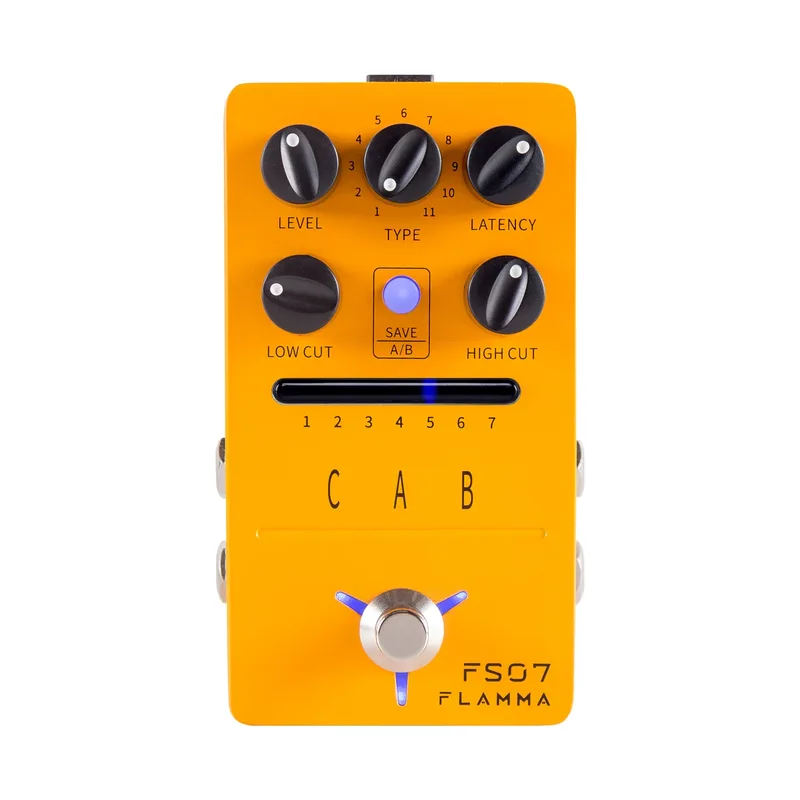
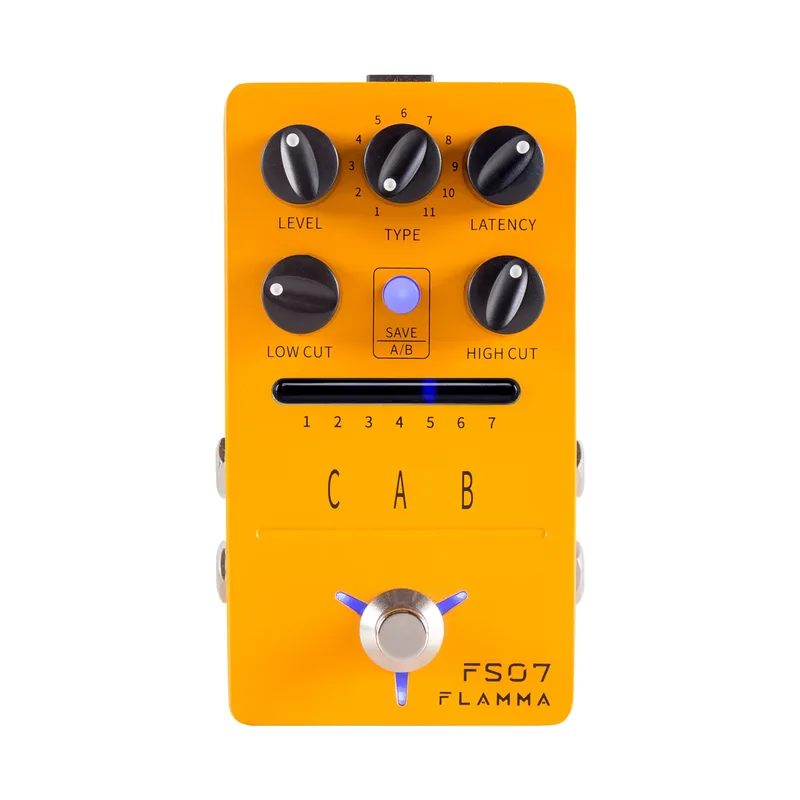
| Flamma FS07 | Stereo cab sim and IR loading | "High-quality stereo cabinet simulation/IR loading pedal"8 |
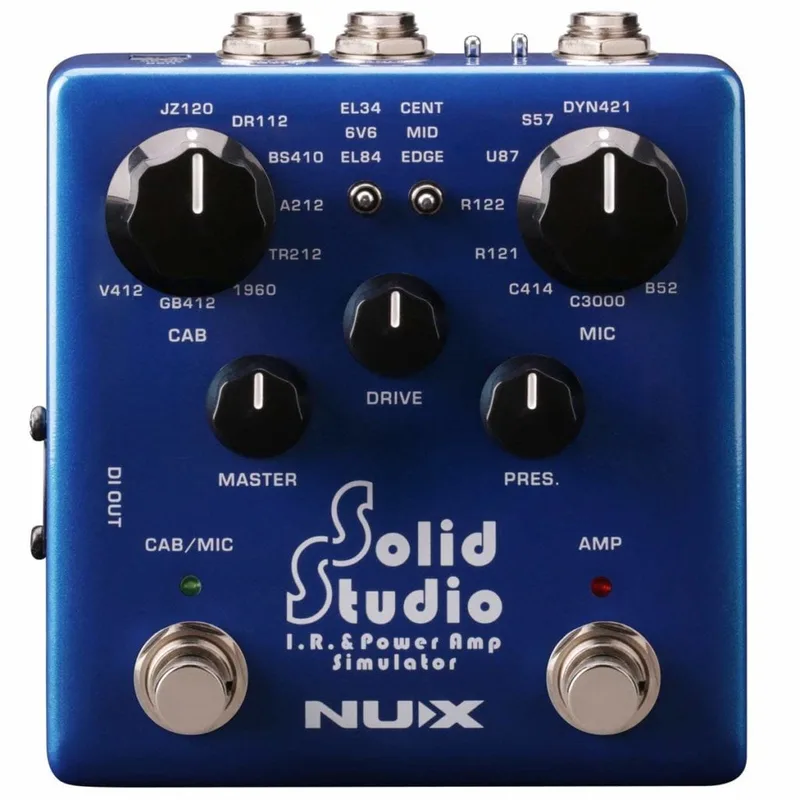
| NUX Solid Studio family, NUX Cerberus | IR loader | "Speaker Cabinet Simulation: IR Loader"9 |
| ENGL EP635 Fireball IR Pedal | IR loading via USB-C | "Customize your sound with user-loadable IRs using the included software"10 |
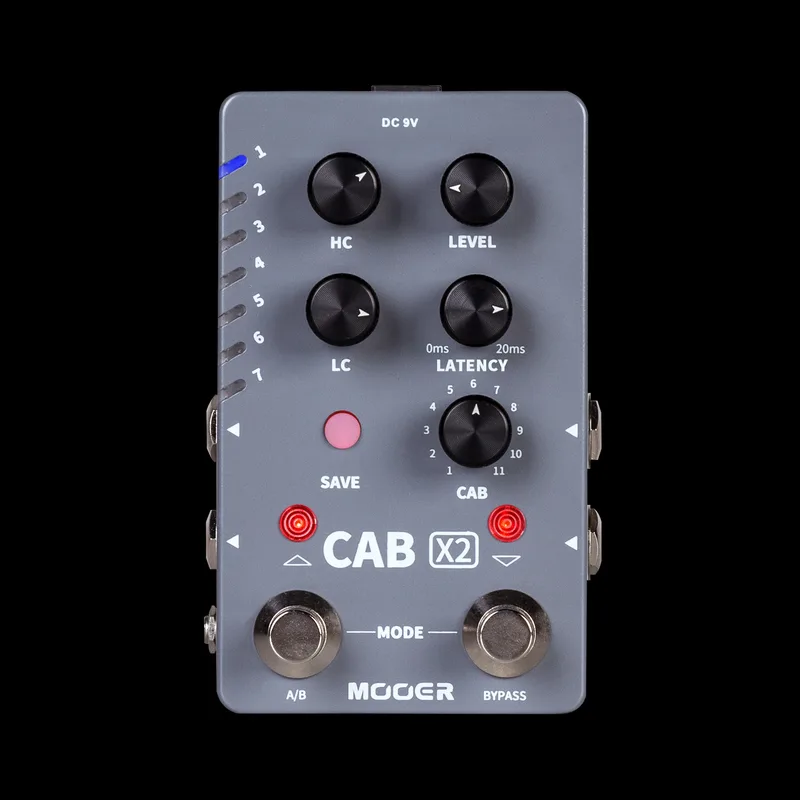
| MOOER Cab X2 | Digital cab sim and IR | "The latest digital cabinet simulation and impulse response pedal from MOOER Audio"11 |
| Flamma FX100 | IR-based cab models | "26 IR-based factory speaker cab models"12 |
| M-VAVE MK-20 | Cab sims with IR loading | "100 cabinet simulations with IR loading support"13 |
| Ampeg SGT-DI (bass) | IR loader and cab sim | "Onboard IR Loader/Cab Simulator"14 |
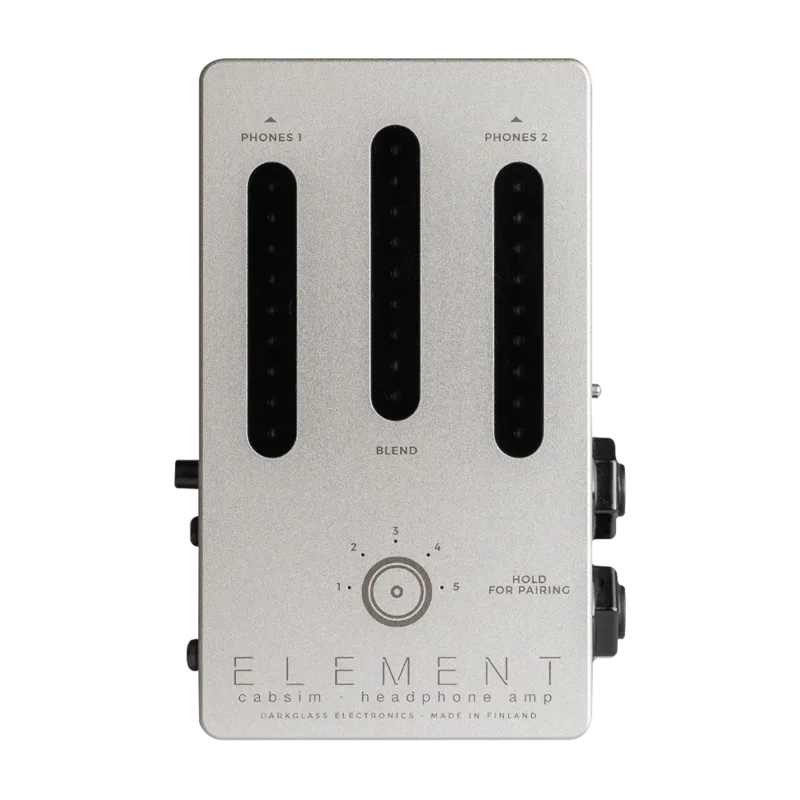
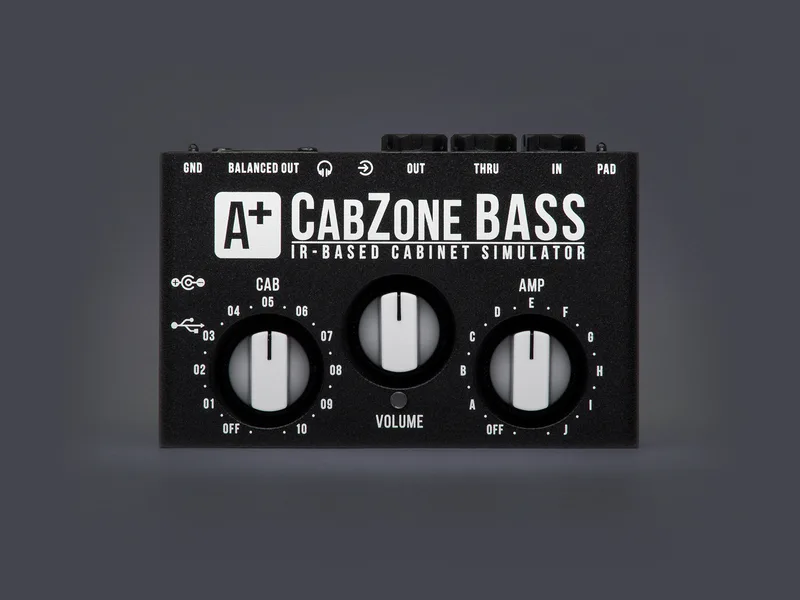
Bass players get the same treatment: Ampeg's SGT-DI Scrambler overdrive preamp carries an onboard IR loader and cab simulator for direct bass work14, and dedicated bass cab sims like the Shift Line A+ CabZone Bass and the Darkglass Electronics Element cover the same ground for bass boards.
One practical advantage of the digital route, which MOD Audio's João Neves points out about amp simulation generally: "You can record your guitar using one of the available amp plugins and then test the same recording through other sounds" without re-recording15. Swap the IR, and the same take sounds like a different cabinet.
Rotary speaker emulators
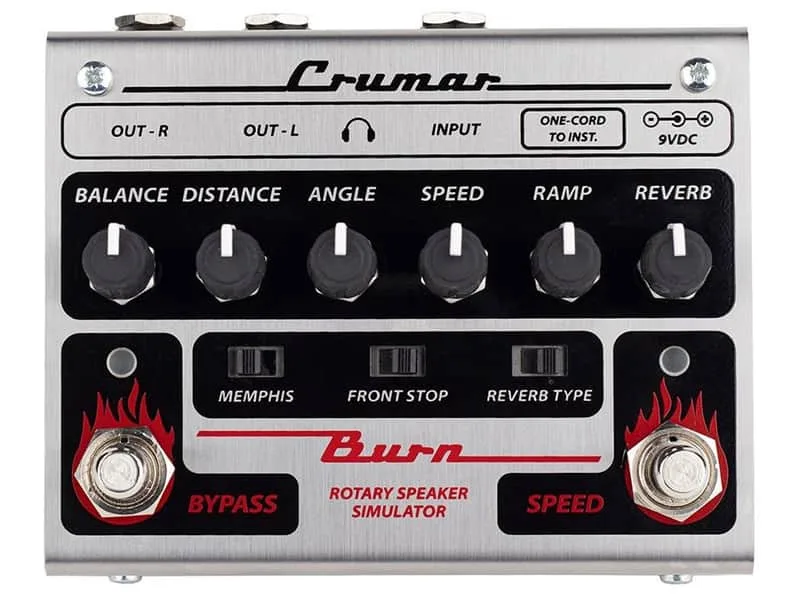
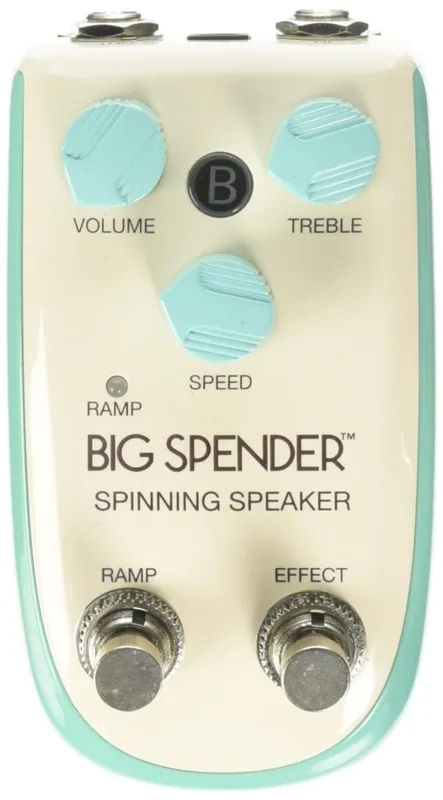
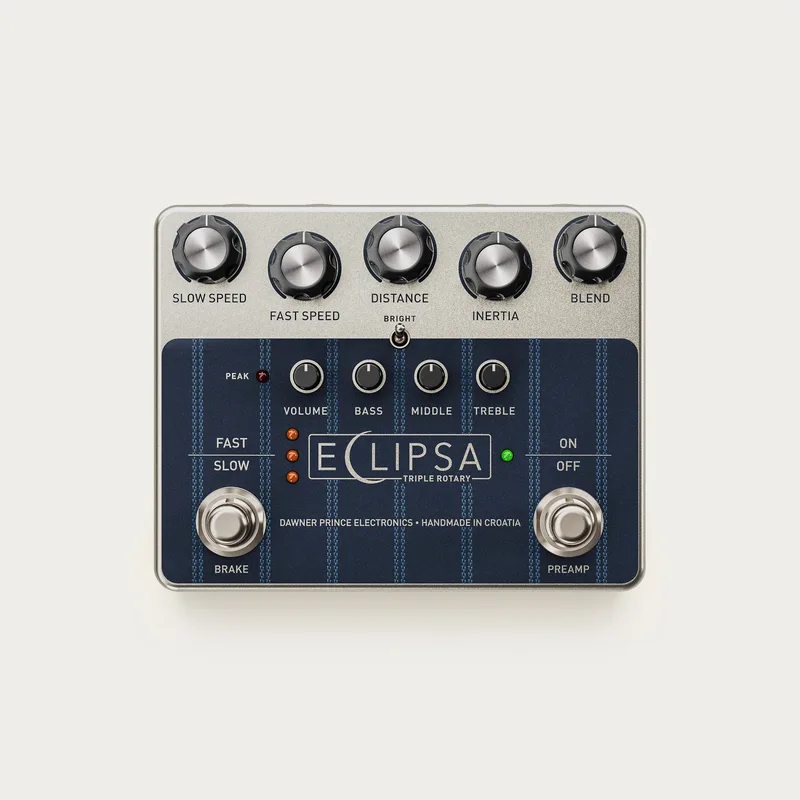
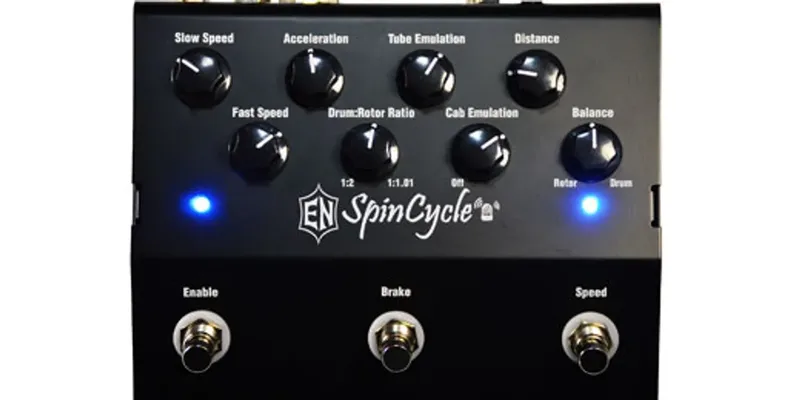
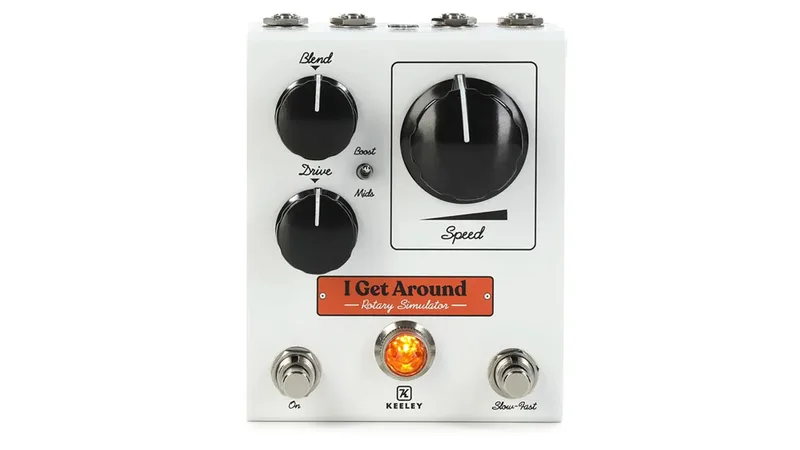
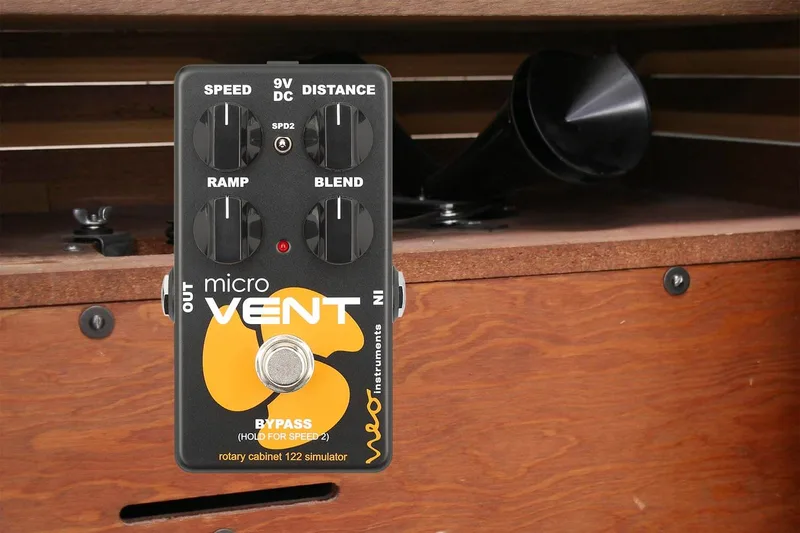
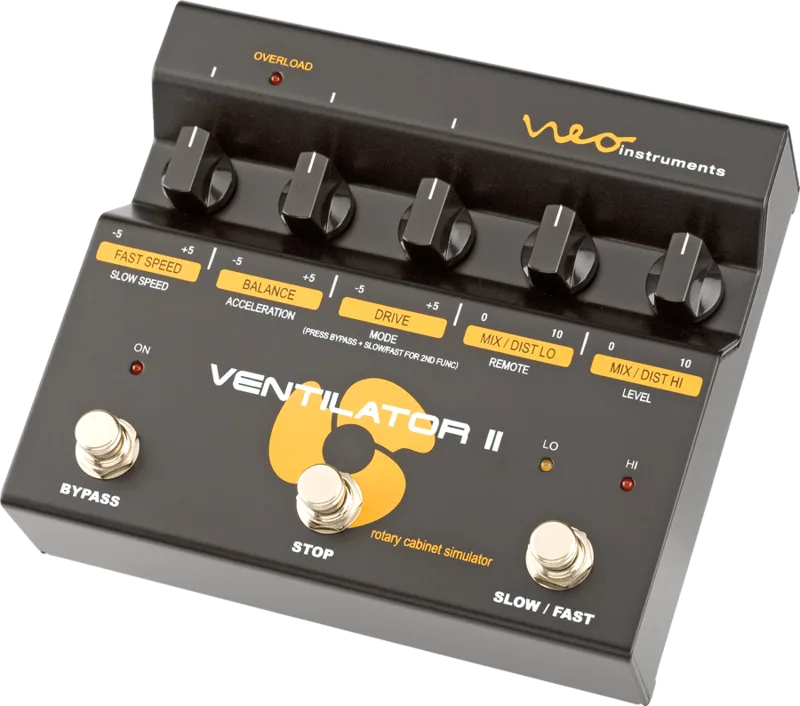
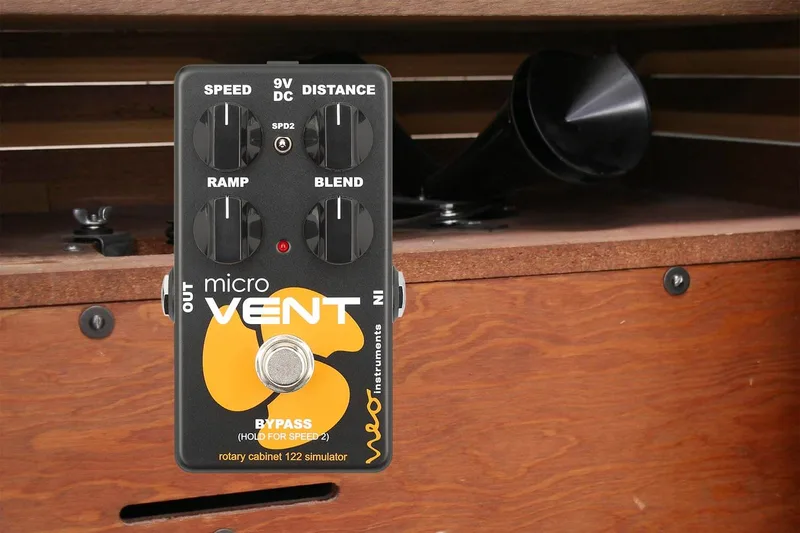
A rotary speaker emulator is a different animal. It does not just mimic a cabinet's tone, it mimics a mechanical system: a speaker physically spinning inside a cabinet, originally built for electric organs, with a slow "chorale" speed and a fast speed, producing a doppler shift, a tremolo-like amplitude wobble and a swirling stereo movement. Guitarists adopted it, and a whole pedal subcategory exists to reproduce it.
Current examples named by their makers:
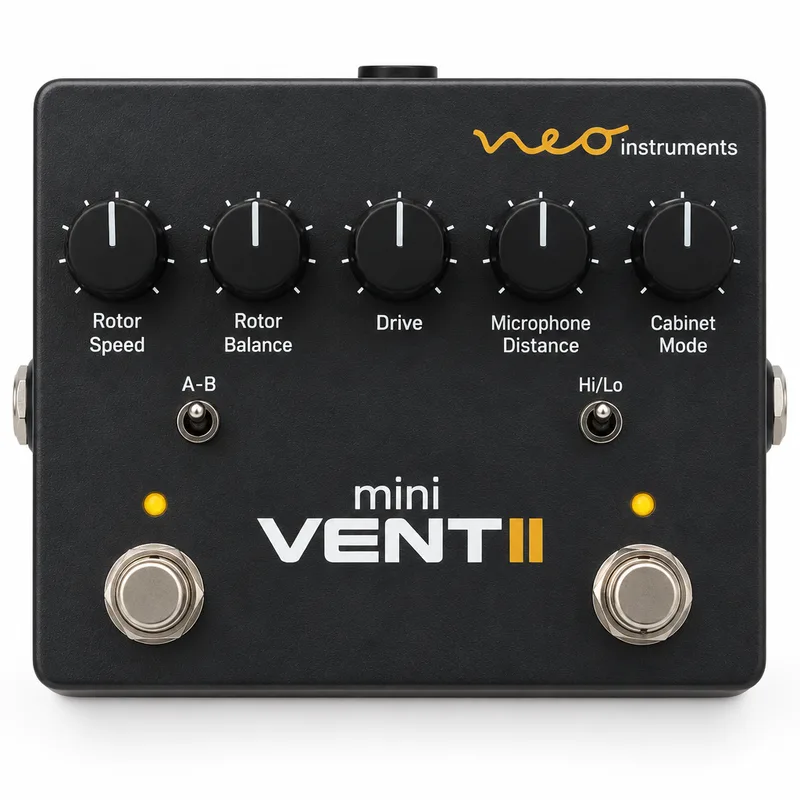
- The neo-instruments mini VENT II, a "Rotary Speaker emulation pedal" for "organ, keyboard or guitar"16
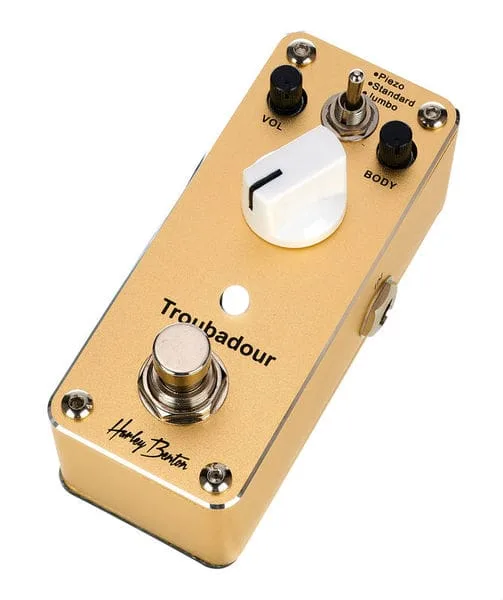
- The Harley Benton MiniStomp Spinner, a compact "Rotary speaker simulation" pedal17
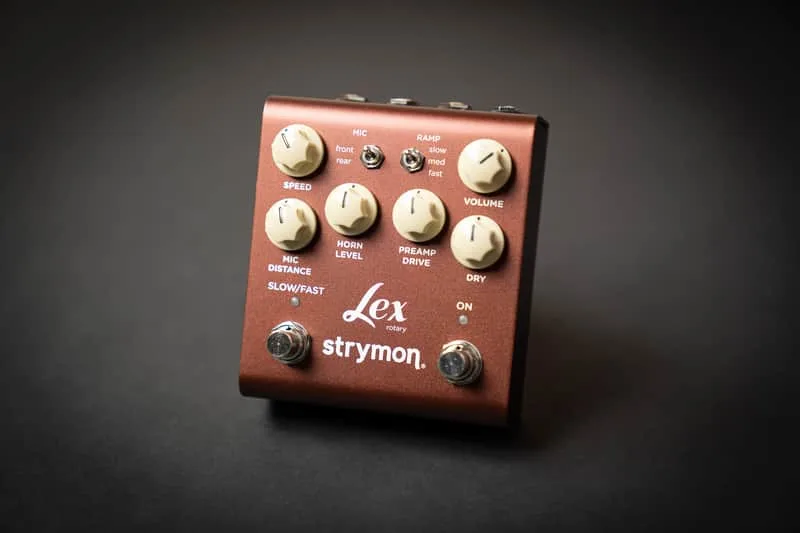
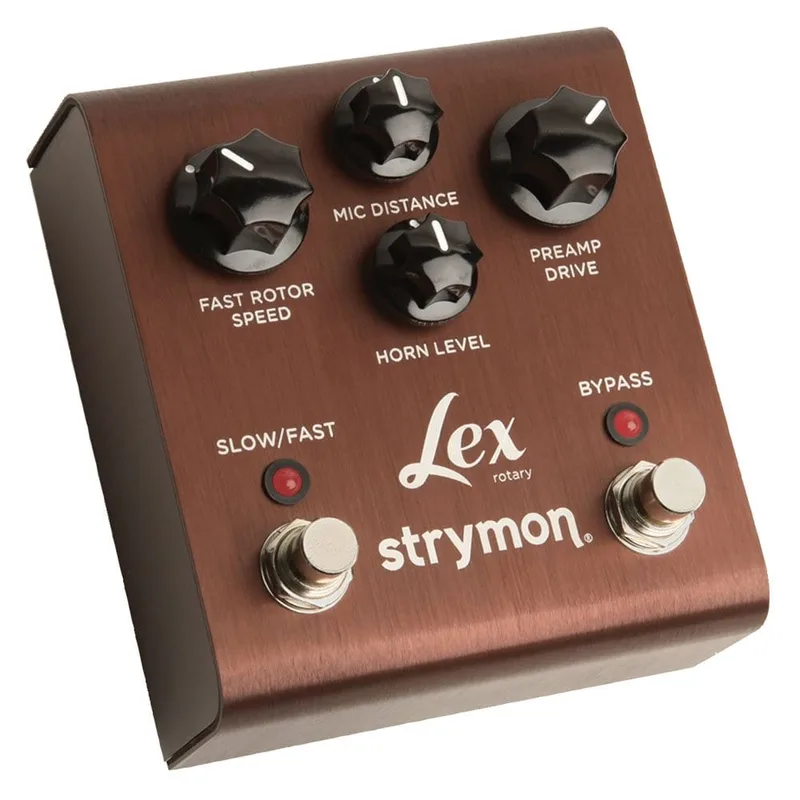
- The Strymon Lex, which Strymon's own development notes describe as a rotary speaker pedal18
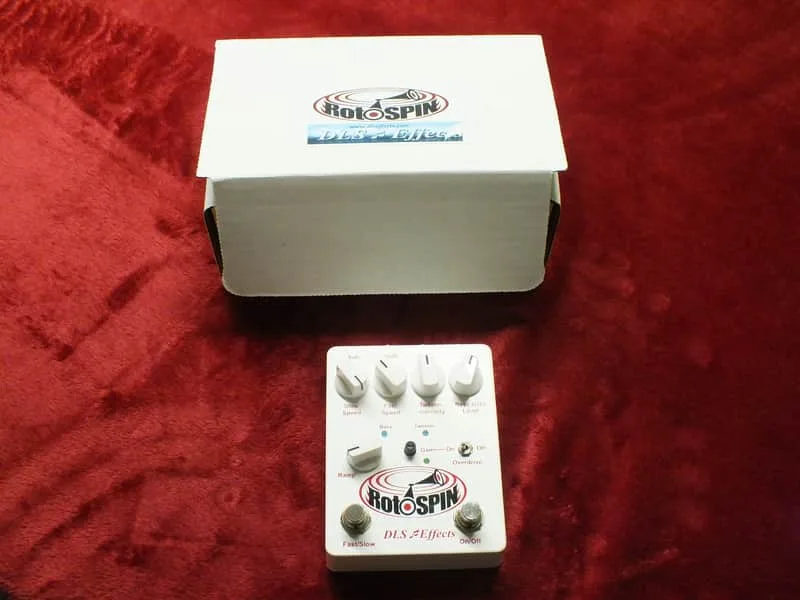
- The DLS Effects RotoSPIN, which "creates ultra-real, vintage Rotary Speaker and SRV Vibratone sounds with dynamic speaker sw[irl]"19
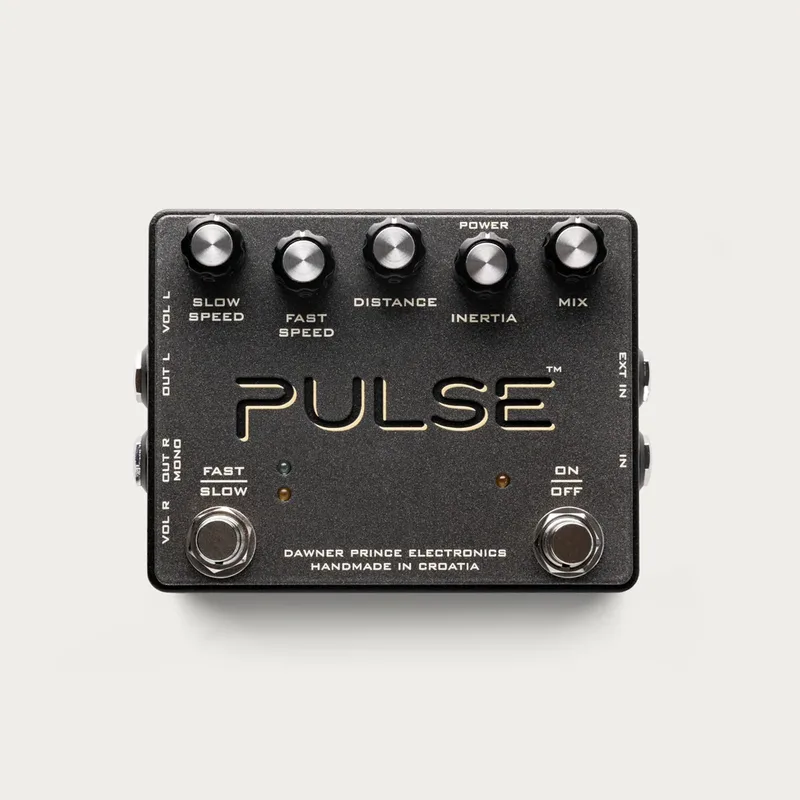
- Dawner Prince's Pulse, a "Revolving Speaker Emulator"20, emulating revolving speakers rather than the classic rotary cabinet
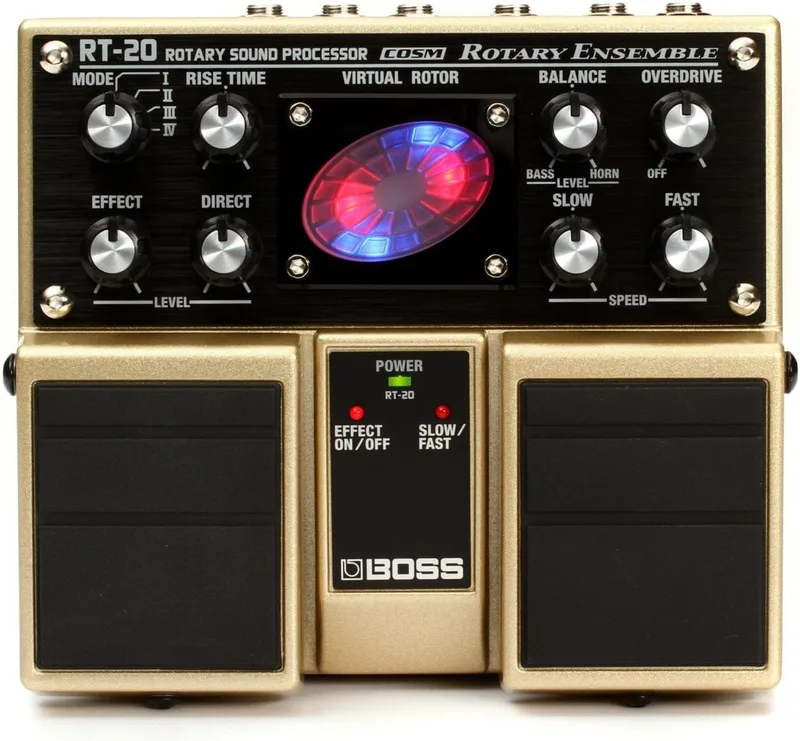
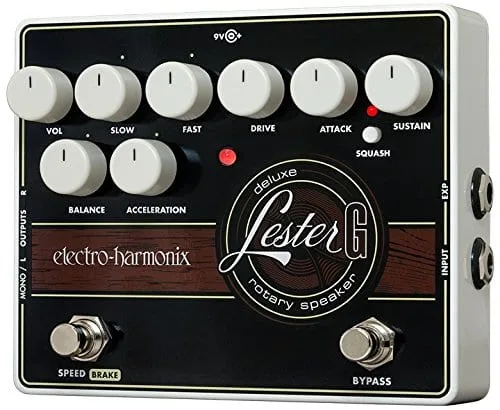
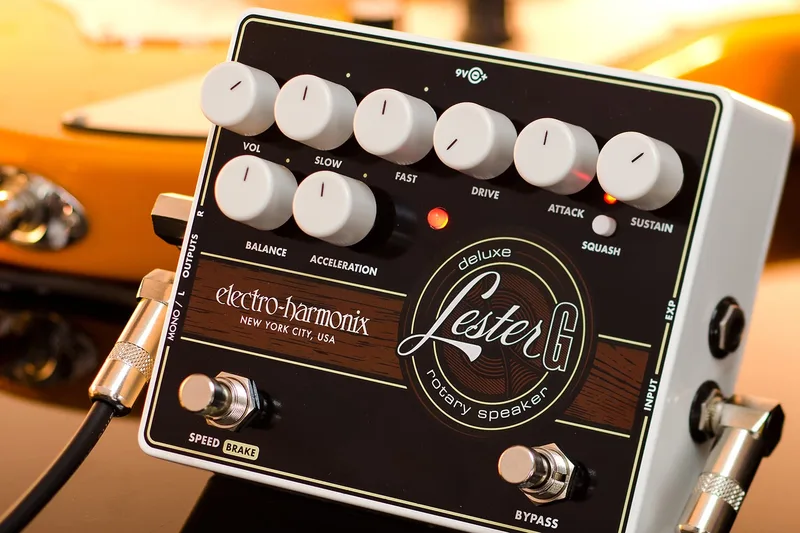
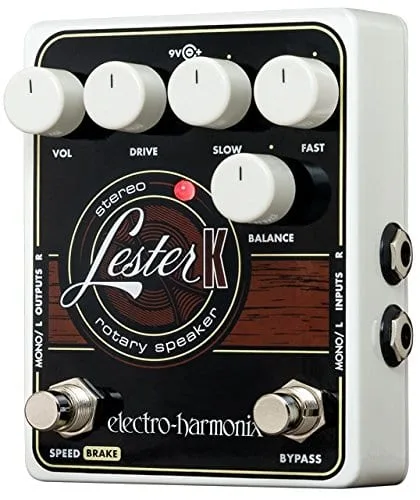
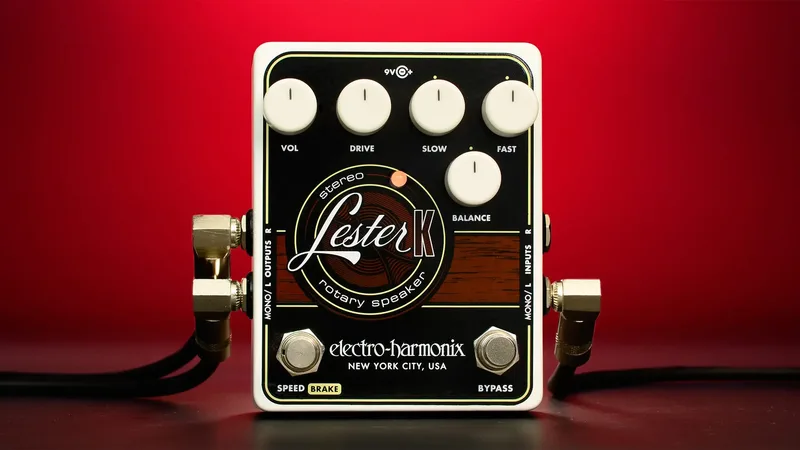
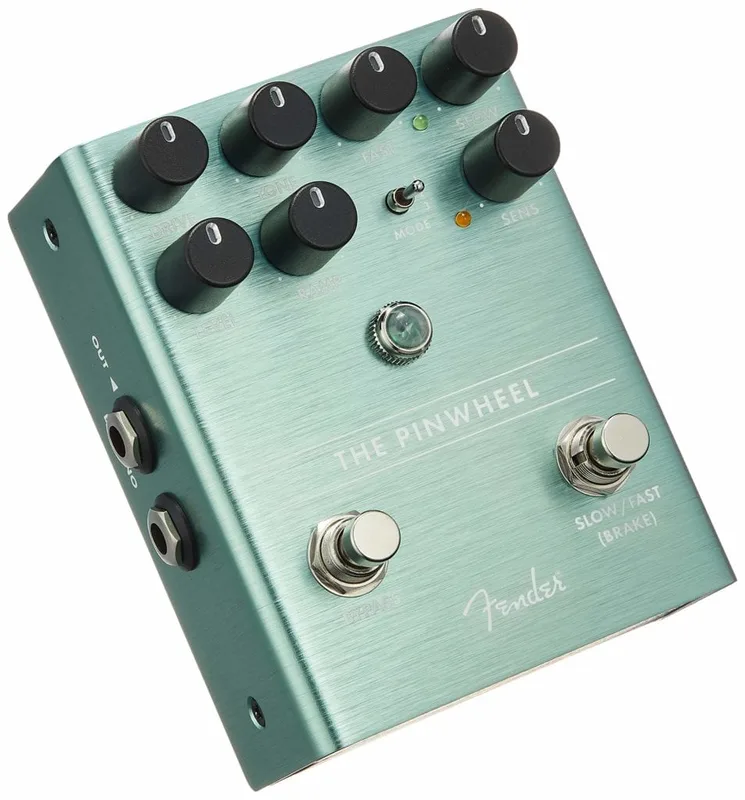
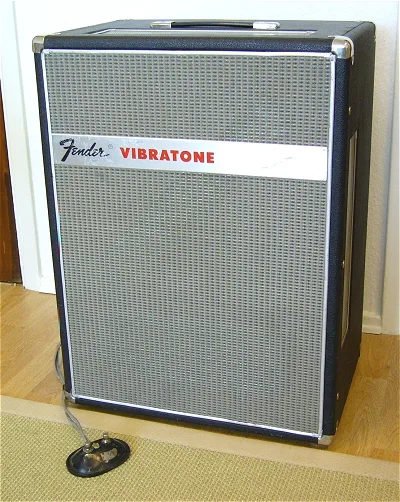
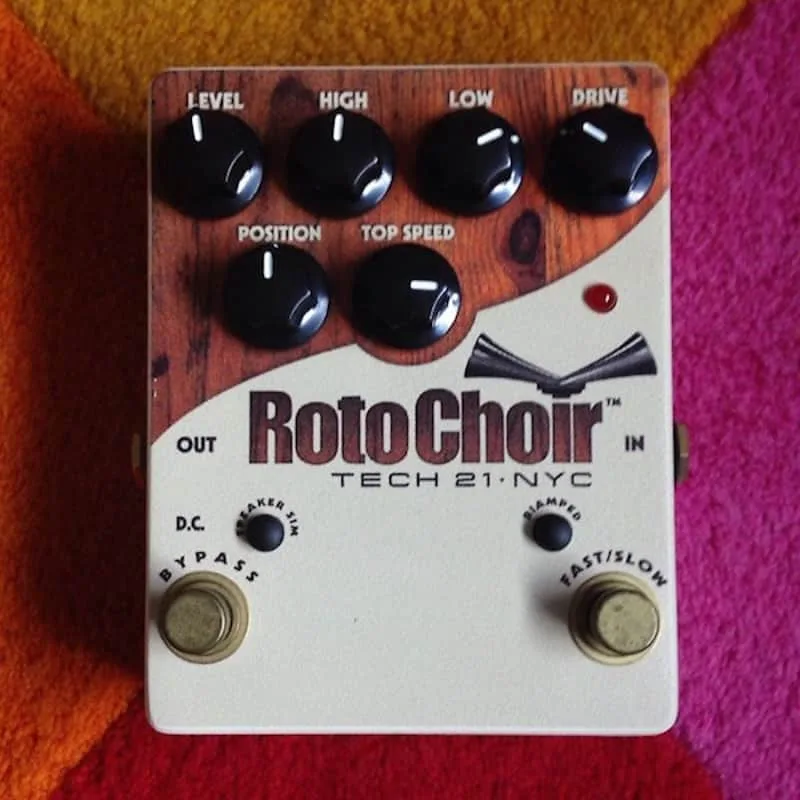
The Vibratone reference is worth knowing: it is the rotating-speaker cabinet associated with Stevie Ray Vaughan's sound, and pedals like the RotoSPIN target it directly19. Other rotary emulators in the wider category include the Boss RT-20 Rotary Ensemble, the Electro-Harmonix Lester G Deluxe and Lester K, the Fender Pinwheel, the Pigtronix Rototron and the Tech 21 RotoChoir.
Because the effect is about movement, speed control and an expression pedal matter more here than on a static cab sim. Dawner Prince's support pages specify that its units work with "any expression pedal with 10 Kohm potentiometer like Roland EV-5, M-Audio EX-P or Mission EP-1"20, and Red Panda's Raster manual lists the same class of pedals as compatible21. If you are shopping for a rotary emulator, check what the maker says about expression control: ramping between slow and fast speed by foot is a large part of the playing feel.
Tube preamps and amp pedals with speaker simulation
Many players pair a cab sim with a preamp pedal, and some pedals combine both halves of an amp in one box. MOD Audio's buying guide defines the type: "An amplifier simulator pedal, also called 'boxed amp', is basically a drive pedal with sound characteristics and equalizers that reproduce the sound of a complete amplifier, including preamp, poweramp and cabinet"15. It can also "be used like any drive pedal, connected to the input of your amplifier"15, which makes these pedals flexible in both directions.
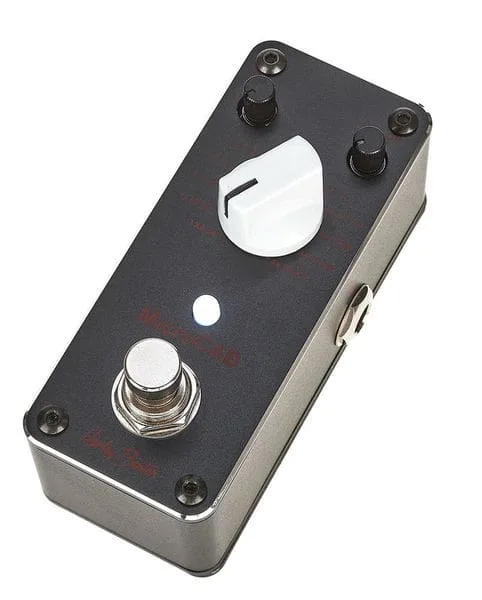
The split approach keeps the halves separate. Carl Martin's Ampster, an analog valve preamp, "works very well" as a direct recording preamp "when paired with a speaker simulator, IR loader, or recording interface with cab simulation"22, and Carl Martin's support pages repeat the same guidance23. Two notes suggests the same pairing, a tube preamp such as its Le Crunch feeding a cab sim pedal4. Master Effects takes preamp circuitry "found in many high end tube amps" and shrinks it into "pedalboard friendly" preamp simulators24.
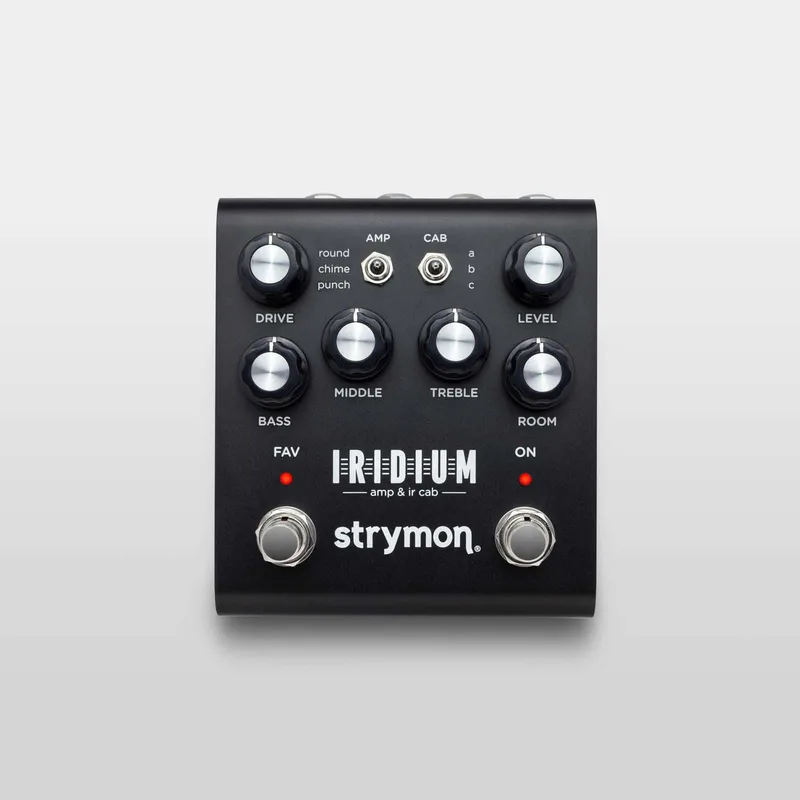
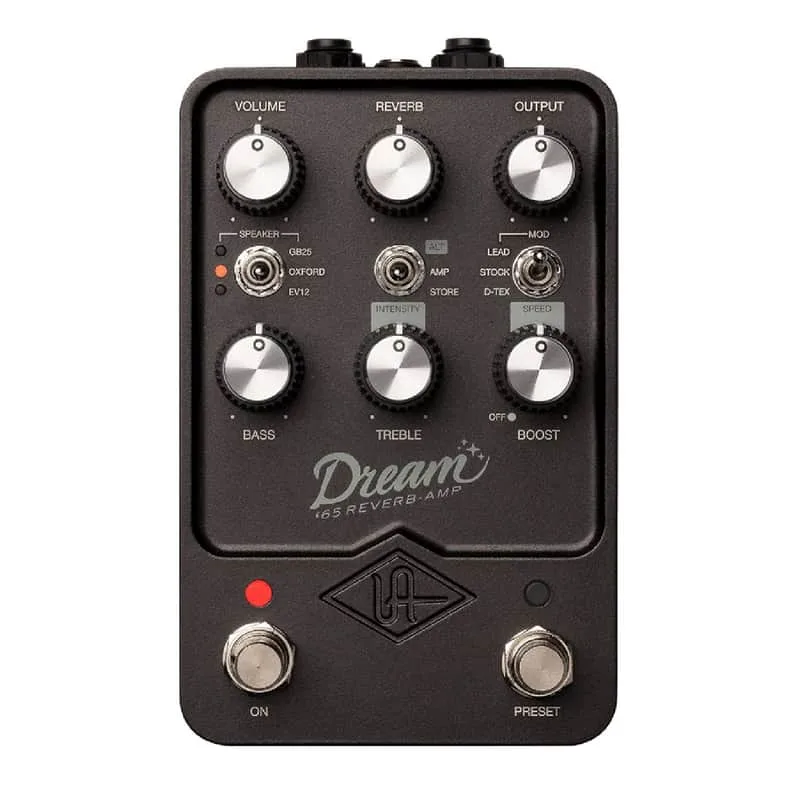
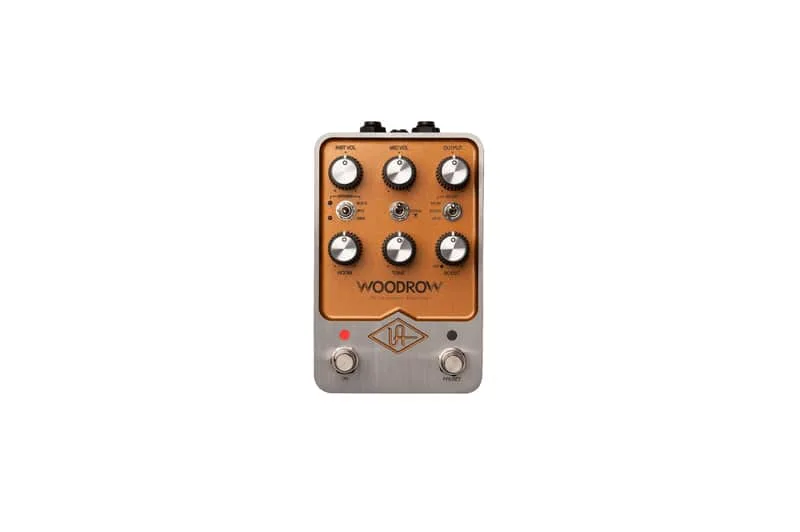
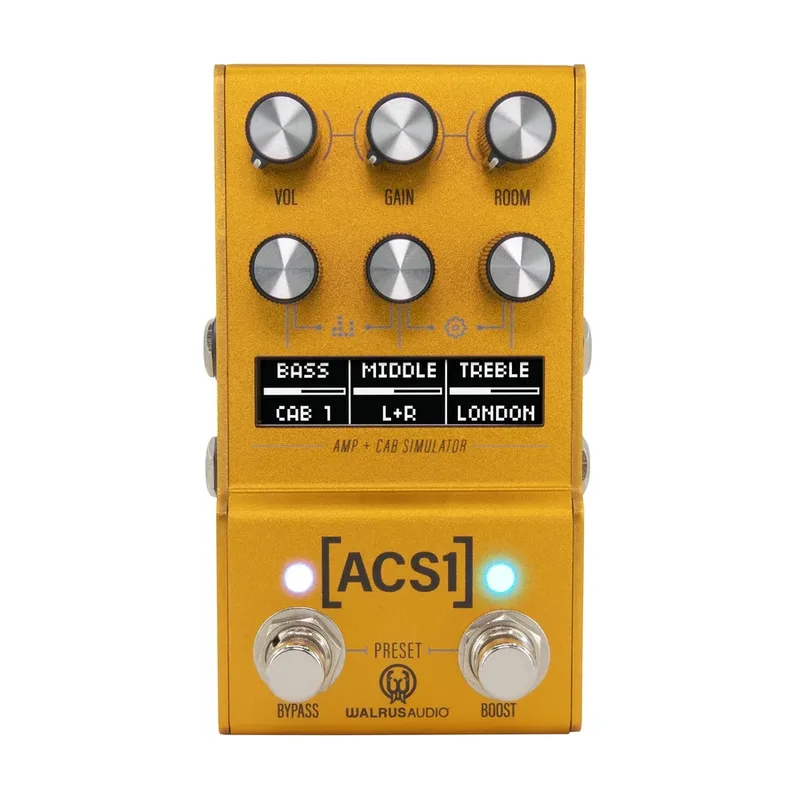
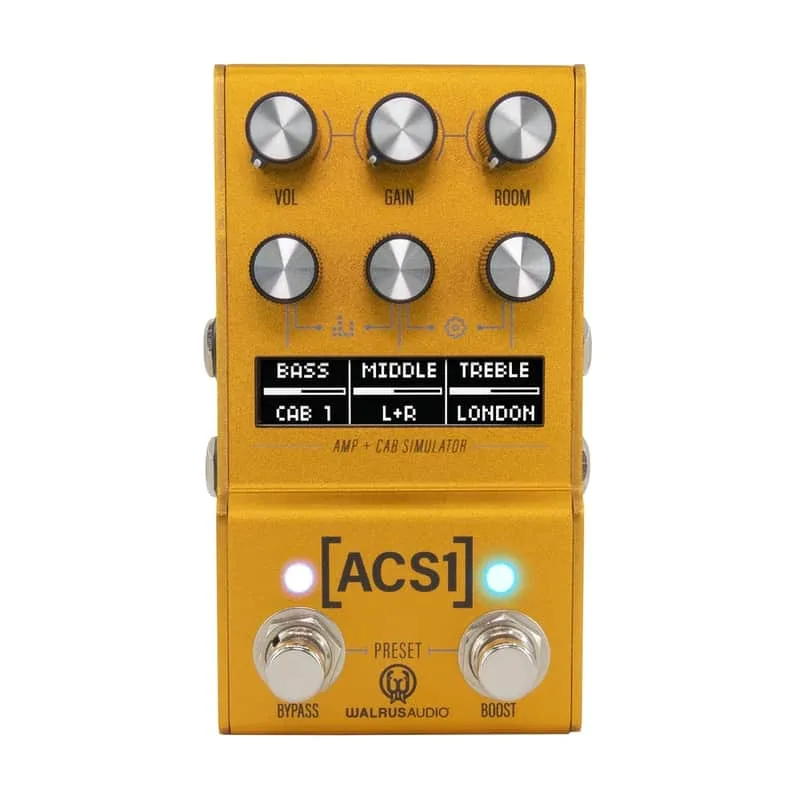
Not every preamp pedal includes the cabinet half. Peavey is explicit about its Rock Master Preamp Pedal: it has no speaker simulation built in and "is intended to be used to supercharge the front end of your amplifier, plug into a power amp, or use an external speaker emulator"25. That is the pattern to watch for: a preamp pedal without cab sim needs a separate simulator for direct use, while amp-and-cab pedals like the Strymon Iridium, the Walrus Audio ACS1 and the Universal Audio UAFX Dream '65 carry both.
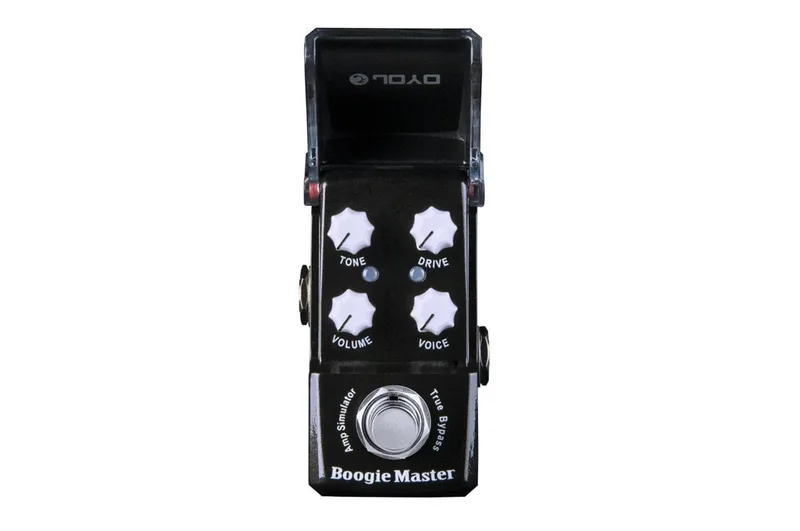
Blackstar's Dept. 10 Dual Drive shows a third pattern: an overdrive pedal with a speaker simulator built in. Blackstar describes Cab Rig as "our next-generation DSP speaker simulator that reproduces the sound and feel of a miked up guitar cab in incredible detail," with three save slots on the pedal26. Mosky's SUPER AMP "combines four popular (AMPLIFIER) box simulation effects in the market into one shell"27, and AMT's S1 even saves power: "When the speaker simulation output jack is not in use, the pedal automatically switches to power saving mode"28.
Load boxes and dynamic speaker emulators
Everything above works at instrument or line level. A different branch of the family connects to a tube amp's speaker output, and it is the only branch that does.
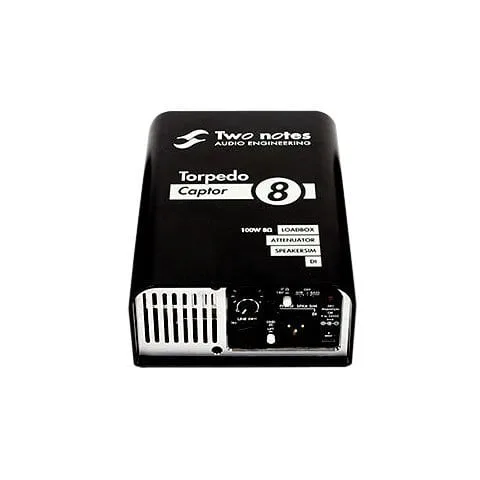
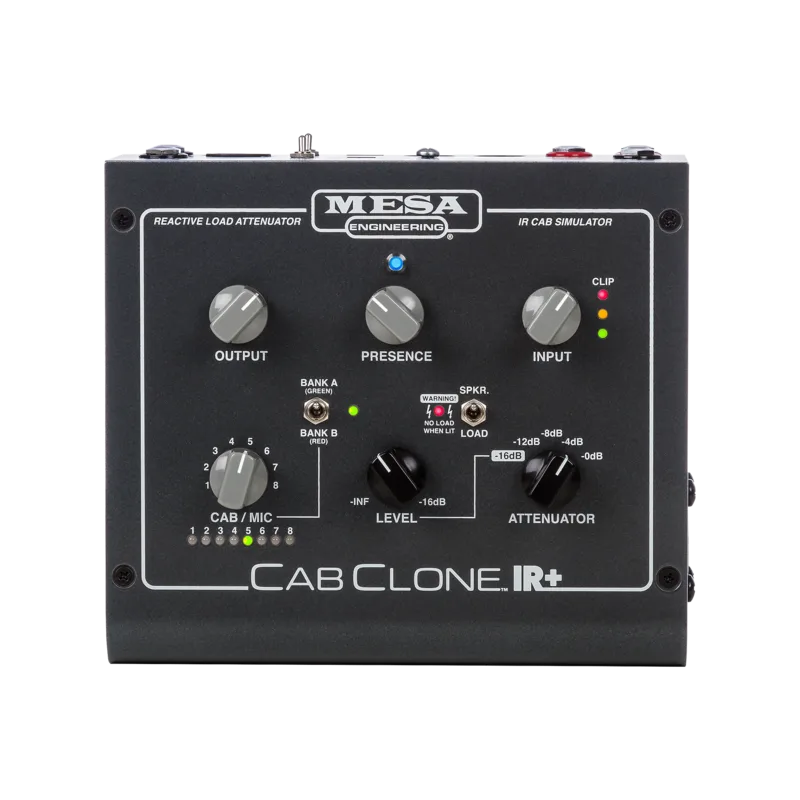
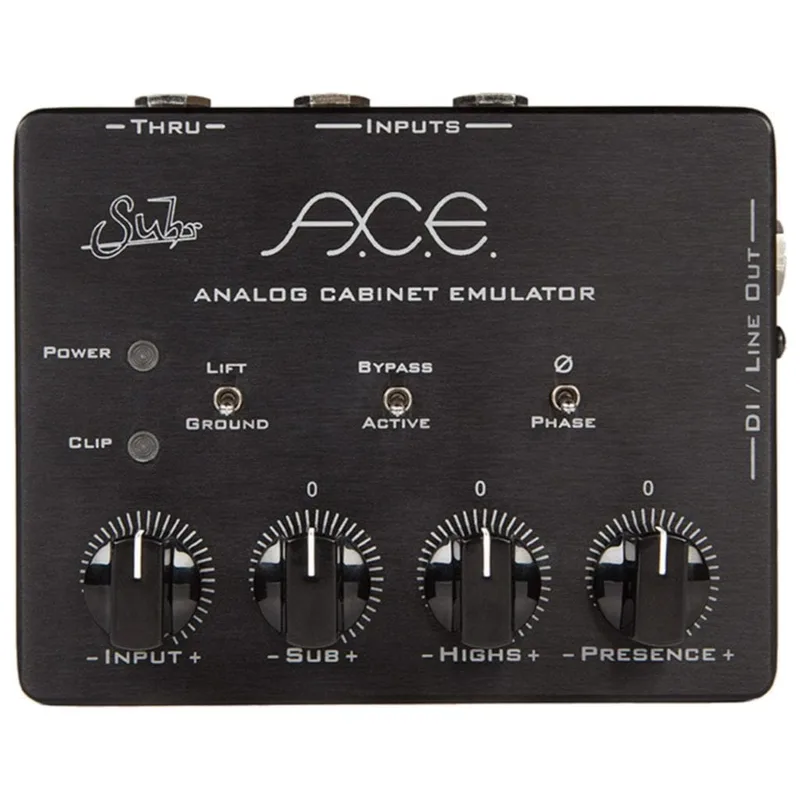
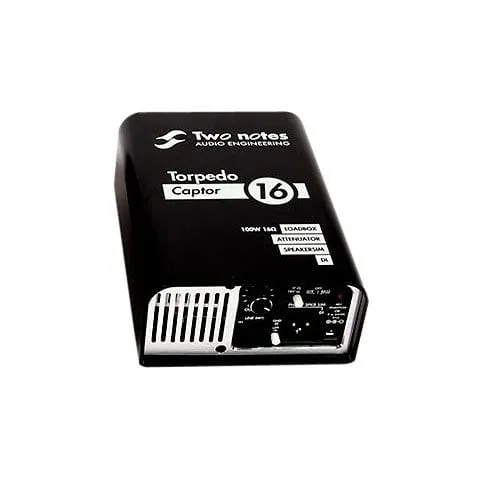
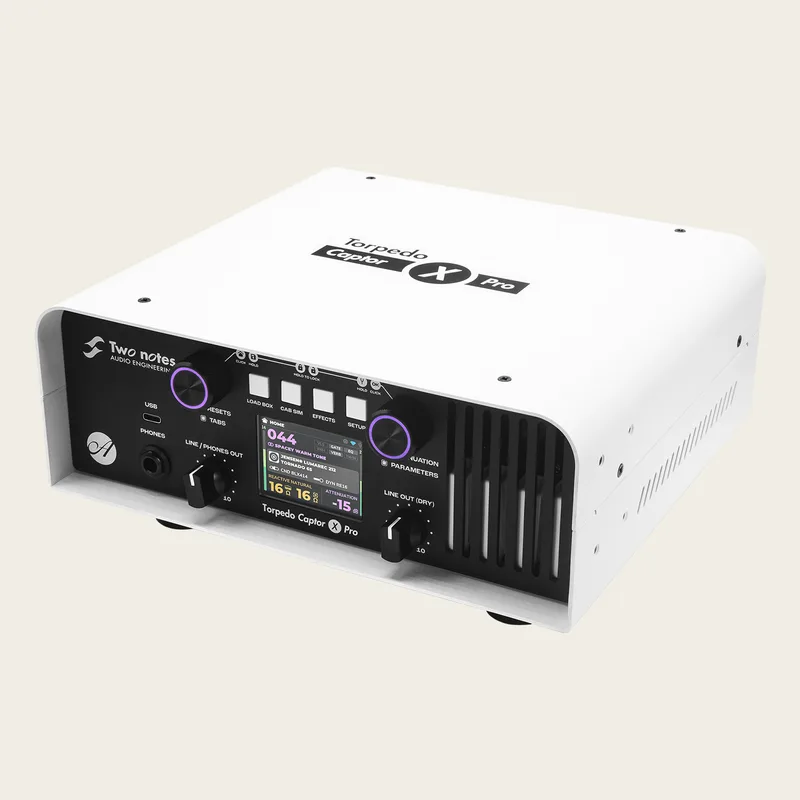
The key component is a load. A tube amp must never run without a speaker or a load box absorbing its output power. Once a load is in place, the amp's signal can be tapped, simulated and sent to a console while the cabinet stays home. Gibson's page for the Mesa CabClone IR explains the feature: "The Internal Reactive Load provides an impedance-matched (per your choice at purchase) safe way to forego the Speaker Cabinet or internal speaker (in a Combo) and record Direct and/or send a DI signal silently to a Live (FOH/Monitor) Console"29. Dedicated load boxes like the Two Notes Torpedo Captor 8 and Captor 16 and the Suhr Reactive Load I.R. do the same job, some with simulation built in.
A useful middle path: the CabClone IR lets you keep a cabinet on stage, since "a speaker cabinet may be used simultaneously for stage sound and monitoring with no effect on the selected Cab Sim/IR sent to the console"30. The same simultaneous operation is available on the other version7. You hear your real cab, the engineer gets the simulated feed.
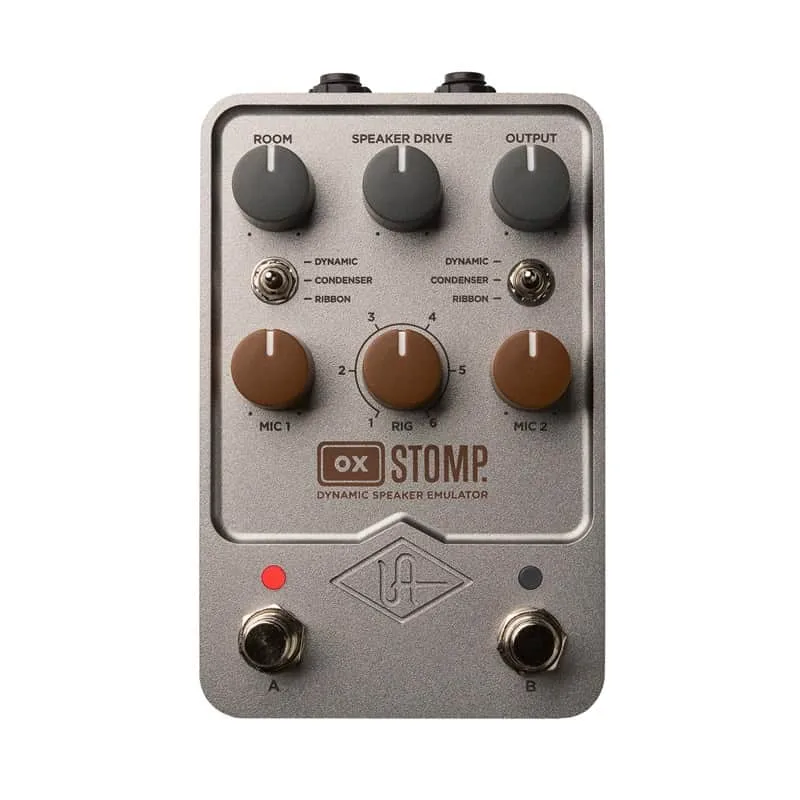
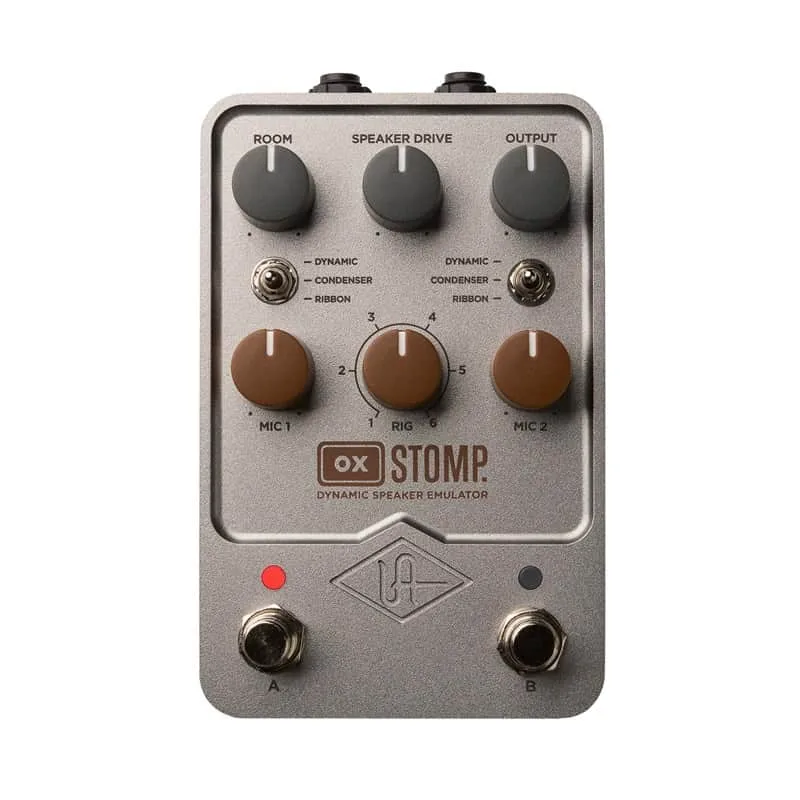
At the pedal level, Universal Audio's OX Stomp is the notable example of a "Dynamic Speaker Emulator," a pedal that gives "amp-in-a-box modelers a packed pro studio full of authentic-sounding" speaker, cabinet, mic and room emulation with studio effects31. The "dynamic" part is the point: rather than a static filter, it models how a speaker and mic respond to the signal. The Universal Audio OX Stomp page covers it in detail.
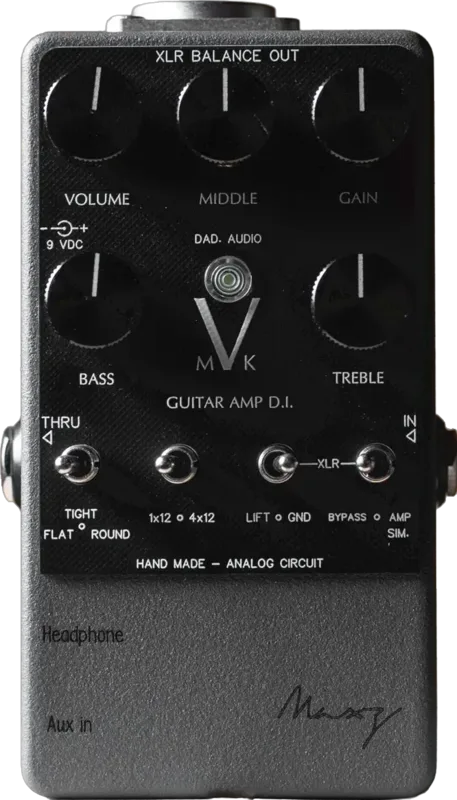
The MAXZ Pedal Speaker Simulator MK-V by MAXZ Pedals / DAD Audio straddles categories as an "amp sim, cab sim and DI pedal"32, and GUP Tech's Lab Series #16 Cab Sim is a straight cab sim whose maker says it "will bring any pedalboard tone to a complete 'Micked Cab Tone'"33.
The usual controls
Speaker sim pedals are among the simpler pedals on a board, but a few controls recur:
- Cab or speaker selection. On analog units this is a switch or two; on IR loaders it is a knob or footswitch stepping through stored IRs, with the count varying widely, from the CabClone IR's 16 onboard simulations7 to the TC Impulse's 99 slots6.
- Level or gain. GUP Tech describes the Lab Series #16's Gain control simply: it "control[s] the general output level of the pedal"33.
- Mic position and type. On IR-based units, some IRs are captured at different mic distances, and the pedal may let you blend or select them.
- Presets. The Blackstar Dual Drive keeps three save slots on the pedal for its Cab Rig simulator26.
- USB or editor access. The ENGL Fireball IR Pedal loads user IRs "via USB-C using the included software"10.
- Expression input. Mainly on rotary emulators, for speed control, using standard 10K expression pedals20.
Analog cab sims often have little more than a voicing switch, which is part of their appeal: set and forget.
Where it goes in the signal chain
Placement is the one thing nearly every maker agrees on. BOSS's signal chain guide, written by Henry Yates, states: "The most common placement for an amp/cab sim pedal is at the end of the chain, where the signal is then routed to a PA system, audio interface, or headphones"34. Quilter's Iconoclast manual is just as direct: "Iconoclast should be placed at the end of your signal chain, after your pedals and/or preamp"2. General Guitar Gadgets adds that its simulator can also run "straight from your guitar" into a mixer, computer or headphone amp1.
The logic is the same as for reverb: these are "finishing" effects that recreate what happens at the end of the real signal path, the speaker and the room. BOSS's guide places reverb "after the delay, as the final link in the chain"34, and a cab sim belongs in the same neighborhood, after your delay and overdrive, not before them.
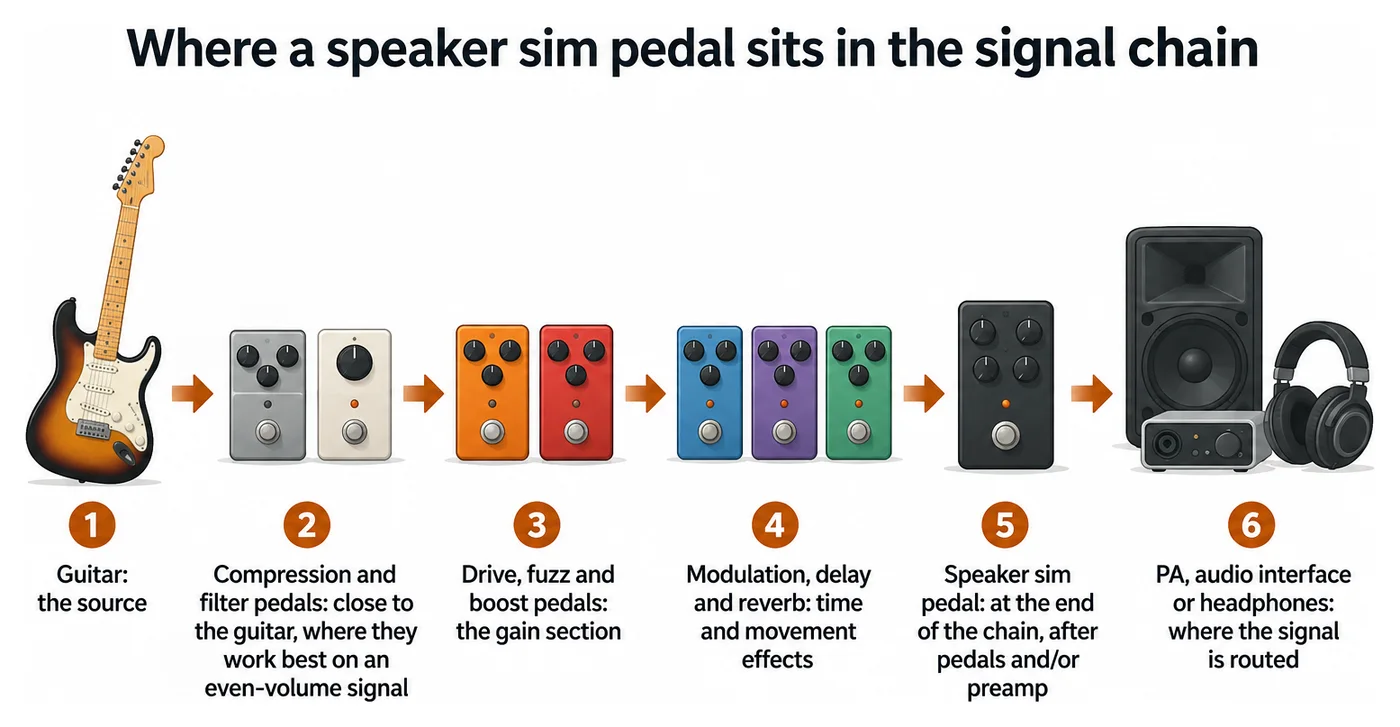
For context, the same BOSS guide notes that compression pedals sit "close to the guitar, before the drive section"34 and that volume pedal placement is debated, "popularly at the start of the chain, or with only reverb and delay after it"34. The cab sim has no such debate: end of chain, every time.
Questions to ask when choosing one
Questions
What is the difference between a cab sim and an IR loader?
A cab sim is any circuit or processor that shapes your signal to sound like it came out of a speaker cabinet. An IR loader is a digital cab sim that uses impulse responses, recorded captures of real cabinets and microphones, as its speaker models. Many modern pedals do both: TC Electronic describes its Impulse as a Cab Sim and IR Loader that holds up to 99 IR emulations6.
Do I need a cab sim to record guitar direct?
If you record a pedalboard or preamp straight into a computer, the raw signal will not sound like it went through a guitar speaker, so a cab sim of some kind is what finishes the tone. GUP Tech says its Taxi Cab can plug into any computer sound card to record a pedalboard directly3, and MOD Audio notes you can test the same recording through other sounds without re-recording15.
Can a speaker simulator replace a guitar cabinet live?
Yes, that is one of the main uses. A cab sim pedal at the end of your board can feed the PA while you skip the cabinet entirely34. Some units, like the Mesa CabClone IR, even let you run a real cabinet on stage for monitoring while the console still receives the simulated signal30.
What is a rotary speaker simulator pedal?
It is a pedal that emulates a rotating speaker system, the kind originally built for organs, with slow and fast speeds and a spinning doppler character. Examples include the neo-instruments mini VENT II16, the Strymon Lex18 and the DLS Effects RotoSPIN, which also targets the SRV Vibratone sound19.
Can I plug a tube amp's speaker output into a cab sim pedal?
Not into an ordinary one. Most cab sim pedals are line-level devices, and their makers warn against connecting an amplifier's speaker output12. To take a speaker-level signal you need a unit with a load box, such as the Mesa CabClone IR with its internal reactive load29, or a dedicated load box feeding a cab sim.
Does a cab sim pedal go at the end of the pedalboard?
Almost always. BOSS's guide puts amp and cab sim pedals at the end of the chain, routed to a PA, audio interface or headphones34, and Quilter's Iconoclast manual says the same2. General Guitar Gadgets adds that its speaker simulator can also run straight from the guitar into a mixer or headphone amp1.
Sources (34)
- Speaker Simulator: DIY Cab Sim Schematic & Layout, General Guitar Gadgets, 2014-05-12
- Iconoclast User Guide, Quilter Labs
- Taxi Cab (Cab Sim), GUP Tech (guptech.ca)
- Want to leave your amp at home?, Two notes, 2021-02-04
- Marshall™-Type Speaker Simulator: DIY Cab Sim PCB & Schematic, General Guitar Gadgets, 2017-10-31
- IMPULSE IR LOADER, TC Electronic
- CabClone IR Cab Simulator, 8 Ohm, Gibson
- FLAMMA FS07 Stereo Cabinets Simulation Pedal, Flamma Innovation (www.flamma.shop)
- Cerberus, NUX Audio, 2026-05-11
- ENGL EP635 Fireball IR Pedal, ENGL Amplification, 2026-04-24
- Cab X2_MOOER Audio, MOOER Audio
- FLAMMA Portable Multi Effects Pedal FX100, Flamma Innovation
- MK 20 by M-VAVE, RockBoard (rockboard.de), 2026
- Ampeg | SGT-DI :: Premium Bass Preamps and DI Pedal, Ampeg
- Amp simulator: is it worth using this feature?, MOD Audio, 2021-03-24
- mini VENT II, neo-instruments.com
- MiniStomp Spinner, Harley Benton (harleybenton.com)
- Putting the finishing touches on Lex..., Strymon, 2011-01-10
- RotoSPIN by DLS Effects, RockBoard PedalPedia, 2026
- FAQs - Dawner Prince Electronics, Dawner Prince Electronics
- raster_instructions.pdf, Red Panda Lab, 2017
- Ampster - Carl Martin, Carl Martin, 2026
- Support - Carl Martin, Carl Martin (carlmartin.com), 2026
- Master Effects Pedals, Master Effects Pedals
- Rock Master® Preamp Pedal, Peavey
- Dept. 10 Dual Drive, Blackstar, 2022-10-20
- SUPER AMP_Hand-Built Effect Pedals_Products_mosky pedal, moskyaudio.com
- AMT S1 | AMT Electronics official website, AMT Electronics, 2026
- CabClone IR Cab Simulator, 4 Ohm, Gibson (gibson.com)
- CabClone IR Cab Simulator, 16 Ohm, Gibson (www.gibson.com)
- OX Stomp Dynamic Speaker Emulator Pedal, Universal Audio
- Maxz Pedal Speaker Simulator MK-V by MAXZ Pedals / DAD Audio, RockBoard PedalPedia, 2026
- Lab Series #16, GUP Tech (guptech.ca)
- The Ultimate Guide to Guitar Effects Pedal Order and Signal Chain, BOSS (articles.boss.info), 2023-03-01