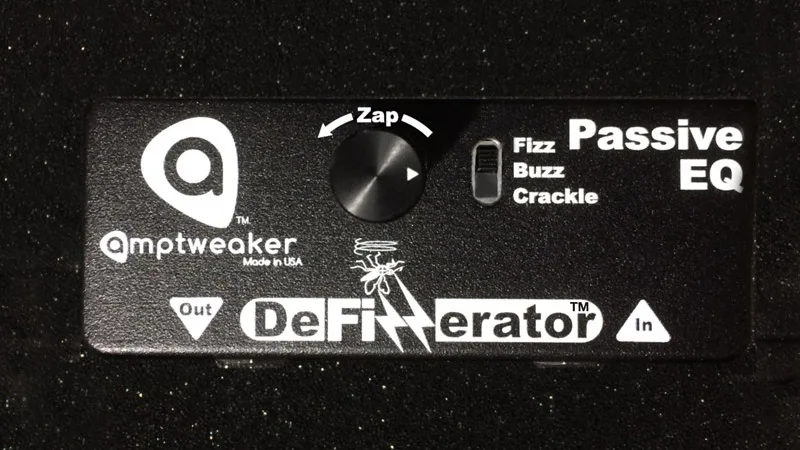
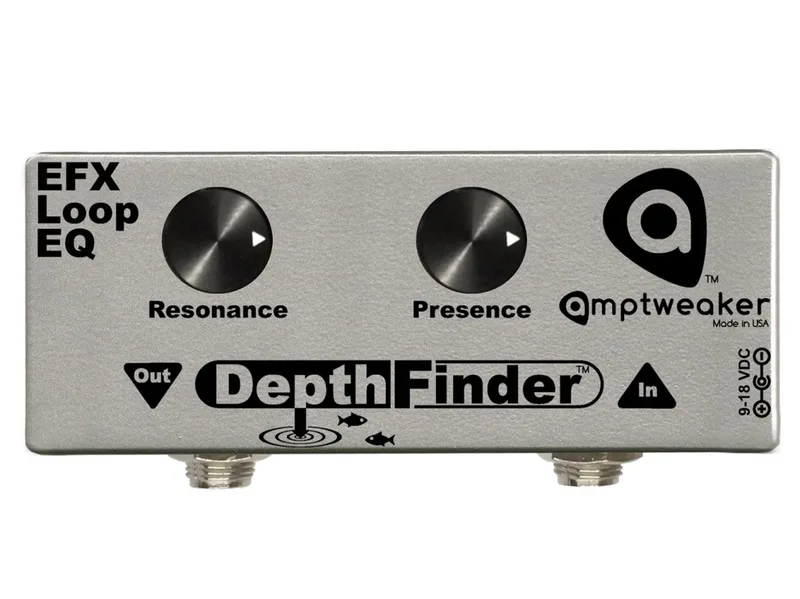
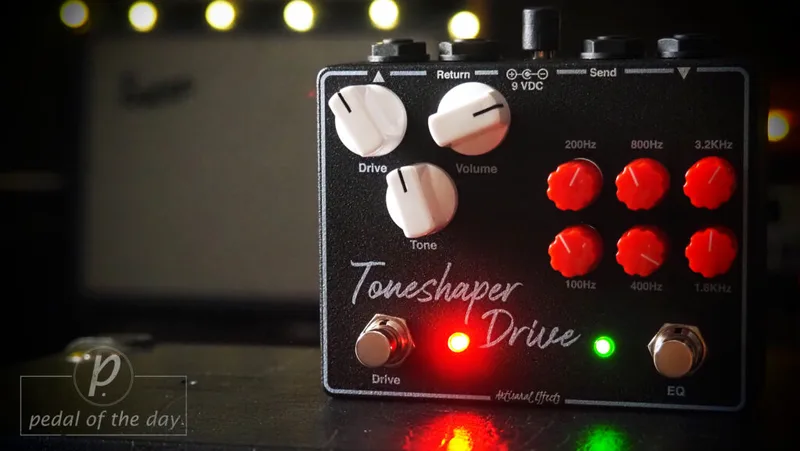
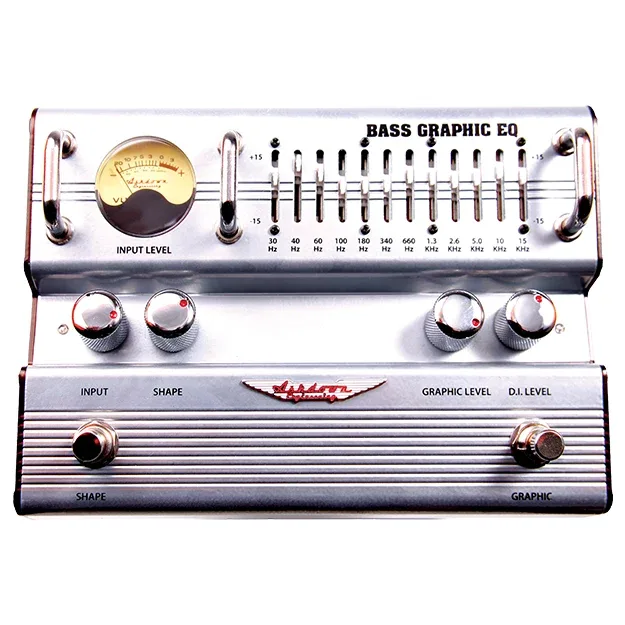
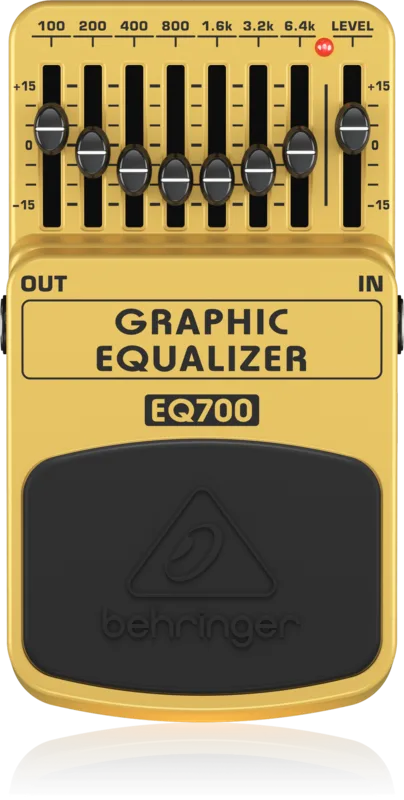
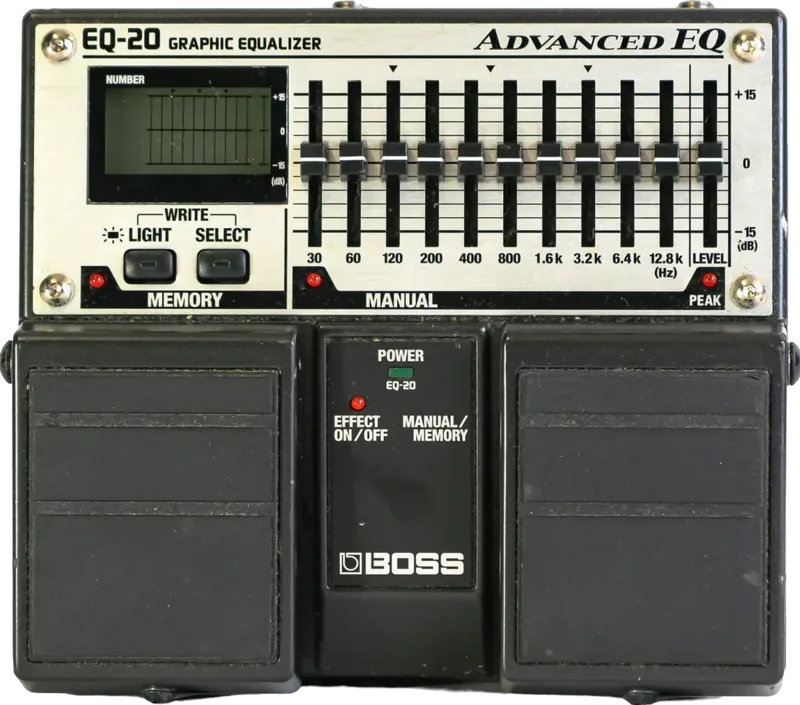
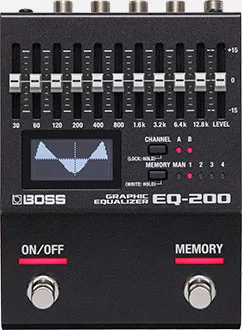
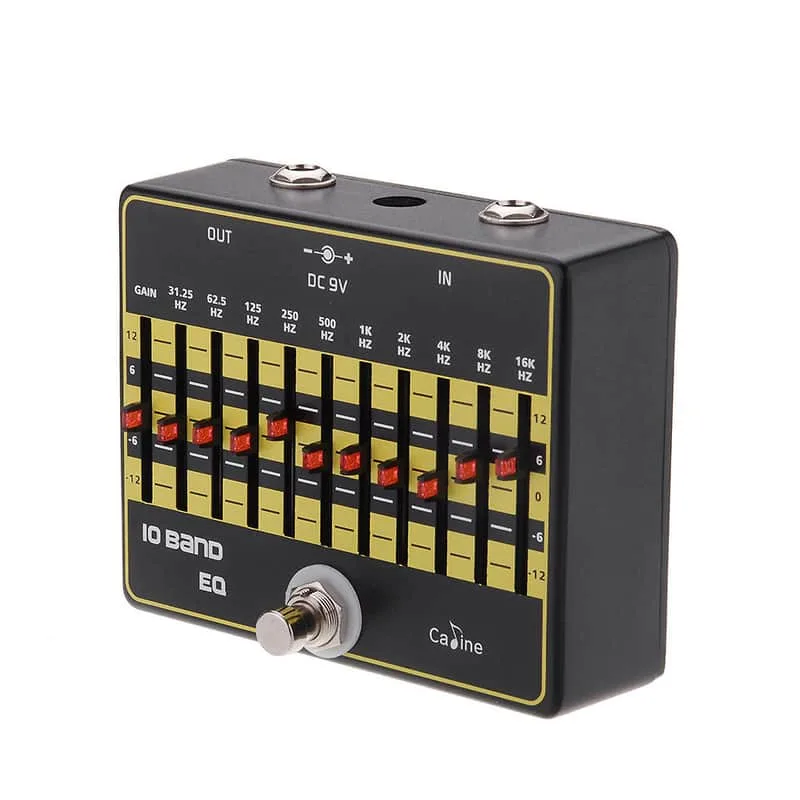
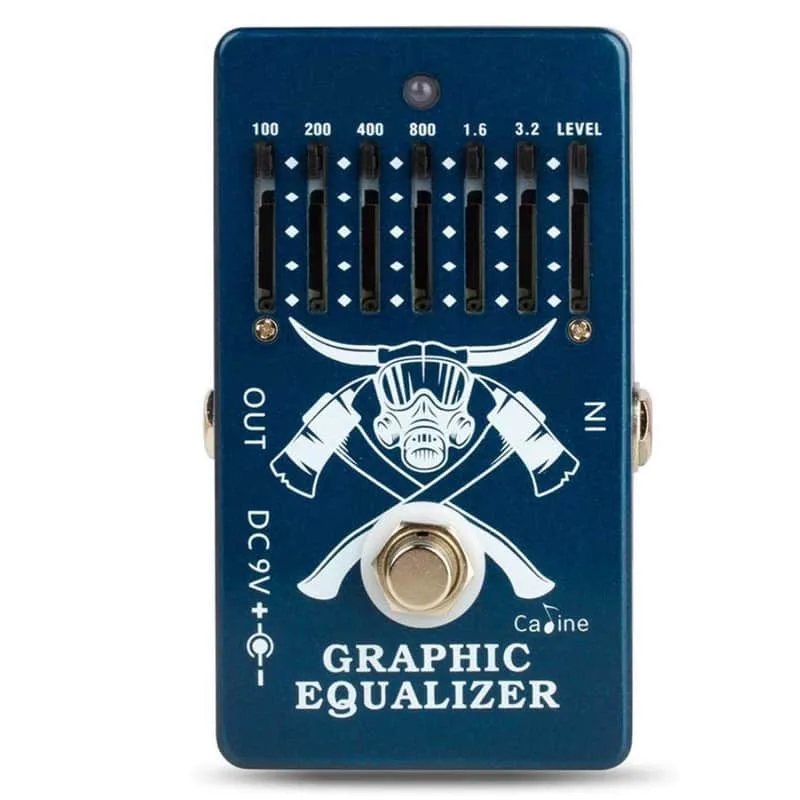
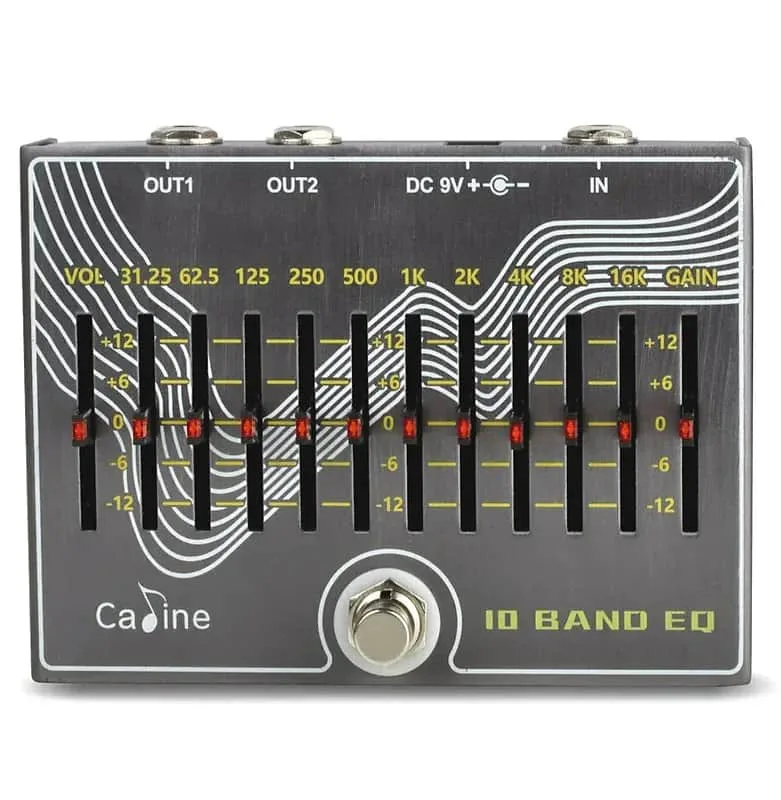
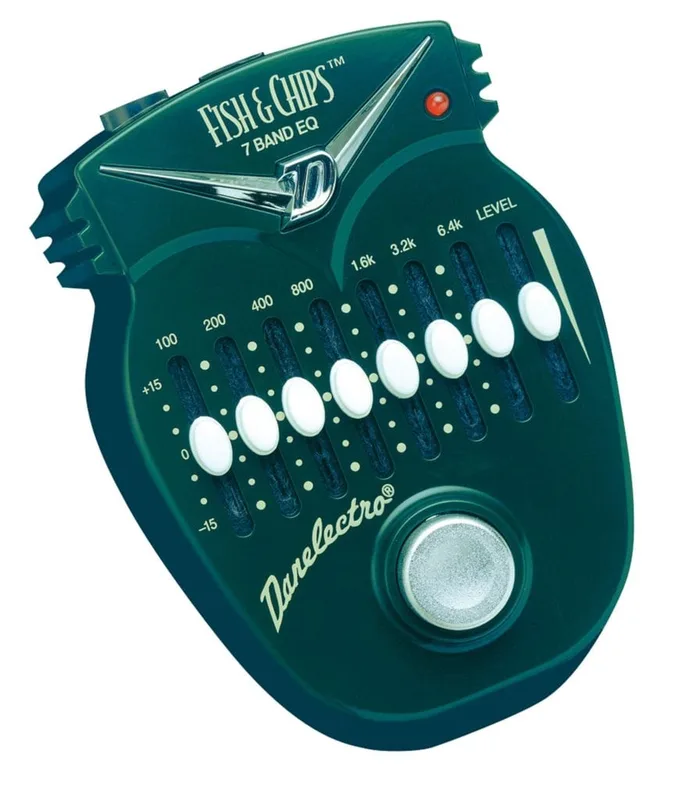
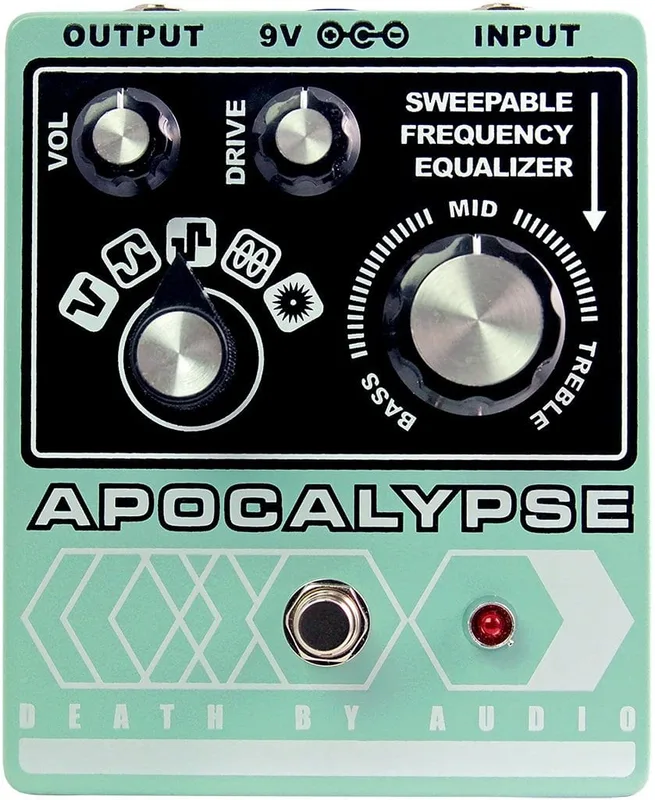
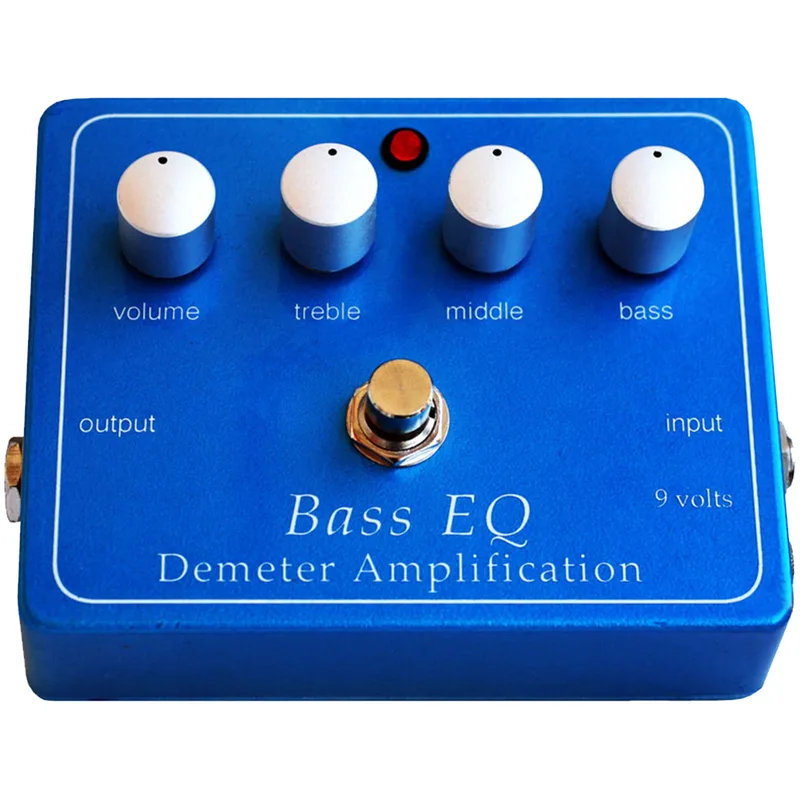
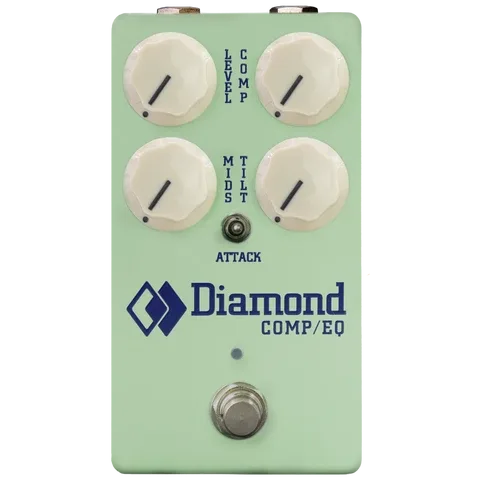
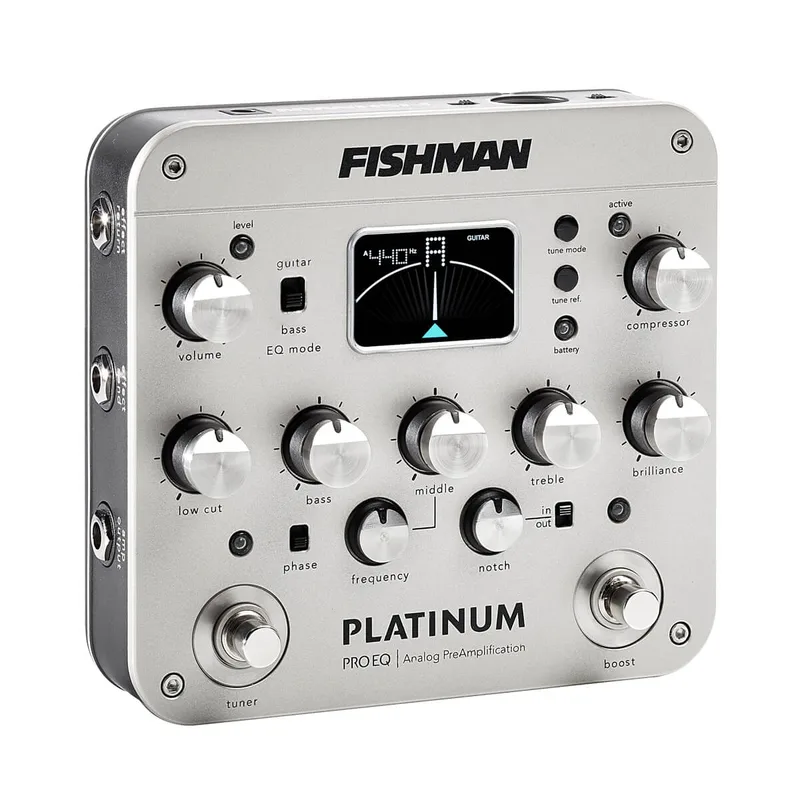
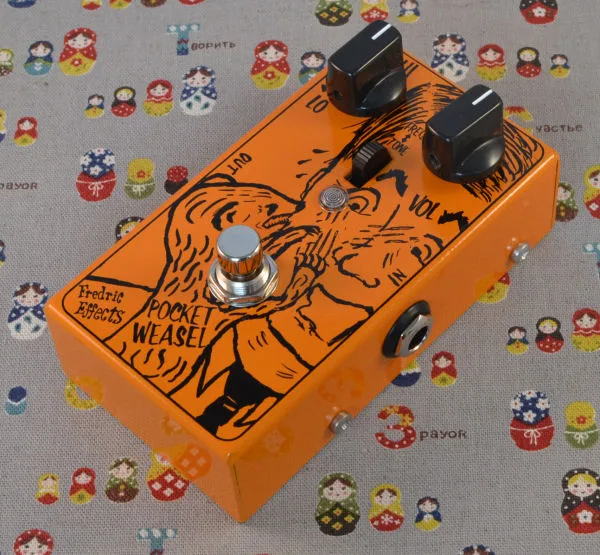
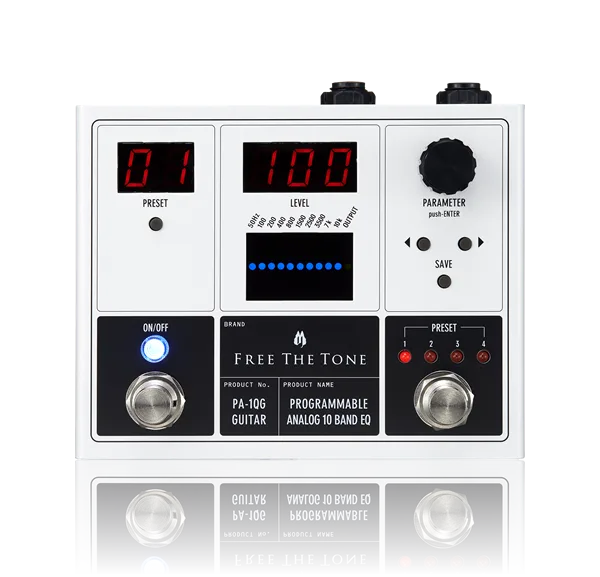
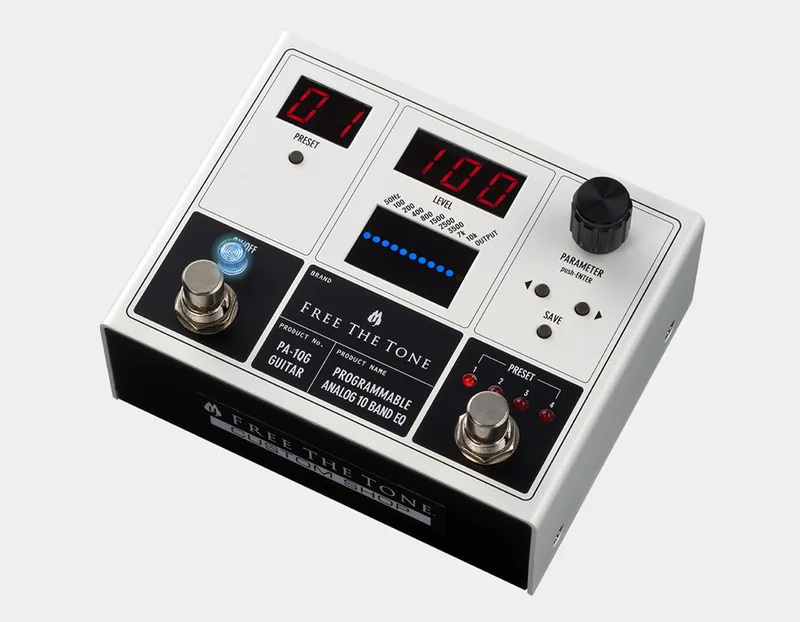
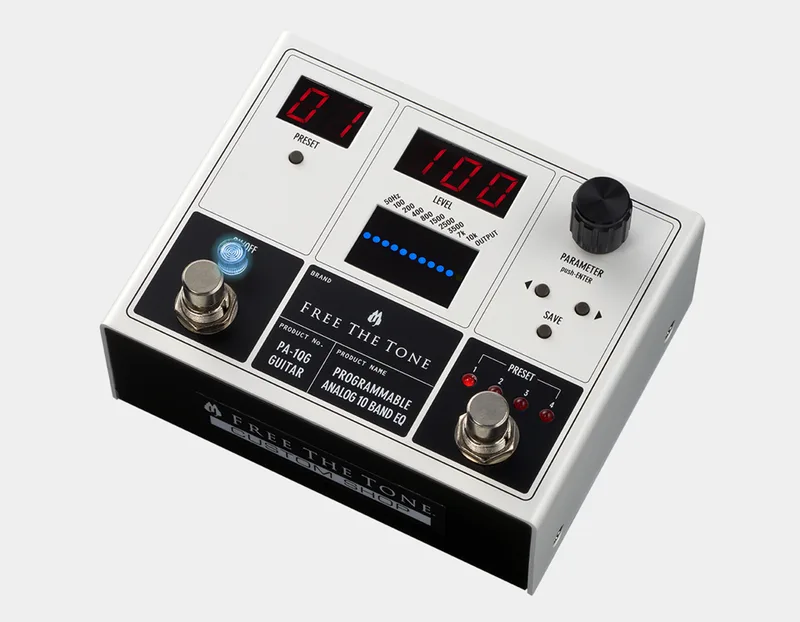
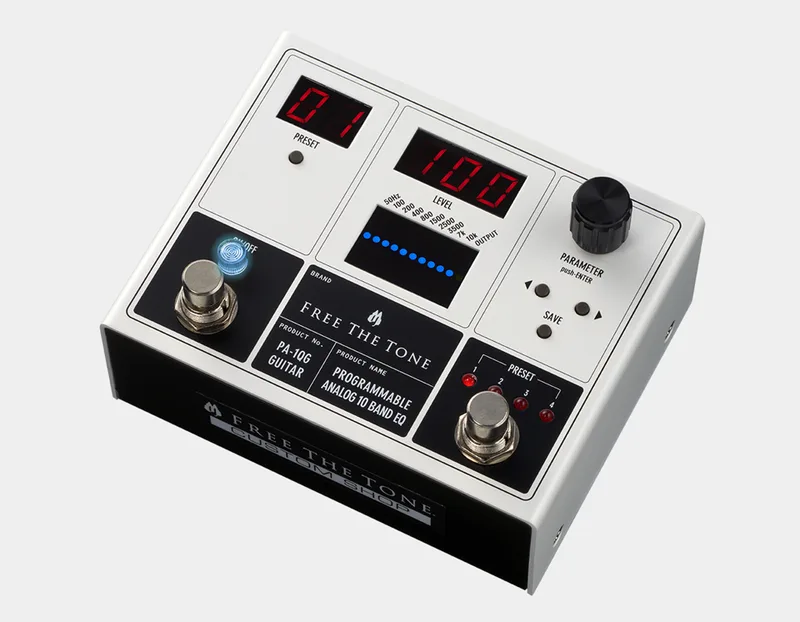
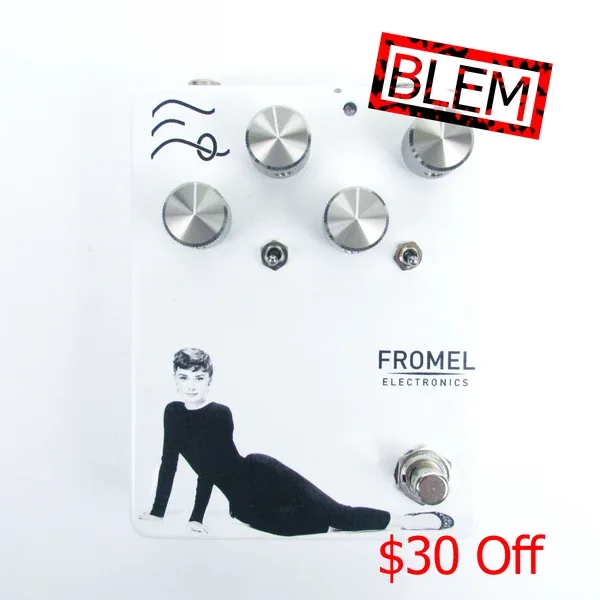
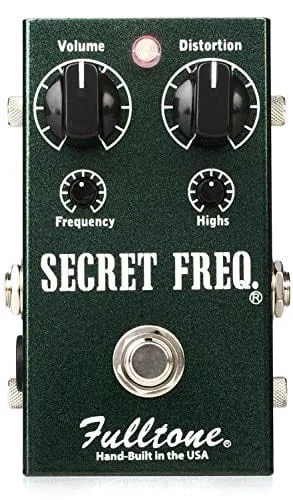
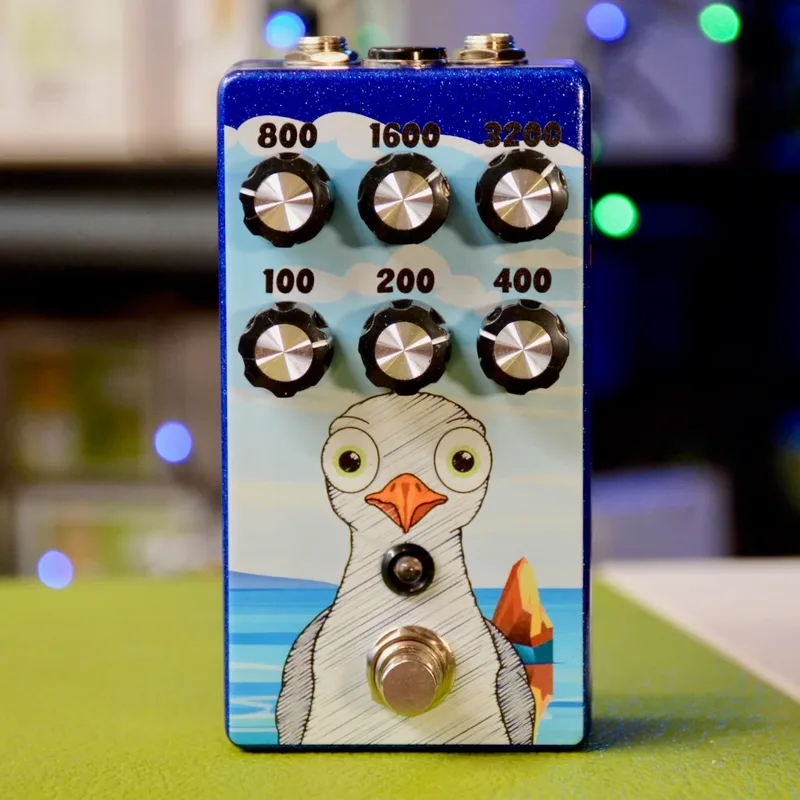
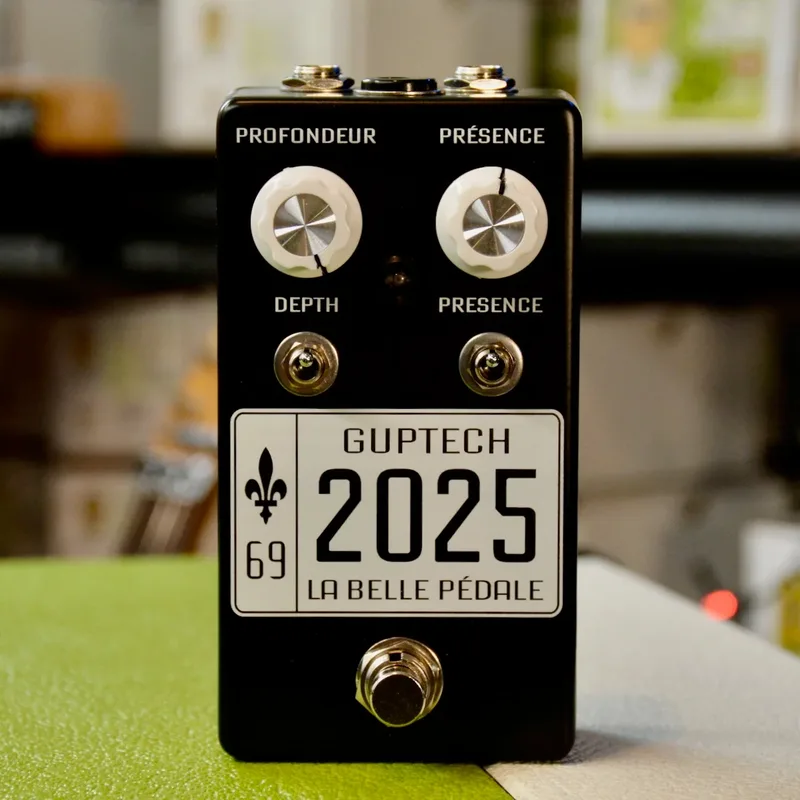
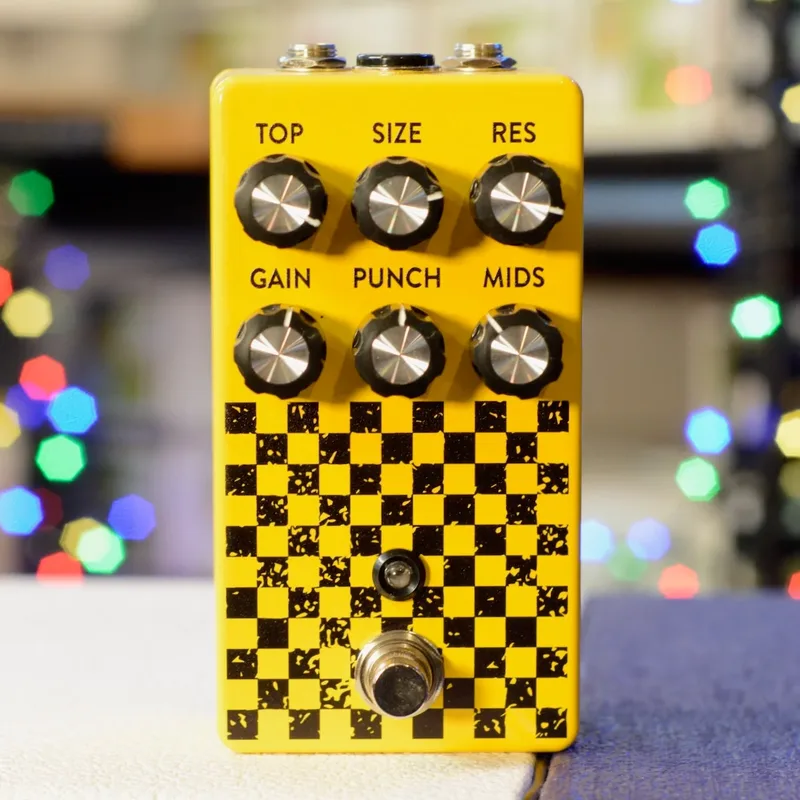
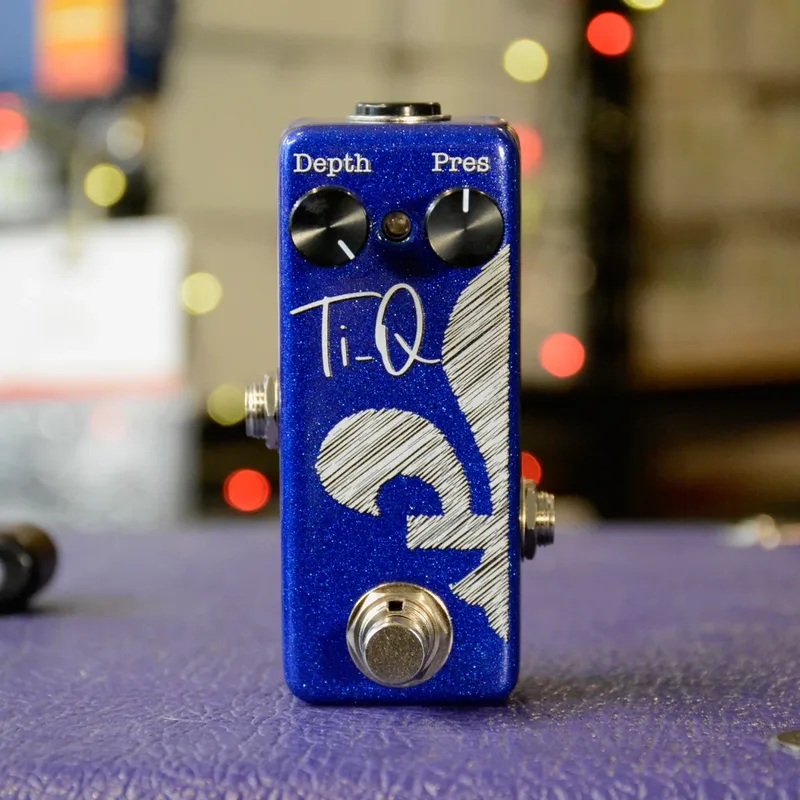
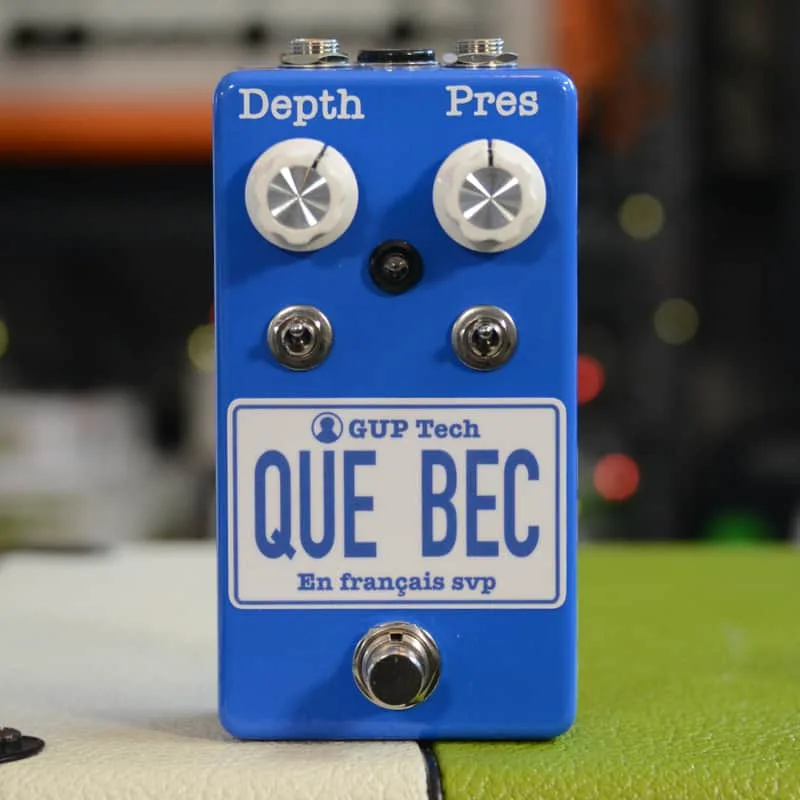
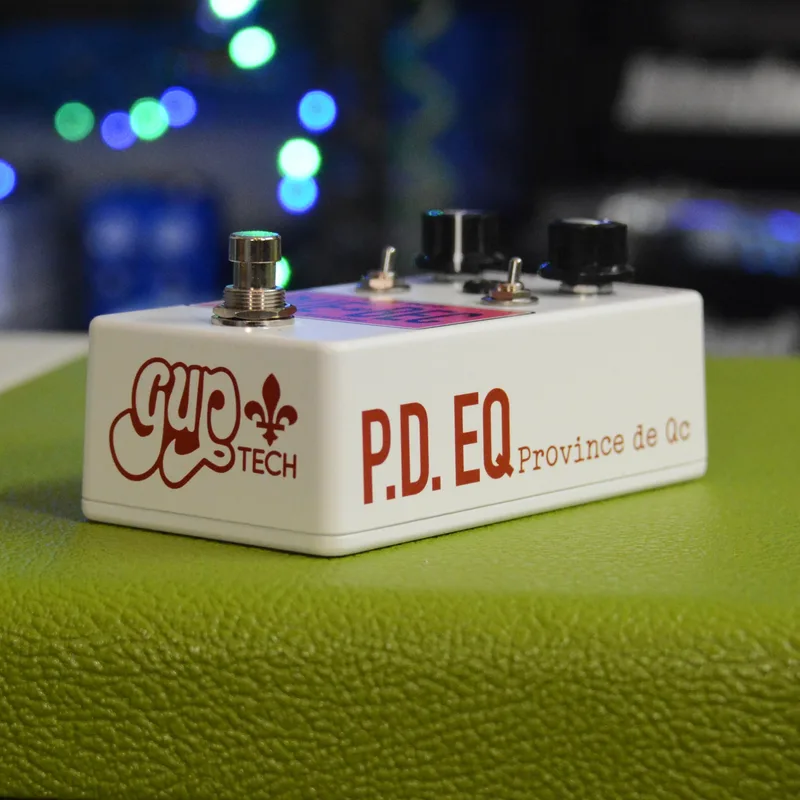
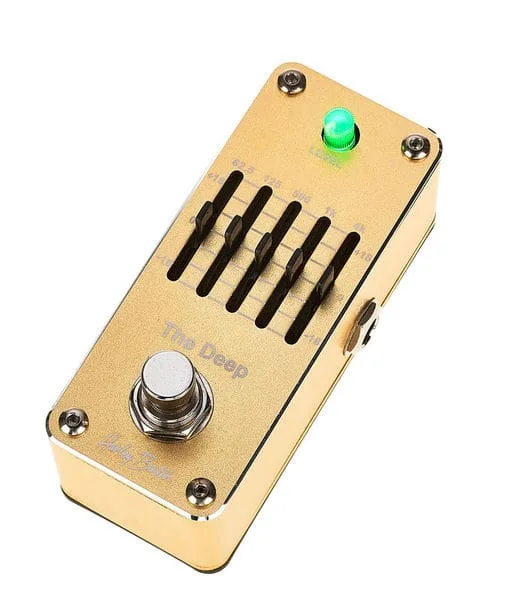
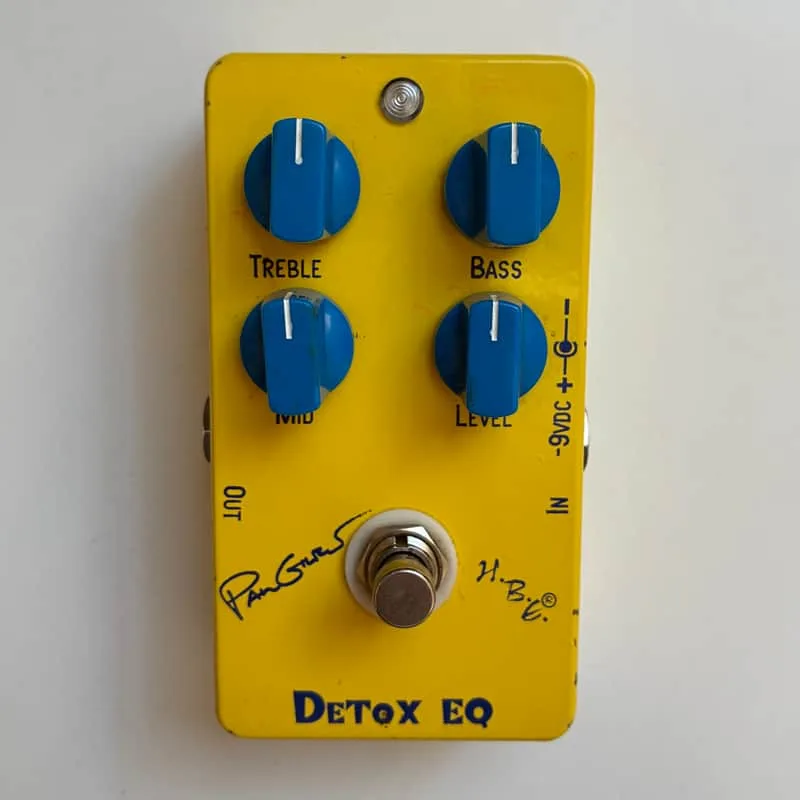
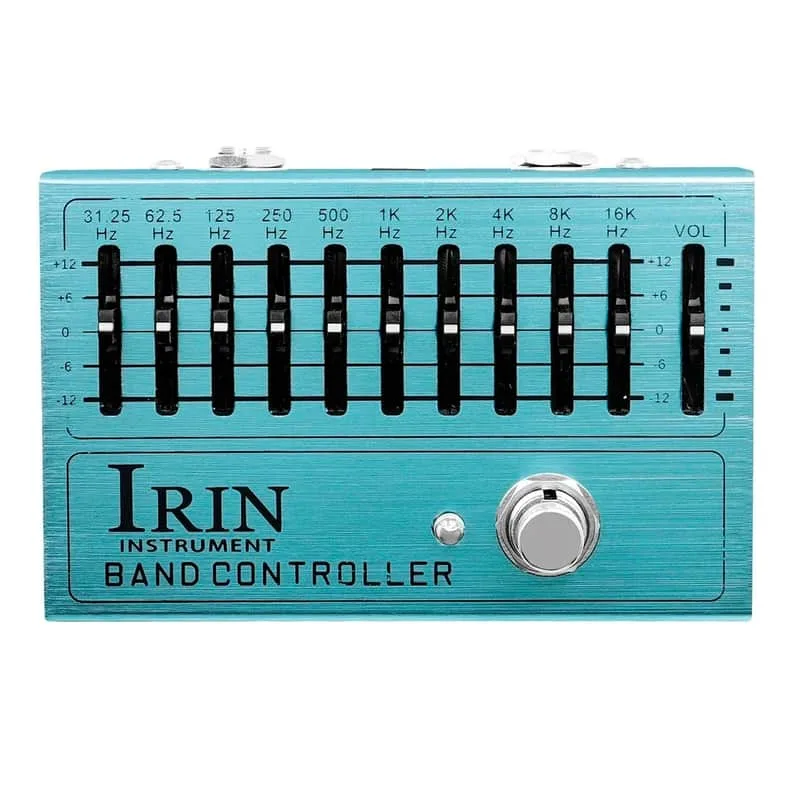
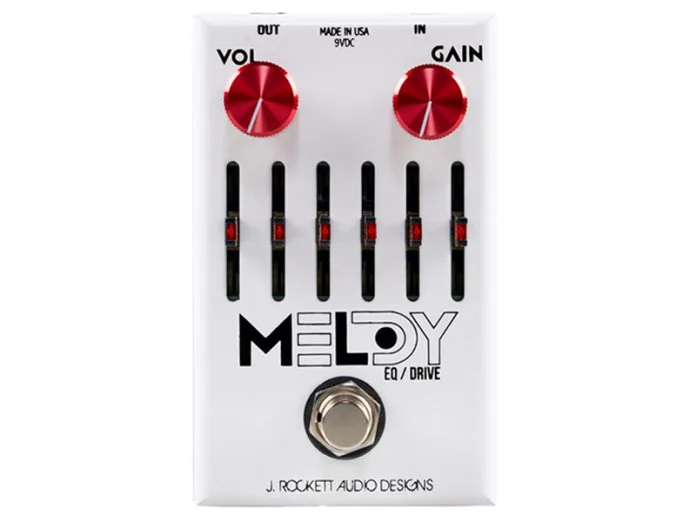
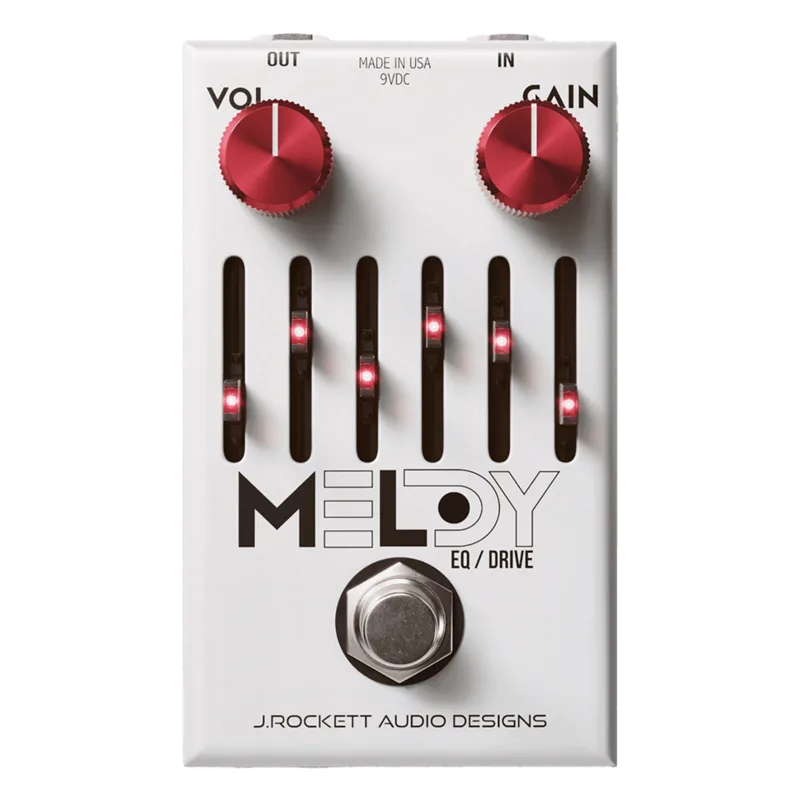
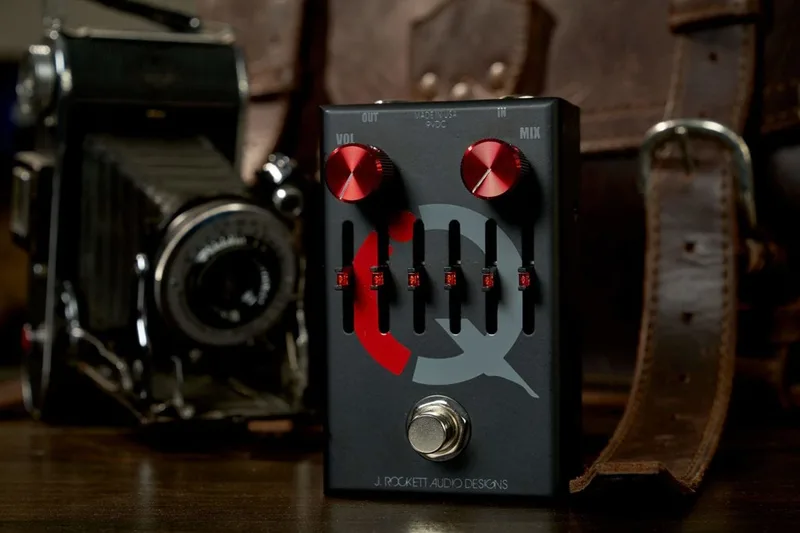
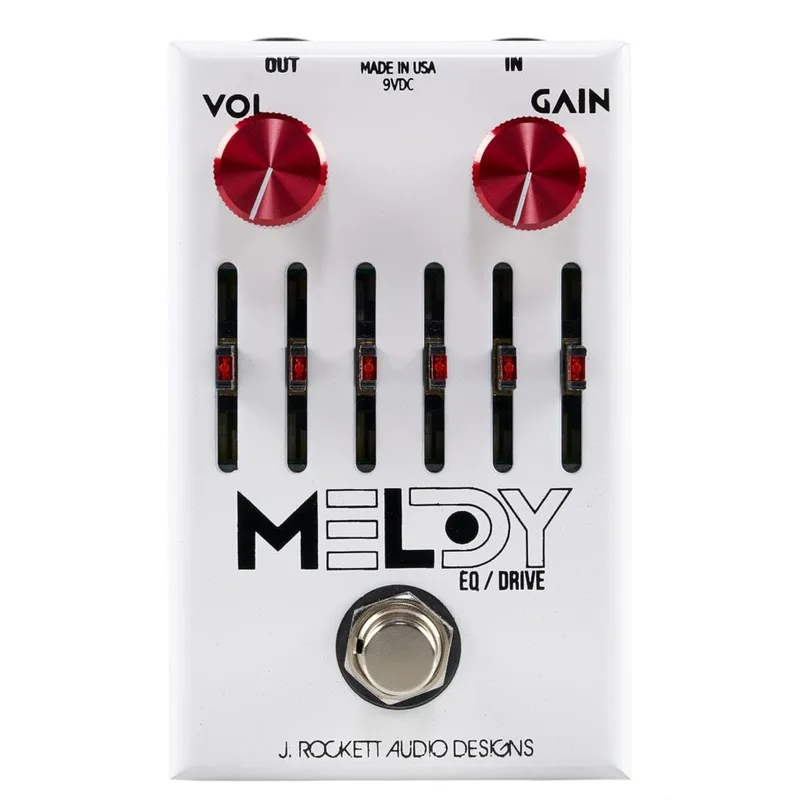
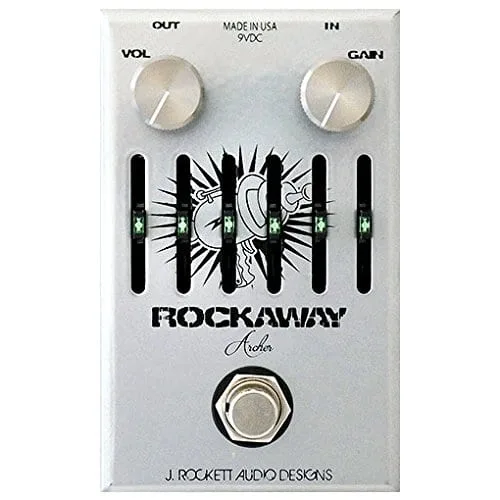
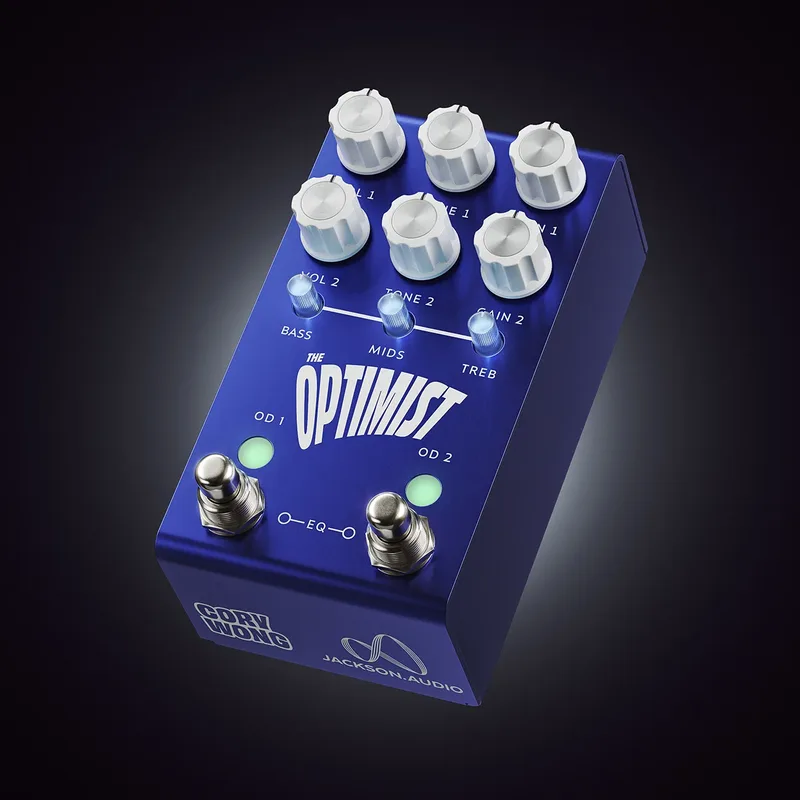
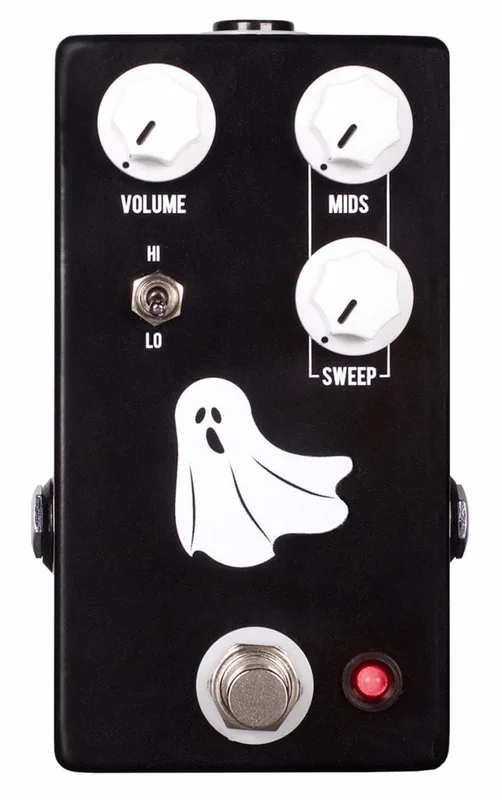
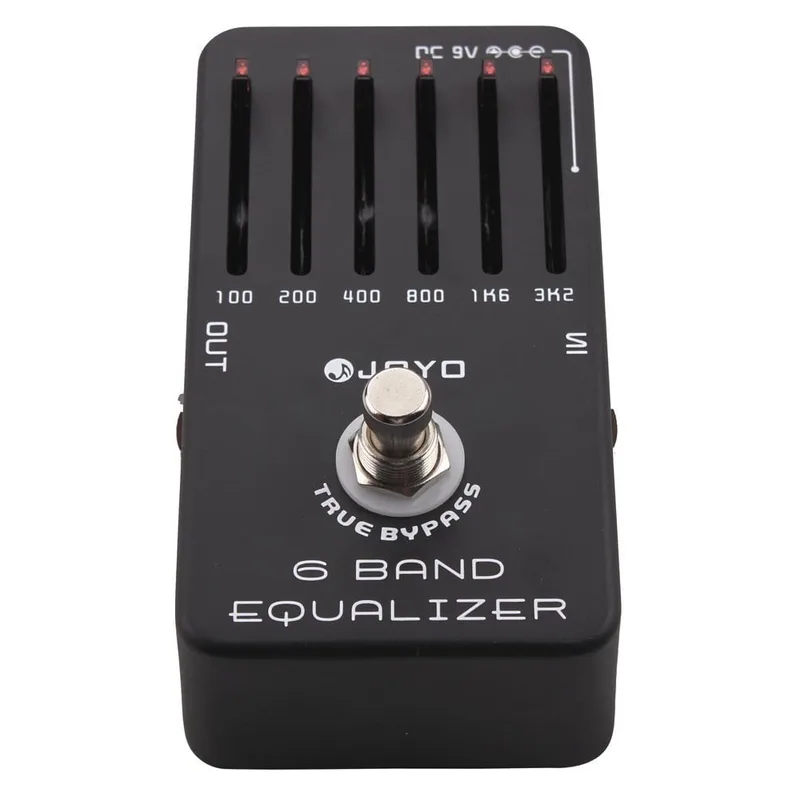
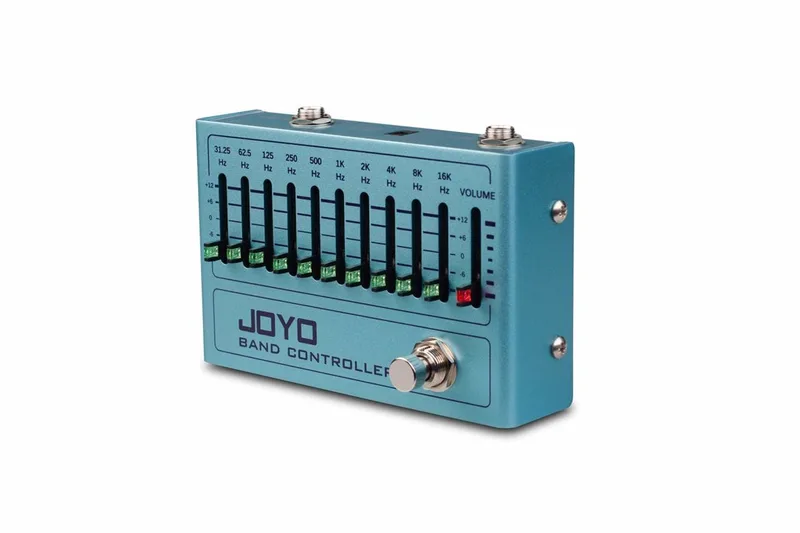
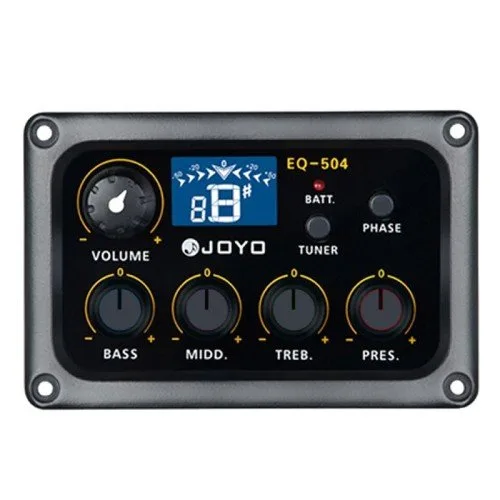
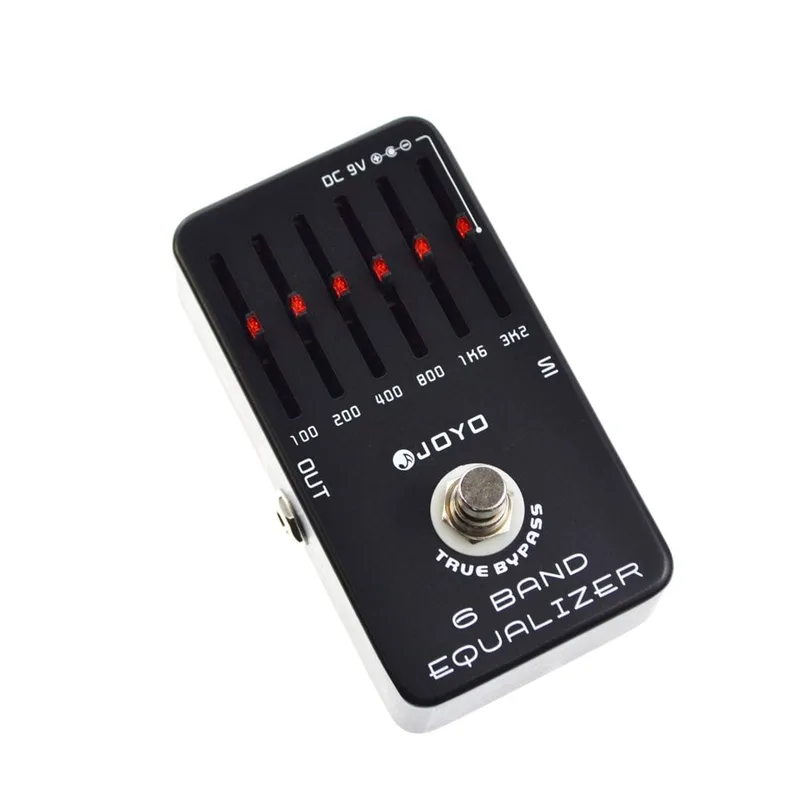

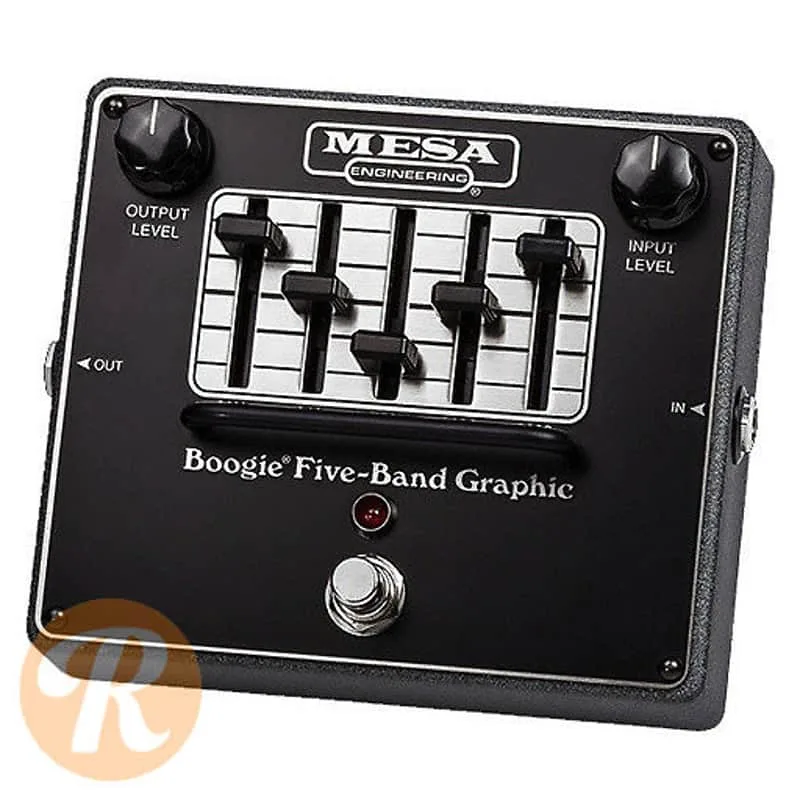
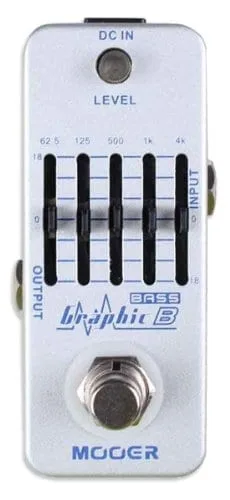
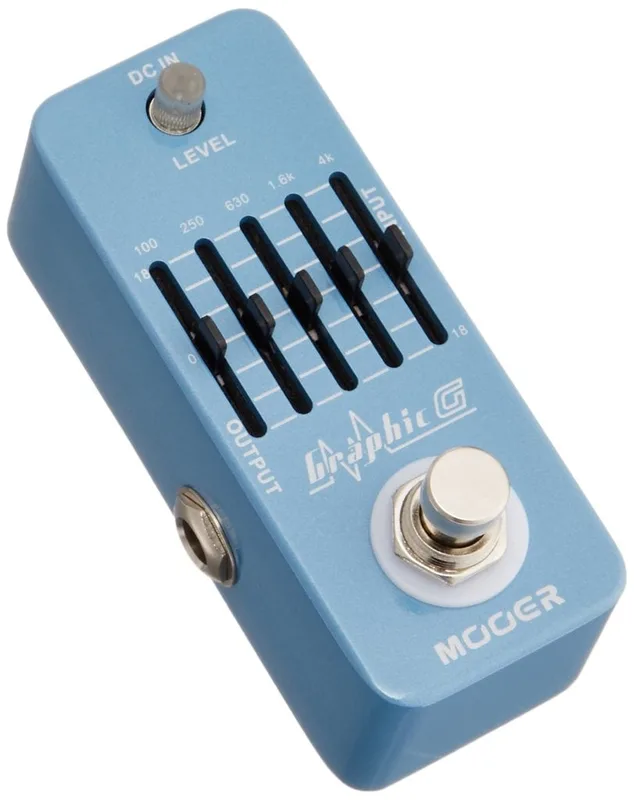
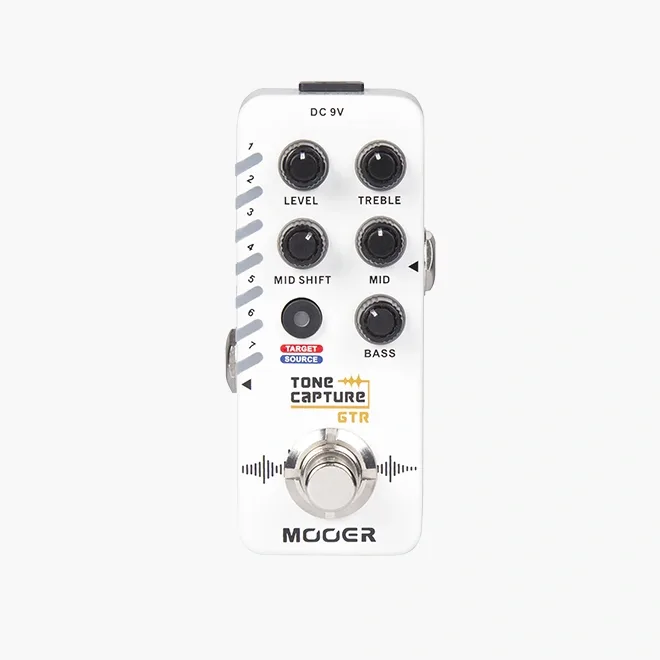
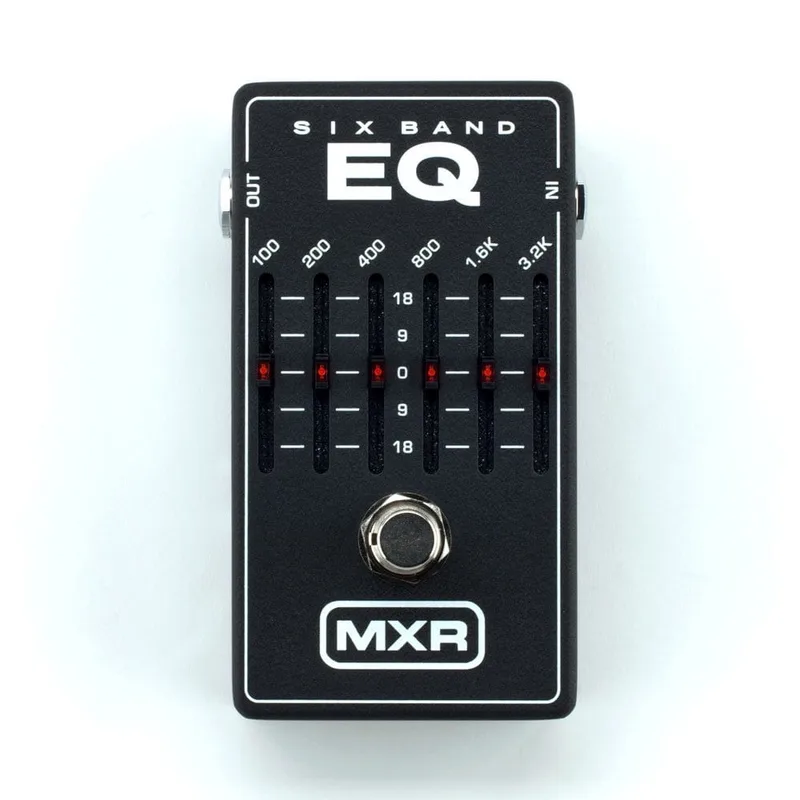
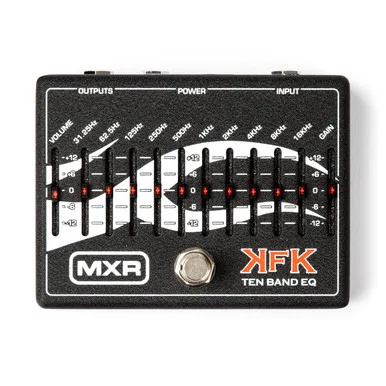
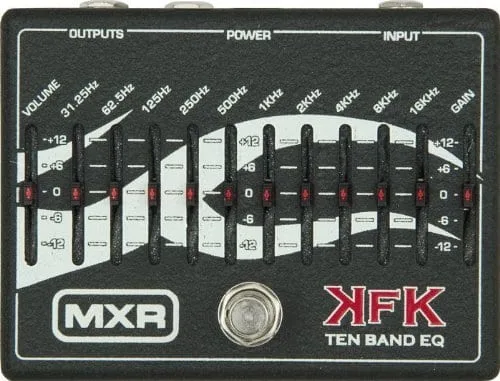
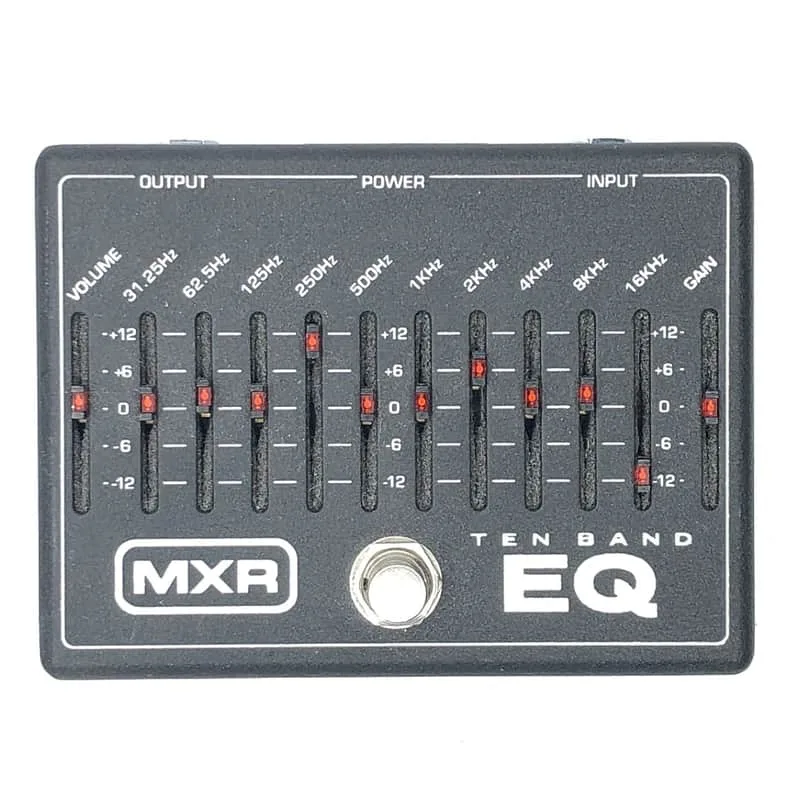
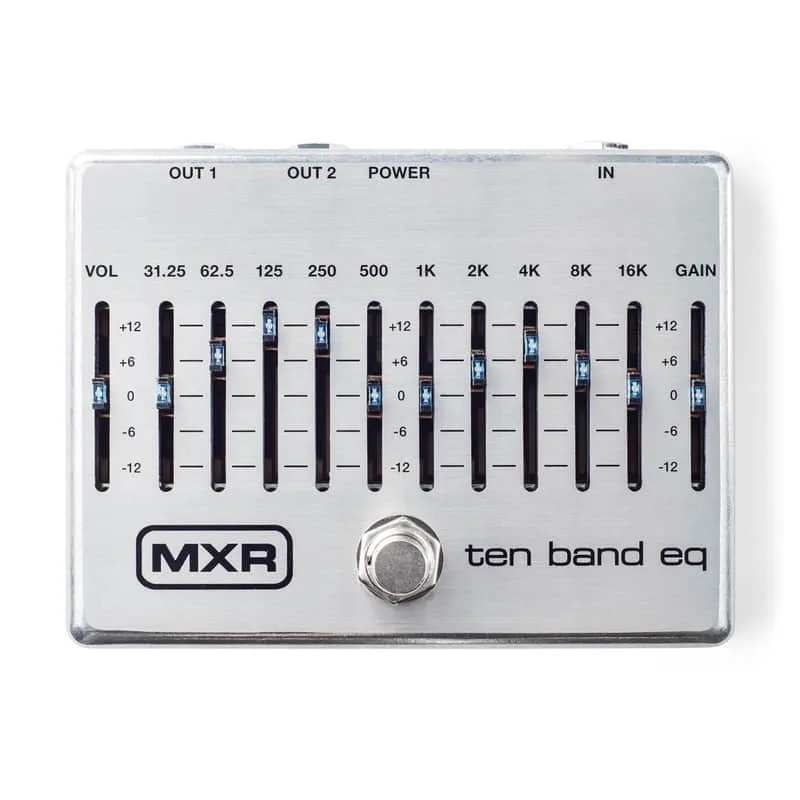
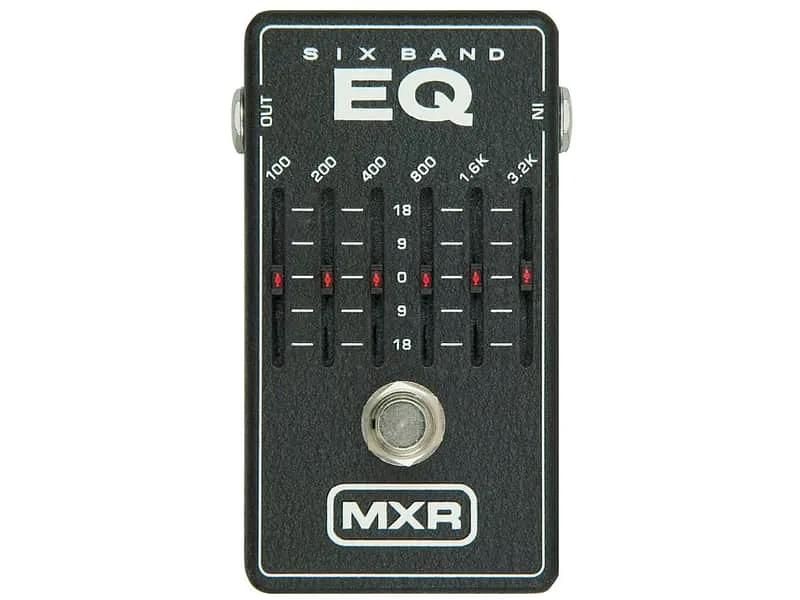
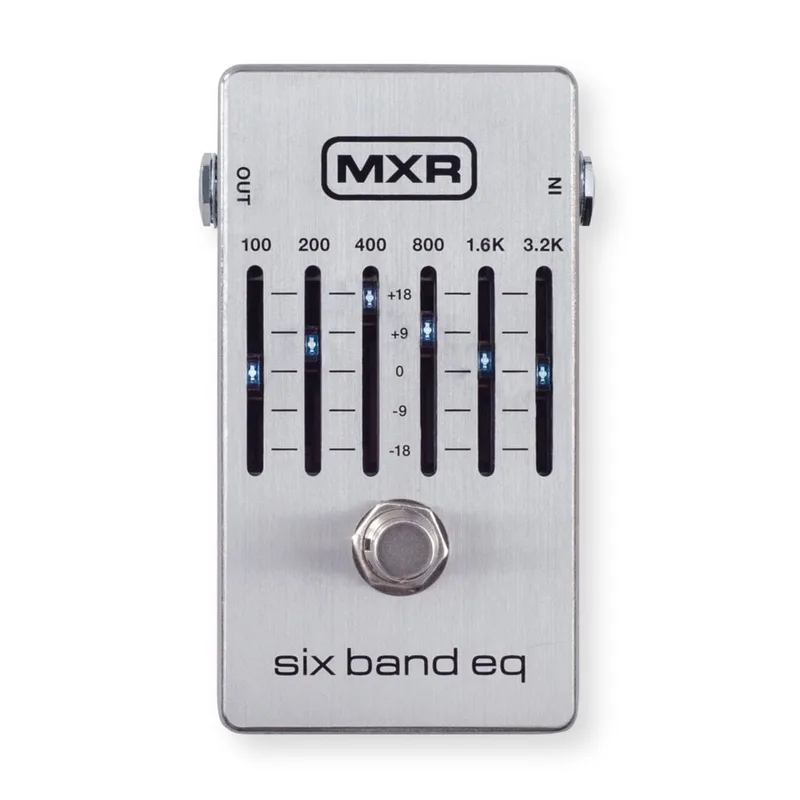
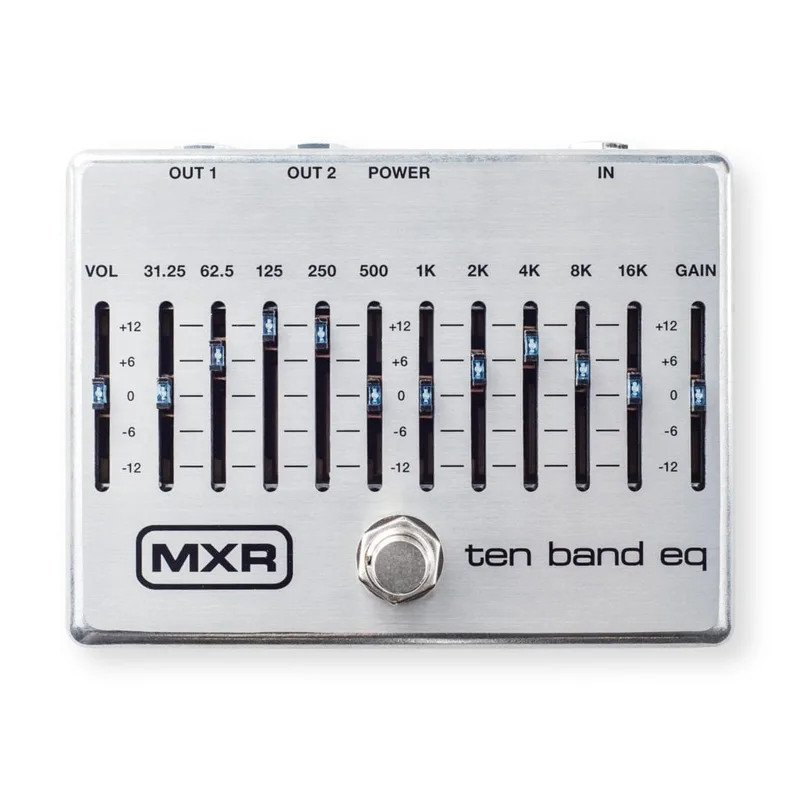
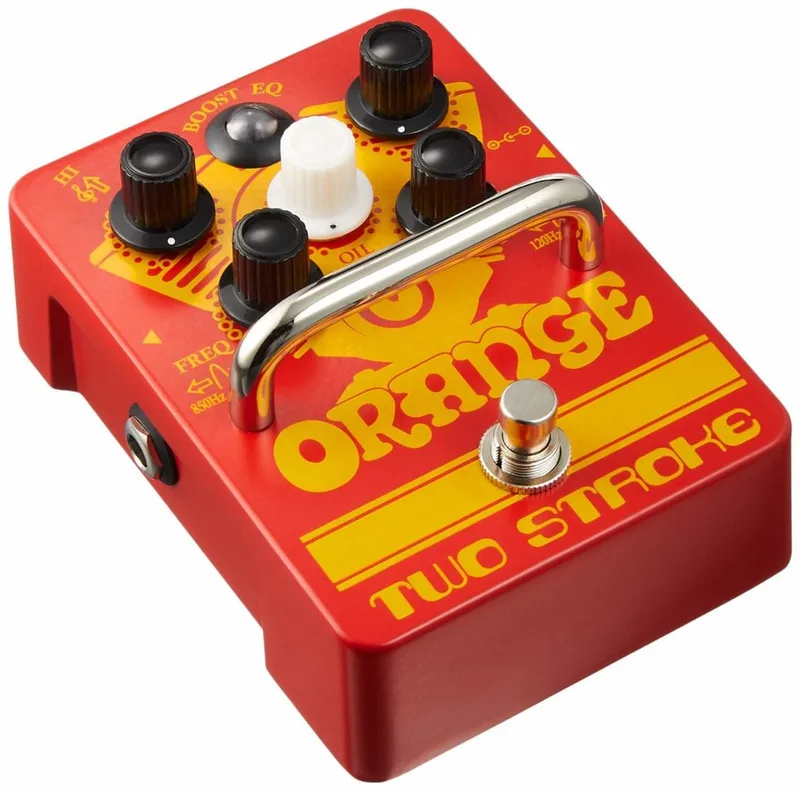
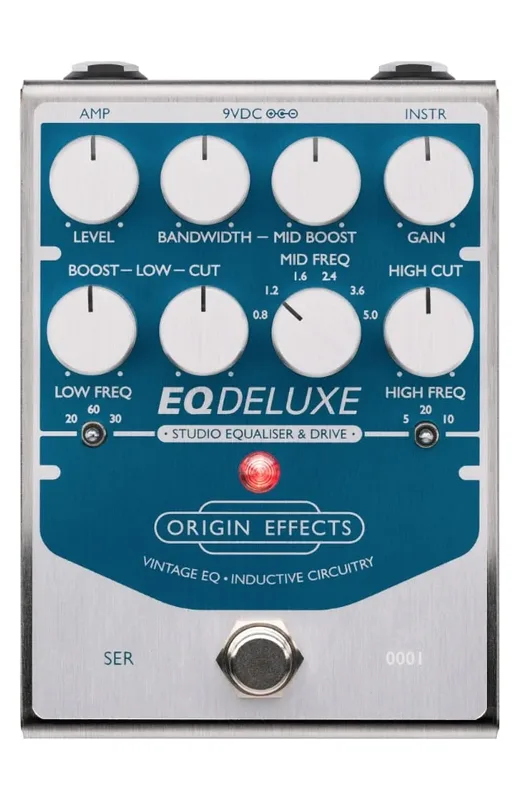
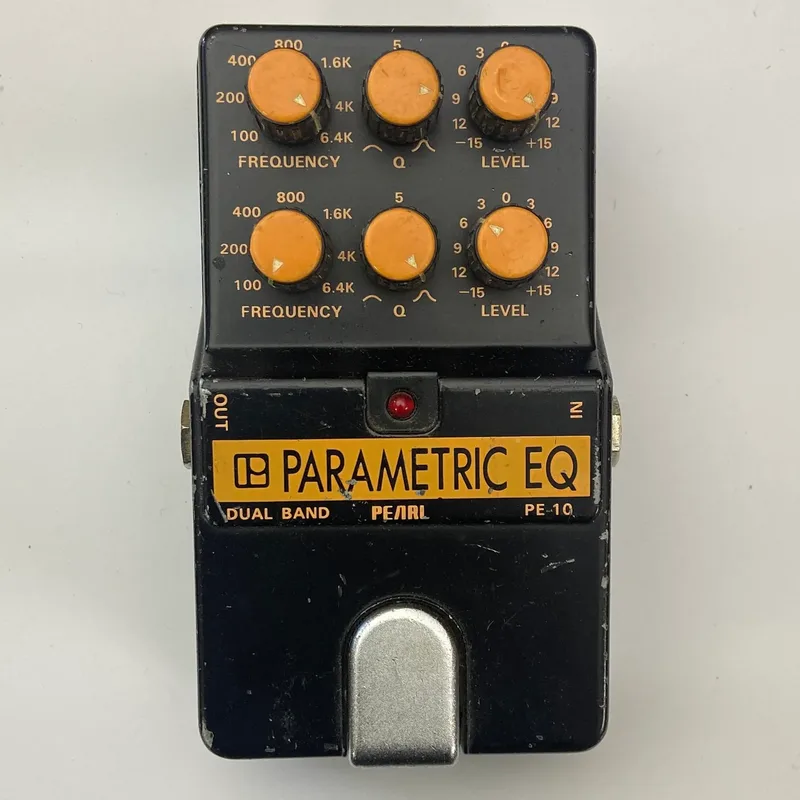
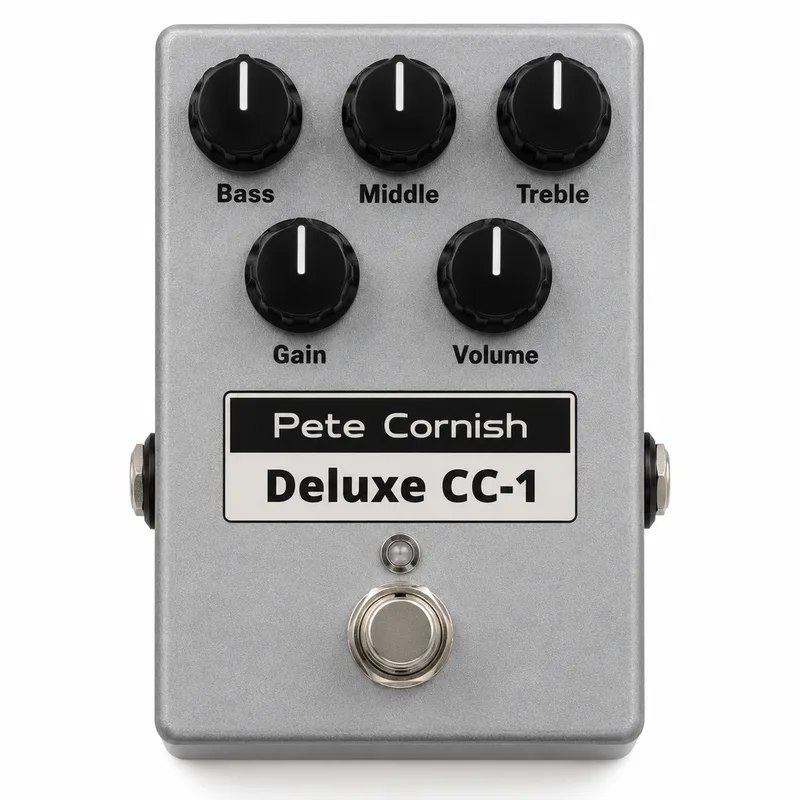
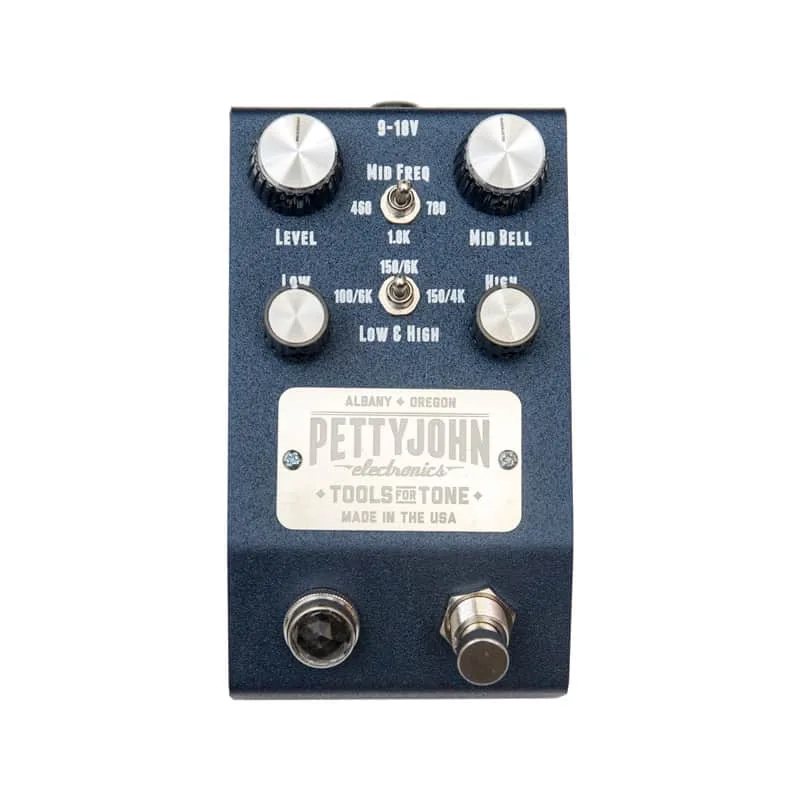
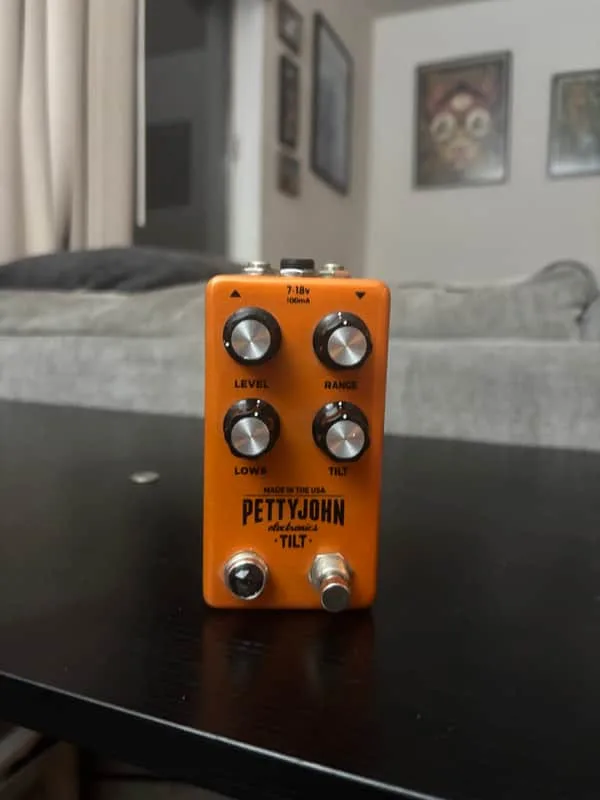
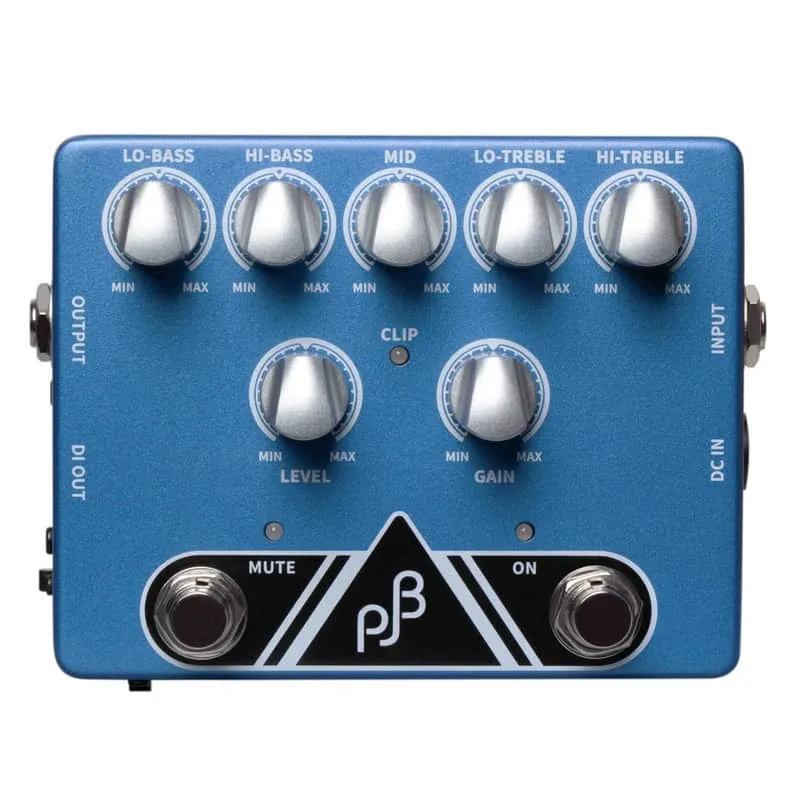
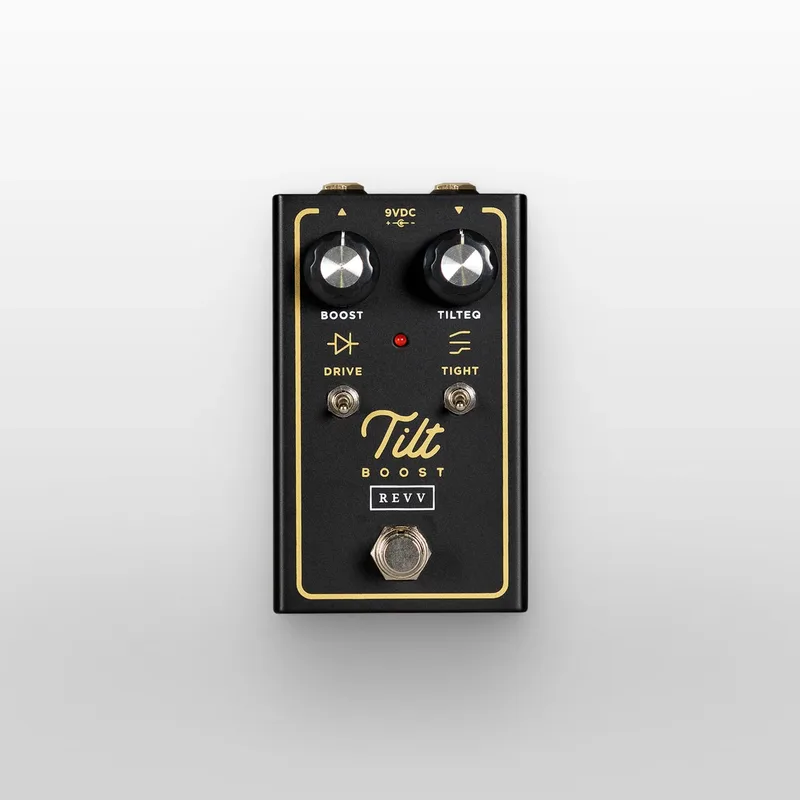
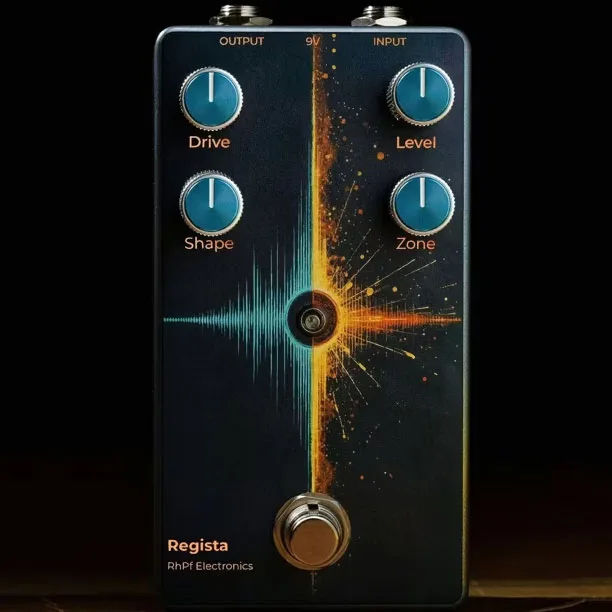
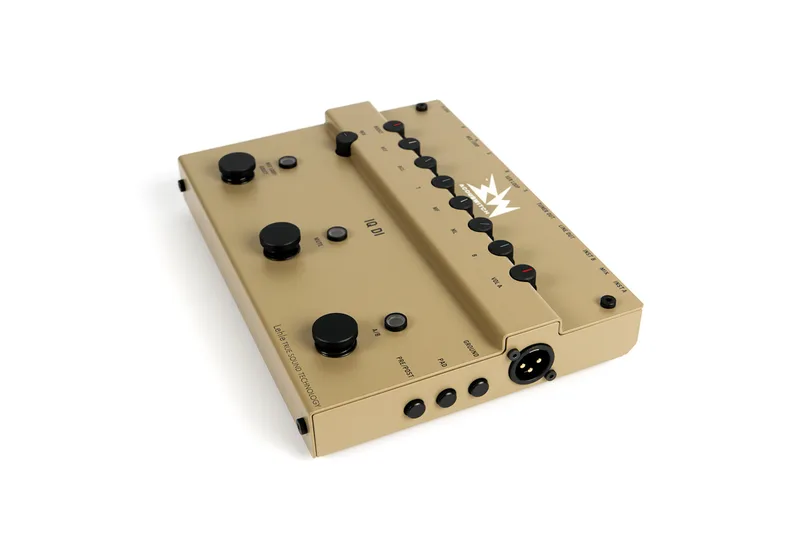
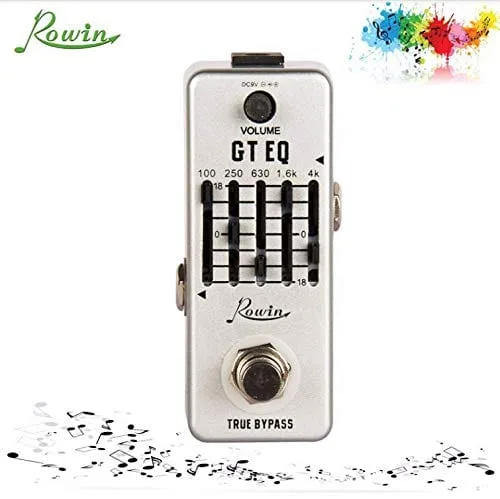
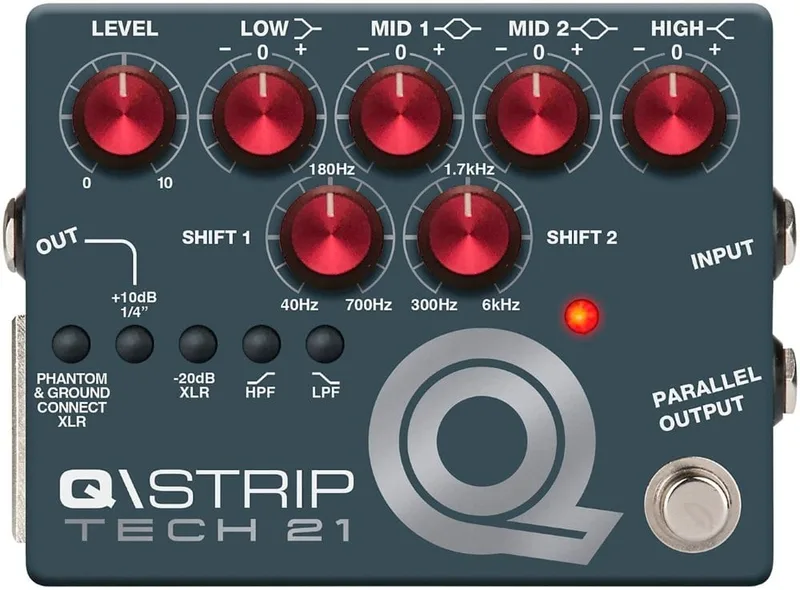
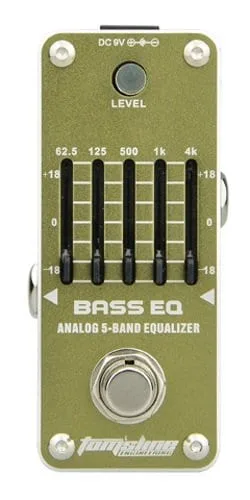
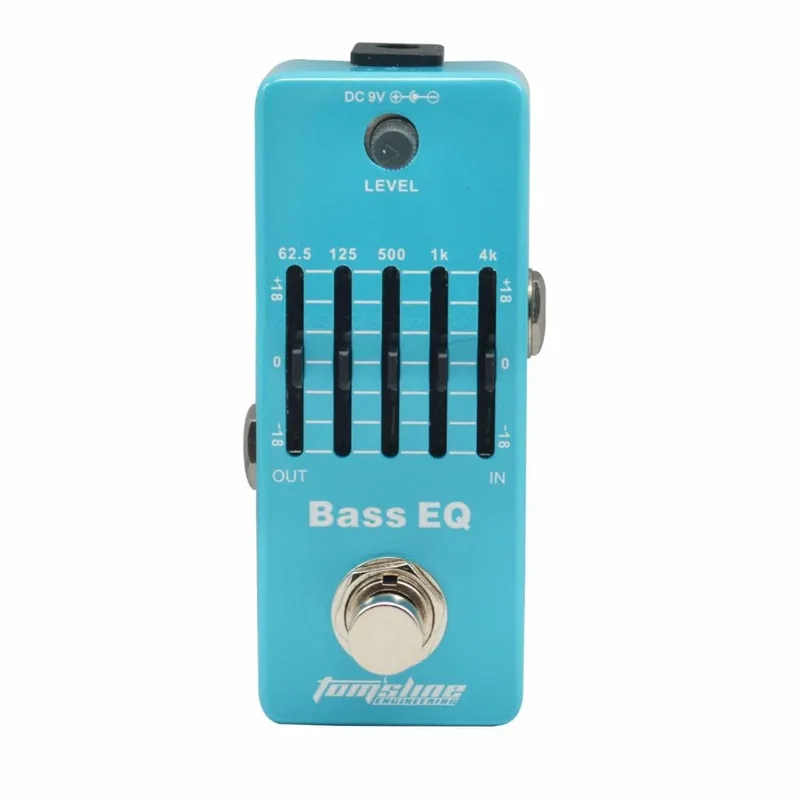
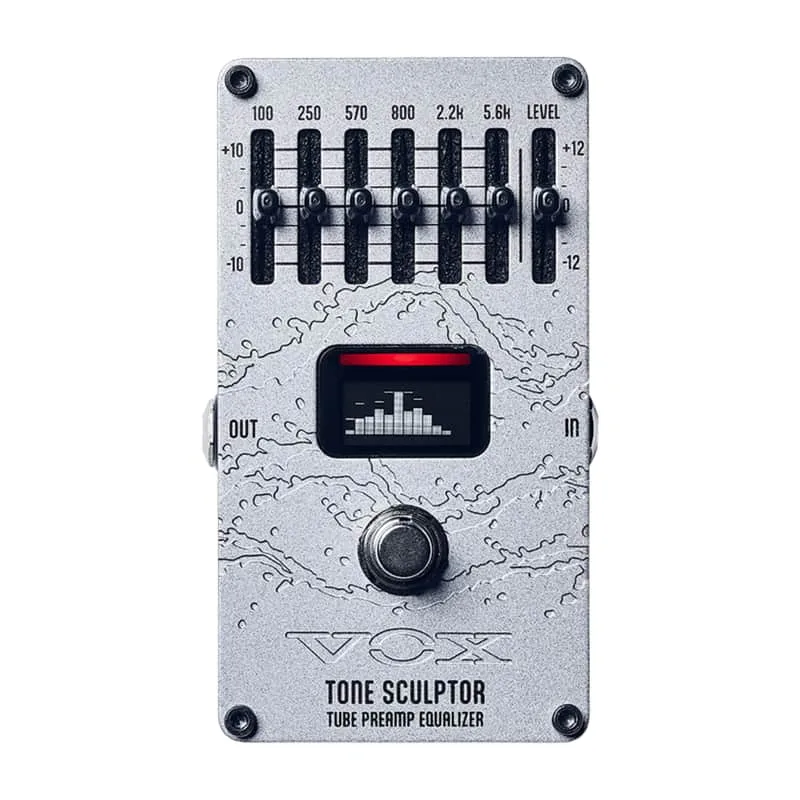
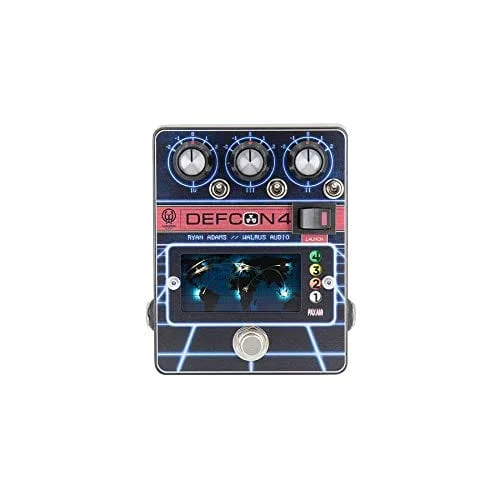
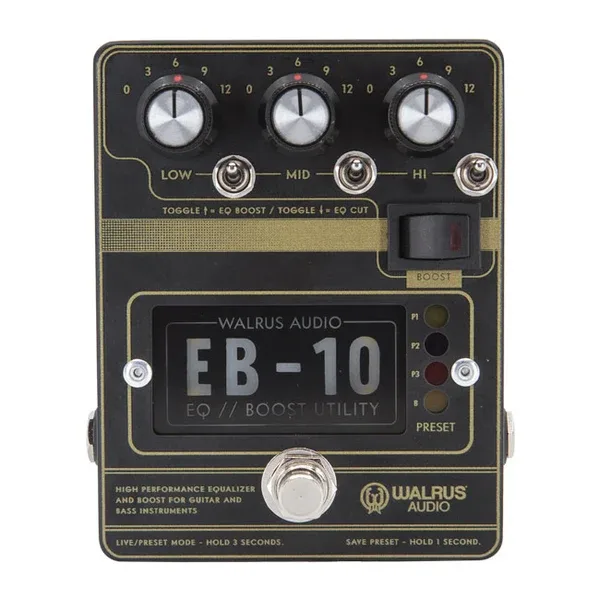
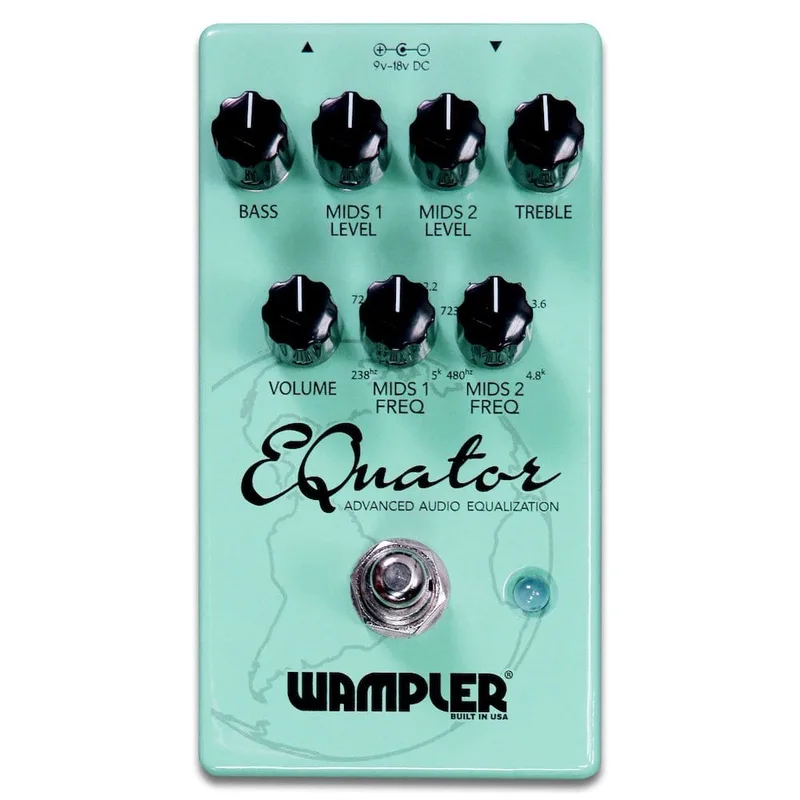
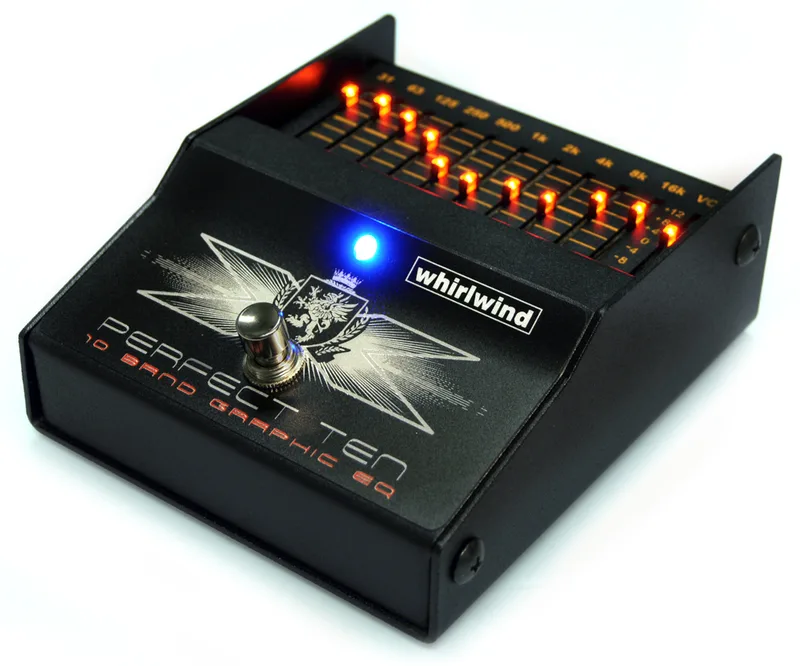
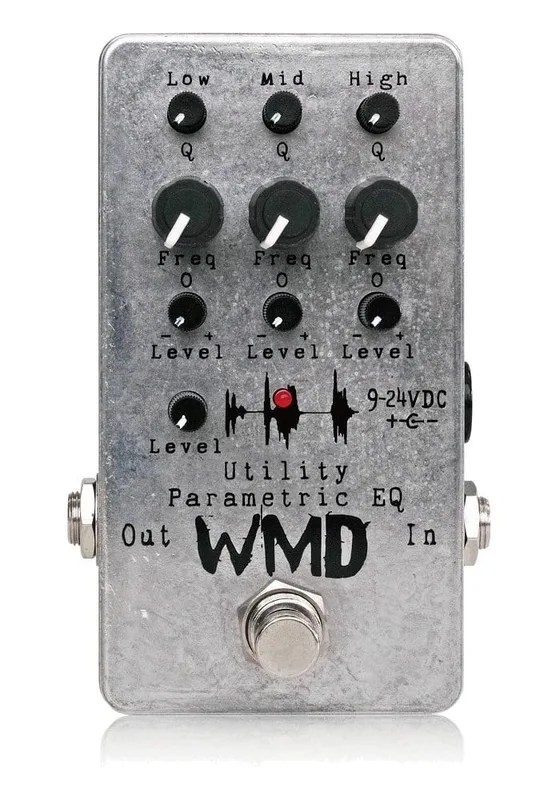
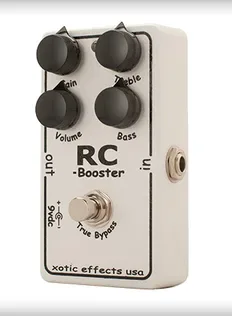
An equalization pedal, usually just called an EQ pedal, cuts or boosts specific ranges of frequencies in your guitar or bass signal. Where a tone knob or an amp's bass and treble controls give you a few broad strokes, an EQ pedal splits the audible range into bands you can raise or lower independently. That lets you do things a tone knob cannot: pull mud out of the low mids, add bite to the presence range, tame a harsh pickup, or push the whole level up as a clean boost.
For a beginner, an EQ pedal is the most direct tool for fixing a tone problem you can hear but cannot name. For an experienced player, it is a precision instrument: a way to voice a rig for a room, reshape how a drive pedal reacts, or carve space for guitar in a mix. BOSS's effects-order guide sums up the two camps: "one school of thought is to sculpt the fundamental guitar tone before any other effect touches it. Others argue that it's" better placed at the end to control the final tone1.
What an EQ pedal does to your sound
Every EQ pedal does the same basic job: it divides the frequency spectrum into bands and lets you boost or cut each one. The audible differences between pedals come from how many bands they offer, where those bands sit, and whether the band positions are fixed or adjustable.
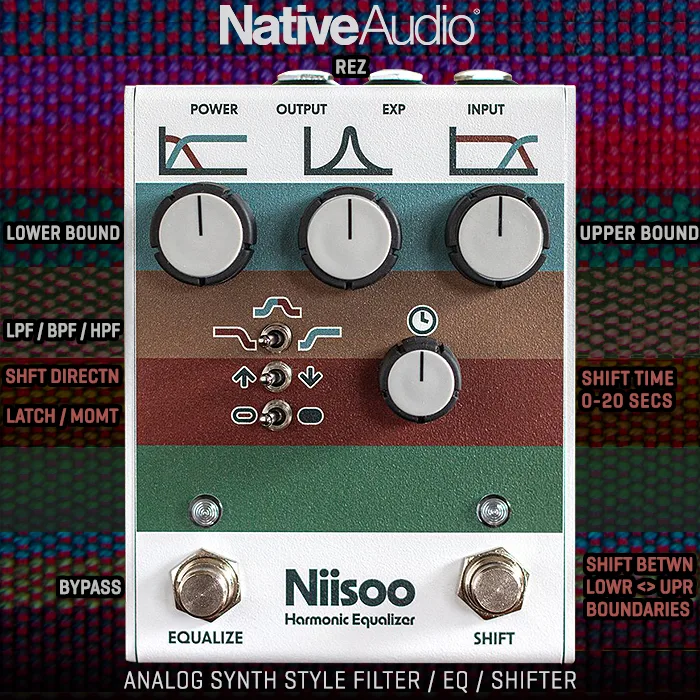
Some EQ pedals go further than straight equalization. A few add filters at the frequency extremes, tuners, or even playback features:
- The Genzler re/Q combines a high pass filter, a low pass filter and a 5-band EQ in one analog pedal2.
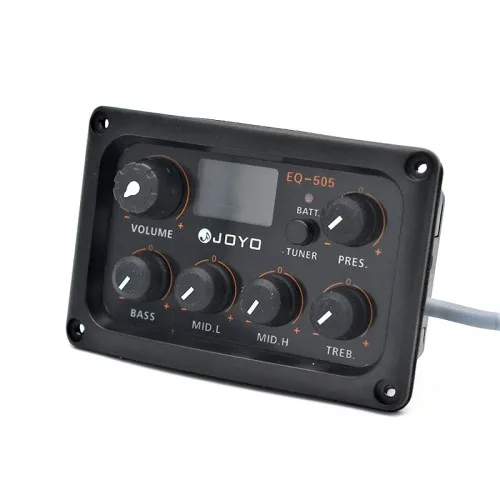
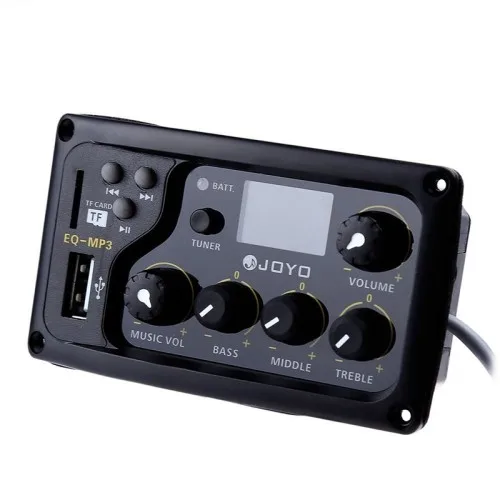
- The JOYO EQ-MP3 is an EQ pedal with a tuner and MP3 playback built in3.
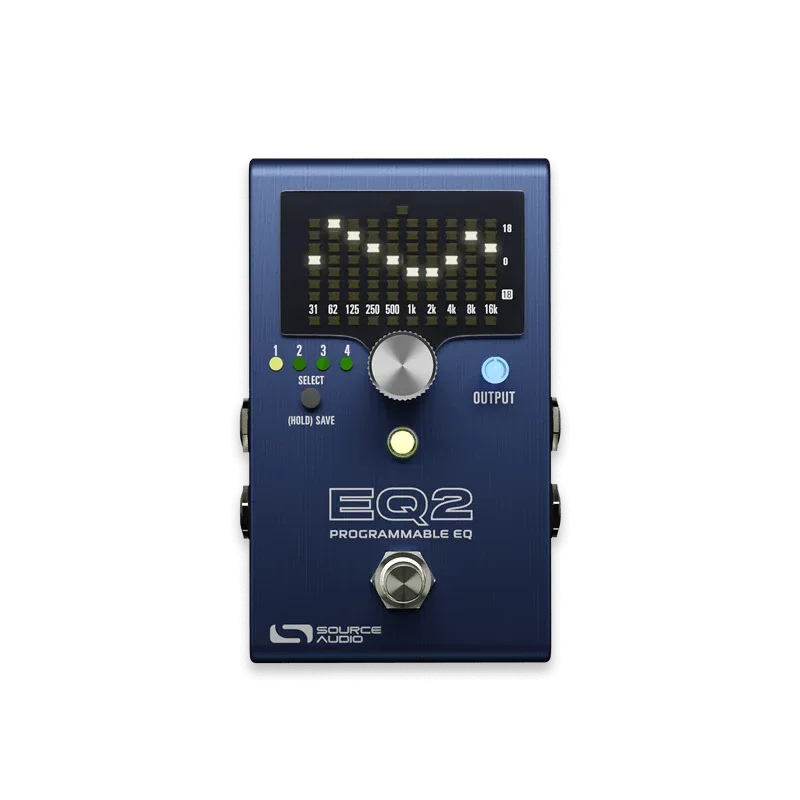
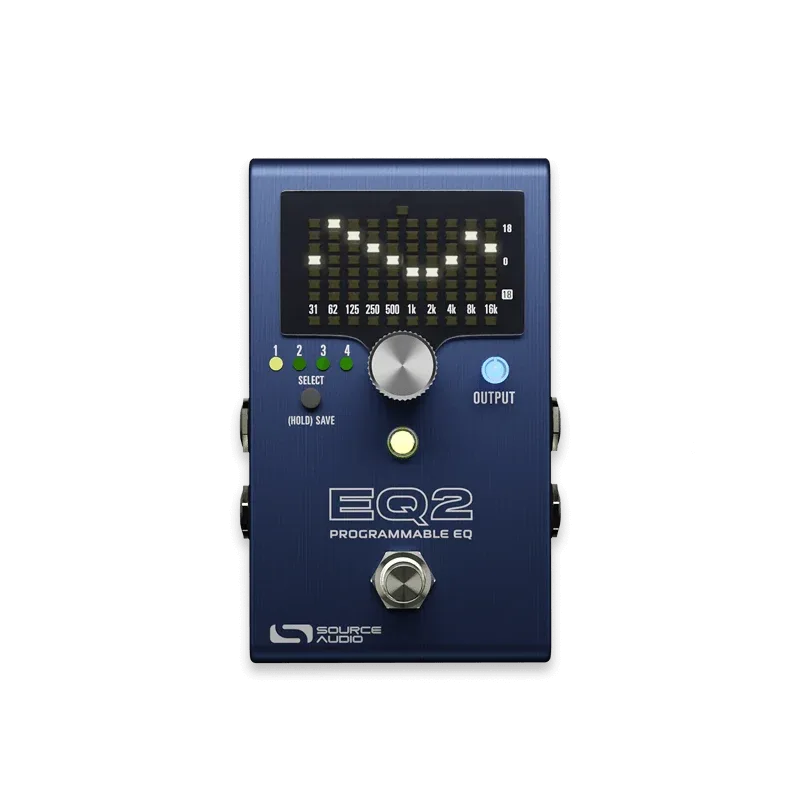
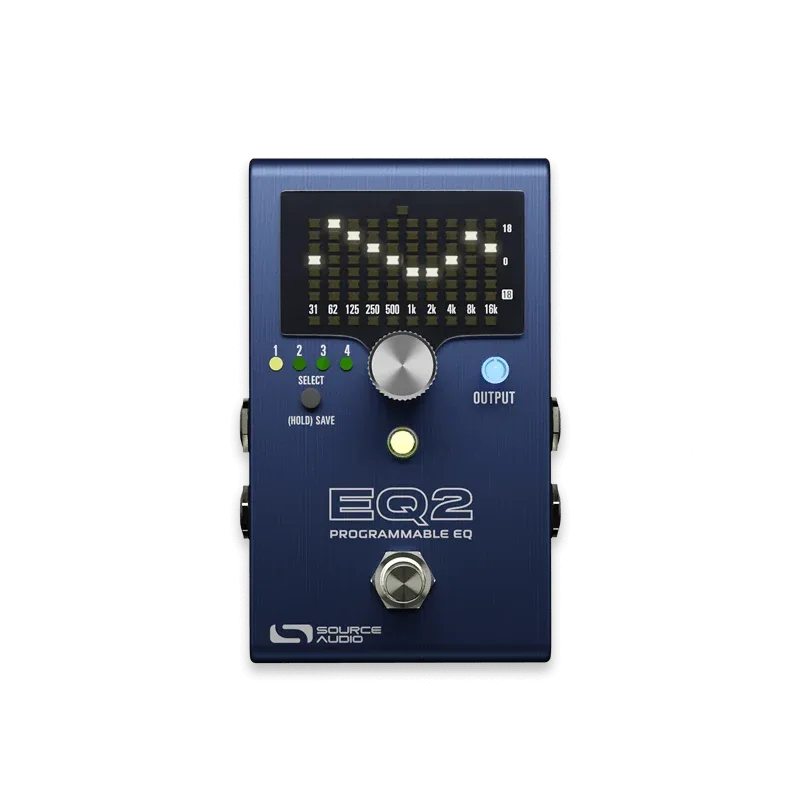
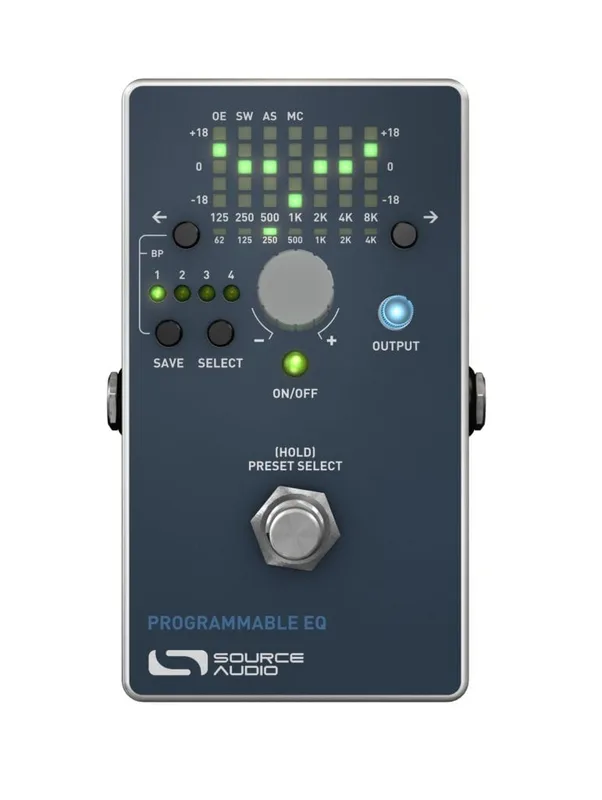
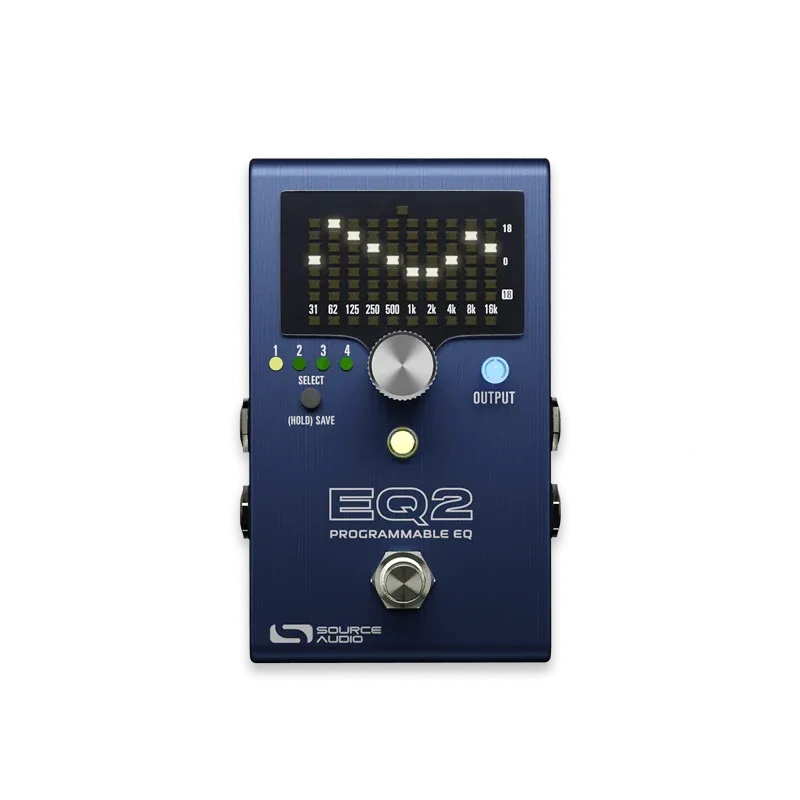
- The Source Audio EQ2 is a stereo graphic and parametric equalizer with full MIDI control, 128 presets and a tuner4.
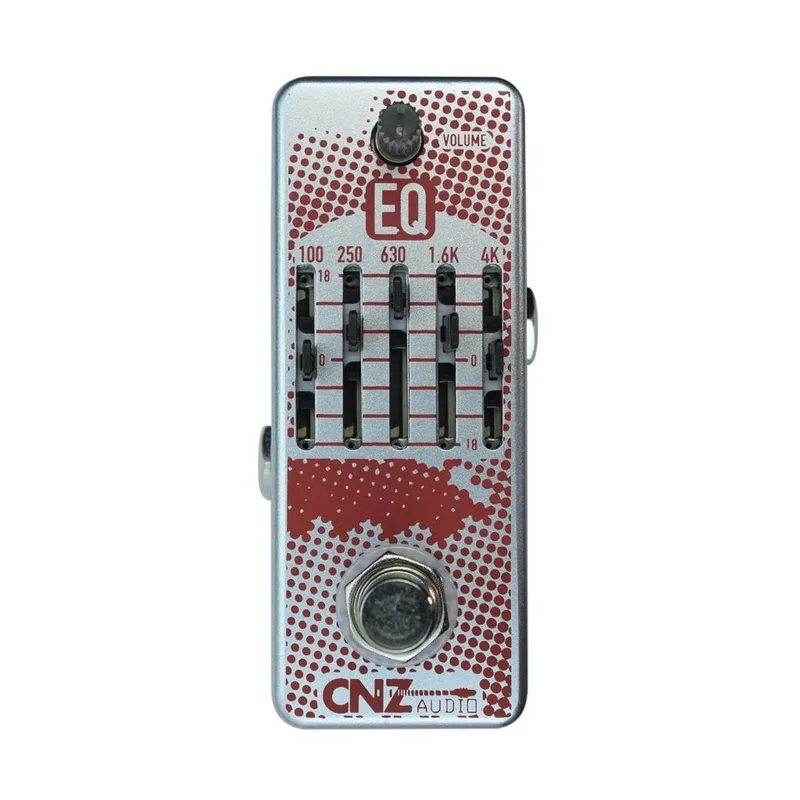
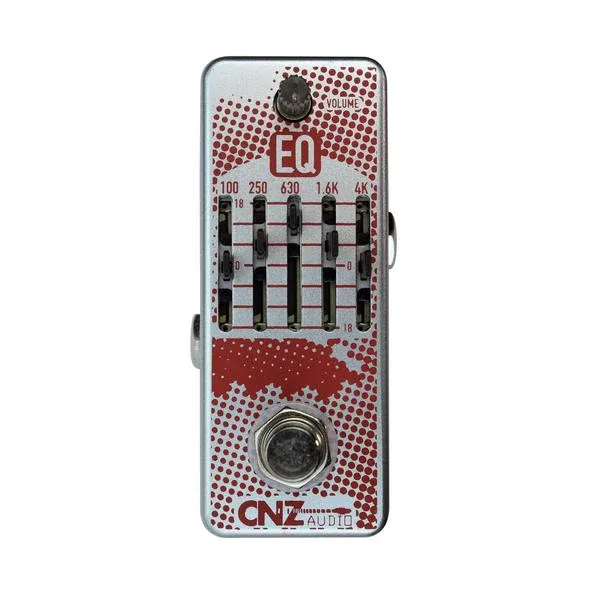
- The CNZ Audio GEQ-5 puts a clear volume knob with a green LED at the top of the pedal for output level5.
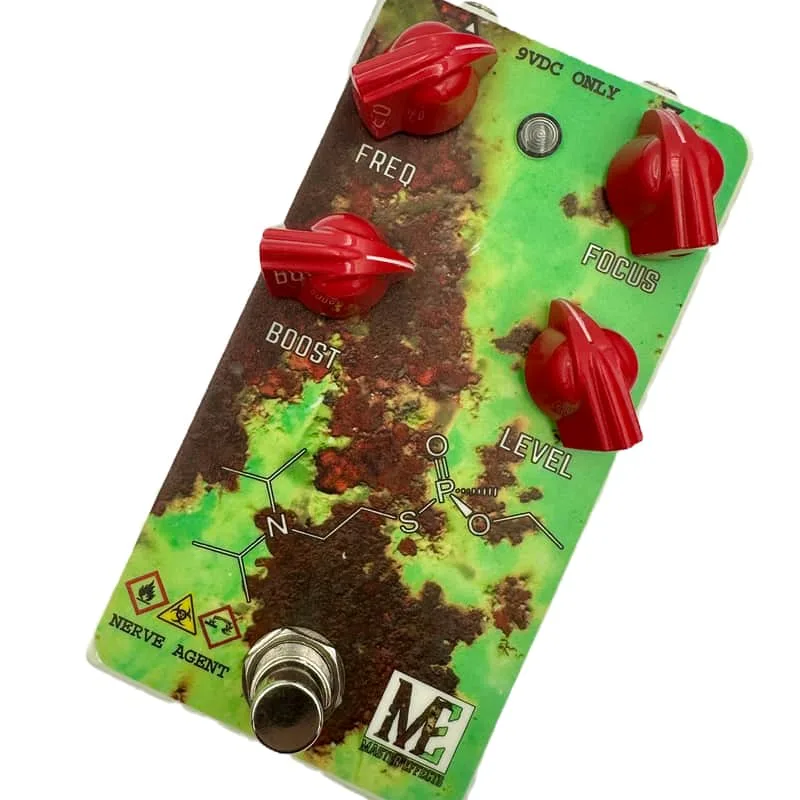
EQ circuits also turn up inside pedals that are not sold as EQs. Alexander Pedals describes the Litho Boost as "an EQ sculptor, adding that extra shimmer and giving your tone just the right amount" of edge6, and VFE Pedals' Focus is labeled a "BOOSTER EQUALIZER"7. If a pedal shapes frequency, an EQ circuit is usually doing the work.
How equalization works: filters, bands and gain
Three ideas cover almost every EQ pedal: filters, bands and gain.
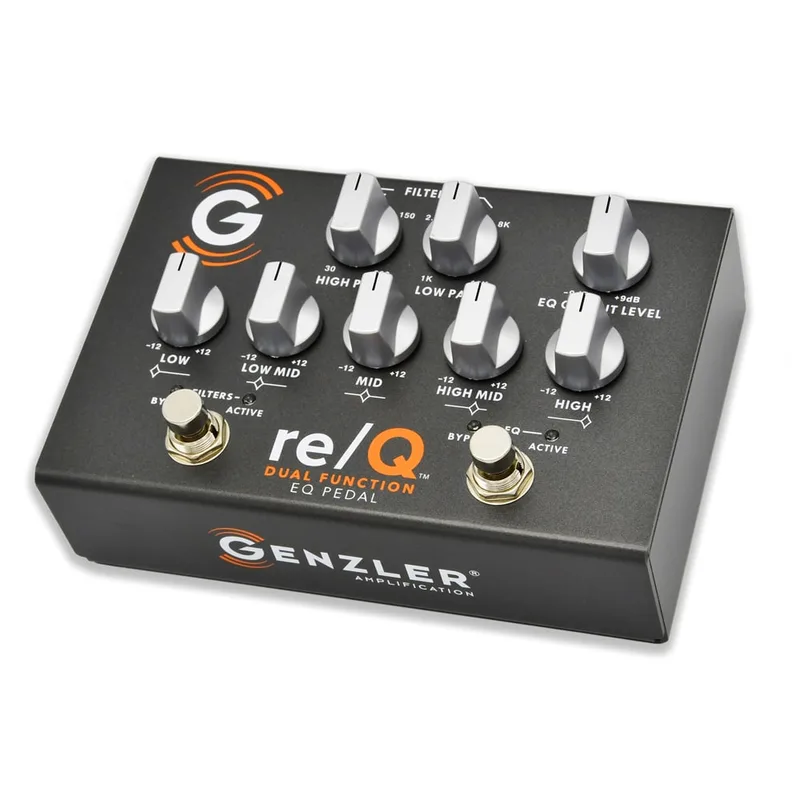
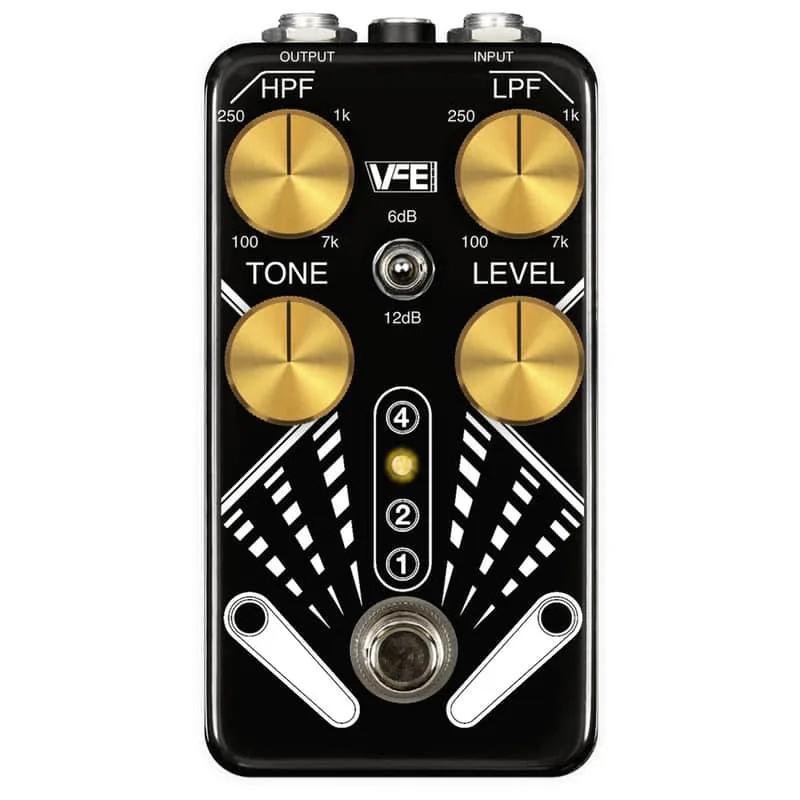
Filters remove everything above or below a chosen frequency. A high pass filter (HPF) lets highs through and cuts lows; a low pass filter (LPF) does the opposite. Genzler's re/Q is built as "a low noise, ALL ANALOG multi-function HIGH PASS FILTER, LOW PASS FILTER and 5 BAND EQ pedal"2, and RockBoard's entry on the pedal describes "2 specific and separate filter networks, HPF and LPF filters with on/off switching and a 5 band EQ network"8. Broughton Audio's Resonant Filter Equalizer "creates unique tone control by combining a high pass filter, low pass filter, and middle e"qualizer9.
Bands are the frequency ranges the pedal divides the signal into. Each band has a center frequency and a width. In a graphic EQ both are fixed by the designer; in a parametric EQ you set them yourself.
Gain is how much each band is boosted or cut. GuitarPCB's Shredding Eagle DIY project describes the core behavior: "This stage is an active, true tone equalizer. Each band will boost or cut the signal," with some interaction between adjacent bands10. That interaction is normal in active EQ circuits: pushing one band slightly pulls its neighbors, which is why a graphic EQ's slider positions only approximate the actual curve.
Filters and EQ interact with gain stages. Shift Line notes that in its Stages preamp, "The mild filtering occurs before the gain stages which introduce harmonic distortion. As a result, the actual amount of" low cut you dial in is smaller than it looks, though the pedal still works well with downtuned instruments11. The same principle applies anywhere EQ meets drive.
Graphic and parametric EQ
The two main designs differ in how much control they give you and how quickly you can use them.
| Graphic EQ | Parametric EQ | |
|---|---|---|
| Bands | Fixed set, often 5 to 10 or more | Fewer bands, often 1 to 3 |
| Frequency | Chosen by the maker | Center frequency is set by the player |
| Bandwidth | Fixed | Set by the player |
| Level | Slider per band | Level control per band |
| Character | Fast, visible, broad shaping | Precise targeting of one frequency |
| Examples | Mooer Graphic G, Ibanez GE-10, Master Effects VEQ | Broughton Parametric Equalizer, Sine Effect MegaPara |
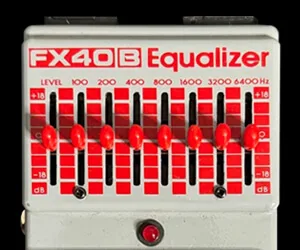
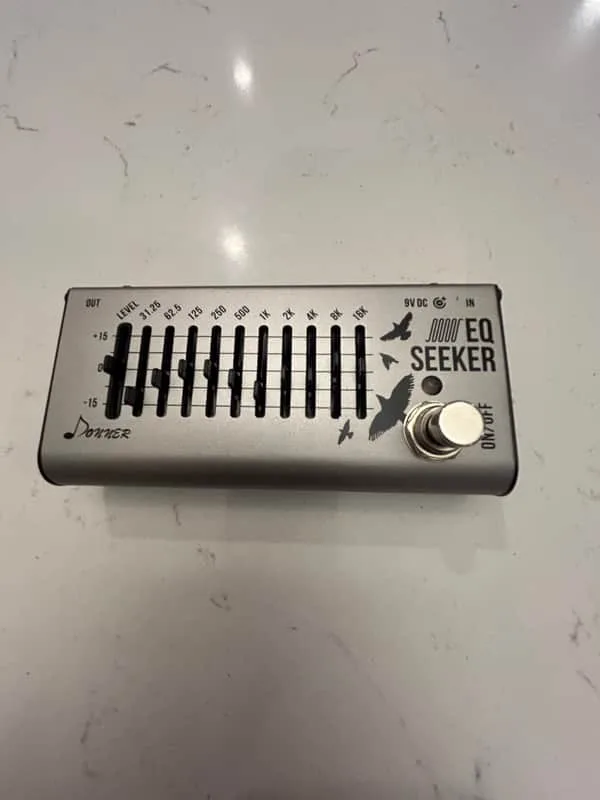
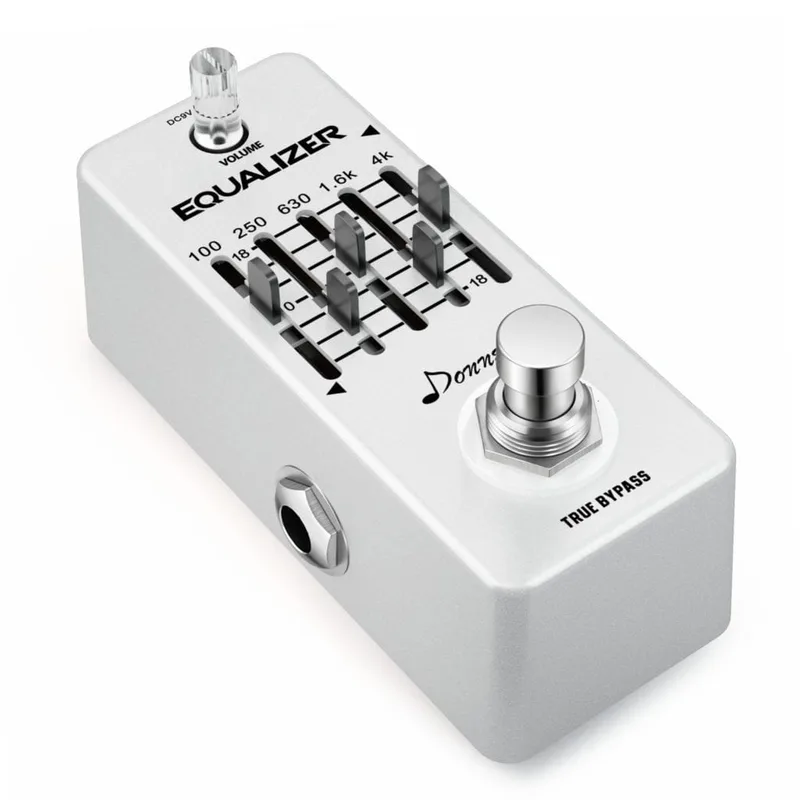
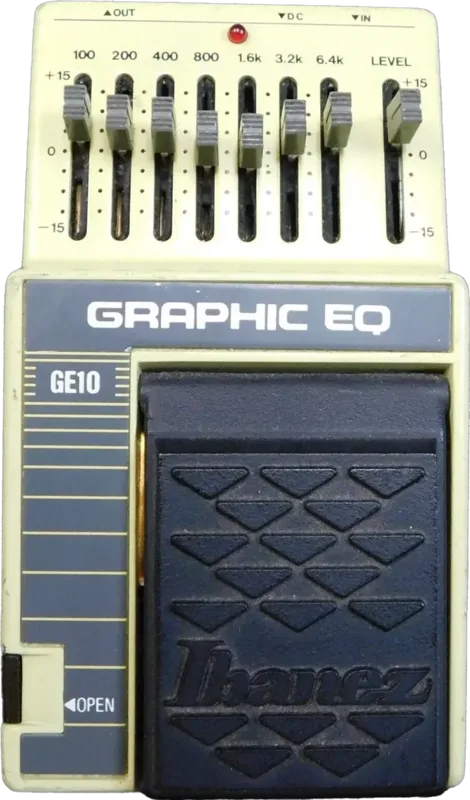
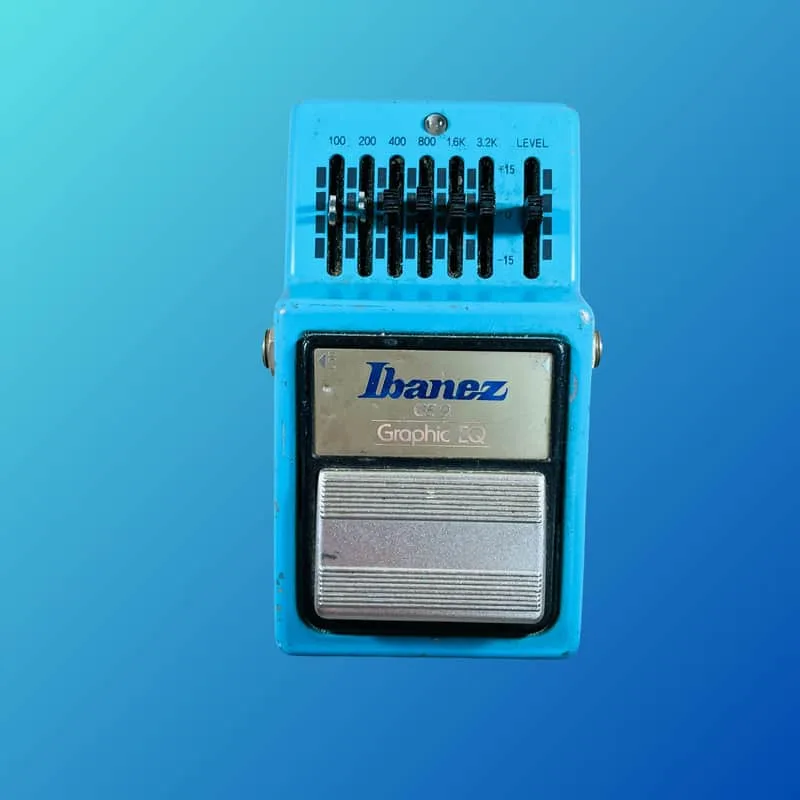
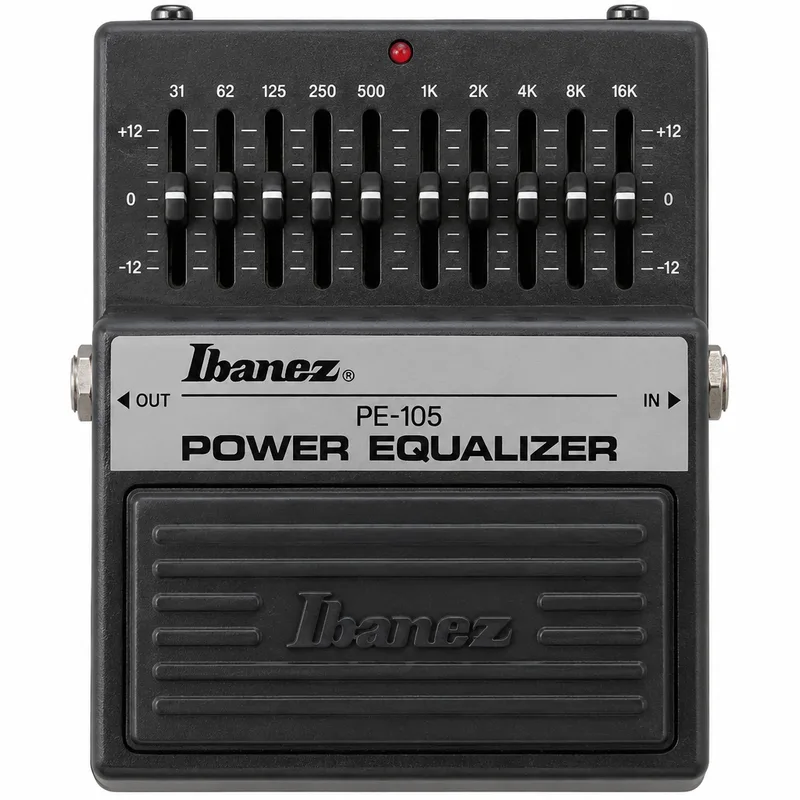
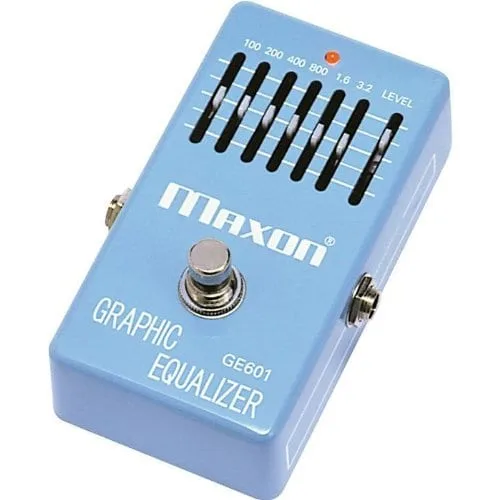
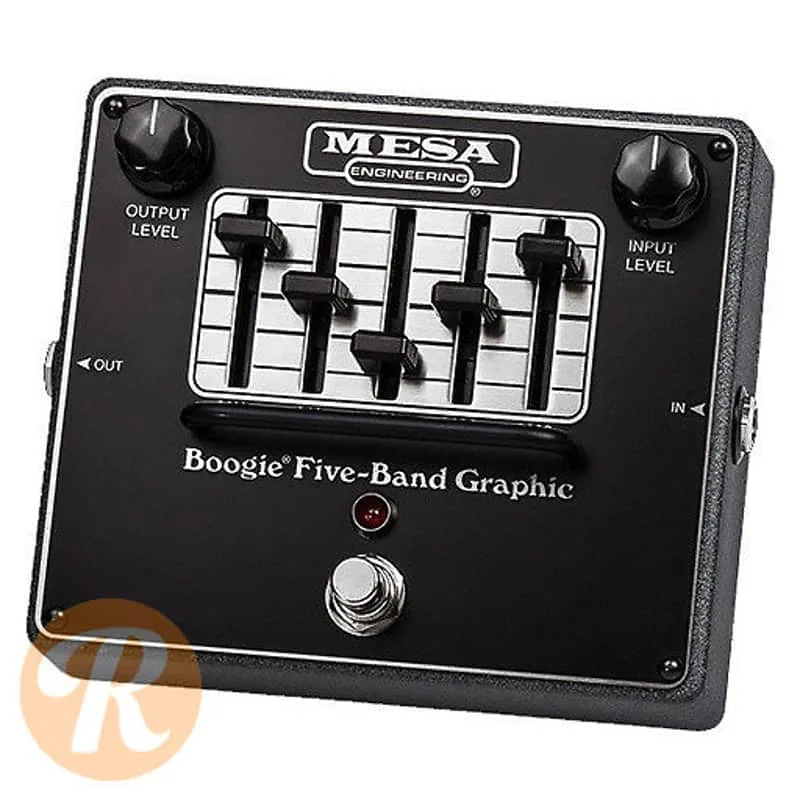
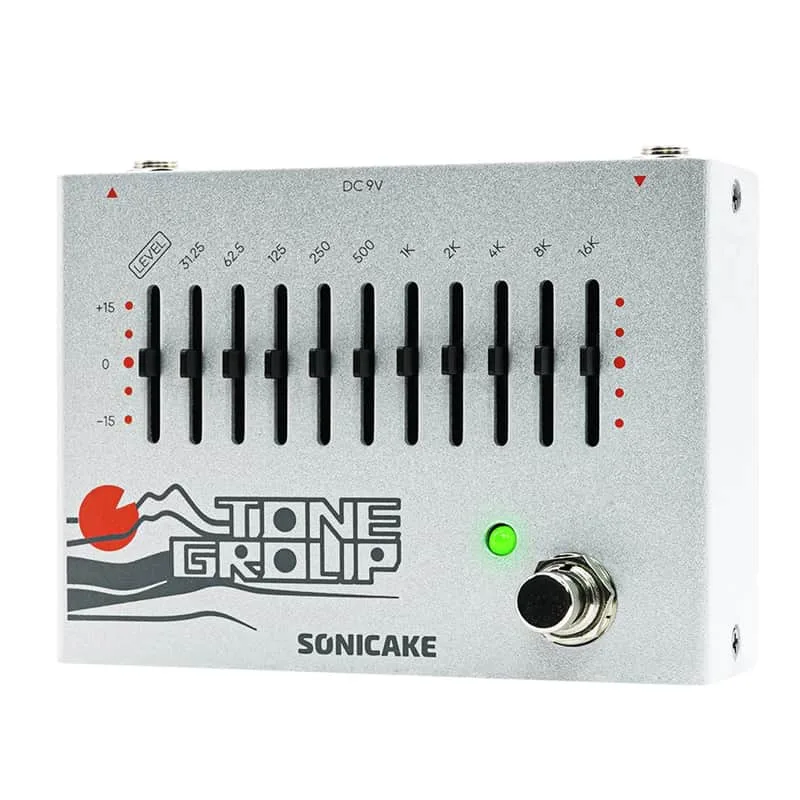
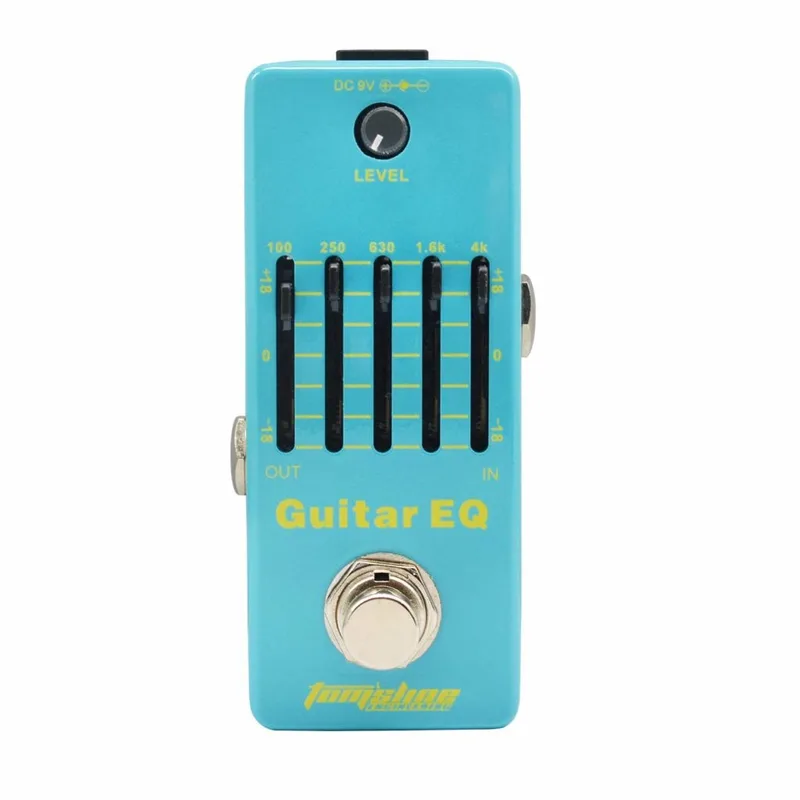
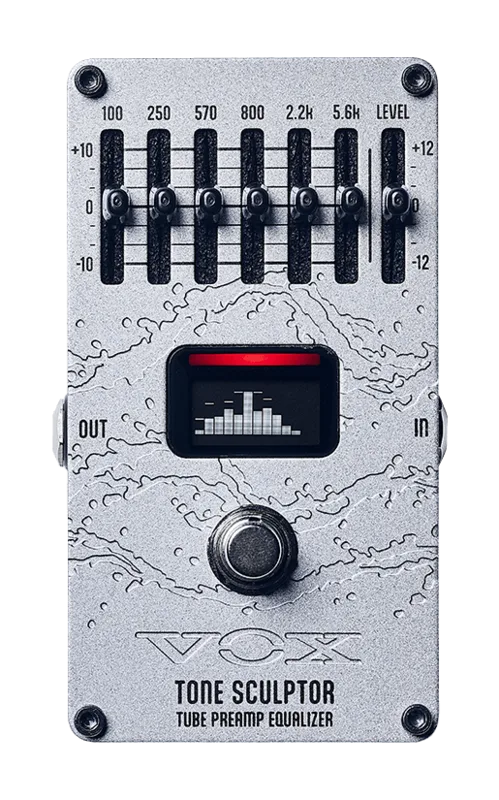
A graphic EQ lays out its bands as a row of sliders, so the physical shape of the sliders mirrors the EQ curve you are building. MOOER calls the Graphic G the "Smallest guitar graphic equalizer pedal in the world"12, and Master Effects' VEQ is a 5-band graphic equalizer pedal13. The classic Ibanez GE-10 Graphic EQ is a pedal-format example of the same layout14.
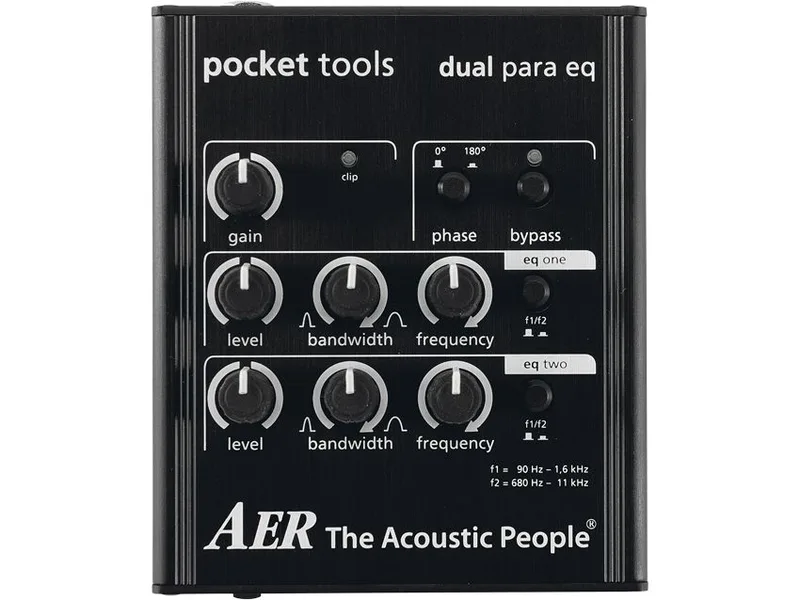
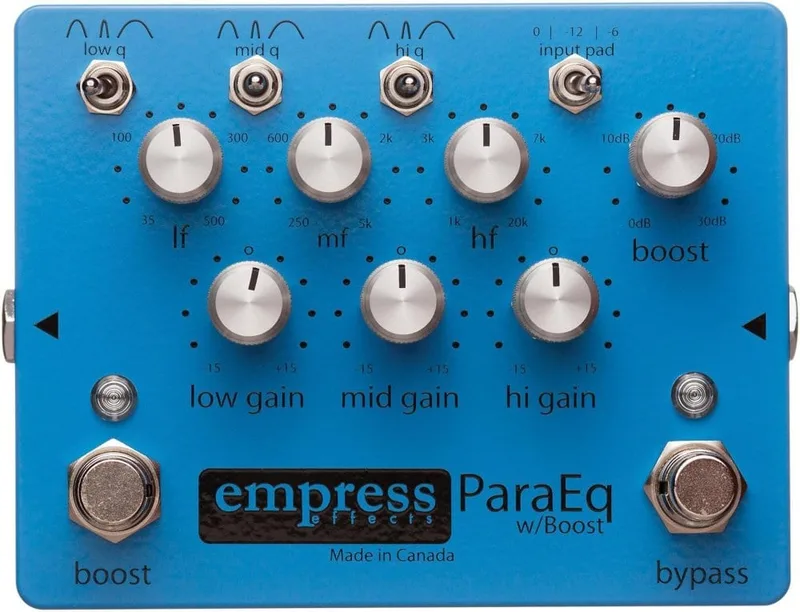
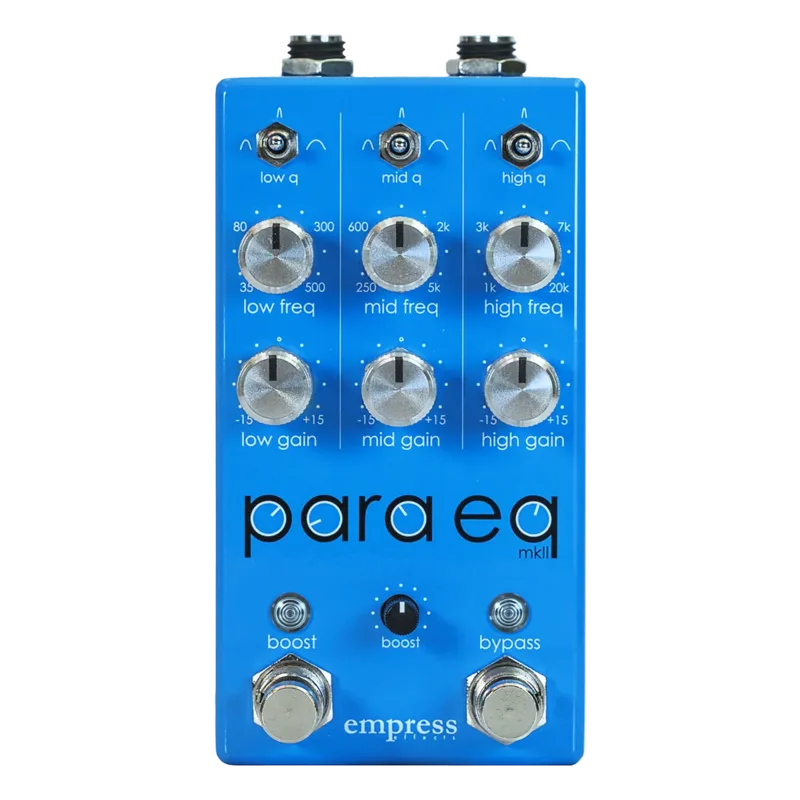
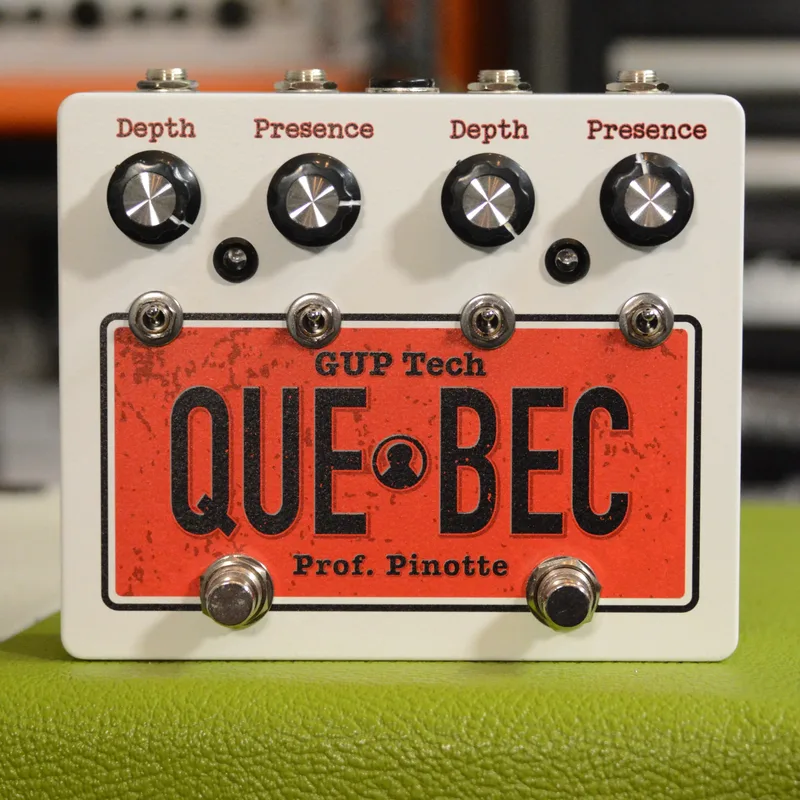
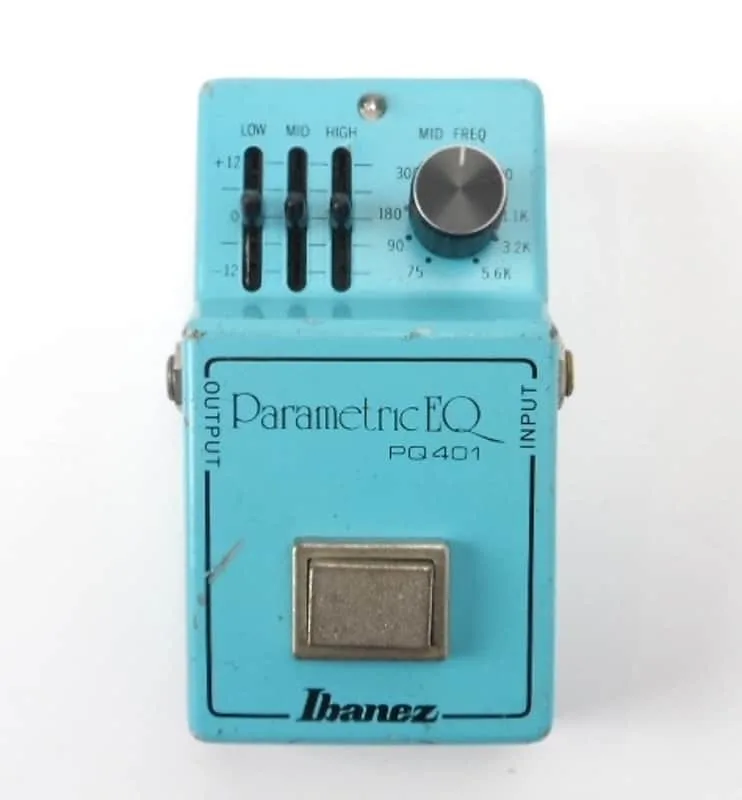
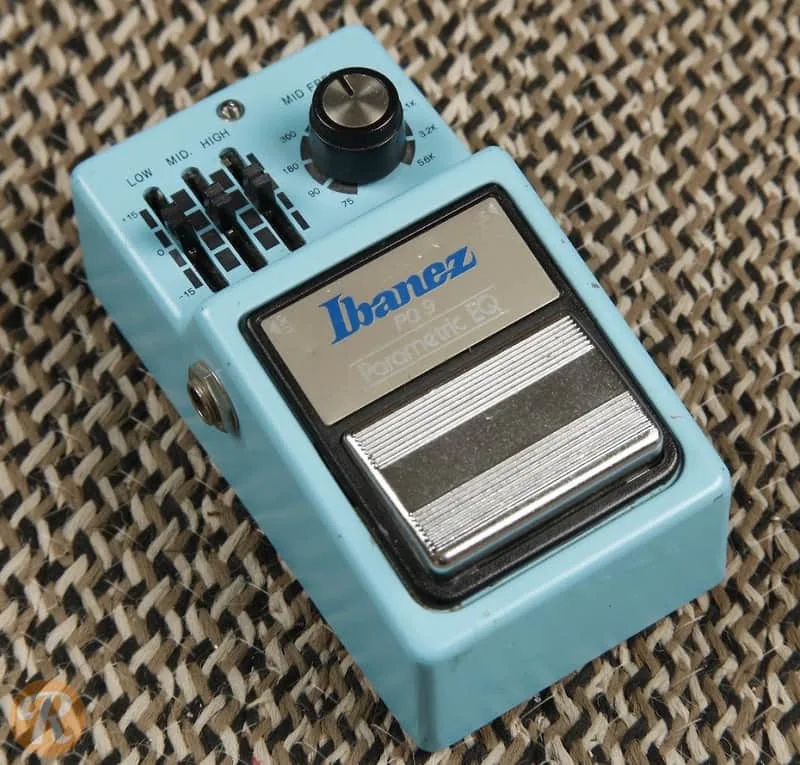
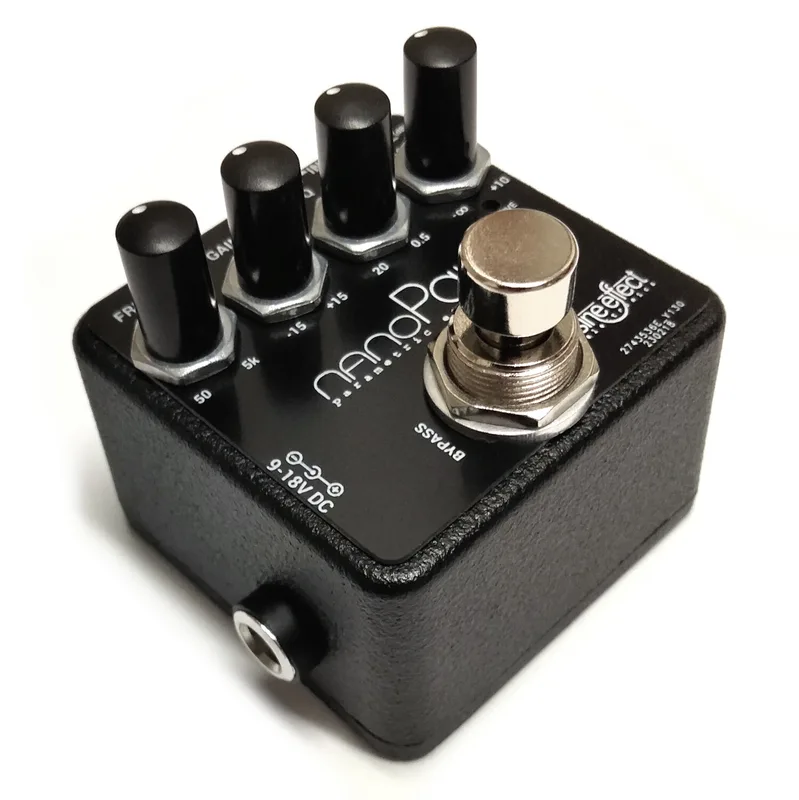
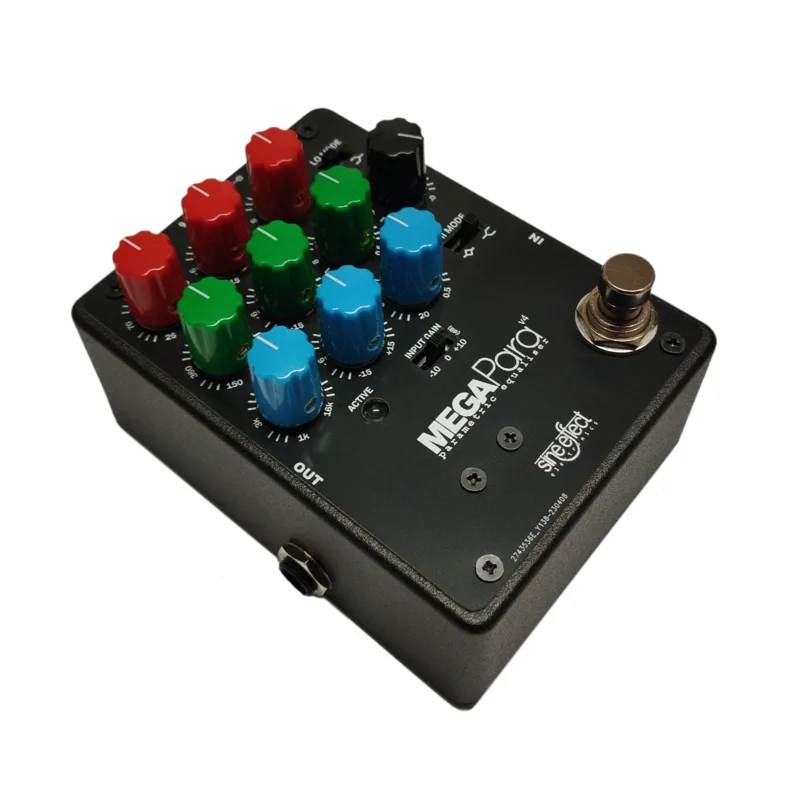
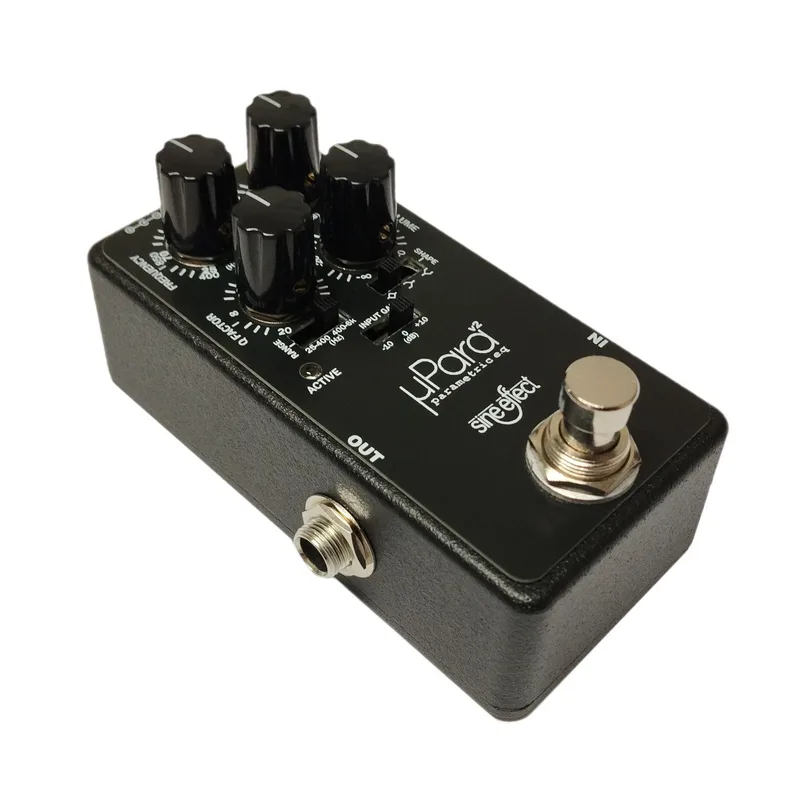
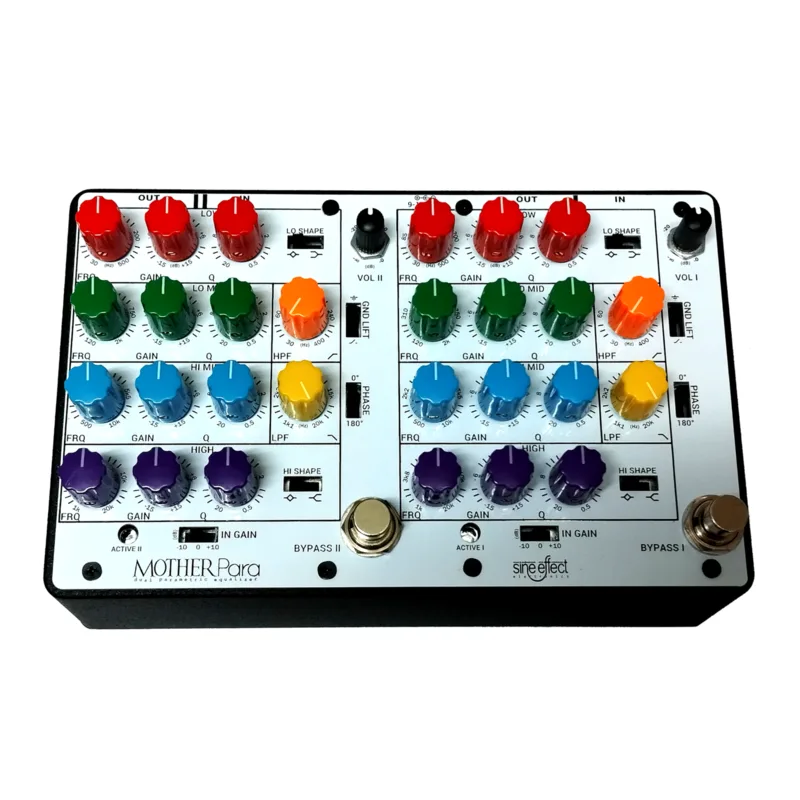
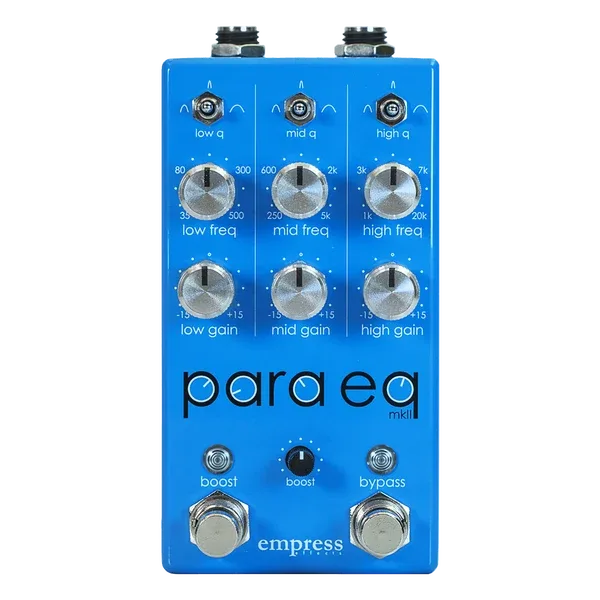
A parametric EQ trades that visual simplicity for precision. Broughton Audio's Parametric Equalizer "offers three bands of equalization with independent control of frequency, bandwidth, and level"15. Sine Effect's microPara is "a small, fully-featured parametric EQ pedal"16, while its MegaPara v4 is "a 3-band parametric EQ pedal for electric, acoustic and bass guitar"17. Empress's buying guide describes the standard configuration of its ParaEq line as three EQ bands18. GUPtech's pPTSD is a parametric guitar EQ pedal in a compact format19.
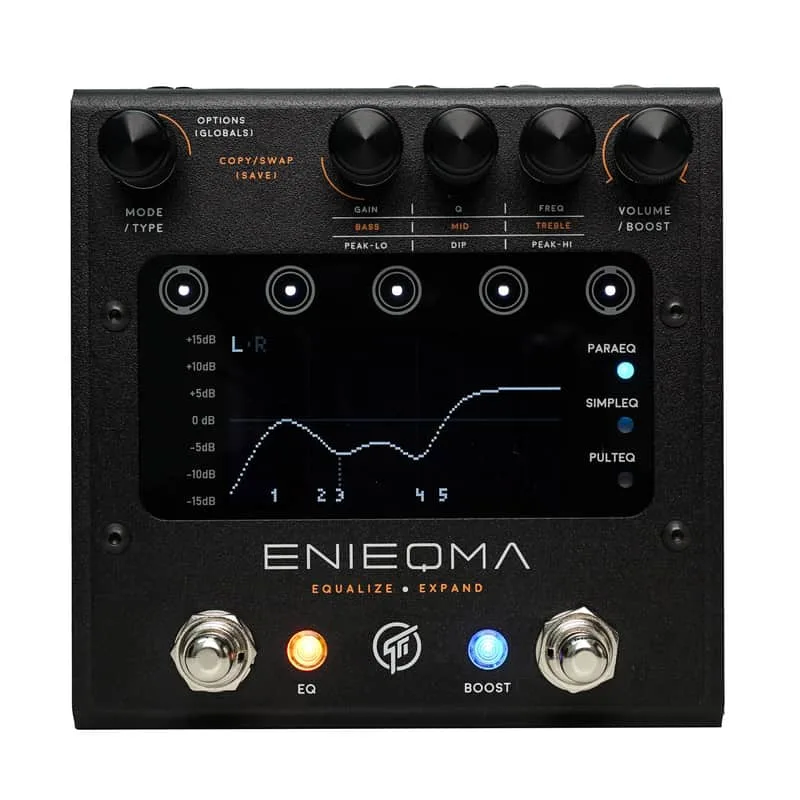
Some pedals do both. The Source Audio EQ2 is "a stereo graphic and parametric equalizer with full MIDI control, and 128 presets, and a tuner"4, and GFI System's Enieqma "packs a 5-band full parametric EQ, a 'simple EQ class' featuring 7 classic tone" shapes in one multipurpose pedal20.
History and landmark EQ pedals
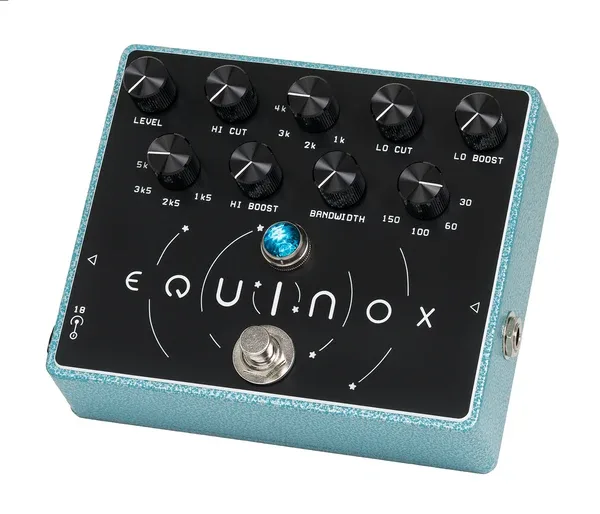
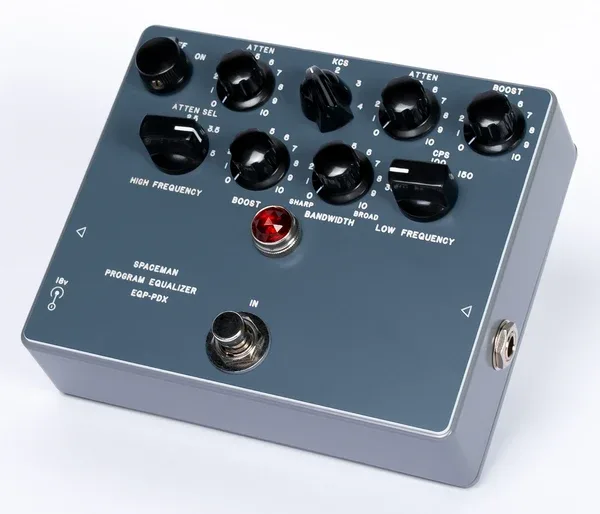
Equalization came to guitars from the studio. Graphic EQ sliders were a mixing-console tool long before they shrank into floor pedals, and the landmark studio units still shape pedal design today. Broughton Audio's Mastering Equalizer is "a tribute to the vintage Pultec PEQ-1A"21, and Origin Effects' M-EQ DRIVER "takes inspiration from the Pultec EQP-1A, repurposing its high-frequency EQ circuit to create a tweakabl"e pedal22. Spaceman's Equinox is an "Analog Studio EQ" in pedal form23.
On the pedalboard itself, the graphic EQ pedal became a fixture through units like the Ibanez GE-1014, and the format has since spread in every direction:
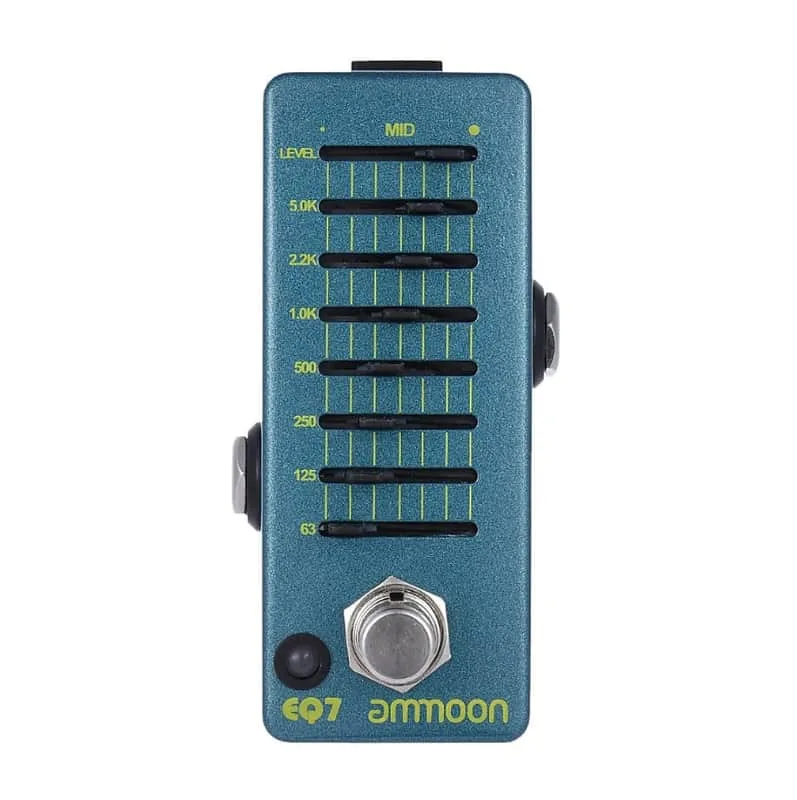
- Miniaturized: MOOER's Graphic G12 and EX AMP's EQ7, a mini single-effect equalizer pedal24.
- Multi-function: Genzler's re/Q dual-function equalization pedal2 and JOYO's EQ-MP3 with tuner and playback3.
- Programmable: Source Audio's EQ2 with presets and MIDI4.
- DIY: General Guitar Gadgets' Graphic EQ Pedal Project sits in its "Tone controllers" category25, PedalPCB's Box and All EQ is a DIY PCB project for an EQ pedal26, and GuitarPCB says its Super Tone TwEQ DIY board has been "the go-to solution for better equalization" in the DIY pedal world27.
What the usual controls do
Most EQ pedals share a small set of controls, whatever their design:
- Band sliders or knobs: set the boost or cut for each frequency band. Flat, meaning all bands at zero, passes the tone through unchanged.
- Level or volume: sets the pedal's overall output. On the CNZ Audio GEQ-5, the clear volume knob "simply provides" output level control5.
- Filter controls: on pedals like the Genzler re/Q, separate high pass and low pass controls with their own on/off switching8.
- Frequency, bandwidth and level per band: on a parametric EQ, each band gets this trio instead of a single slider15.
Preset buttons, footswitches for bypass, and MIDI ports appear on programmable models like the EQ24.
Where an EQ goes in the signal chain
Placement is genuinely debated, and BOSS's guide lays out both positions honestly: sculpt the fundamental tone before any other effect touches it, or place EQ at the end to control the final tone1. Each placement does a different job.
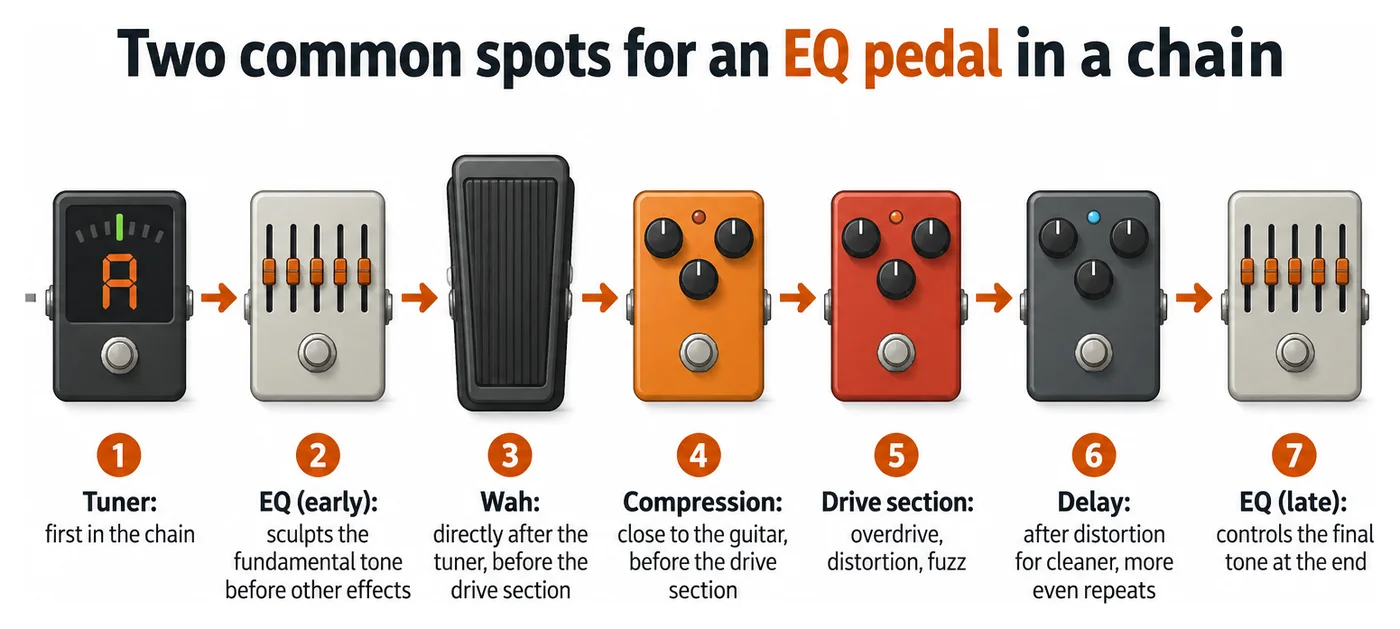
A few placement rules from the wider signal-chain world are worth knowing because they explain why early EQ matters:
- BOSS recommends placing a wah "directly after the tuner and before the drive section" so the filter effect gets an optimized signal1.
- Compression pedals go "close to the guitar because these units work best with an even-vol"ume signal1.
- EBS says of analog octave pedals: "Place the additional pedals after the octave pedal to feed it with as clean a signal as possible"28. EQ placed before an octave or pitch pedal can help or hinder tracking depending on what is cut.
- Amp and cabinet simulator pedals go "at the end of the chain, where the signal is then routed to a PA s"ystem, interface or headphones1, which makes them a natural neighbor for a late-chain EQ.
Power needs
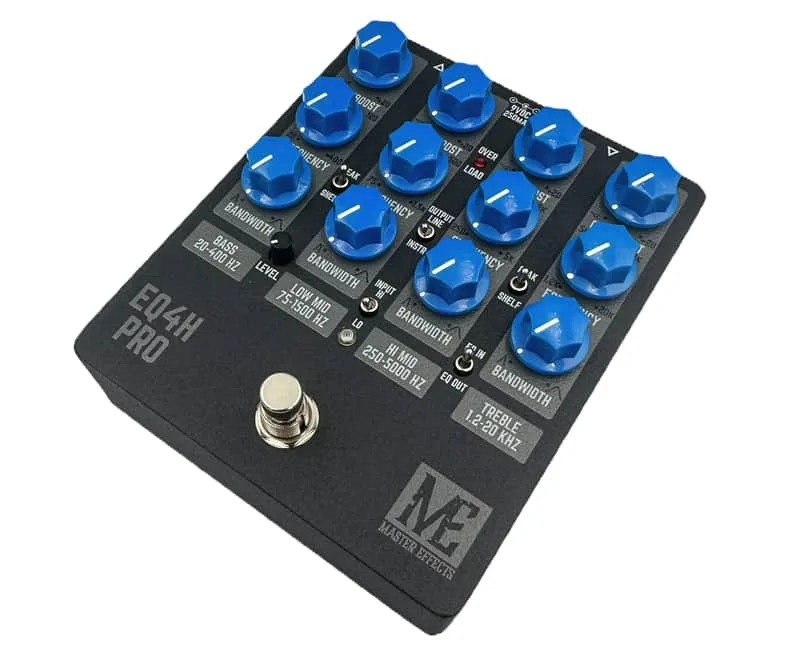
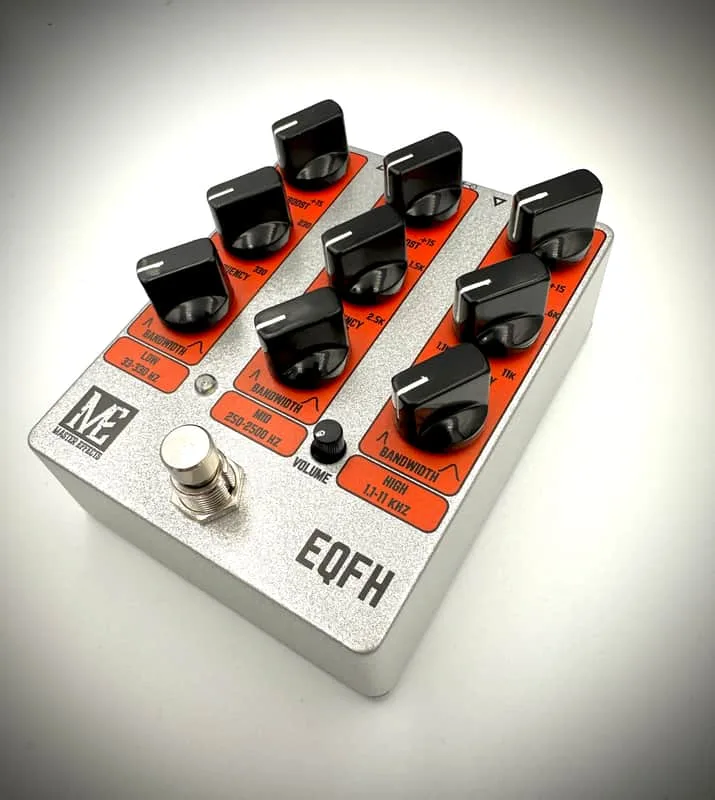
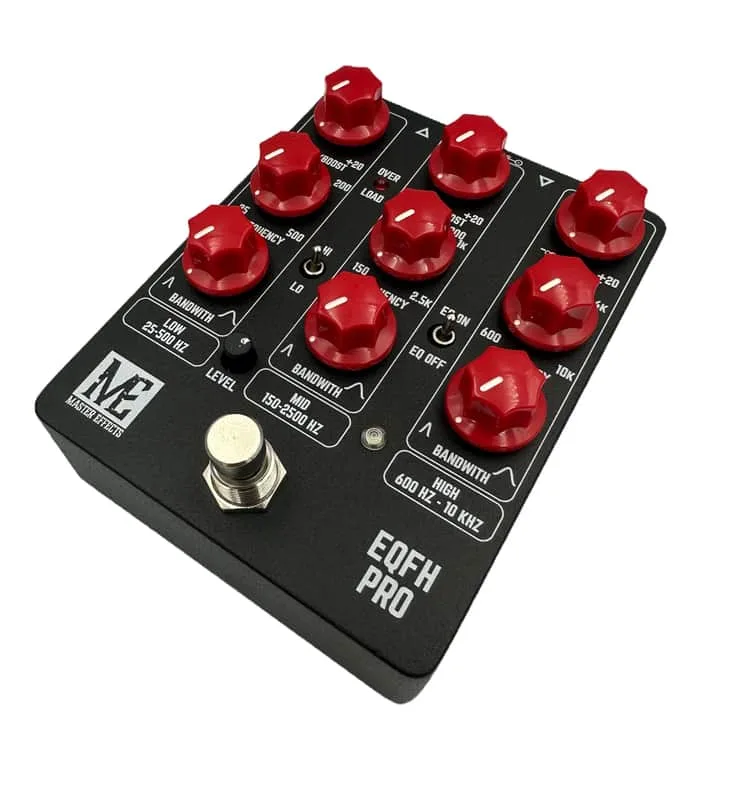
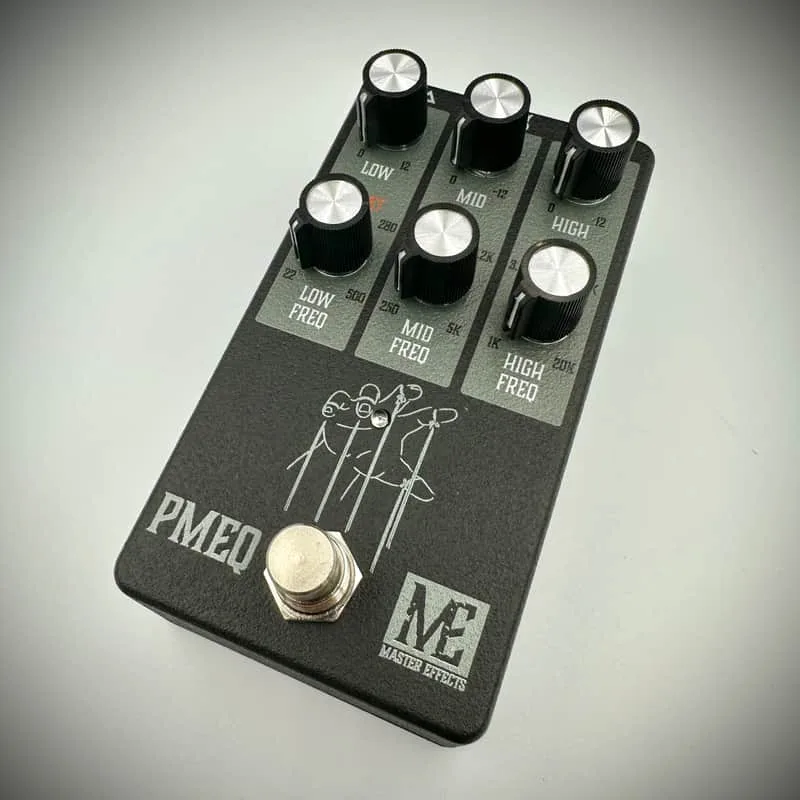
Many EQ pedals run on a 9V DC supply, like the Broughton Audio Parametric Equalizer, which requires a 9V DC power supply (not included), and the Wilson Effects No Face NPN, which operates via a standard 9VDC 2.1mm center negative power supply. Master Effects pedals such as the EQFH use a standard boss-style 9V power supply (2.1mm, center negative), and the PMEQ requires a regulated 9VDC supply. The JET Pedals Unity6 uses a 9V DC negative tip power supply, while the Vahlbruch FX SpaceTime TAP v2 requires an external regulated 9V power supply (not included). Some pedals differ, such as the Eventide H9 Harmonizer Effect Processor, which uses a 9-12VDC/500mA center-positive power source, and pedal power supplies that offer 9V/18V DC, so the details are worth checking before you buy152930.
| Pedal | Power | Notes |
|---|---|---|
| Master Effects Puppet Master EQ | 9V, 2.1mm center negative | Boss-style supply31 |
| Wilson Effects No Face NPN | 9V DC, 2.1mm center negative | Standard supply29 |
| Broughton Parametric Equalizer | 9V DC | Supply not included15 |
| LR Baggs Align Series Equalizer | Standard 2mm plug | Common effects-pedal connector32 |
| Vahlbruch FX SpaceTime TAP v2 | 9V regulated, positive at ring | Supply not included33 |
| Vahlbruch FX Xroads | 9V regulated, positive at ring | Supply not included33 |
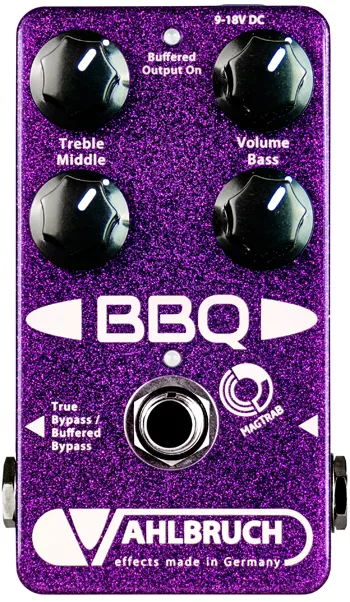
Polarity is where EQ pedals can bite you. Most follow the Boss convention of 2.1mm center negative3129, but Vahlbruch FX pedals require positive at the ring and negative at the tip293430. A pedal wired the other way around from your supply will not power up correctly, so check the polarity before plugging in.
Broughton also notes for its Resonant Filter Equalizer that "higher voltages will provide more headroom when using the pedal with hotter signals"9, so some analog EQ pedals benefit from more than 9V if your power supply offers it.
Questions to ask when choosing an EQ pedal
Before buying, it helps to work through what you actually need the pedal to do:
- What problem are you solving? A muddy neck pickup, a harsh piezo, a room that booms, or a solo that needs to cut through each point at different bands and placements.
- Graphic or parametric? If you want fast, visible, broad shaping, a graphic EQ like the VEQ13 fits. If you need to hunt one exact frequency, a parametric like the Broughton15 or microPara16 is the right tool.
- How many bands? LR Baggs voices its Align Series Equalizer as "A 6-band EQ shapes the frequencies" it considers "most useful for improving acoustic guitar pickups with the flexibility neede"d32. More bands means finer control but more to manage.
- Do you play bass or acoustic? Empress makes its Bass ParaEq for "Bass or an instrument with a high-impedance output such as a piezo pickup"18, and Origin Effects points bass players toward its EQDELUXE and DCXBASS for tone-shaping and drive22.
- Do you need presets or MIDI? If you switch rigs or instruments mid-set, Source Audio's EQ2 with 128 presets and full MIDI control4 or GFI's Enieqma20 saves repeating your settings by hand.
- Do you want filters too? High pass and low pass filtering, as on the Genzler re/Q2 or Broughton Resonant Filter Equalizer9, extends what the pedal can do beyond band boost and cut.
- Do you want to build it? DIY options like the Super Tone TwEQ27, the Box and All EQ26 and General Guitar Gadgets' project25 let you assemble an EQ yourself, often for less than a finished pedal.
Questions
What is the difference between a graphic and a parametric EQ?
A graphic EQ gives you a row of fixed frequency bands, each with its own slider, so the layout shows the curve you are building1314. A parametric EQ has fewer bands, but each one lets you choose the center frequency, the bandwidth and the level independently15, so you can target an exact problem frequency instead of the nearest fixed band.
Should an EQ pedal go before or after distortion?
Both placements work and players disagree1. EQ before drive sculpts the fundamental tone the distortion reacts to, which changes the character of the drive. EQ after drive shapes the finished tone, the way a studio console would. Some players run one EQ early and another at the end of the chain.
Can an EQ pedal be used as a clean boost?
Yes. With all bands set flat, raising the pedal's output level gives you a clean boost. Genzler says its re/Q design "allows the pedal to be used as a clean boost in some applications"2, and the VFE Focus is explicitly a booster and equalizer in one unit7.
Do bass players need a different EQ pedal than guitarists?
Not strictly, but voicing matters. Empress builds its Bass ParaEq for bass and for high-impedance sources like piezo pickups18, and Origin Effects recommends its EQDELUXE and DCXBASS for bass players' tone-shaping and drive needs22. Sine Effect's MegaPara v4 covers electric, acoustic and bass guitar in one parametric pedal17.
Can an EQ pedal be used in an amp's effects loop?
Yes. In an effects loop the EQ works on the signal after the preamp, closer to how a console EQ is used on a recorded track. LR Baggs also notes that multi-instrumentalists can use dedicated EQ pedals "for level matching a variety of instruments and tailoring a s"pecific EQ for each one32.
How many bands does a guitar EQ pedal need?
There is no single answer. A 5-band graphic EQ13 handles broad shaping; 6 bands, as in the LR Baggs Align Series32, gives finer control; and programmable pedals like the EQ24 and Enieqma20 offer far more. Let the problems you are solving pick the number.
Sources (34)
- The Ultimate Guide to Guitar Effects Pedal Order and Signal Chain, BOSS (articles.boss.info), 2023-03-01
- RE/Q - DUAL FUNCTION EQUALIZATION PEDAL - Genzler Amplification, Genzler Amplification, 2025-10-23
- EQ-MP3_JOYO, JOYO
- EQ2 Programmable Equalizer, Source Audio
- GEQ-5 | EQ Pedal | CNZ Audio, CNZ Audio
- Litho Boost by Alexander Pedals, RockBoard PedalPedia, 2026
- Focus by VFE Pedals, RockBoard PedalPedia, 2026
- Re/Q by Genzler Amplification, RockBoard PedalPedia, 2026
- Resonant Filter Equalizer, Broughton Audio
- BD_Shredding-Eagle.pdf, GuitarPCB.com, 2023
- Shift Line Stages, Shift Line, 2026
- Graphic G_MOOER Audio, MOOER Audio
- VEQ | mastereffects, mastereffects
- GE-10 Graphic EQ by Ibanez, RockBoard PedalPedia, 2026
- Parametric Equalizer, Broughton Audio
- microPara (μPara) 1-band parametric EQ, Sine Effect Store (sineeffect.com)
- MegaPara v4, Sine Effect Store (sineeffect.com)
- EQ and You, Empress Effects Inc.
- GUPtech pPTSD, GUPtech (guptech.ca)
- Enieqma, GFI System
- Mastering Equalizer, Broughton Audio
- M-EQ DRIVER, Origin Effects, 2026-08-18
- Equinox: Analog Studio EQ, Spaceman Effects
- EQ7 by EX AMP, RockBoard PedalPedia, 2026
- Graphic EQ Pedal Project: 6-Band EQ Schematic & Layout, generalguitargadgets.com, 2014-05-12
- Box and All EQ, PedalPCB
- Super-Tone-TwEQ.pdf, GuitarPCB, 2023
- How to improve the performance of your analog octave pedal, EBS Sweden (ebssweden.com), 2021-06-03
- No Face NPN, Wilson Effects
- EQFH | Parametric EQ From Hell | Master Effects, Master Effects
- PMEQ | Puppet Master Semi-Parametric EQ | Aphex EQF-2 | Master Effects, Master Effects Pedals
- Align Series, lrbaggs.com
- Vahlbruch pedal, SpaceTime Delay Tap Tempo, MagTraB switching, made in Germany, Vahlbruch FX, 2025
- Vahlbruch, Analog Phaser Pedal, MagTraB switching, made in Germany, vahlbruch-fx.com, 2026