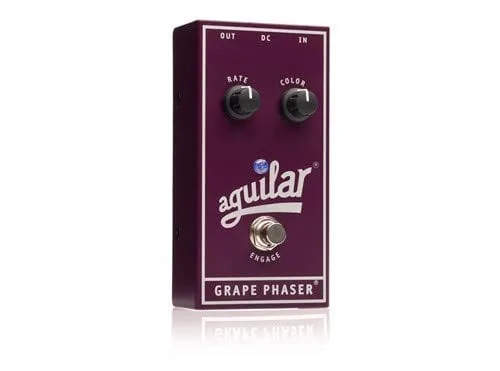
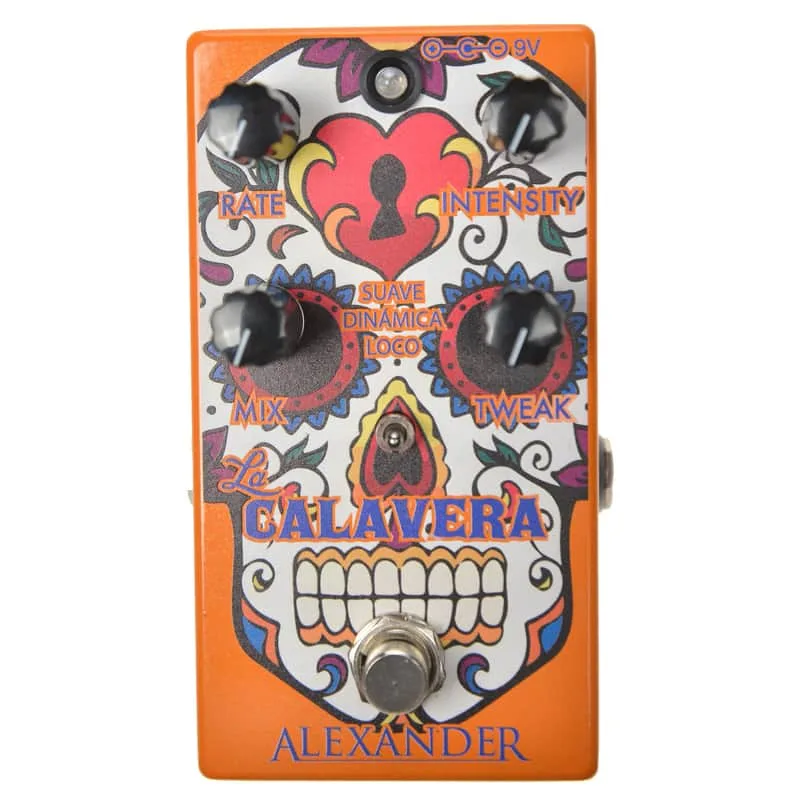
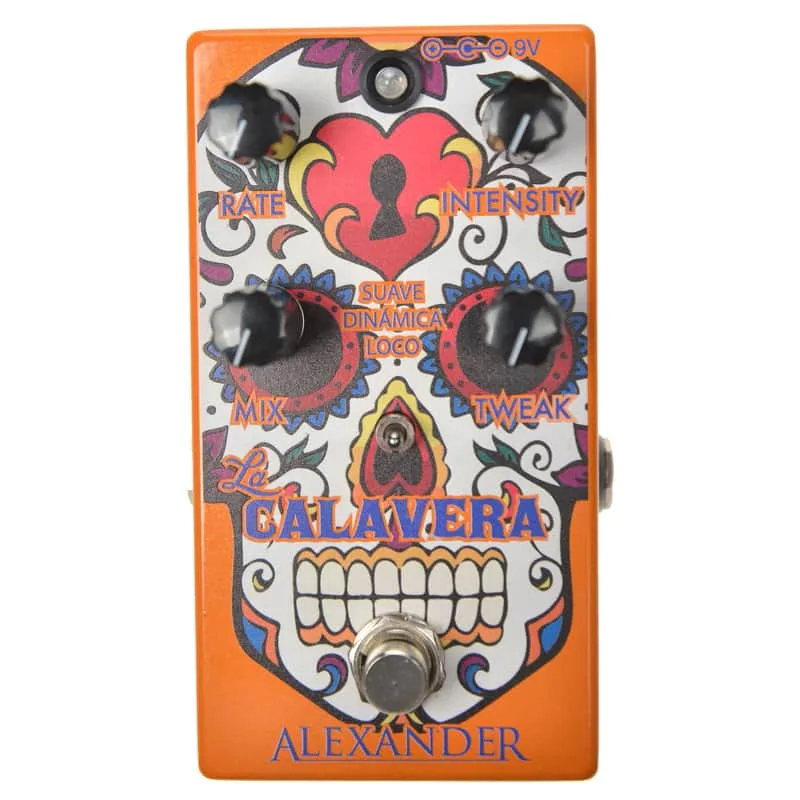
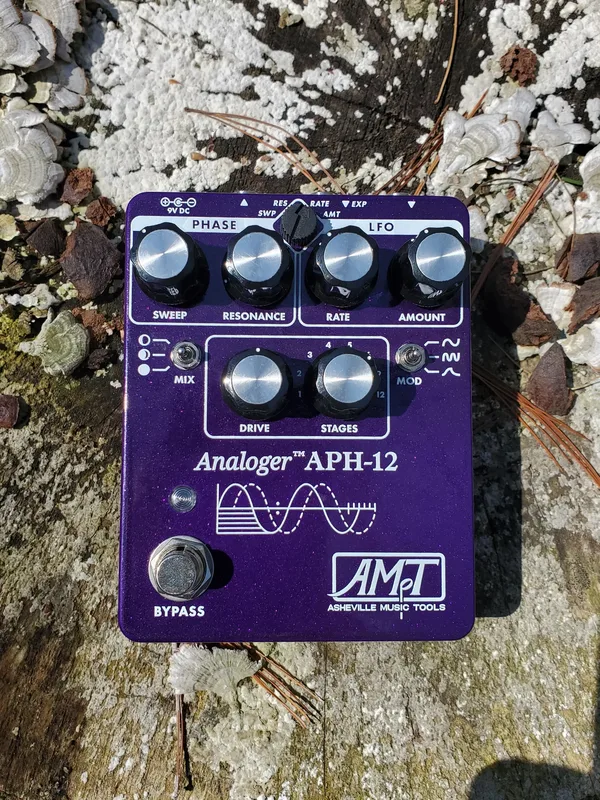
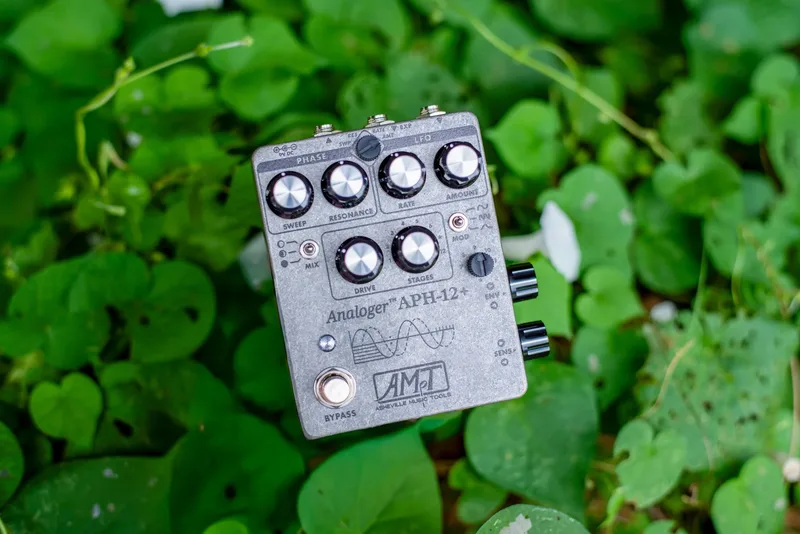

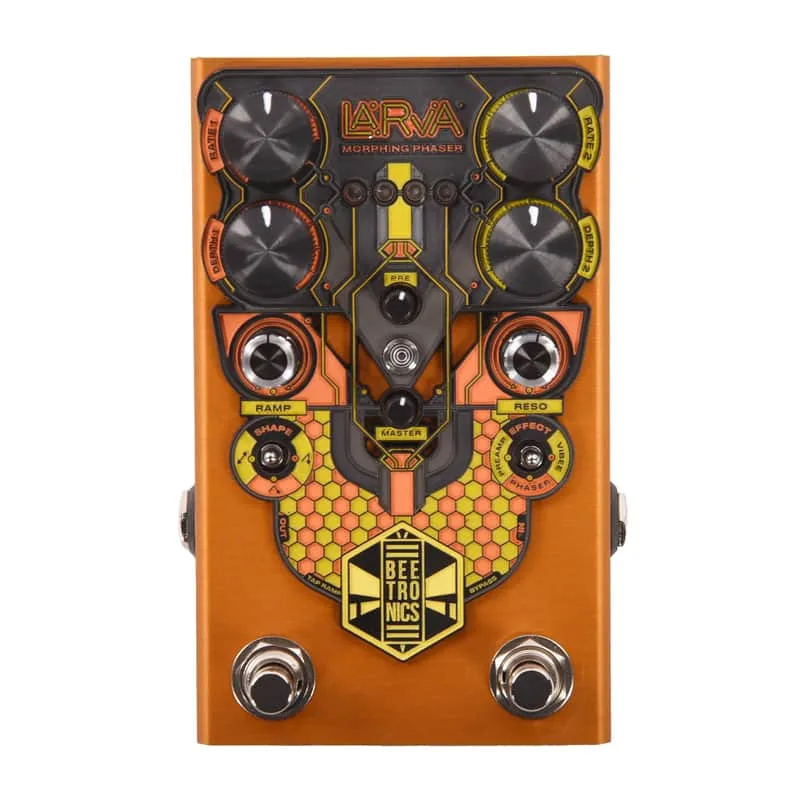
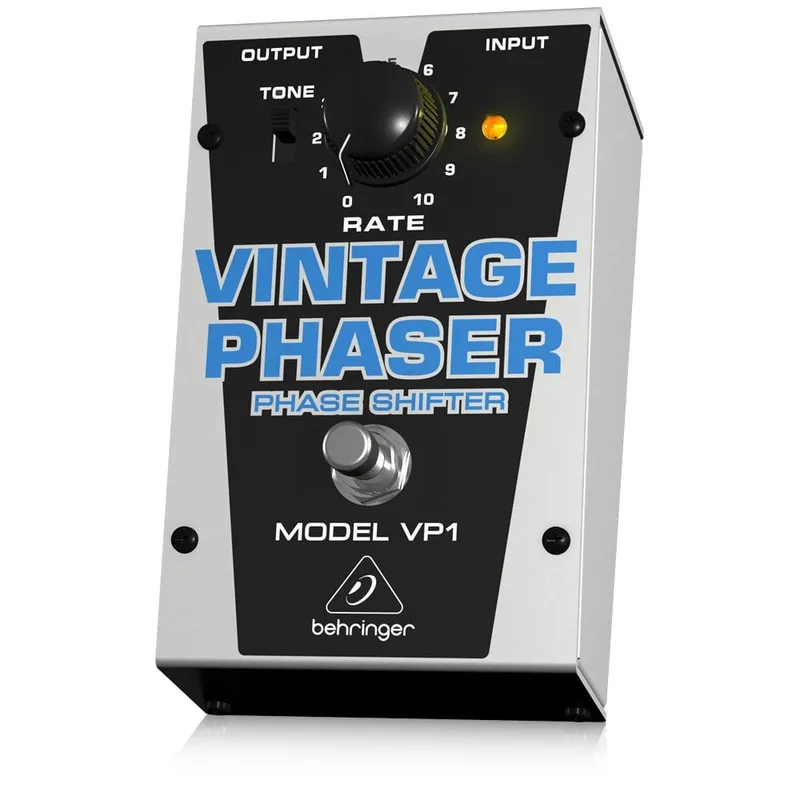
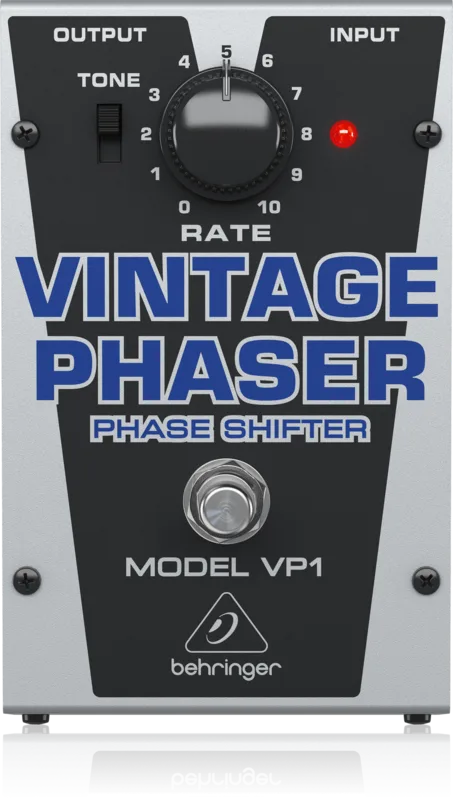
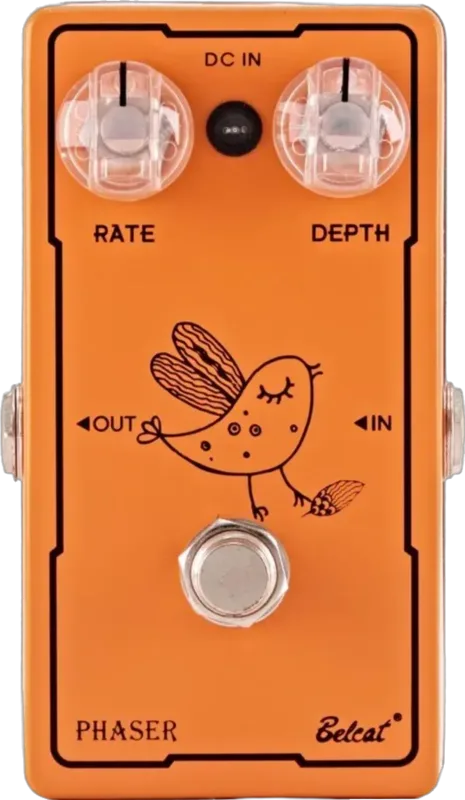
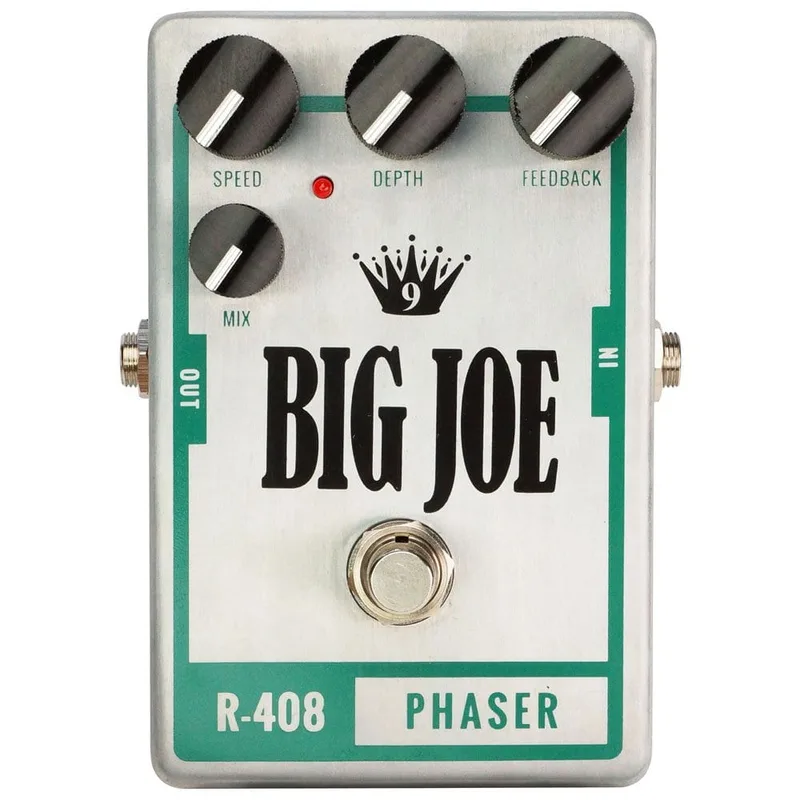
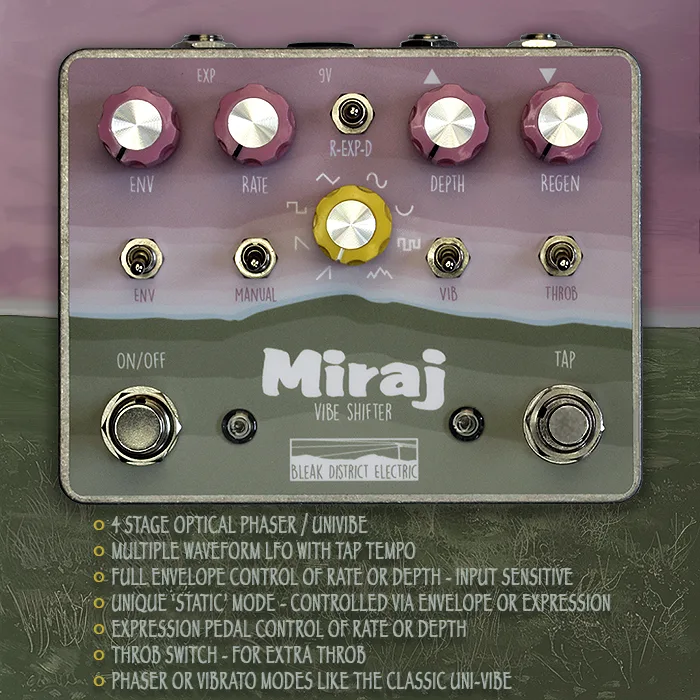
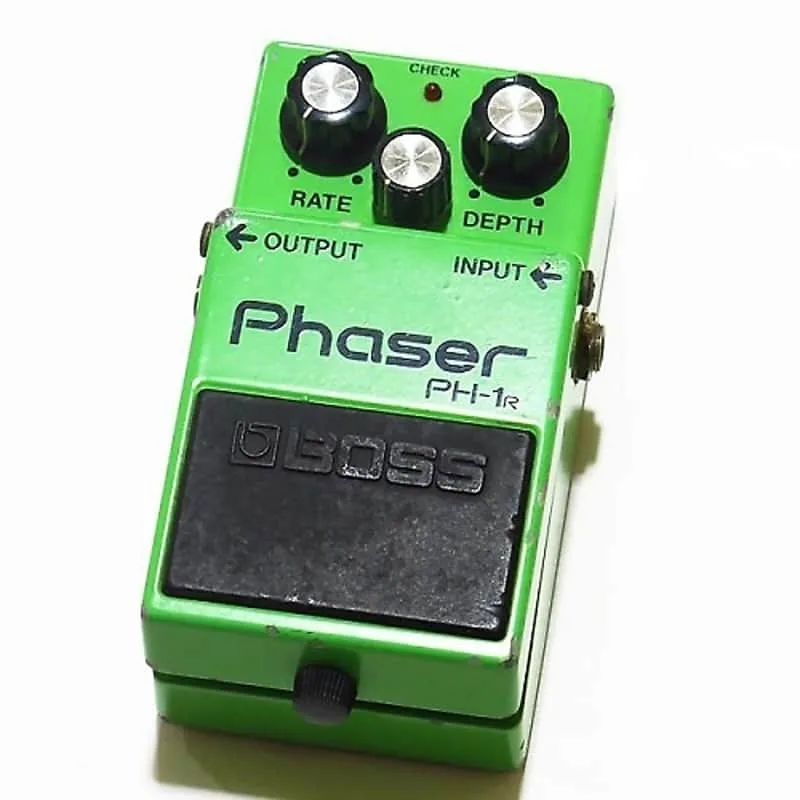
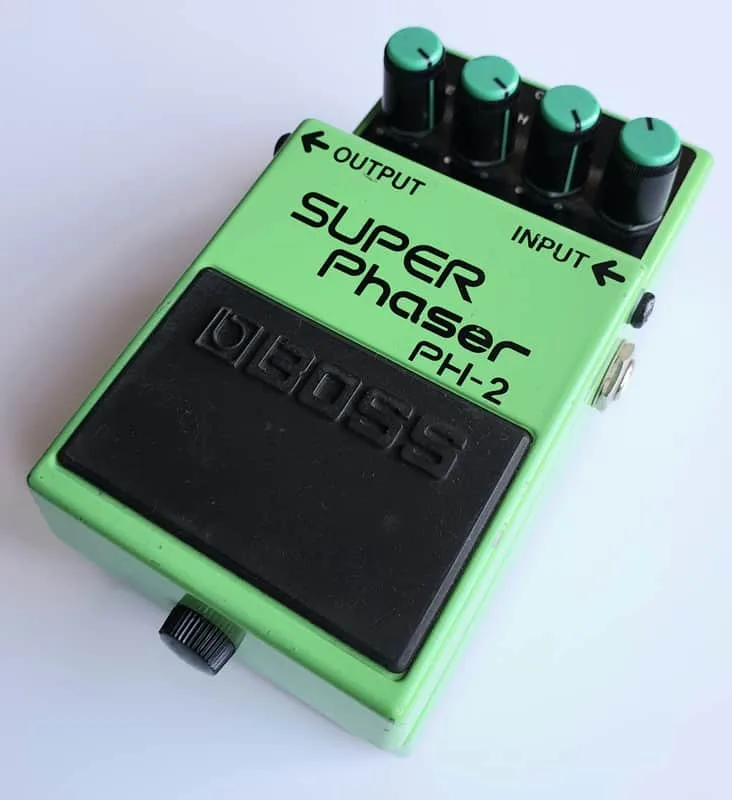
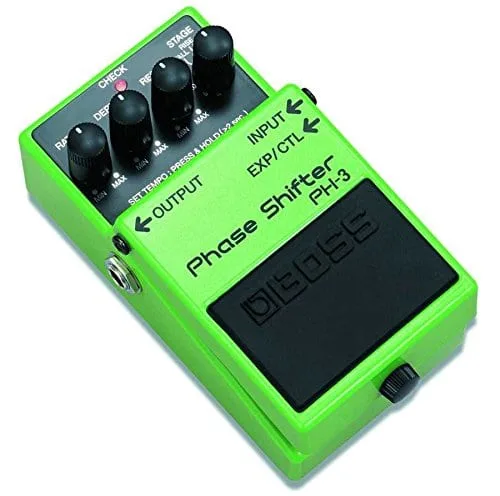
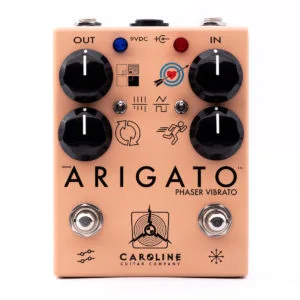
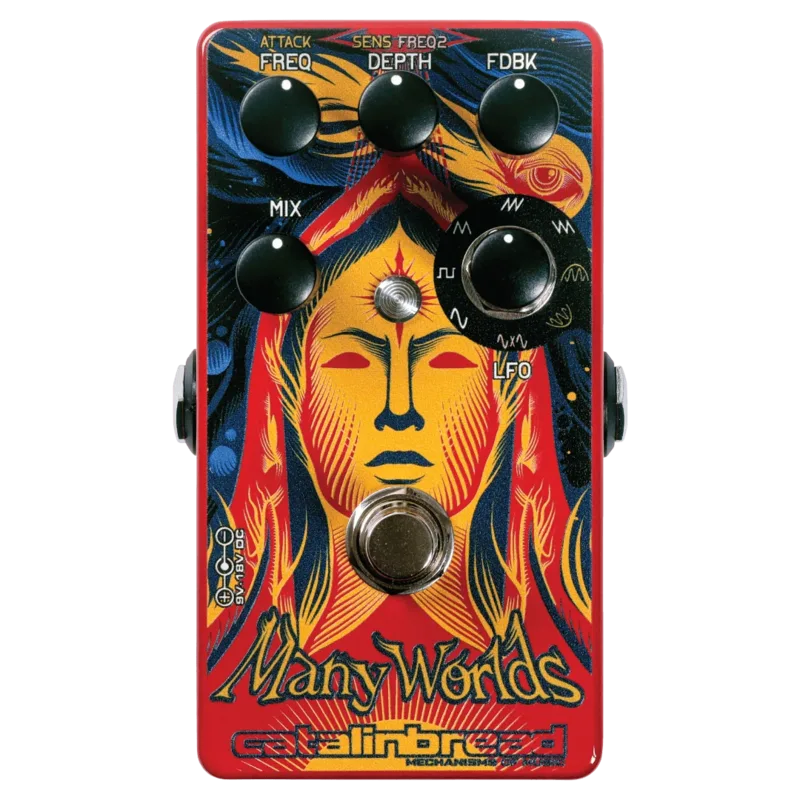
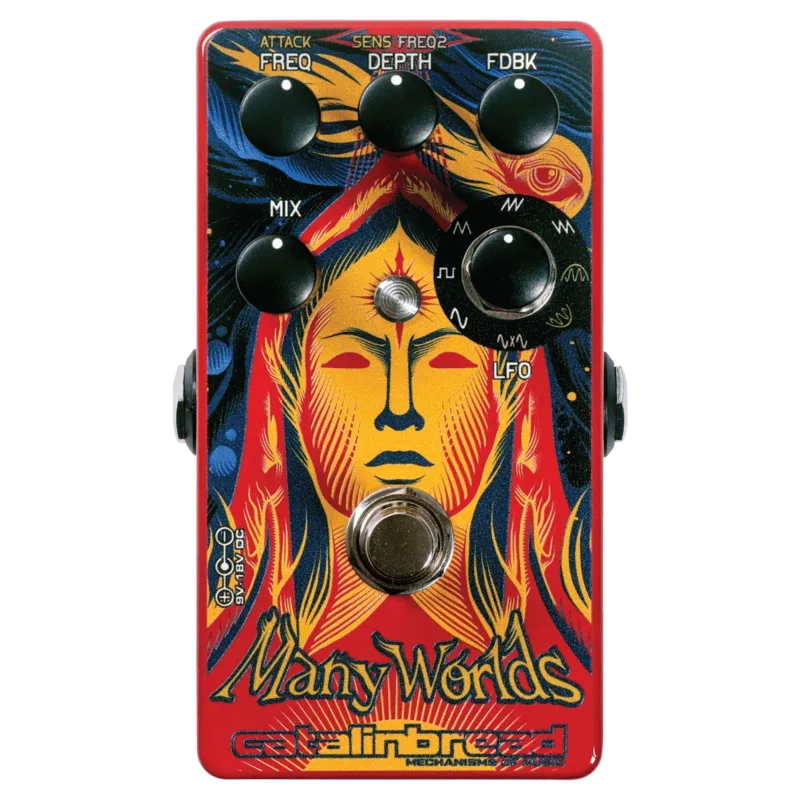
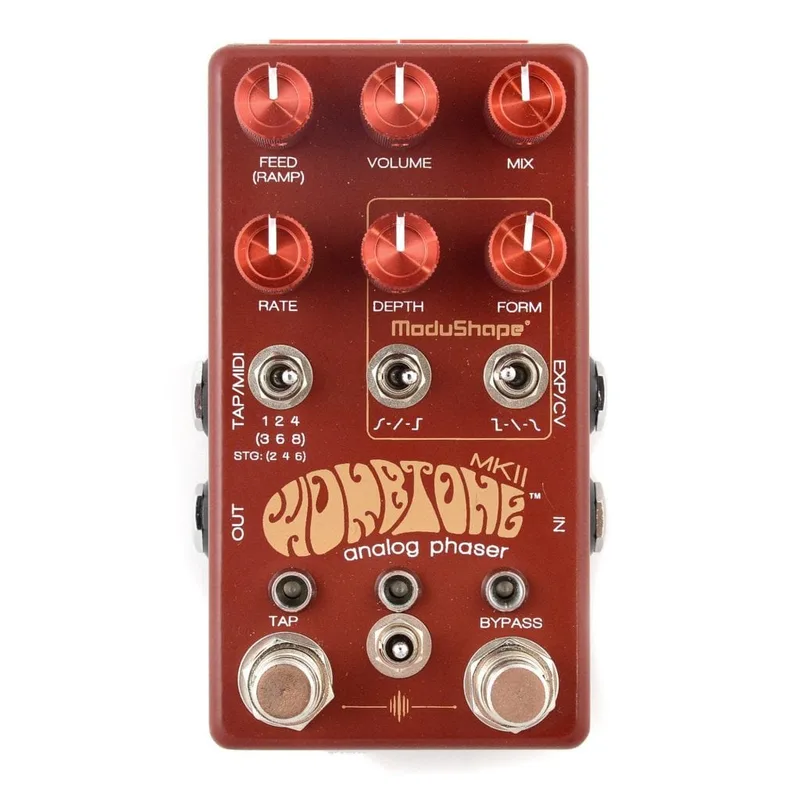
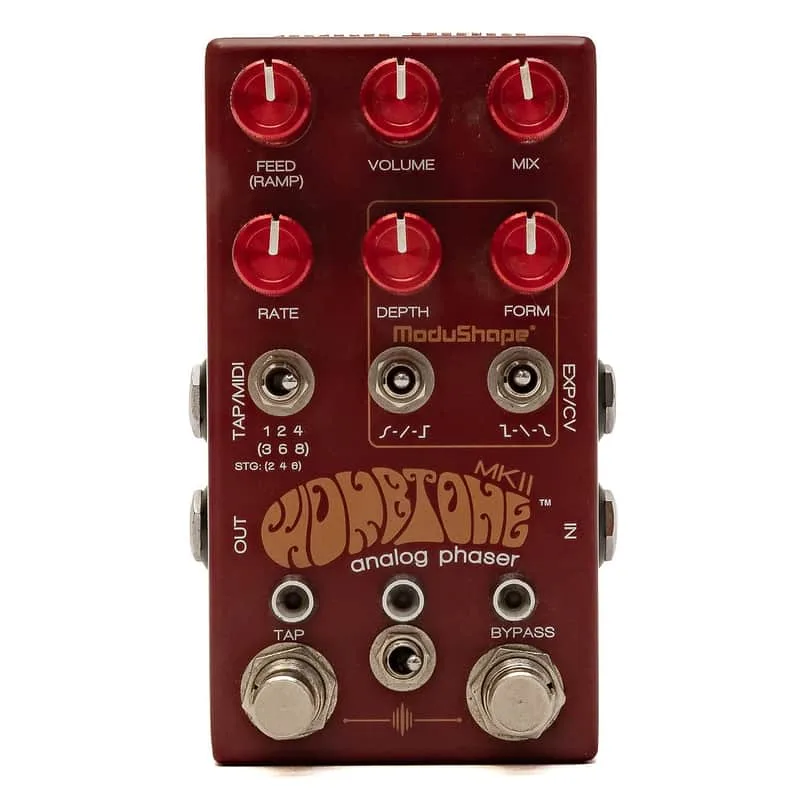
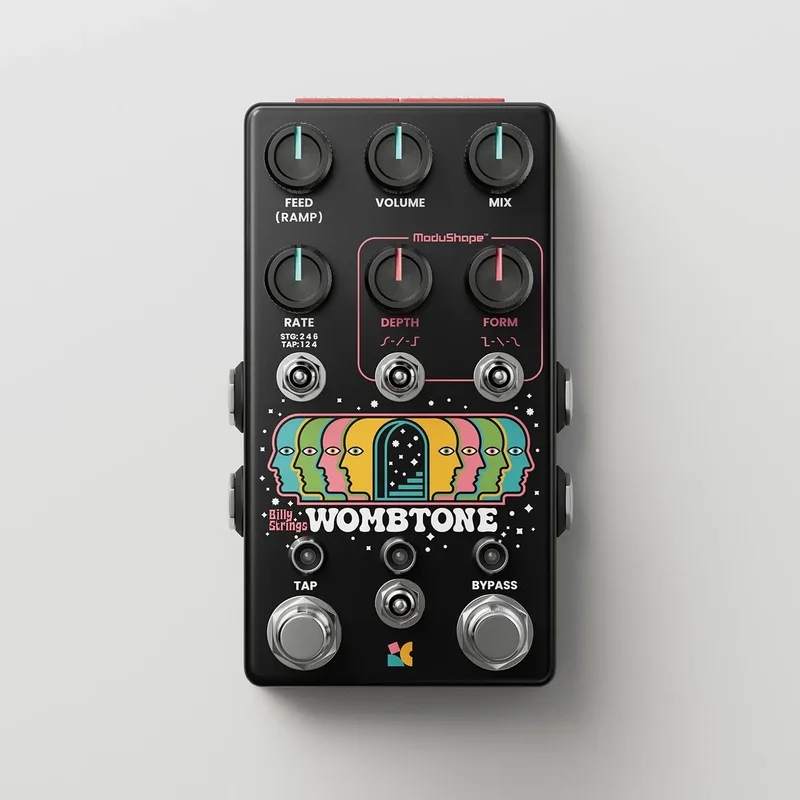
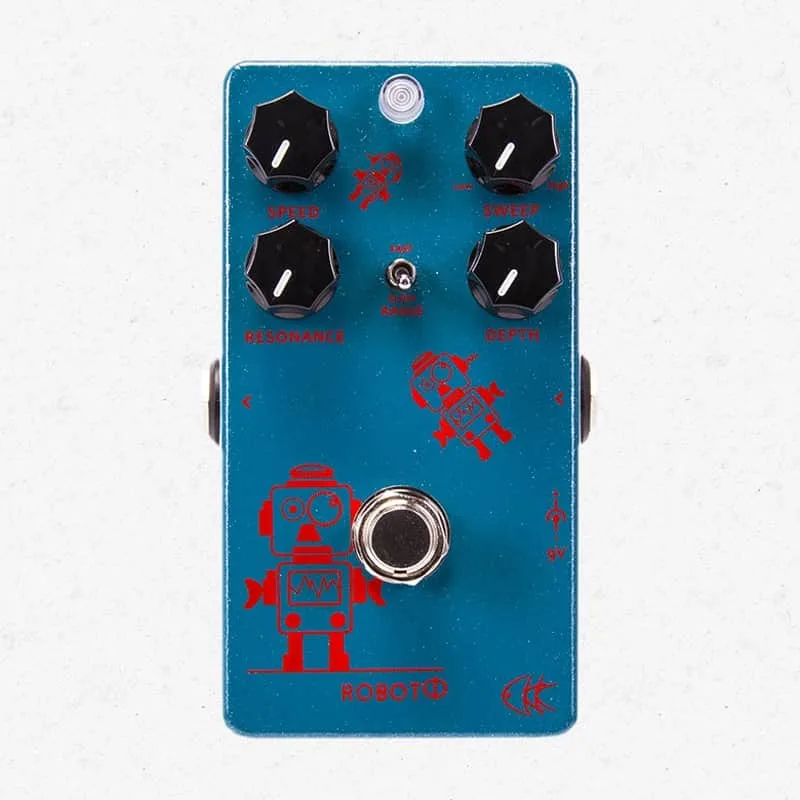
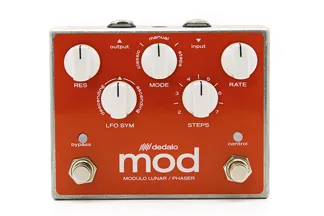
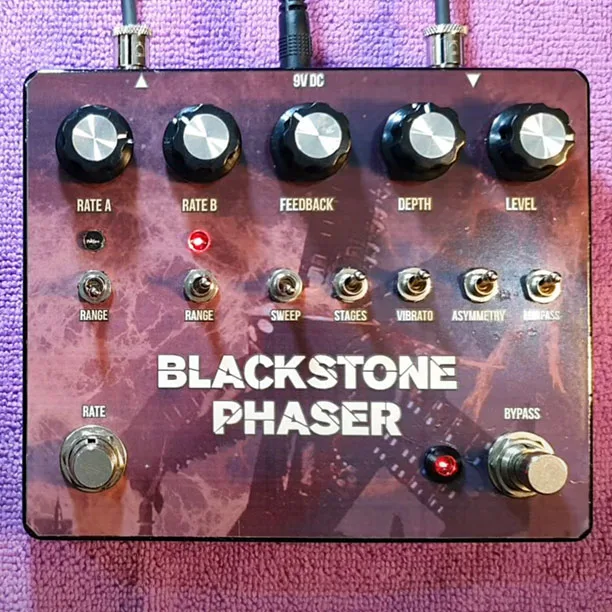
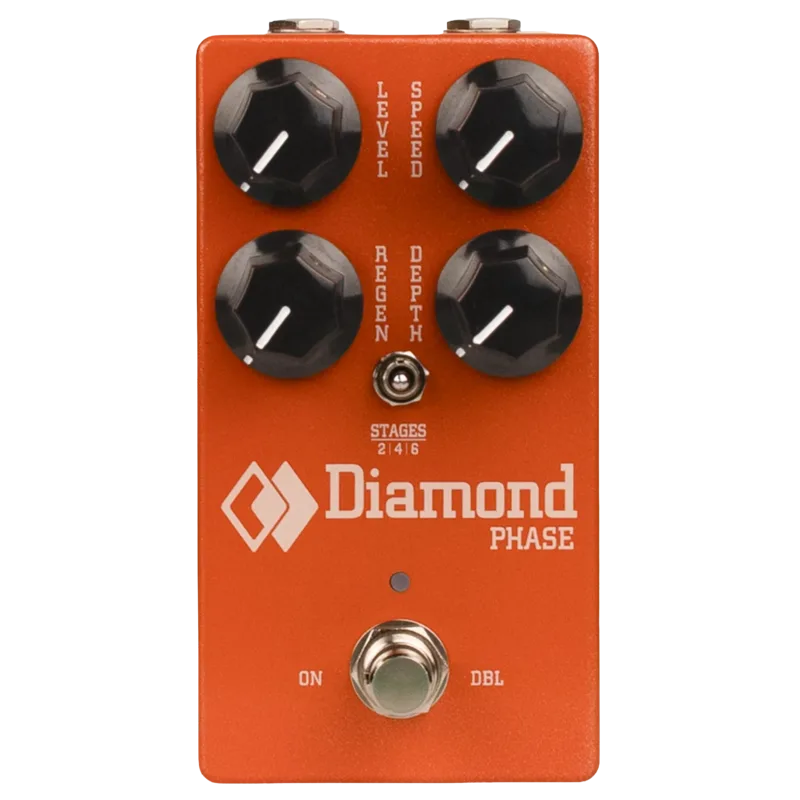
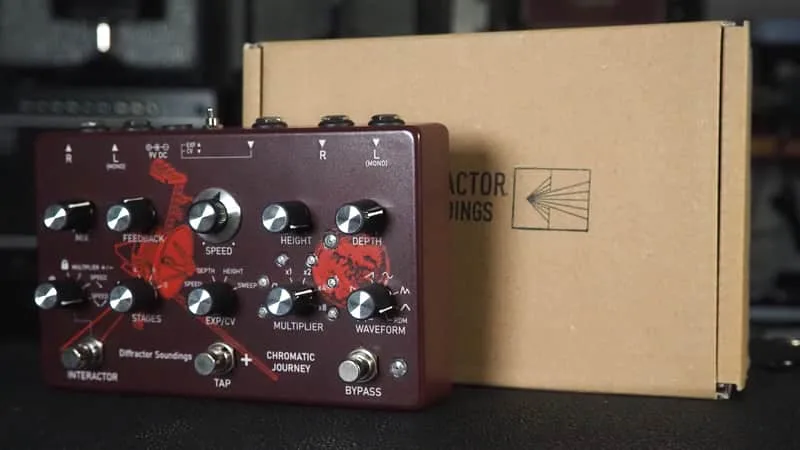
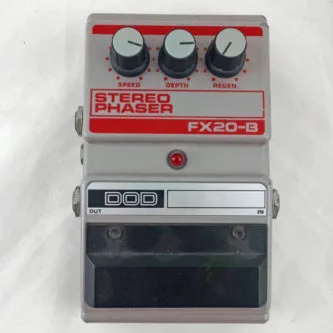
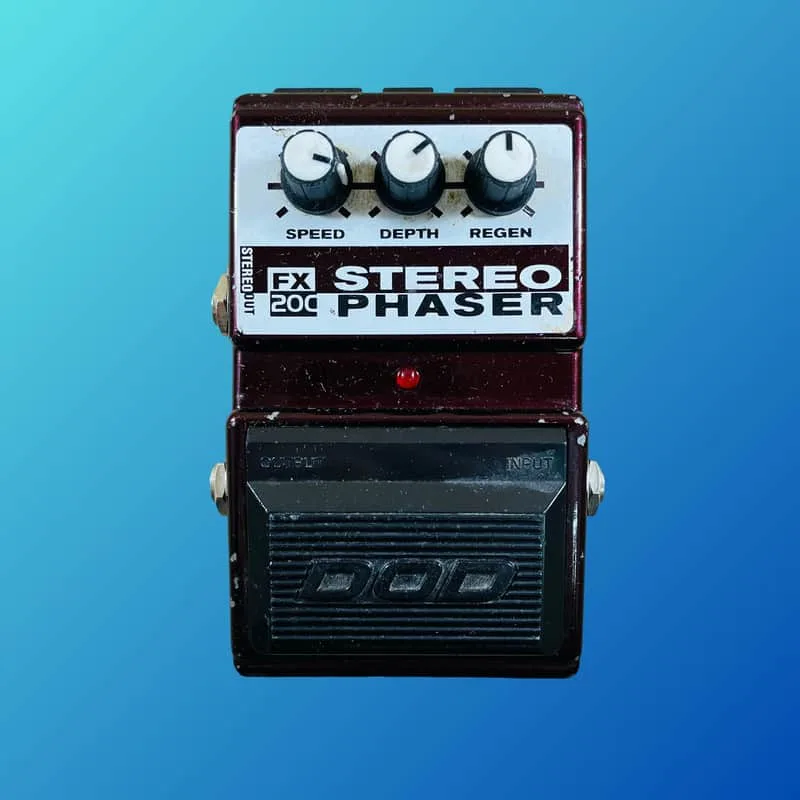
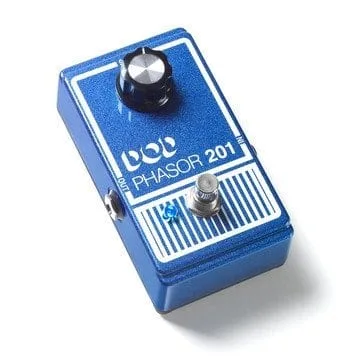
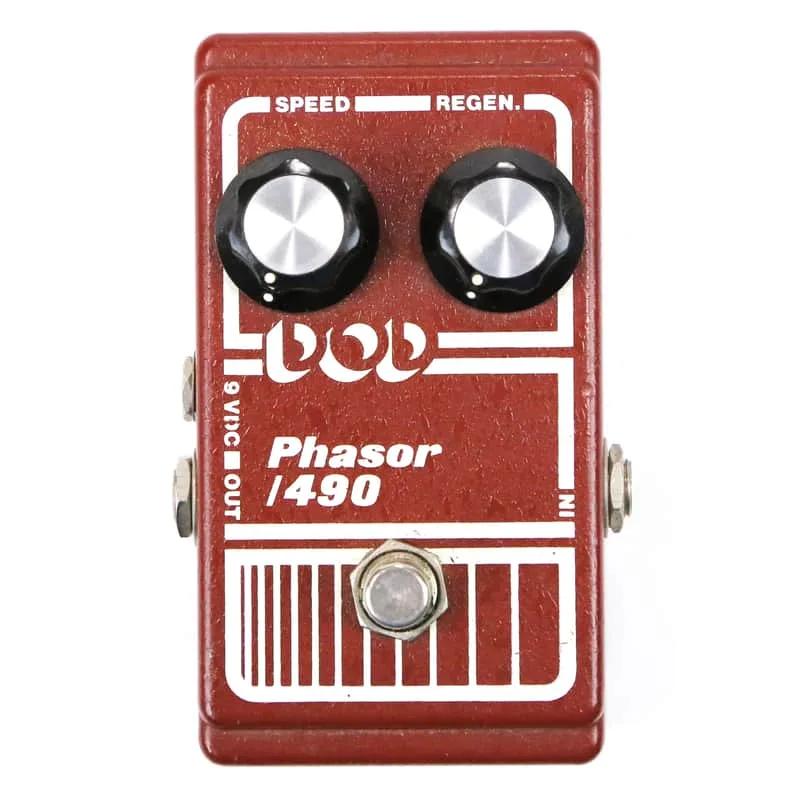
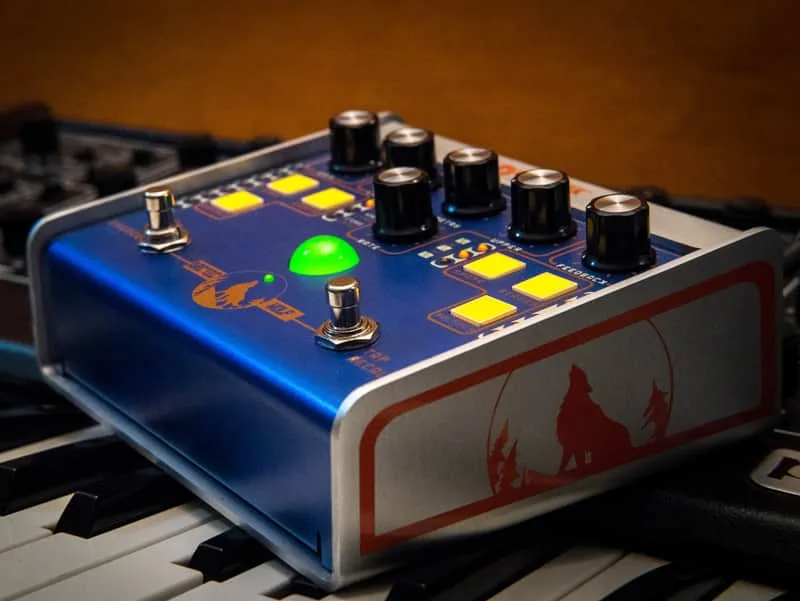
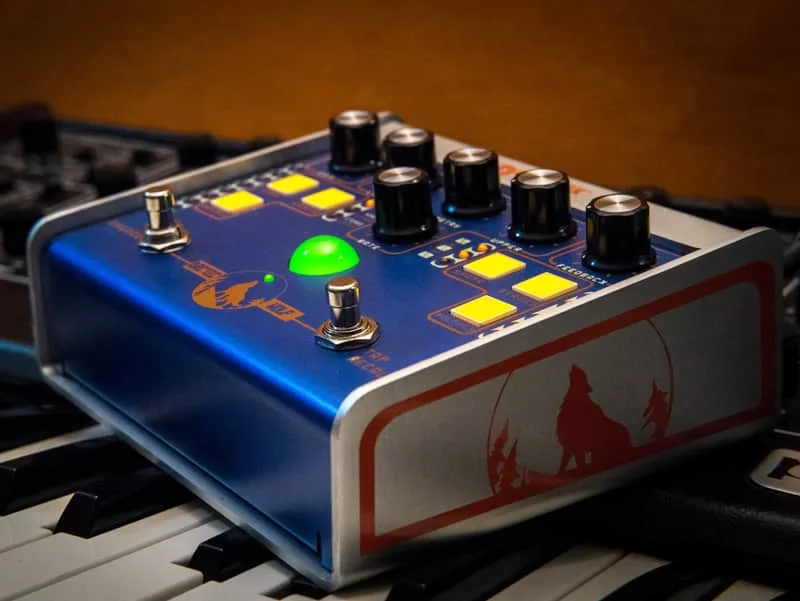
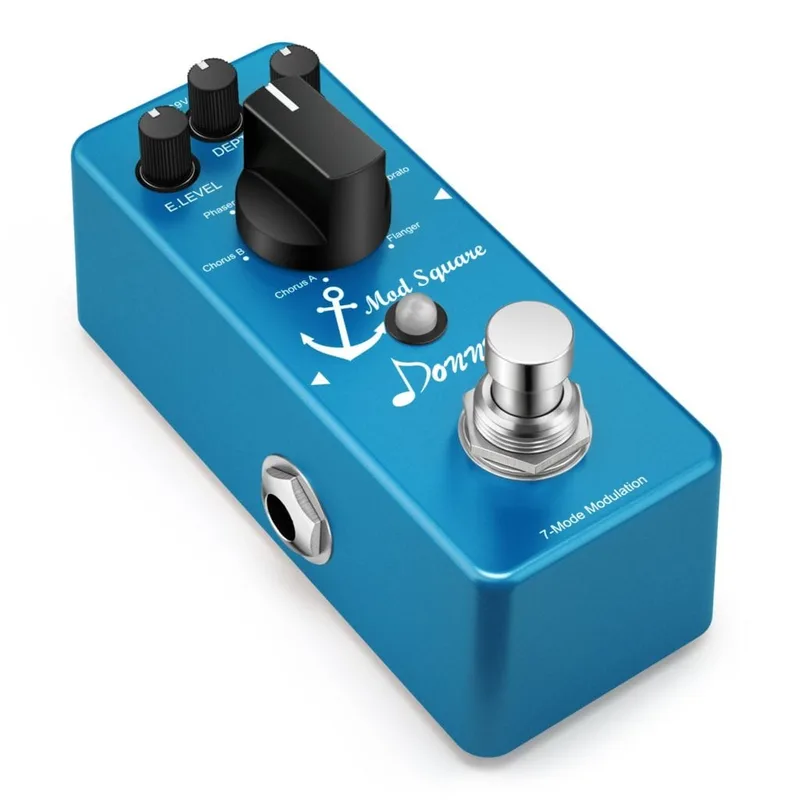
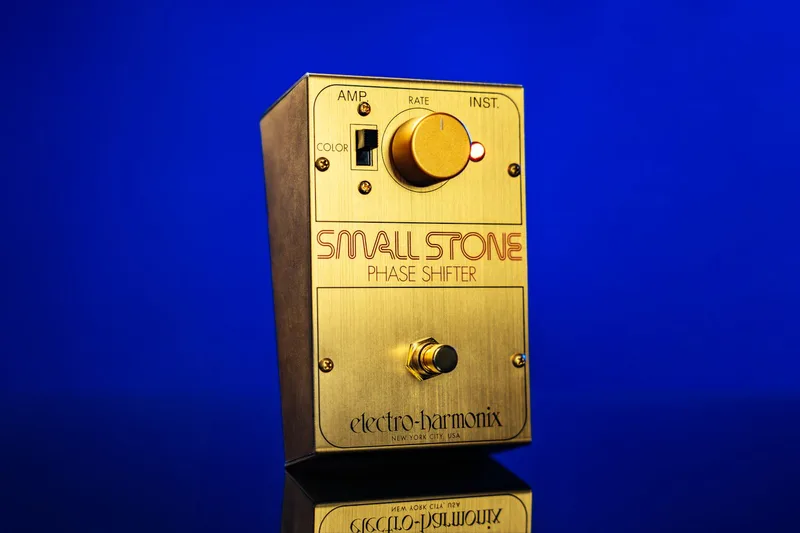
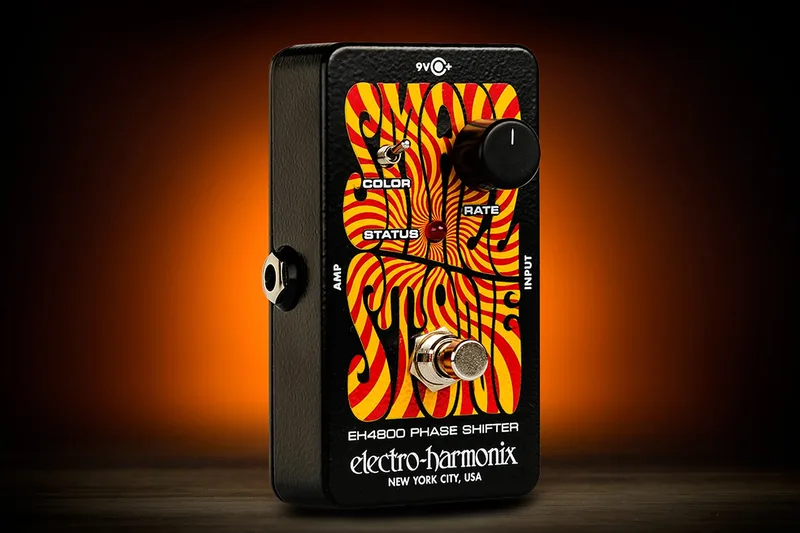
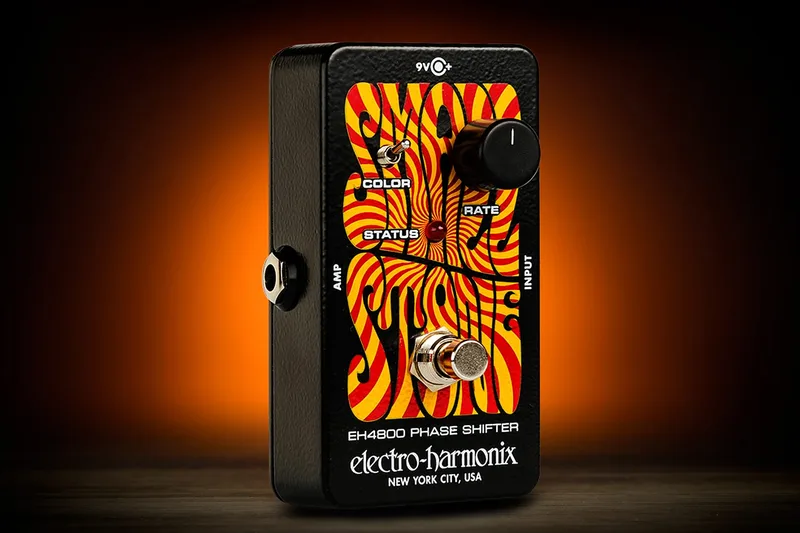
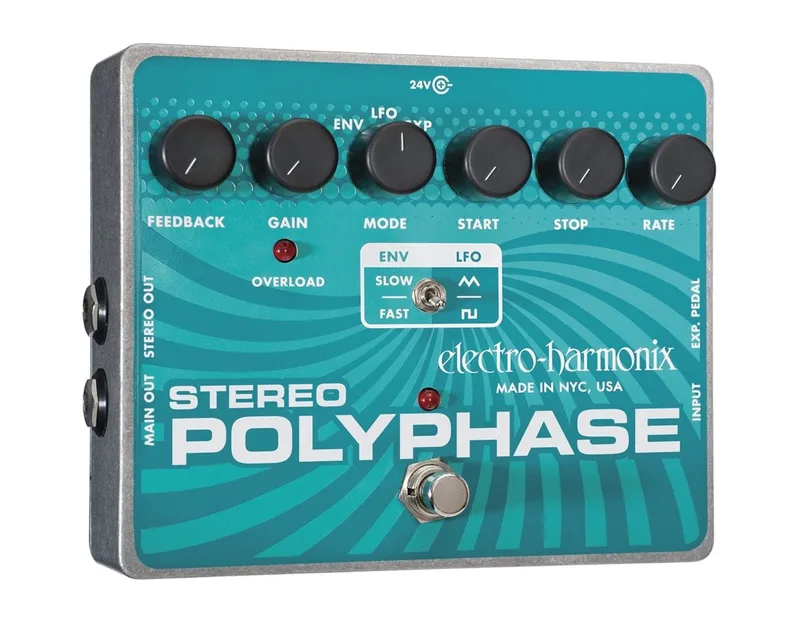
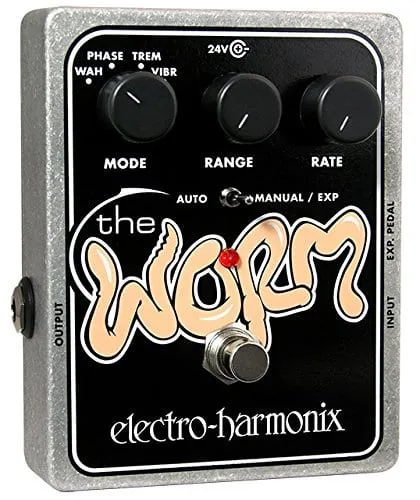
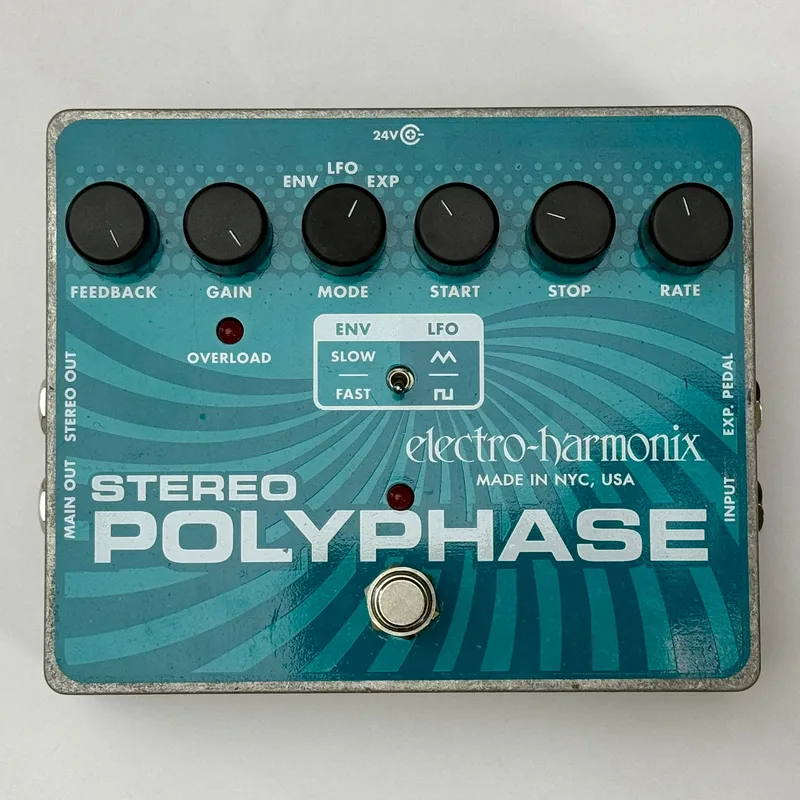
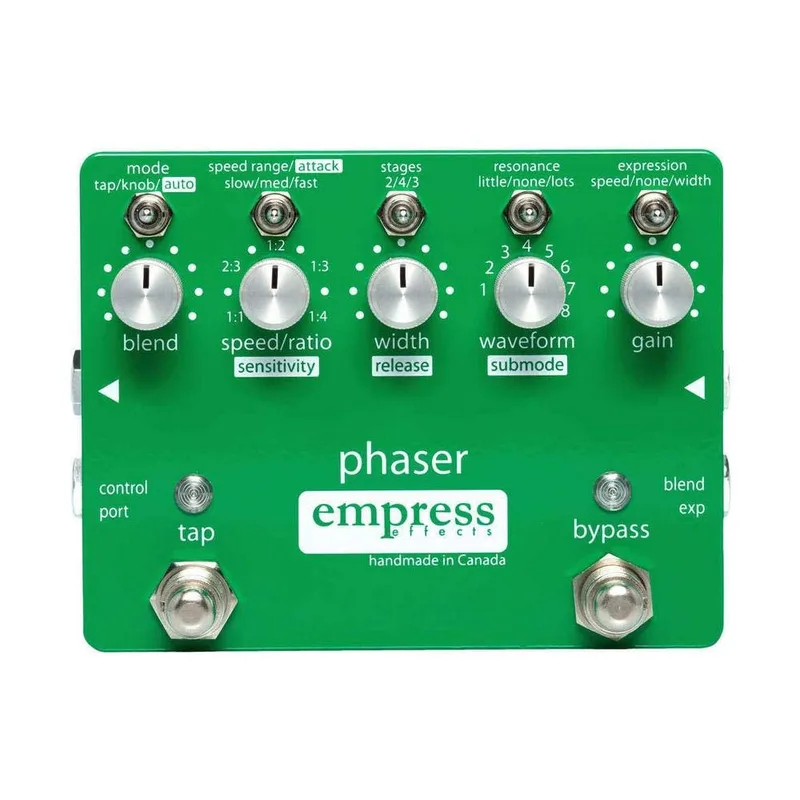
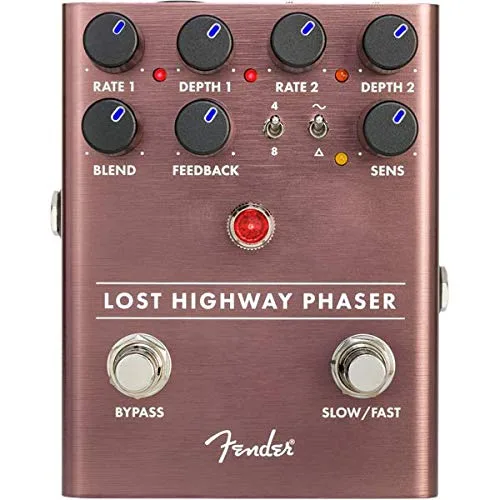
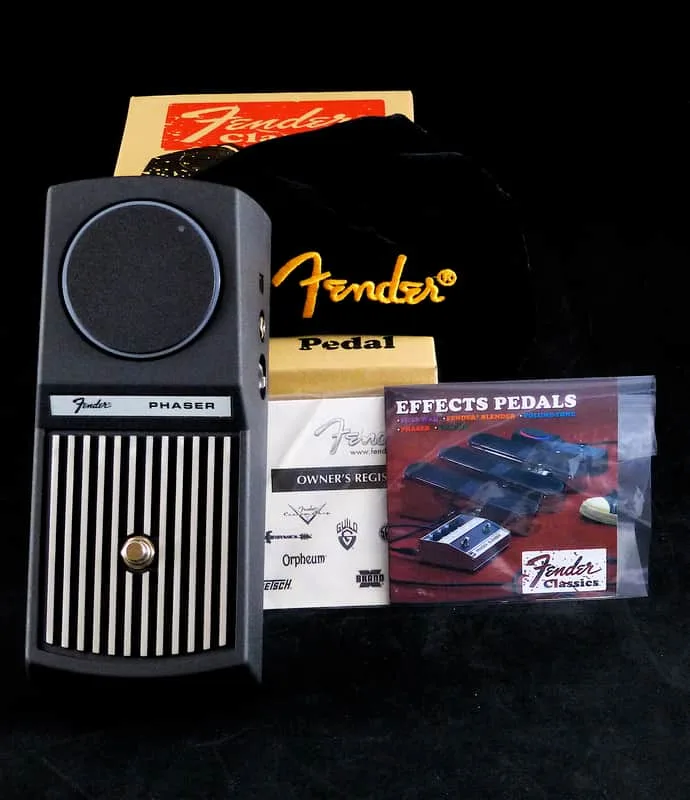
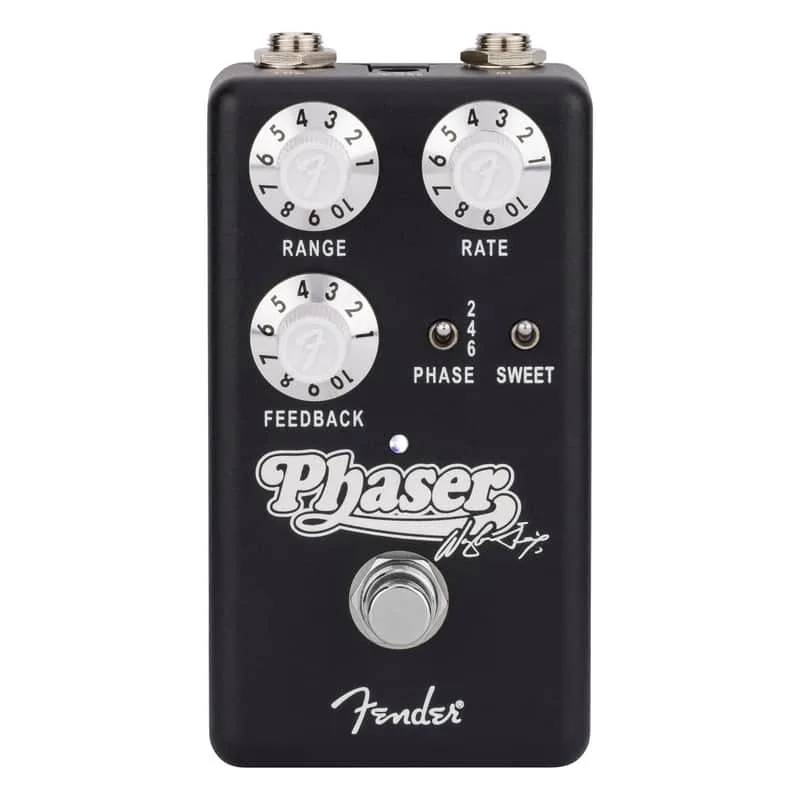
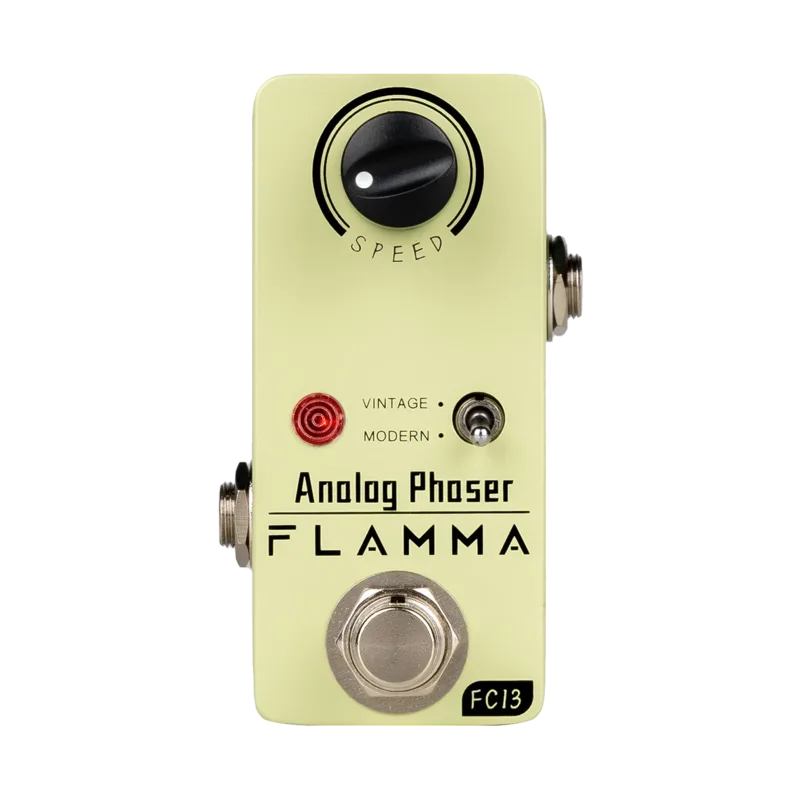
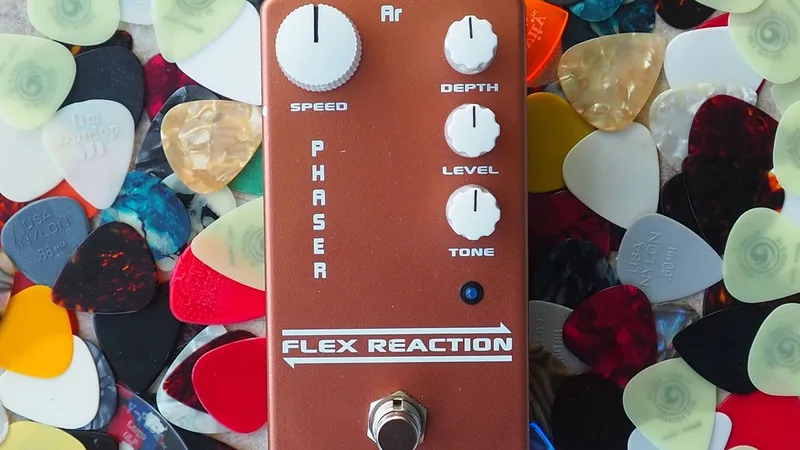
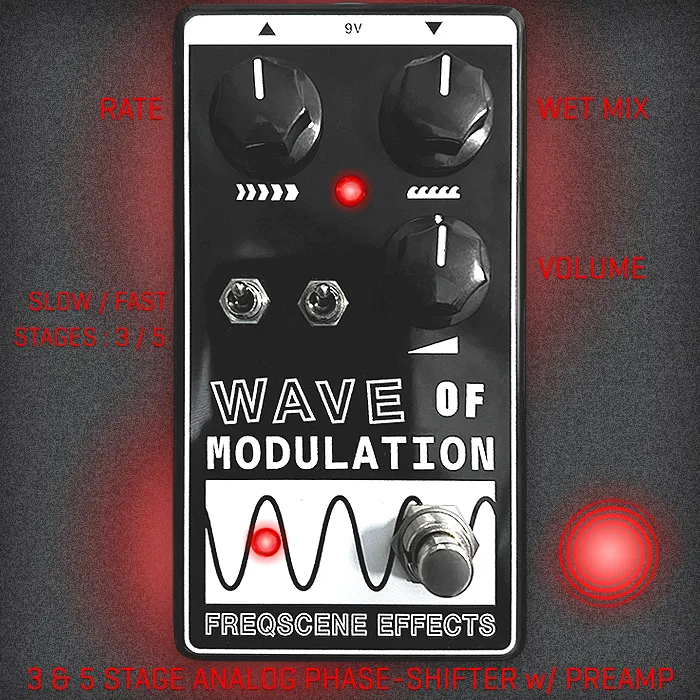
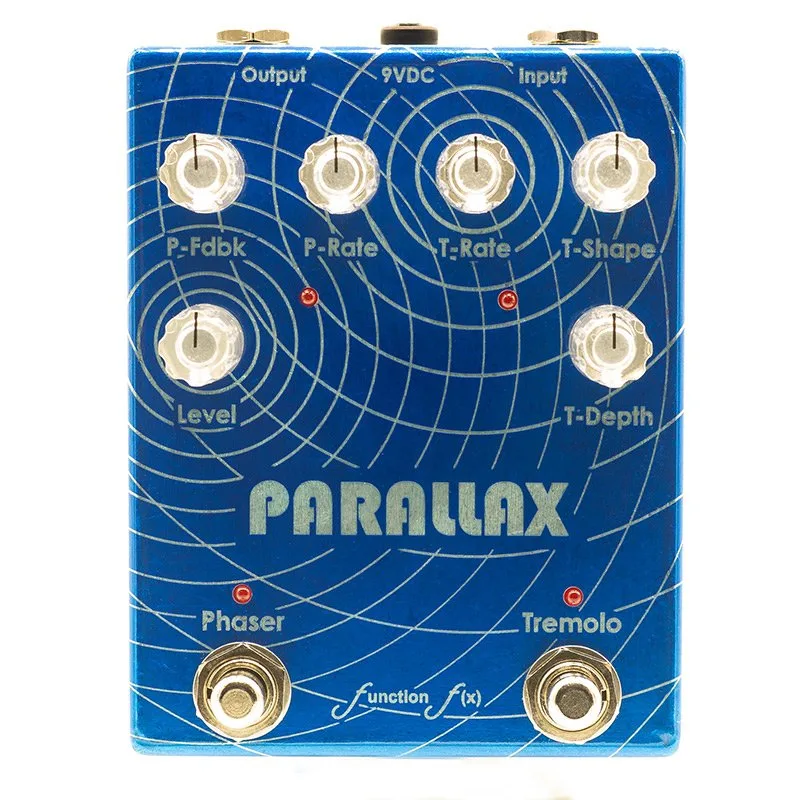
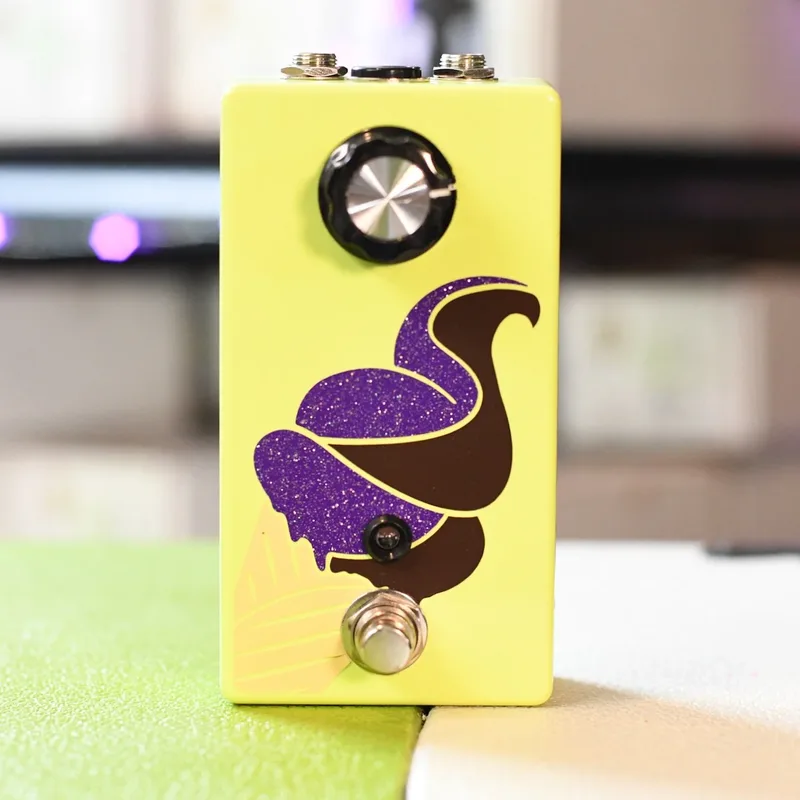
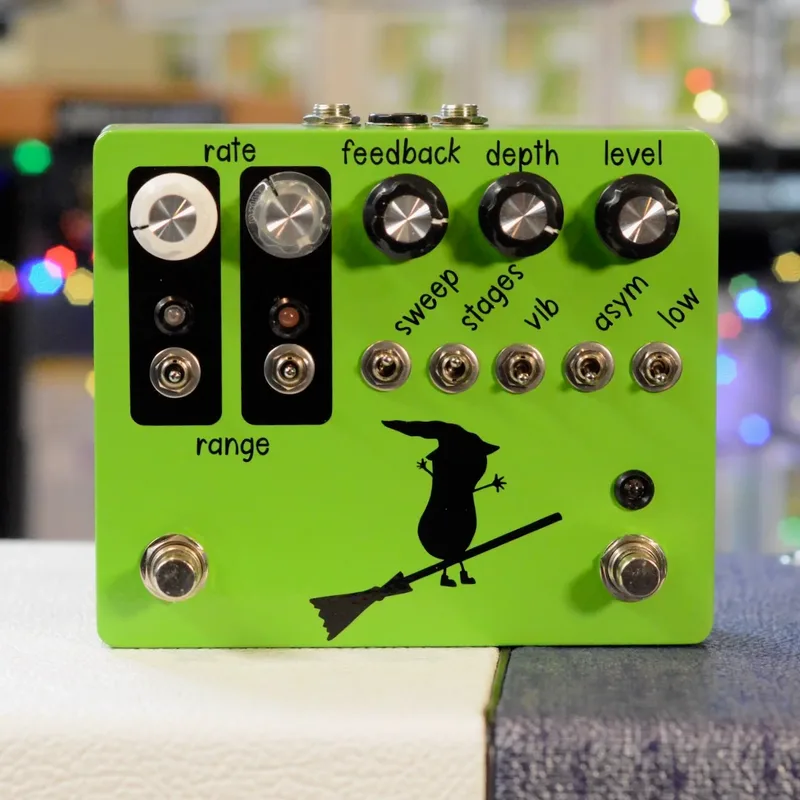
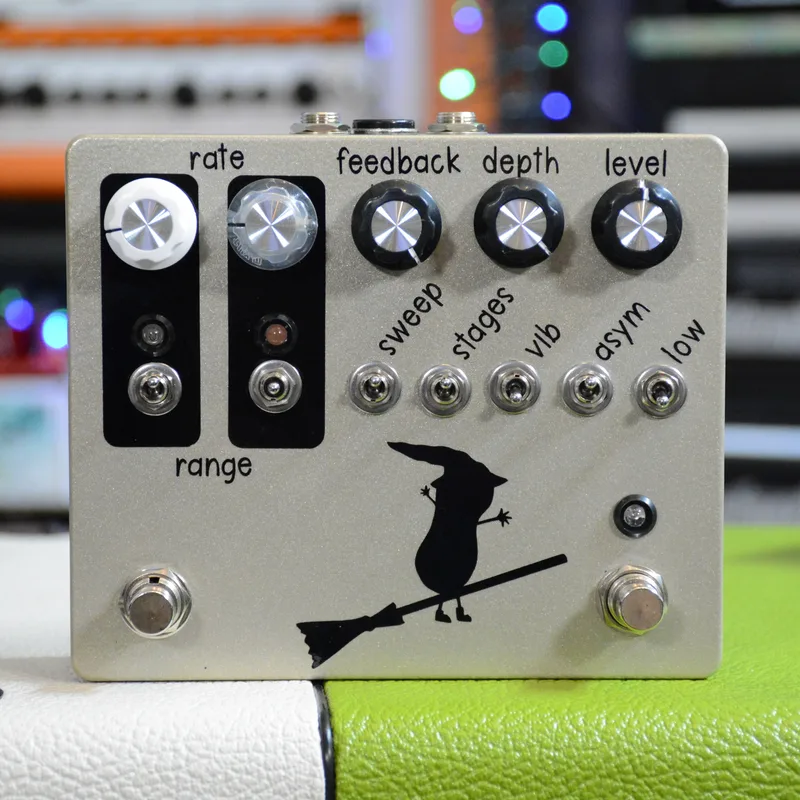
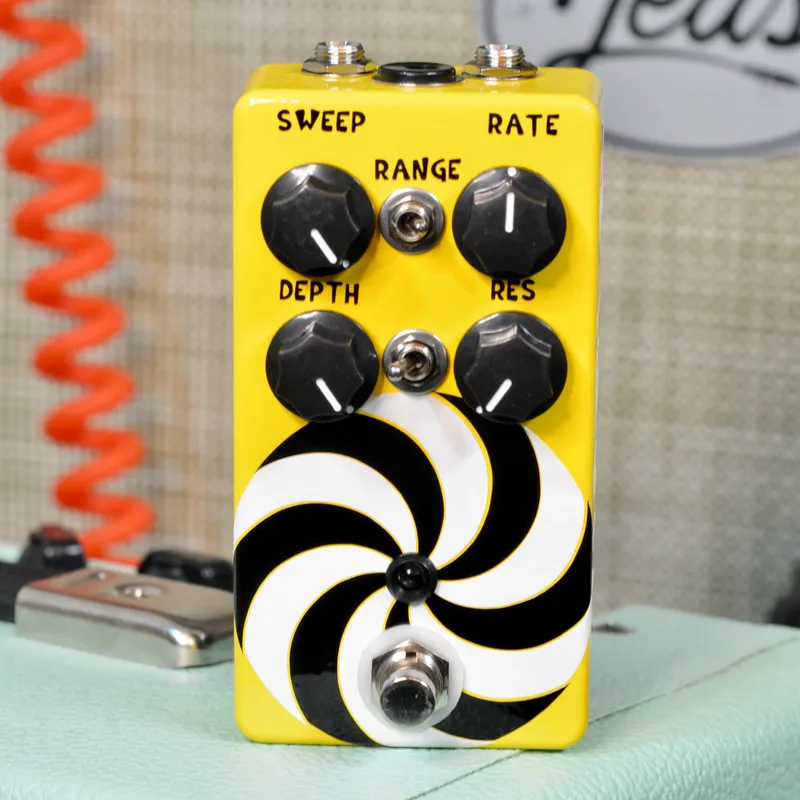
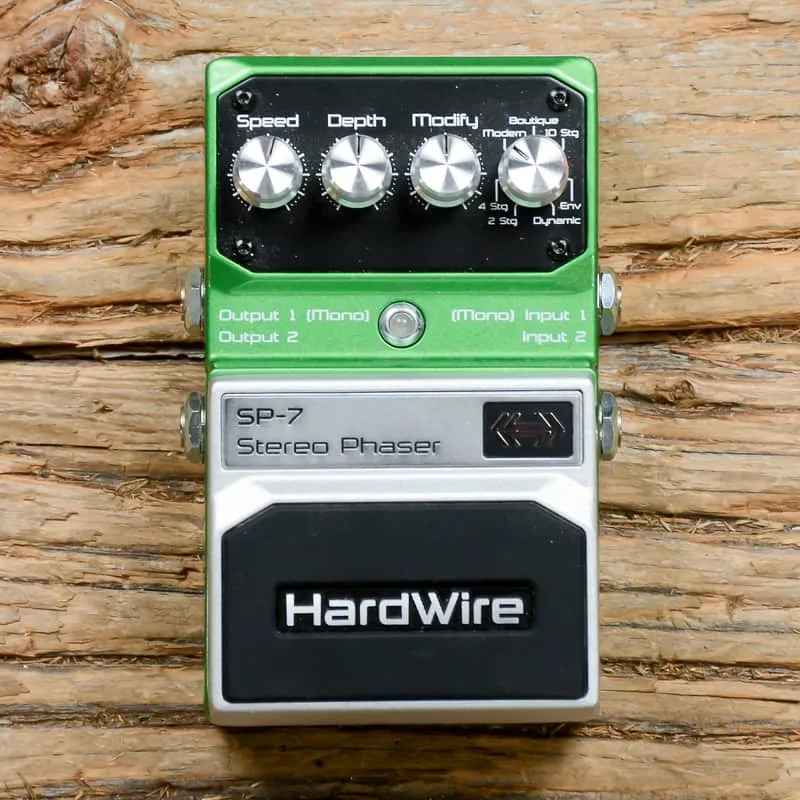
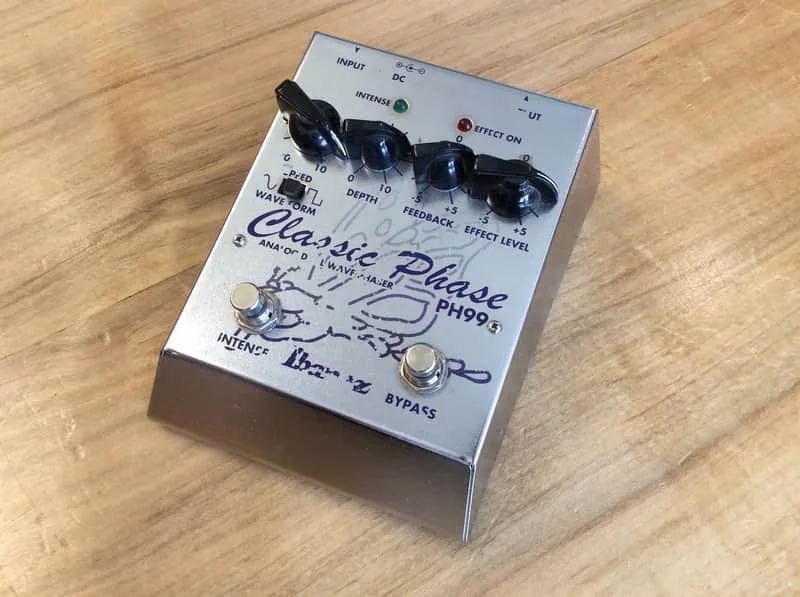
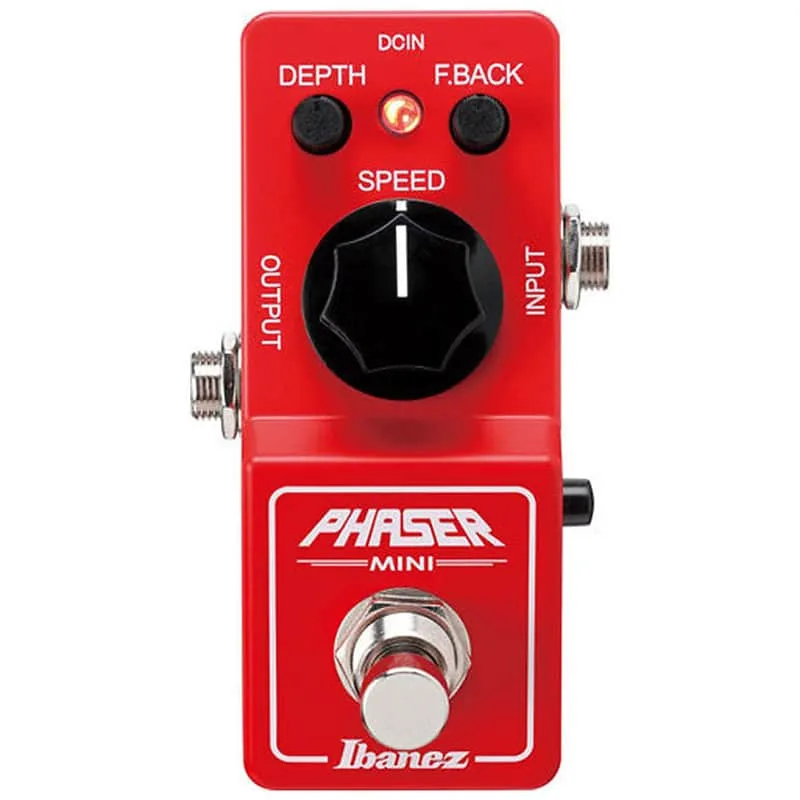
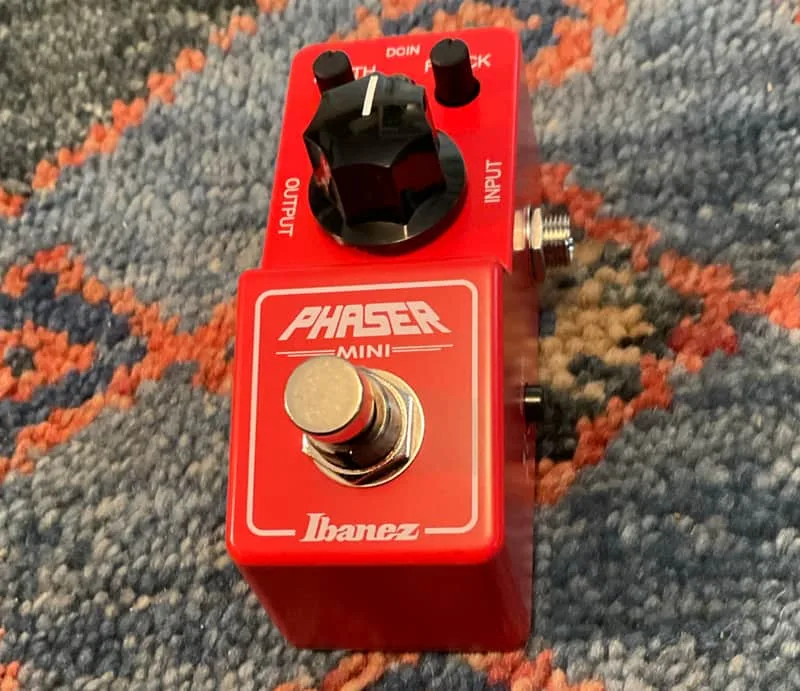
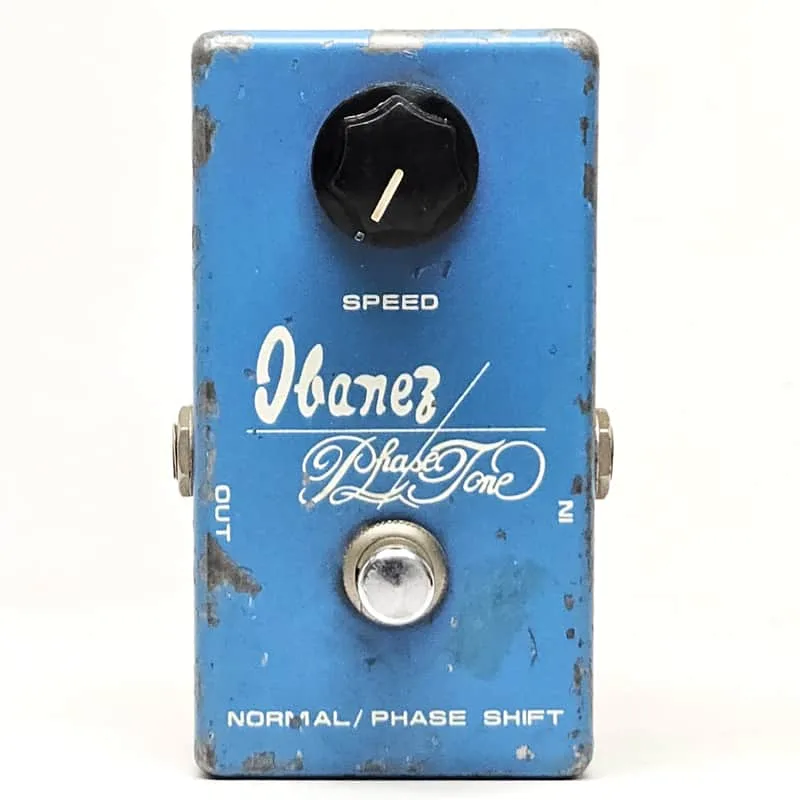
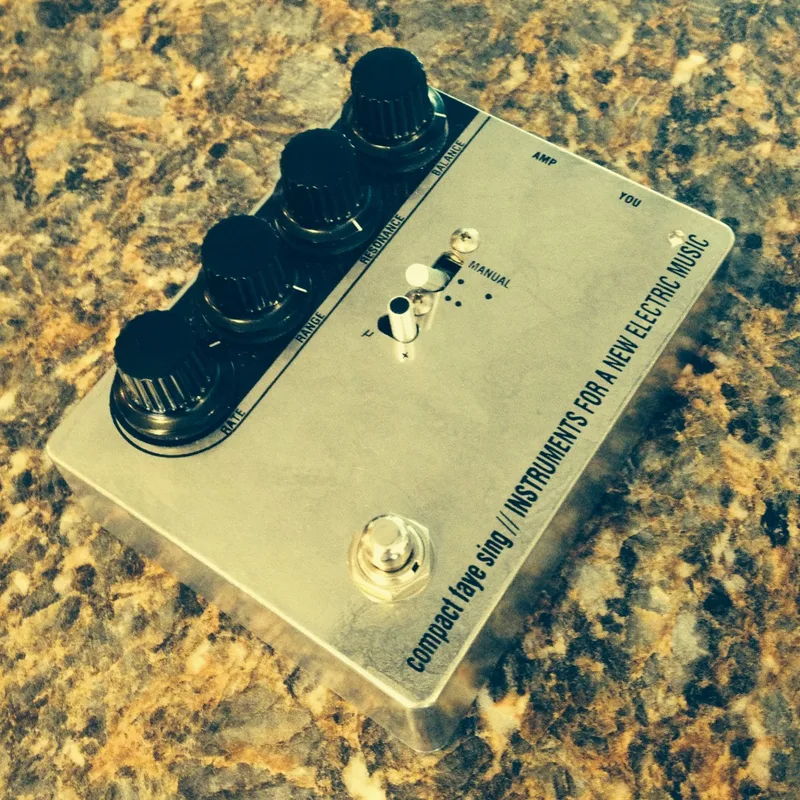
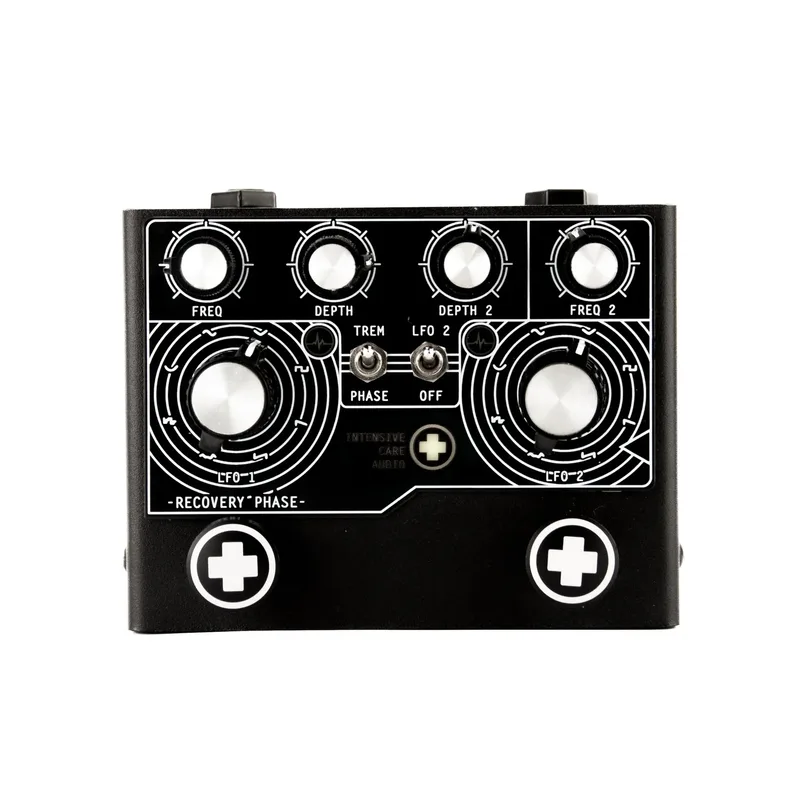
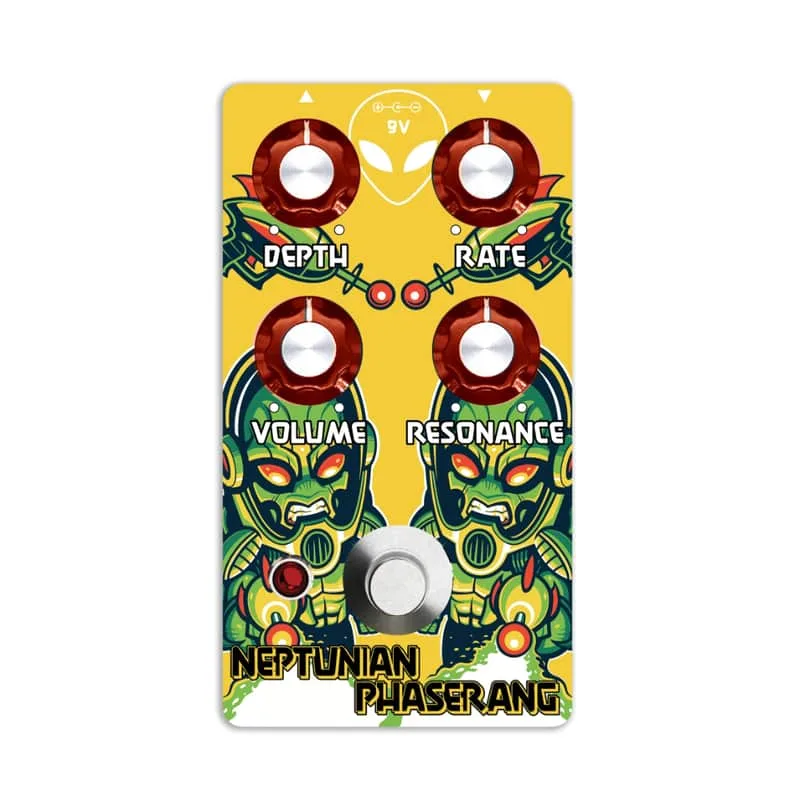
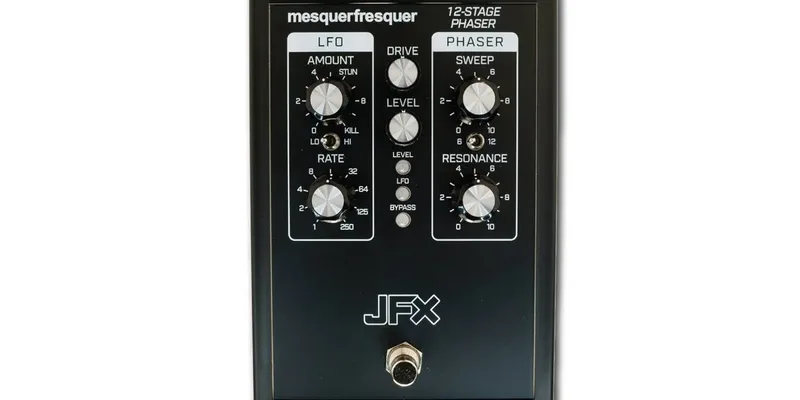
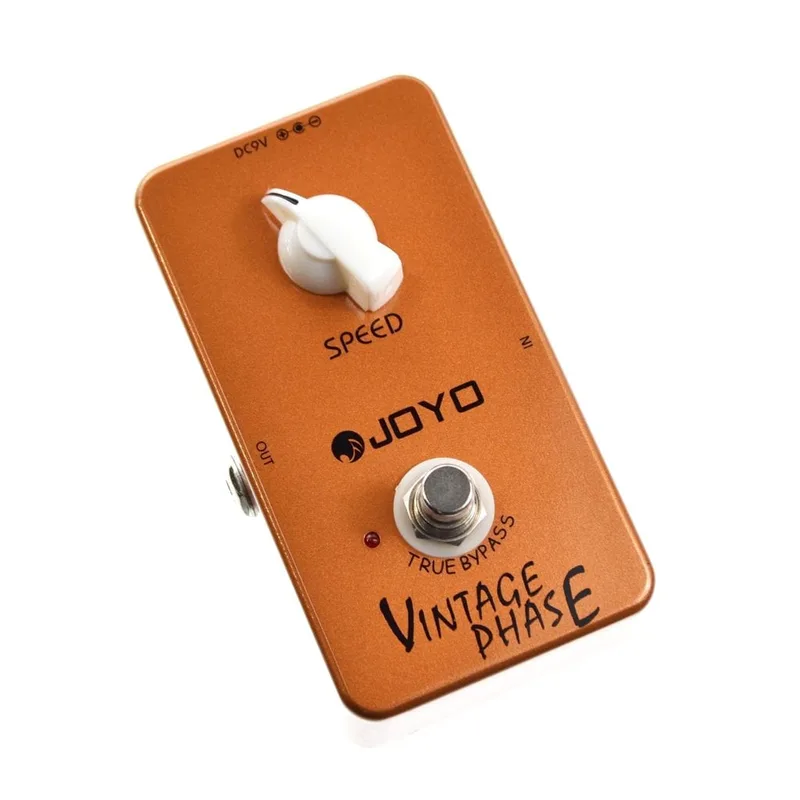

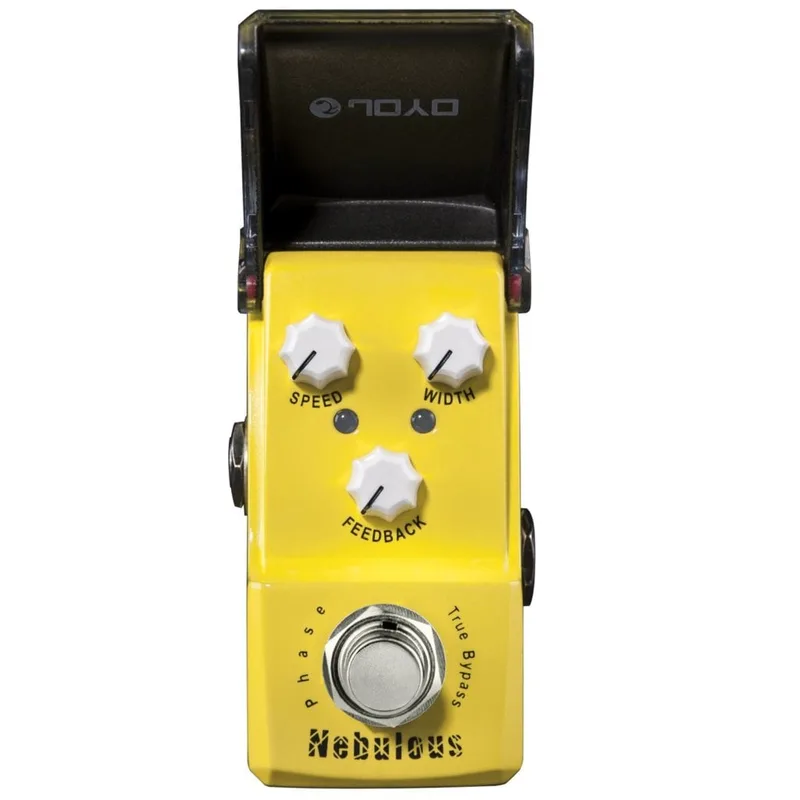
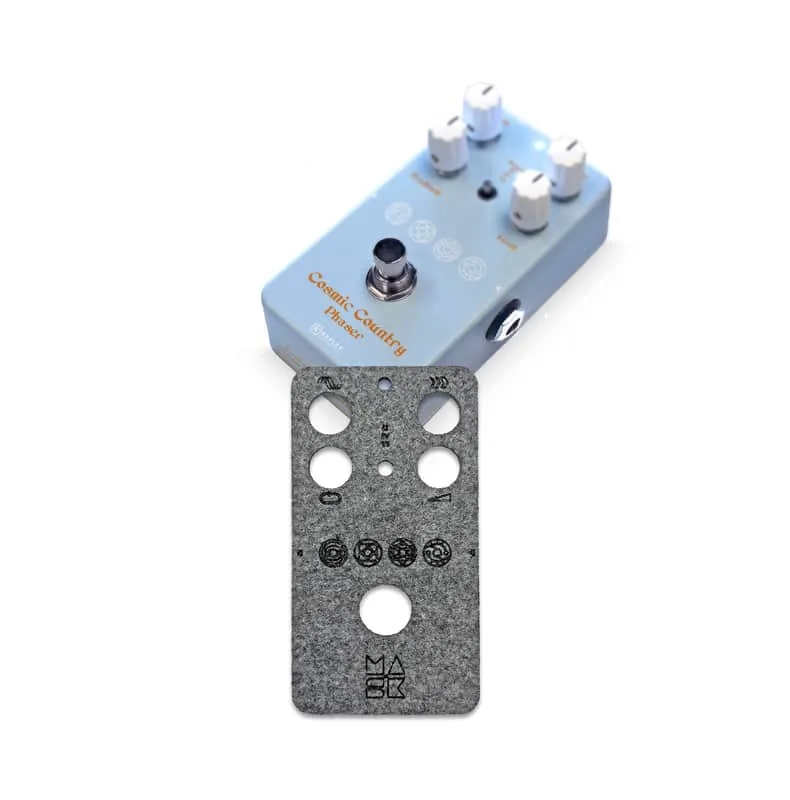
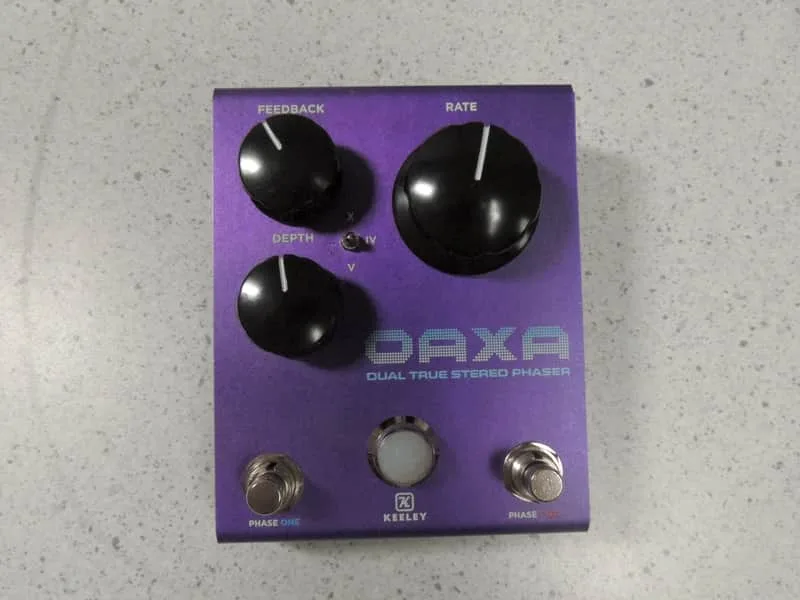
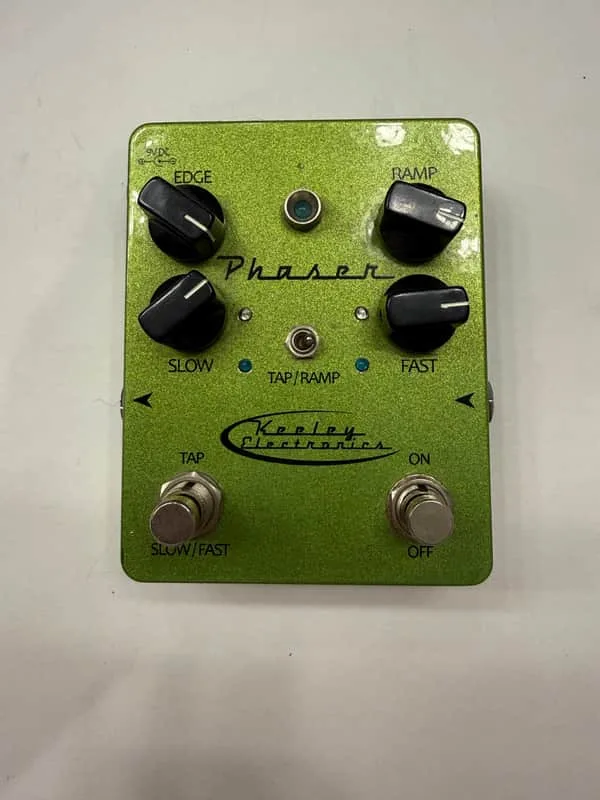
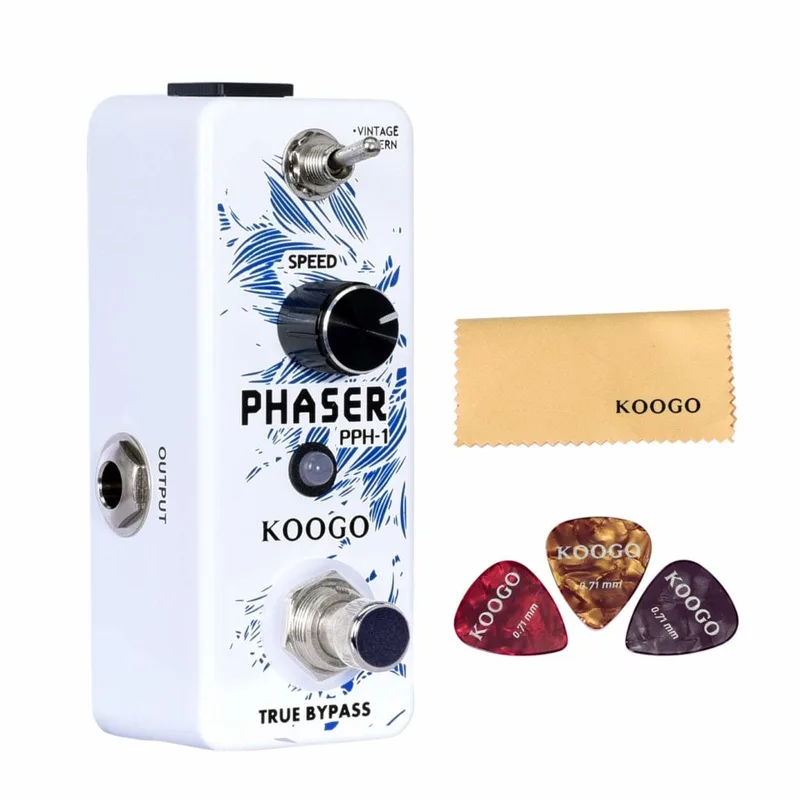
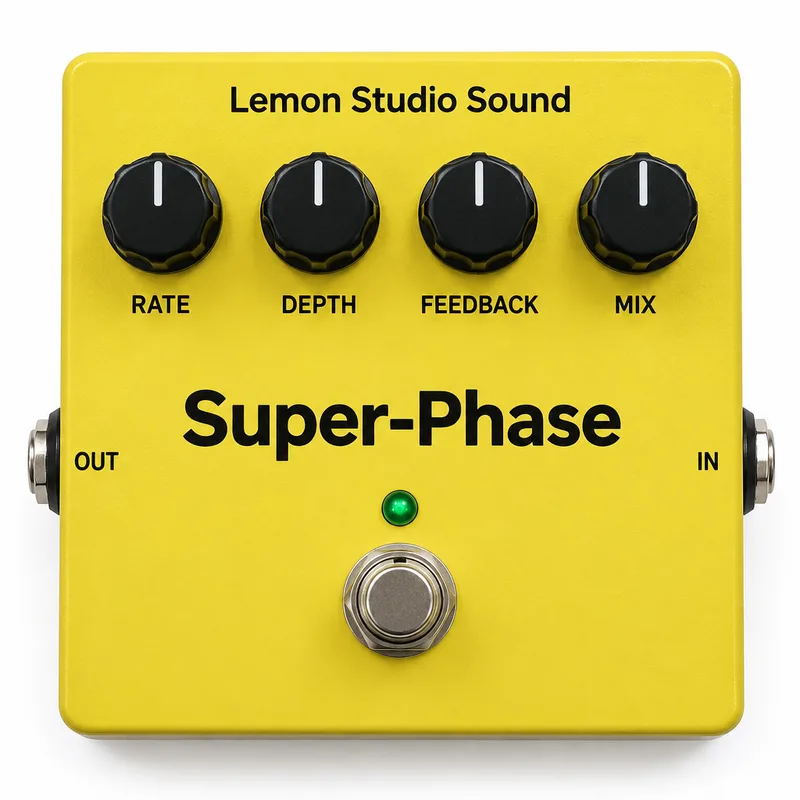
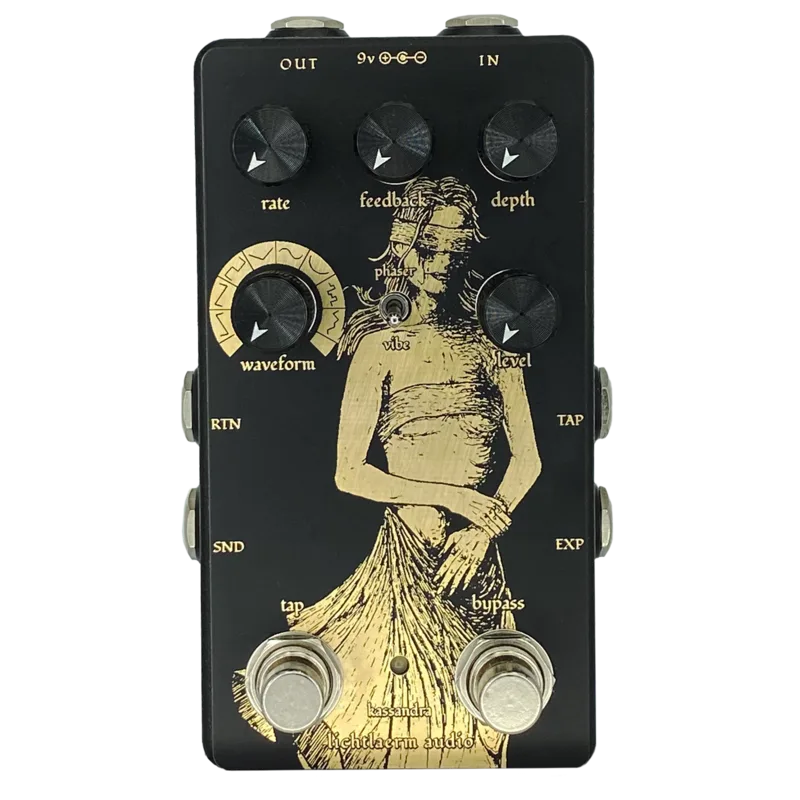
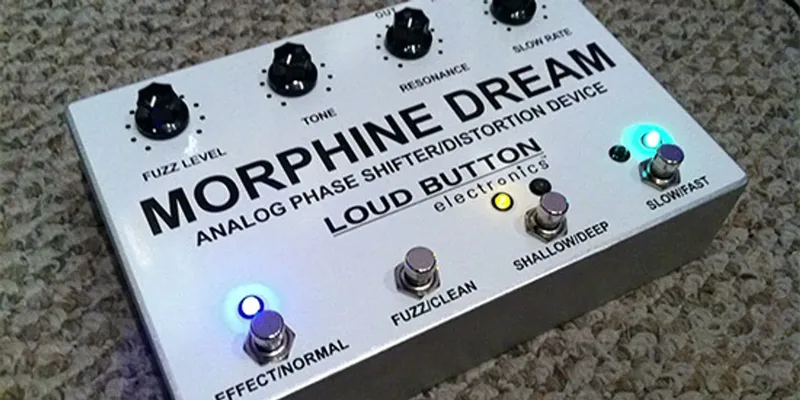
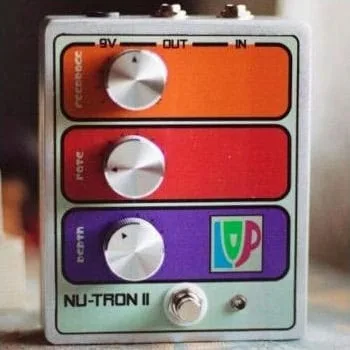
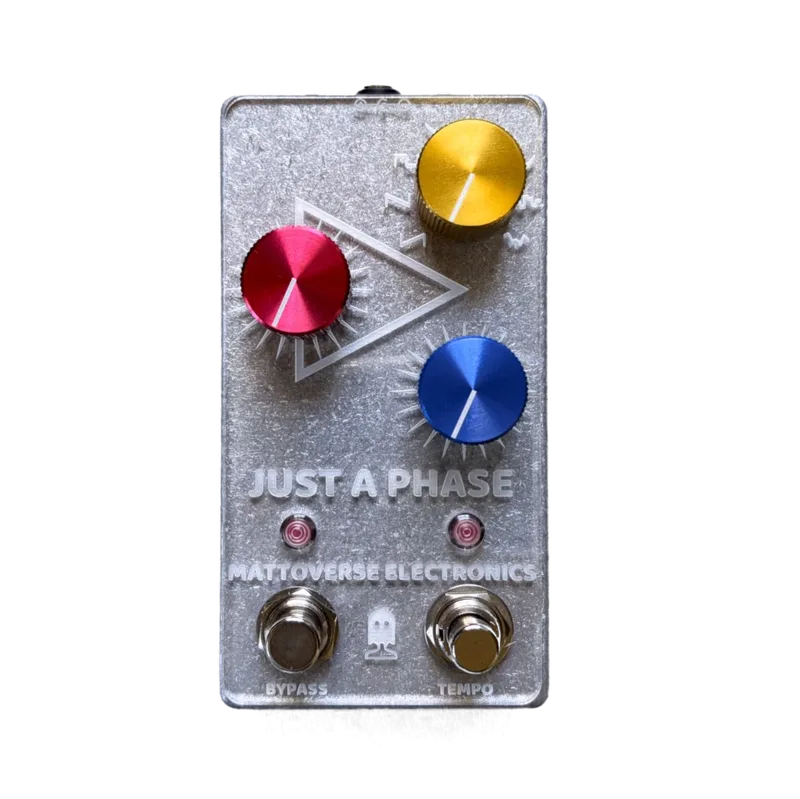
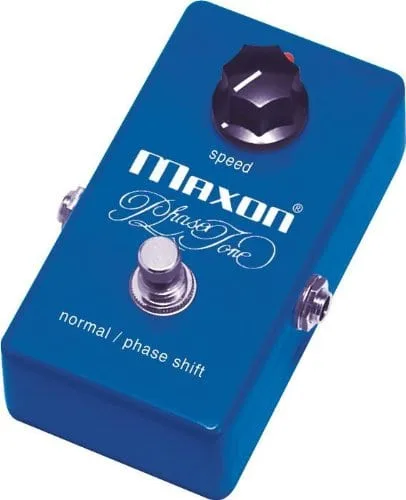
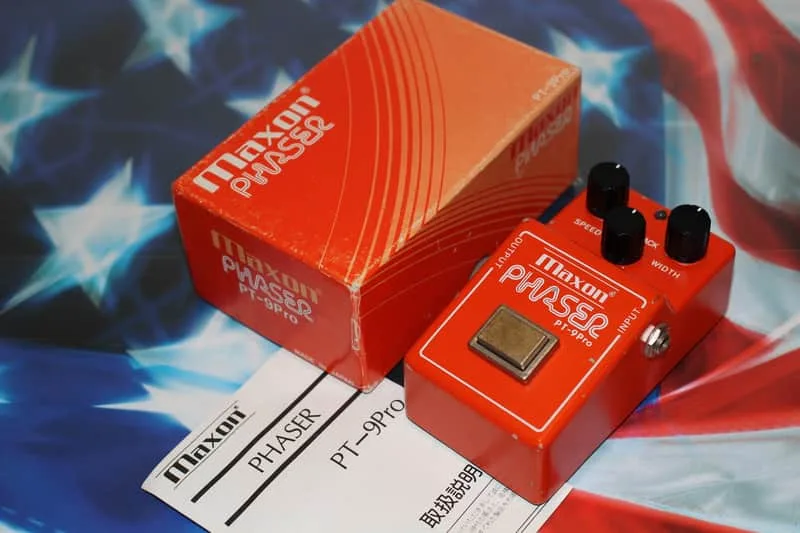
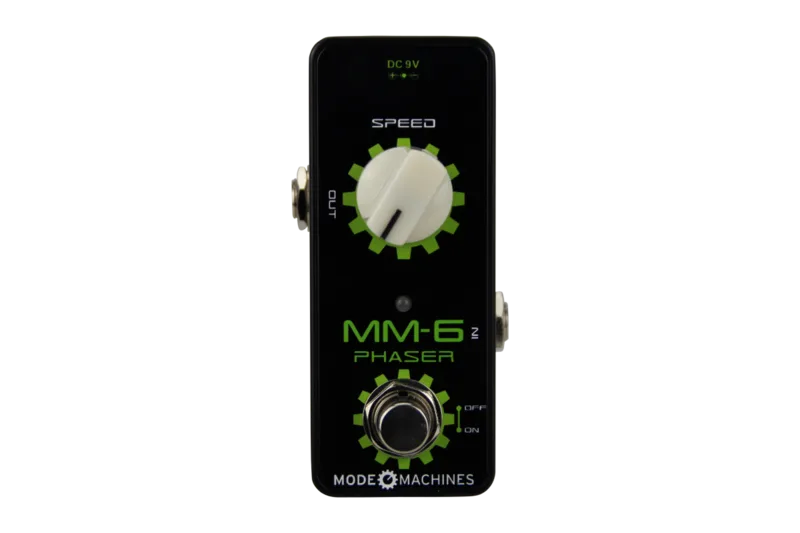
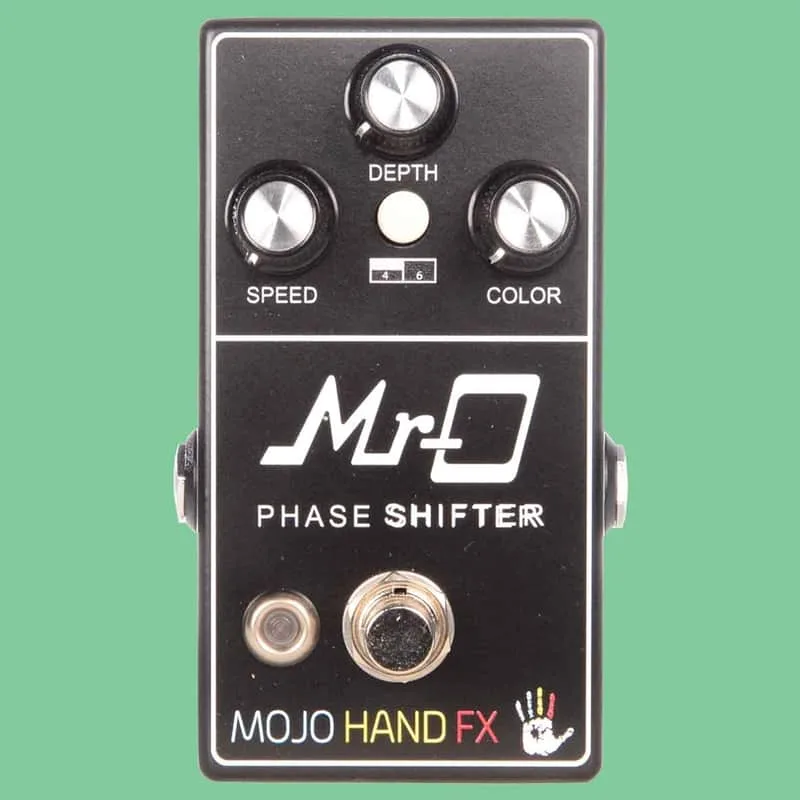
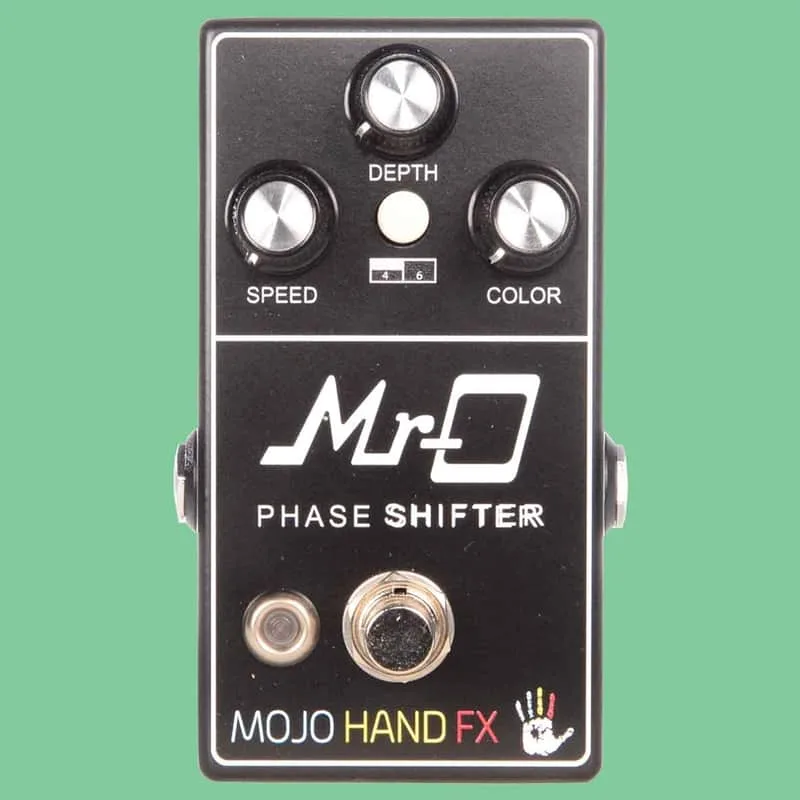
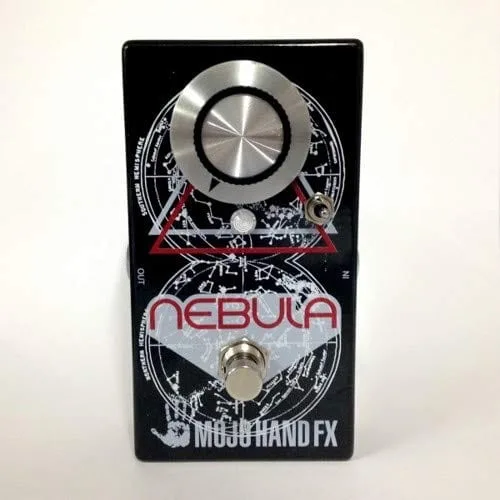
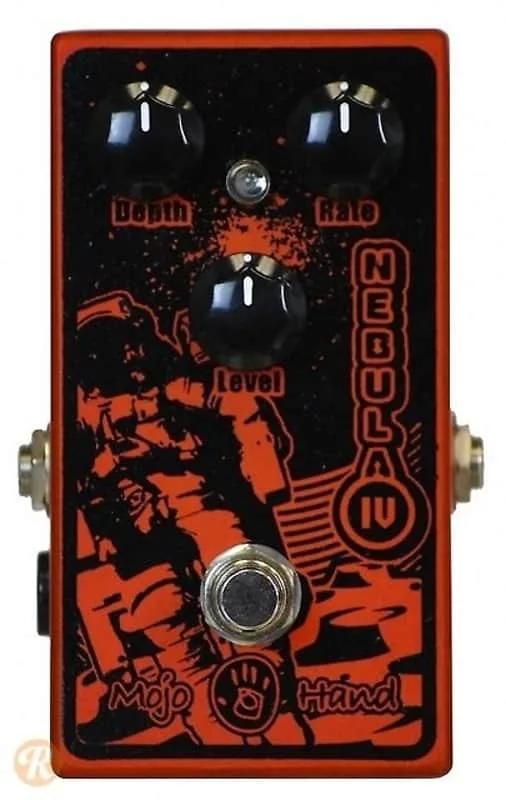
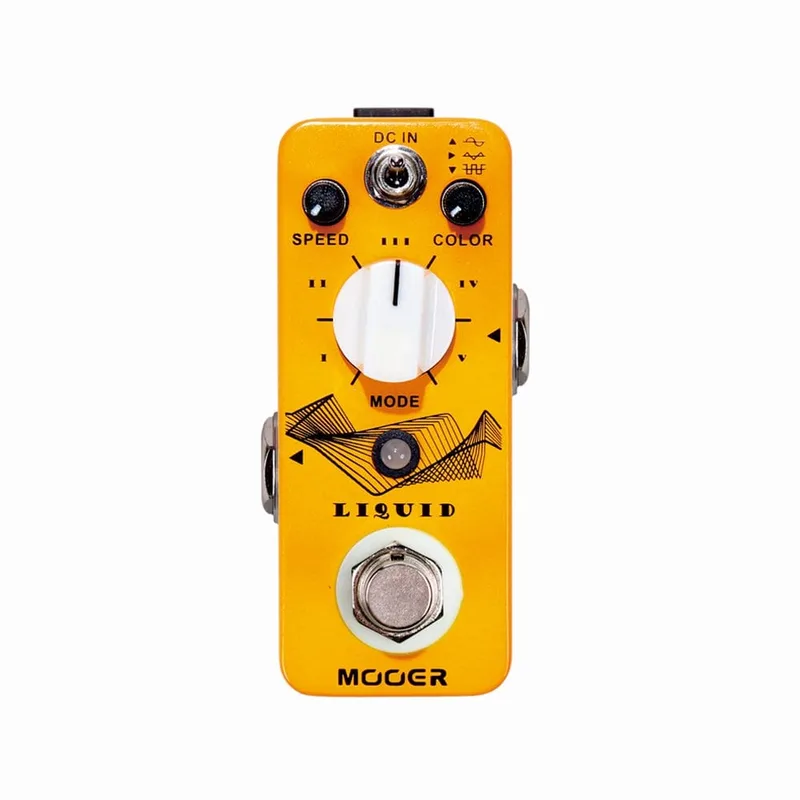
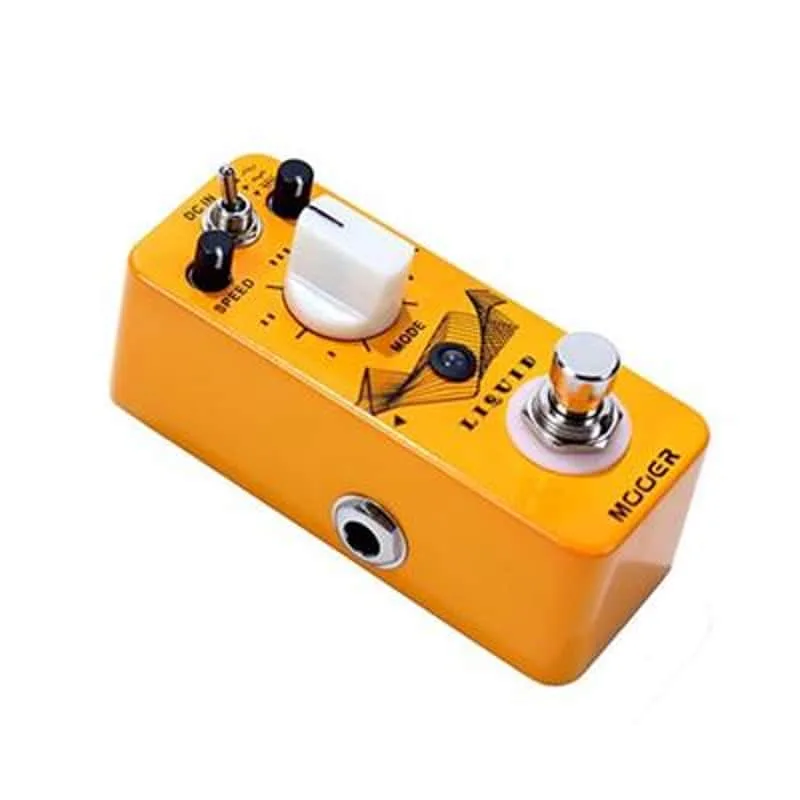
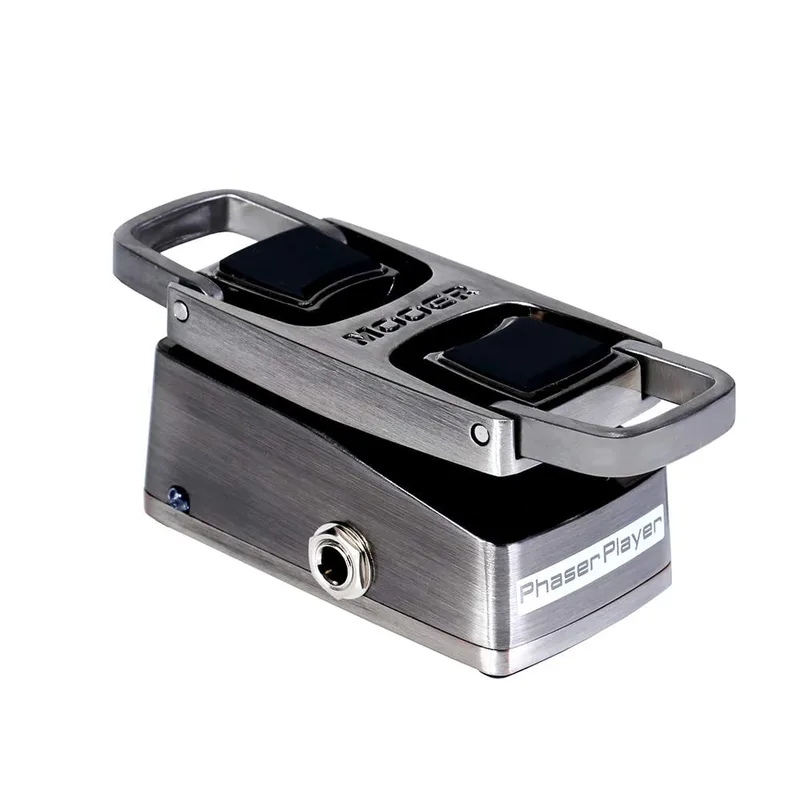
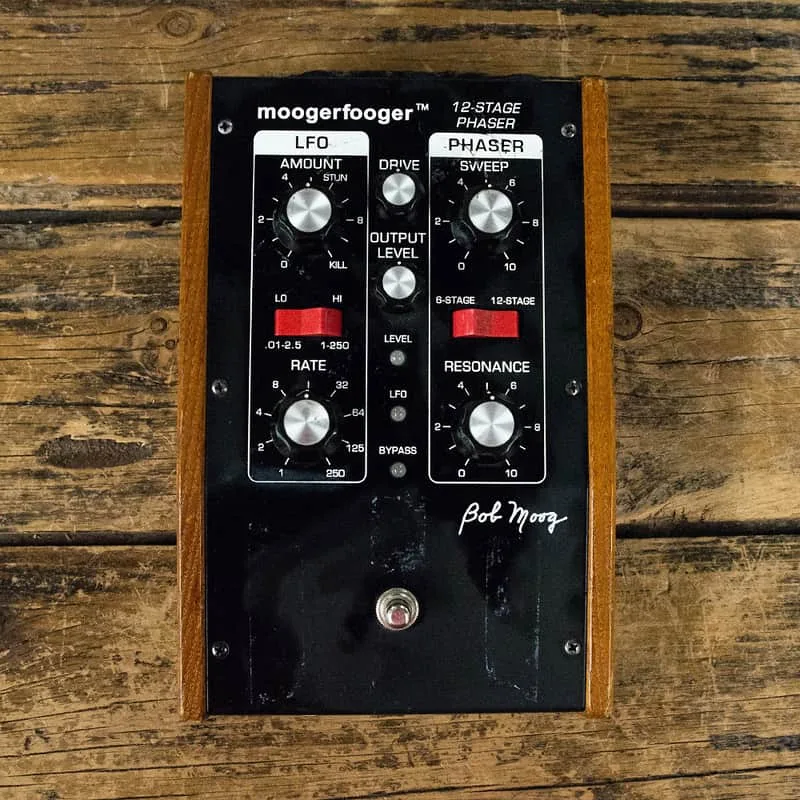
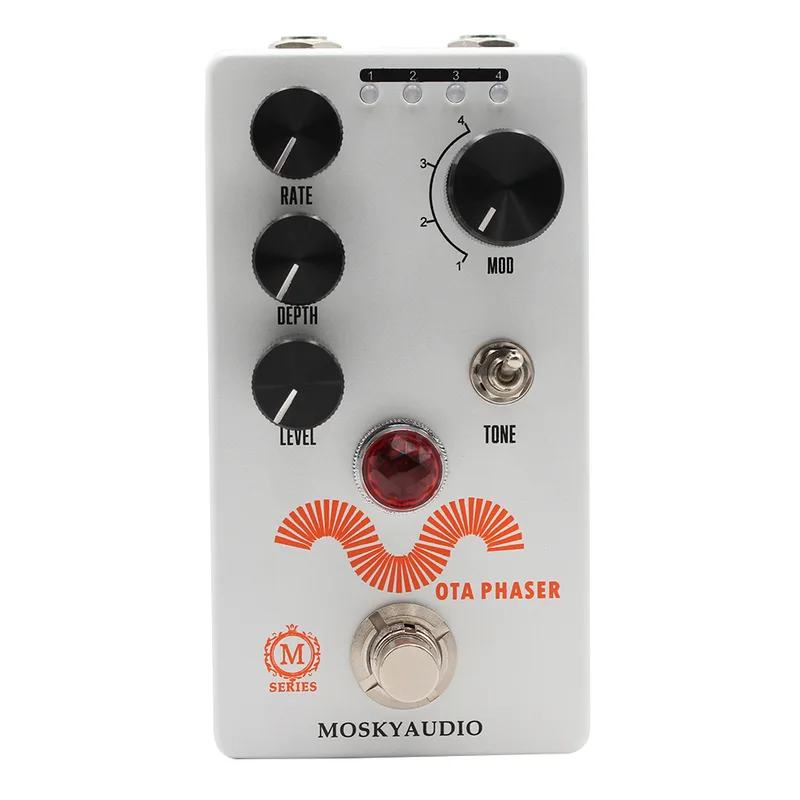
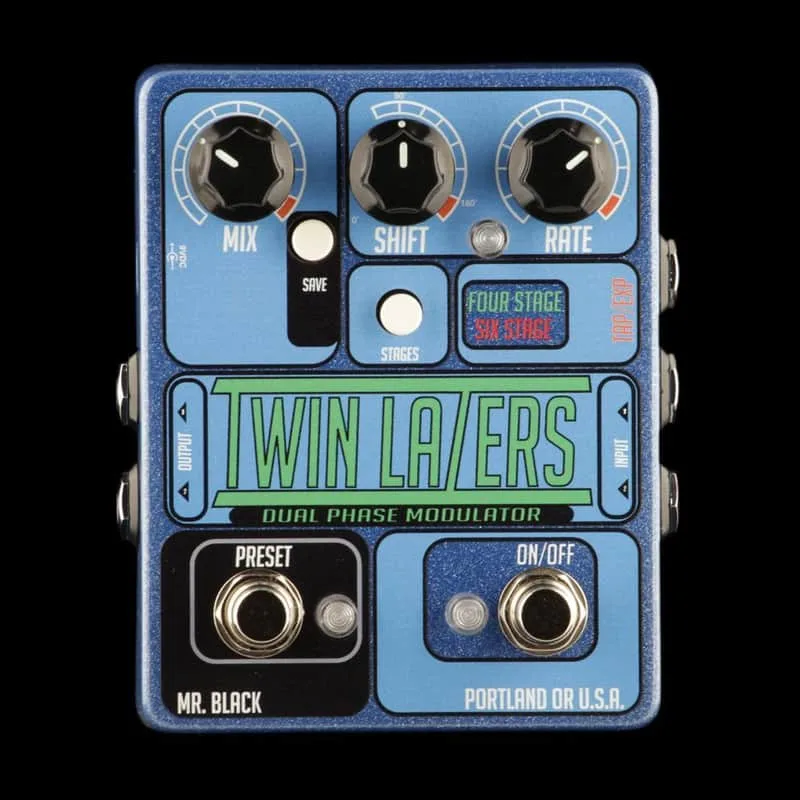
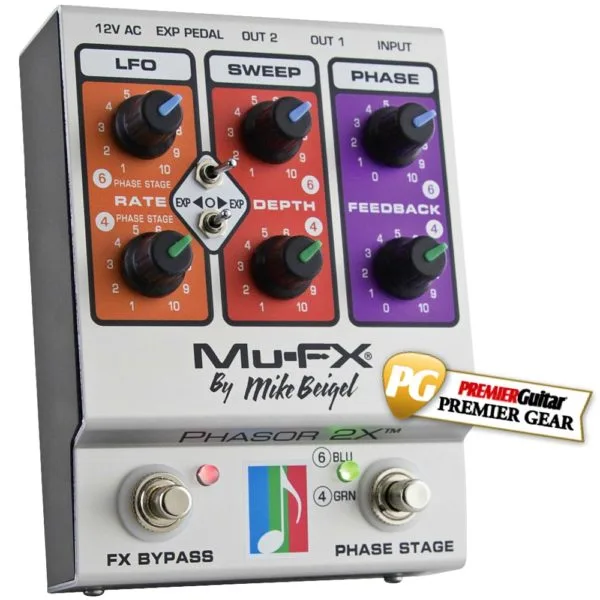
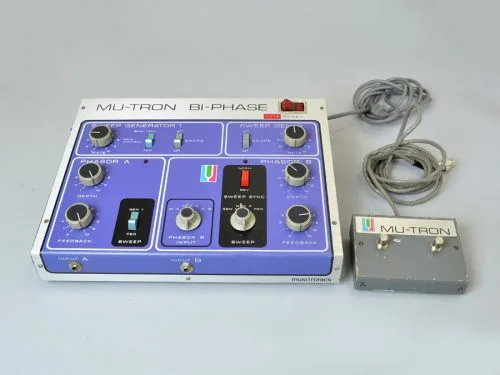
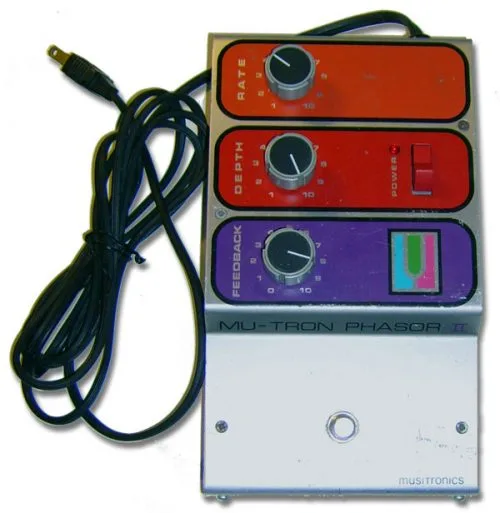
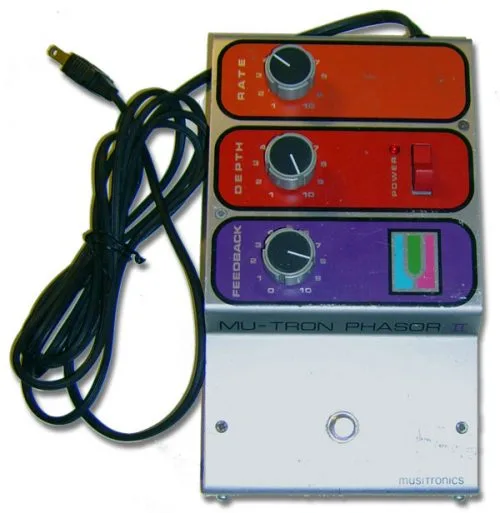
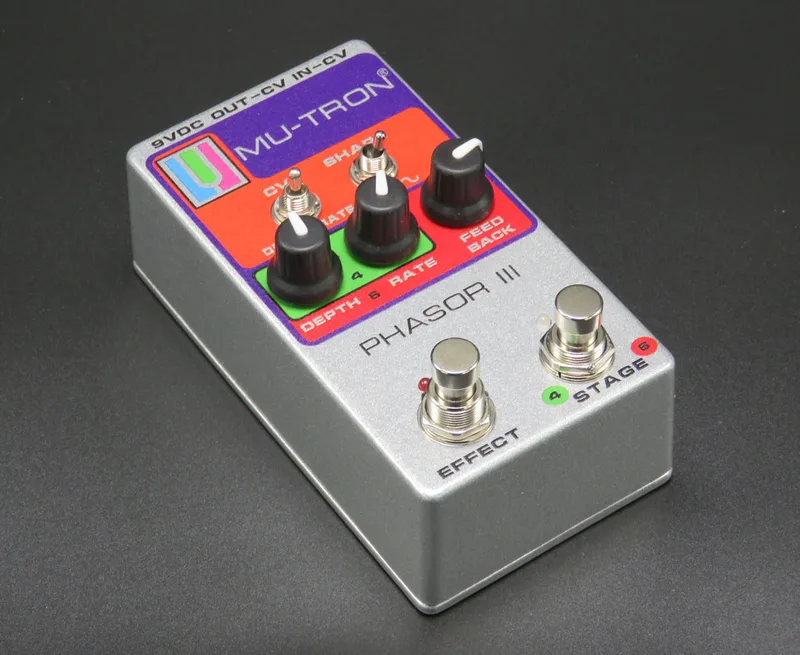
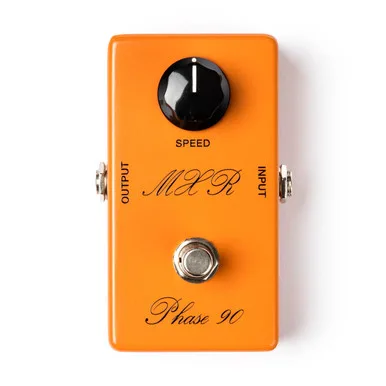
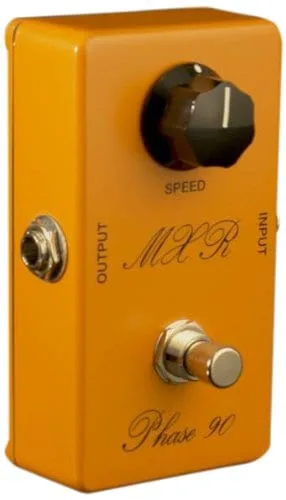
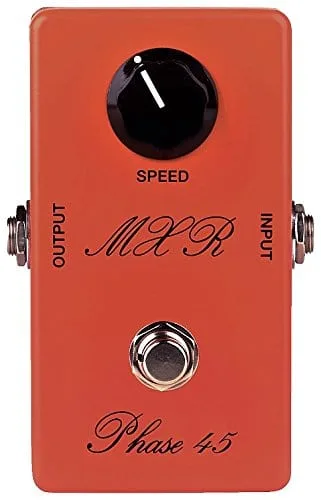
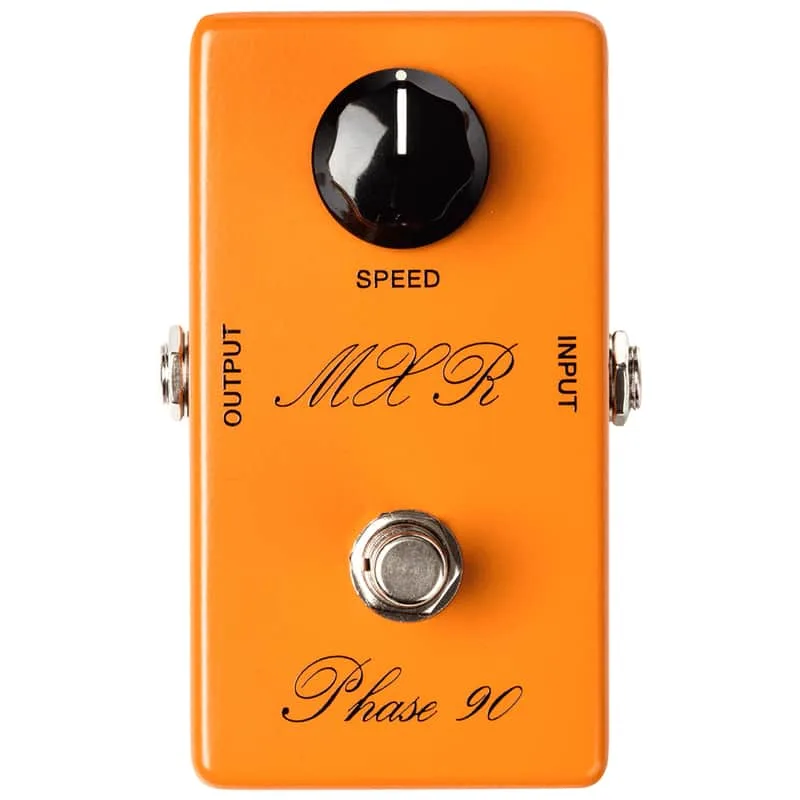
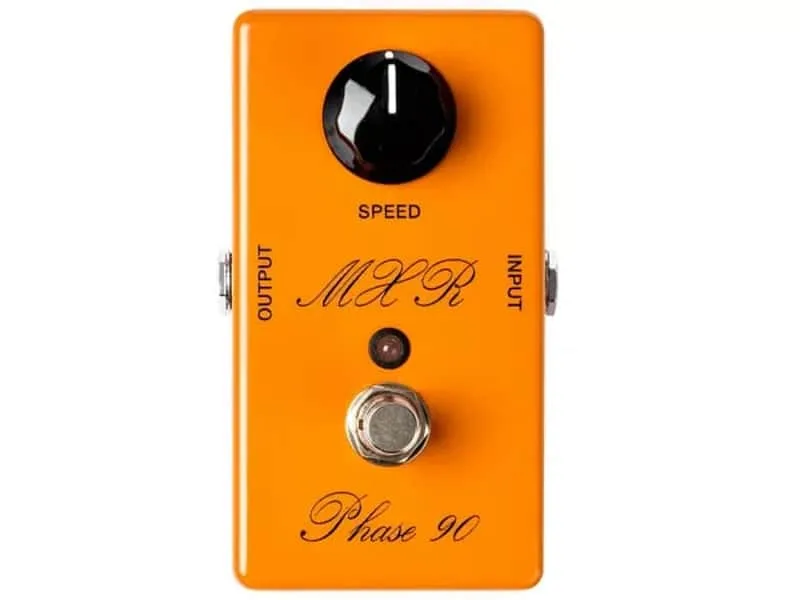
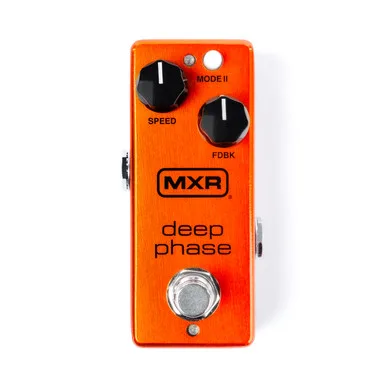
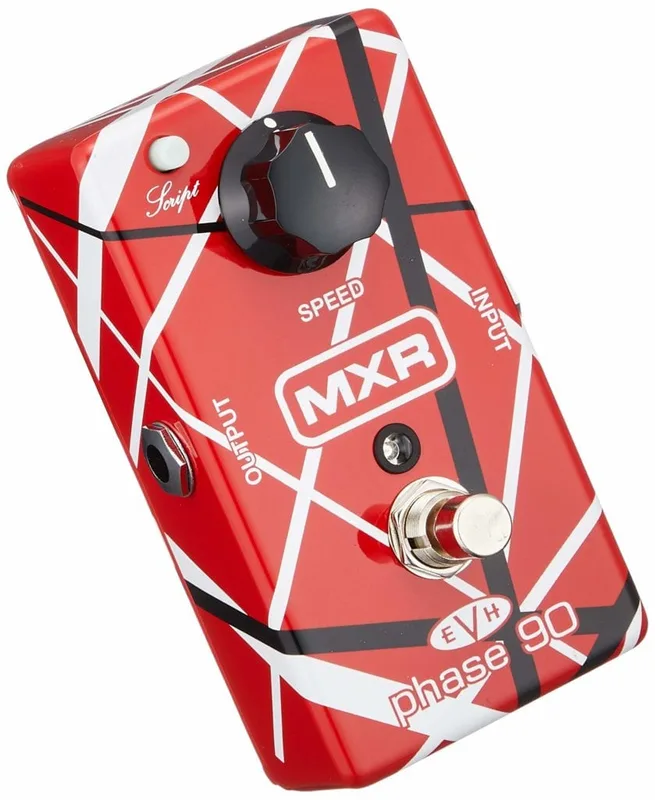
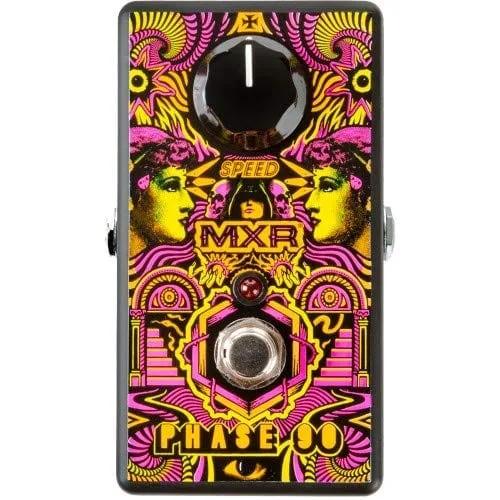
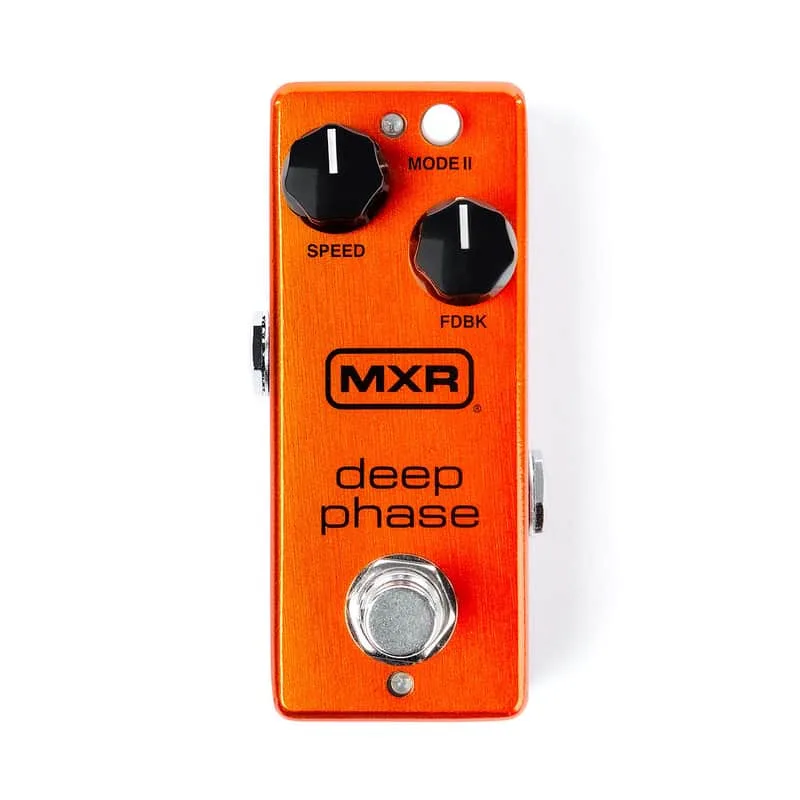
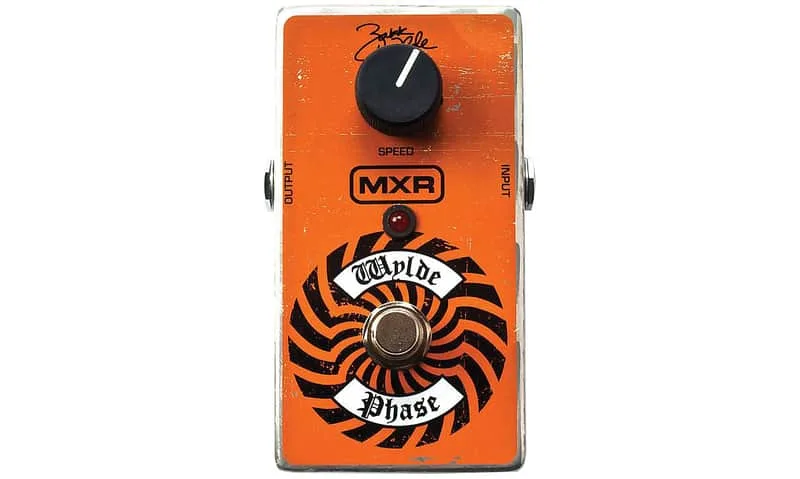
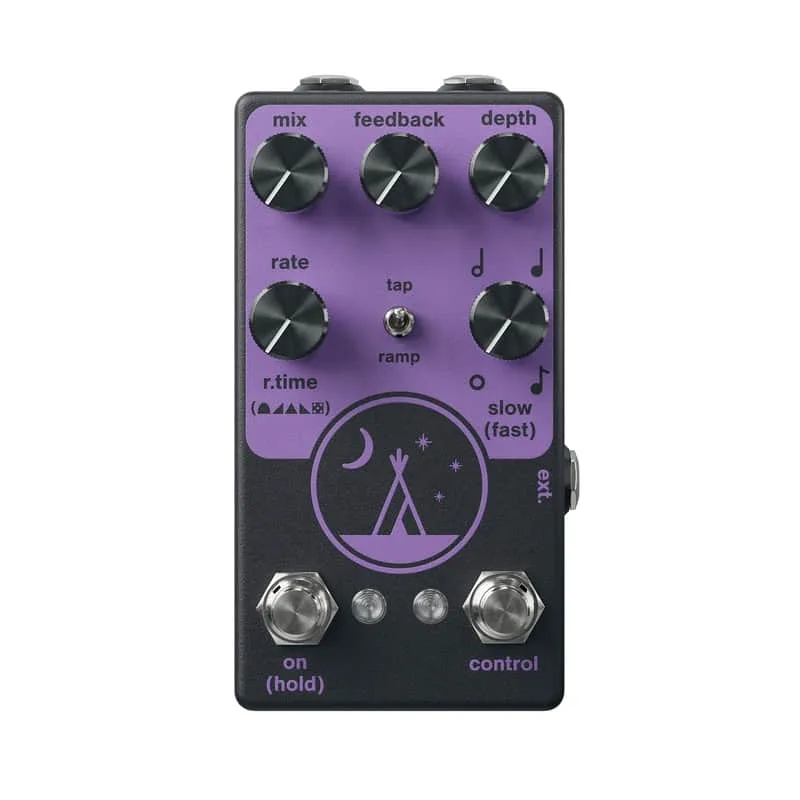
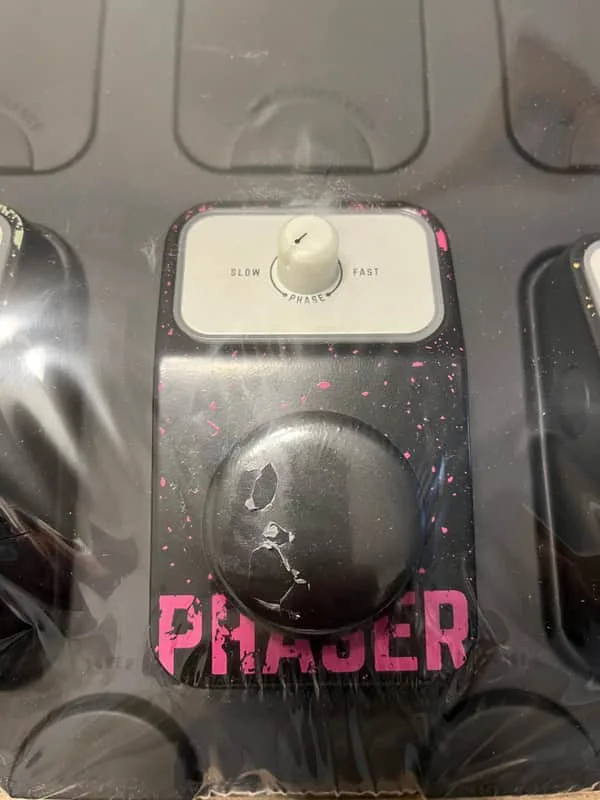
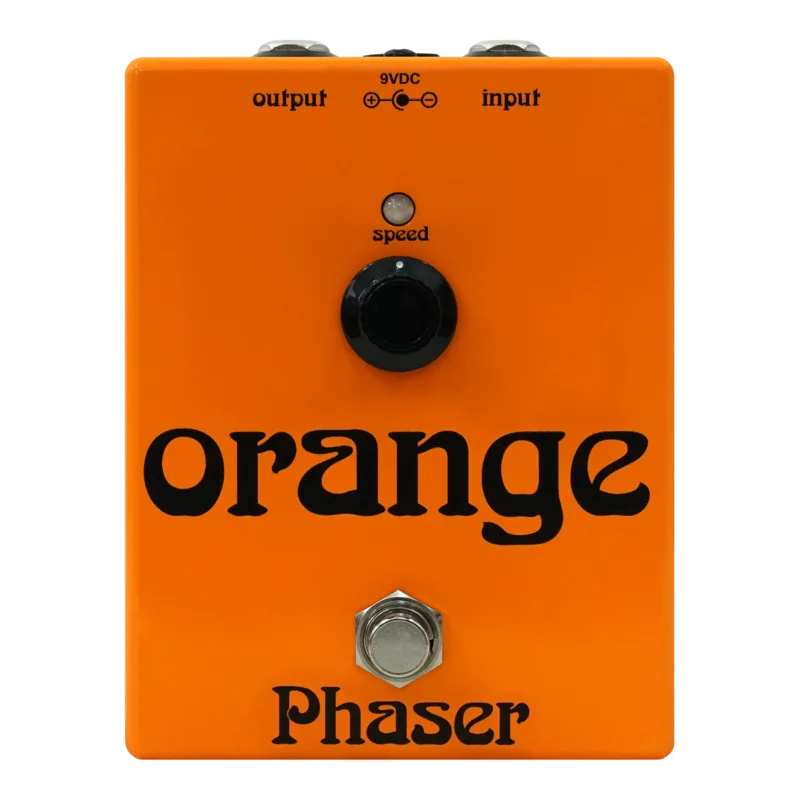
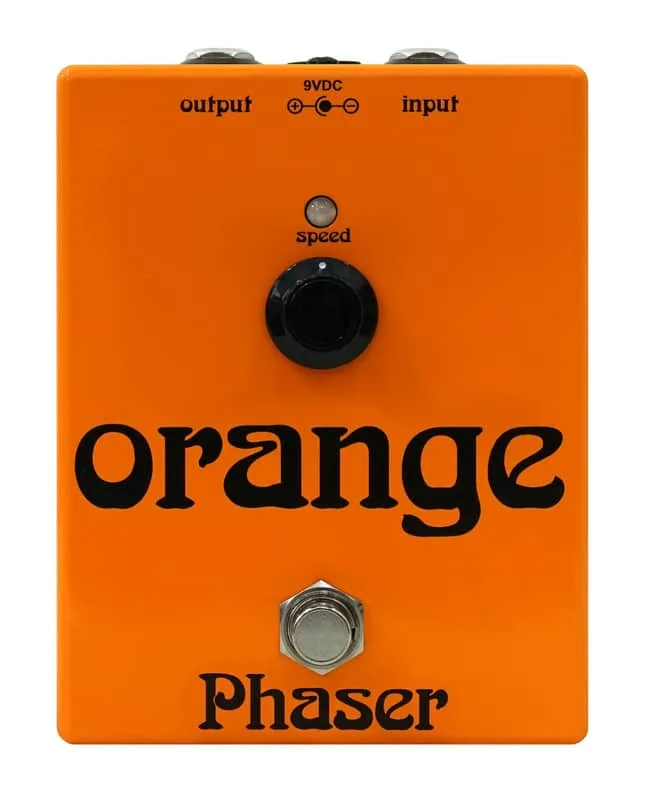
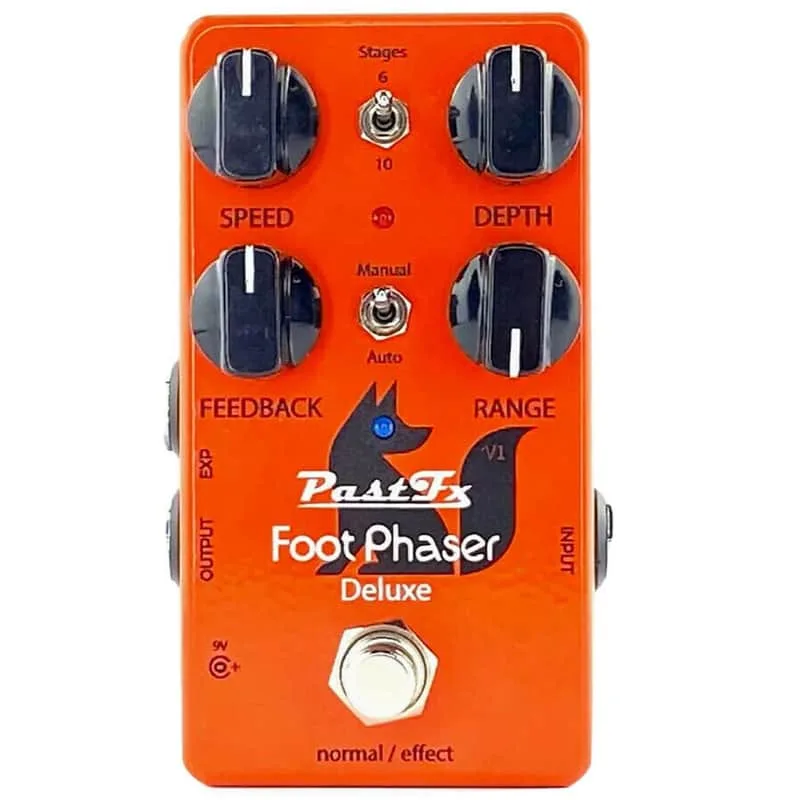
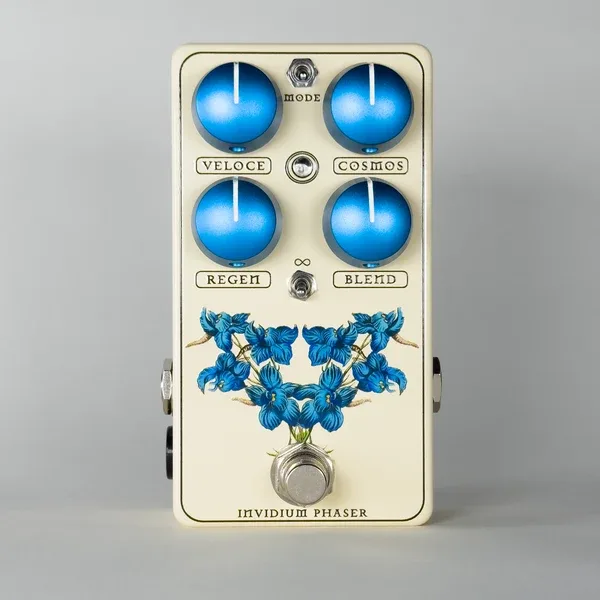
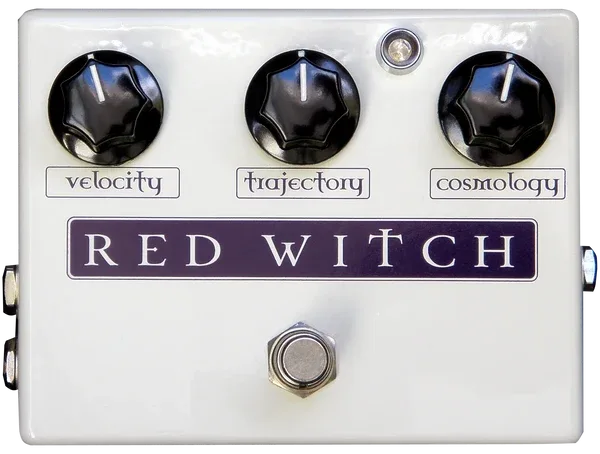
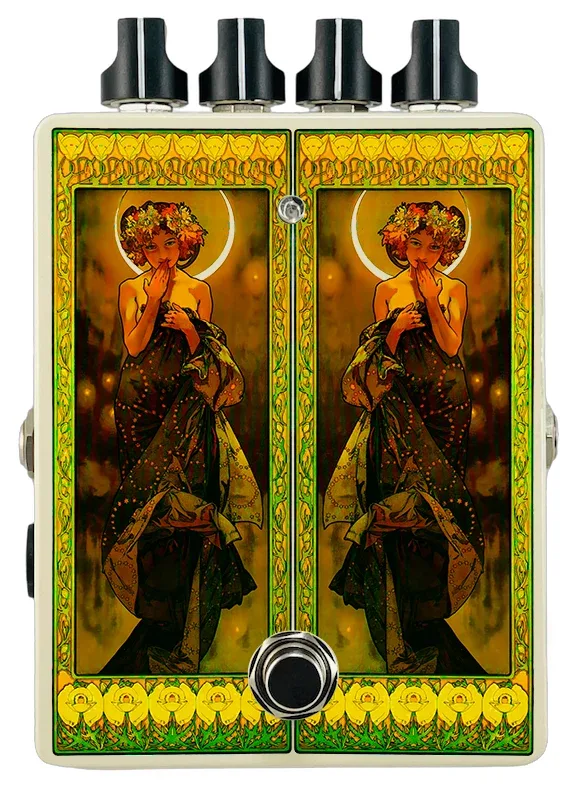
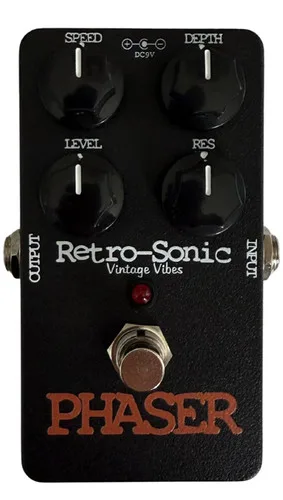
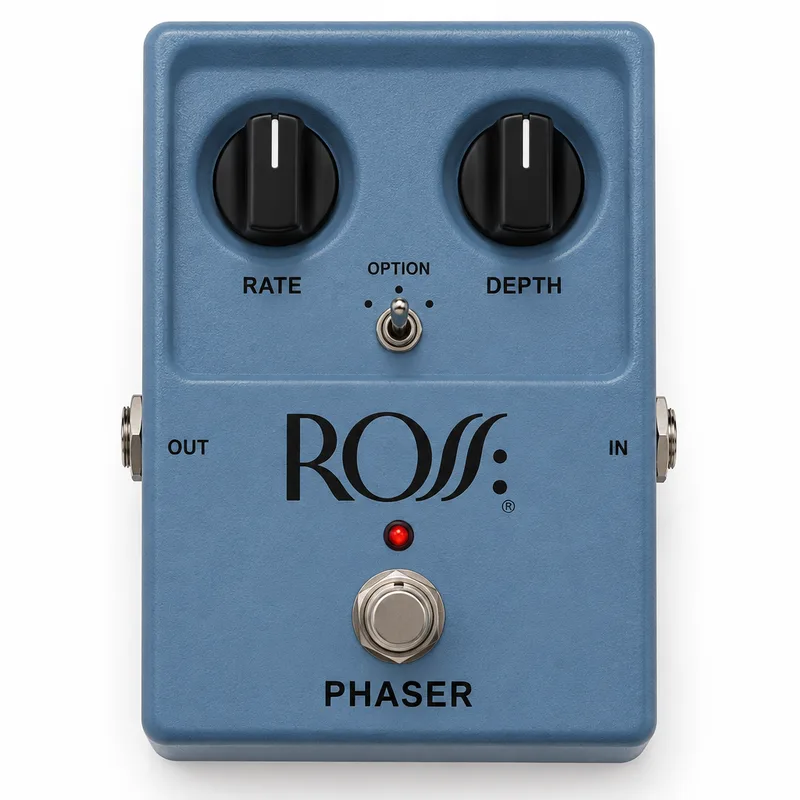
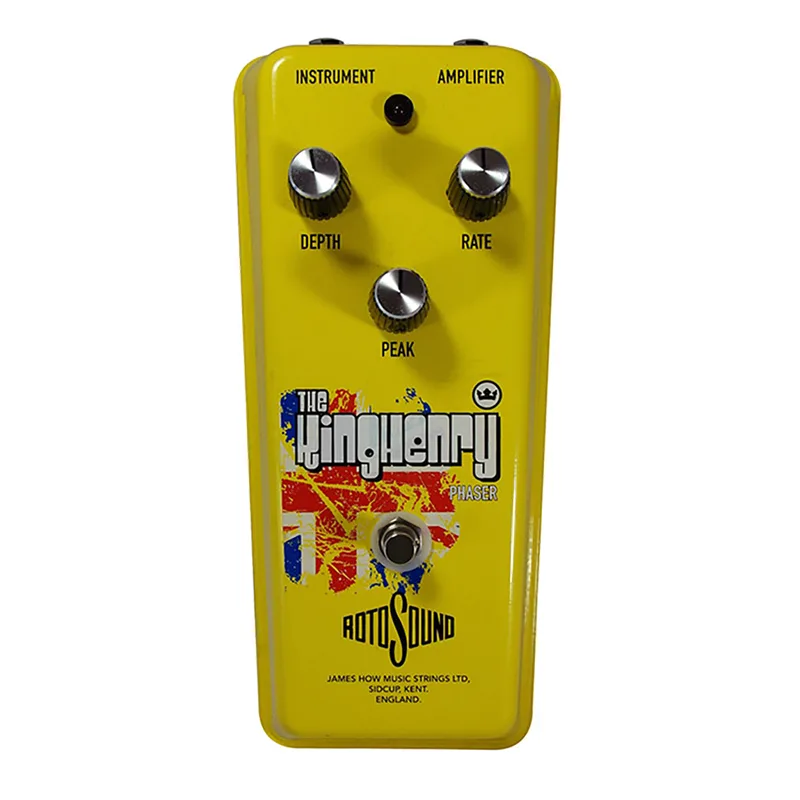
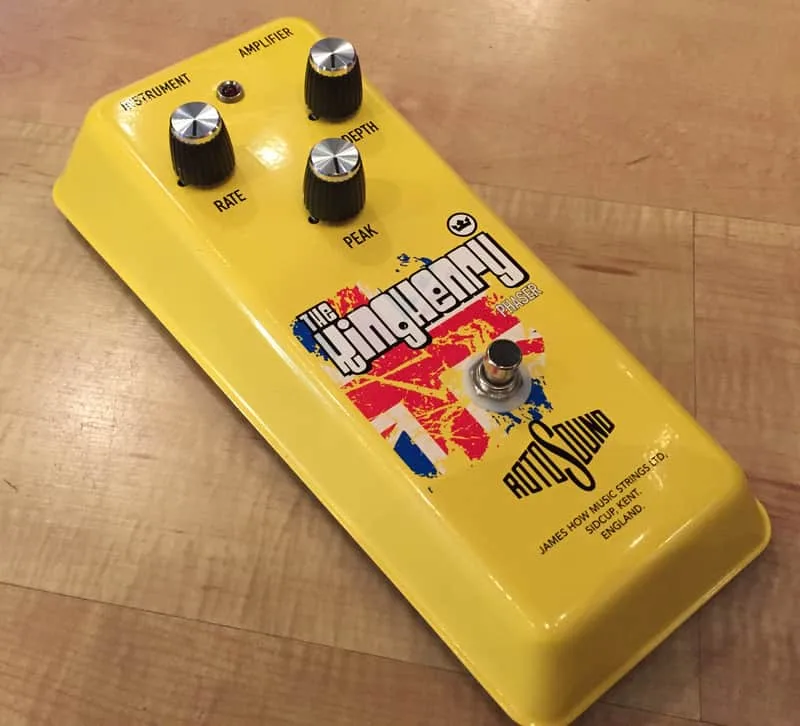
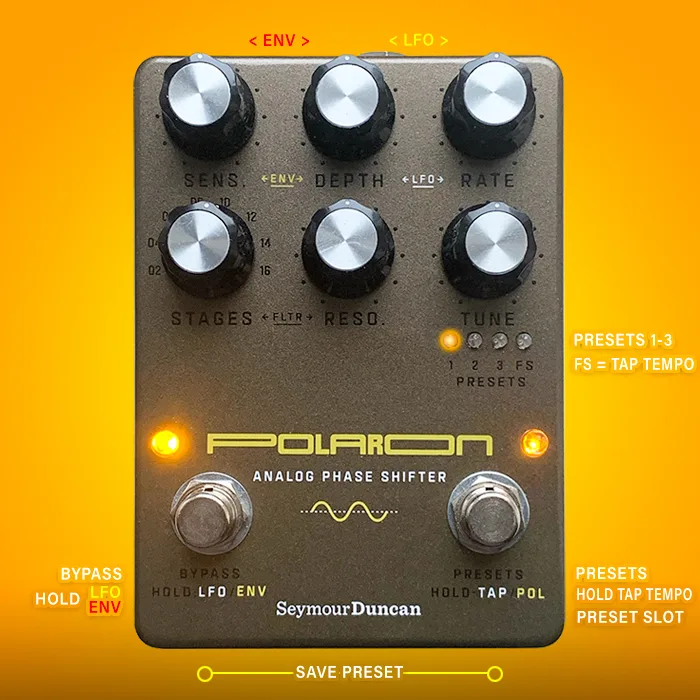
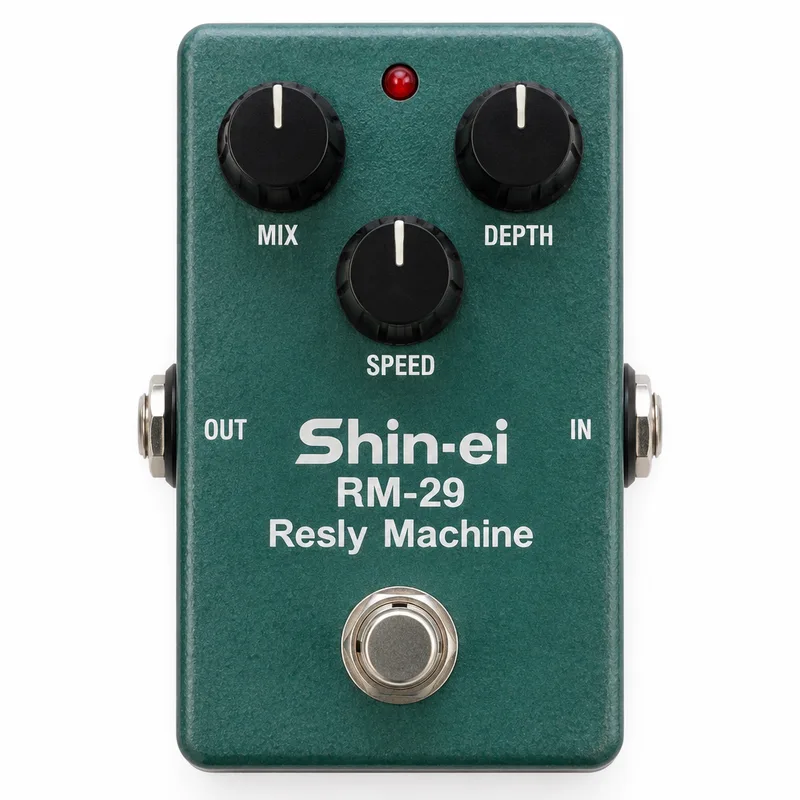
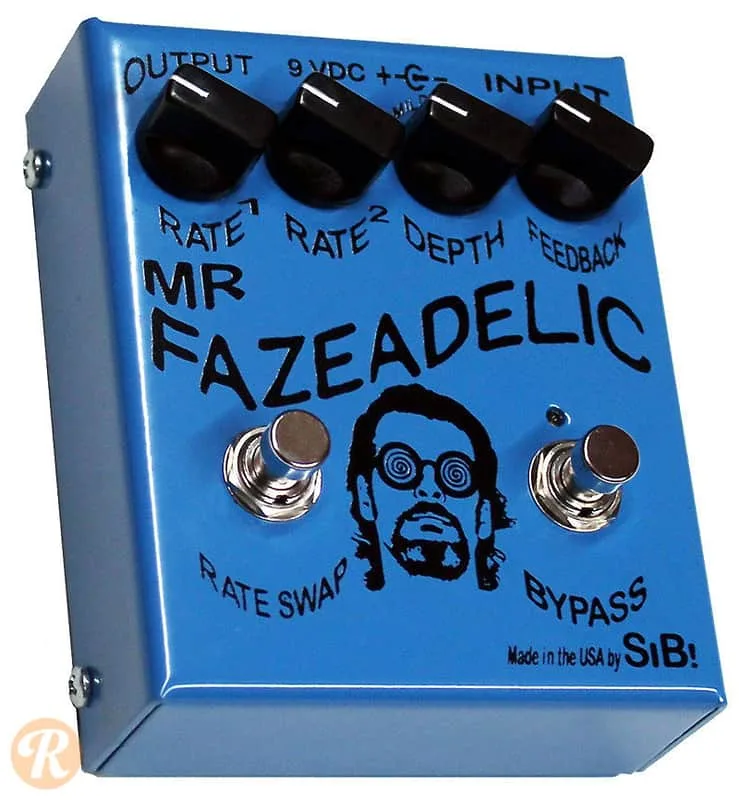
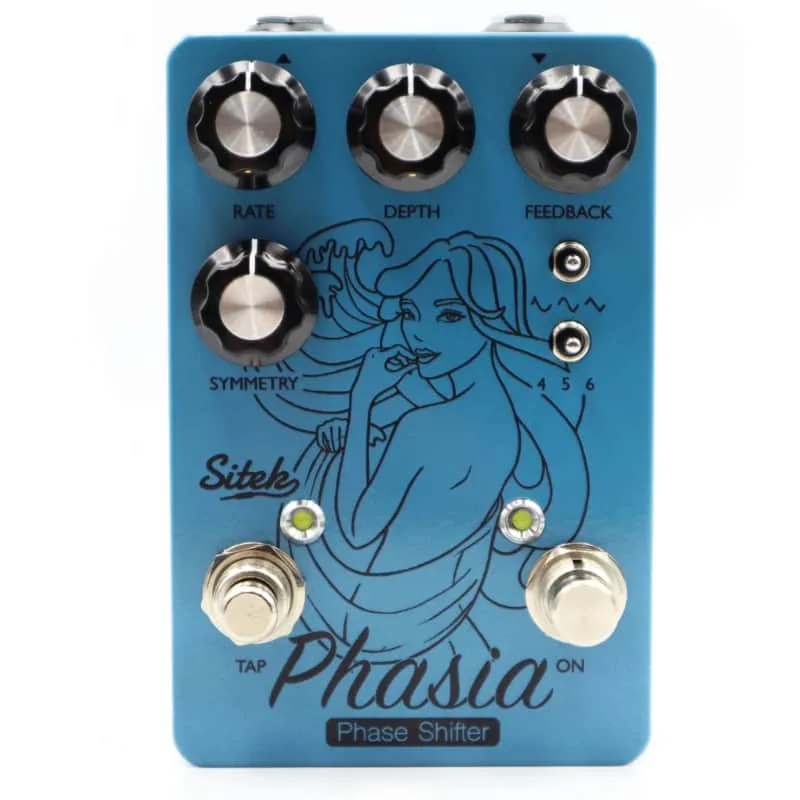
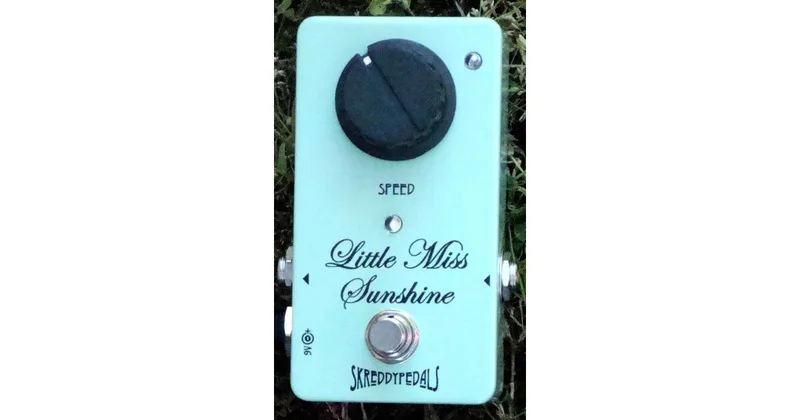
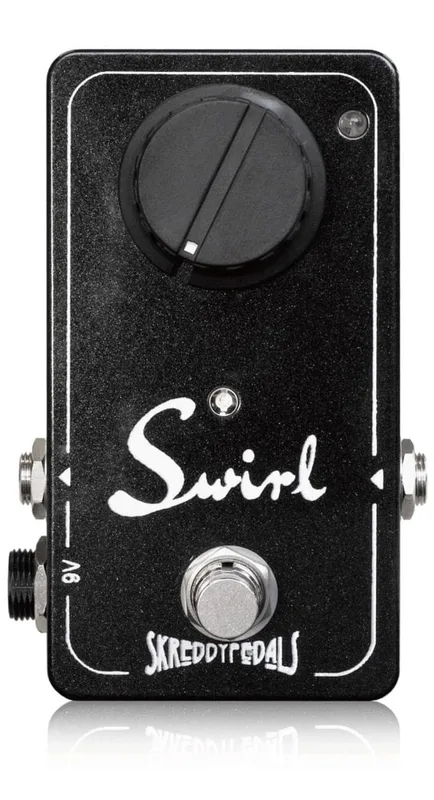
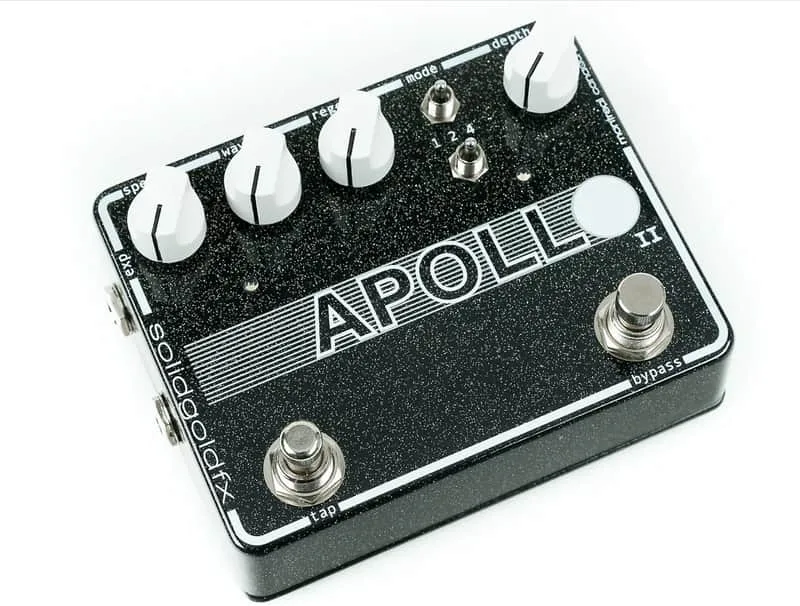
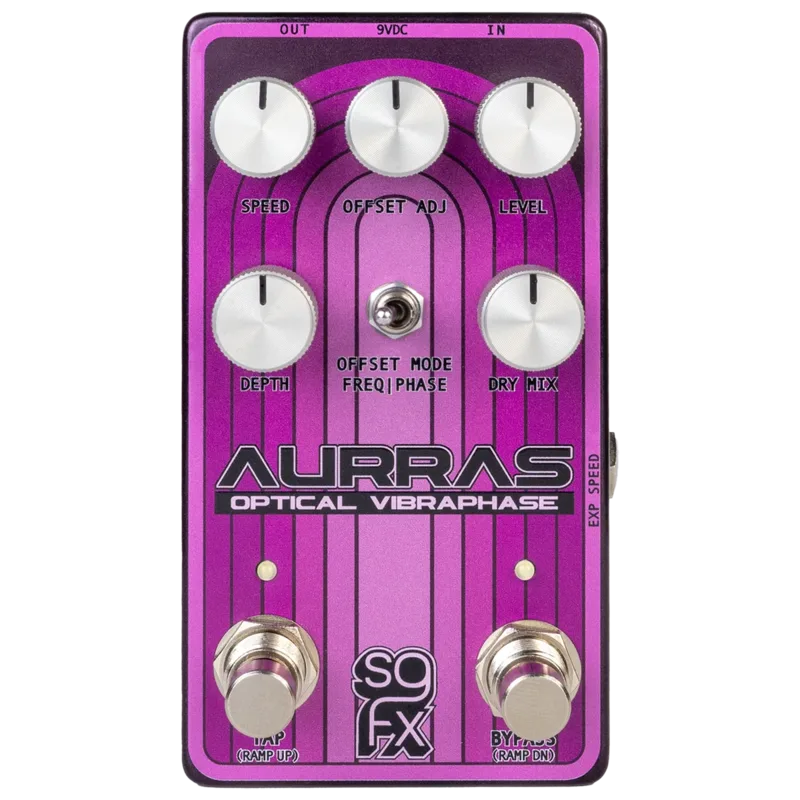
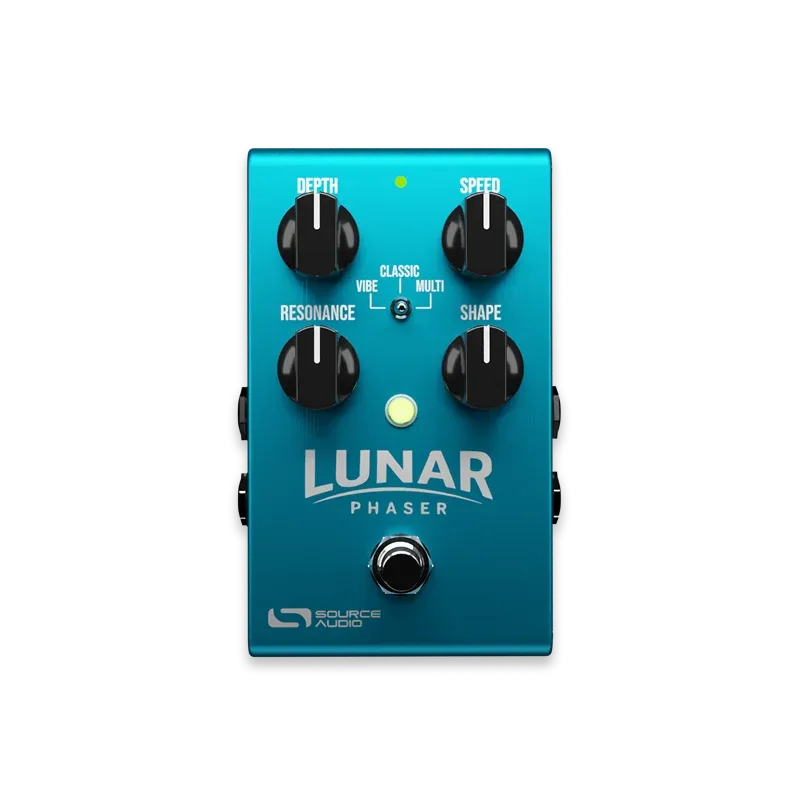
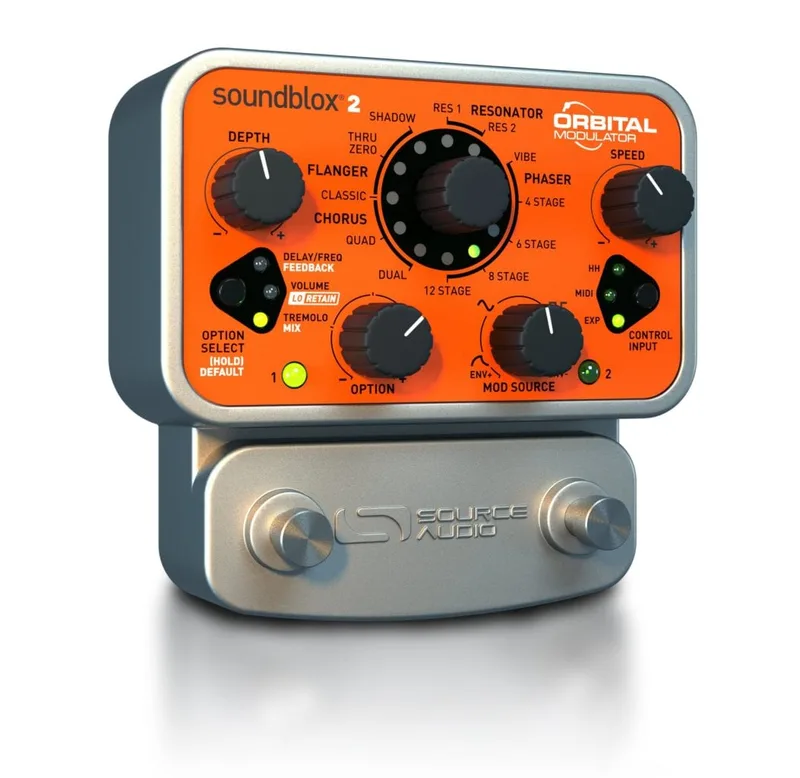
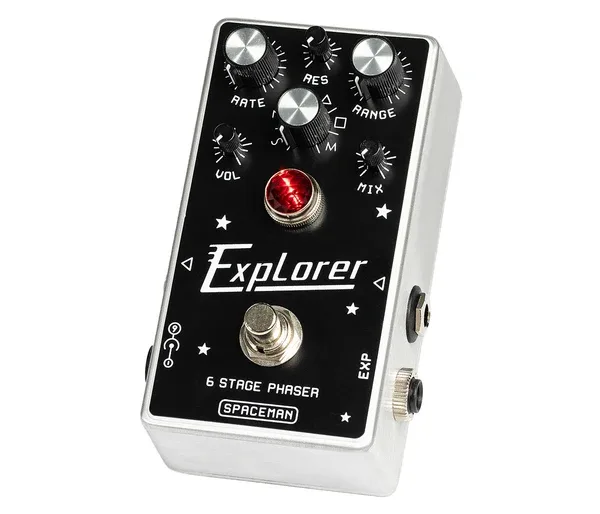
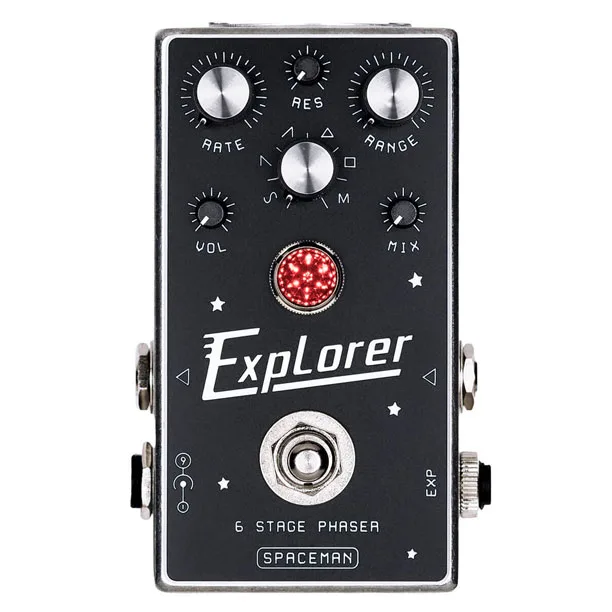
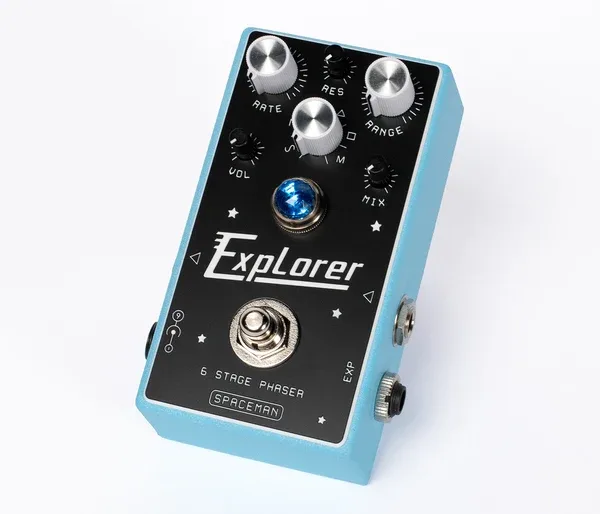
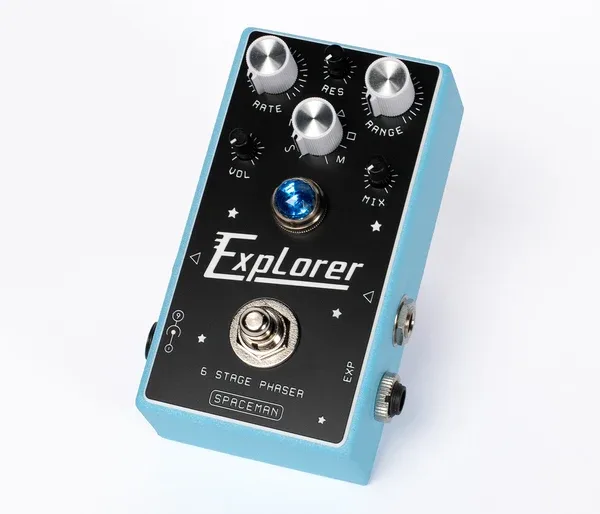
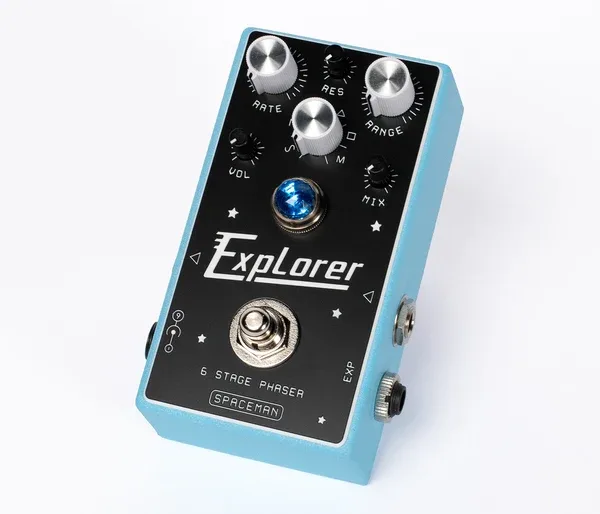
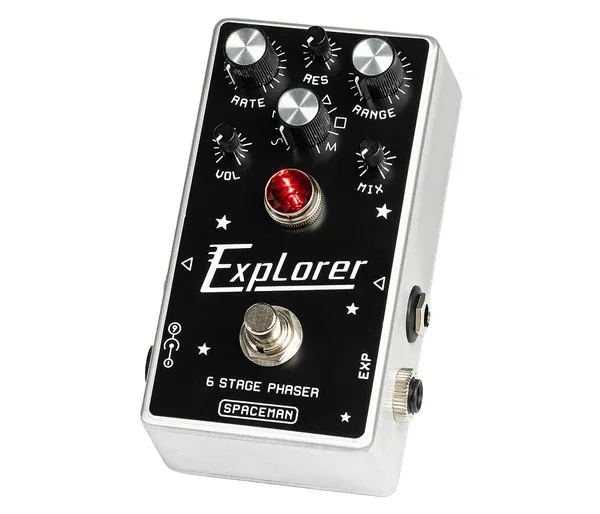
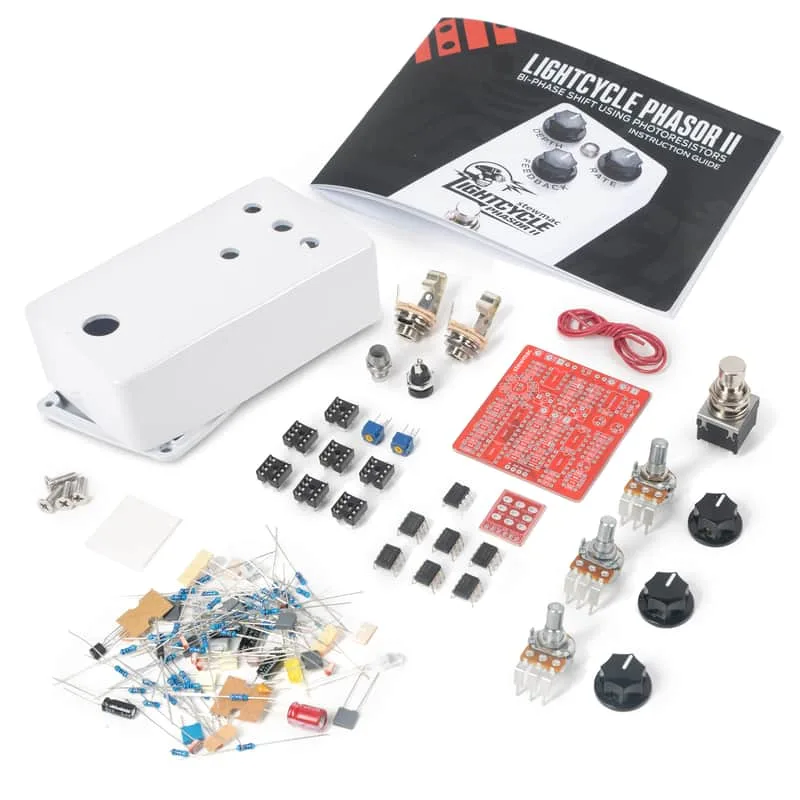
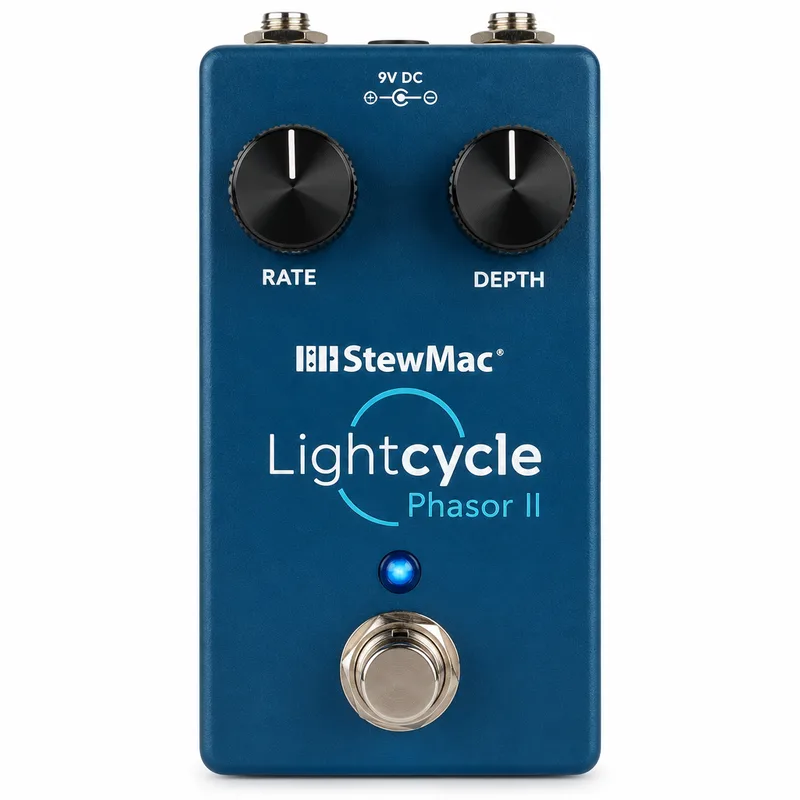
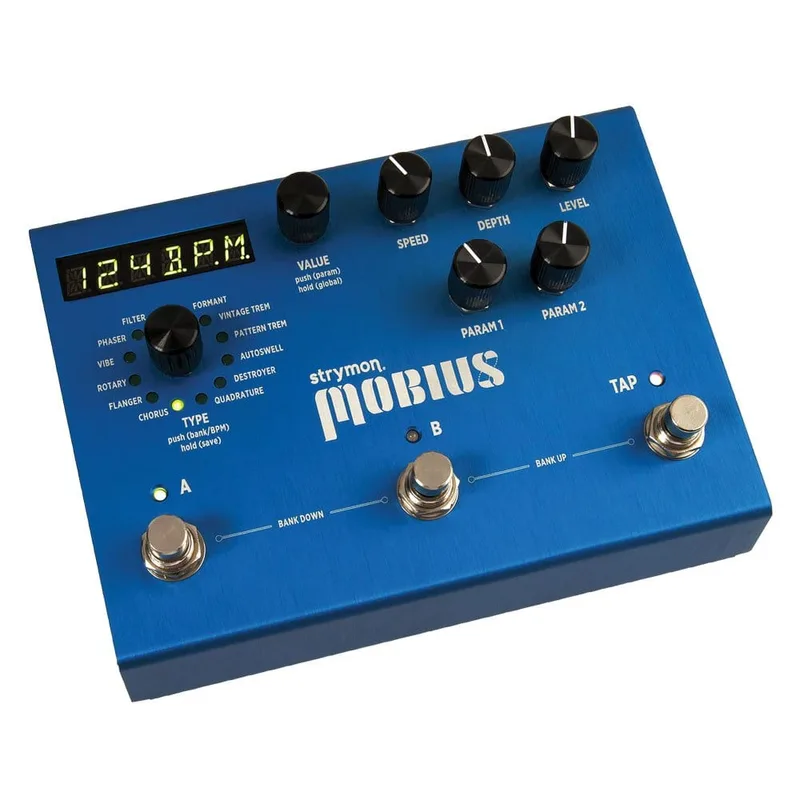
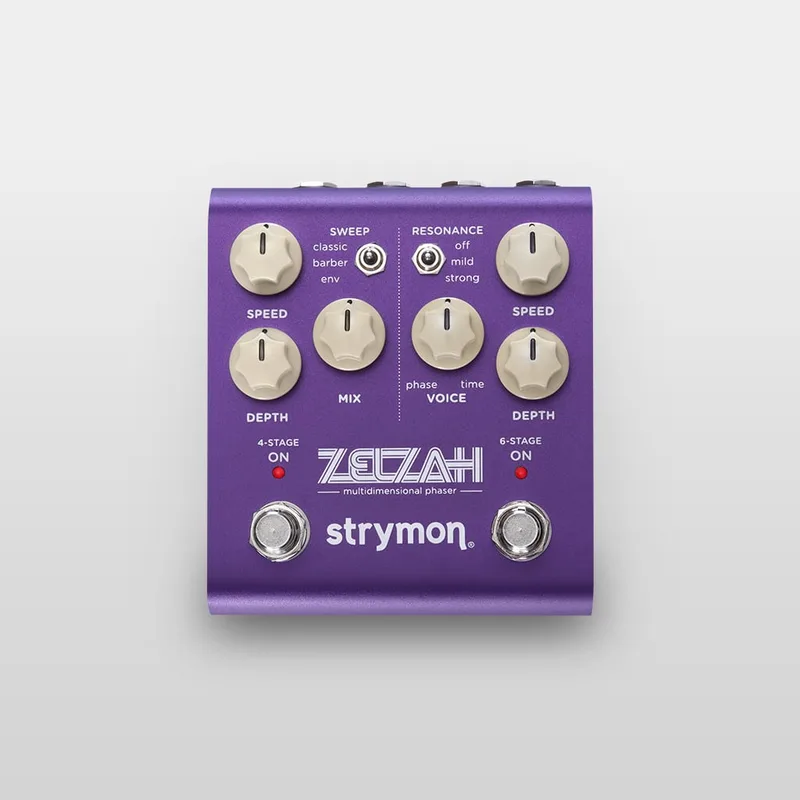
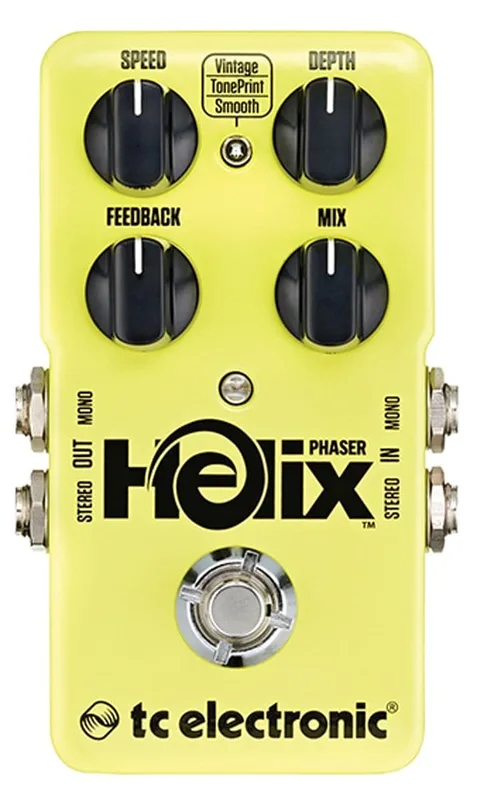
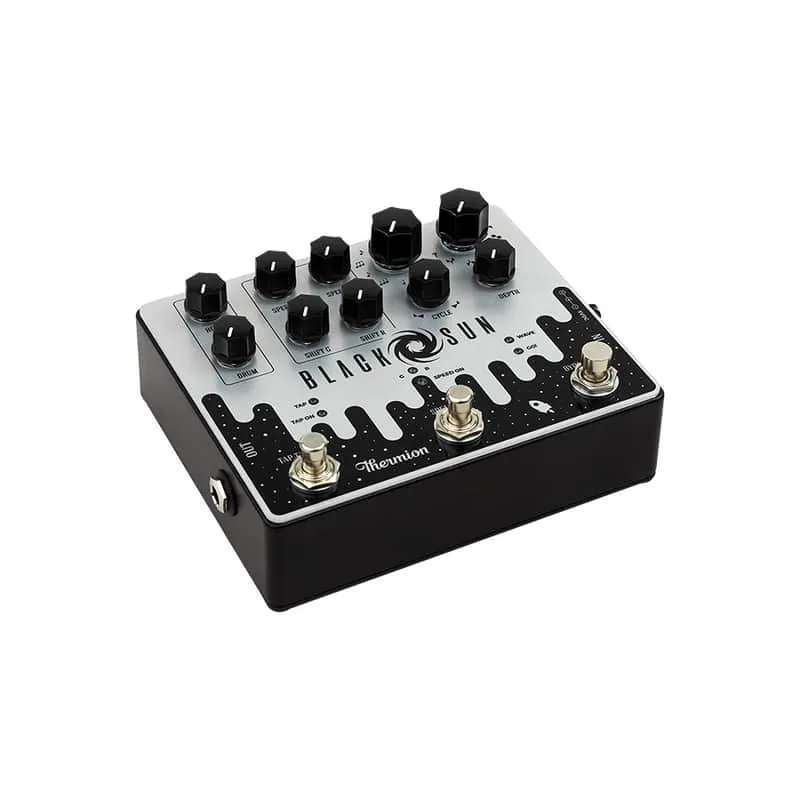
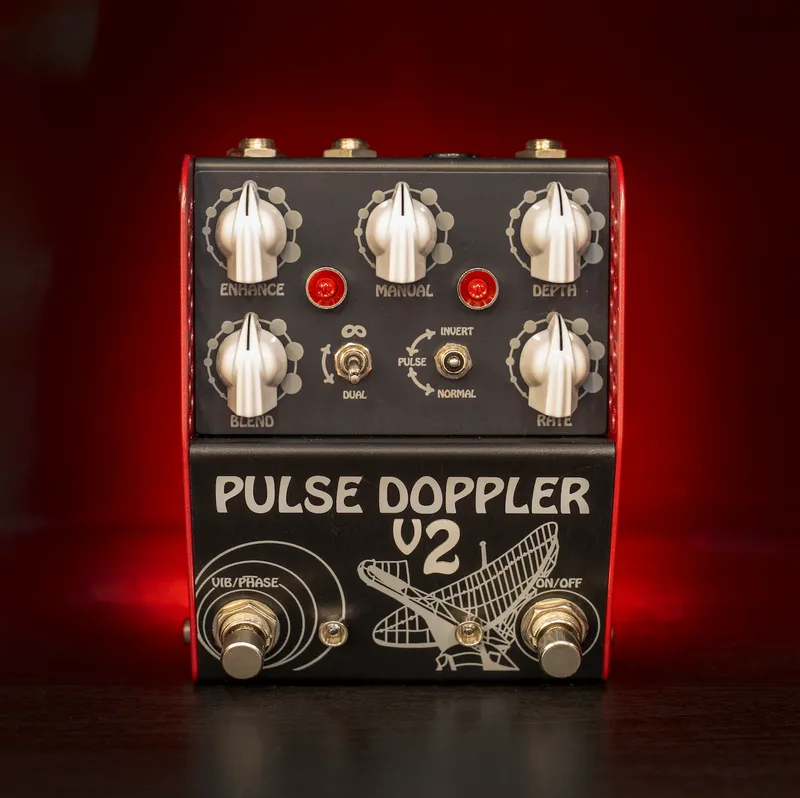
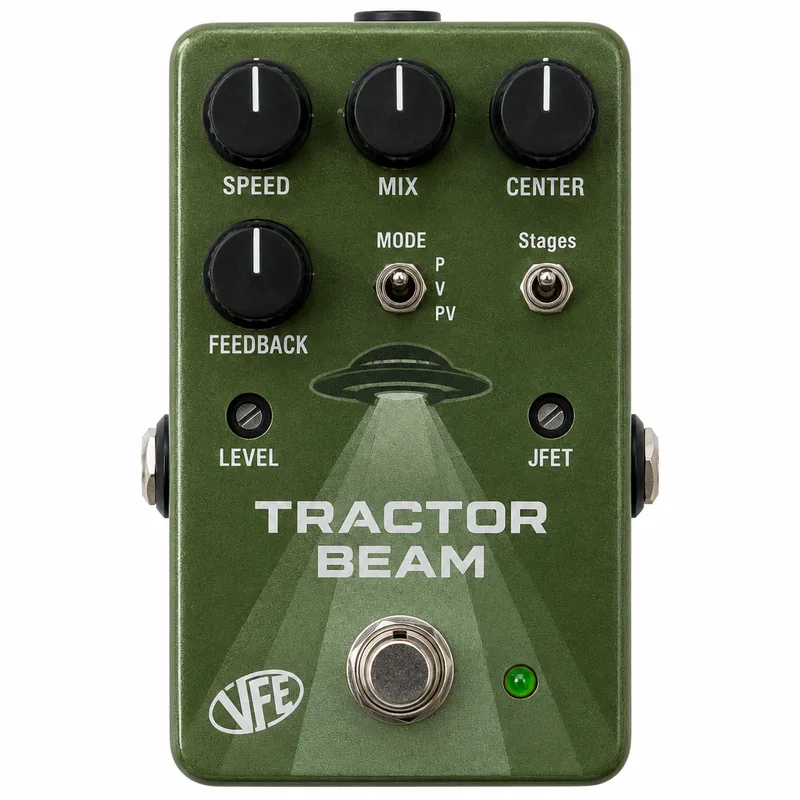
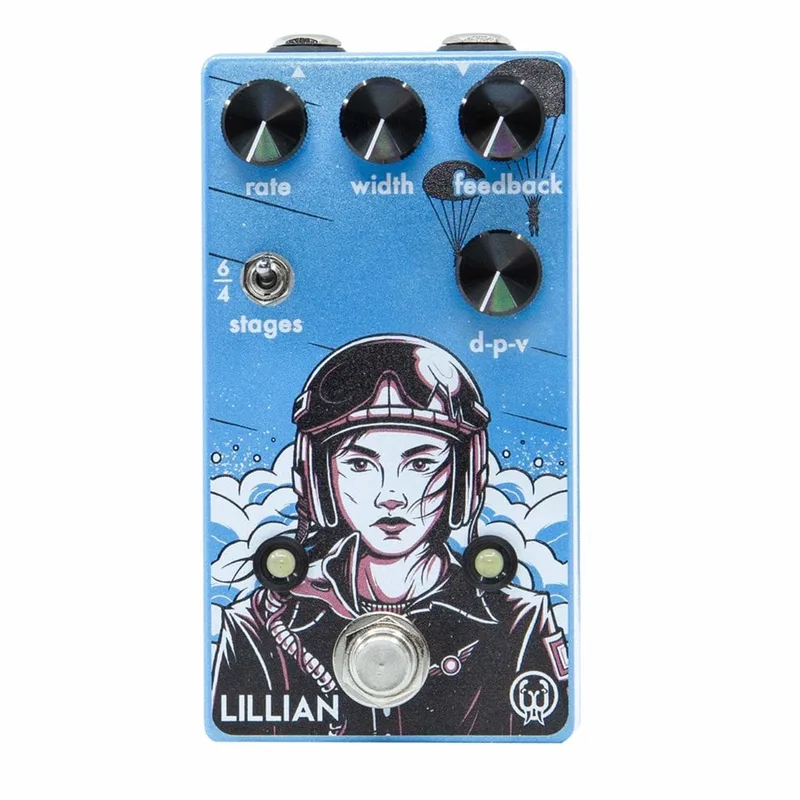
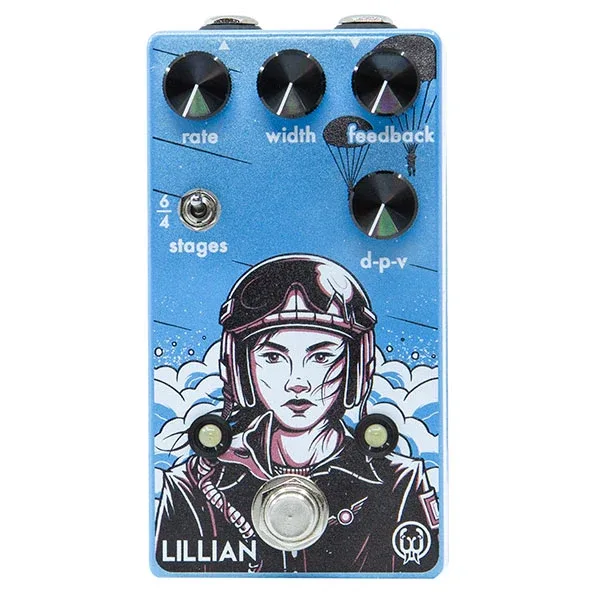
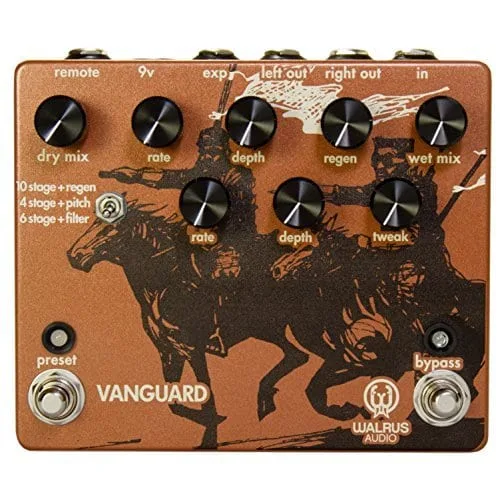
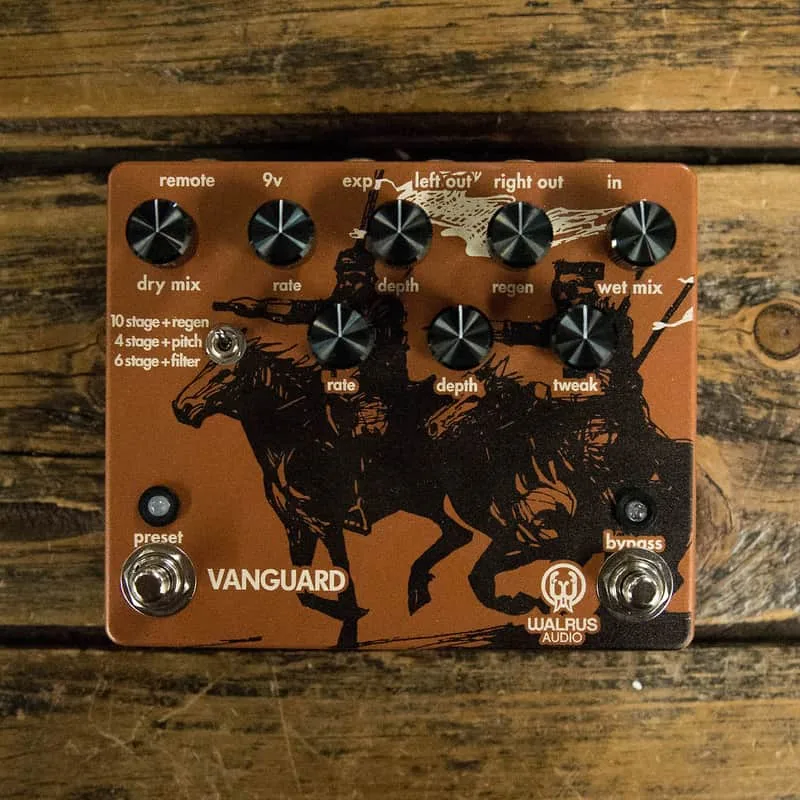
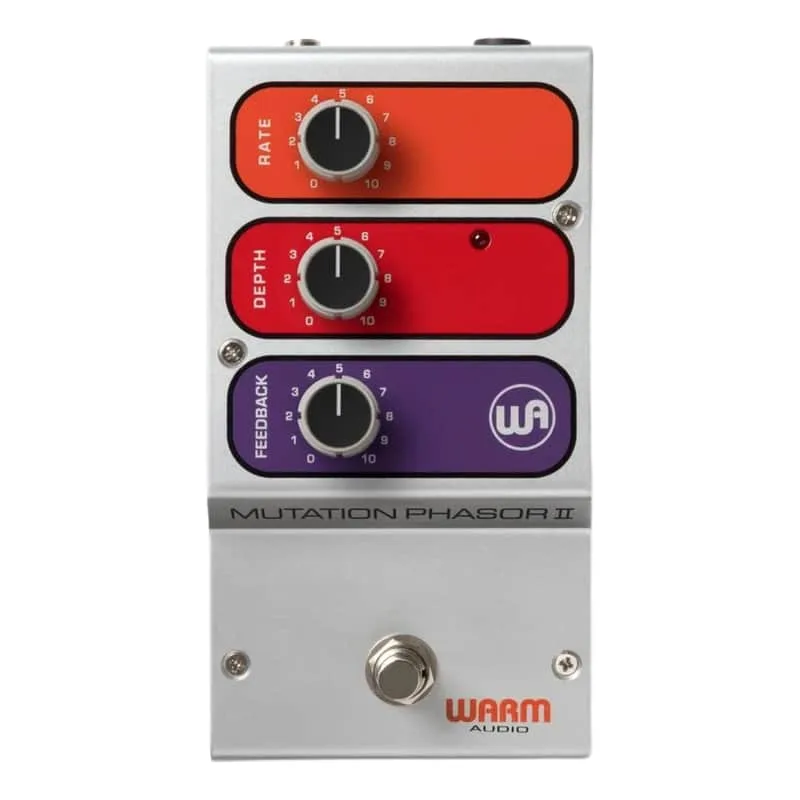
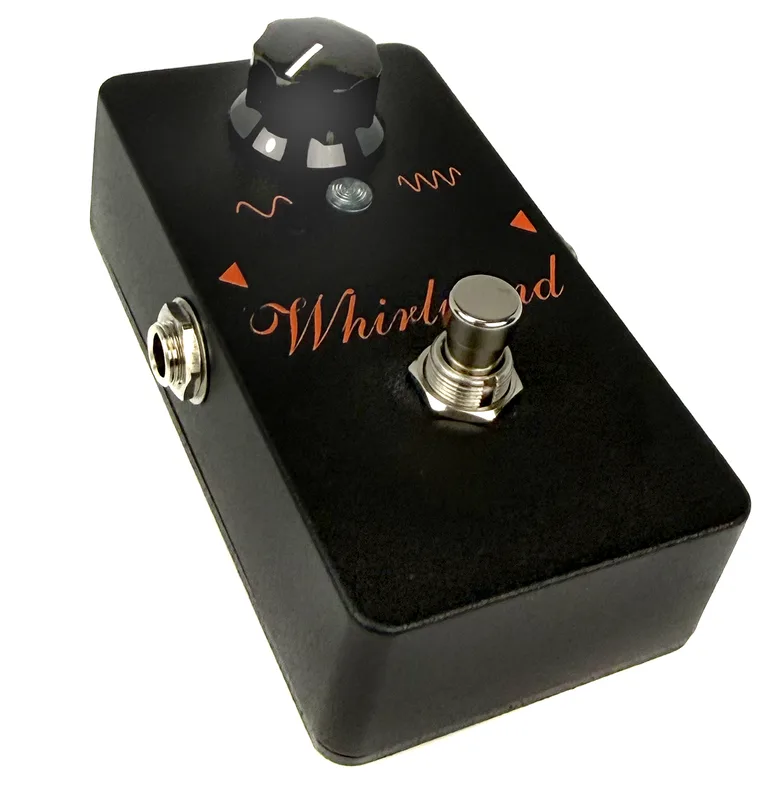
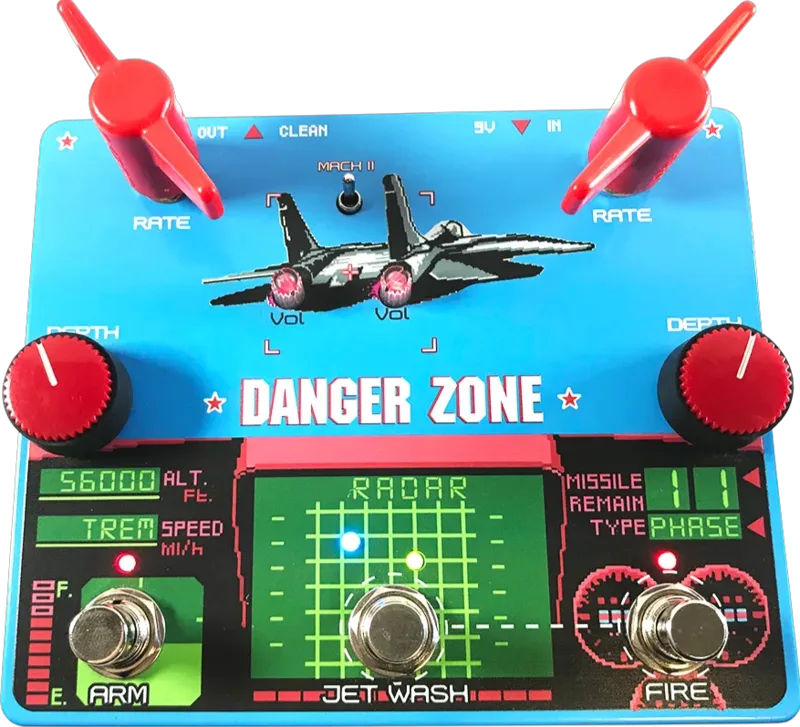
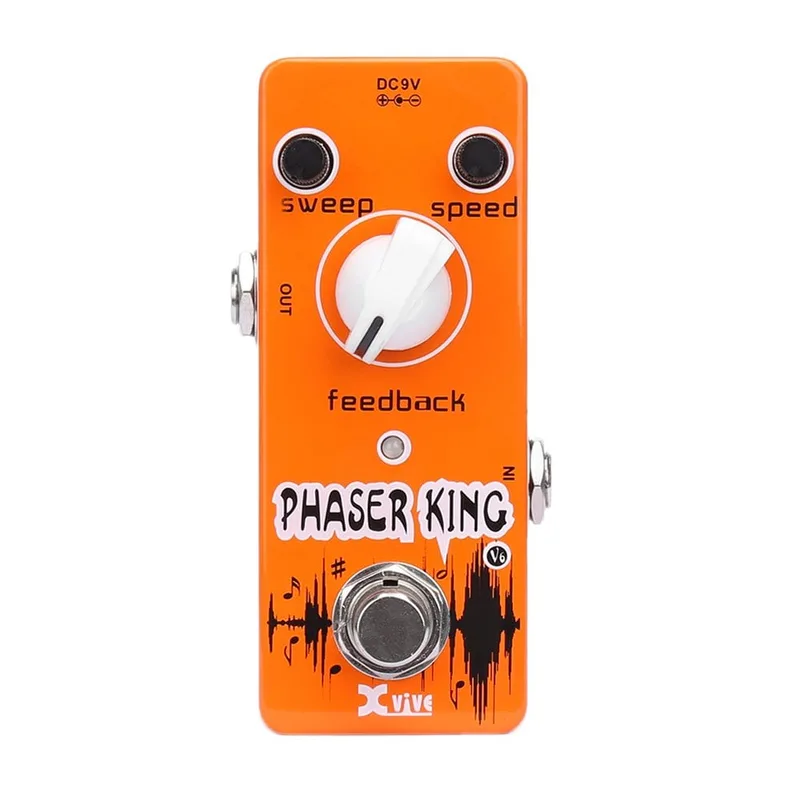
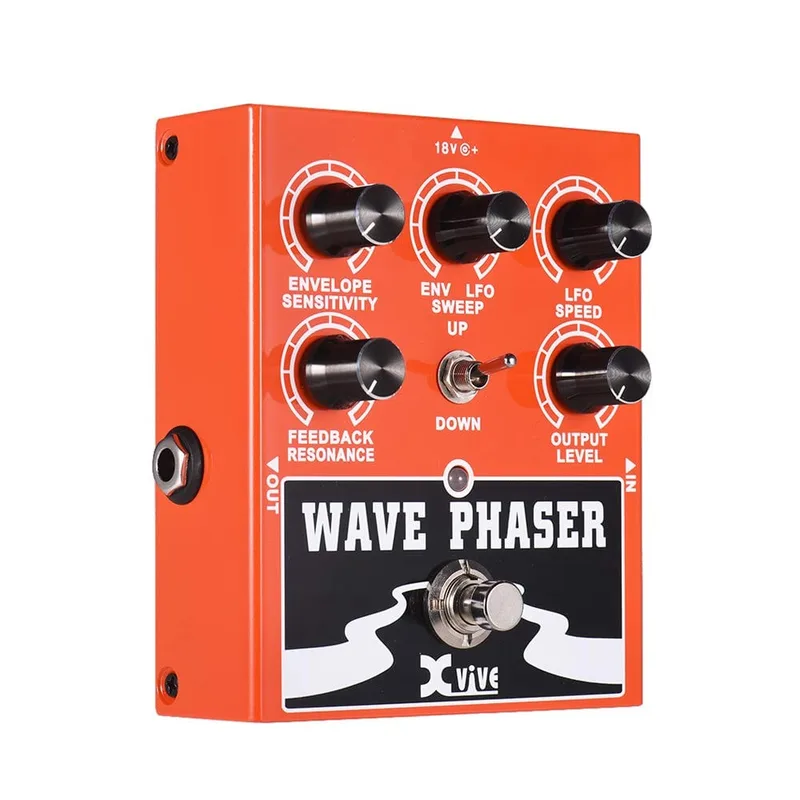
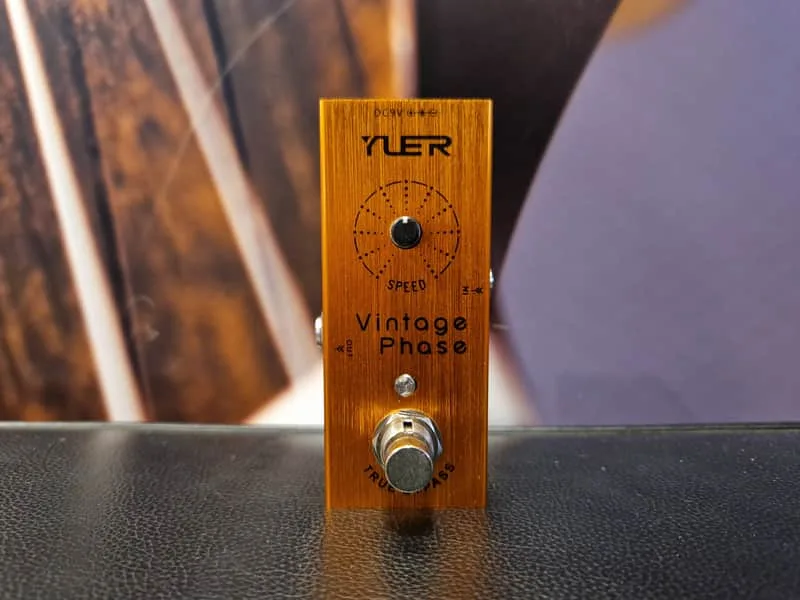
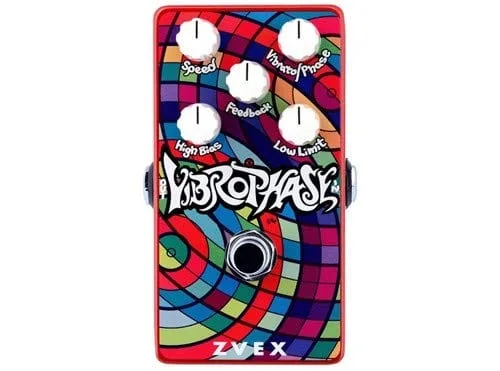
A phaser is a modulation effect that sweeps a series of notches through your guitar's frequency spectrum, producing the swirling, whooshing sound heard on countless recordings. Kemper describes the family as "classic pedals like the Uni-Vibe creating signature sweeping soundscapes by shifting the phase of the signal"1. Where a flanger or chorus works with short delays, a phaser works by shifting phase, and that difference gives it its own character: smoother than a flanger, more vocal than a chorus.
For a beginner, a phaser is one of the easiest ways to make a static chord part move and breathe. For an experienced player, the number of filter stages, the LFO shape, feedback, and where the pedal sits in the chain all change what it does. This page covers how the effect works, where it came from, the styles of phaser on the market, the controls you will meet, power requirements, and the questions worth asking before you buy one.
What a phaser does to your sound
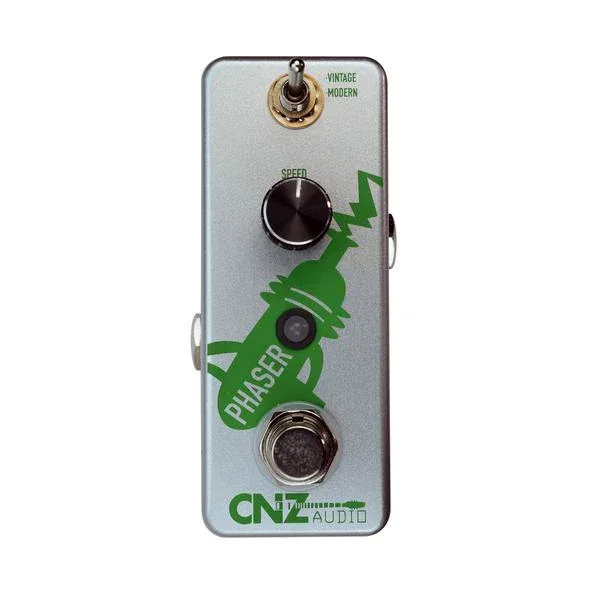
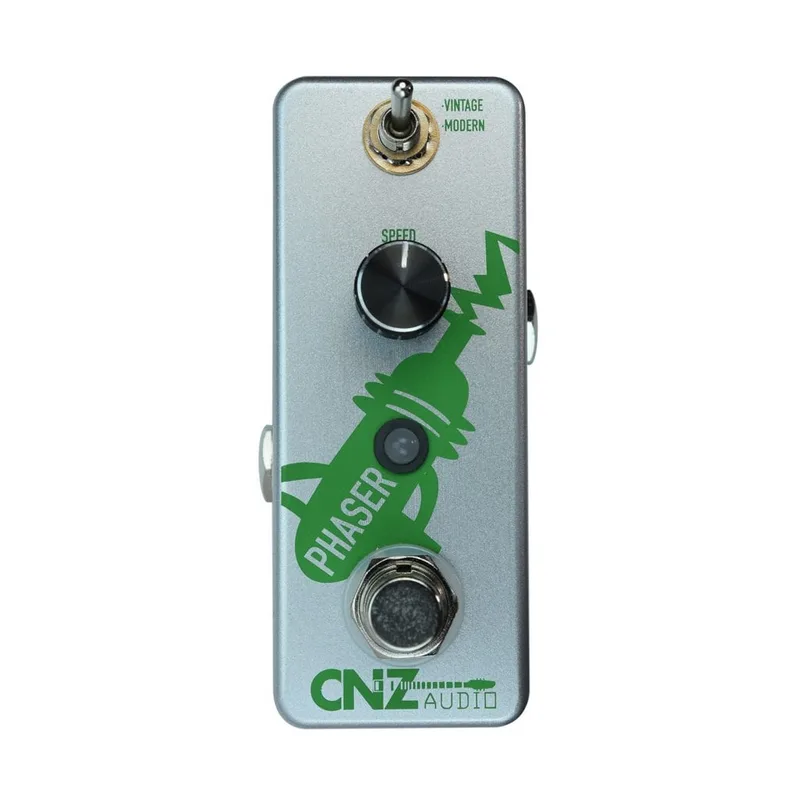
A phaser shifts the phase of your input signal and mixes it back in with your dry signal2. Because the shifted and dry copies cancel at certain frequencies, you hear notches in the tone, and because those notches move as the pedal sweeps, you hear a rising and falling, jet-like wash over the note. CNZ Audio describes its SPH-20 as providing "excellent note bending and sound wave shifting effects to add warmth and depth to your music with the possibility of extreme Phaser Effects"4.
The effect covers a wide range of moods depending on speed and depth:
- Slow and subtle: EarthQuaker Devices' Dan Epstein writes that at slower settings a phaser "adds majestic, wistful texture to slowly strummed open chords," enhanced by reverb or by placing the phaser in a delay's feedback loop3.
- Fast and deep: cranked up, the sweep becomes a pronounced wobble, the sound most people picture when they hear the word phaser.
- With dirt: Epstein notes that at low LFO speeds with distortion added, a phaser "adds thick texture and weight to riffs, useful for the lone guitarist in a heavy band"3.
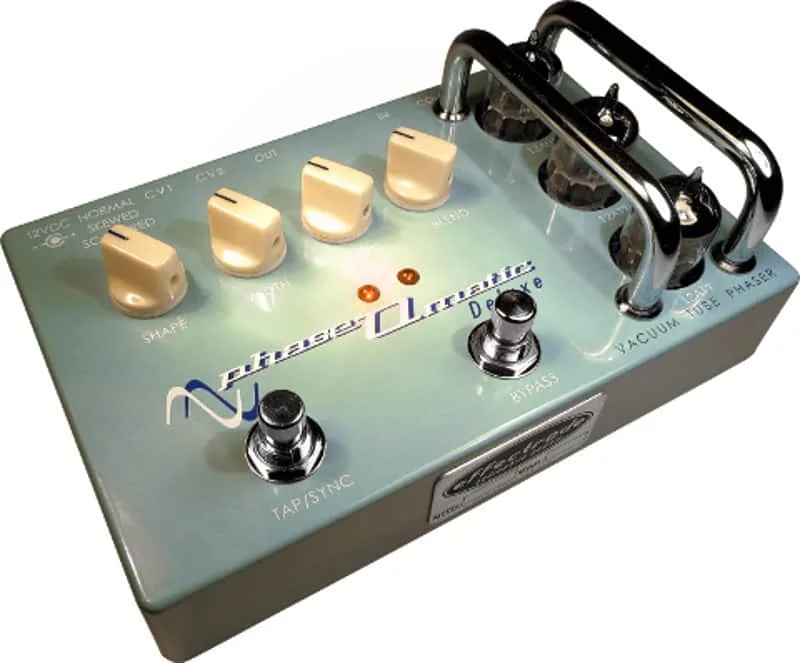
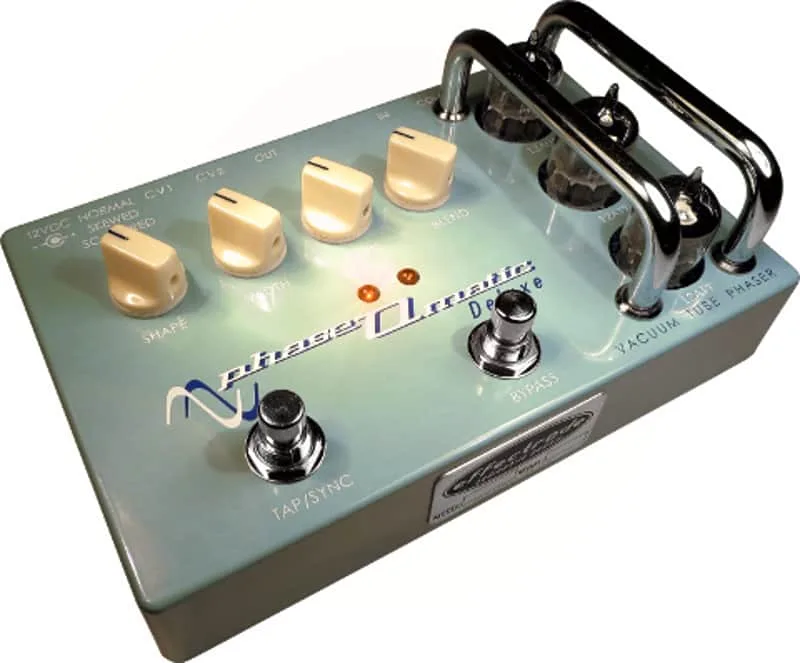
- Pushed to extremes: Effectrode describes its tube-based Phaseomatic at rich settings as producing "intense, deep 'tunnel' phasing plus cosmic and spacious sound effects like 1950s 'B' science fiction movie soundtracks," and at subtle settings a natural-sounding vibrato and shimmering phasing5.
How a phaser works
The circuit is straightforward once you see the pieces. Function f(x)'s technical analysis explains that "the phase shifting in a phaser pedal is done via a series of all-pass filters"2. Each all-pass filter, called a stage, shifts the phase of the signal across the frequency range without changing its level. The pedal mixes the filtered copy with the untouched dry signal, and where the two are out of phase they cancel, cutting notches into the spectrum. A low-frequency oscillator, the LFO, moves the notches up and down, which is the sweep you hear.
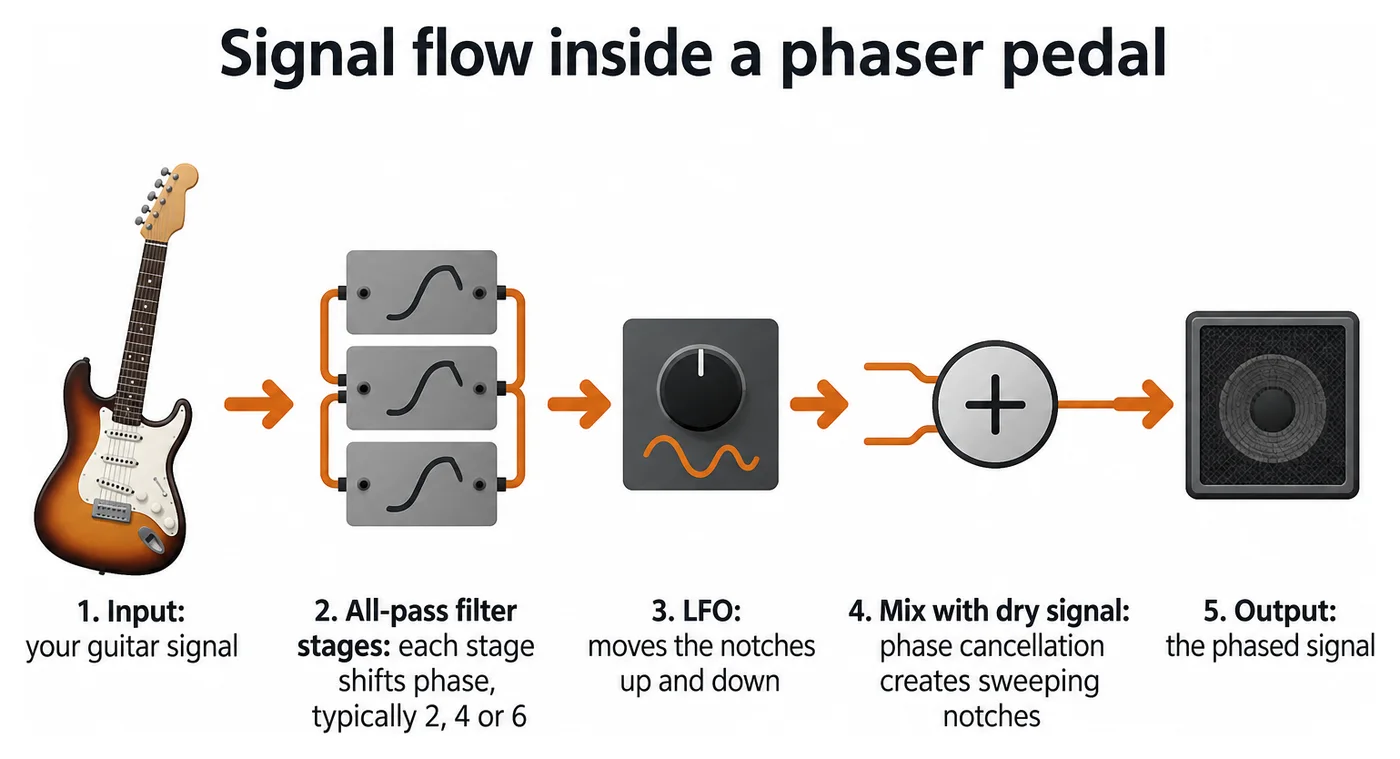
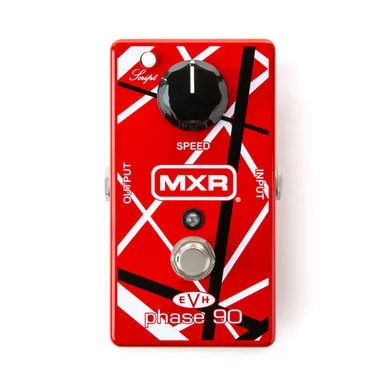
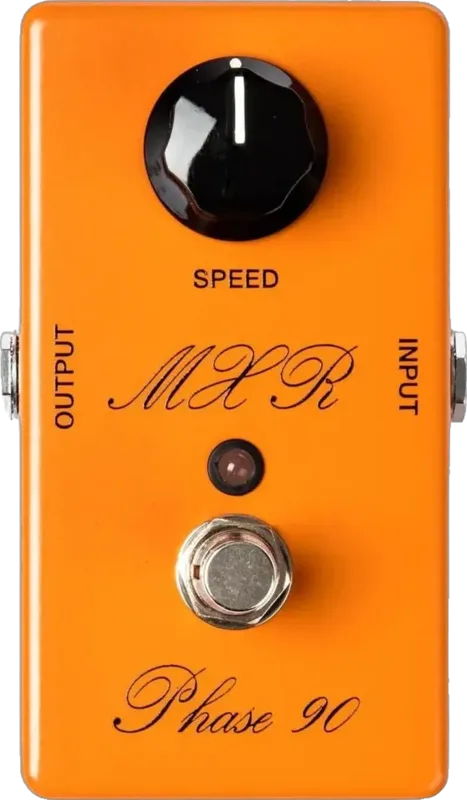
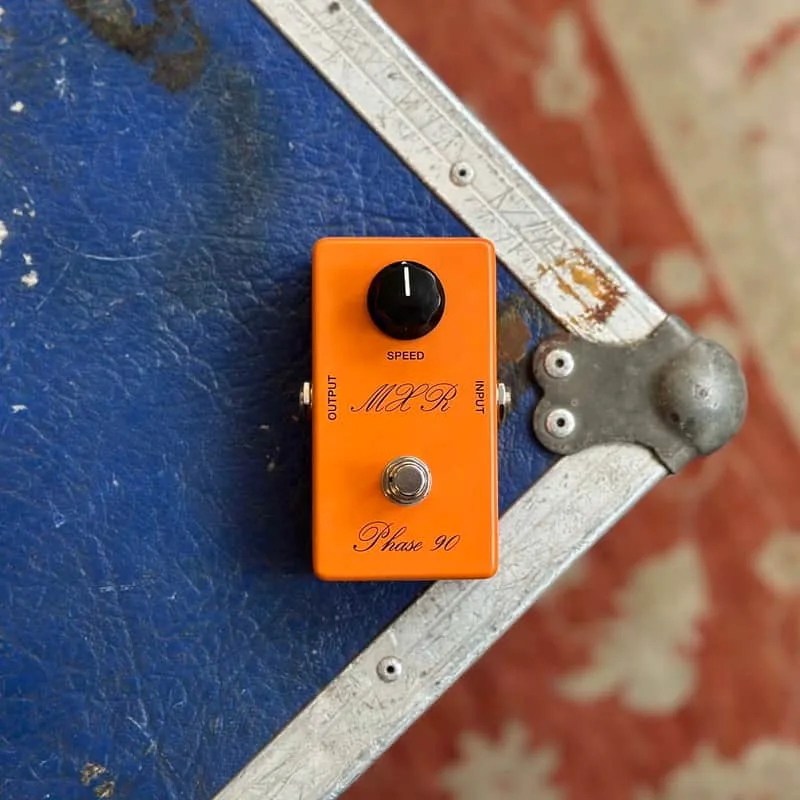
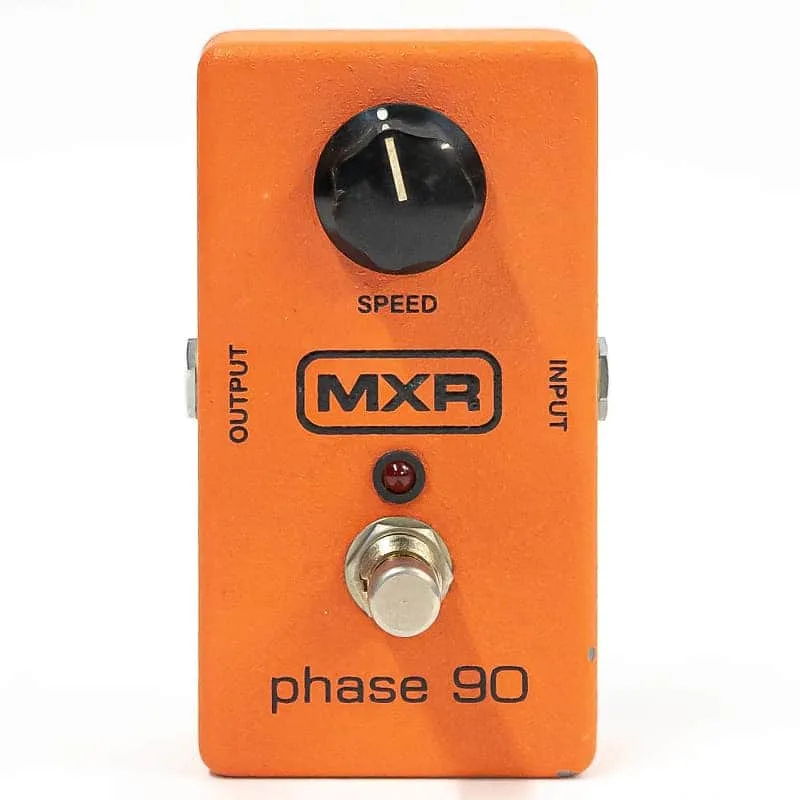
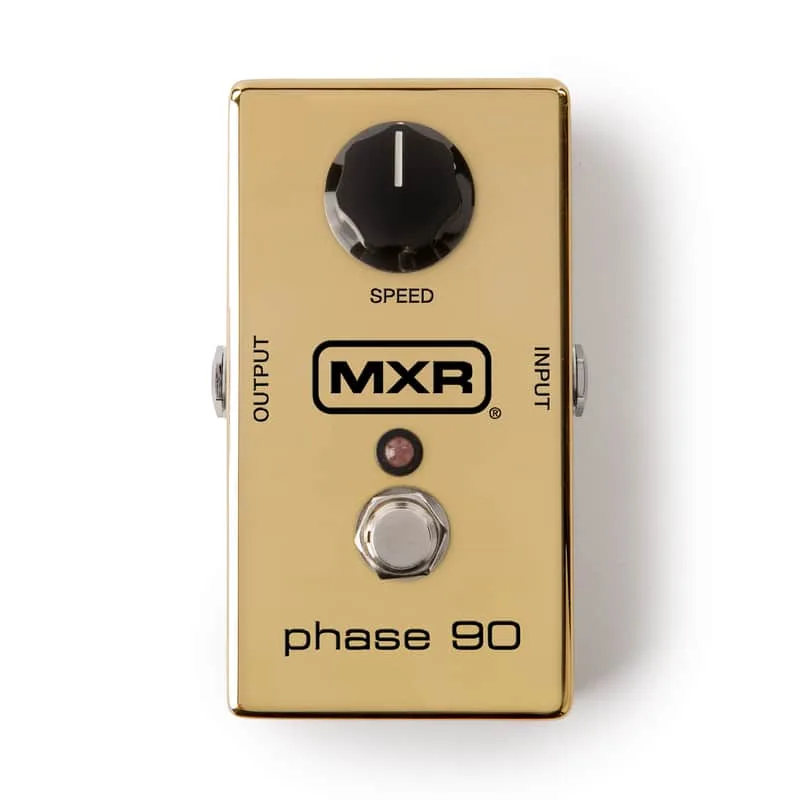
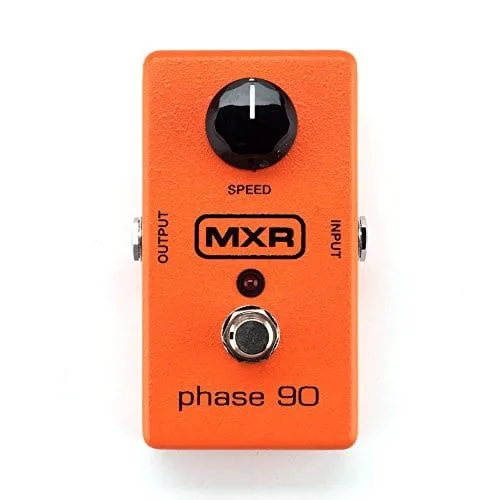
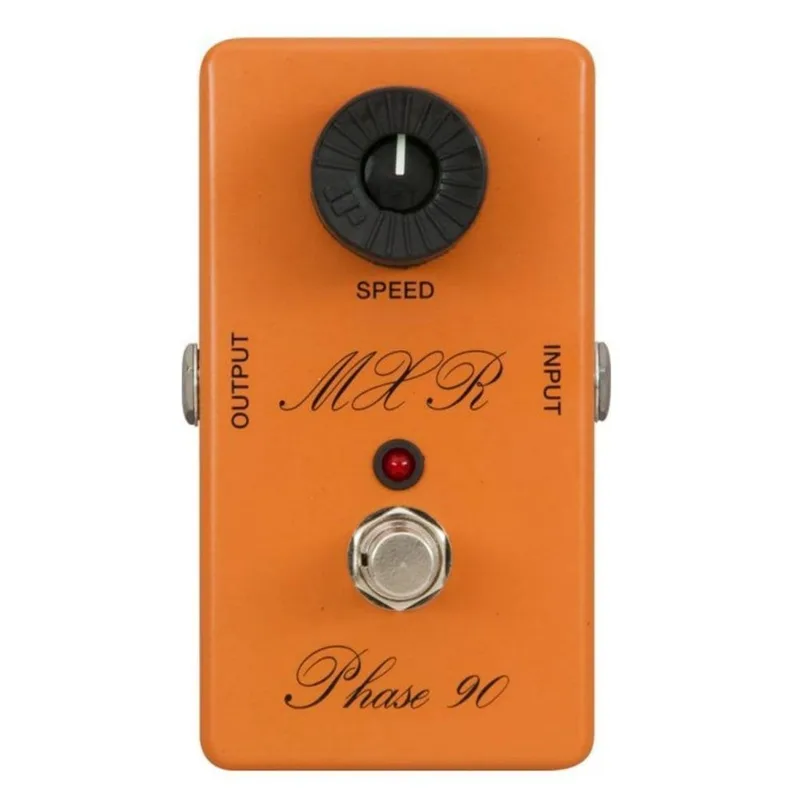
The number of stages sets the character. Function f(x) notes that "typically, phasers are configured in even numbers of stages (2, 4, 6, etc), but odd numbers of stages are also present in some pedals"2. More stages means more notches and a more complex, textured sweep; fewer stages sounds gentler and more open. The classic four-stage circuit of the MXR Phase 90 is the reference point: Rocktron's manuals state that in its rack processors, a STAGES setting of 4 "produces a result similar to a vintage Phase 90, while a setting of '6' emulates other phaser" pedals6. That gives you a practical yardstick: four stages is the vintage sound, six stages is the fuller modern sound.
History and landmark phasers
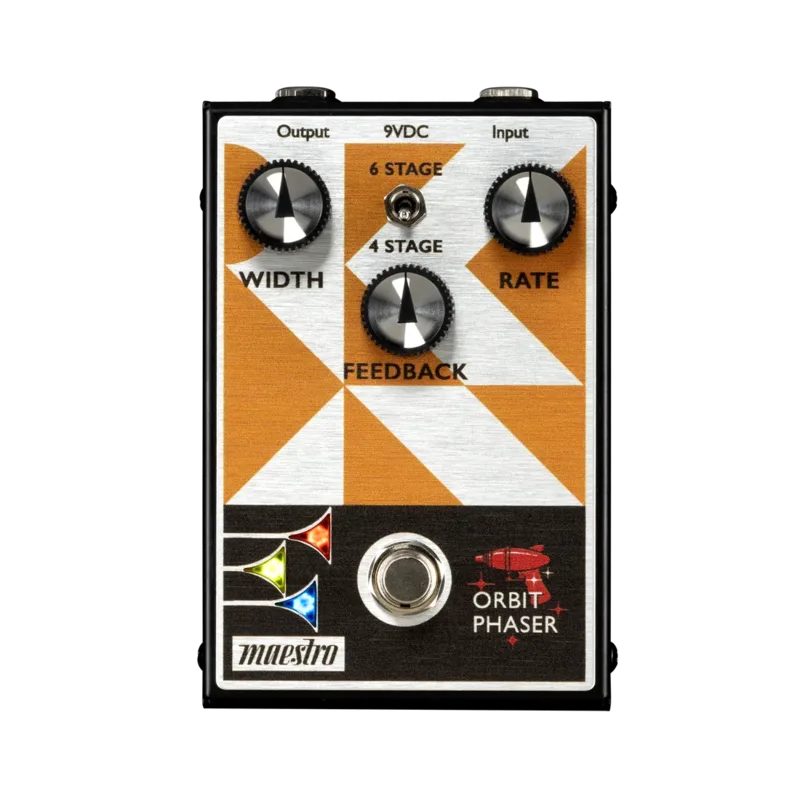
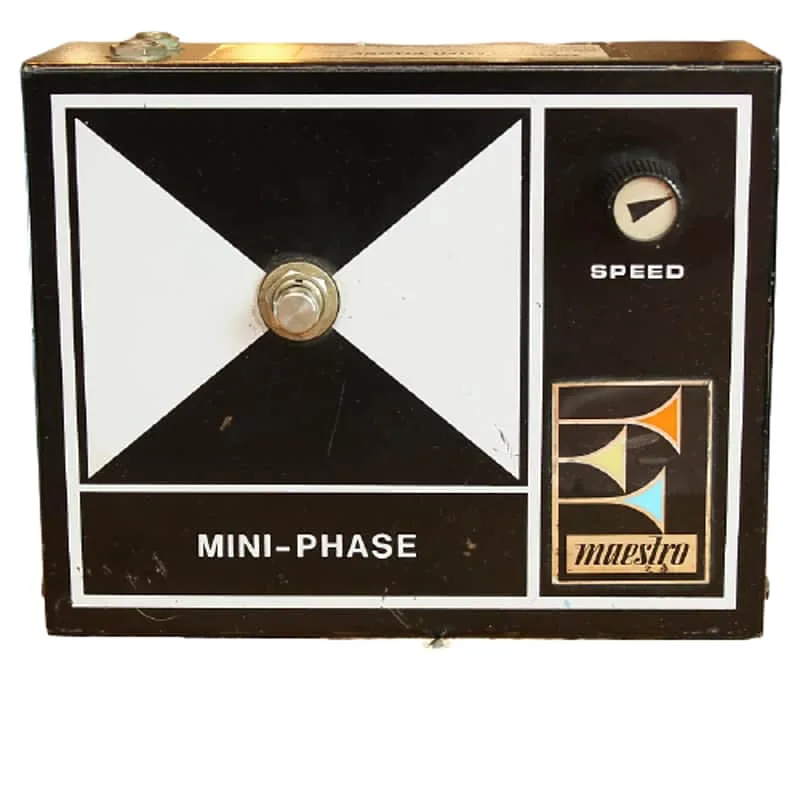
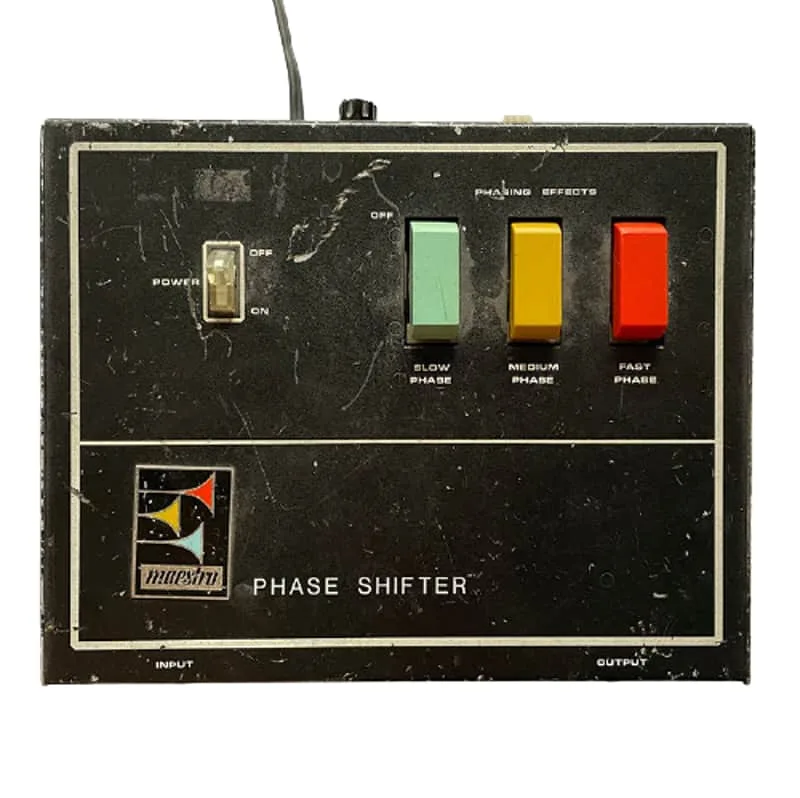
The phaser pedal begins with Maestro. Gibson describes the Maestro Orbit as "a descendent of the very first phaser pedal ever produced - the legendary Maestro PS-1"7. The PS-1 established the format: a footswitched box with a rate control and a fixed number of stages. The Orbit carries the lineage forward as "an all-analog phaser pedal with 4-stage and 6-stage modes and a three-control layout"7.
From that origin the family tree spreads quickly:
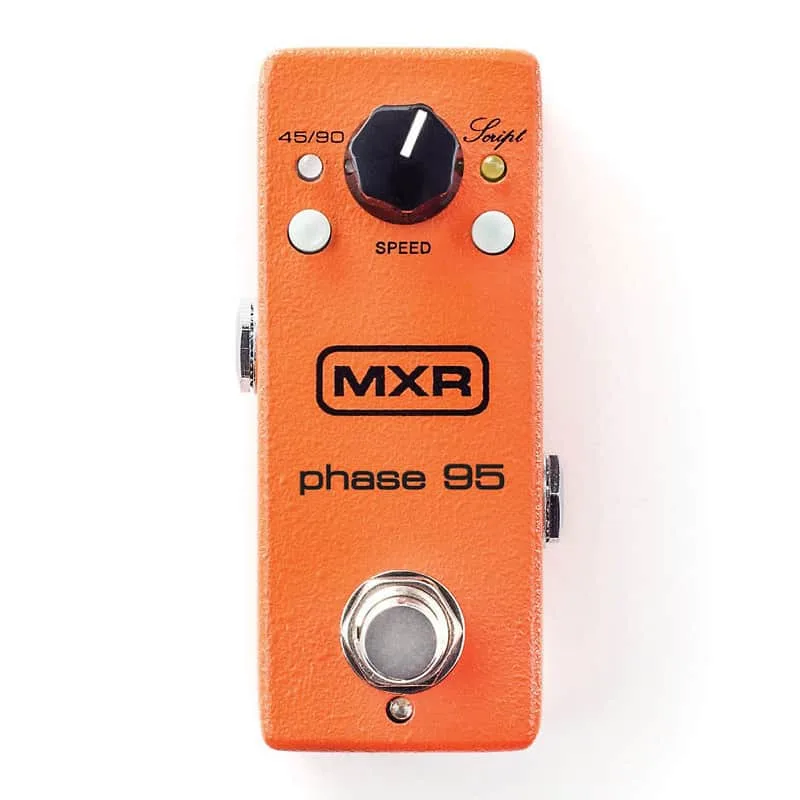
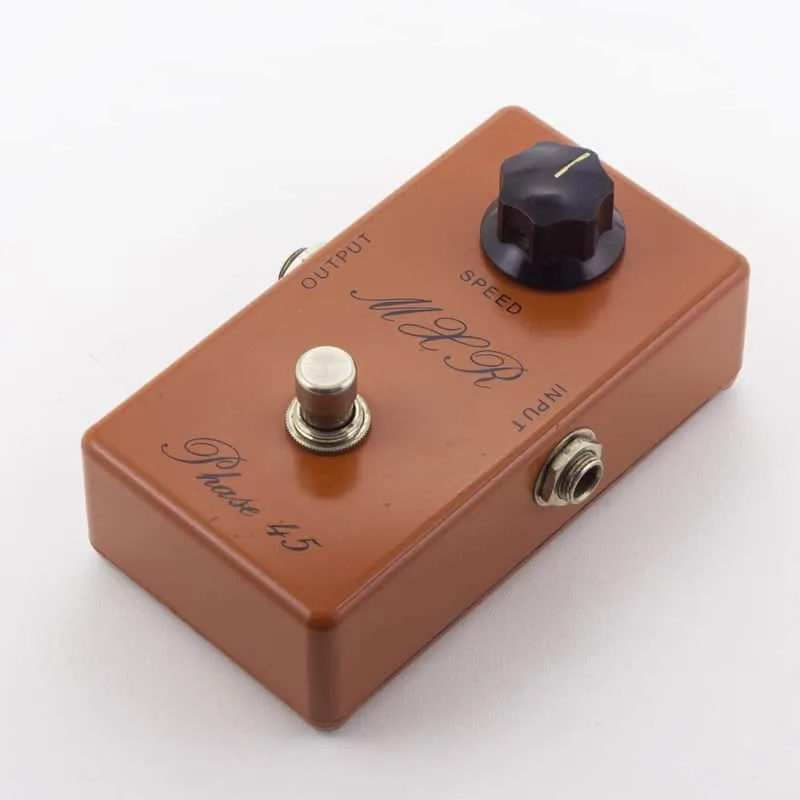
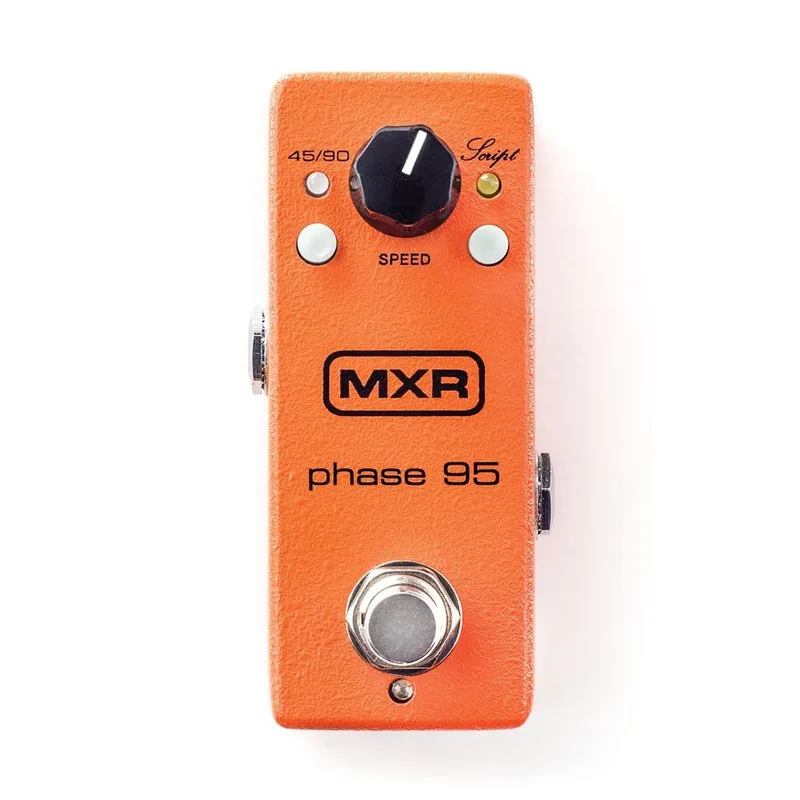
- The script-era classics: the MXR Phase 90 and MXR Phase 45 fixed the four-stage sound in players' minds. Retro-Sonic's Phaser is "based on the famous 4-stage Script 90 circuit known for its classic phase tone"89, and the Retro-Sonic 4-Stage Analog Phaser keeps that approach alive today.
- The univibe branch: the vibe pedal is really a phaser variant, covered in its own section below.
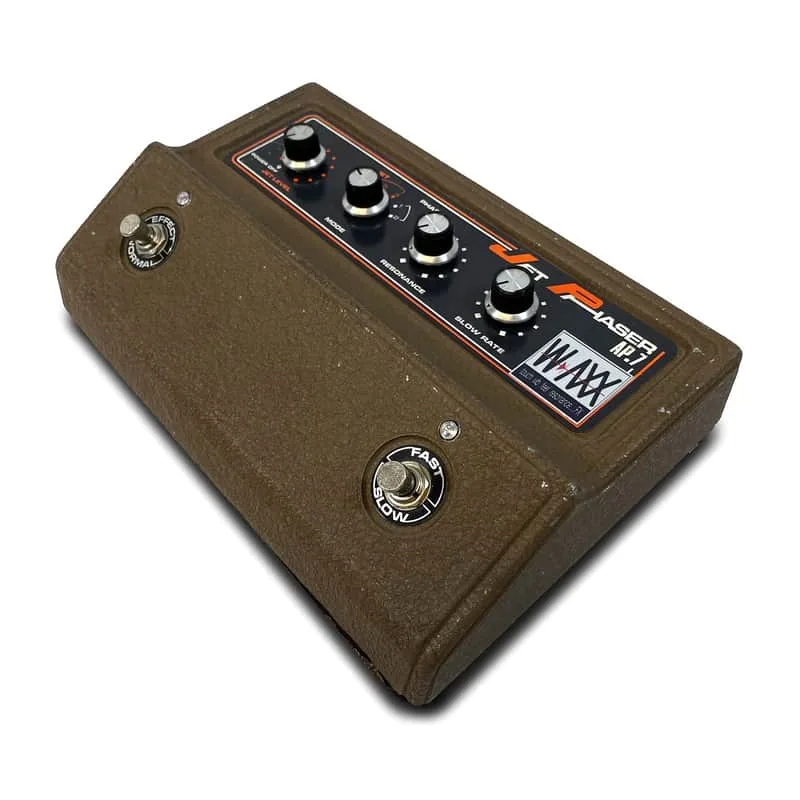
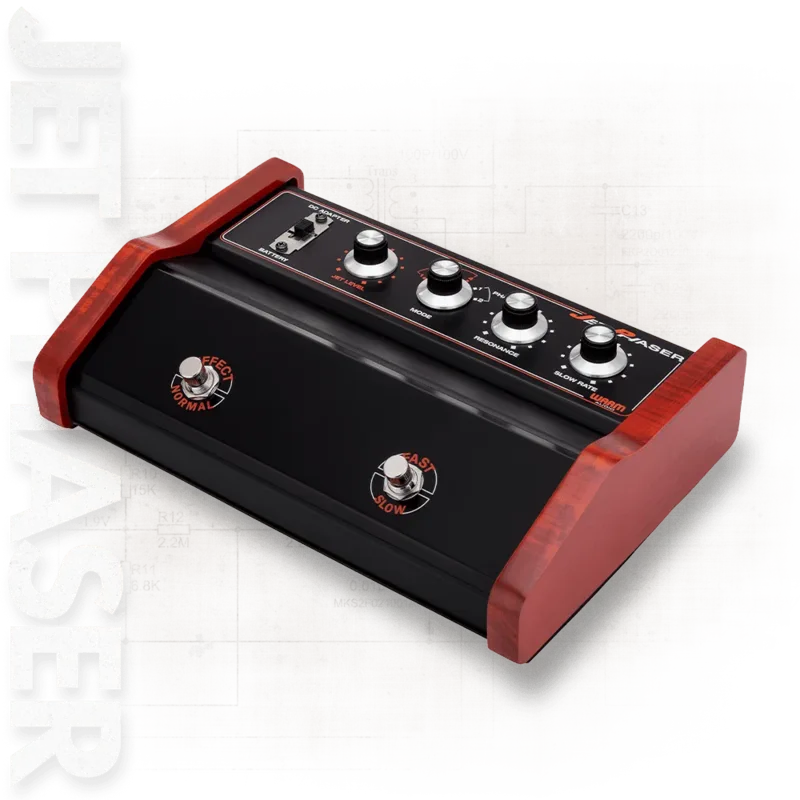
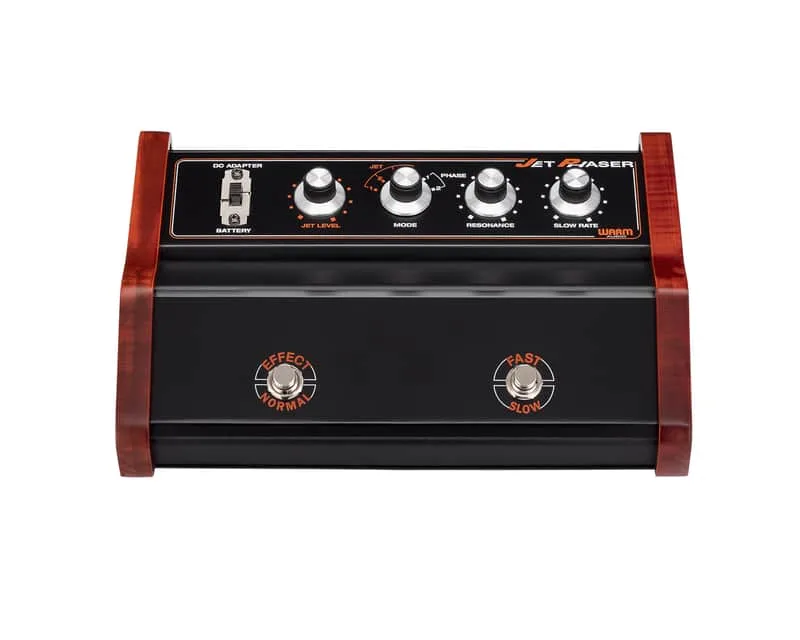
- Fuzz-plus-phase: PastFx's manual for its Jet Phaser notes that the original AP-7 "was unique for its time, incorporating a fuzz and phase circuit within one pedal"10, a combination later revived in the Warm Audio Jet Phaser.
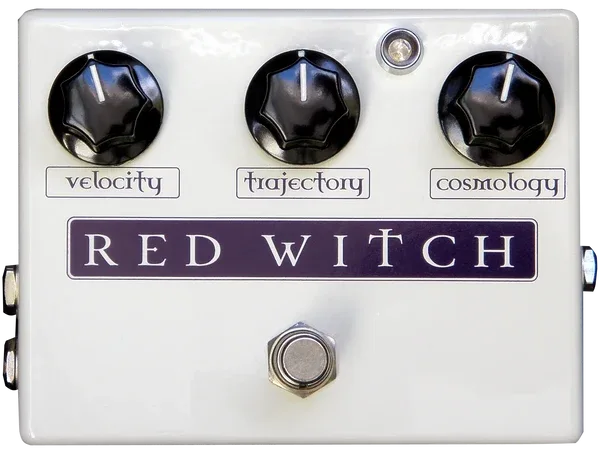
- Long-running designs: Red Witch Pedals describes its Moon Phaser as a flagship pedal "used and loved by players over the last twenty years"11.
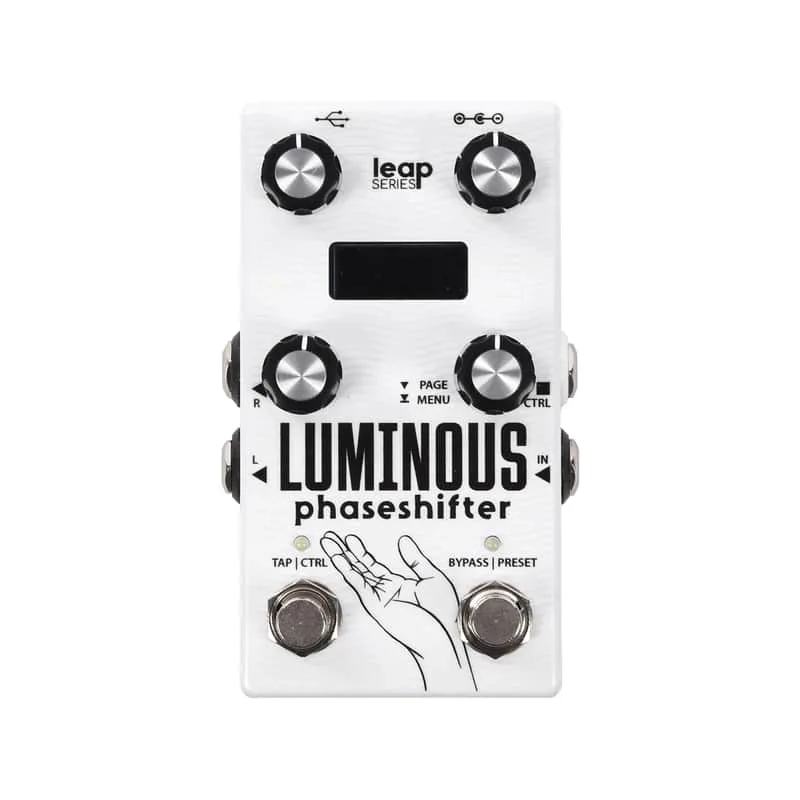
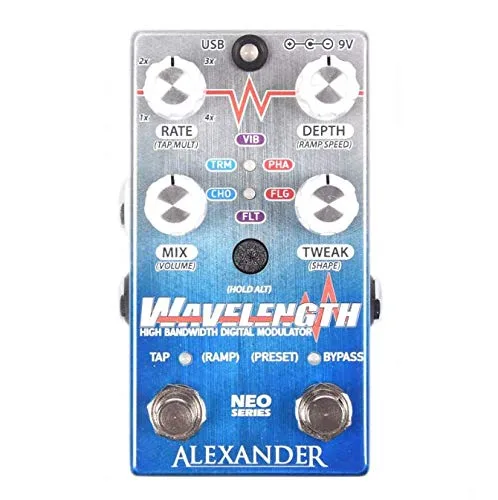
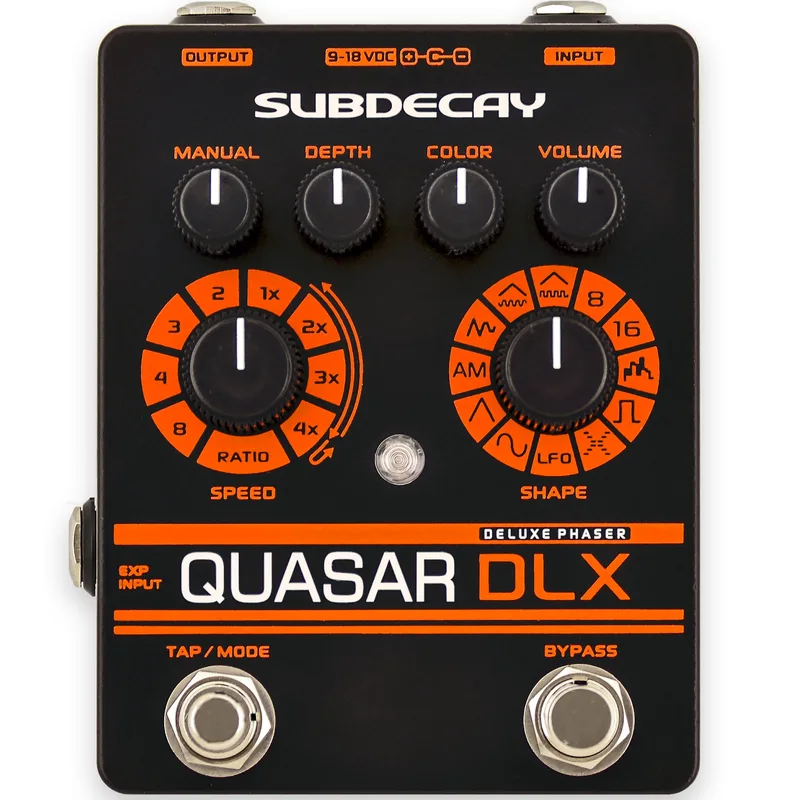
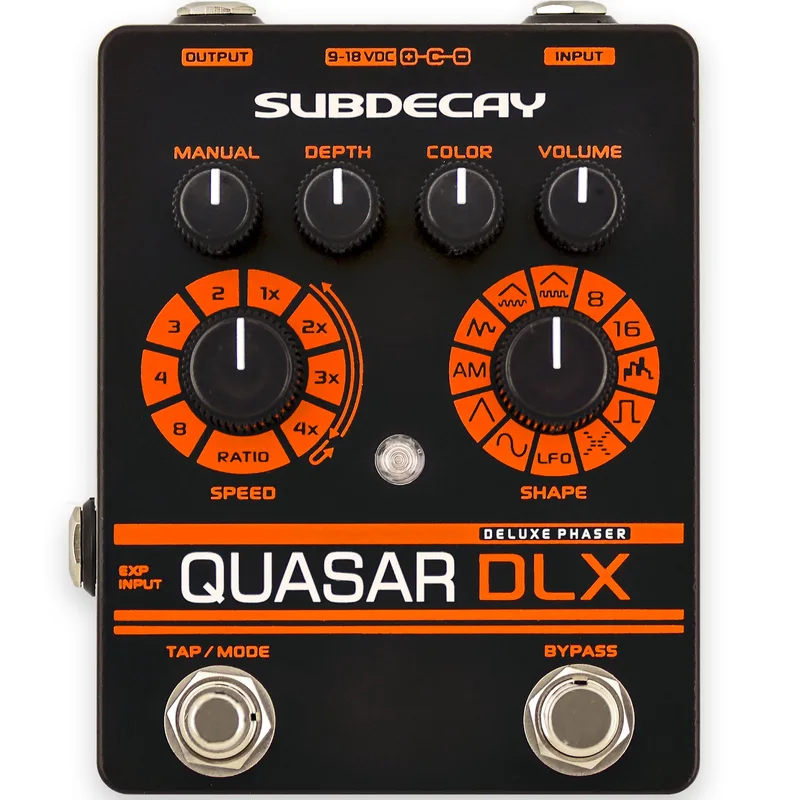
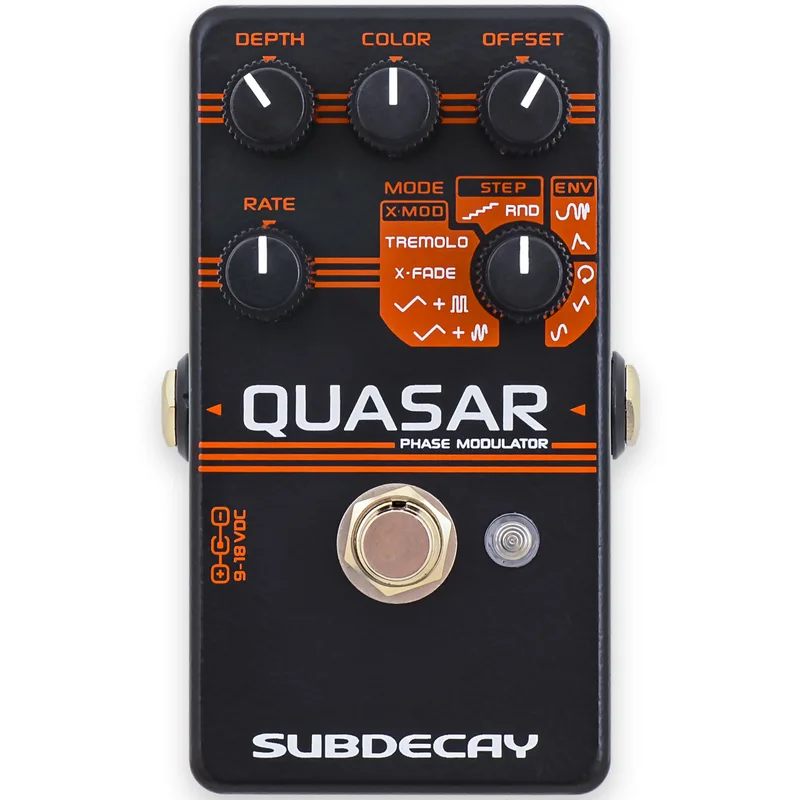
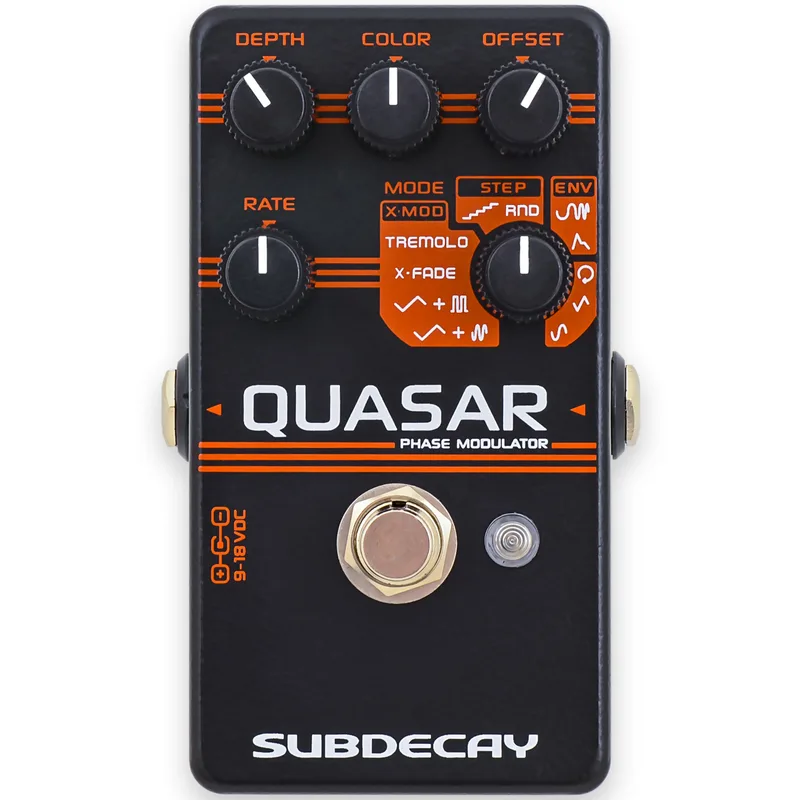
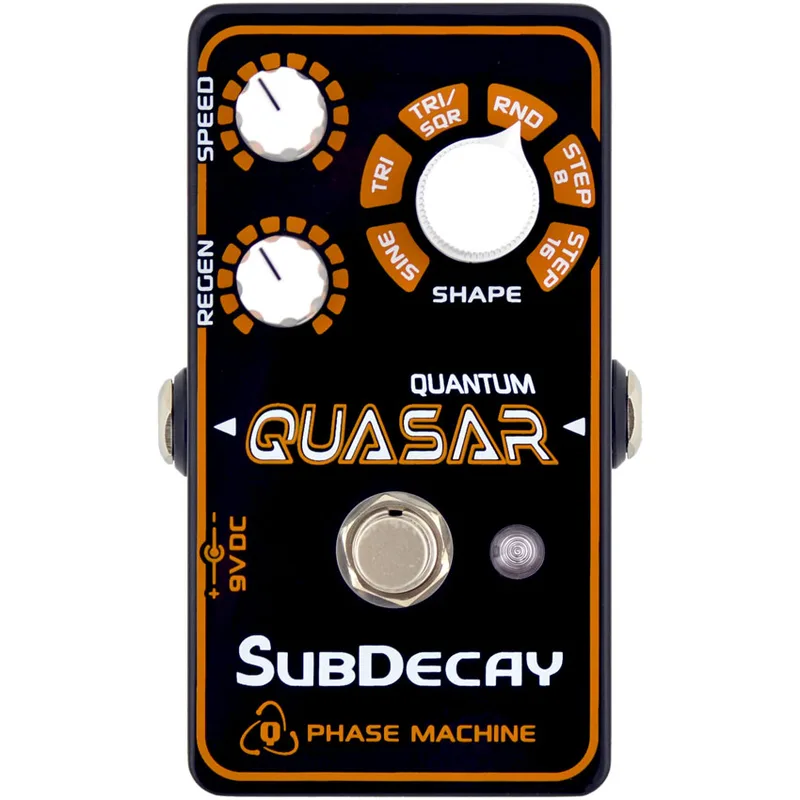
- Modern multi-mode pedals: the Subdecay Quasar Phaser is a "multi mode phaser pedal"12, and the Alexander Pedals Luminous Phaseshifter is described by its maker as "equal parts phaseshifter and swirly glowing haze machine"13.
Styles of phaser
Phasers on the market today sort into a few recognizable styles, and knowing which one a pedal belongs to tells you a lot about how it will sound.
| Style | What it is | Examples the makers describe |
|---|---|---|
| Vintage four-stage | Script-circuit tone, minimal controls | Retro-Sonic Phaser, based on the Script 908 |
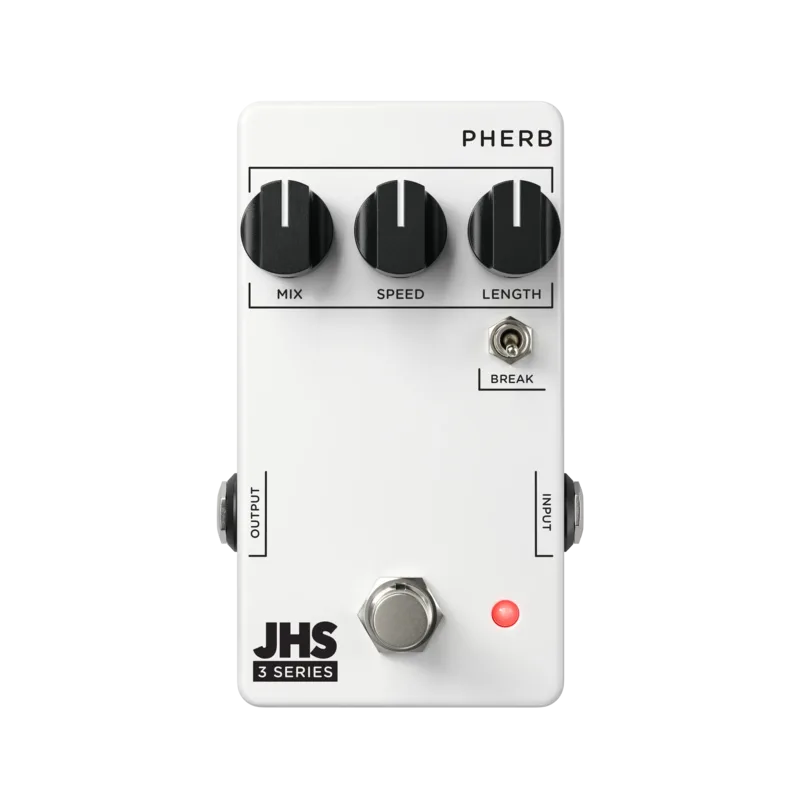
| Multi-stage | Six or more stages for a deeper sweep | JHS 3 Series Phaser, a six-stage design14; Maestro Orbit with 4- and 6-stage modes7 |
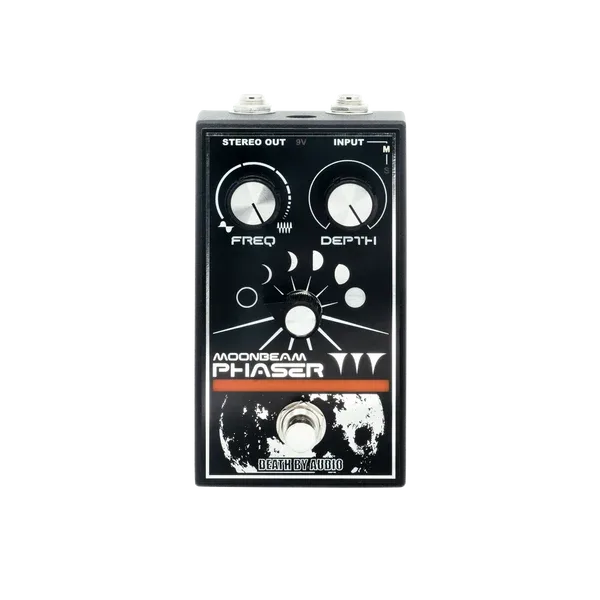
| Multi-mode | Several waveforms, stage counts or voicings in one box | Subdecay Quasar, a multi mode phaser12; Death By Audio Moonbeam, a stereo multi-stage phaser15 |
| Tube phaser | Vacuum tubes in the filter path | Effectrode Phaseomatic5 |
| Fuzz phaser | Fuzz and phase in one unit | PastFx Jet Phaser, from the AP-7 circuit10 |
| Bass phaser | Voiced or built for bass | Recovery Effects Pearl16 |
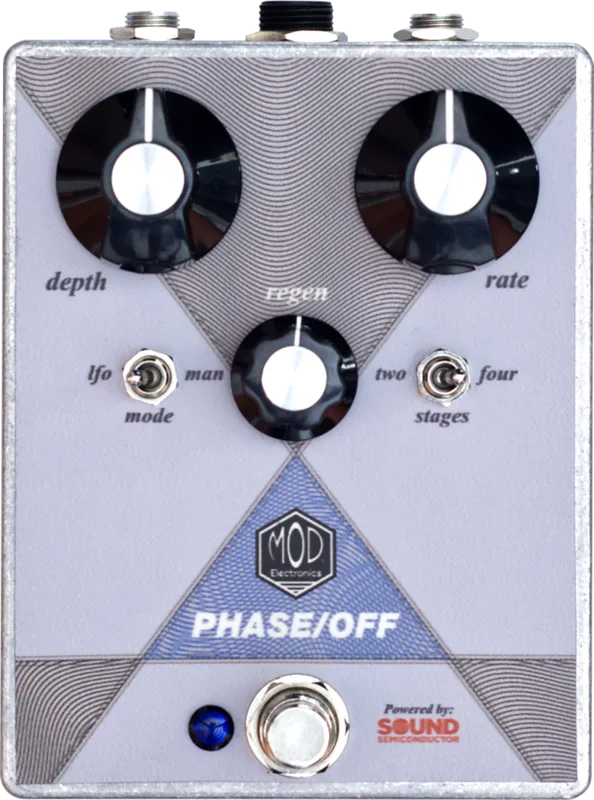
A few of these deserve a note. The JHS 3 Series Phaser is described by JHS as "a versatile and easy to use six-stage phaser pedal inspired by the classic phaser circuits of the" past14, a good example of a modern pedal borrowing vintage architecture. The Death By Audio Moonbeam Phaser is "a stereo, multi-stage phaser like no other," letting you reshape the sound by choosing between modes15. And the Mod Electronics Phase/Off shows how flexible the format can be: its Stages switch "can change the Phase / Off from four-stage phaser to a two-stage phaser"17, so one pedal covers two classic depths.
The usual controls
Most phasers keep their control sets small. The two you will find on nearly every one:
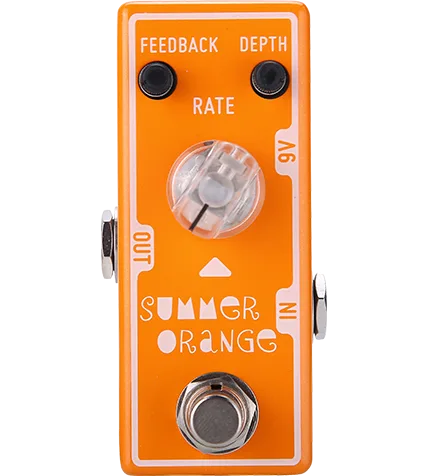
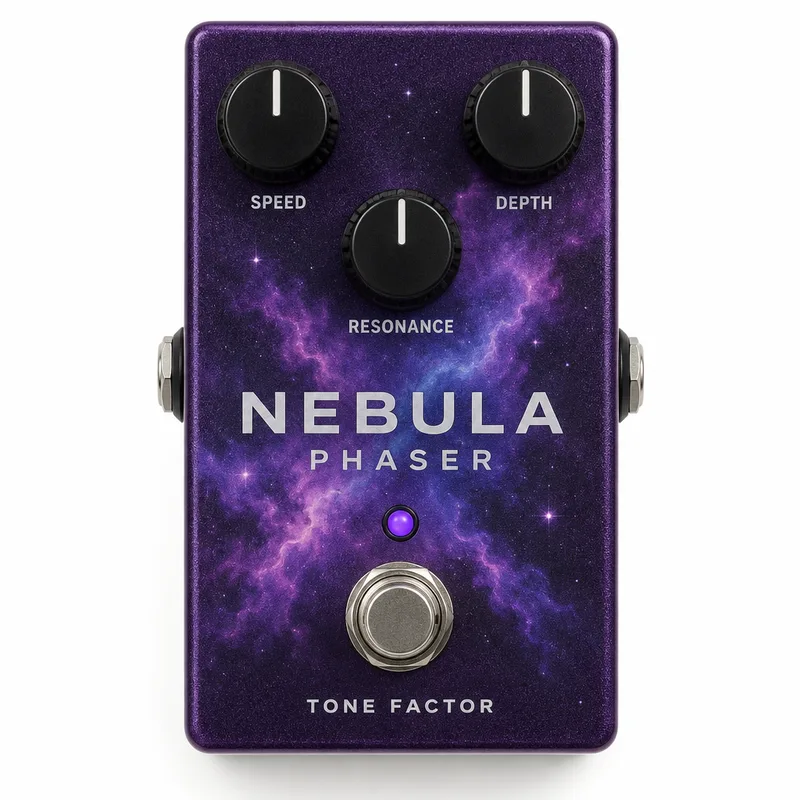
- Rate (or Speed): how fast the LFO sweeps the notches. Slow settings give texture; fast settings give wobble.
- Depth: how far the notches move, from a faint shimmer to a full sweep.
Beyond those, makers add what their circuit needs:
| Control | What it does | Where it appears |
|---|---|---|
| Stages | Switches the number of active filter stages, changing the depth and complexity of the sweep | Mod Electronics Phase/Off, 4 to 2 stages17; Rocktron Chameleon STAGES parameter6 |
| Feedback | Feeds some of the phased signal back into the filters for a more resonant, vocal sweep | Common on multi-stage designs |
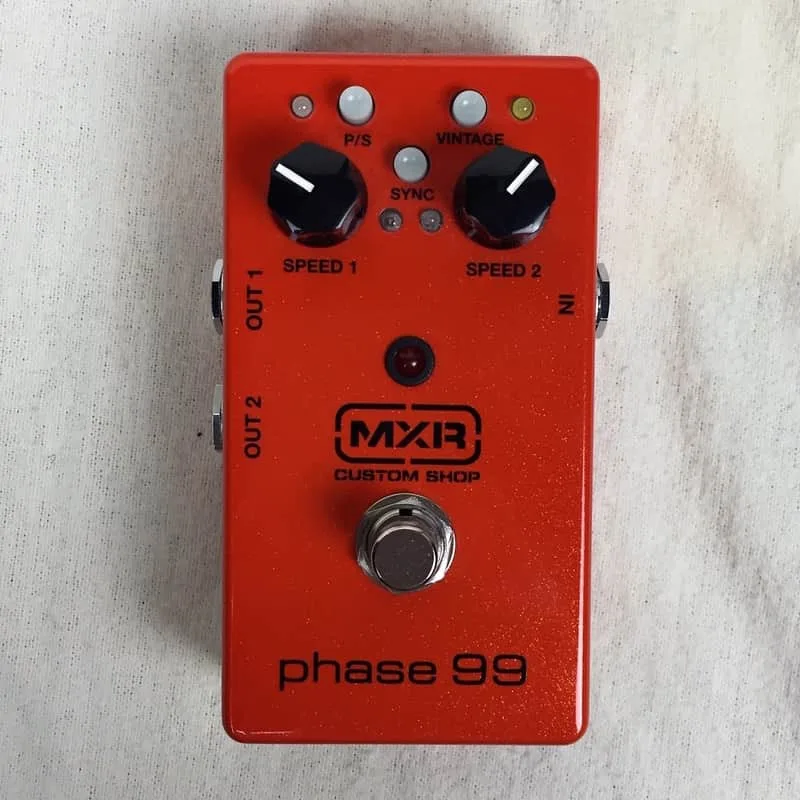
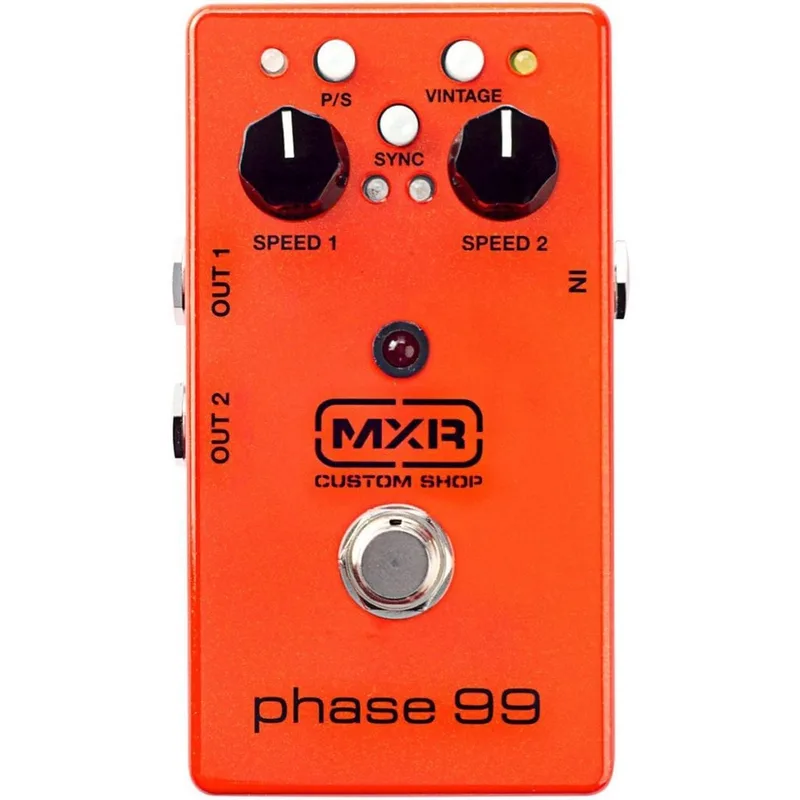
| Sync | Sets the LFO synchronization of a second phaser, normal or reverse | PedalPCB Duo-Phase toggle18 |
| Mode | Selects between waveforms, stage counts or voicings | Subdecay Quasar multi mode design12; Death By Audio Moonbeam15 |
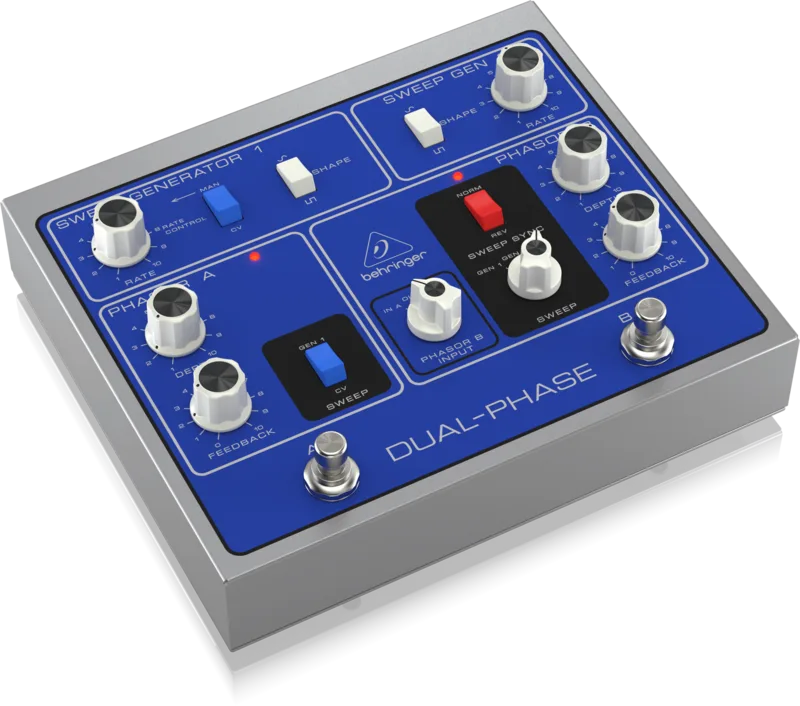
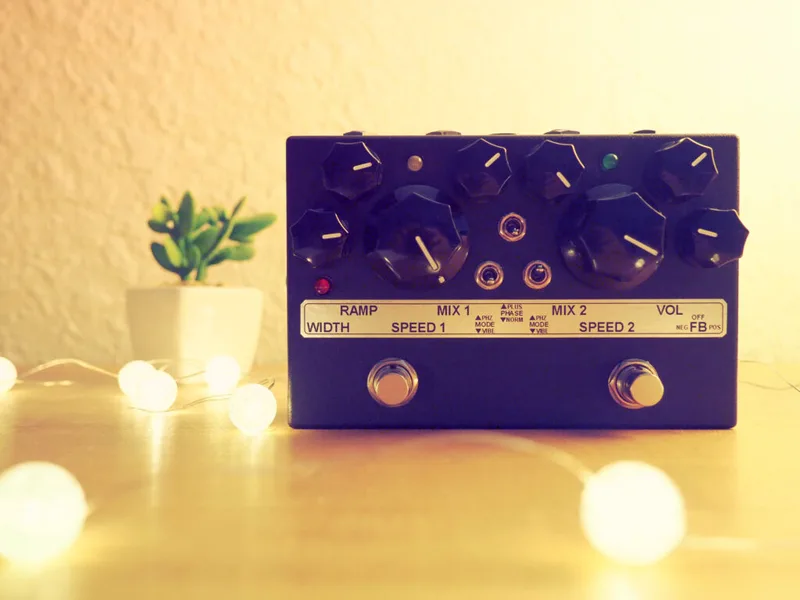
The Duo-Phase, a two-phaser-in-one build, shows why sync matters: with Phaser B running in reverse against Phaser A, the two sweeps interact instead of simply doubling up18.
Where a phaser goes in the signal chain
BOSS's signal chain guide puts the standard order together: tuner first, then pitch, then compression and wah, with the wah pedal "directly after the tuner and before the drive section"19. Overdrive and distortion pedals come next, "stacked from lightest drive to heaviest distortion"19, then modulation, then time-based effects. Delay pedals sit after distortion "for cleaner and more even repeats," before reverb19. A phaser is a modulation effect, so the conventional home is after your drive pedals and before delay and reverb.
That said, placement is a matter of taste, and two alternatives are worth trying:
- Before distortion: the drive compresses the sweep into a more uniform, subtle movement, the thick-texture approach Epstein describes for heavy riffs3.
- In a delay's feedback loop: EarthQuaker Devices suggests that if you already have a delay pedal, you can "put the phaser in that effect's feedback loop to process the repeats," so each echo carries more phase than the last3.
At the end of the chain, looper pedals belong last, as BOSS's Lee Glynn explains, "as you will loop every possible signal and effect triggered"20, and amp and cabinet simulators go at the very end when you are routing to a PA, interface or headphones19. A phaser belongs well before both.
Power needs
Most phasers run on the same 9V DC supply as the rest of a modern pedalboard, but the details vary and are worth checking before you buy. A few examples from makers' own pages:
| Pedal | Power | Notes |
|---|---|---|
| MXR Phase 90 | 9V battery, Dunlop ECB003 9-volt adapter, or DC Brick, Iso-Brick and Mini Iso-Brick supplies | Battery option, supplies not included21 |
| MXR Phase 100 | 9V battery, Dunlop ECB003 adapter, or DC Brick, Iso-Brick and Mini Iso-Brick supplies | Same options as the Phase 90226 |
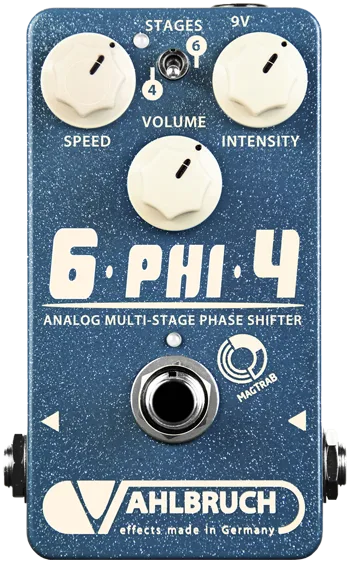
| Vahlbruch 6-PHI-4 | External regulated 9V supply, not included | Polarity: positive at ring, negative at tip23 |
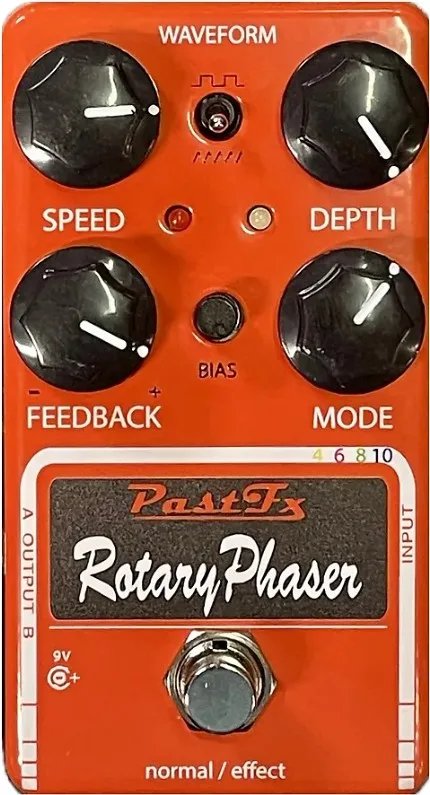
| PastFX Rotary Phaser | 9V DC, negative tip | "Boss style" power only24 |
Polarity matters. The Vahlbruch 6-PHI-4 uses positive-at-ring, negative-at-tip wiring23, the opposite of the center-negative standard most pedals use. Plugging a standard daisy chain into a pedal with reversed polarity can damage it, so check the manual before you power an unfamiliar phaser.
Current draw is usually modest for analog phasers, but digital and feature-rich designs can pull more. Jim Dunlop specifies that its MXR Layers pedal "requires a 9-volt (300mA) center-negative power supply"25, a reminder that a pedalboard supply sized for a handful of analog boxes may not cover every modern unit.
Phaser, flanger, univibe: telling the relatives apart
Phaser versus flanger. EarthQuaker Devices draws the line clearly: "flanging (whether via tape or a pedal) mixes a dry signal with a delayed one, then feeds the delayed signal back into the chain to create harmonic feedback," while "phasing, on the other hand, mixes two identical signals together," one dry and one through the all-pass stages3. A flanger's notches are harmonically related and its feedback gives it the characteristic jet swoosh; a phaser's notches are more evenly spread and its sweep is smoother and less metallic.
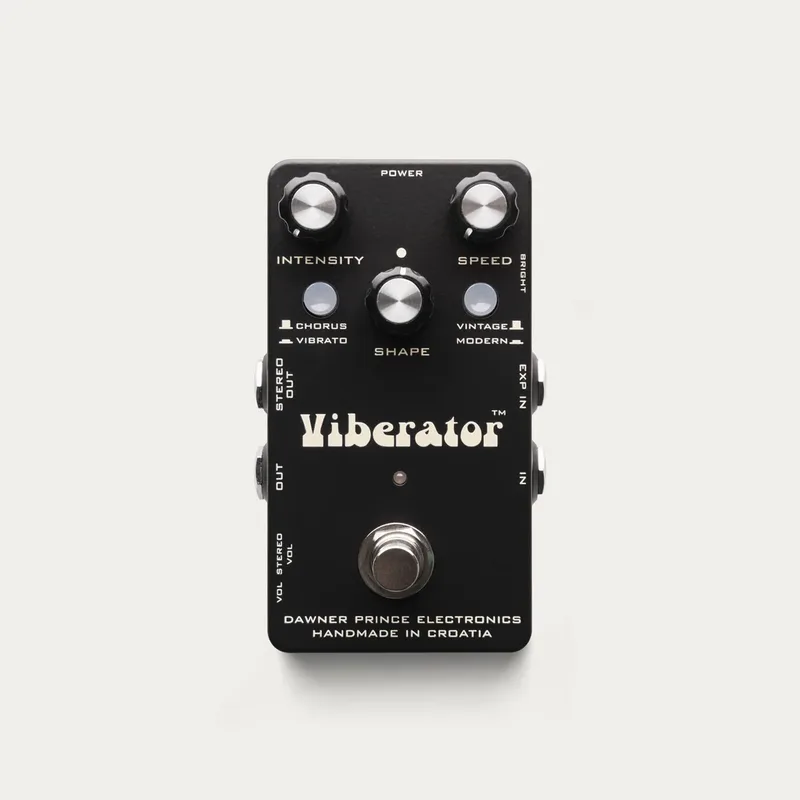
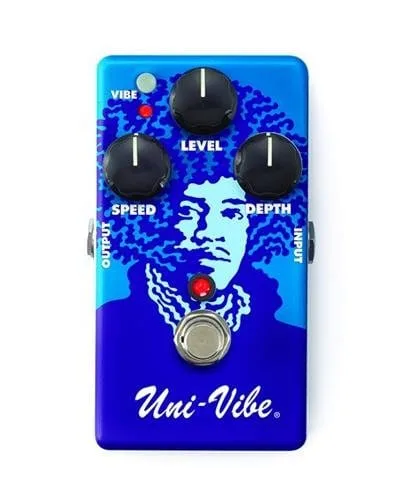
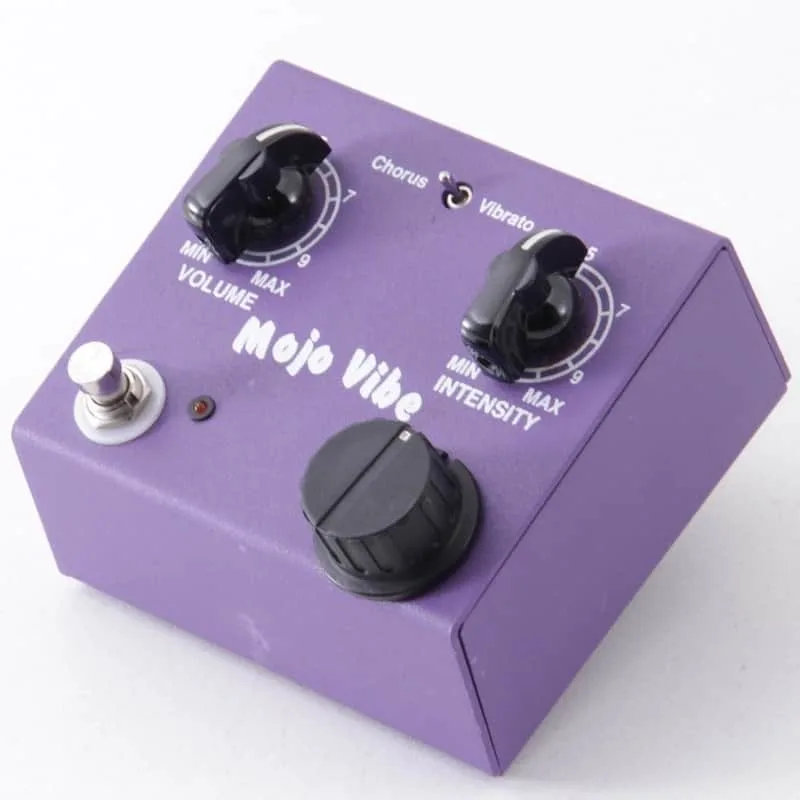
Phaser versus univibe. The vibe pedal is not a separate species so much as a particular phaser. Function f(x) calls the Dunlop Univibe "an optical phaser with no dry signal"2, meaning the circuit drops the dry half of the mix that a standard phaser keeps. Jed's Peds describes the result: "in its simplest form a univibe circuit is a staggered phase shifter known for its throbbing, hypnotic pulse and lo-fi sweep"26. If you want even, hi-fi movement, a standard phaser is the tool; if you want the pulse and lo-fi character of the classic vibe sound, look at the Dunlop Univibe and its descendants like the Sweet Sound Mojo Vibe and Dawner Prince Viberator.
Phasers on bass and in stereo
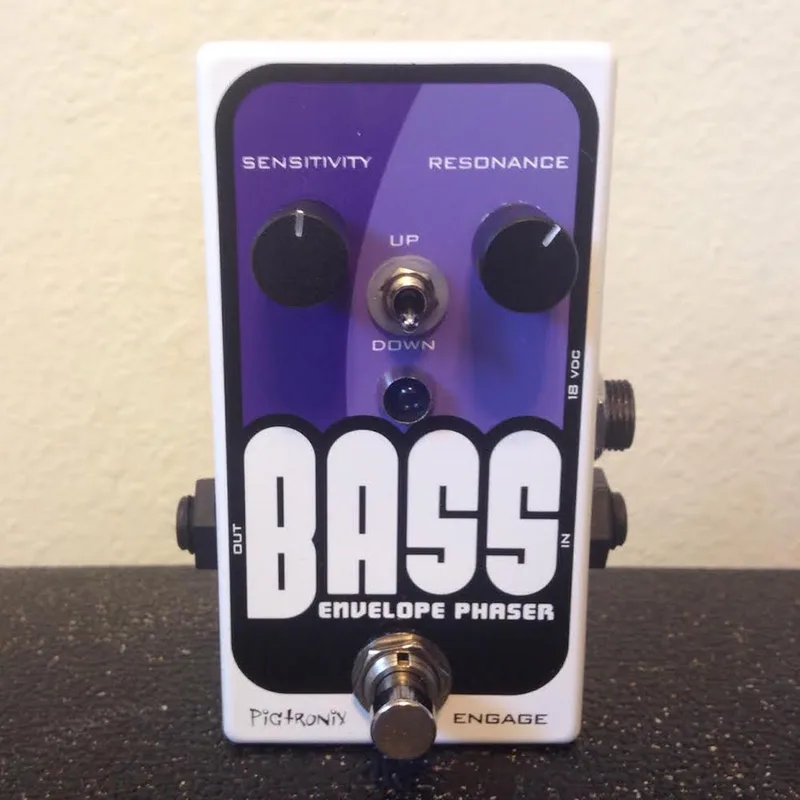
Bass players get real use from phasers, and some are built for the job. Recovery Effects says of its Pearl: "This pedal was created for bass, but you can also plug your guitar into it to make your low-end dreams come true!"16. The Pigtronix Bass Envelope Phaser is another dedicated option, and the general bass pedals category includes several more.
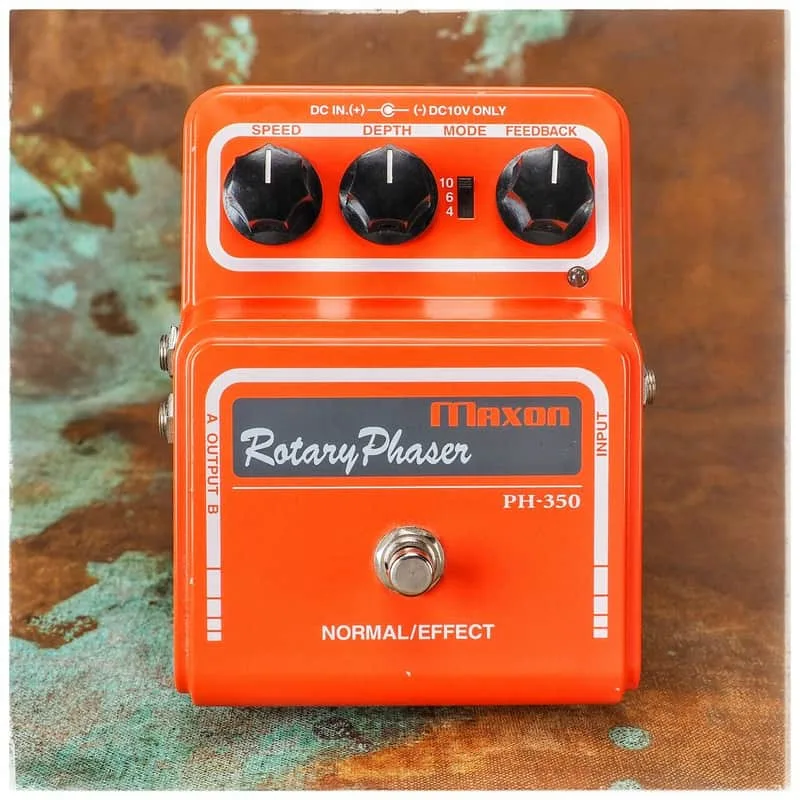
Stereo is the other frontier. The Maxon PH-350 Rotary Phaser, as a 2004 Better Guitar review republished by Maxon explains, is "really a stereo effects pedal. When using two amps, the phaser effect comes out the A jack, and the" dry signal comes out the B jack; with a single amp, the pedal "sends a mix of both the dry and effected signals through the A" jack27. Two-amp setups like this spread the effect across the room in a way a mono pedal cannot.
Questions to ask when choosing a phaser
Before settling on a phaser, it helps to run through a few key points:
- How many stages do you want? Four stages is the vintage Phase 90 sound; six stages is fuller and more modern6. Some pedals, like the Mod Electronics Phase/Off, switch between stage counts17.
- Analog or digital? Analog phasers like the Maestro Orbit7 and tube designs like the Effectrode Phaseomatic5 have their own character; digital multi-mode pedals like the Subdecay Quasar12 trade that for flexibility.
- Do you need more than one mode? A multi-mode pedal covers several sounds in one footprint, which matters on a small board.
- Mono or stereo? If you run two amps, a stereo phaser like the Maxon PH-350 splits effect and dry across outputs27.
- What power do you have available? Check voltage, polarity and current draw against your supply; the Vahlbruch 6-PHI-4's reversed polarity23 and the MXR Layers' 300mA draw25 show how much these details vary.
- Where will it sit? After drive is the conventional spot3, but before drive and inside a delay's feedback loop both give different results3.
Questions
What is the difference between a phaser and a flanger?
Flanging mixes a dry signal with a delayed one and feeds the delayed signal back into the chain, creating harmonic feedback. Phasing instead mixes two identical signals, one dry and one sent through all-pass filter stages, so the notches come from phase cancellation rather than delay. The result is a smoother, less jet-like sweep.
Should a phaser go before or after distortion?
There is no single rule, but many players run modulation after the drive section. EarthQuaker Devices notes that at low LFO speeds with distortion added, a phaser adds thick texture and weight to riffs, useful for the lone guitarist in a heavy band. Try both placements: before drive the sweep is more uniform, after drive the notches are more pronounced.
Are phaser pedals good on bass?
Yes. Some phasers are built with bass in mind: the Recovery Effects Pearl was created for bass, with guitar as a bonus, and Pigtronix makes a dedicated bass envelope phaser. A phaser can add movement and depth to a bass line, though very deep sweeps can thin the low end, so a pedal with a mix or depth control helps.
What is the difference between a phaser and a univibe?
A univibe is really a phaser variant. Function f(x) describes the Dunlop Univibe as an optical phaser with no dry signal, and Jed's Peds calls the circuit a staggered phase shifter known for its throbbing, hypnotic pulse and lo-fi sweep. A standard phaser mixes dry and shifted signals for a more even, hi-fi sweep.
Do phaser pedals work in an effects loop?
Yes. A phaser can run in an amp's effects loop, where it acts on the preamp signal, and some players put one in a delay's feedback loop so the repeats are phased. Stereo phasers like the Maxon PH-350 Rotary Phaser can also feed two amps, with the effect on one output and dry signal on the other.
Sources (27)
- KEMPER Phaser and Flanger Effects, Kemper Amps
- Guitar Phaser Pedal Types: JFET, Optical, OTA, and Others, Function f(x), 2022-03-18
- 5 Reasons Everyone Needs a Phaser, EarthQuaker Devices, 2023-02-21
- SPH-20 | Phaser Pedal | CNZ Audio, CNZ Audio
- Phaseomatic Vacuum Tube Phaser by Effectrode, RockBoard PedalPedia, 2026
- Rocktron Chameleon (tm) Manual, Rocktron (www.rocktron.com), 2024-08-28
- Maestro Orbit Phaser, Gibson (gibson.com)
- old phaser layout, retro-sonic.com
- HOW MXR PEDALS BECAME LEGENDARY, JHS Pedals
- PastFx_Jet_Phaser_Manual_2021.pdf, PastFx, 2021
- Eleutheria Analog Flanger, Red Witch Pedals
- quasar-phaser-new, Subdecay, 2018-02-16
- Luminous, Alexander Pedals
- 3 SERIES PHASER, JHS Pedals
- MOONBEAM PHASER, Death By Audio
- PEARL PEDAL (Heavy Low-End Vintage Fuzz), Recovery Effects and Devices
- Phase / Off, Mod Electronics (modkitsdiy.com), 2026
- Duo-Phase, PedalPCB.com
- The Ultimate Guide to Guitar Effects Pedal Order and Signal Chain, BOSS (articles.boss.info), 2023-03-01
- The Complete Guide to Loop Pedals for Acoustic Guitarists, BOSS Articles (articles.boss.info), 2025-04-04
- MXR® PHASE 90, Dunlop (jimdunlop.com)
- MXR® PHASE 100, Dunlop (jimdunlop.com)
- Vahlbruch, Analog Phaser Pedal, MagTraB switching, made in Germany, vahlbruch-fx.com, 2026
- Rotary Phaser, pastfx.com, 2026
- MXR® LAYERS™ PEDAL, Jim Dunlop (jimdunlop.com)
- Angels Univibe, Jed's Peds (jedspeds.co.uk)
- Maxon PH350 Rotary Phaser, Better Guitar (republished on maxonfx.com by Godlyke, Inc.), 2004