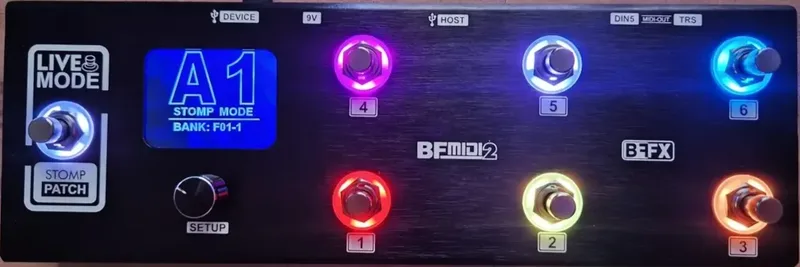
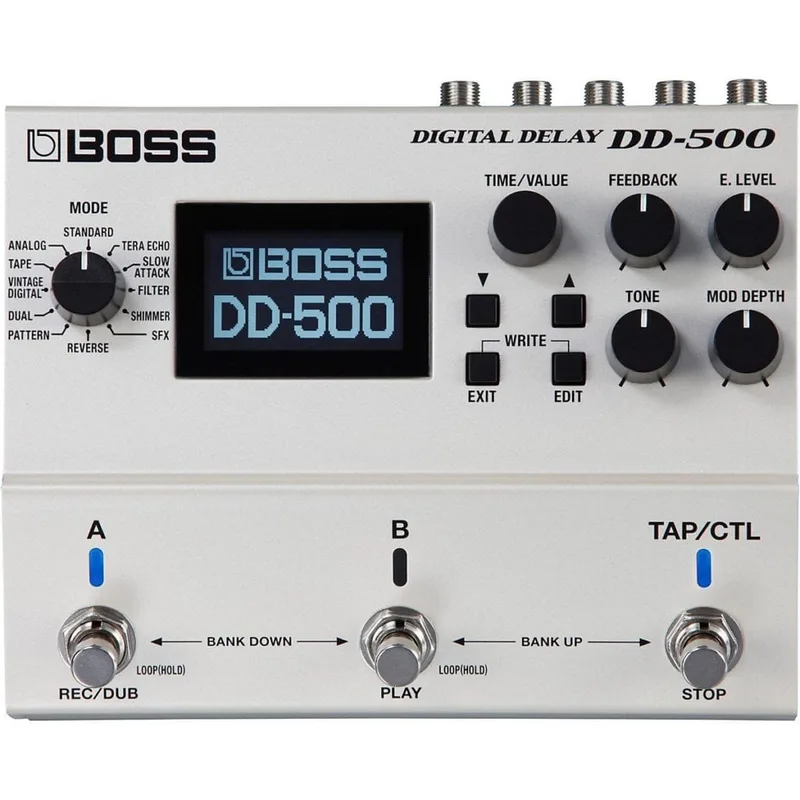
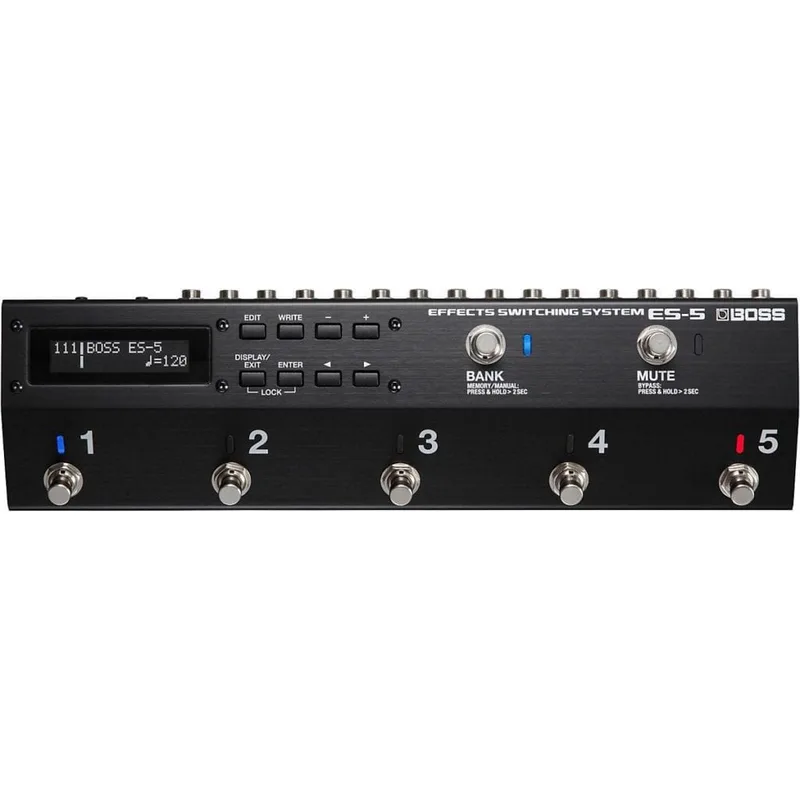
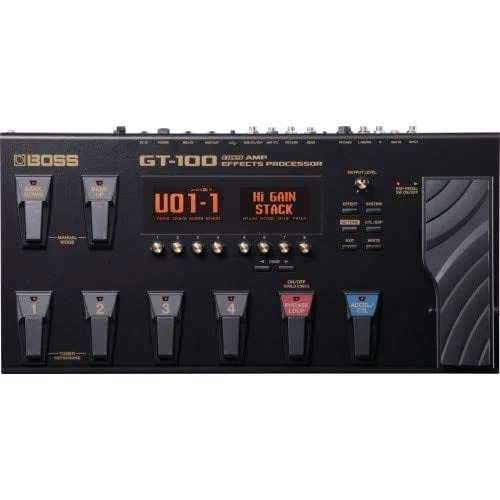
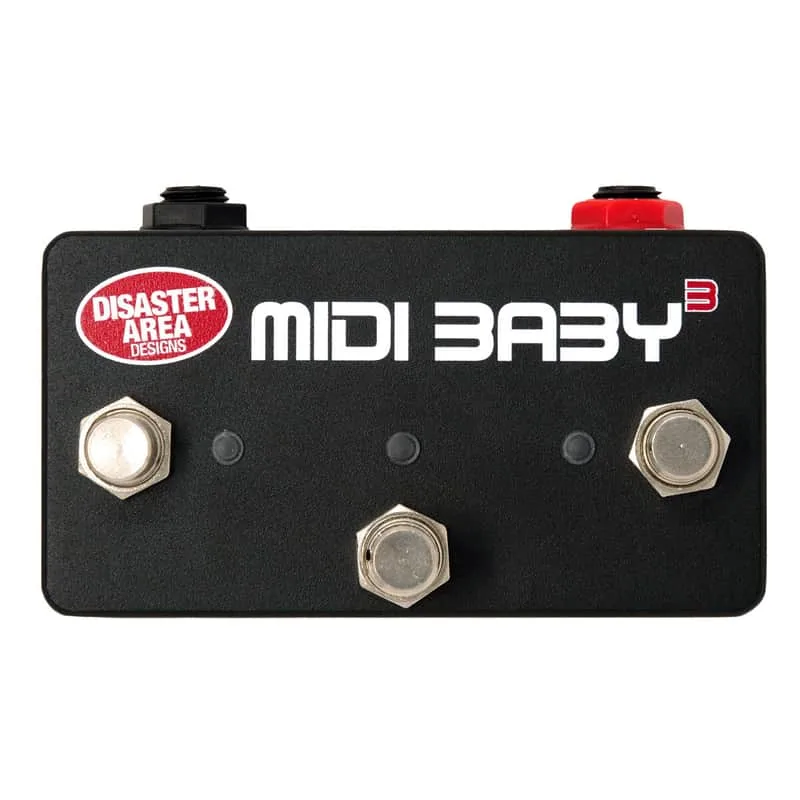
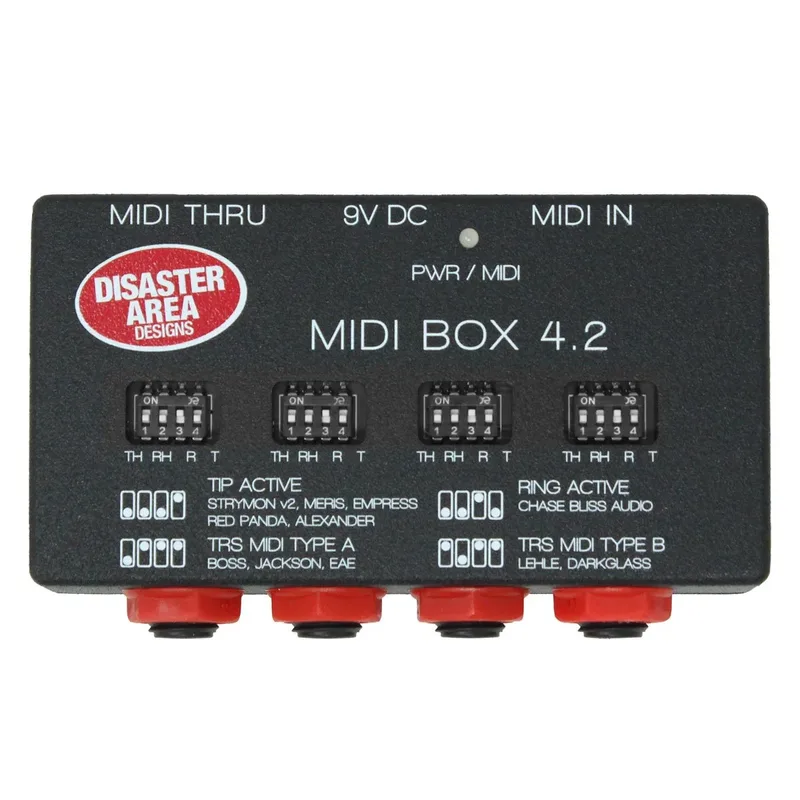
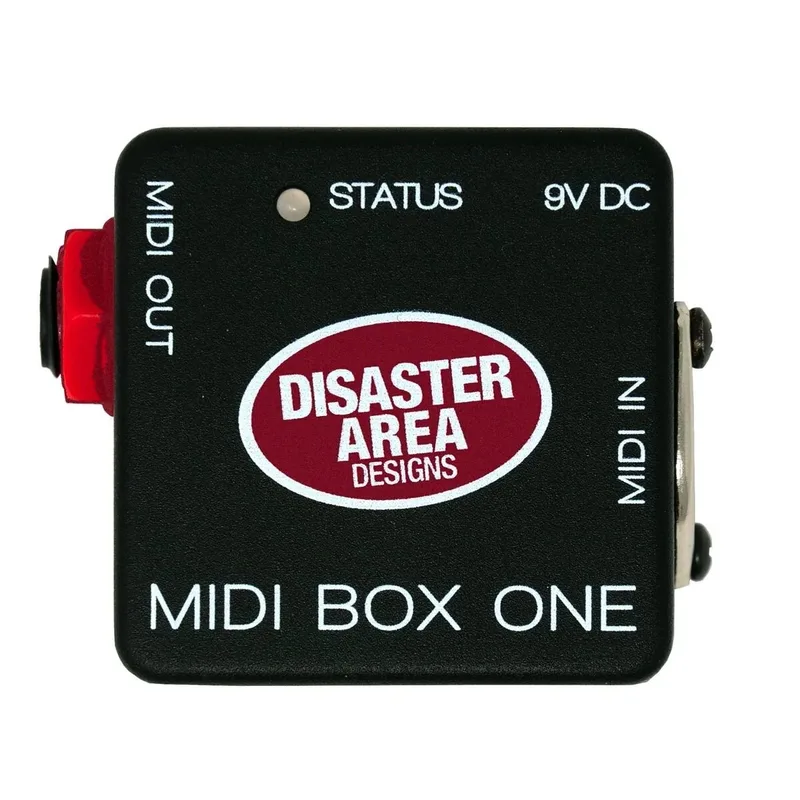
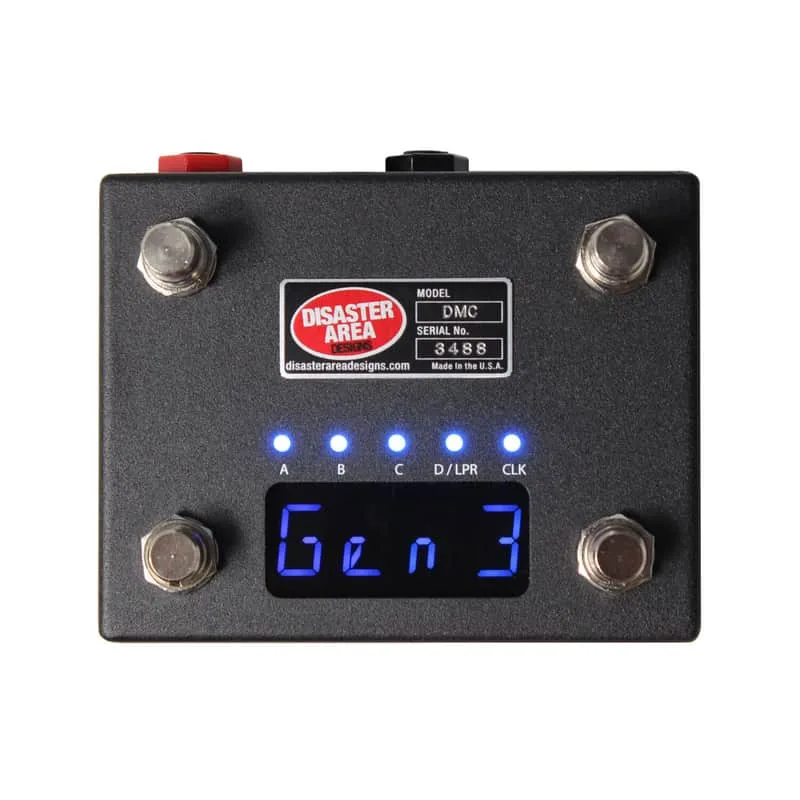
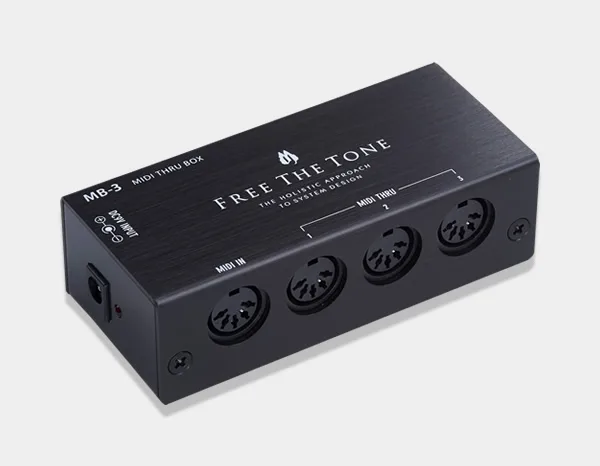
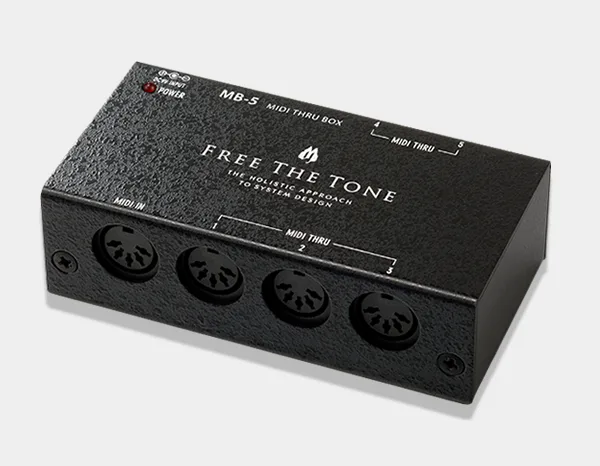
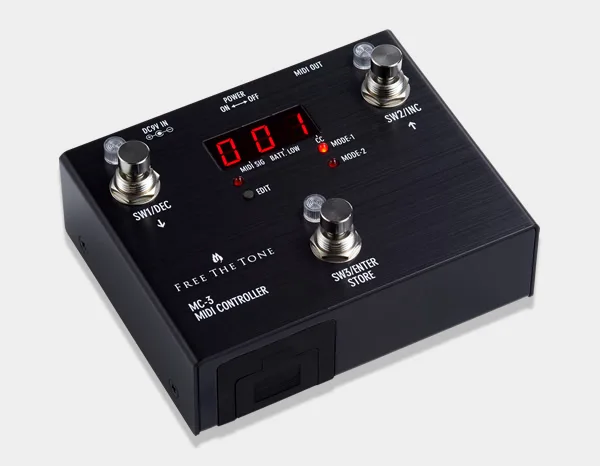
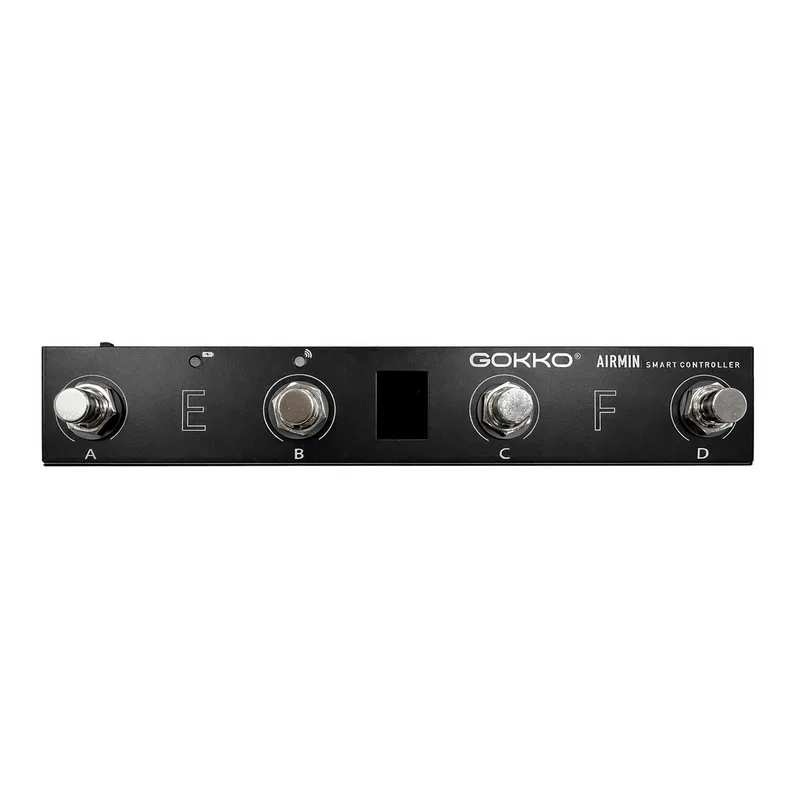
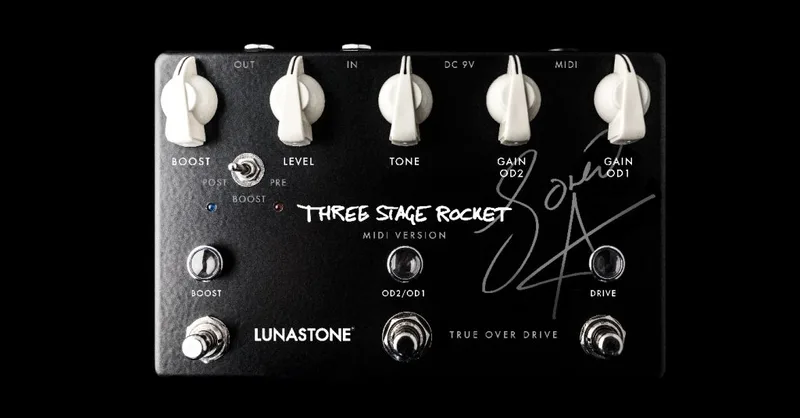
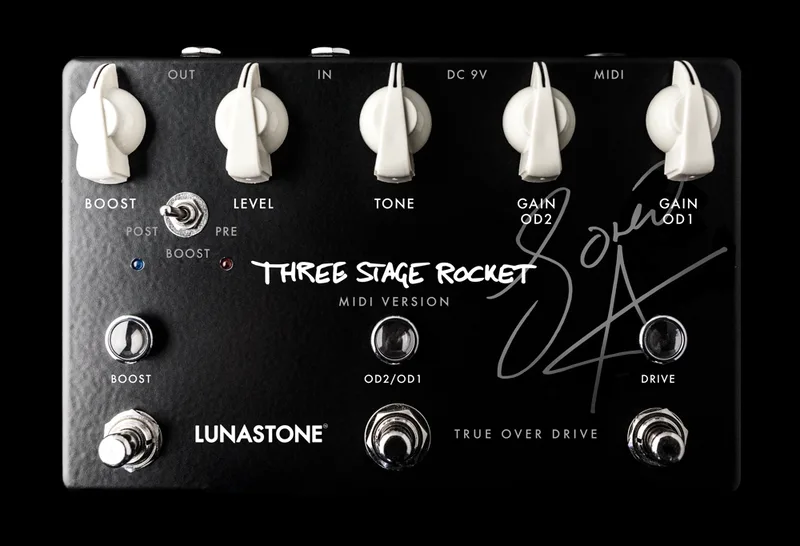
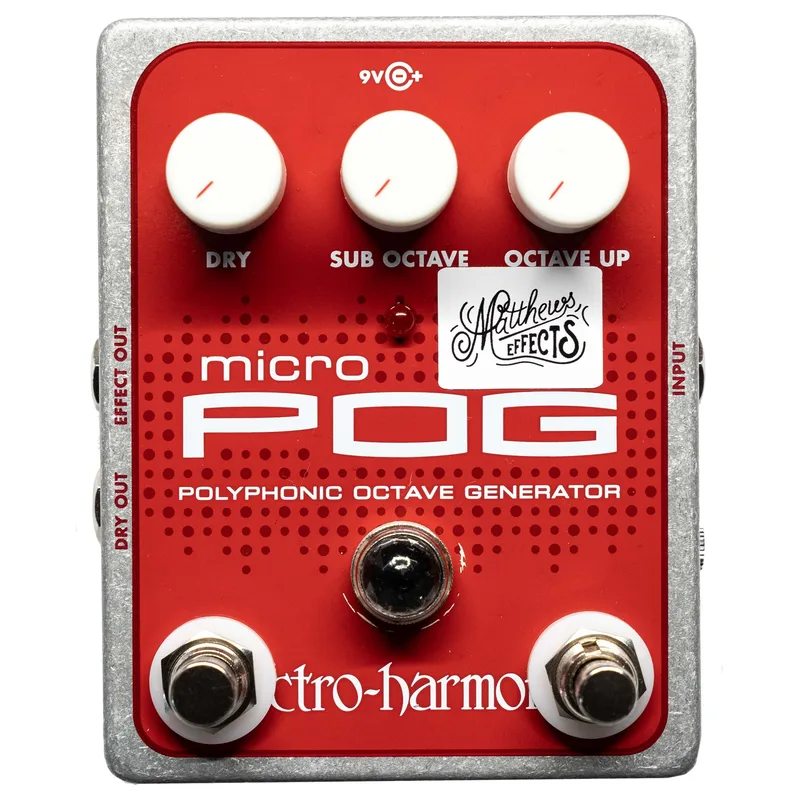
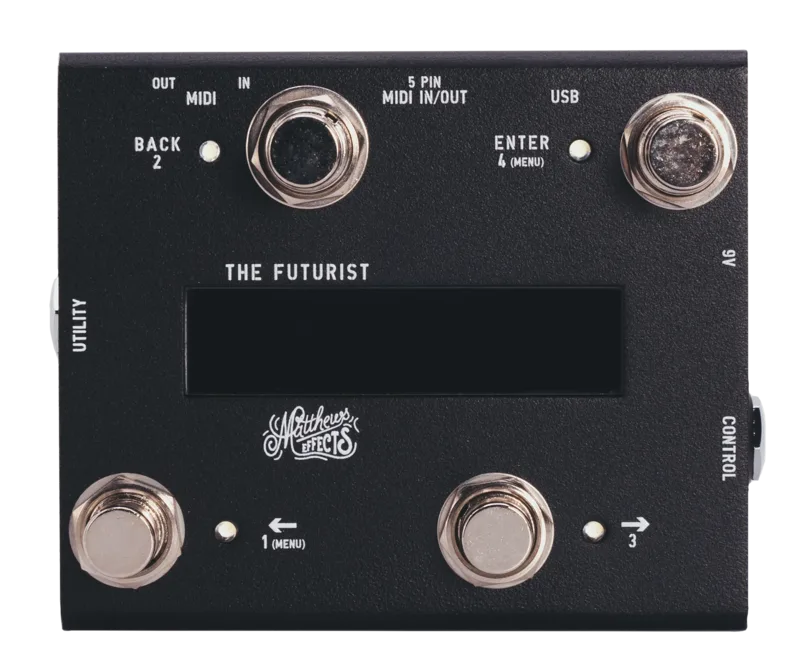
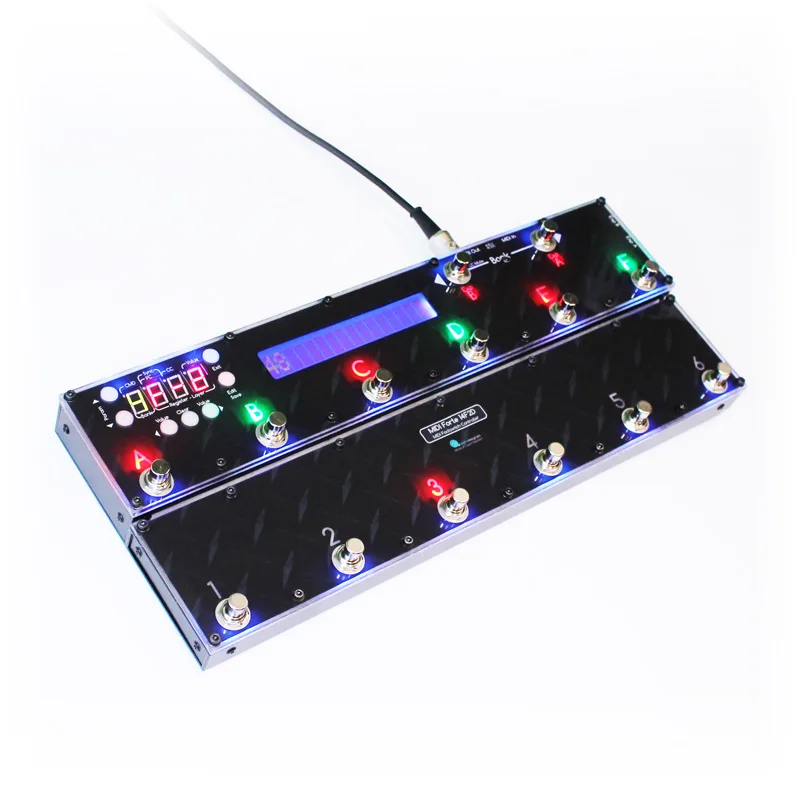
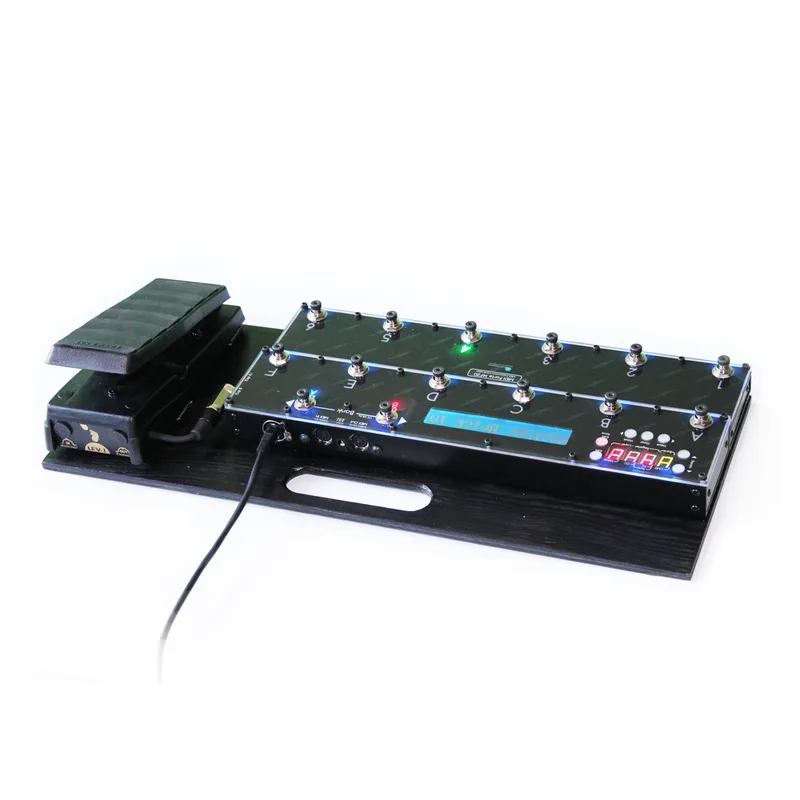
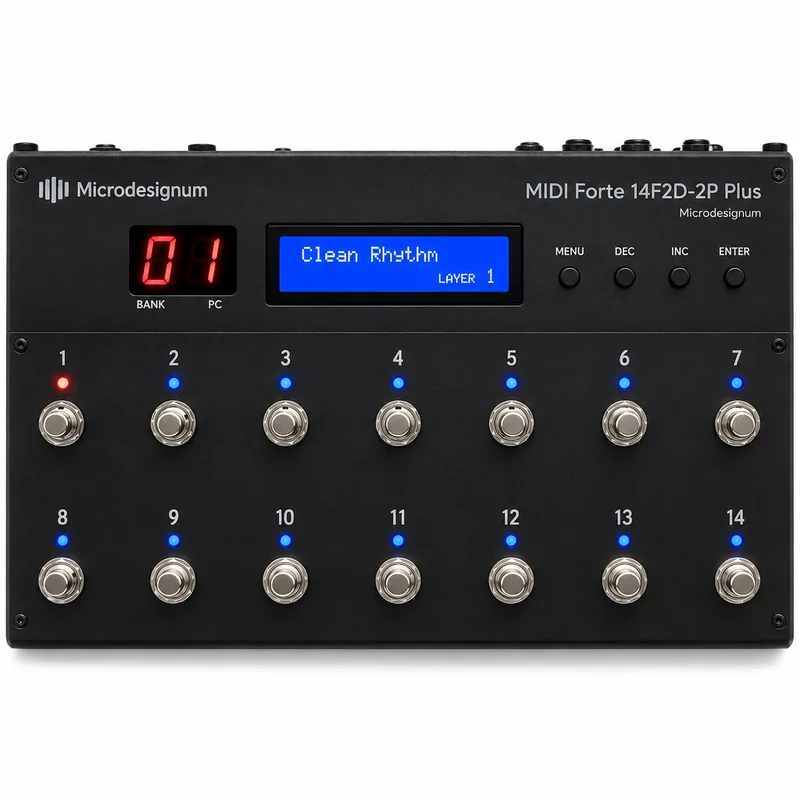
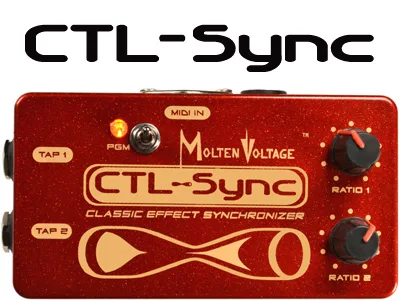
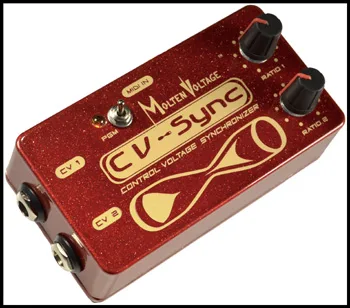
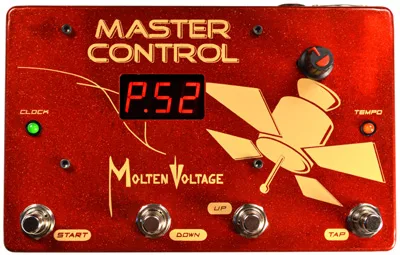
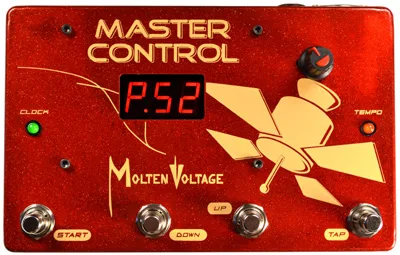
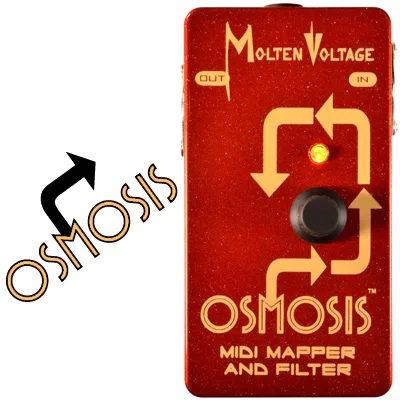
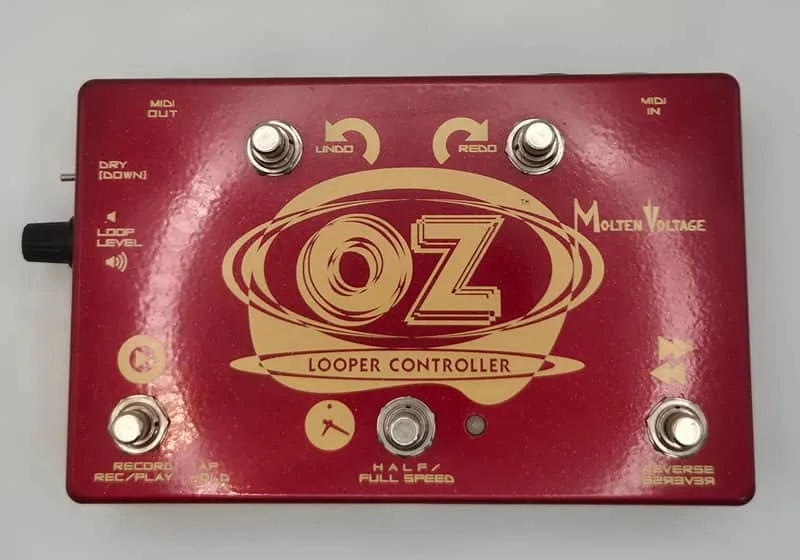
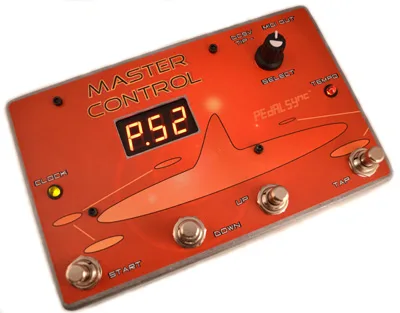
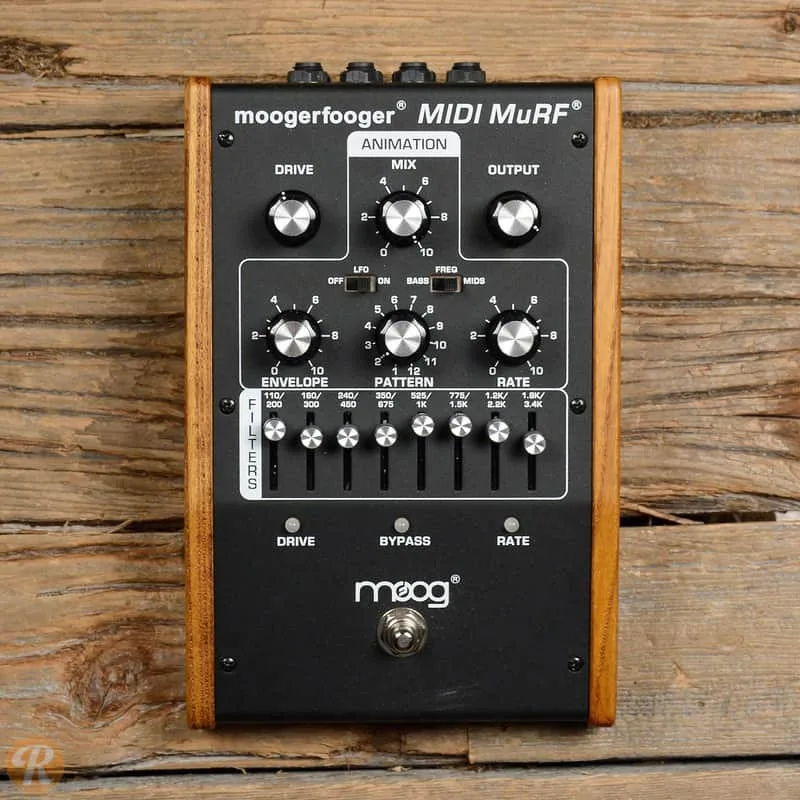
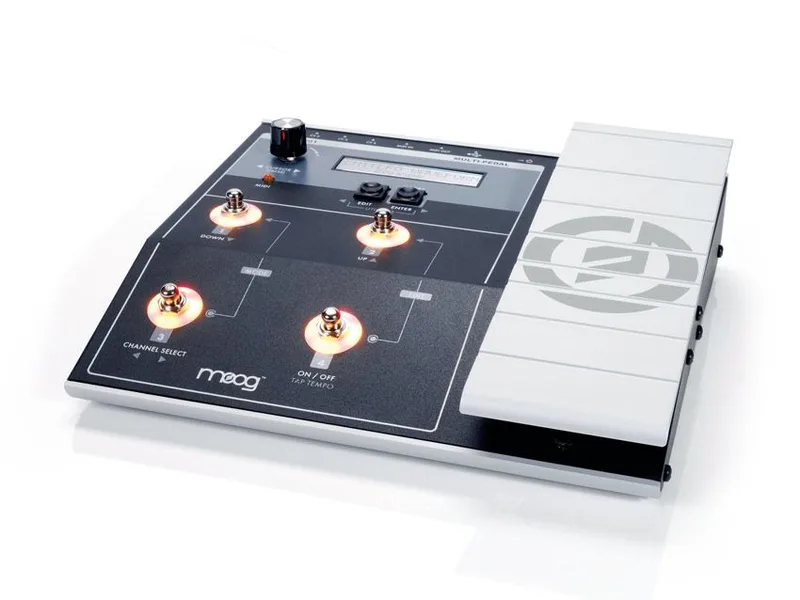
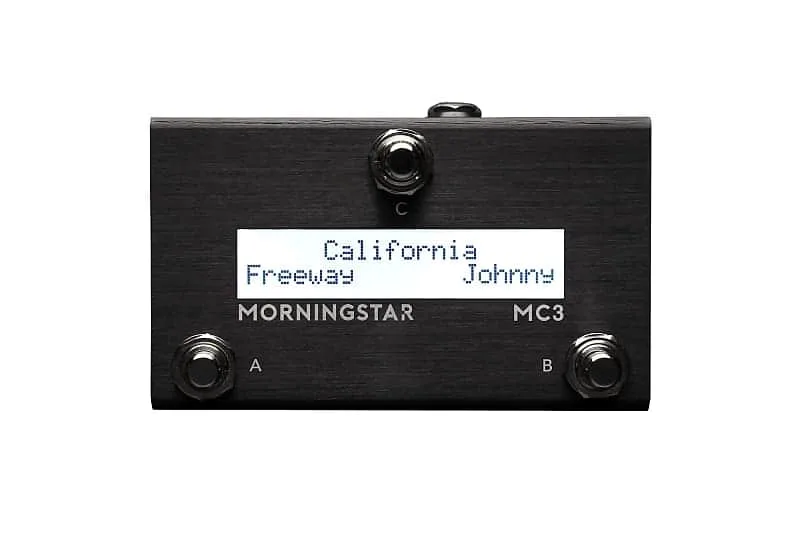
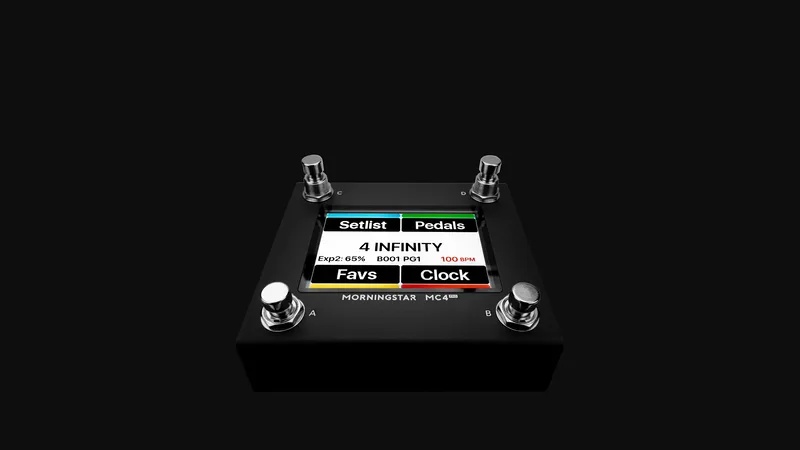
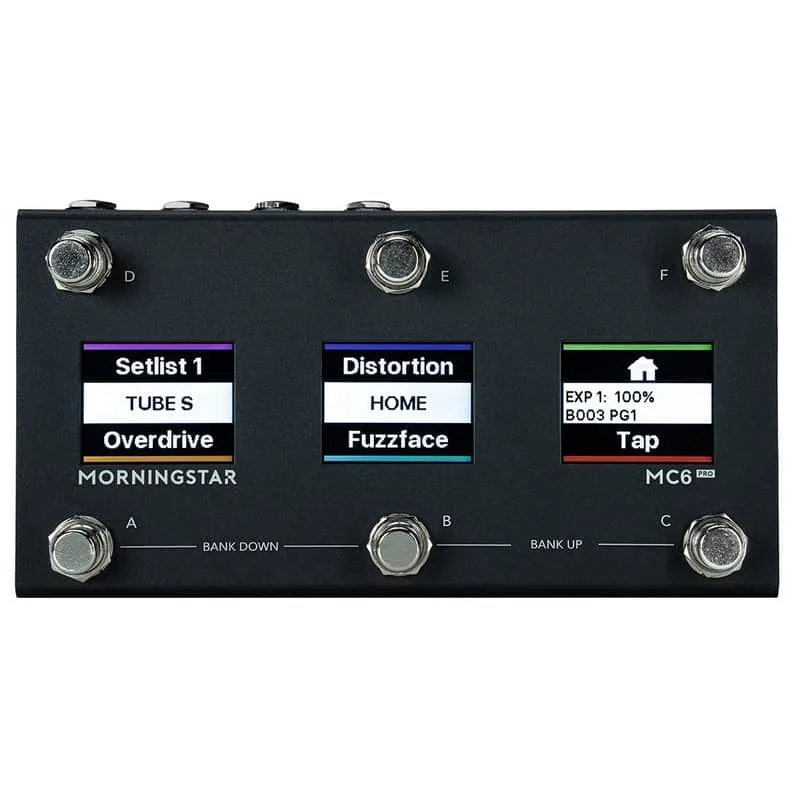
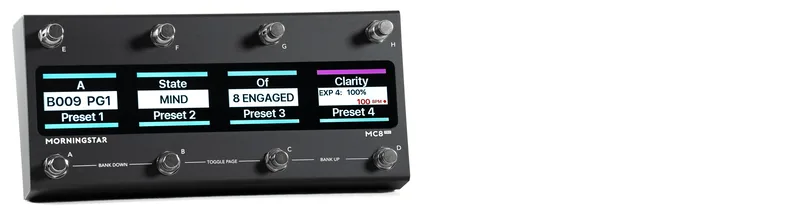
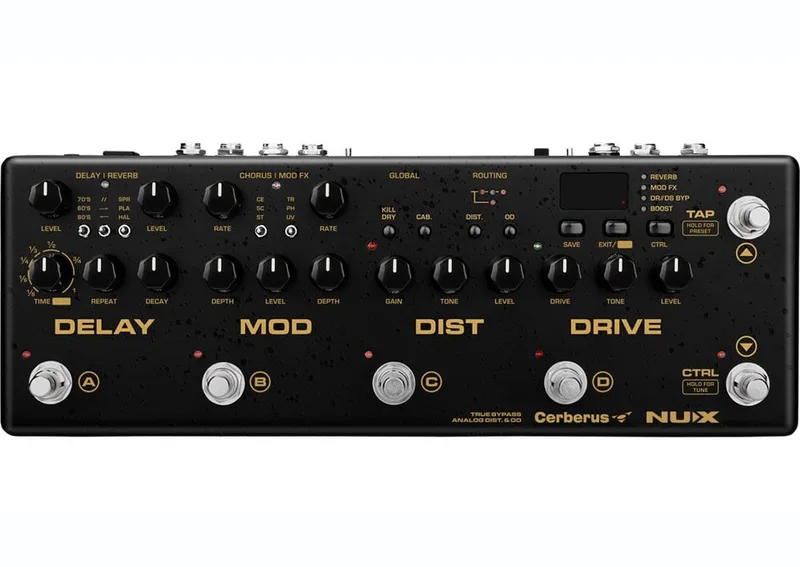
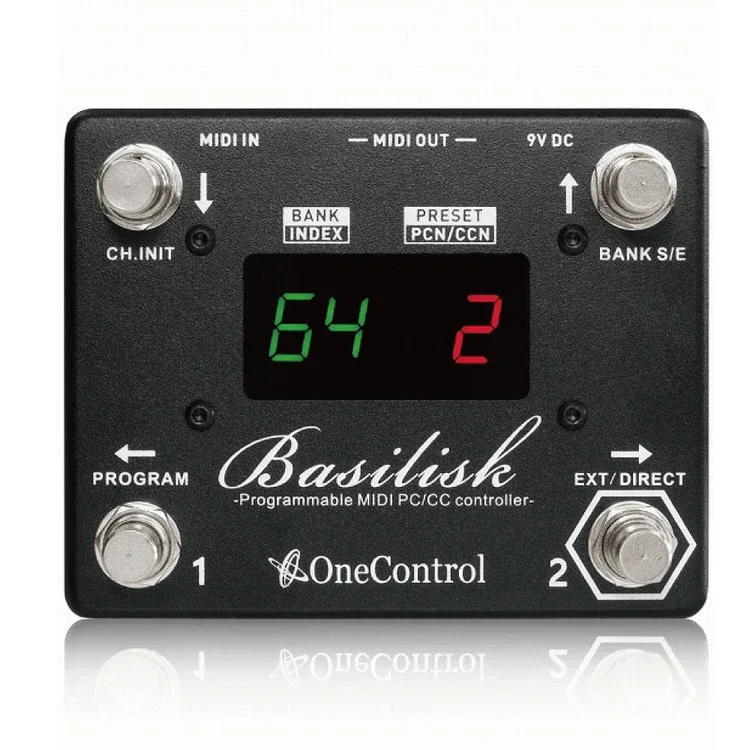
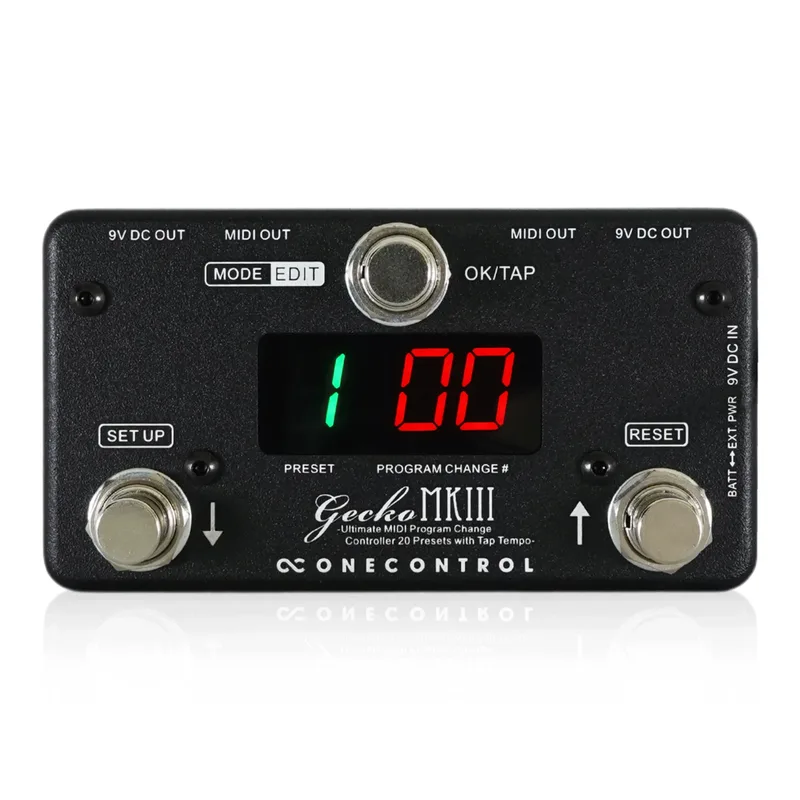
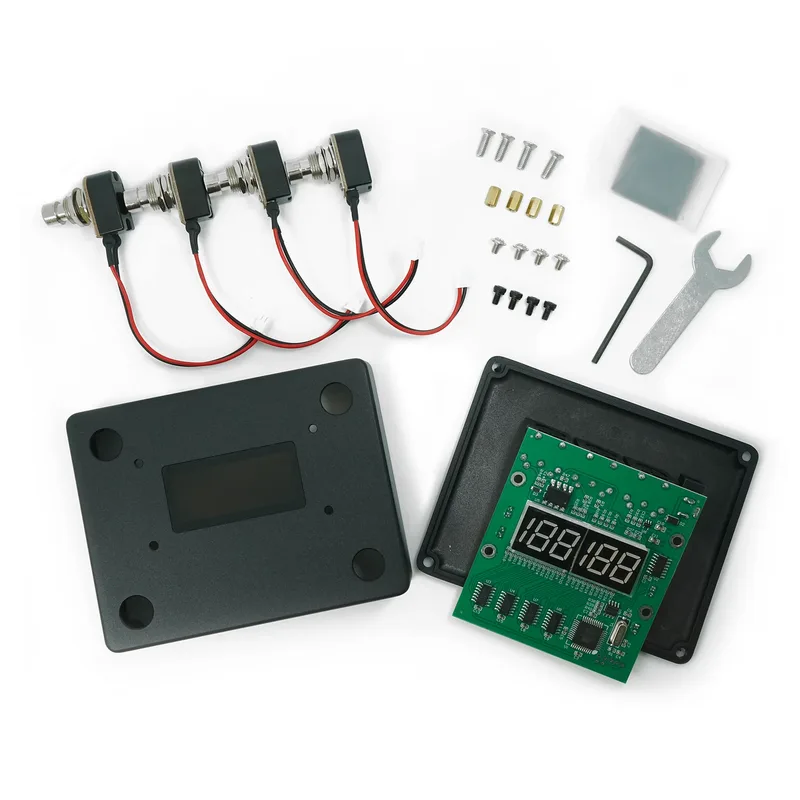
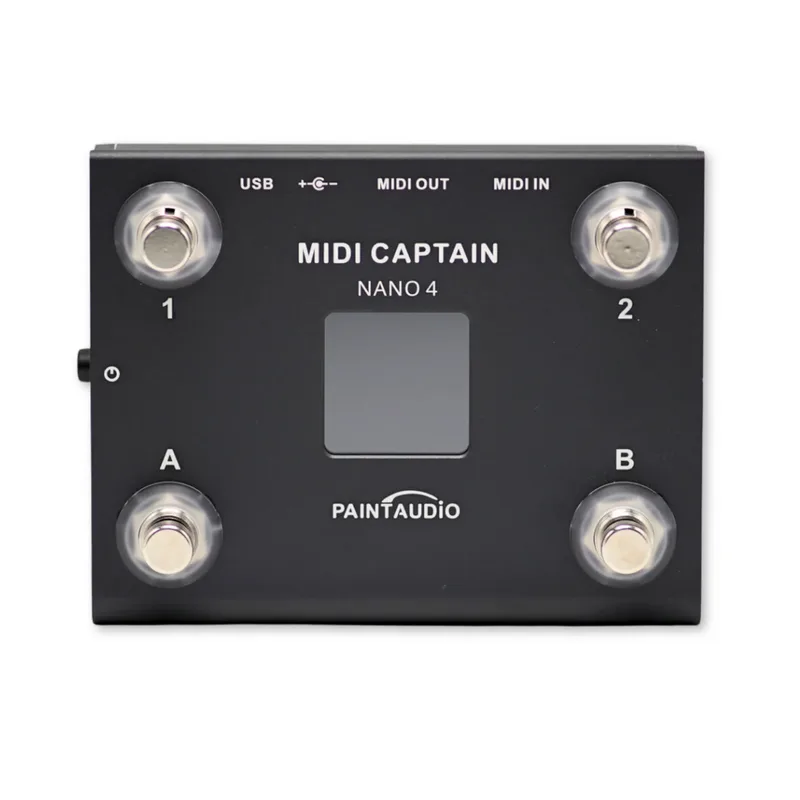
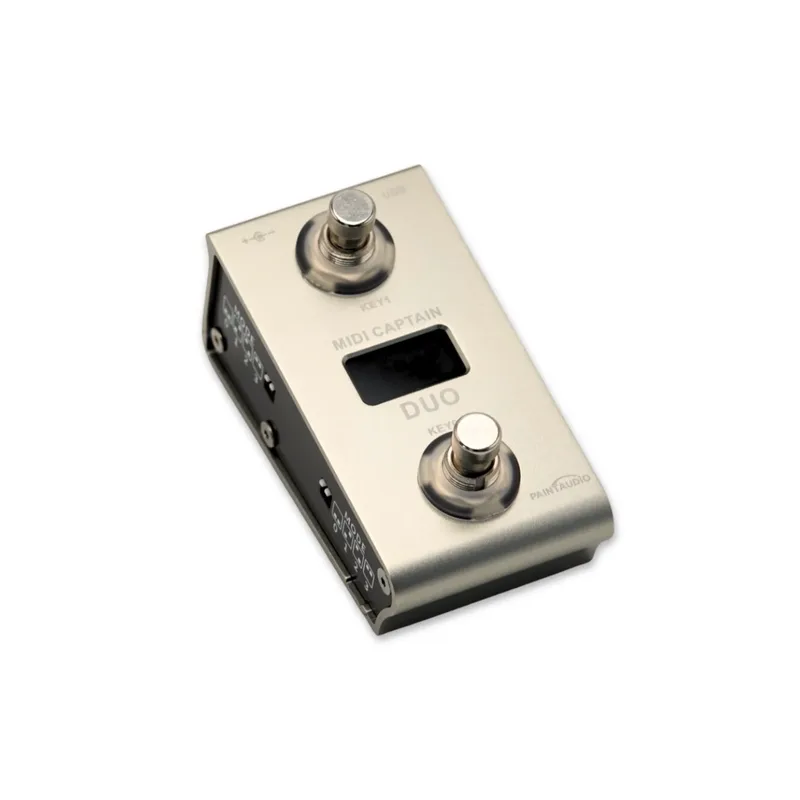
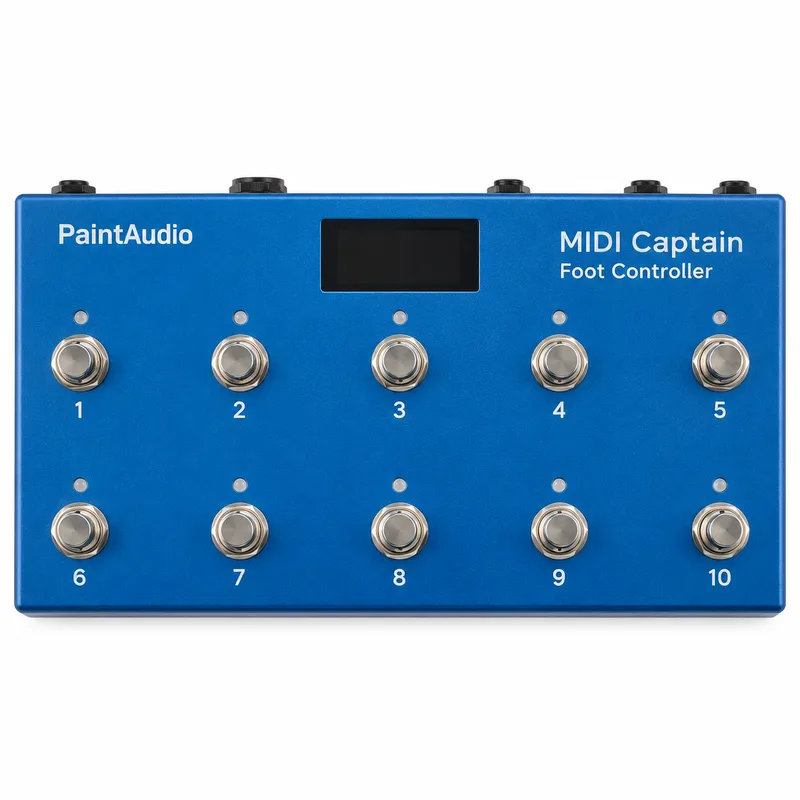
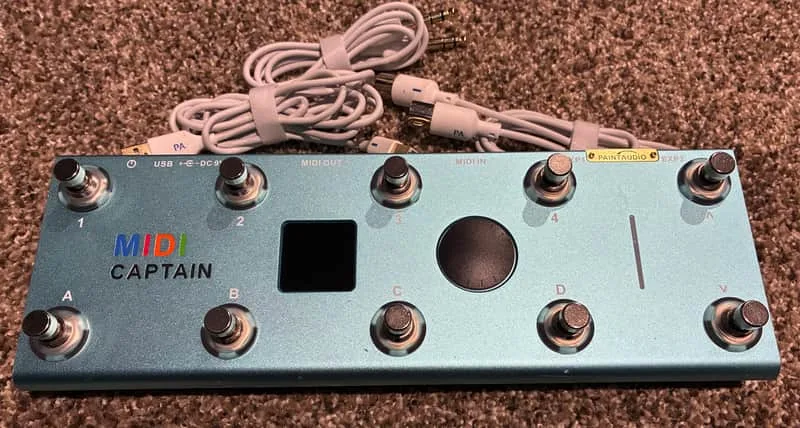
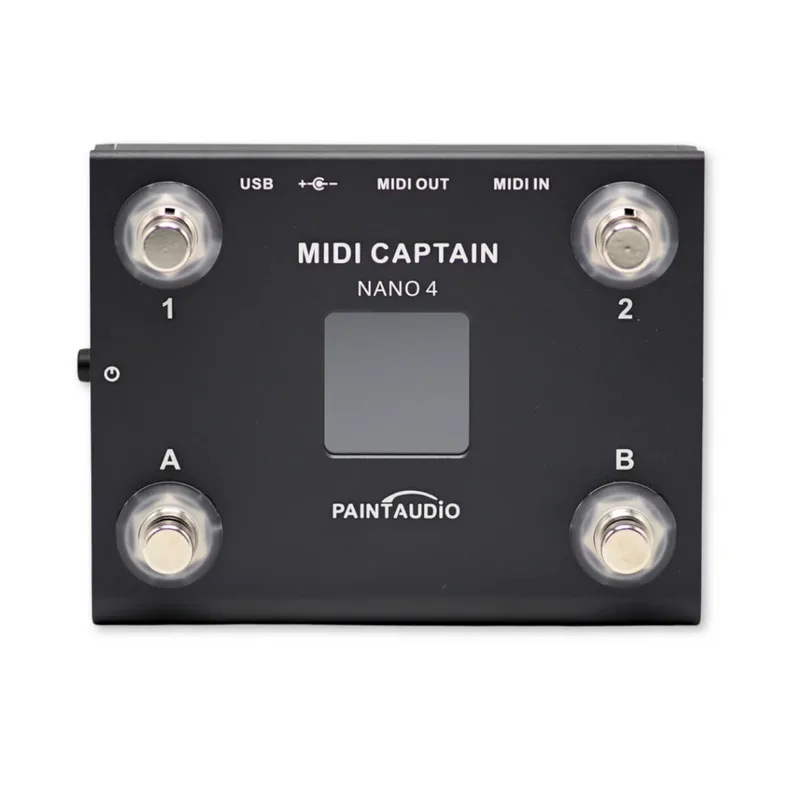
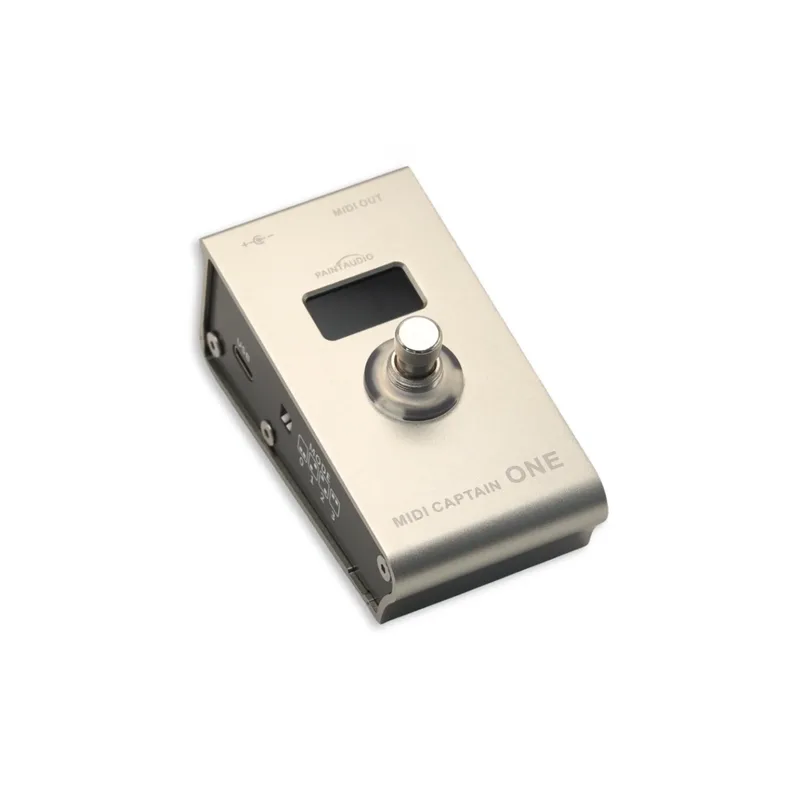
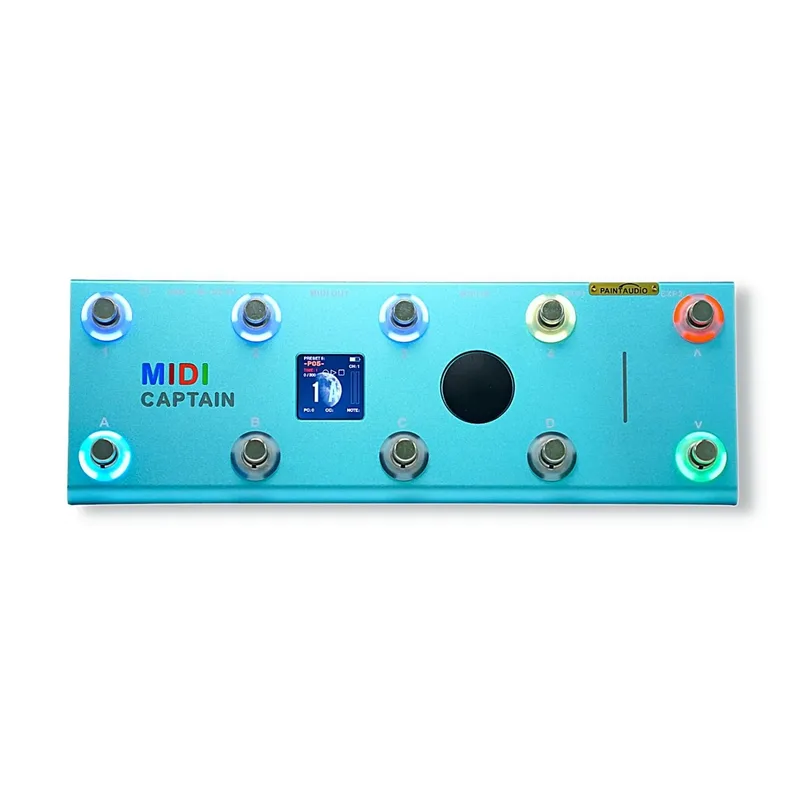
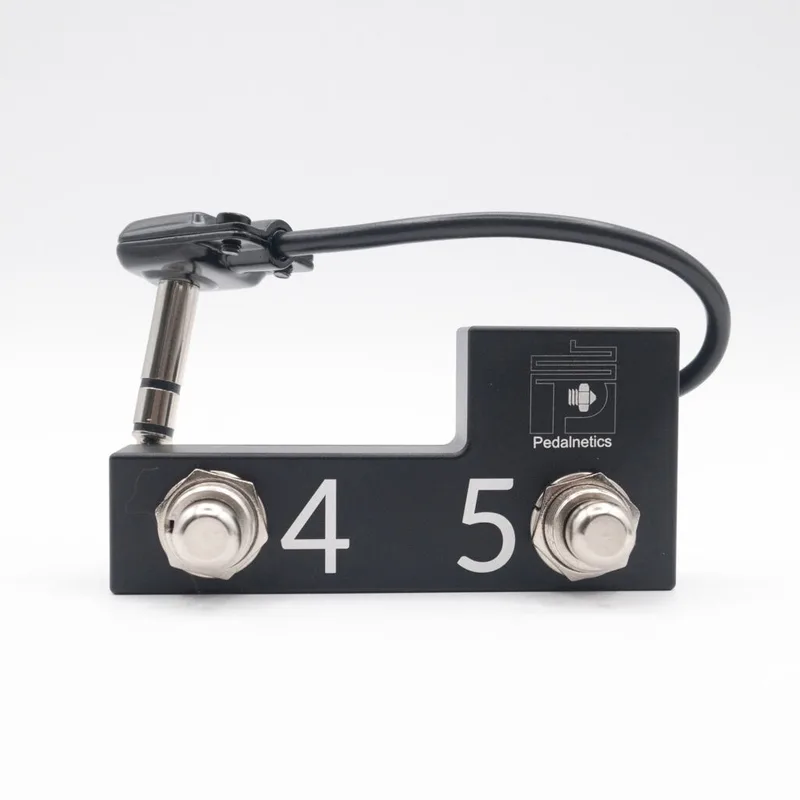
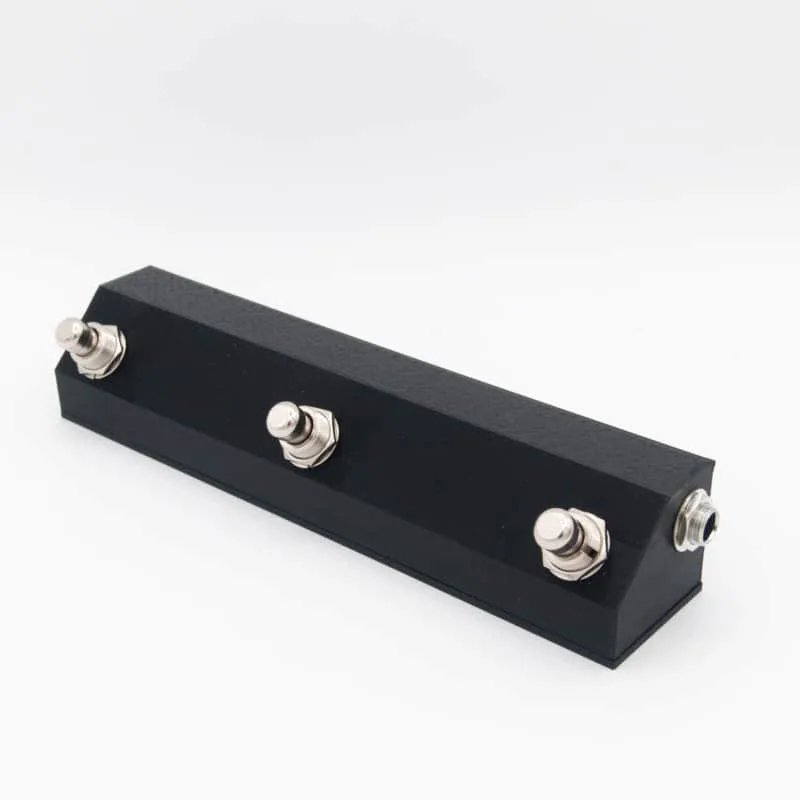
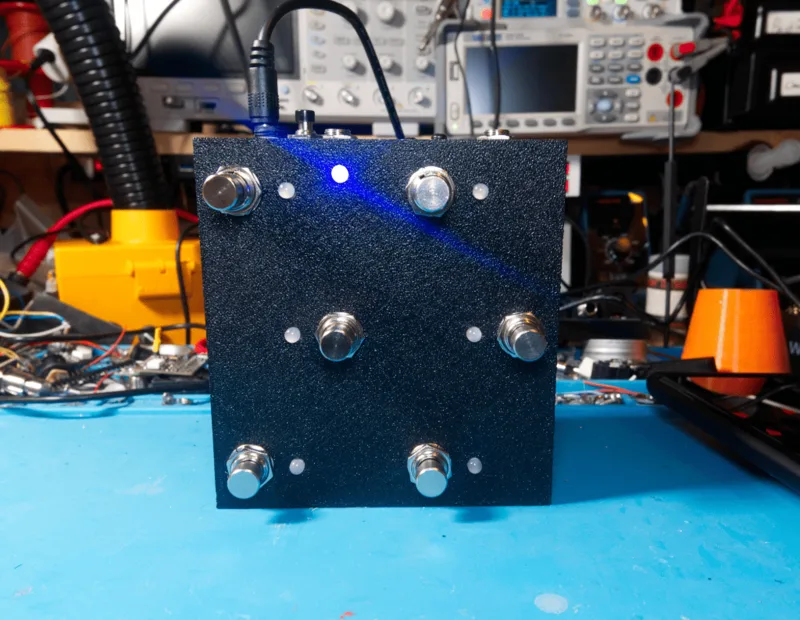
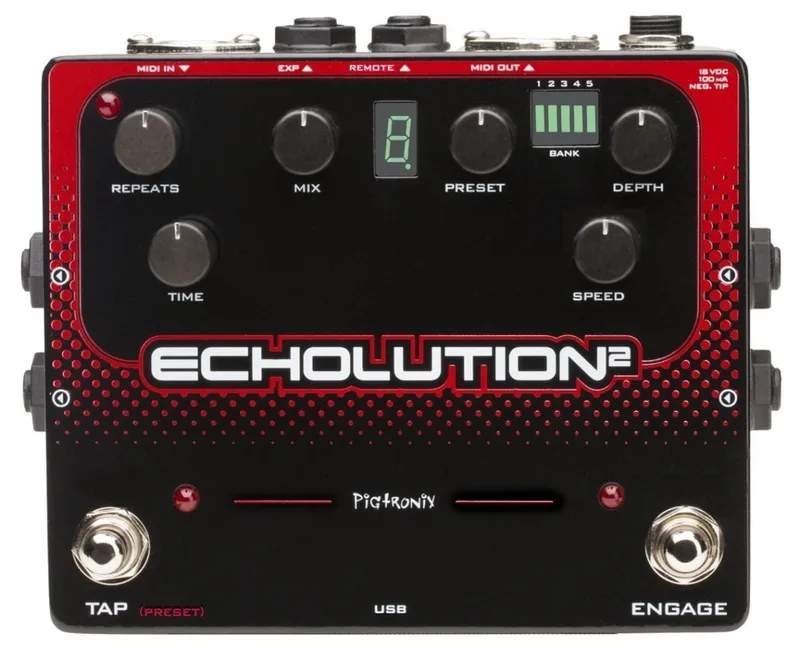
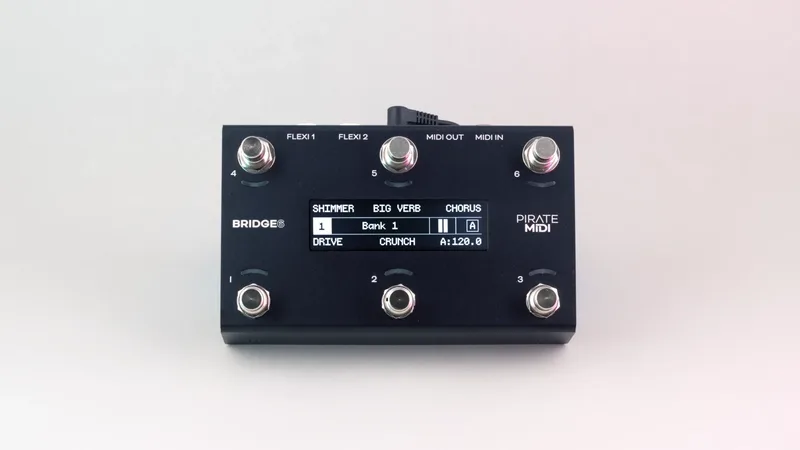

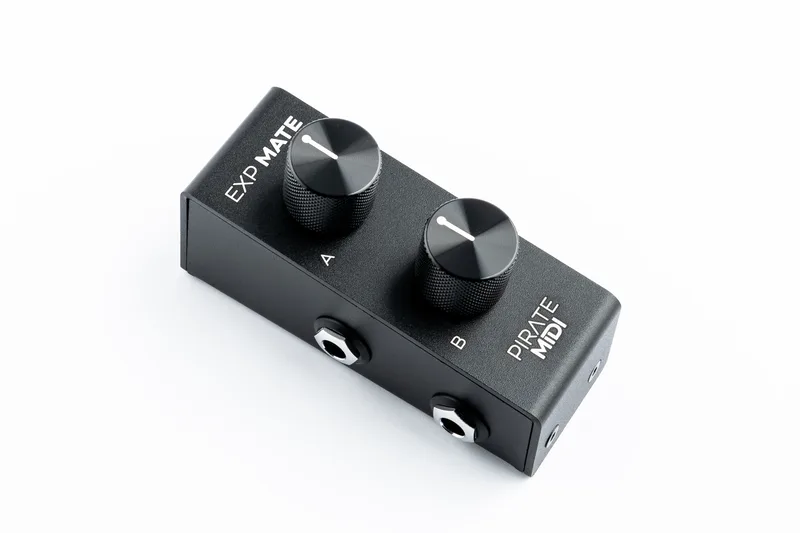
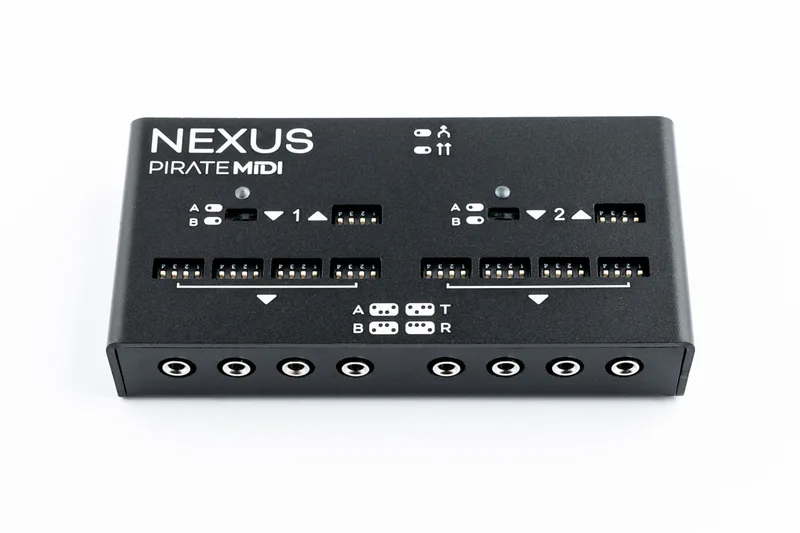
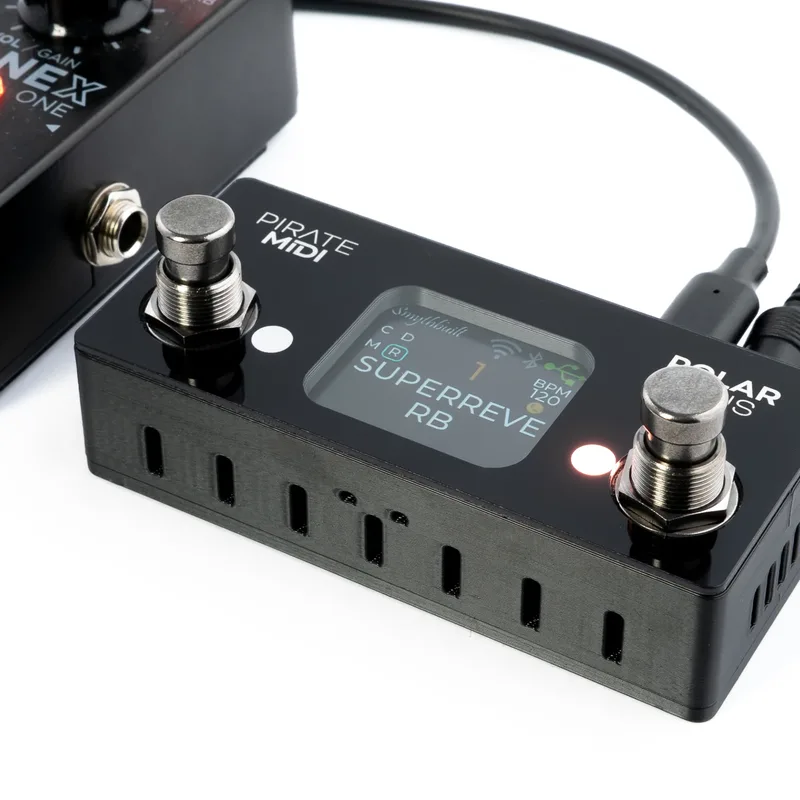
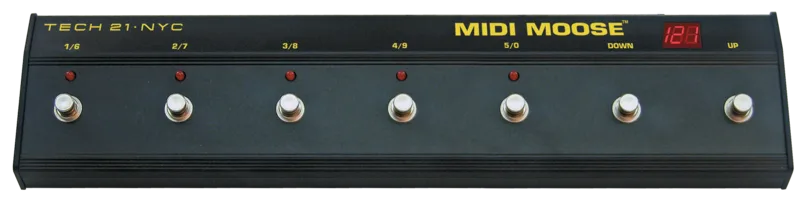
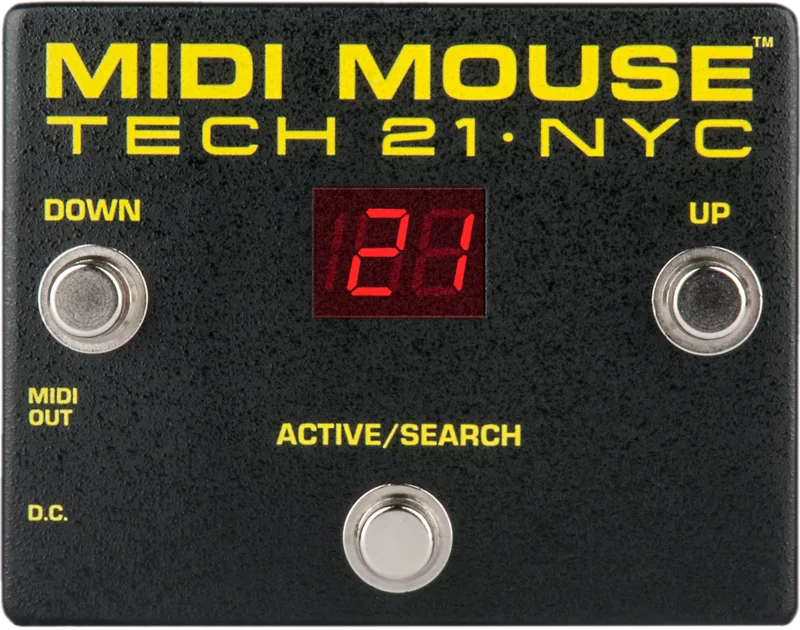
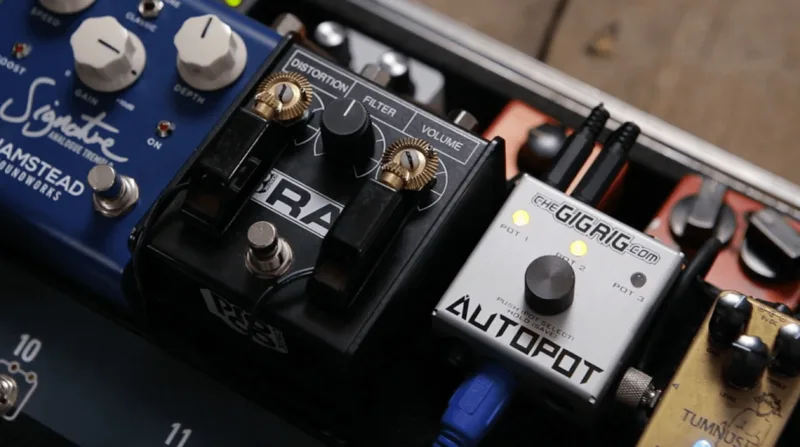
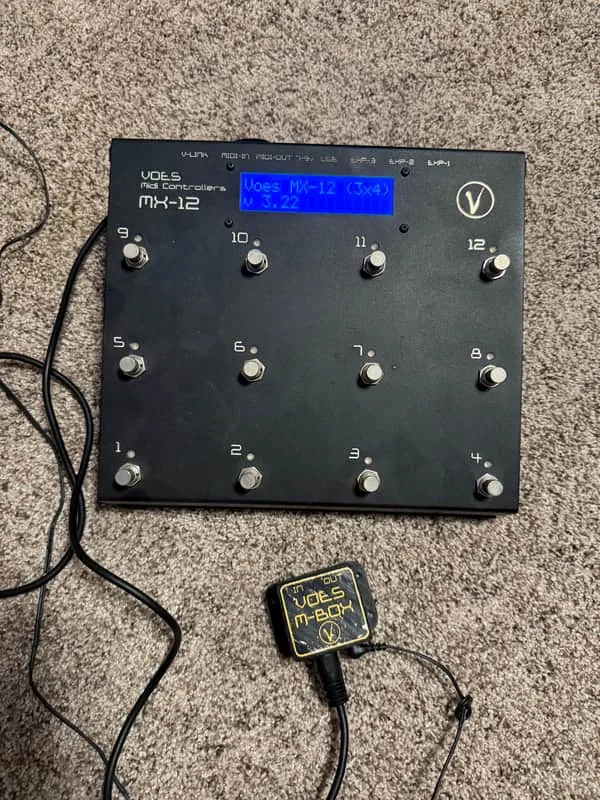
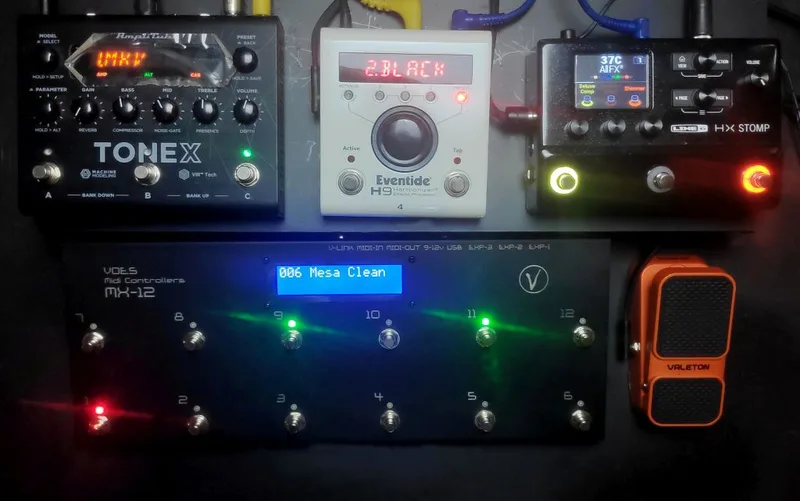
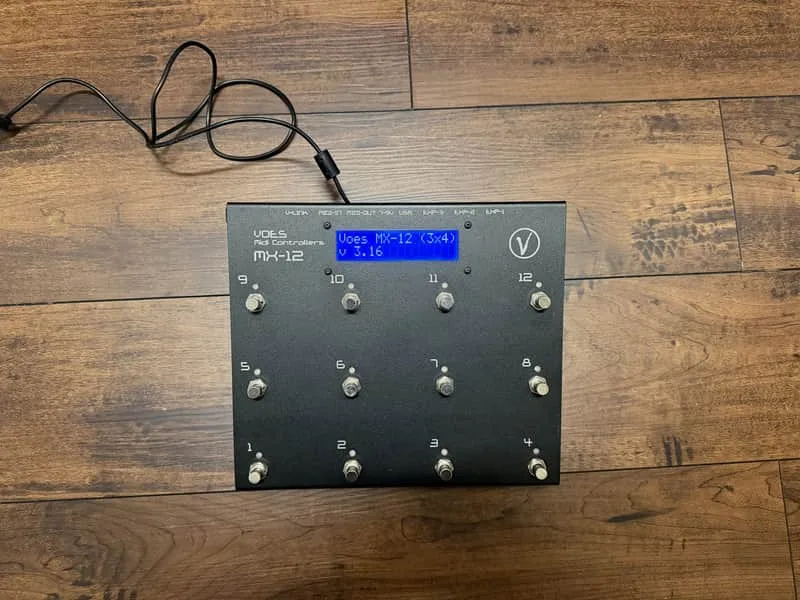
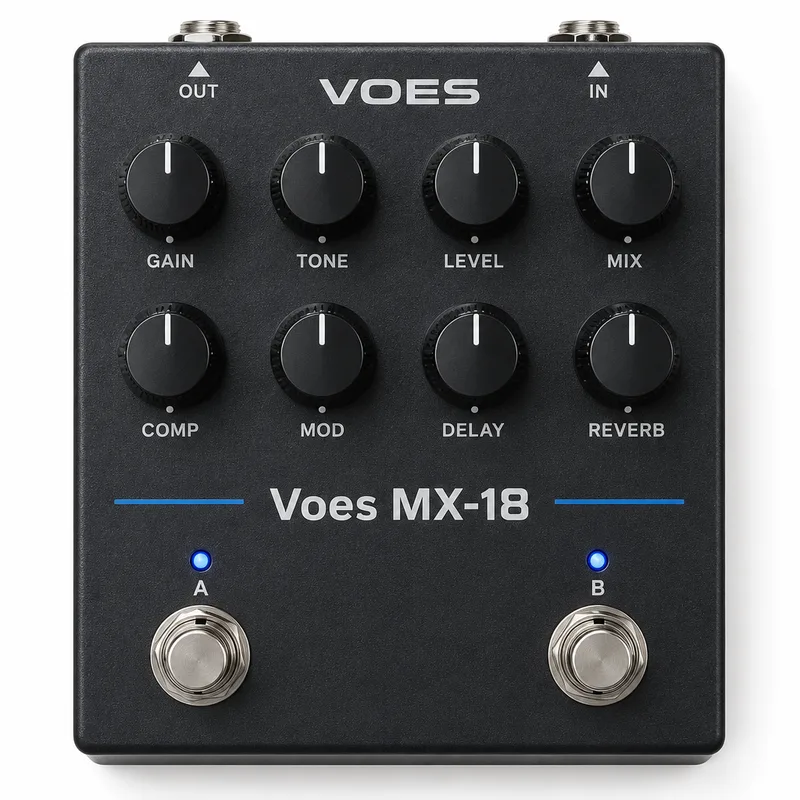
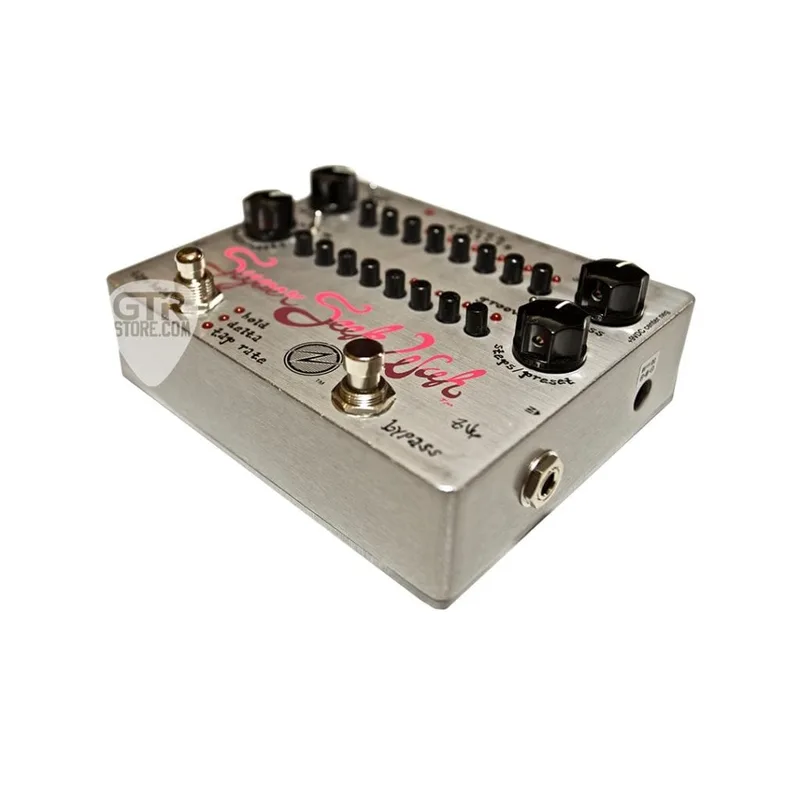
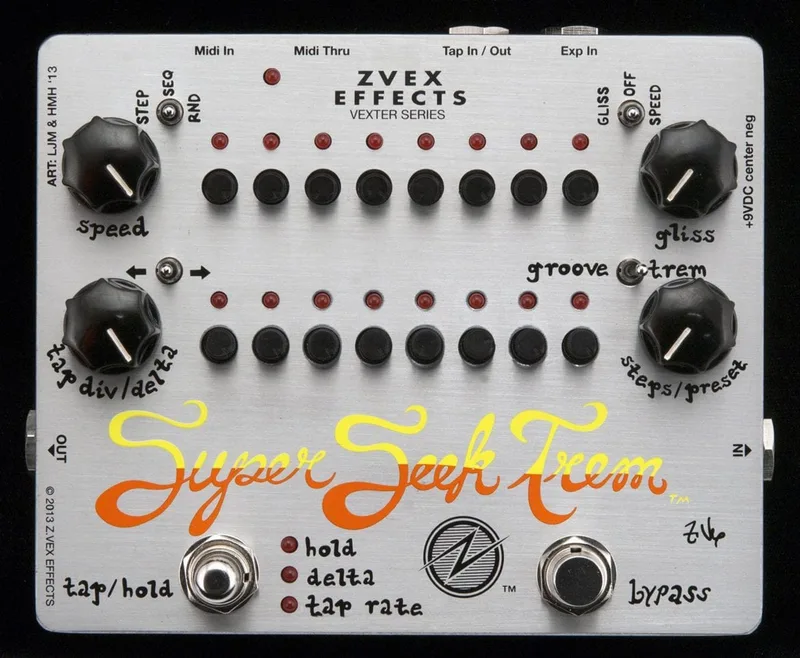
MIDI pedals are guitar effects and control devices that use MIDI, the Musical Instrument Digital Interface protocol, to send and receive commands. On a pedalboard, MIDI does four practical jobs: switching effects on and off, calling up presets on MIDI-enabled effects, synchronizing time-based effects, and letting a MIDI expression pedal drive effect parameters1. The key thing to understand is that MIDI never carries your guitar signal. As Voodoo Lab's switching guide puts it, "MIDI runs parallel to all of it, never touching audio, only sending commands"2. DSP pedals, rack gear, even stage lights respond to those commands instantly.
For a long time MIDI was the language of synthesizers, sequencers, and drum machines1. Guitar pedals adopted it later, and today it appears in two broad forms: effects that can be controlled by MIDI, and devices whose whole job is to send MIDI, such as foot controllers, expression converters, and relay modules that retrofit older pedals. This page covers both sides of that divide.
MIDI is a control protocol, not an effect type. A "MIDI pedal" can be a reverb, a delay, a fuzz, or a box with no audio path at all. What the label means is that the device listens to, or speaks, MIDI.
How MIDI control works
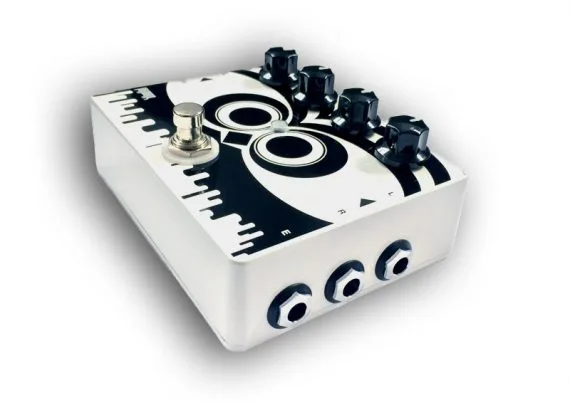
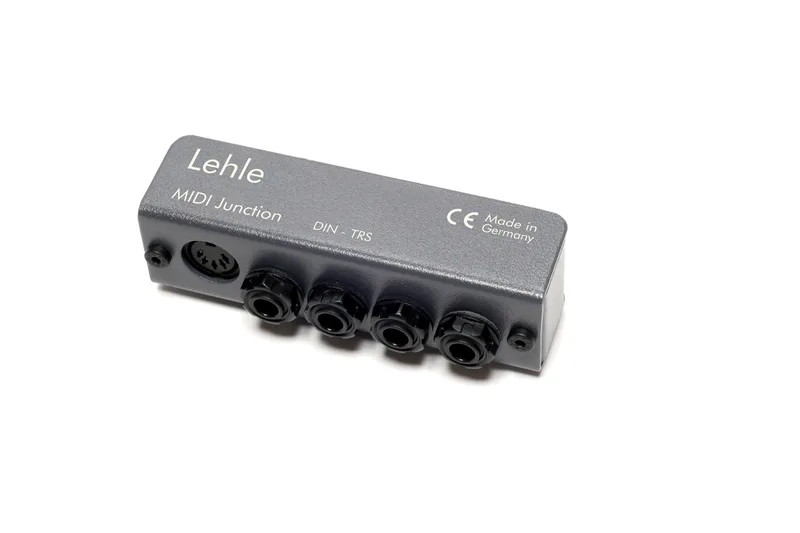
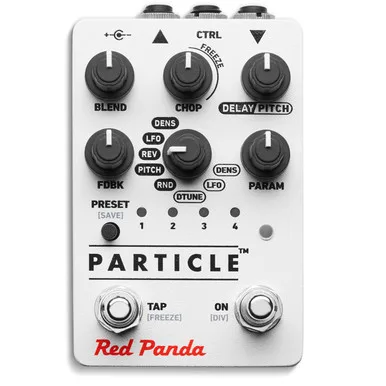
MIDI messages travel over their own connections: 5-pin DIN ports, 1/4" TRS jacks, or USB. A Red Panda Particle 2, for example, supports USB MIDI in and out plus 1/4" TRS MIDI on the input only3. A Rebel Technology OWL Pedal uses USB MIDI4. Whichever physical form it takes, the messages themselves fall into a few families a player will meet constantly.
- Program Change (PC): a numbered command that recalls a stored preset or state. Microdesignum's relay modules respond to Program Change as well as Control Change5.
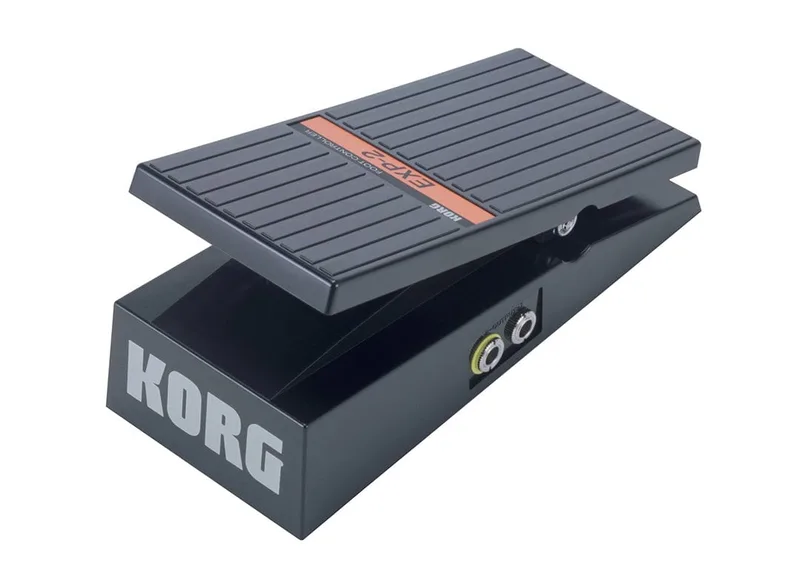
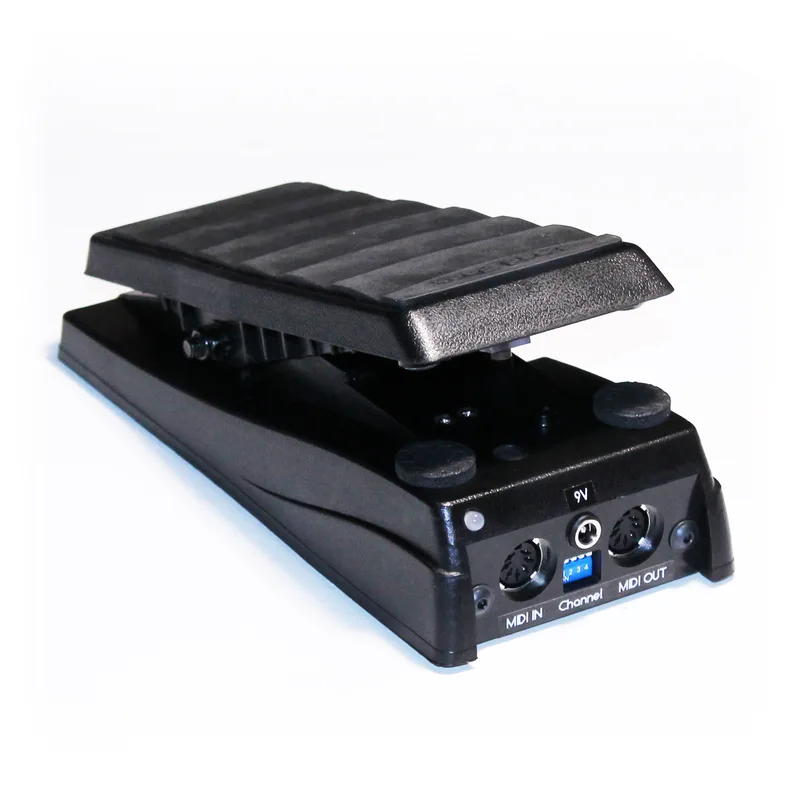
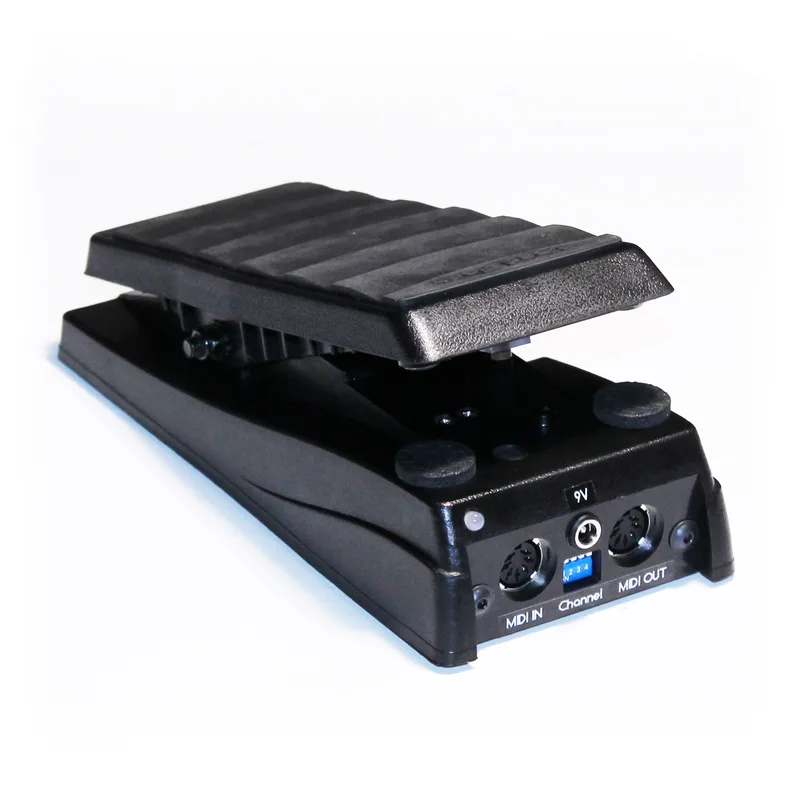
- Control Change (CC): a numbered controller with a value from 0 to 127. Microdesignum's MIDI Expressione 1A1F sends Control Change messages matching the position of the pedal, 0 to 127, and the state of its switch, 0 or 1276.
- MIDI Clock: a tempo stream that time-based effects can lock onto. Pedals that sync to MIDI Clock lock onto the incoming signal and adjust their tempo1.
- System Exclusive (SysEx): manufacturer-specific messages, often used for setup. MIDI Solutions' Pedal Controller is programmed by sending it SysEx commands from a computer with a MIDI interface7.
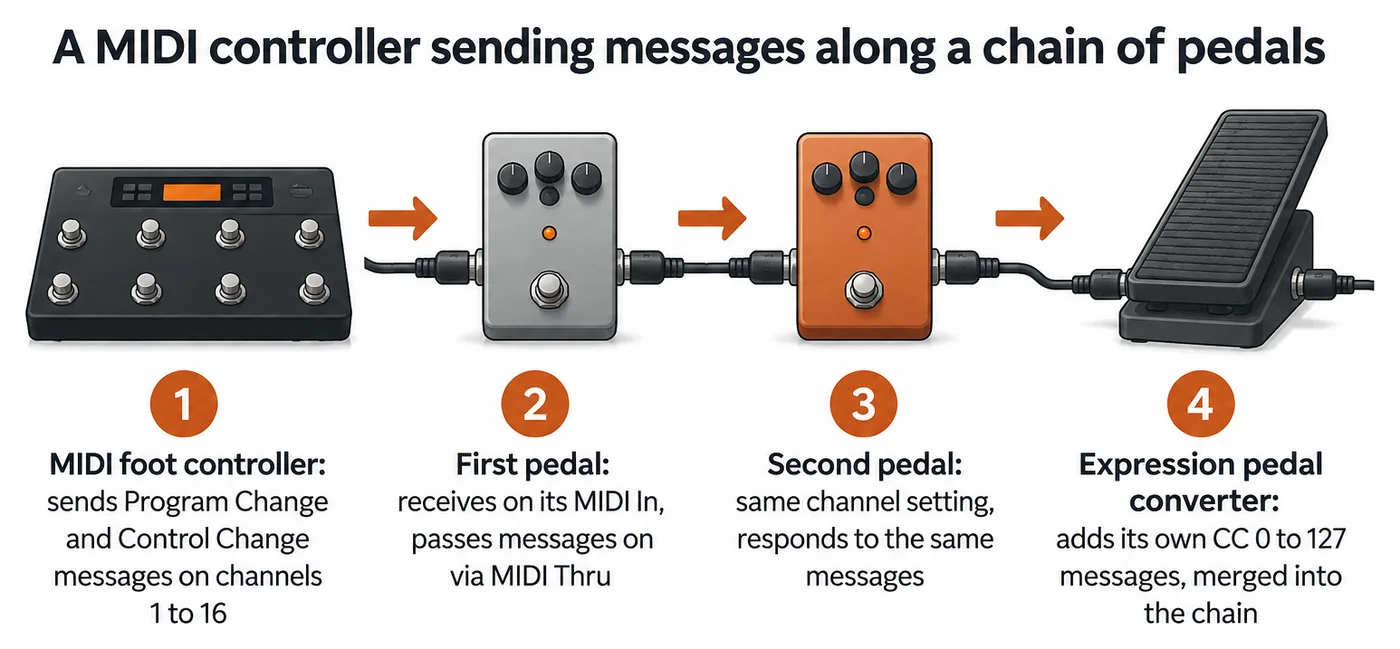
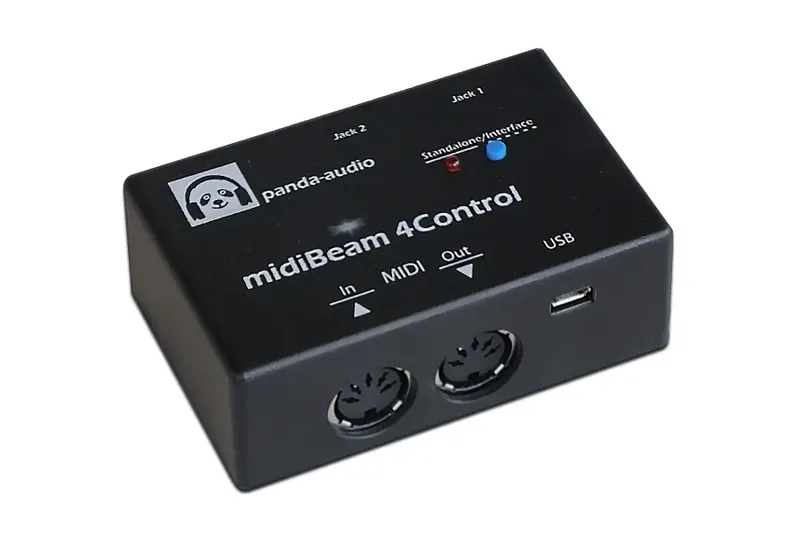
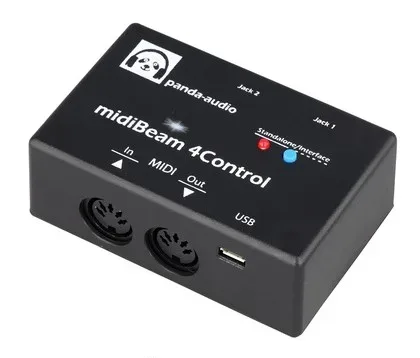
Two settings govern whether any of this works. The first is the MIDI channel. A pedal will respond only to messages sent on the same MIDI channel it is set to receive MIDI on9. There are 16 channels, so one controller can address 16 different devices independently. Panda-Audio's midiBeam 4Control has a MIDI CHANNEL setting for channels 1 through 16 that sets the channel its connected expression pedal transmits on108. On Microdesignum's modules, the channel is set with DIP switches5.
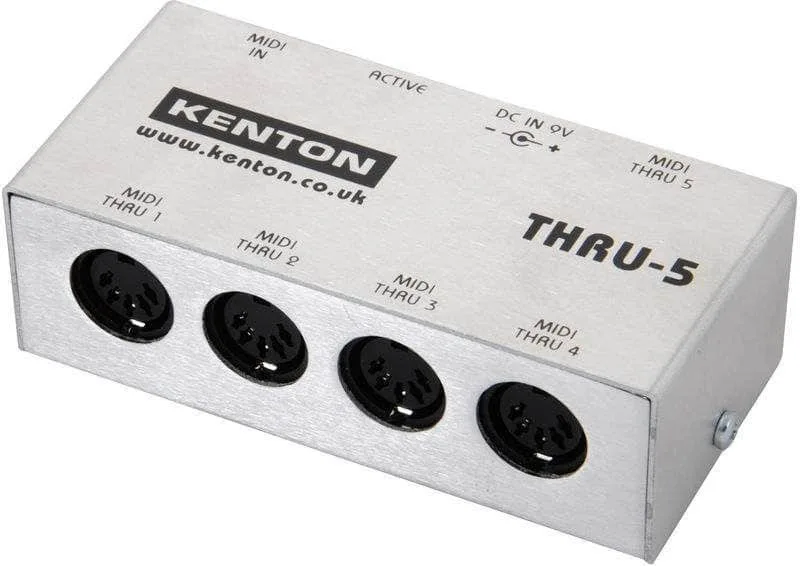
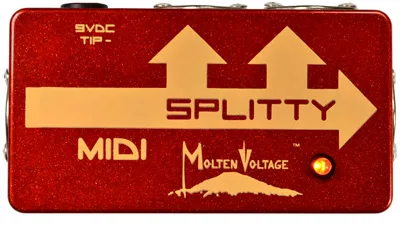
The second is channel routing through the chain. Most, but not all, MIDI-capable pedals have MIDI In and MIDI Thru ports, which allows daisy chaining: the controller feeds the first pedal, and that pedal's Thru passes the messages on to the next9. Some devices go further and merge. The MIDI Solutions Footswitch Controller merges its triggered MIDI events with incoming MIDI messages and sends everything to its output11, and the MIDI Solutions Pedal Controller can merge the messages it generates with messages received at its MIDI input7.
The Pedal Controller also illustrates a setting players will see elsewhere: MIDI Echo. When Echo is ON, all incoming MIDI messages received by the Pedal Controller are echoed to its output; when OFF, only messages generated by the Pedal Controller are sent7. MIDI Solutions' product page describes the same behavior for its MIDI Echo parameter: ON passes everything at MIDI In through to MIDI Out, OFF filters the messages out12. Echo ON effectively turns a merged chain into a pass-through; Echo OFF keeps the device quiet on the line except for its own messages.
History and landmark MIDI pedals
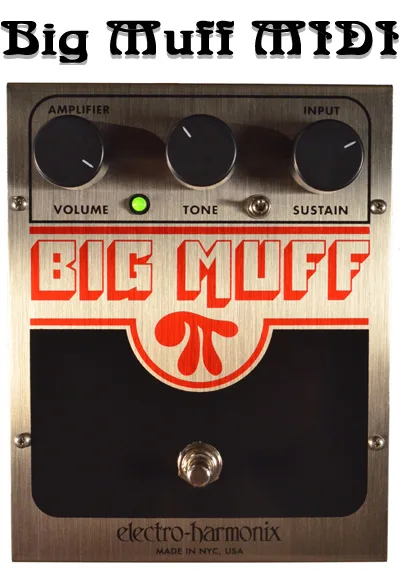
MIDI spent its early life connecting synthesizers, sequencers, and drum machines1. Guitar effects came to it gradually, and one of the clearest early examples of the idea applied to a classic analog circuit is Molten Voltage's Big Muff MIDI, a MIDI-controllable fuzz pedal built around the Big Muff circuit, documented by its maker in February 201513. The pitch was simple: take a pedal players already knew and make its switching reachable by MIDI.
The idea spread in two directions. Effects makers built MIDI into their own designs: Old Blood Noise Endeavors' Parting and Sunlight Stereo both offer MIDI control over everything in the pedal, including MIDI clock in and out for external syncing1415. Boss's GT-1000CORE takes MIDI control of external pedals and preset and parameter recall via MIDI, alongside CTL outputs and dual effects loops16. IK Multimedia's TONEX Pedal carries MIDI IN/OUT17, and Behringer's EDGE offers MIDI In and MIDI Out/Thru, with an external MIDI keyboard, footswitch, or expression pedal connectable to it18.
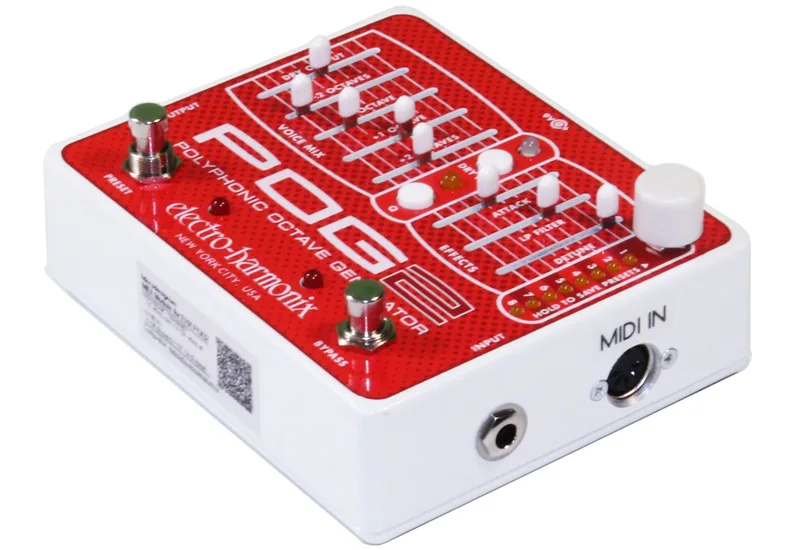
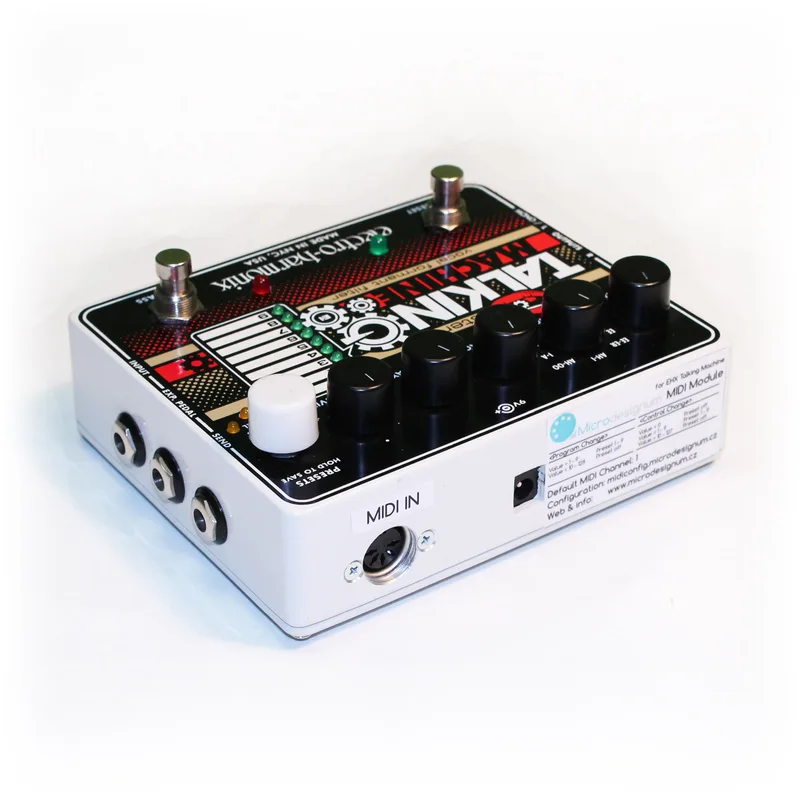
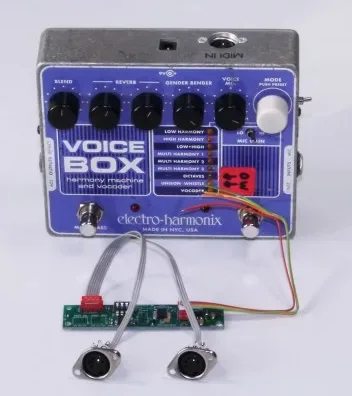
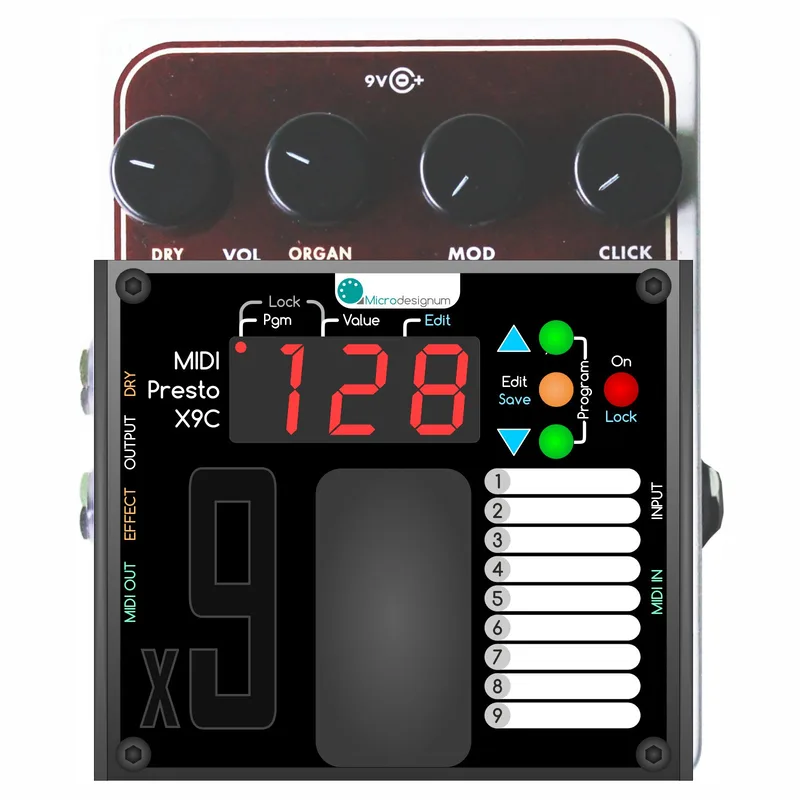
The other direction was retrofit: small companies building modules that bring MIDI to pedals that never had it. Microdesignum's module line, discussed below, is the clearest example, and its modules exist for specific pedals such as the EHX Ring Thing and Ravish Sitar and the TC Electronic Nova Delay1920. More recently, Universal Audio's UAFX pedals gained MIDI control, allowing users to recall presets and adjust effect parameters with a MIDI foot controller21.
MIDI-controllable effects and MIDI controllers
The MIDI pedal world splits into gear that makes sound and gear that sends commands. Both are worth knowing, because most boards end up using each.
Effects with MIDI built in
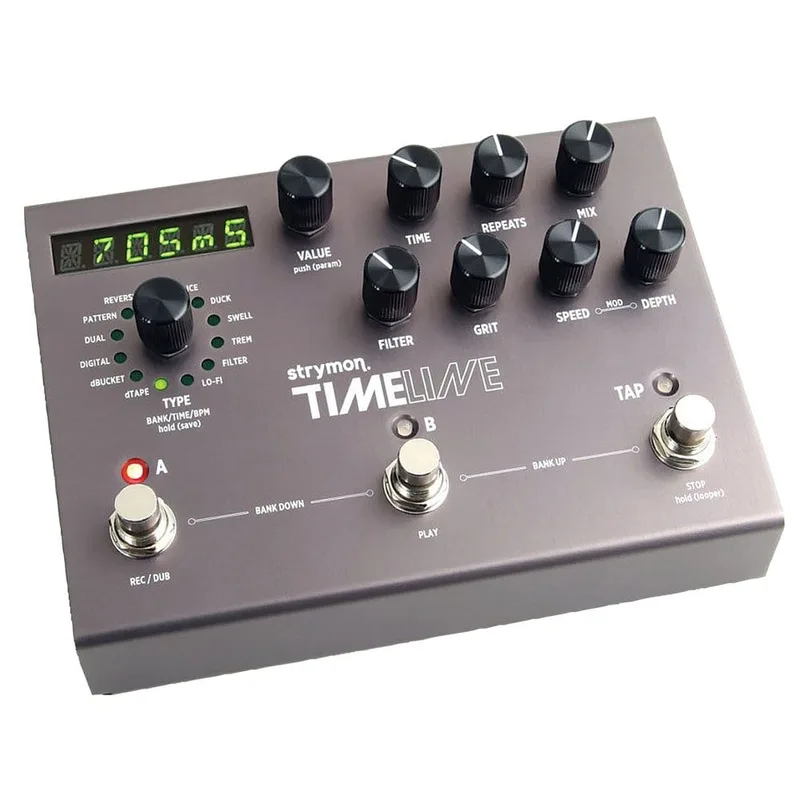
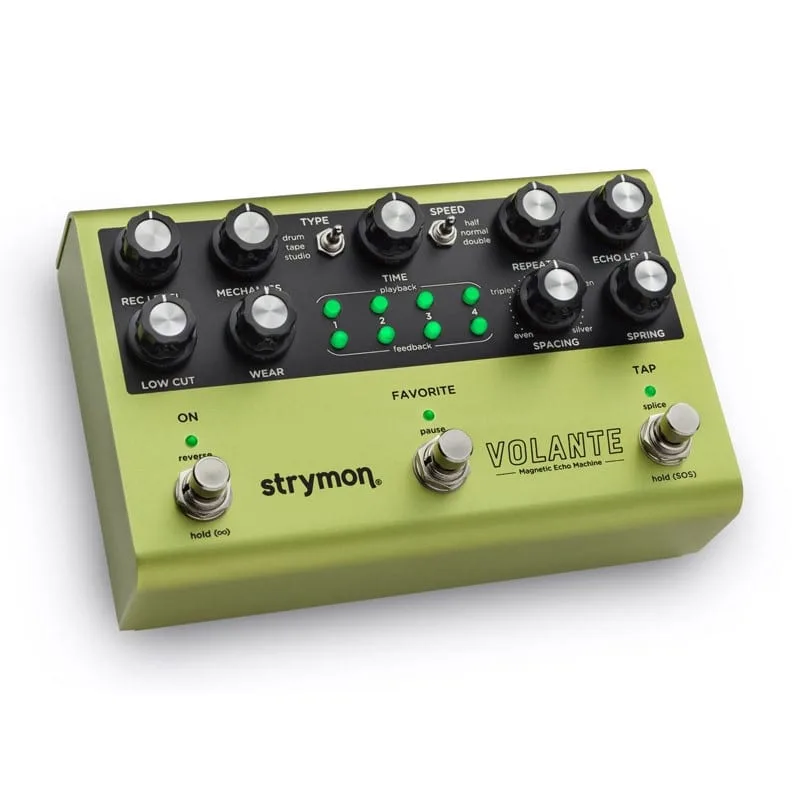
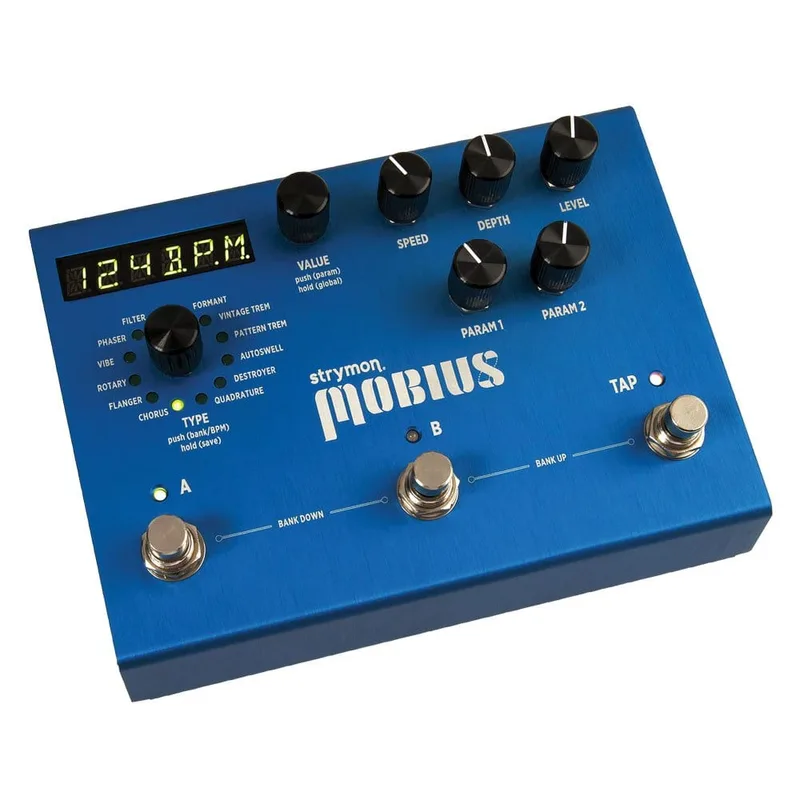
Many modern digital pedals listen for MIDI. Strymon's support documentation lists BigSky, Compadre, Iridium, Mobius, NightSky, Riverside, Sunset, TimeLine, and Volante as controllable via MIDI with an external MIDI controller or another device that can send MIDI messages22. Strymon also notes a practical caveat: although the MIDI protocol is universal, not all MIDI controllers operate in the same manner or have the same features, so the controller's manual should be consulted for programming it to send the desired messages22. With two or more MIDI-equipped Strymon pedals such as TimeLine, BigSky, and Mobius, one pedal can control the others via Program Change messages sent from the first pedal in the chain23.
| Pedal | MIDI implementation | Source |
|---|---|---|
| Red Panda Particle 2 | USB MIDI in/out, 1/4" TRS MIDI input only | 3 |
| Boss GT-1000CORE | MIDI control of external pedals, preset and parameter recall | 16 |
| IK Multimedia TONEX Pedal | MIDI IN/OUT | 17 |
| Behringer EDGE | MIDI In and MIDI Out/Thru, external keyboard, footswitch or expression pedal | 18 |
| Old Blood Noise Parting and Sunlight Stereo | MIDI control over everything, MIDI clock in and out | 1415 |
| Strymon BigSky, Mobius, TimeLine and others | Control via external MIDI controller or another MIDI device | 22 |
MIDI controllers and interfaces
On the sending side, the range runs from full foot controllers to tiny converters.
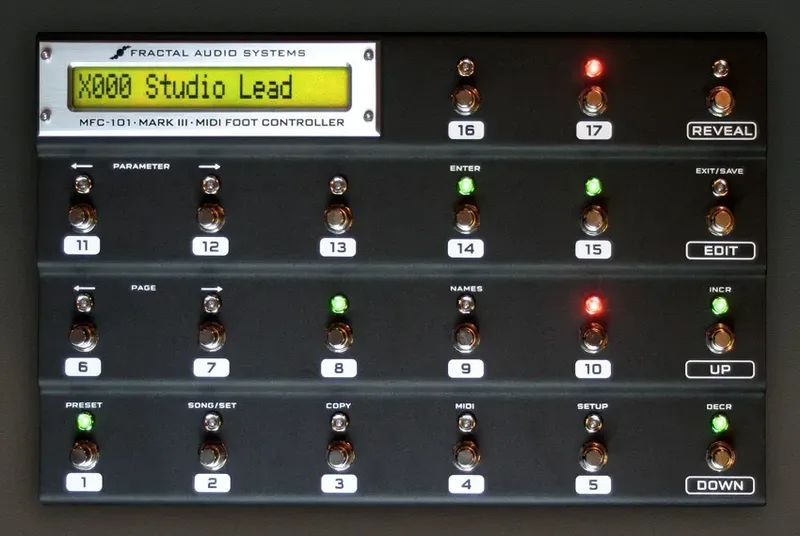
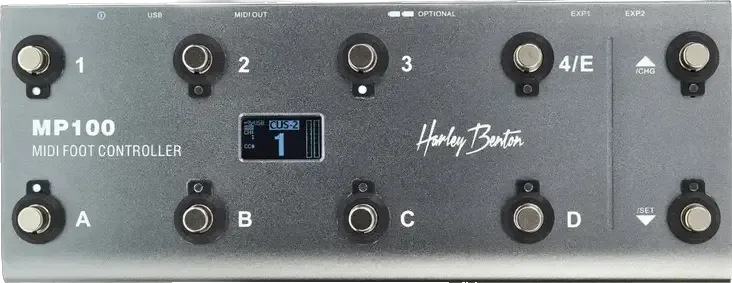
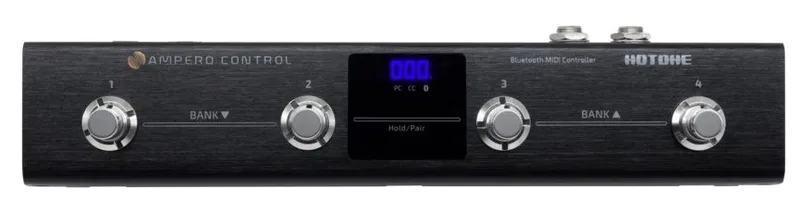
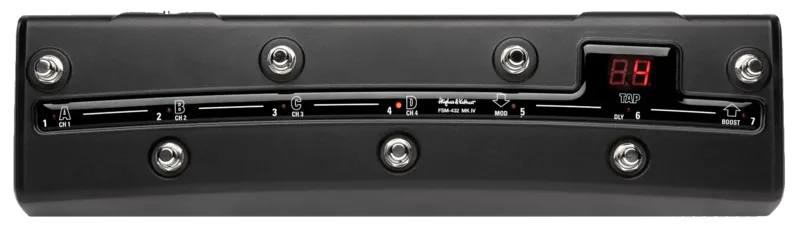
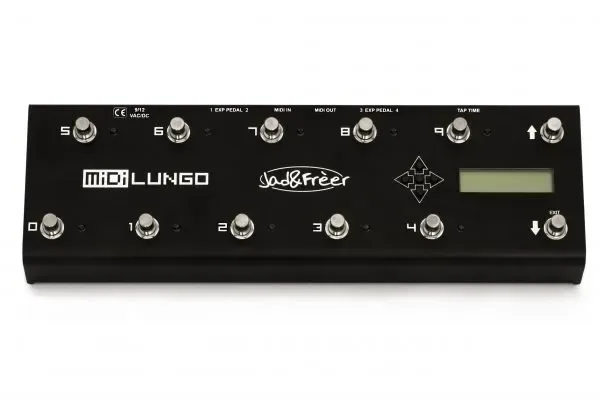
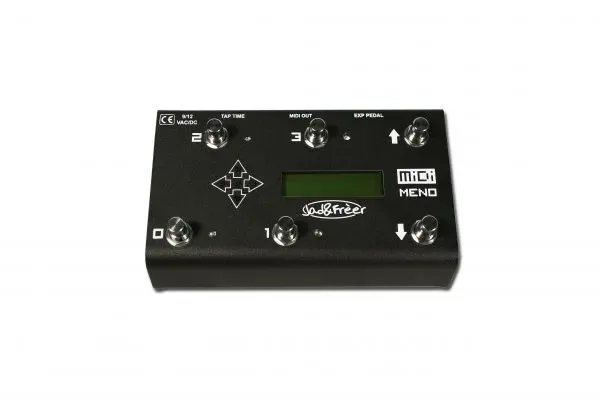
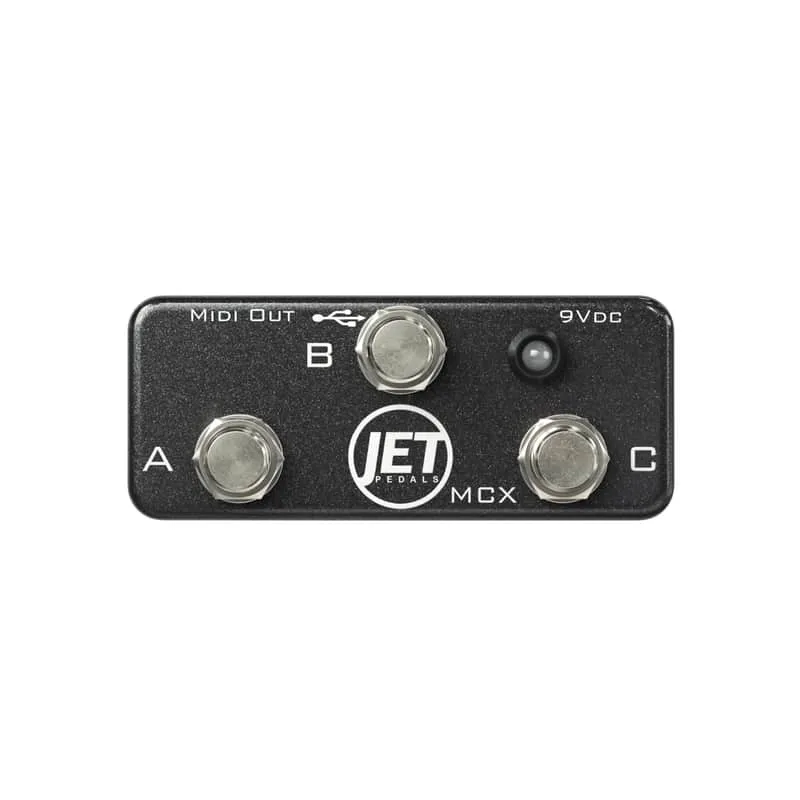
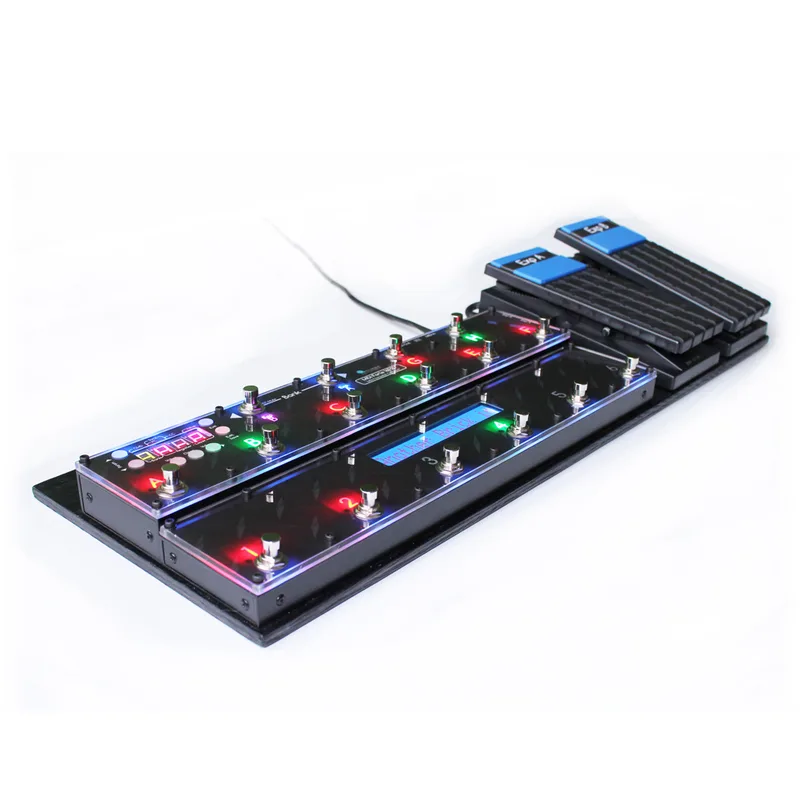
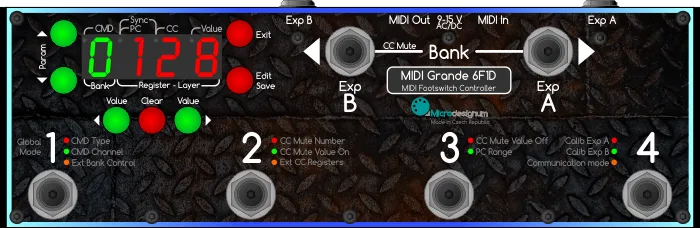
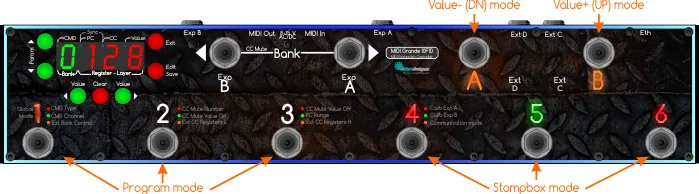
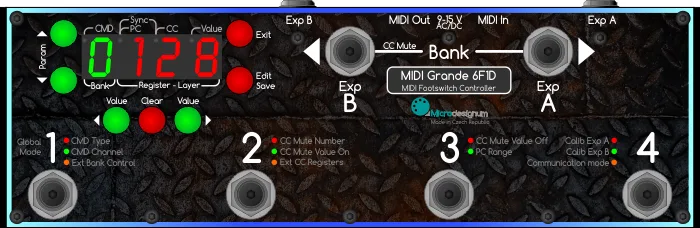
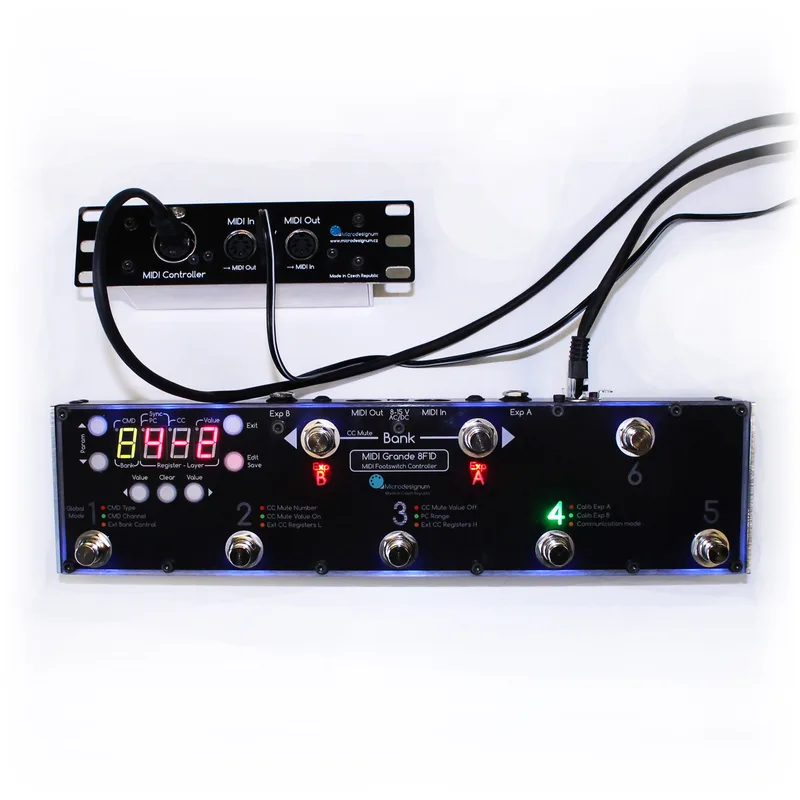
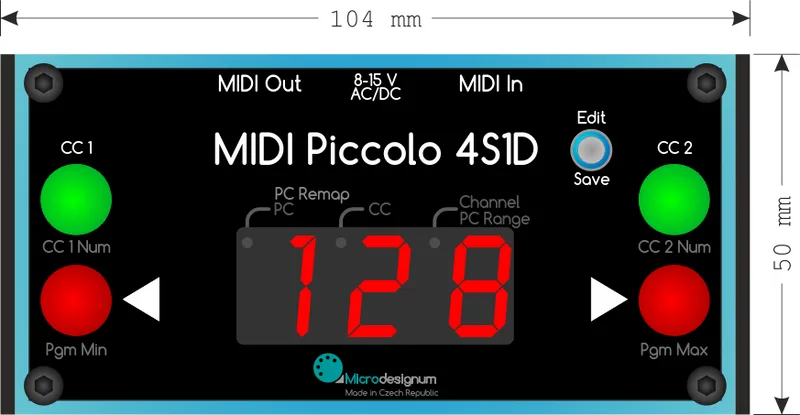
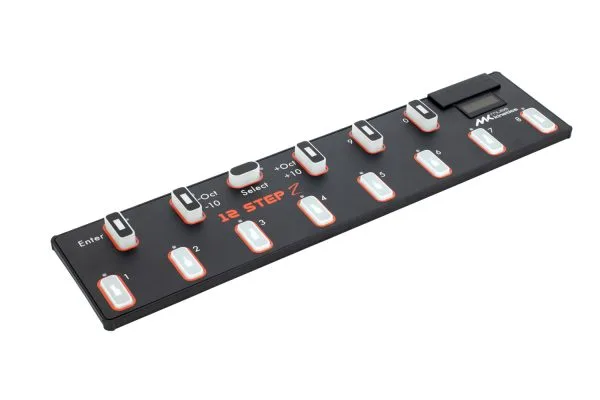
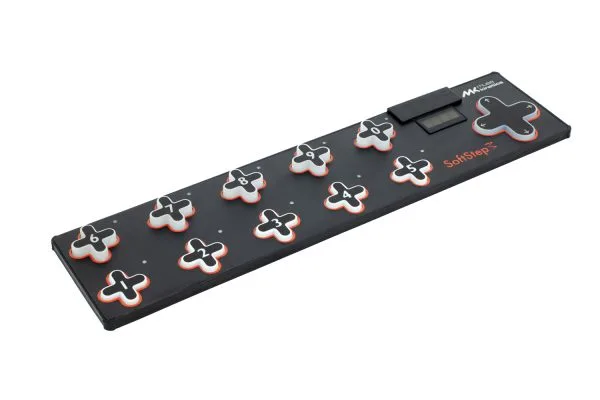
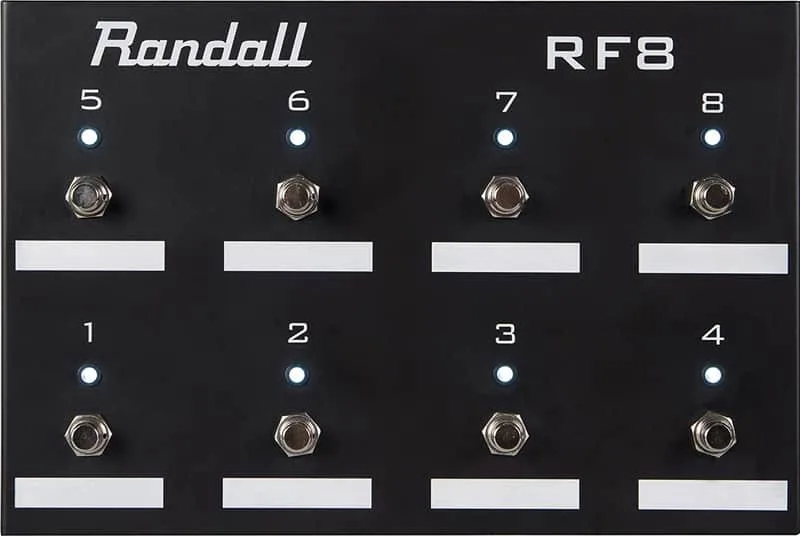
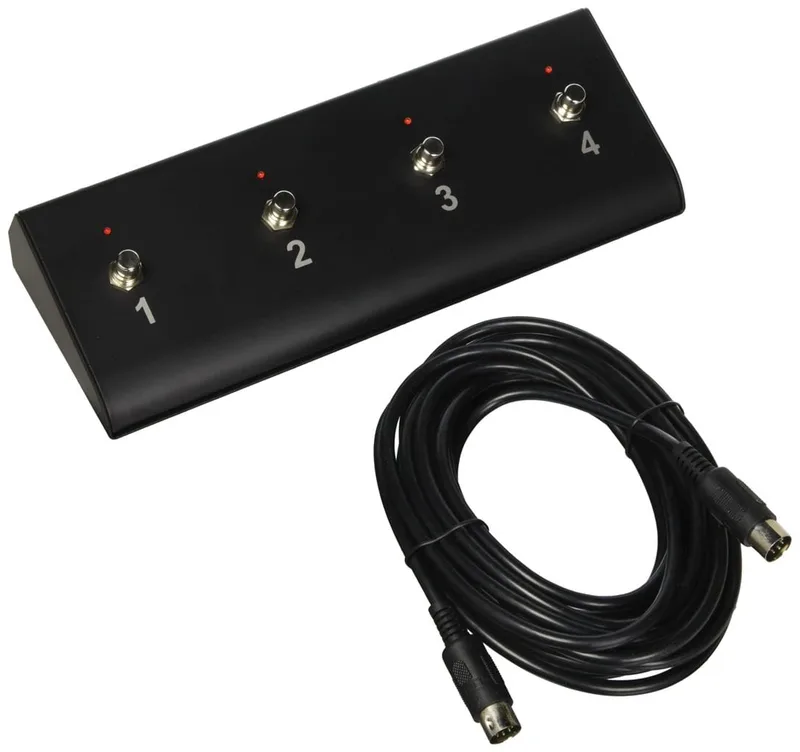
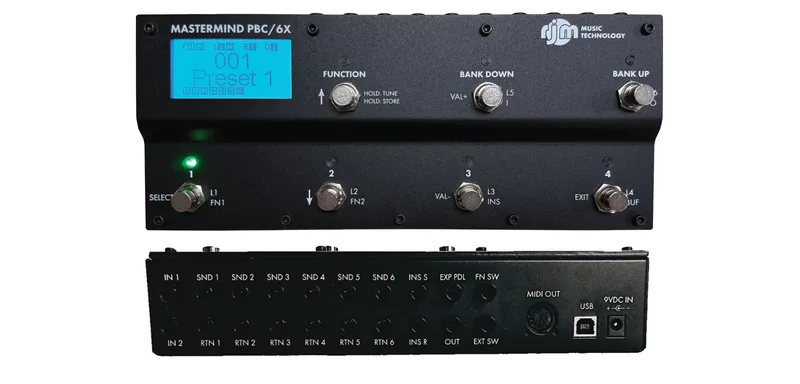
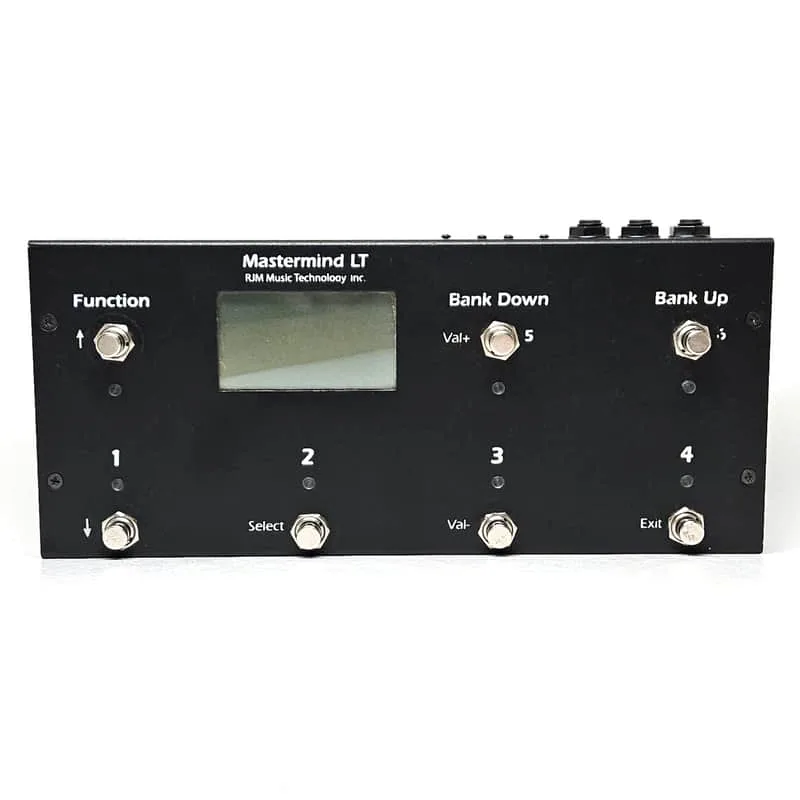
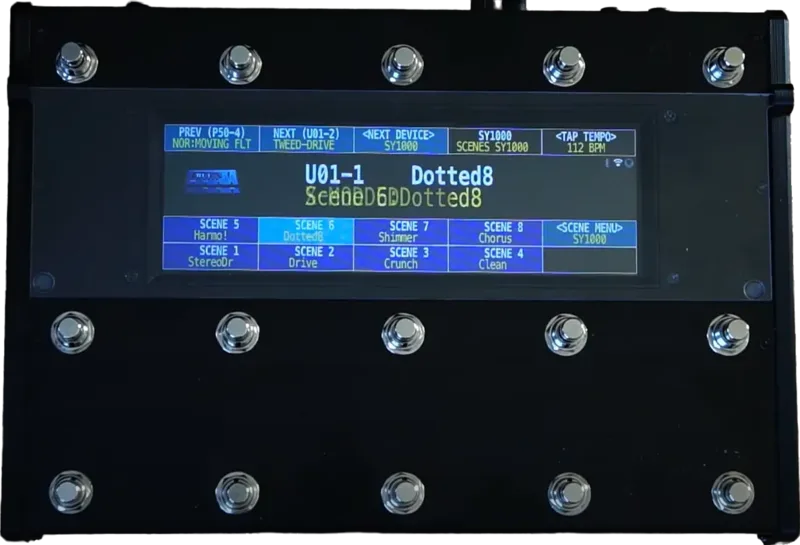
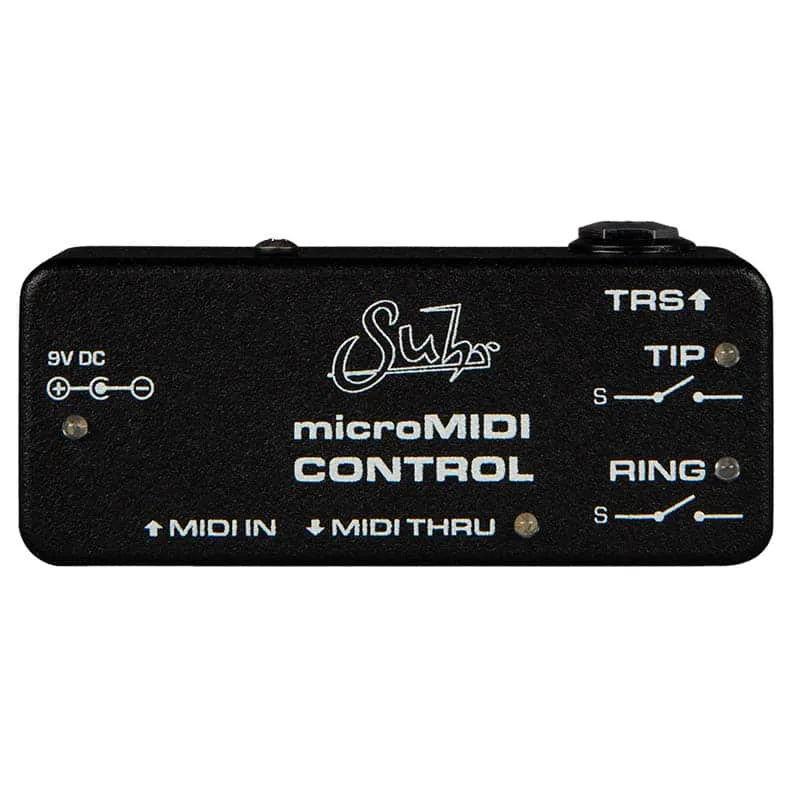
- Foot controllers: Microdesignum's MIDI Grande is a universal MIDI foot controller for guitar effects and amps24. Behringer's BM-11M offers USB-C and MIDI control for what its listing calls seamless integration25.
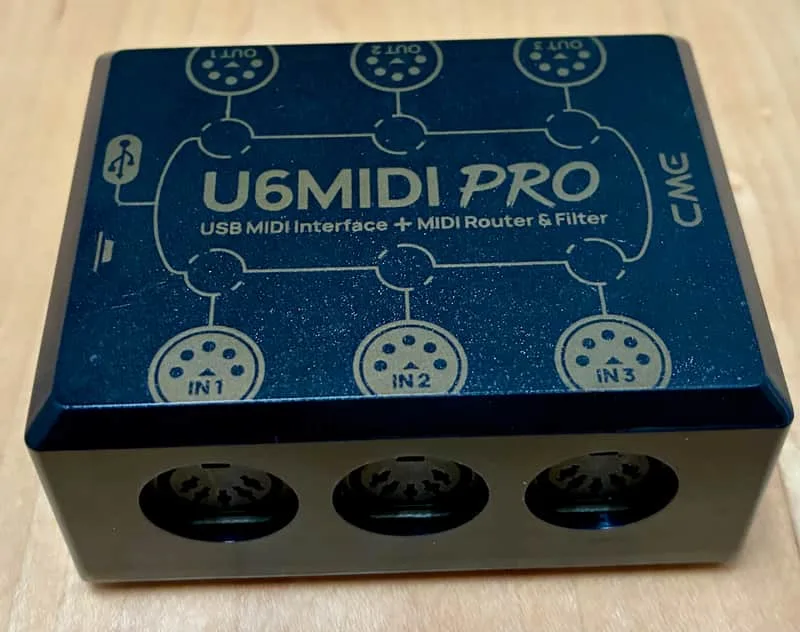
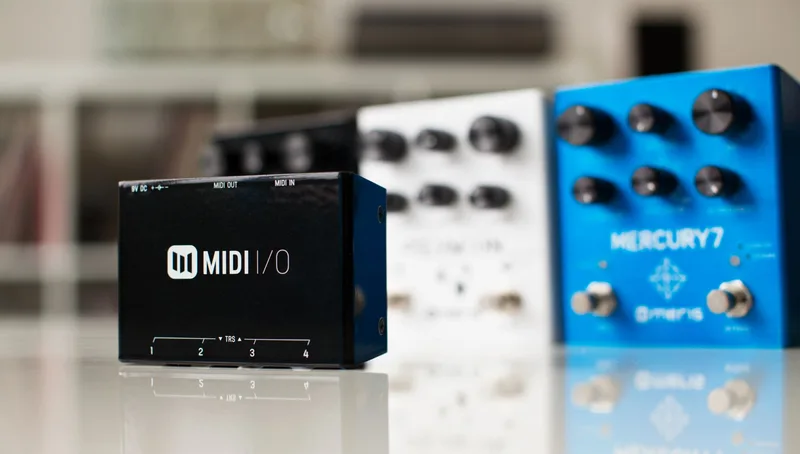
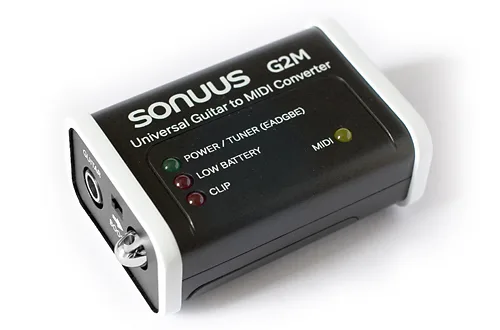
- Interfaces and converters: Panda-Audio's midiBeam 4Control works as a class-compliant USB-to-MIDI interface or as a means to connect passive TRS expression pedals or footswitches and convert them to MIDI26. In Standalone Mode, messages from connected pedals or switches pass to the DIN MIDI OUT, and messages arriving at DIN MIDI IN pass through to the DIN MIDI OUT as well26. Meris's MIDI I/O is described by its maker as a MIDI control interface supporting MIDI input and output from all Meris pedals27. CME's U6MIDI Pro is another entry in this class from CME28.
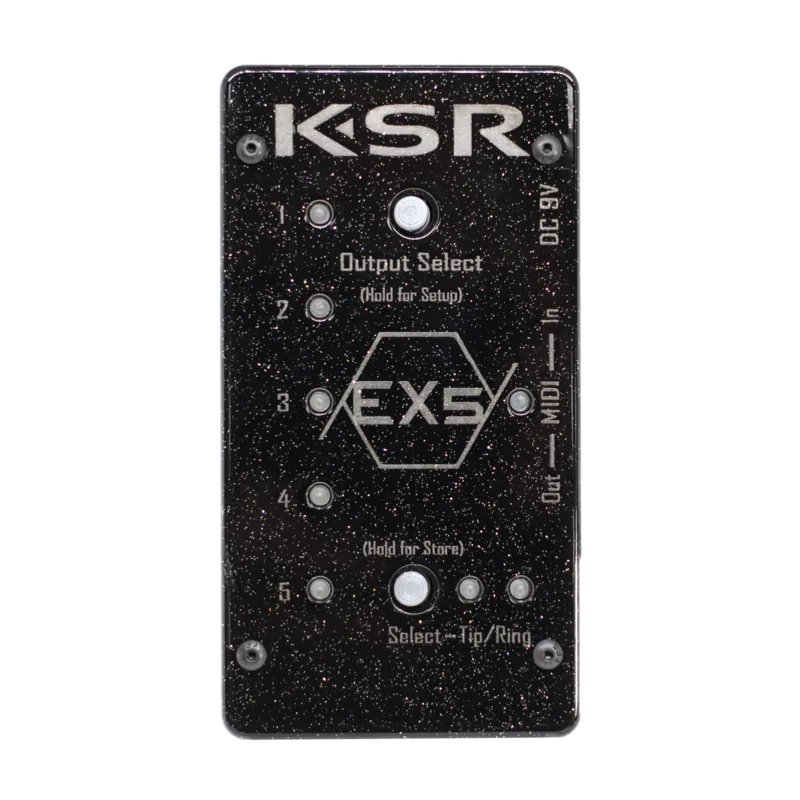
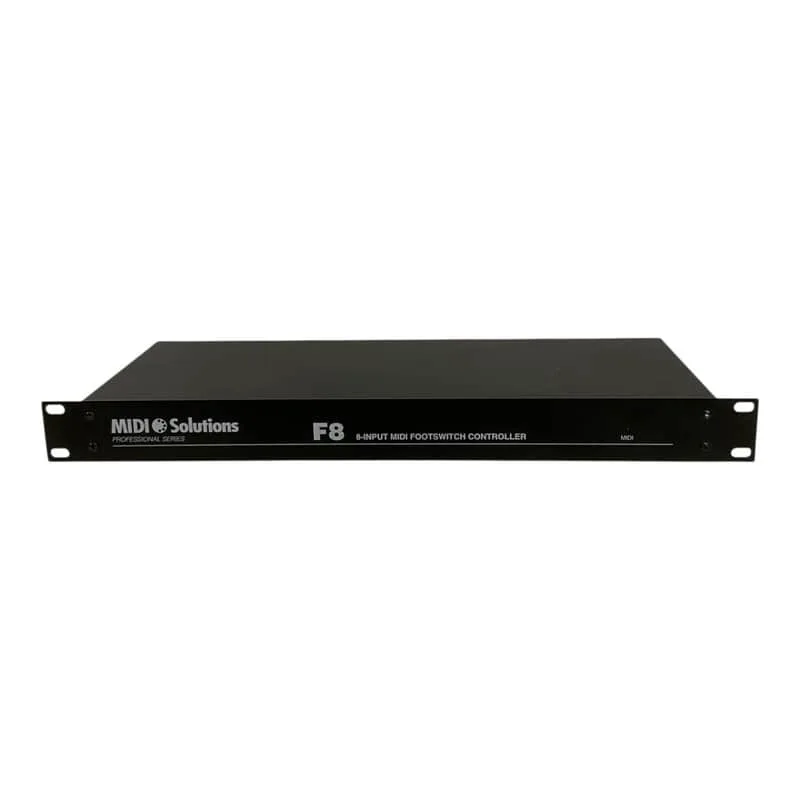
- Expression and footswitch converters: the MIDI Solutions Pedal Controller provides a 1/4" stereo phone jack input for an expression pedal or potentiometer and turns its position into MIDI7. The MIDI Solutions Footswitch Controller does the same job for switches11.
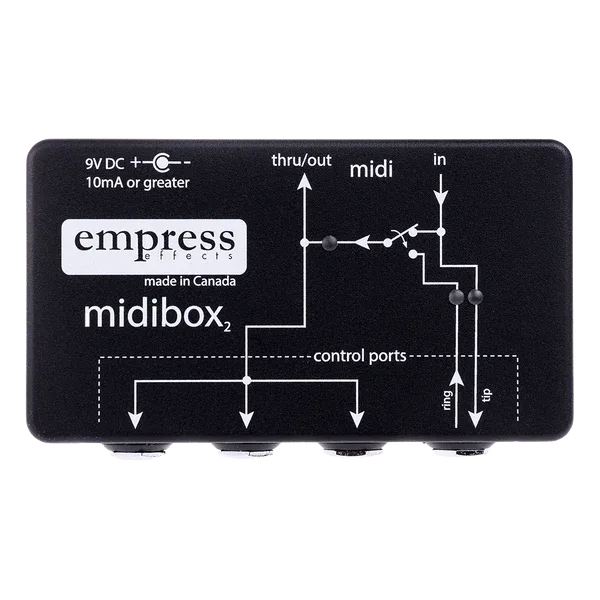
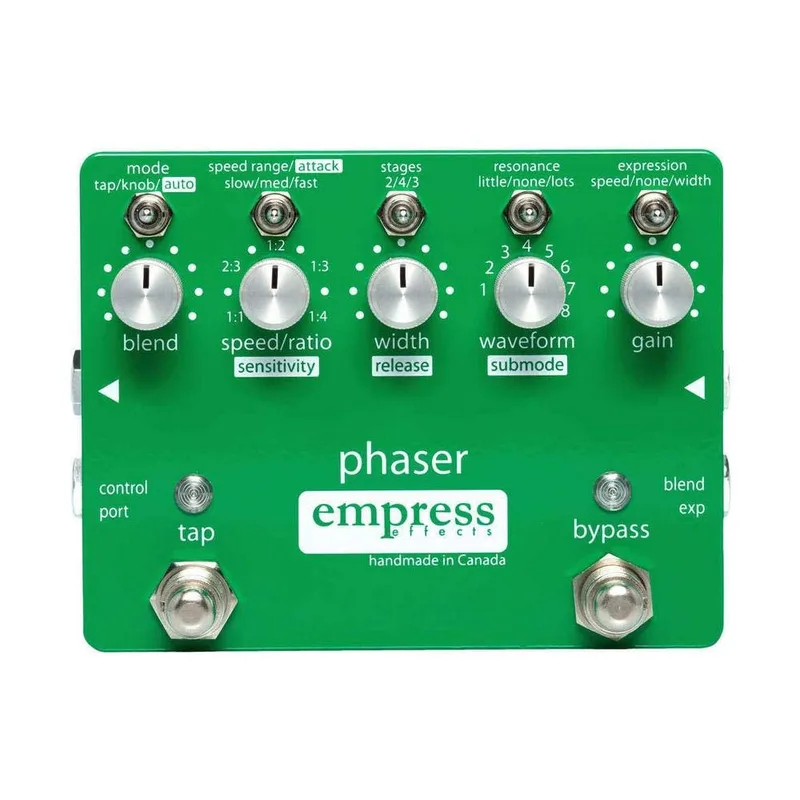
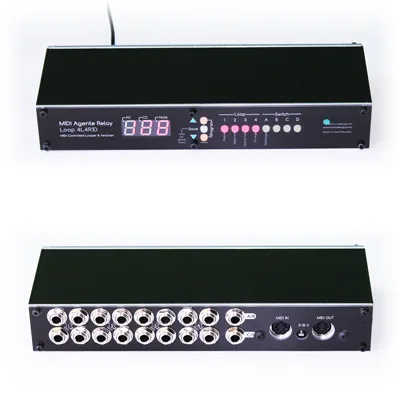
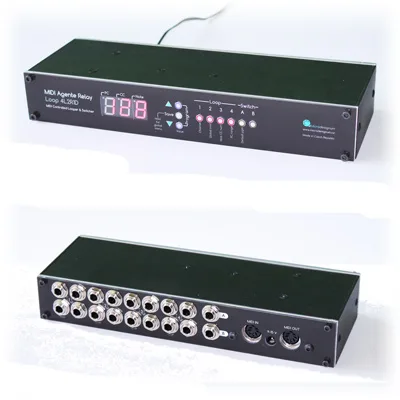
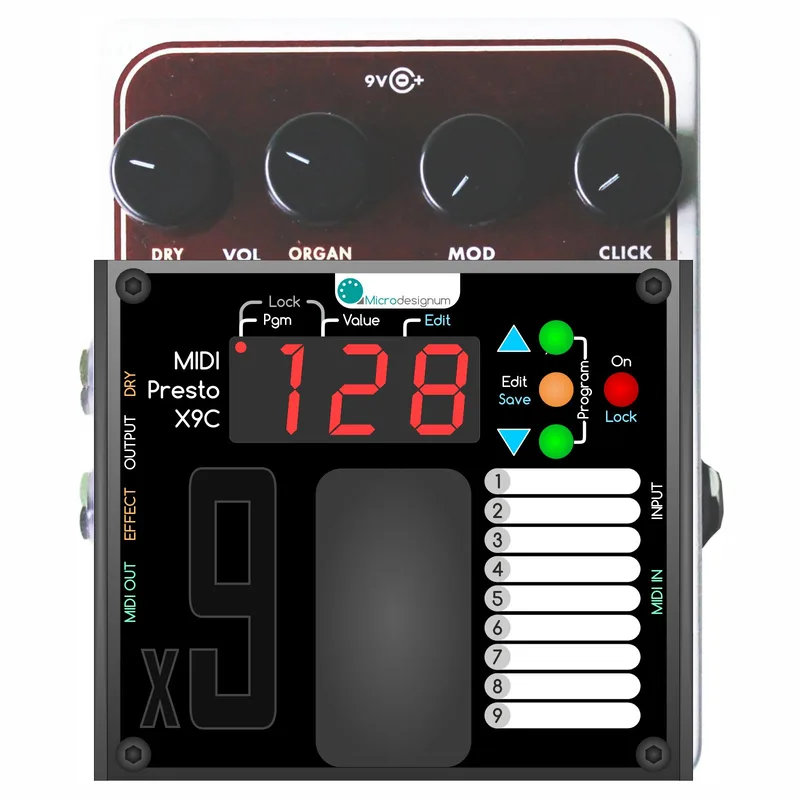
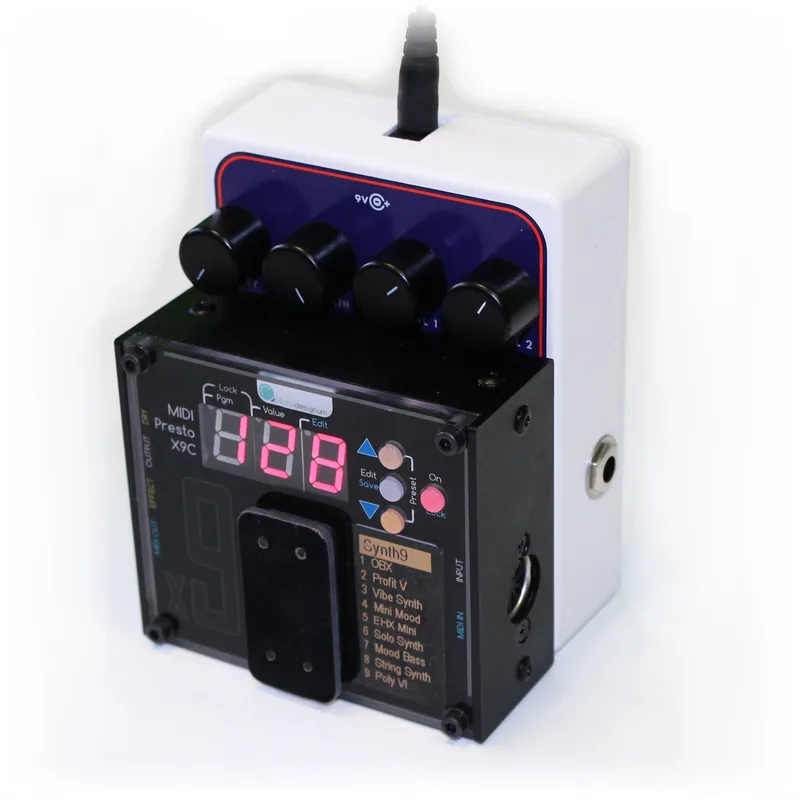
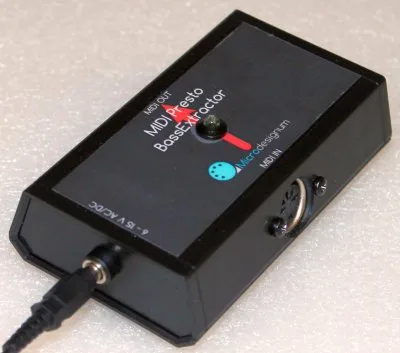
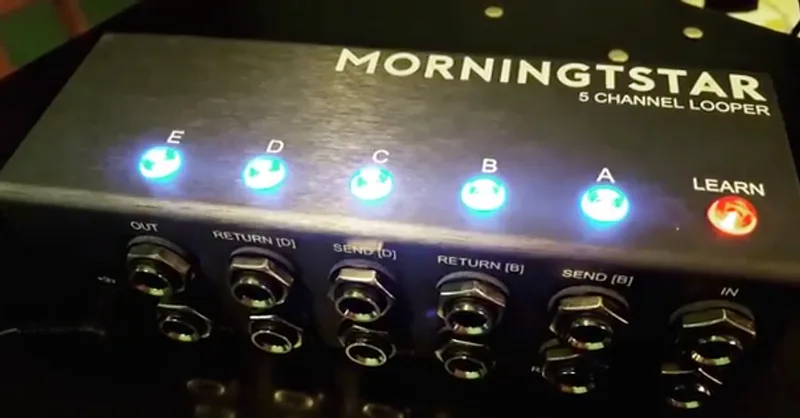
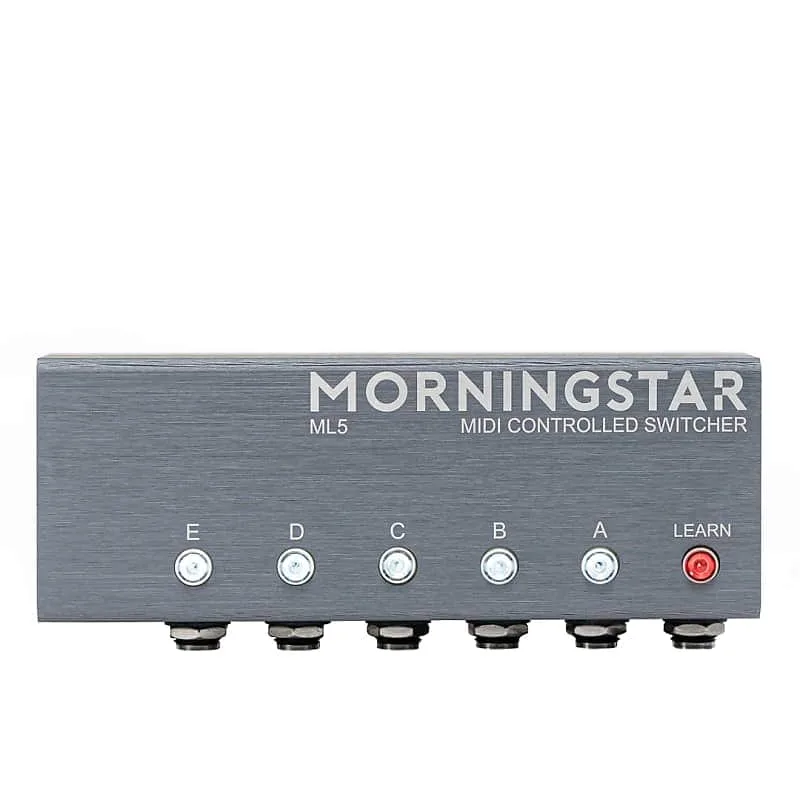
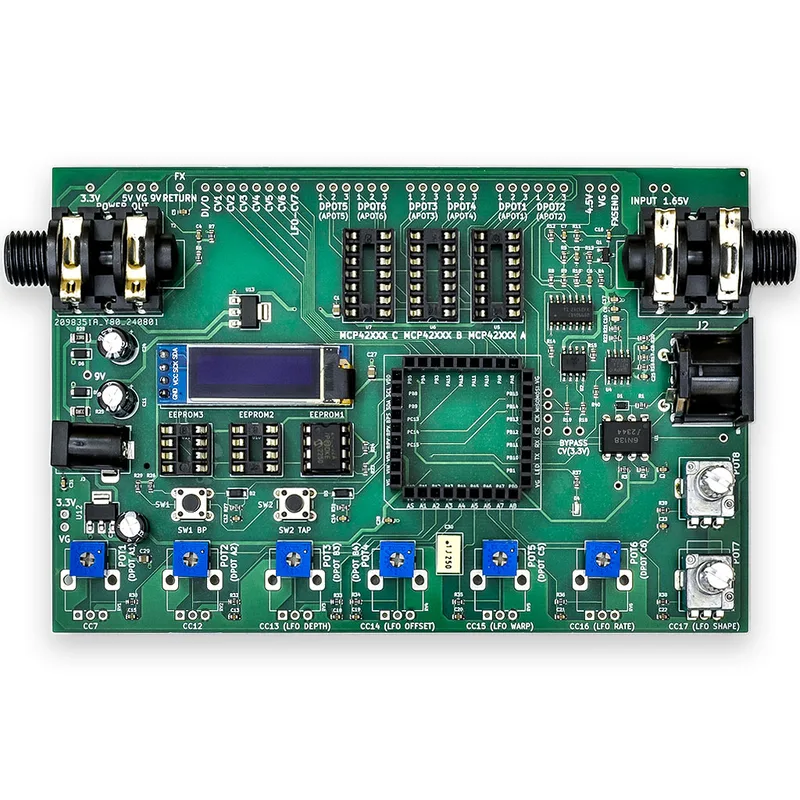
- Retrofit relay modules: Microdesignum's MIDI module for guitar pedals with 1 footswitch and 4PDT relay replaces a pedal's mechanical footswitch with an electronically controlled 4PDT relay that responds to MIDI Program Change or Control Change messages5. Its DPDT relay version does the same with a DPDT relay29. Empress Effects' Midibox takes a different route: it uses MIDI to control any Empress pedal equipped with a control port30.
The principle behind the retrofit modules is worth stating plainly, because it explains how a non-MIDI pedal can join a MIDI board. As Microdesignum describes its universal modules, "The principle of operation is that the built-in MIDI module electronically simulates pressing a footswitch and replaces the original footswitch function"31. The relays are controlled both via MIDI and via substitute footswitches that are part of the module, so the pedal still works by hand when you want it to31. Which parameters end up under MIDI control depends on the guitar effect being modified5.
What the usual controls and settings do
MIDI pedals and controllers expose a fairly consistent set of settings. Here are the ones a player is most likely to adjust.
| Setting | What it does | Example |
|---|---|---|
| MIDI channel (1 to 16) | Sets which channel the device transmits or receives on; a pedal responds only to messages on its own channel109 | midiBeam 4Control MIDI CHANNEL setting10 |
| DIP switches | Set the MIDI channel on modules without screens | Microdesignum relay modules5 |
| MIDI Echo / Thru | Passes incoming messages onward when ON, filters them when OFF | MIDI Solutions Pedal Controller712 |
| Message merge | Combines generated messages with received ones at the output | MIDI Solutions Footswitch Controller11 |
| Calibration | Matches the converter to the travel of a specific expression pedal | midiBeam 4Control CALIBRATION LOW END, 0.0% to 100.0% at heel-down10 |
On the midiBeam 4Control, the CALIBRATION LOW END button sets and displays the pedal's lower calibration value, from 0.0% to 100.0%, at the heel-down position10. Calibration matters because expression pedals differ in their taper and travel, and a converter that assumes the wrong range will clip off part of the sweep.
For devices that need configuration beyond front-panel settings, SysEx programming from a computer is the usual route, as with the MIDI Solutions Pedal Controller7.
Where MIDI pedals go and how they are powered
MIDI connections form their own chain, separate from the audio chain. The standard layout is controller first, then effects in sequence, each one's MIDI Thru feeding the next's MIDI In, so a single controller reaches every pedal9. Devices that merge, like the MIDI Solutions boxes, can sit anywhere in that chain and add their messages to the stream711.
Power works differently for MIDI gear than for effects. A few MIDI devices take their power from the MIDI connection itself: the MIDI Solutions Pedal Controller is MIDI-powered and requires no batteries or power supply to operate7, and the Footswitch Controller is likewise MIDI-powered with no batteries or power supply needed for most MIDI products11. That is a real convenience on a crowded board, since it removes one wall wart or one tap on the power supply.
Others follow the ordinary pedal pattern. For firmware updates, Strymon says BigSky, Mobius, and TimeLine should be powered by an external power supply and connected to the computer with a compatible MIDI interface using their MIDI IN and MIDI OUT ports32.
Not every MIDI connection is a DIN jack. UAFX pedals receive MIDI via their USB device ports, so communicating with them requires a controller with a USB host port21. Check which physical MIDI format a pedal uses, DIN, TRS, or USB, before buying a controller, because the three are not interchangeable without an adapter or interface.
Questions to ask when choosing a MIDI pedal
A short checklist covers most compatibility problems before they happen.
- Which MIDI channels does it use? With 16 channels available, a pedal responds only to messages on the channel it is set to receive on, so plan channel assignments across the board9.
- Does it have MIDI Thru? Most MIDI-capable pedals do, which allows daisy chaining, but not all, and a pedal without Thru has to sit at the end of a chain or behind a splitter9.
- What messages does it respond to? Program Change for presets, Control Change for parameters and switching, MIDI Clock for tempo33. A pedal that only takes PC cannot be swept by an expression pedal.
- What physical ports does it have? DIN, TRS, and USB MIDI all exist, sometimes on the same pedal, as on the Particle 2 with USB in/out and TRS input only3. UAFX pedals need a USB host port on the controller21.
- Does the controller match the pedals? Strymon's guidance applies broadly: the MIDI protocol is universal, but controllers differ in operation and features, so consult the controller's manual for programming the messages you want22.
- Do you need to retrofit? If a favorite pedal lacks MIDI, relay modules can simulate its footswitch electronically3435, and makers like Microdesignum also sell new pedals with MIDI control already installed35.
Questions
What does MIDI do on a guitar pedal?
MIDI lets a pedal receive commands instead of only audio. A player can switch the effect on and off, recall presets, synchronize time-based effects to a shared tempo, and drive parameters with a MIDI expression pedal. The MIDI signal runs parallel to the audio and never touches it, so it adds control without changing the sound path.
Do I need a MIDI controller to use a MIDI pedal?
Usually yes, something has to send the messages. That can be a dedicated MIDI foot controller, another MIDI-equipped pedal, or a computer with a MIDI interface. Some devices are exceptions in the other direction: MIDI Solutions' Pedal Controller and Footswitch Controller are MIDI-powered and need no batteries or power supply to operate with most MIDI products.
Can MIDI sync delay and modulation pedals to the same tempo?
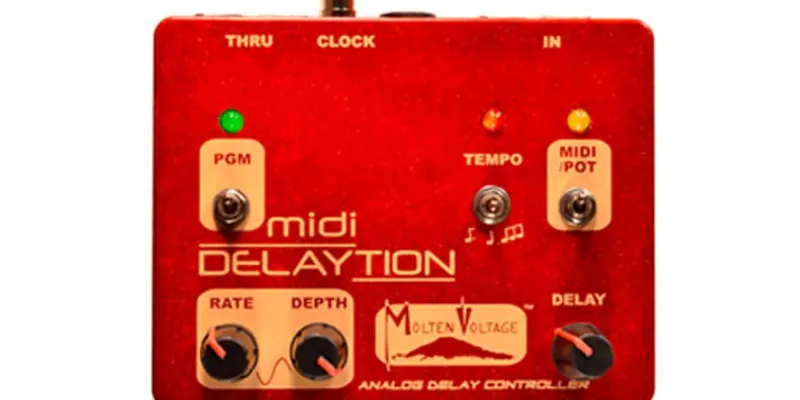
Yes. Pedals that sync to MIDI Clock lock onto the incoming signal and adjust their tempo, so a delay and a modulation pedal can share one tempo source. Molten Voltage's MIDI Delaytion, for example, automatically scales its delay time to stay in sync with slower MIDI Clock tempos.
Can a MIDI controller switch non-MIDI pedals?
Only if the amp or pedal is MIDI-compatible. For standard amplifiers, Voodoo Lab's buying guide says you need a MIDI-to-analog converter like the Control Switcher. For non-MIDI effects pedals, relay-based modules such as Microdesignum's kits electronically simulate pressing the footswitch, so MIDI messages can switch the pedal on and off.
Sources (35)
- MIDI PedalBoard Devices: MIDI PedalBoard and Guitar Effect Essentials, Molten Voltage (blog.moltenvoltage.com), 2014-08-15
- Guitar Effects Switching System Guide, Voodoo Lab, 2026-06-24
- Particle 2 Owners Manual.pdf, Red Panda LLC, 2023-07
- OWL Pedal, Rebel Technology, 2017-08-30
- Universal MIDI module for pedals with footswitch and a 4PDT relay, Microdesignum.cz
- MIDI expression pedal with a toe switch, Microdesignum
- E:\Corel8\OPNewest\Ped_www_page01.cdr, MIDI Solutions Inc., 2023
- Guitar Pedal X, Guitar Pedal X, 2023-12-16
- The ABSOLUTE Beginner's Guide to Pedalboard MIDI, Morningstar (www.morningstar.io), 2021-09-10
- 4Control User Manual, Panda-Audio Ltd., 2021-10-08
- MIDI Solutions Footswitch Controller; General Purpose Input to MIDI, MIDI Solutions Inc., 2026
- MIDI Solutions Pedal Controller; Continuous MIDI Data Generator, MIDI Solutions Inc., 2026
- MIDI PedalBoard Devices: Big Muff MIDI, Molten Voltage (blog.moltenvoltage.com), 2015-02-18
- Old Blood Noise Endeavors, Old Blood Noise Endeavors
- Old Blood Noise Endeavors, Old Blood Noise Endeavors
- BOSS - GT-1000CORE Applications Guide, BOSS (boss.info)
- TONEX Pedal, IK Multimedia
- EDGE | Behringer, Behringer
- MIDI Control for Electro Harmonix x9, Microdesignum
- MIDI Control for TC Electronic Nova Delay, Microdesignum
- The Evolution of Universal Audio Pedals: MIDI Control Unleashed, www.morningstar.io, 2025-11-12
- How can I control my Strymon Pedal with MIDI?, Strymon, 2023-10-19
- Gear Guide: Syncing Presets with MIDI, Strymon, 2016-11-17
- MIDI Grande, Microdesignum
- BM-11M by Behringer, RockBoard PedalPedia, 2026
- 4Control Quick-Start Guide B, Panda-Audio Ltd., 2026
- MIDI I/O, Meris
- U6MIDI Pro by CME, RockBoard PedalPedia, 2026
- Universal MIDI module for pedals with a footswitch and a DPDT relay, Microdesignum.cz
- Midibox - Empress Effects Inc., Empress Effects Inc.
- Universal MIDI modules for guitar pedals, Microdesignum
- Strymon Update 2 Support, Strymon, 2026-08-08
- Manuals - KERNOM, KERNOM
- MIDI module for EHX Ring Thing, Microdesignum.cz
- MIDI modules for build in guitar effects, Microdesignum