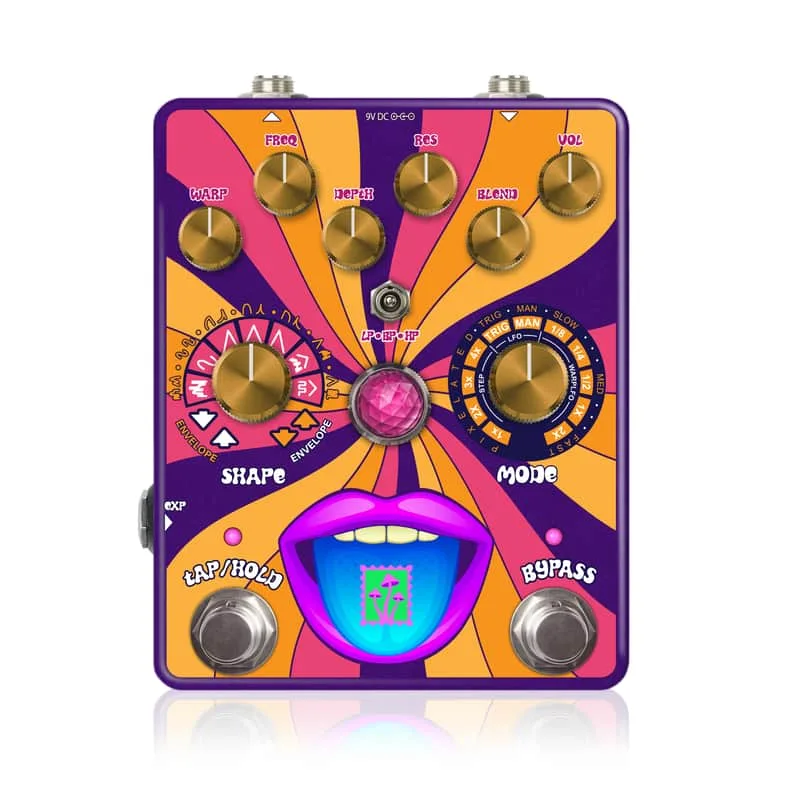
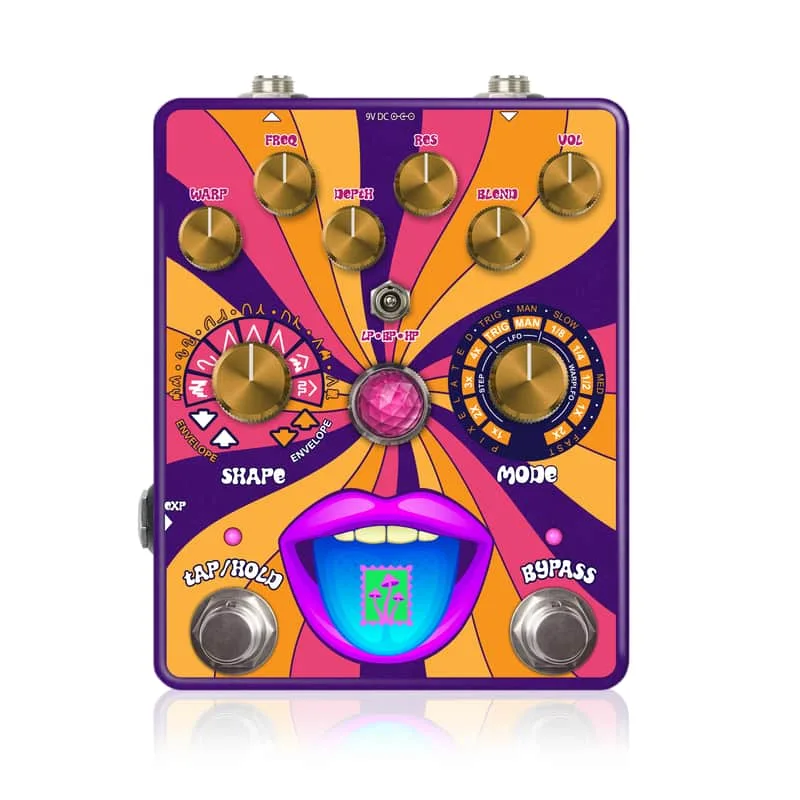
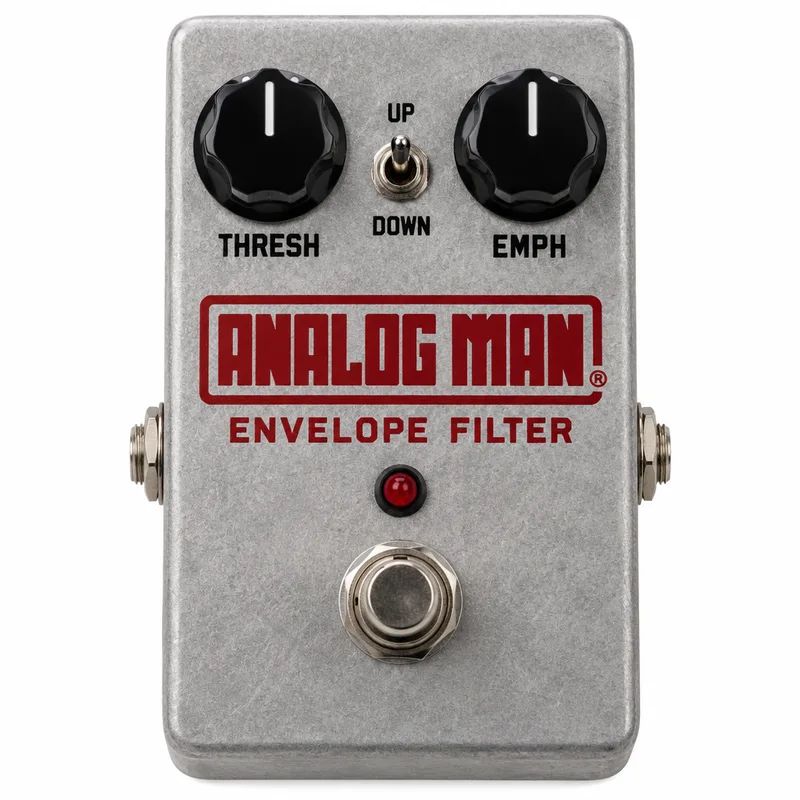
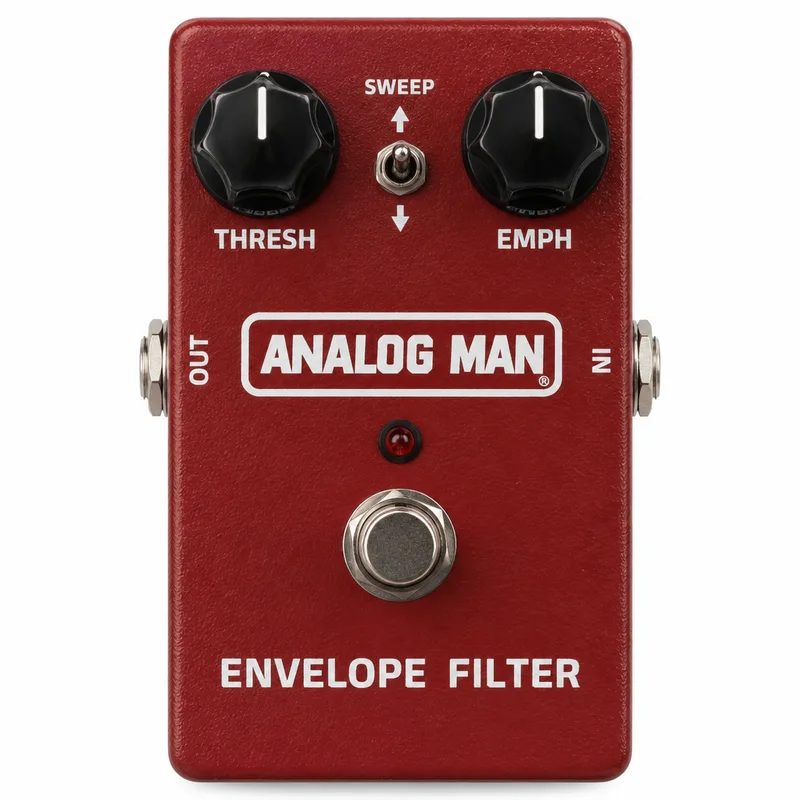
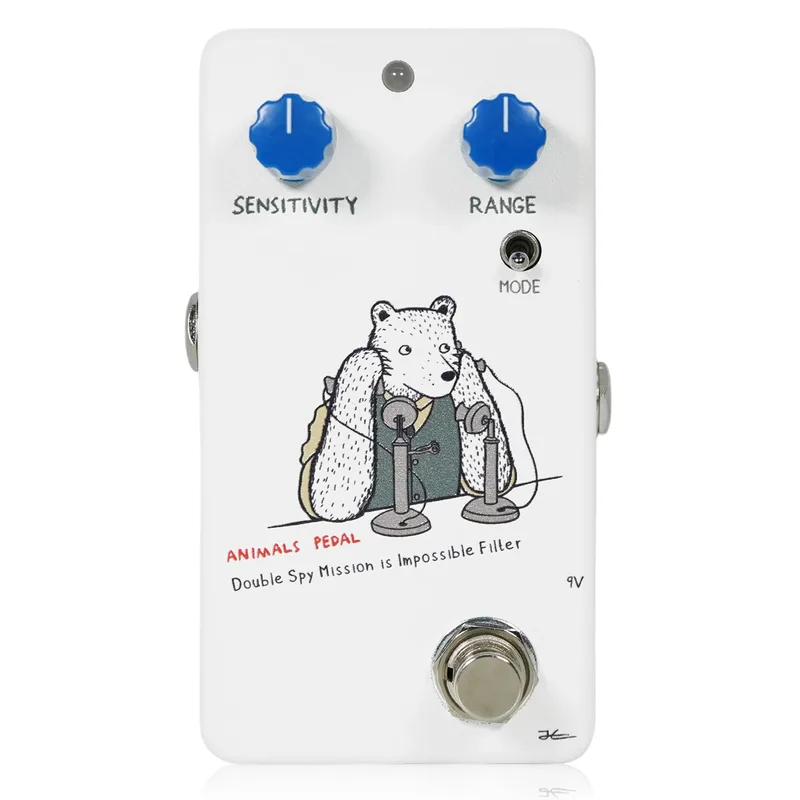
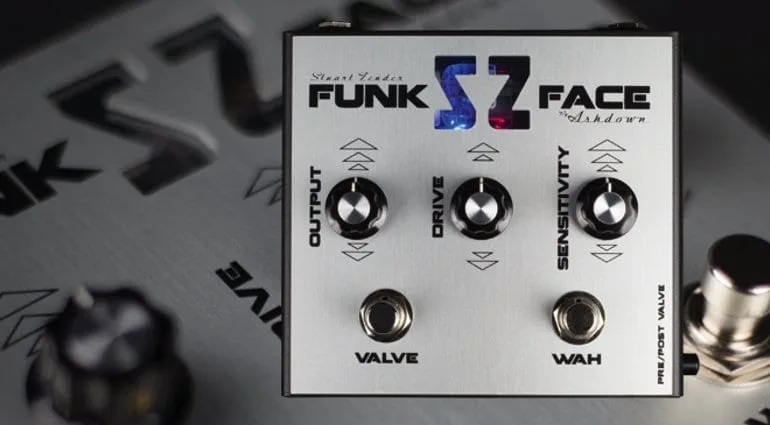
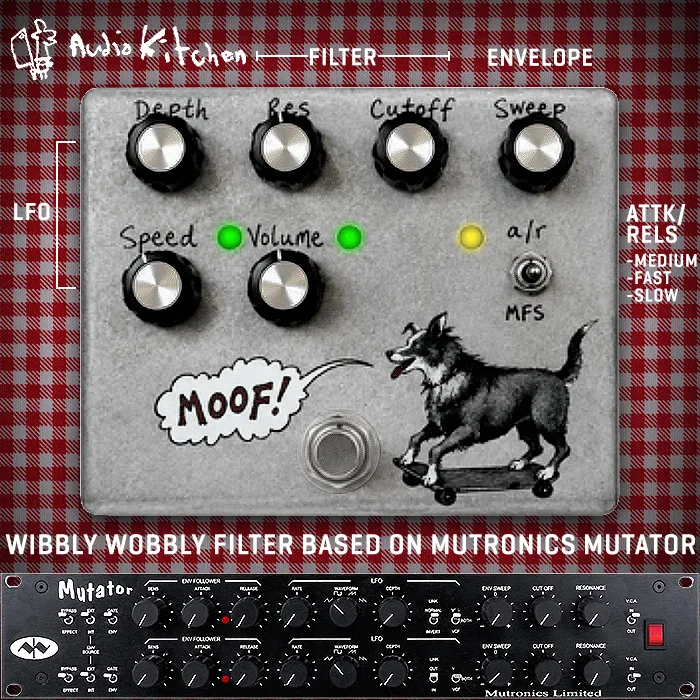
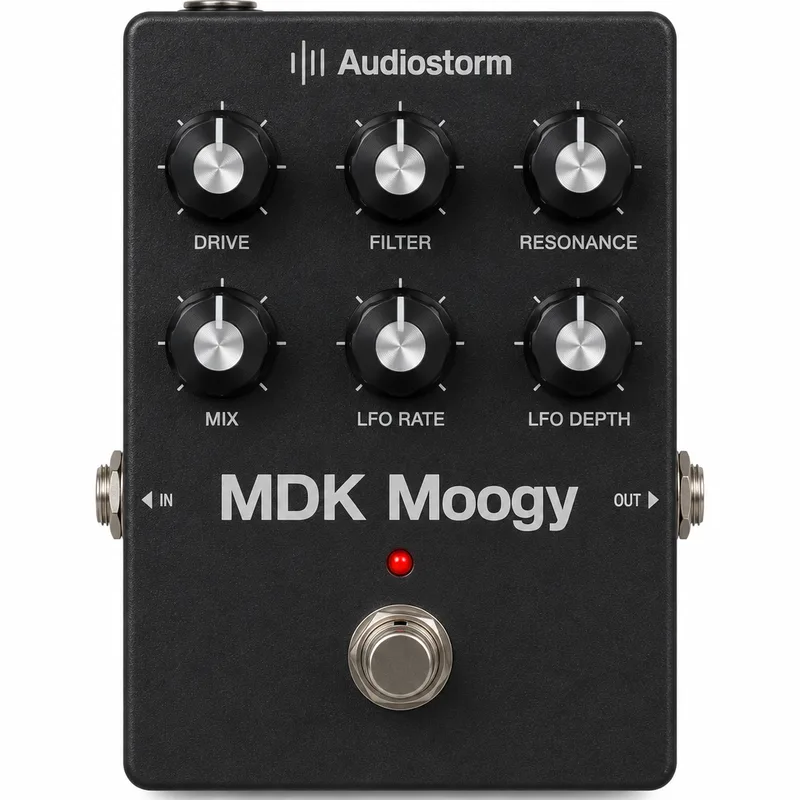
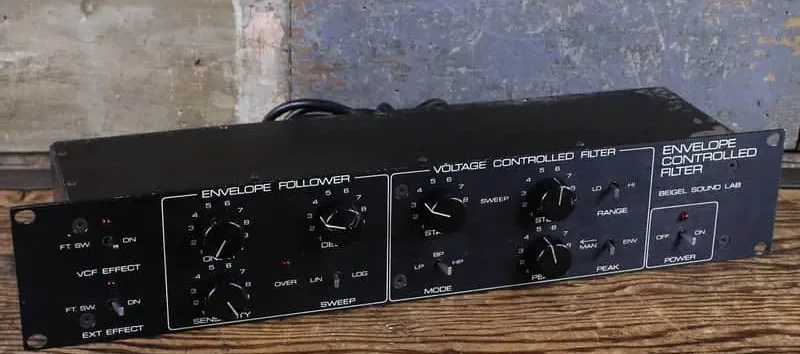
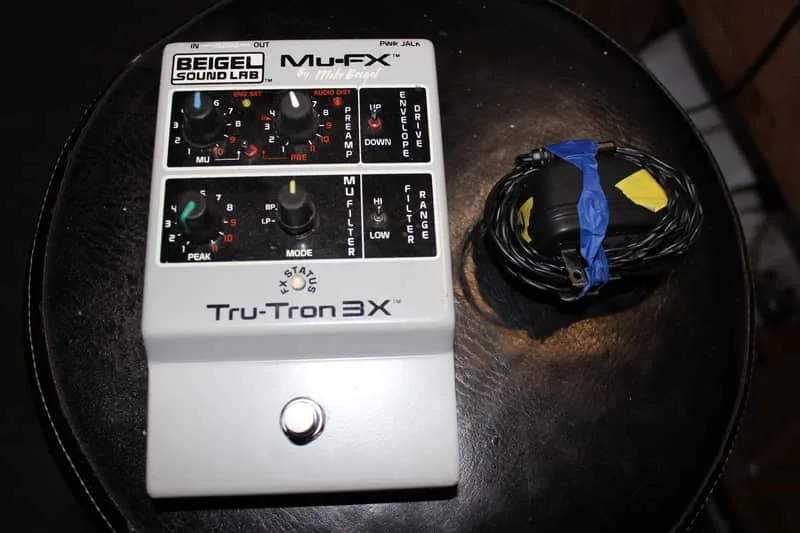
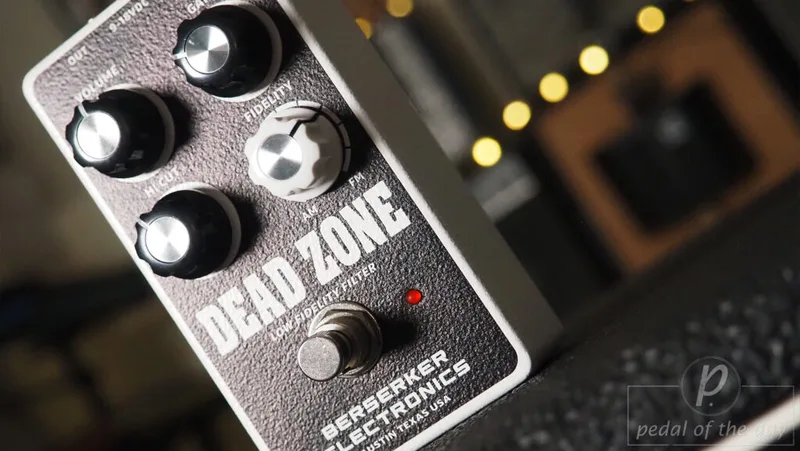

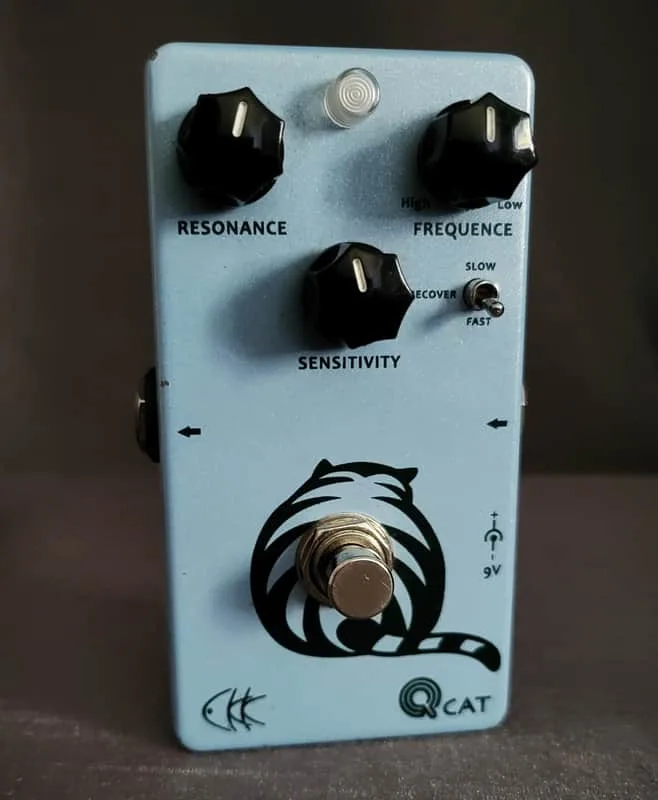
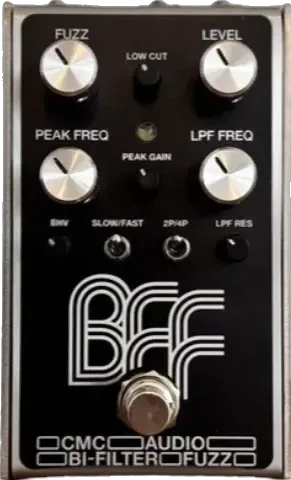
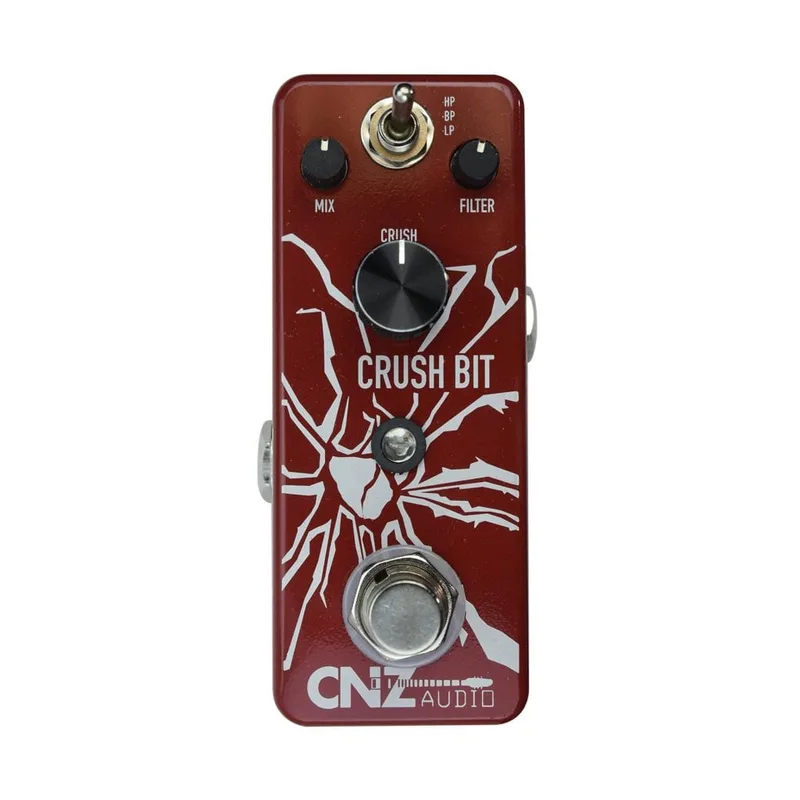
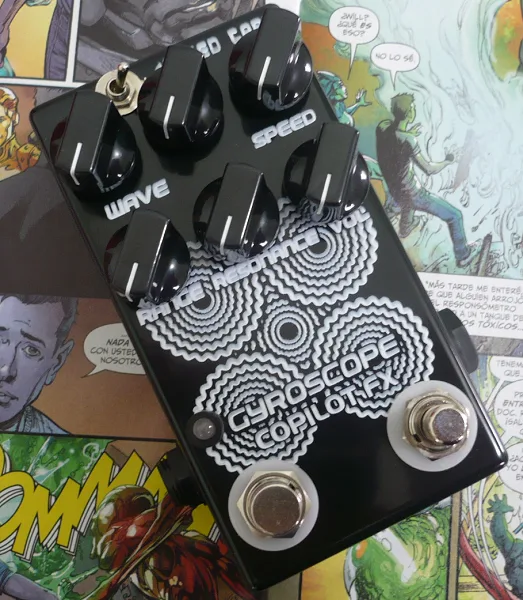
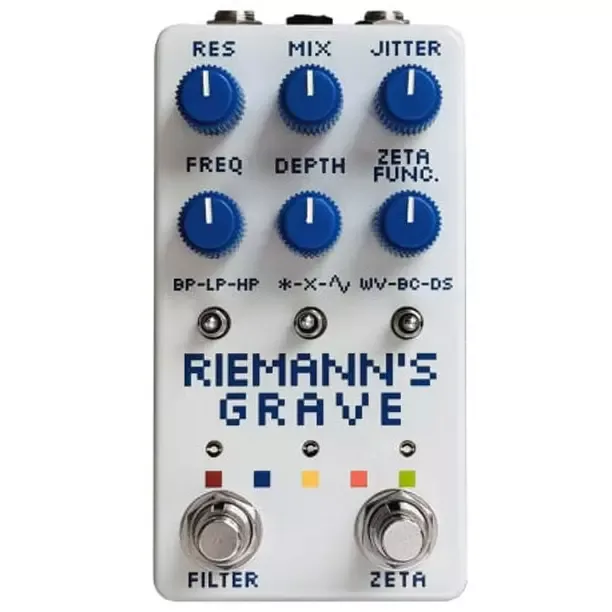
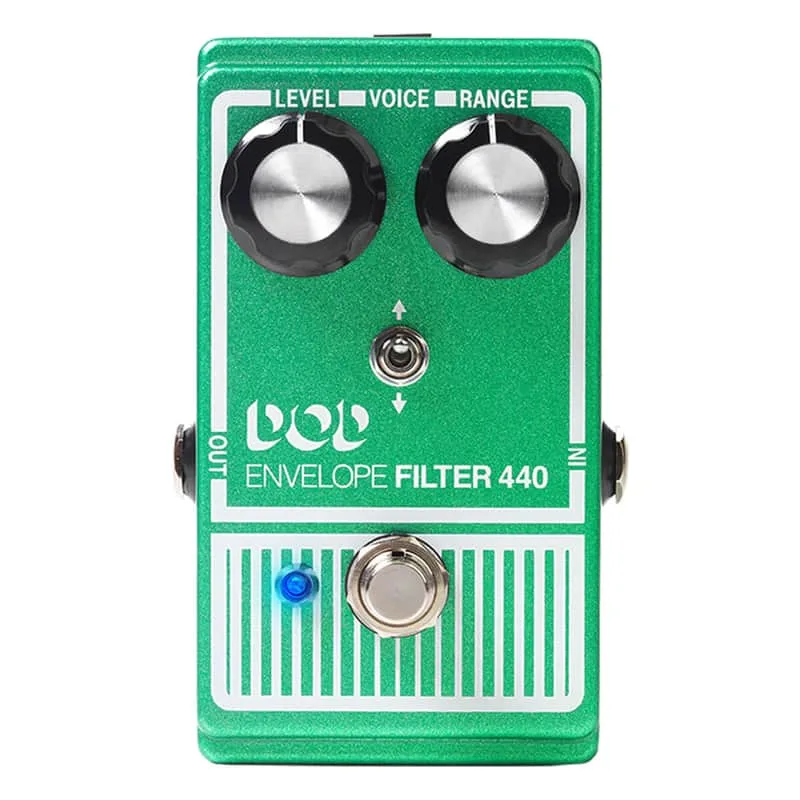
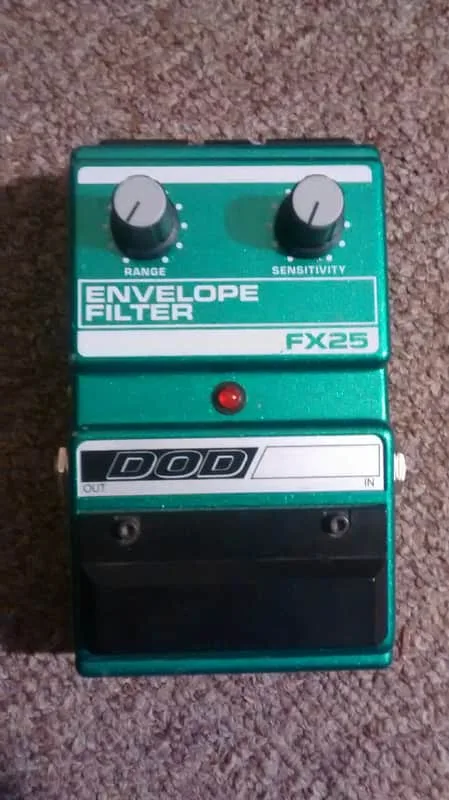
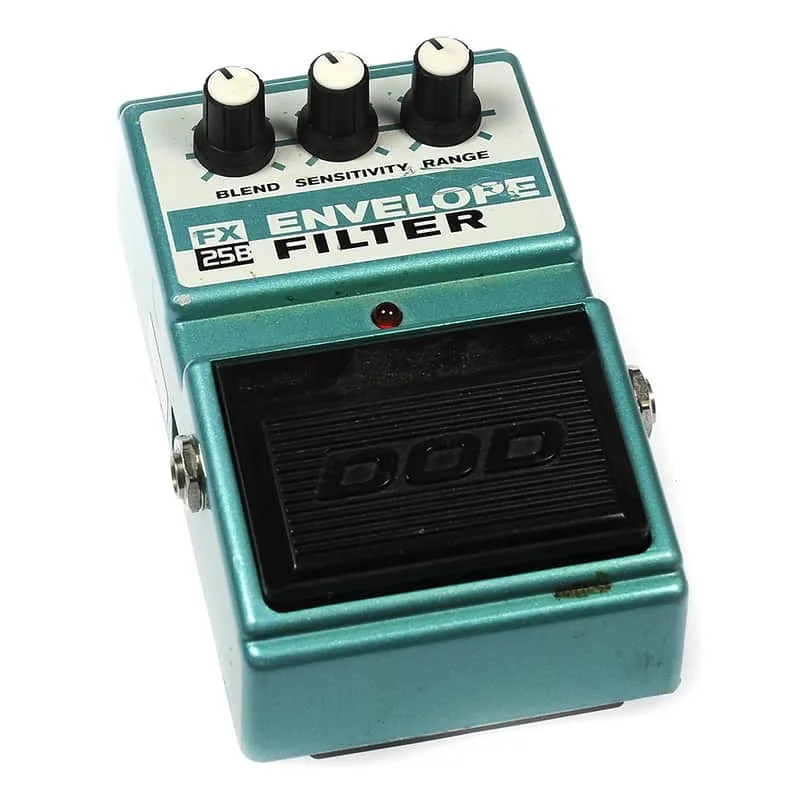
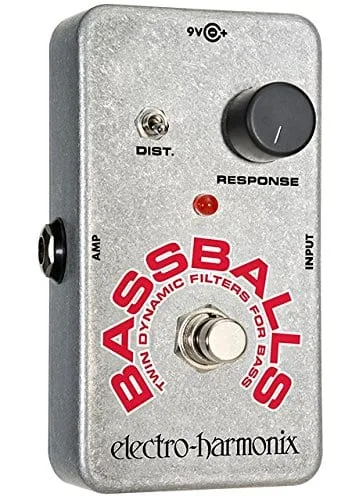
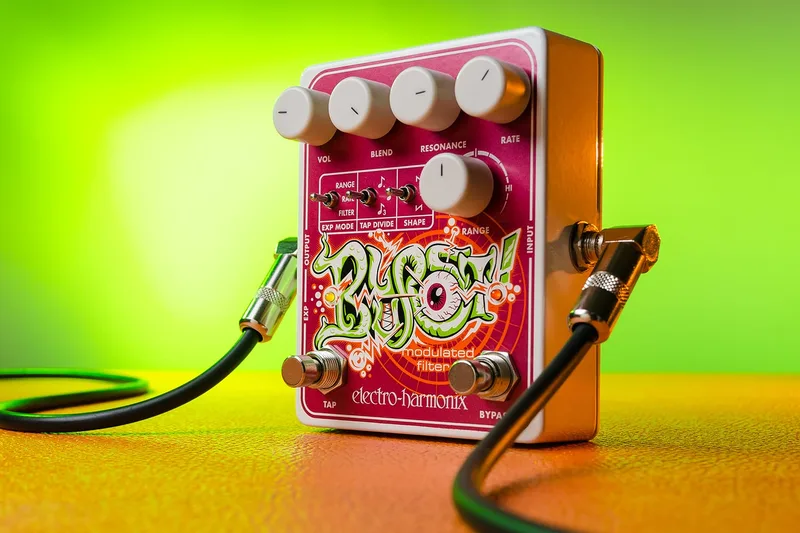
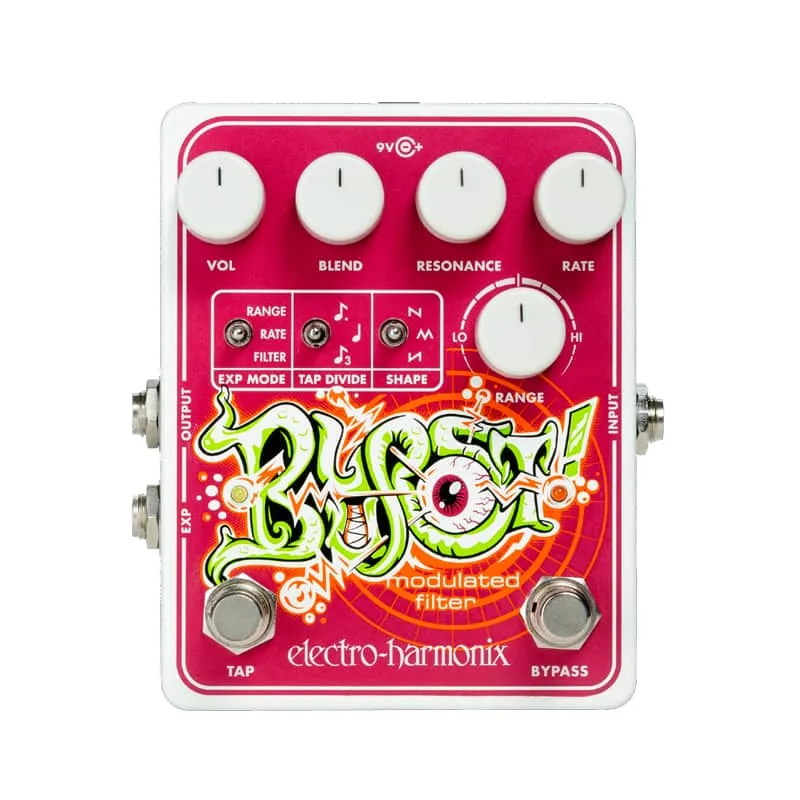
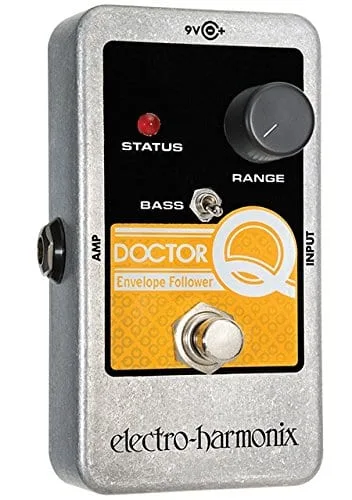
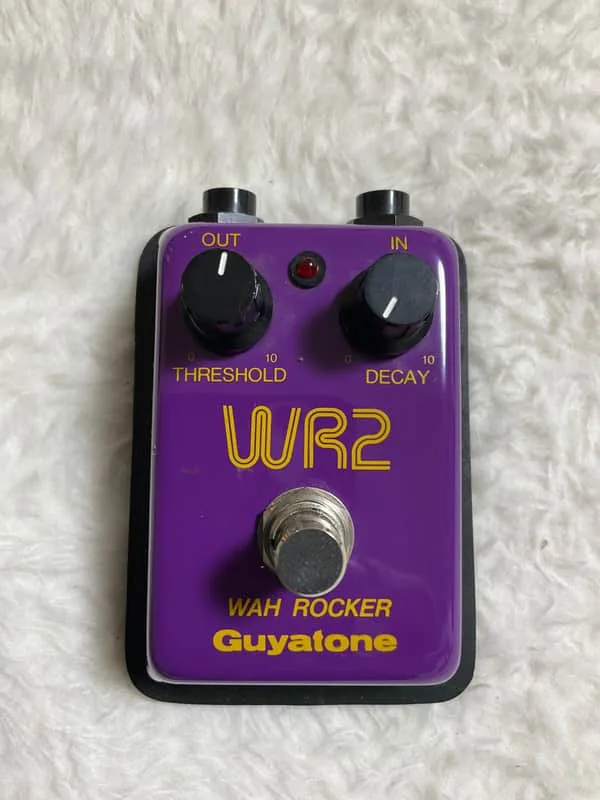
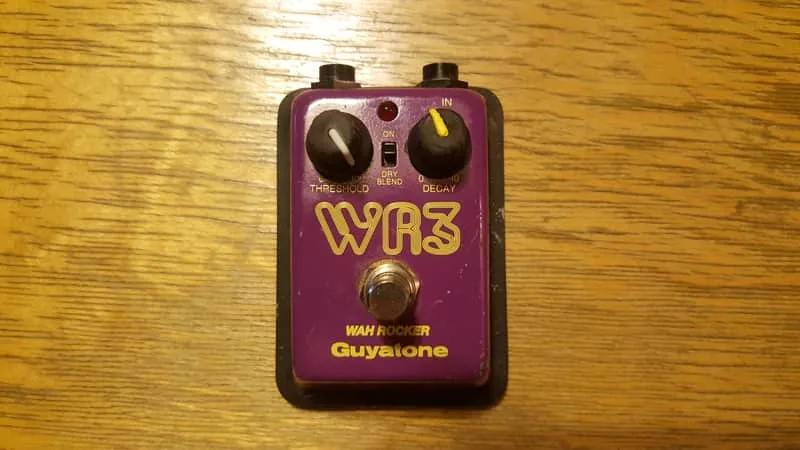
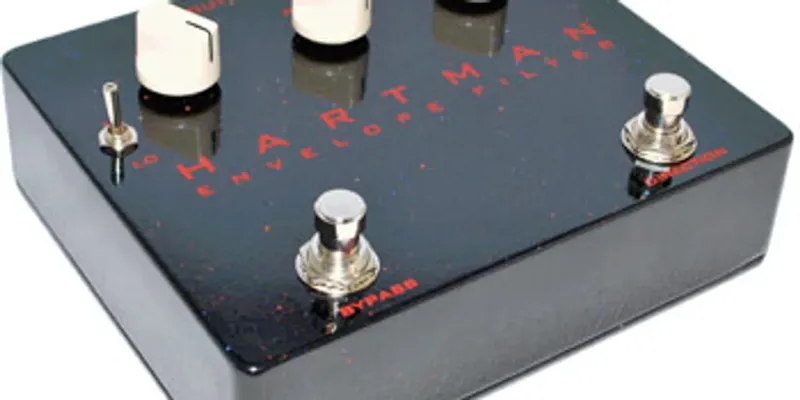

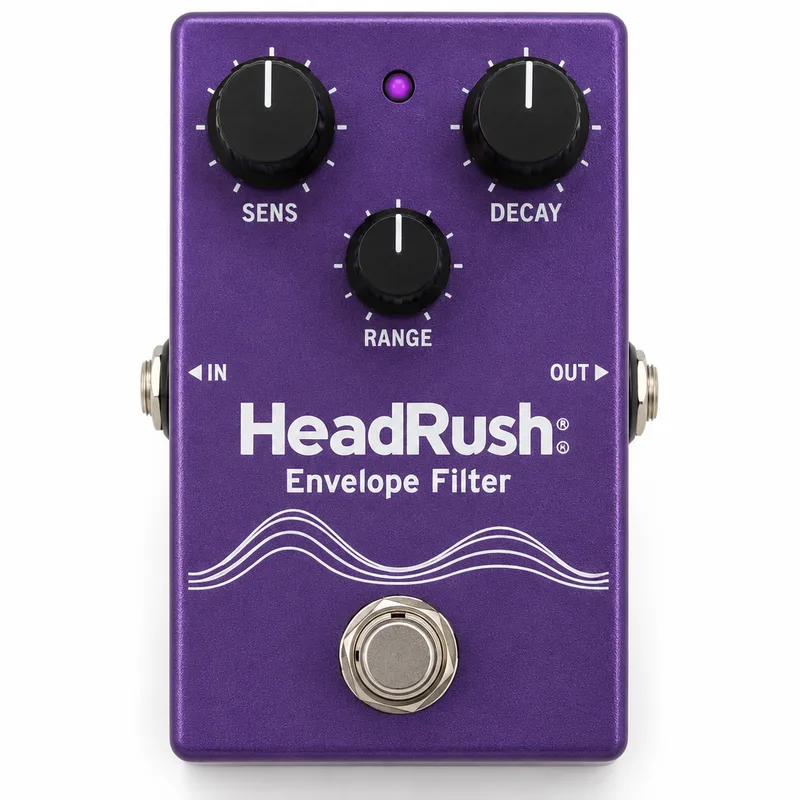
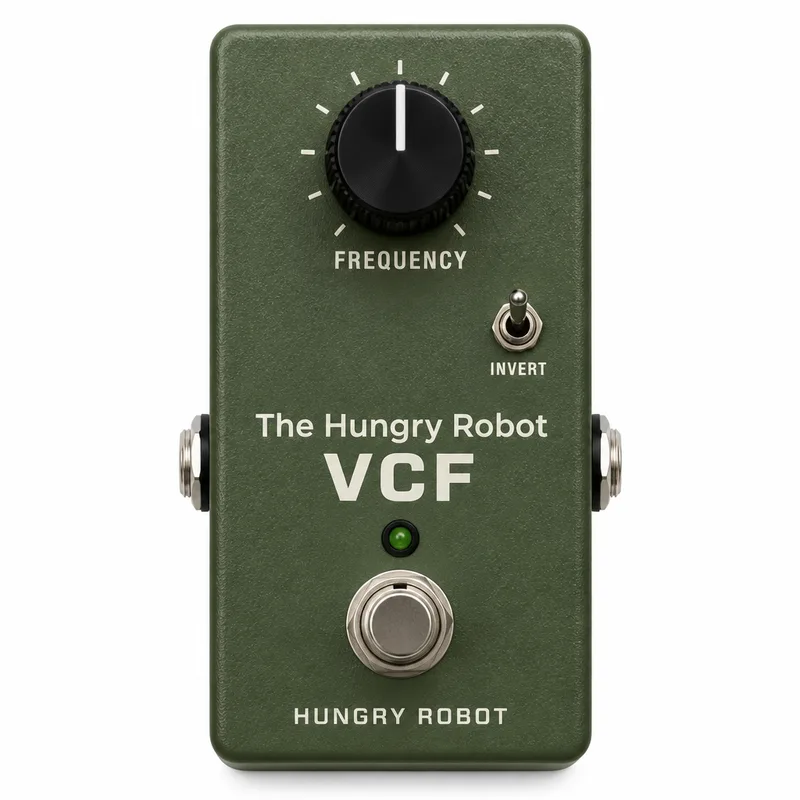
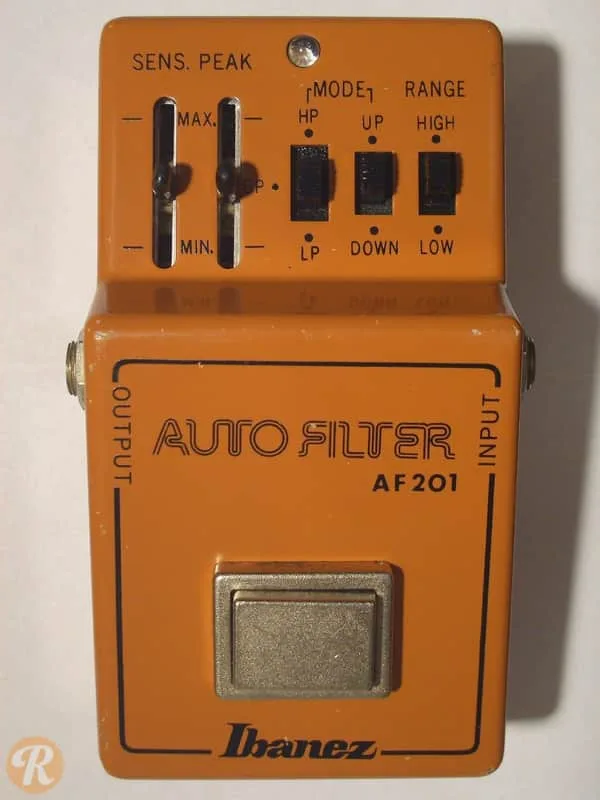
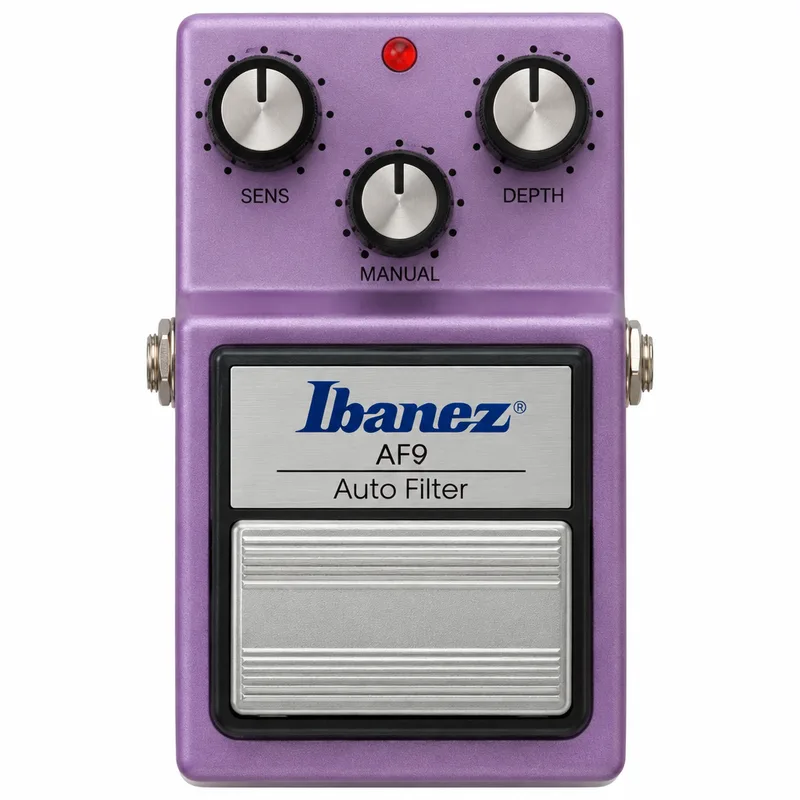
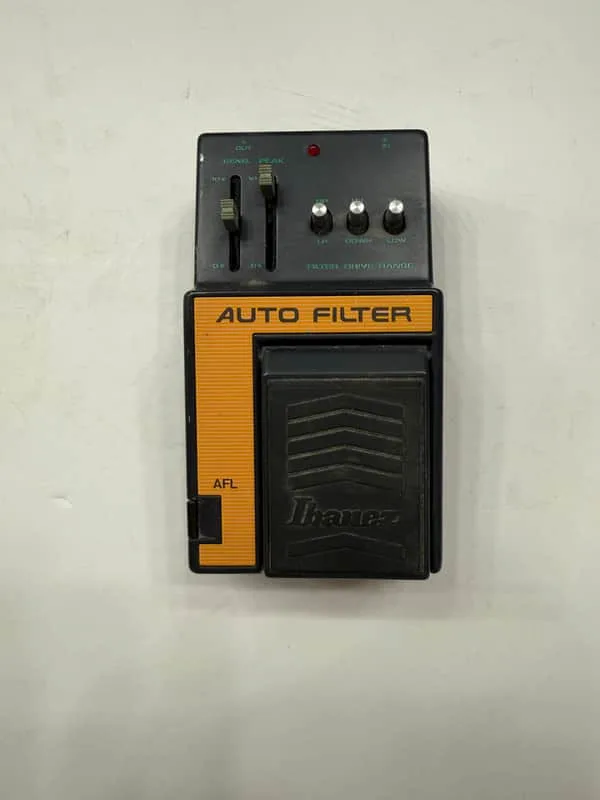
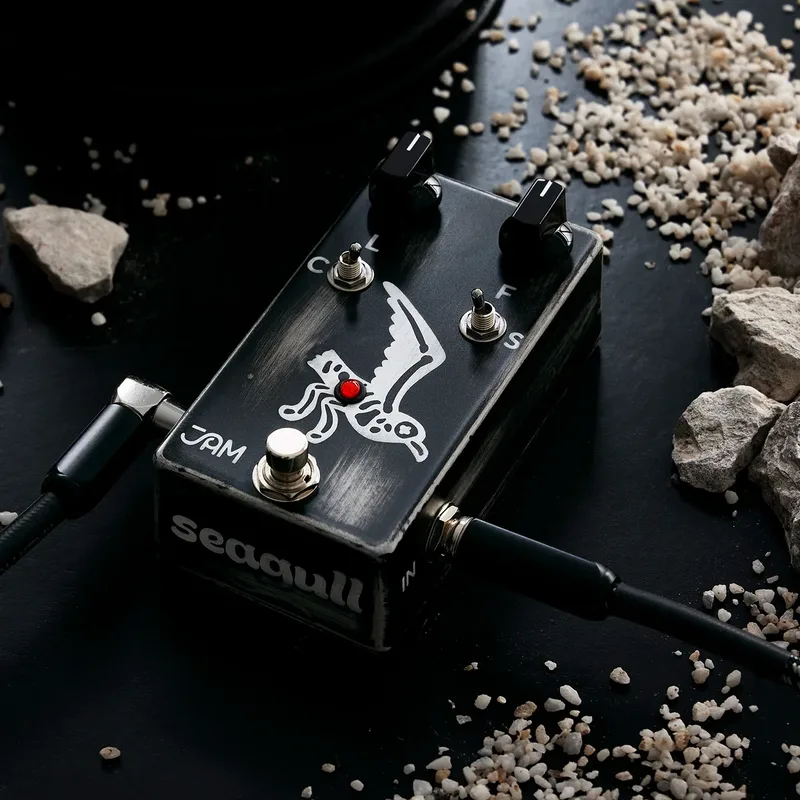
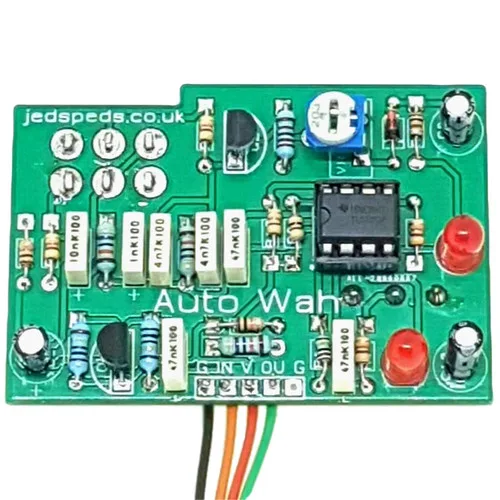
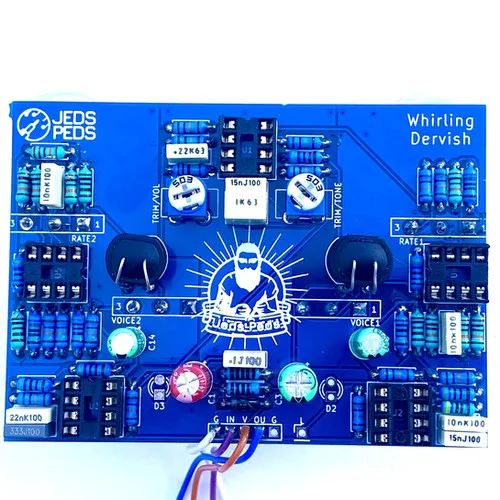
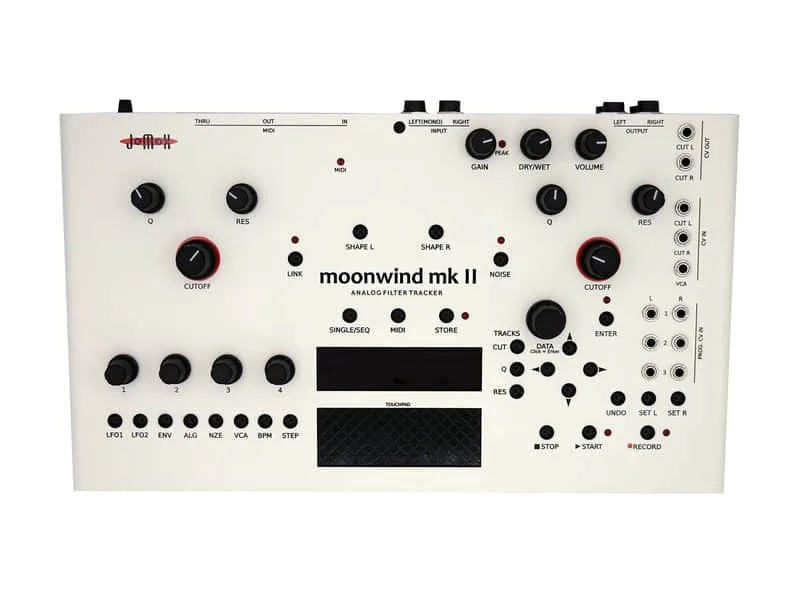
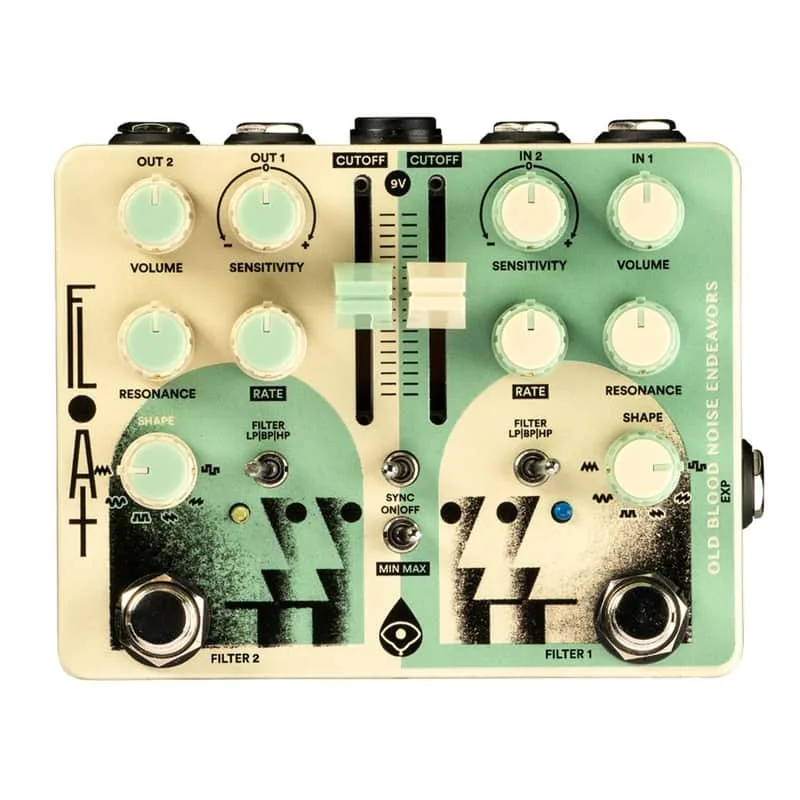
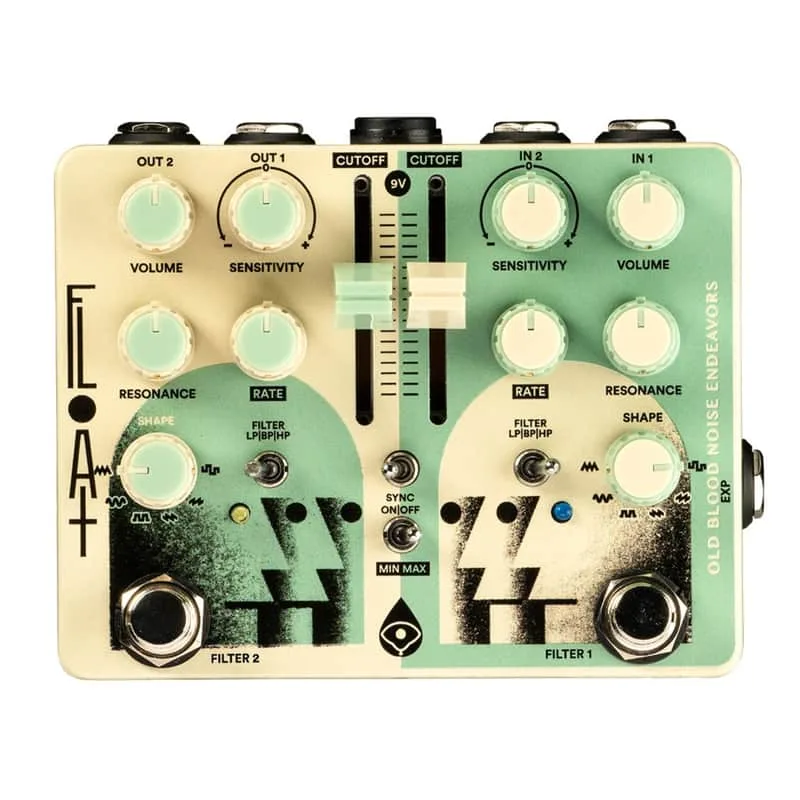
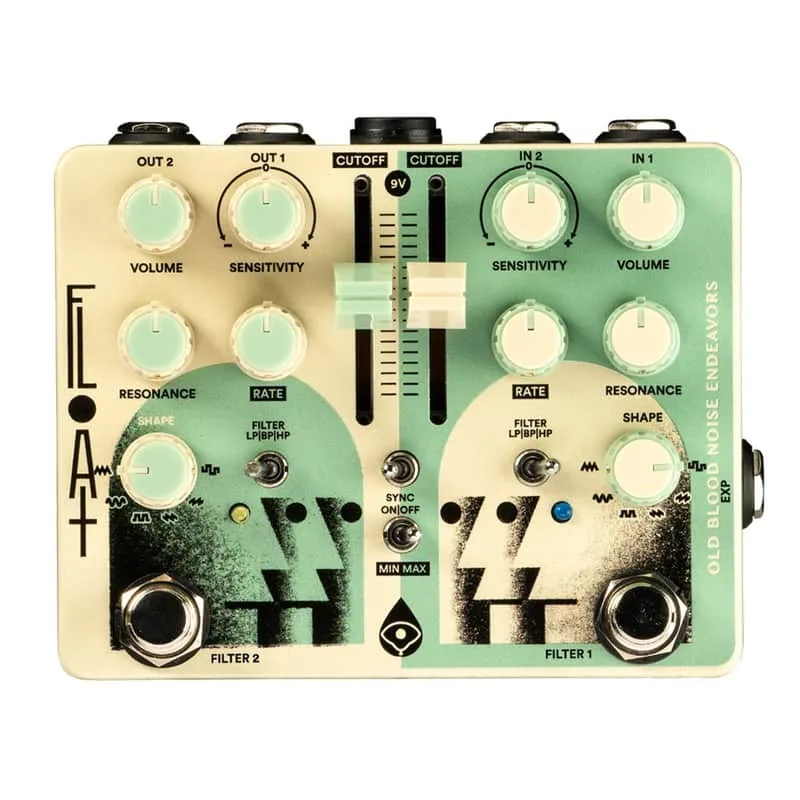
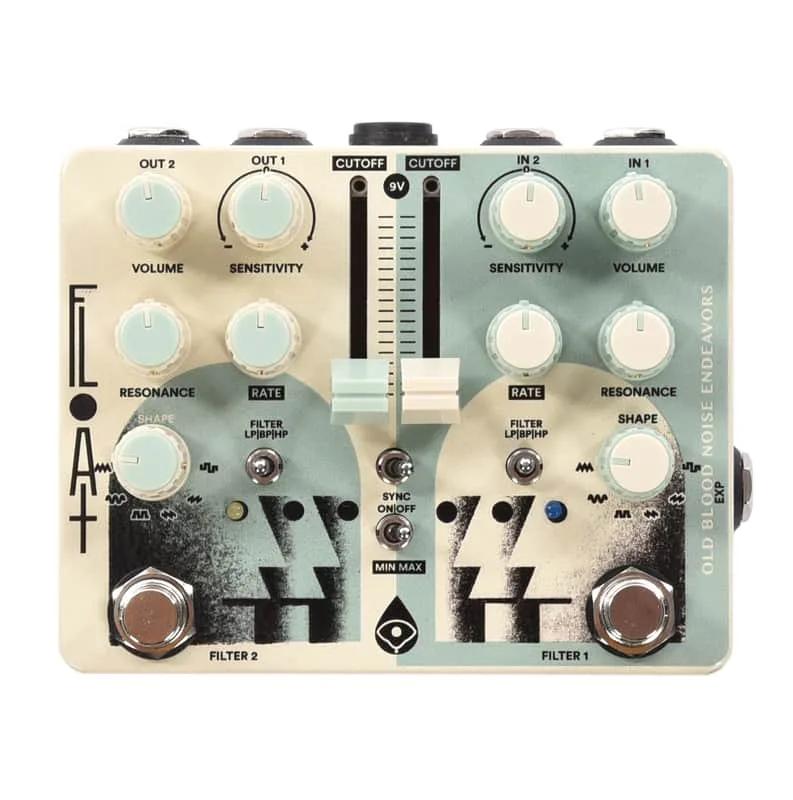
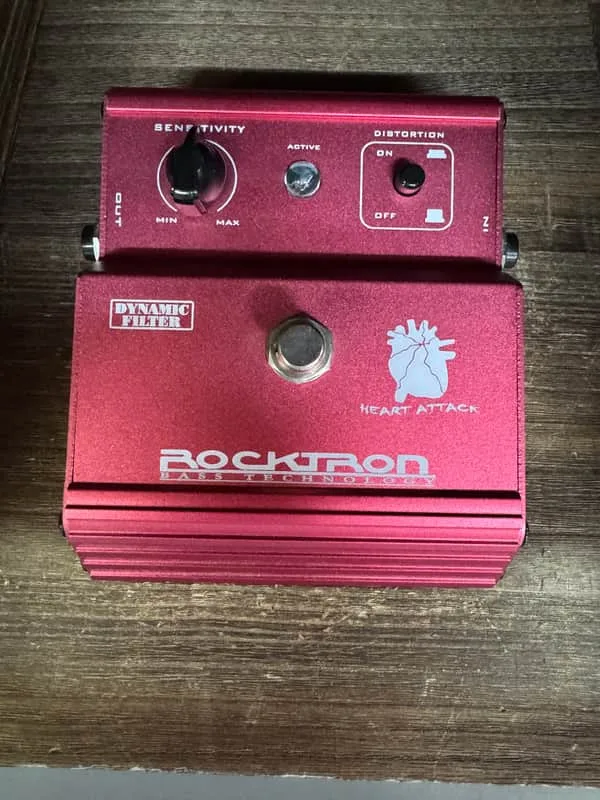
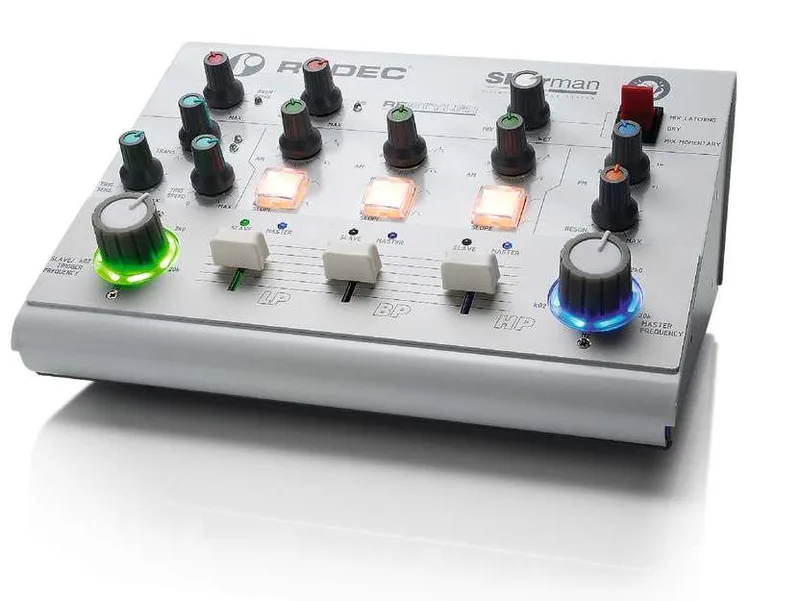
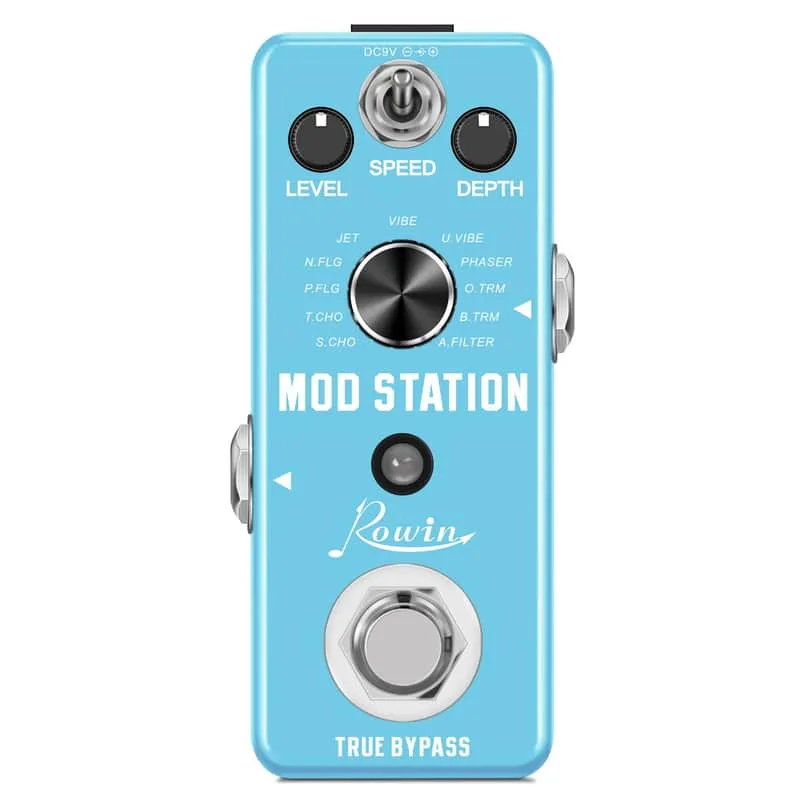
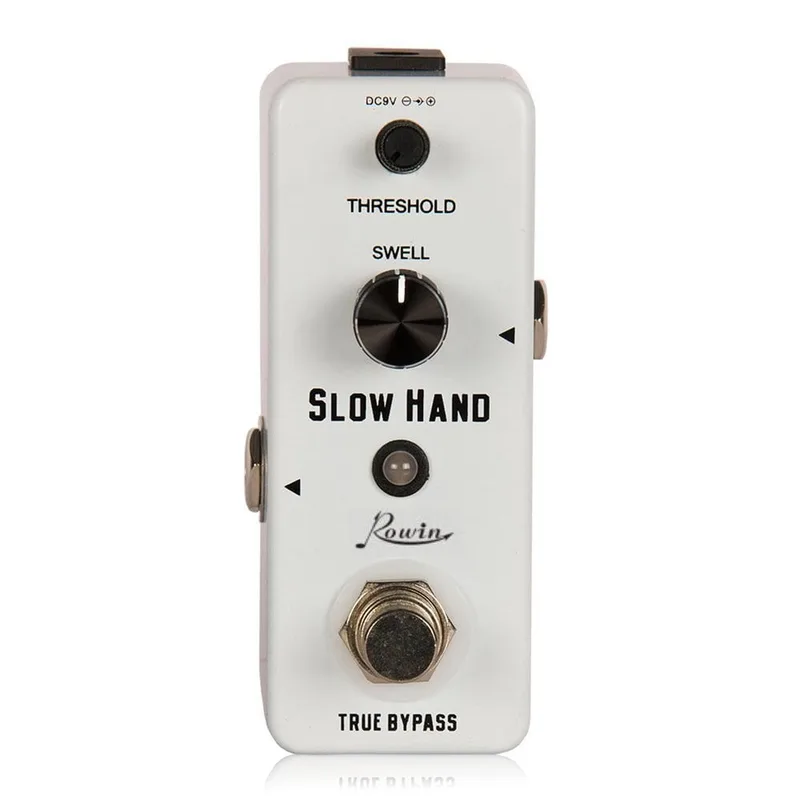
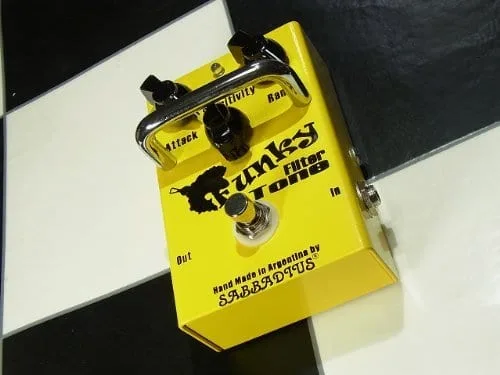
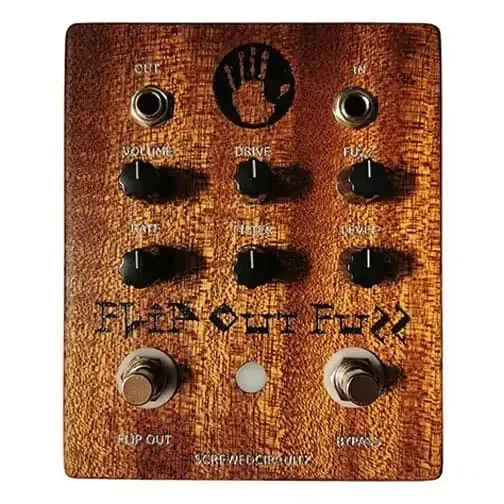
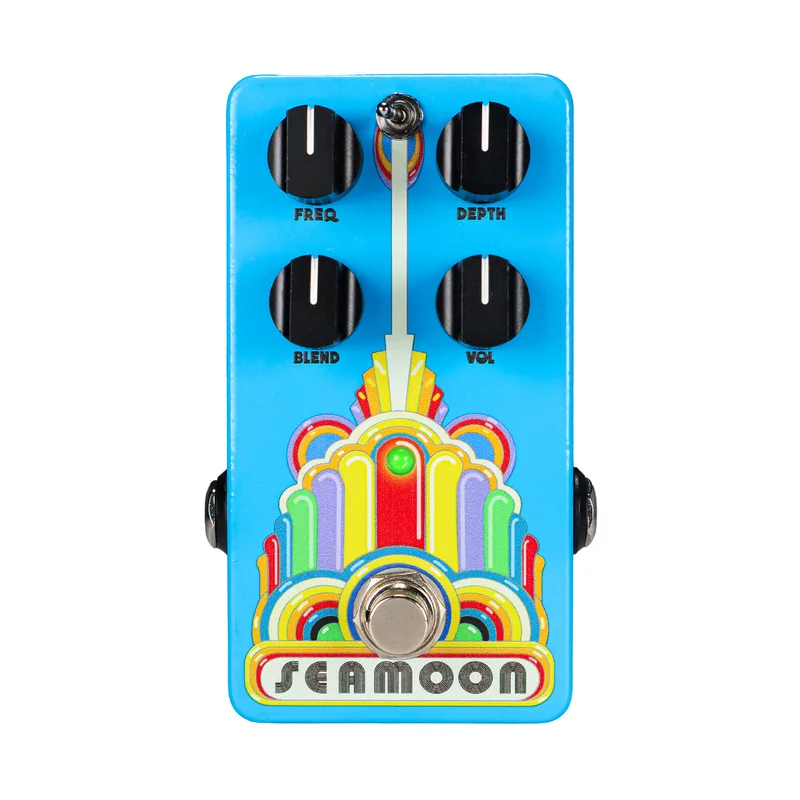
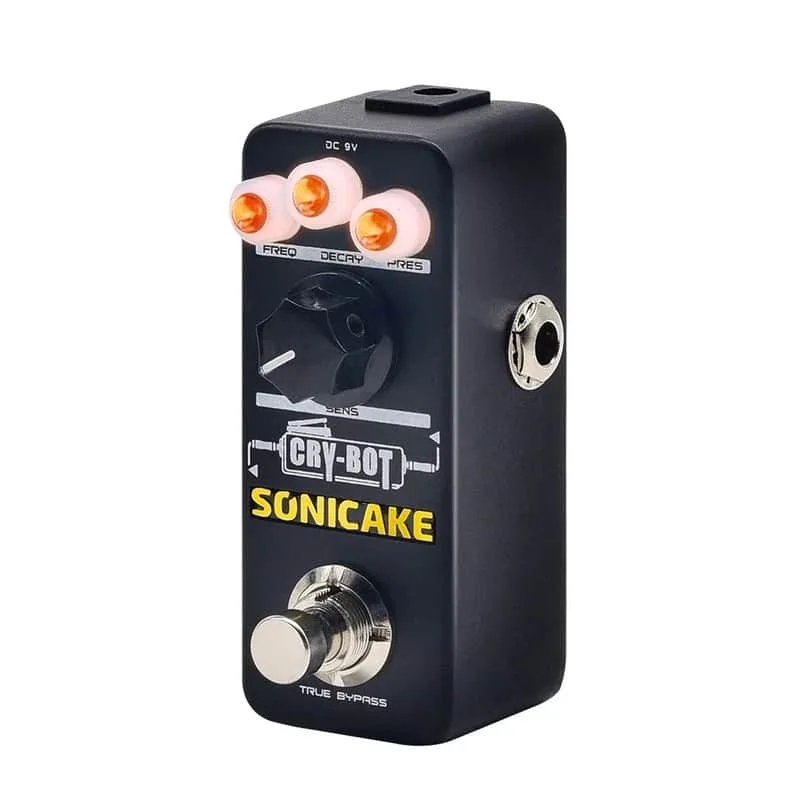
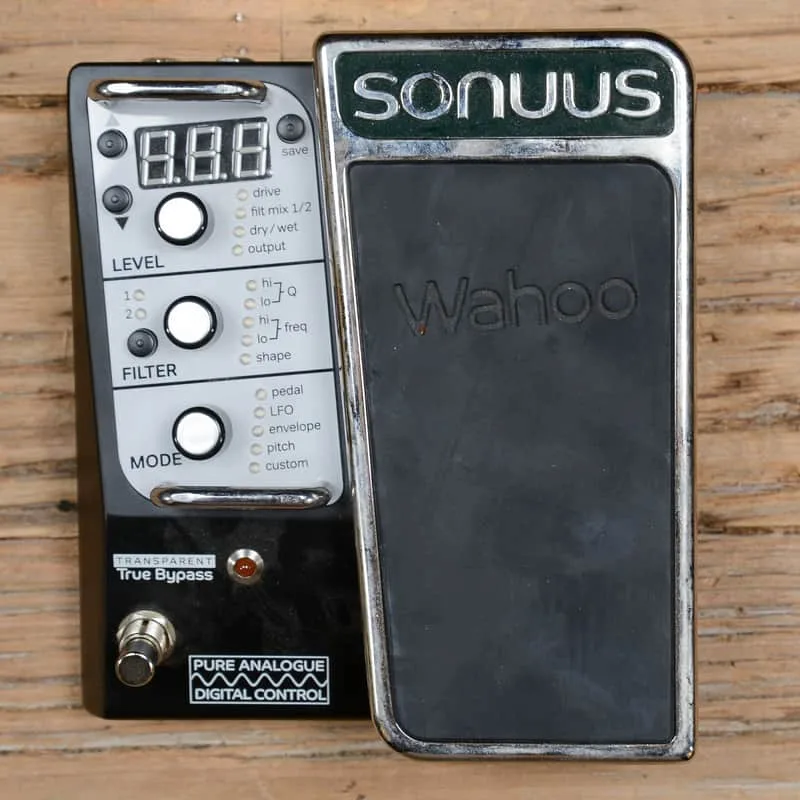
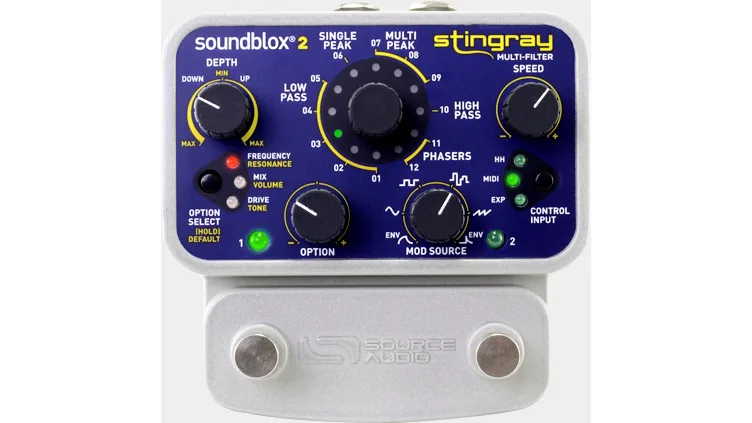
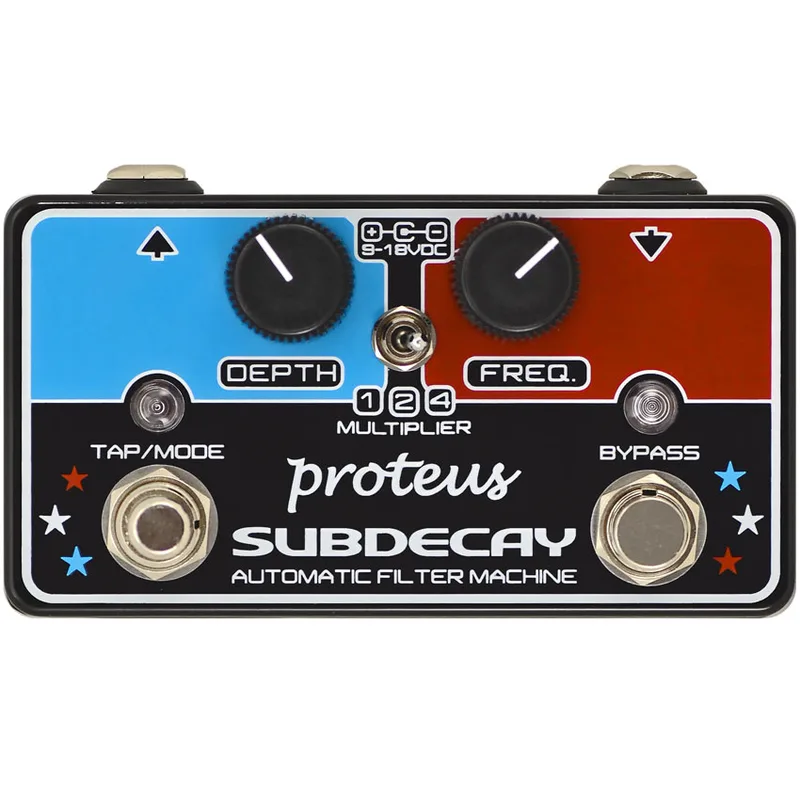
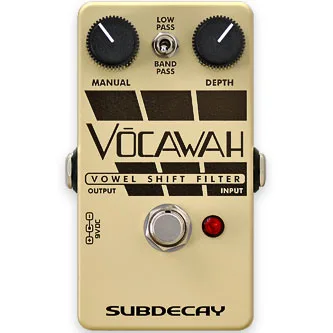
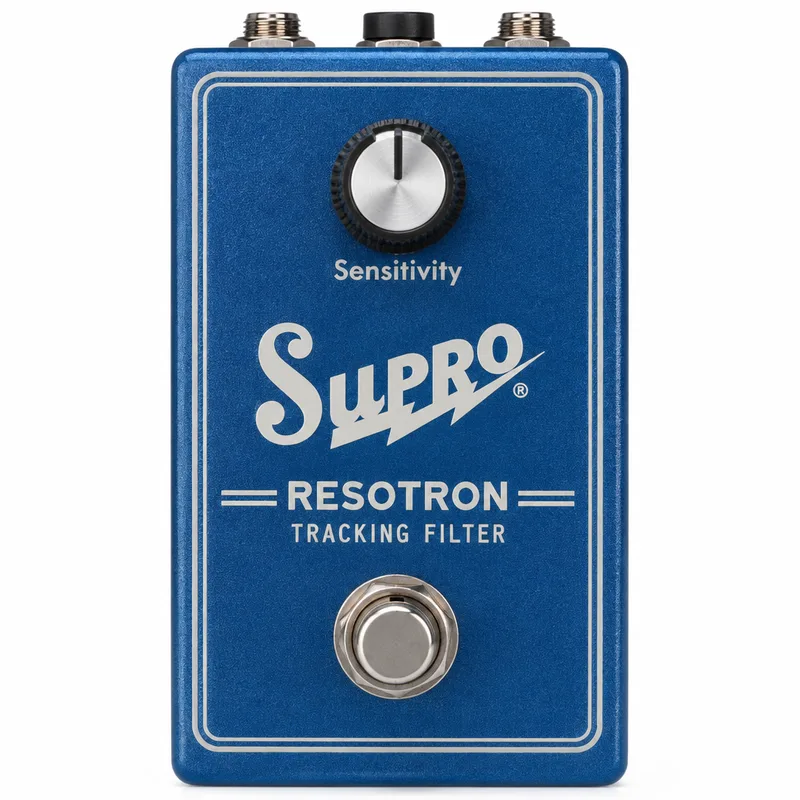
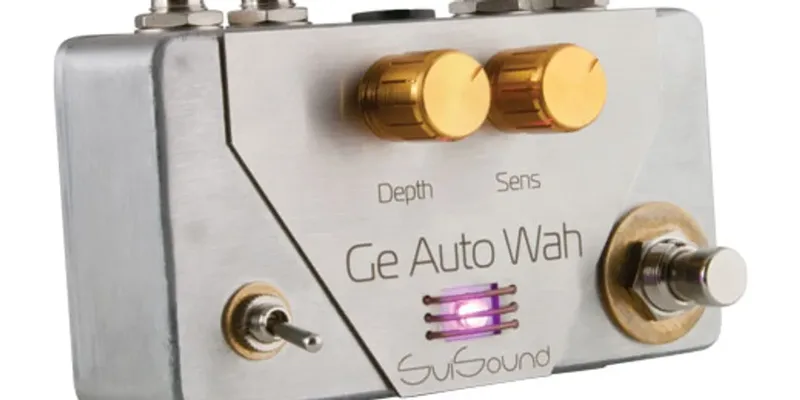
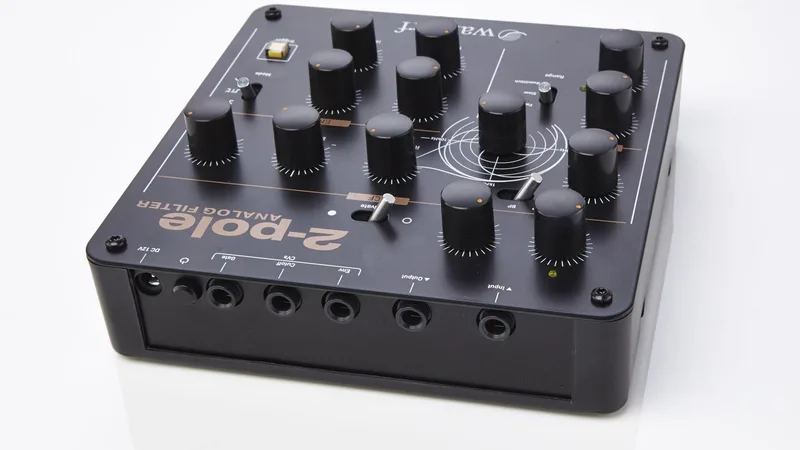
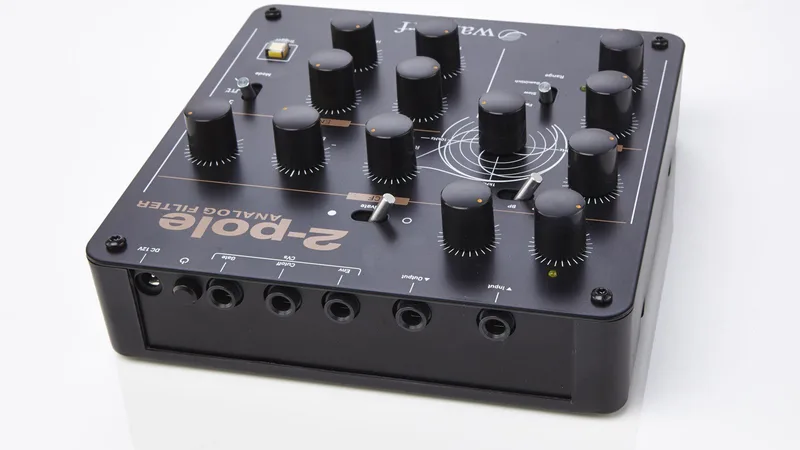
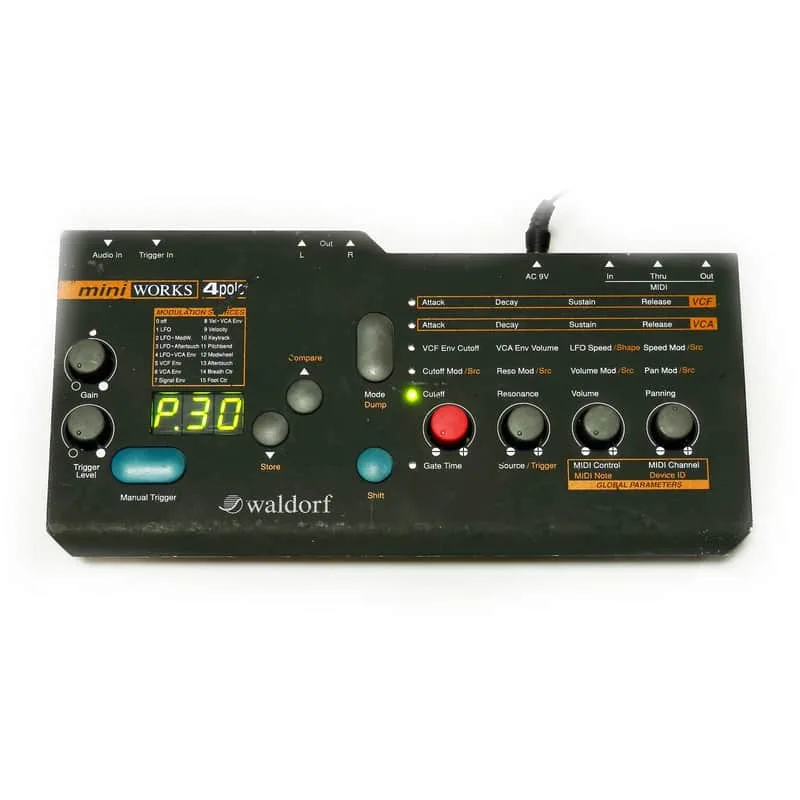
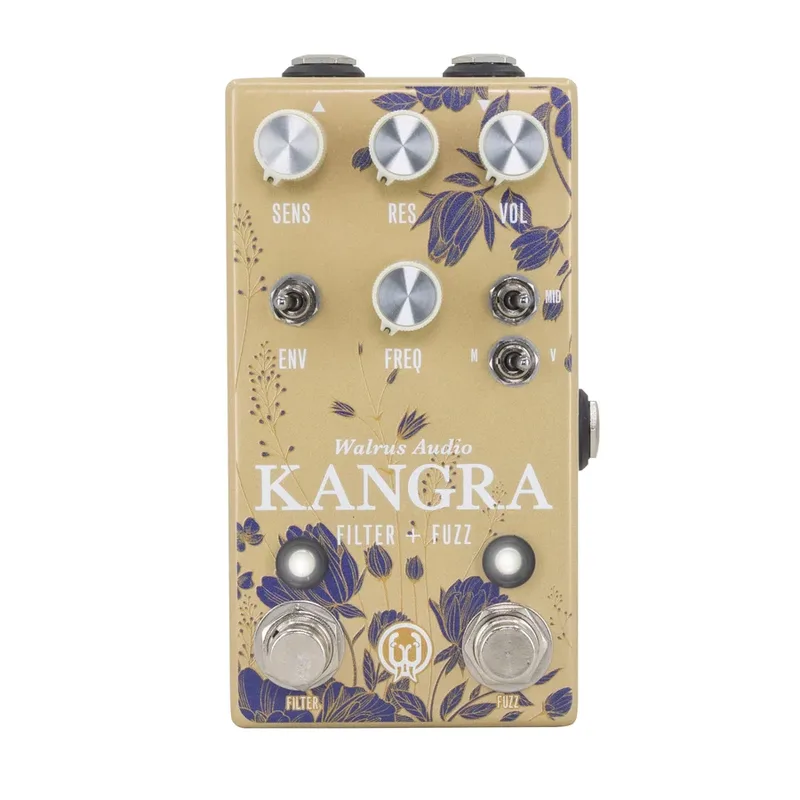
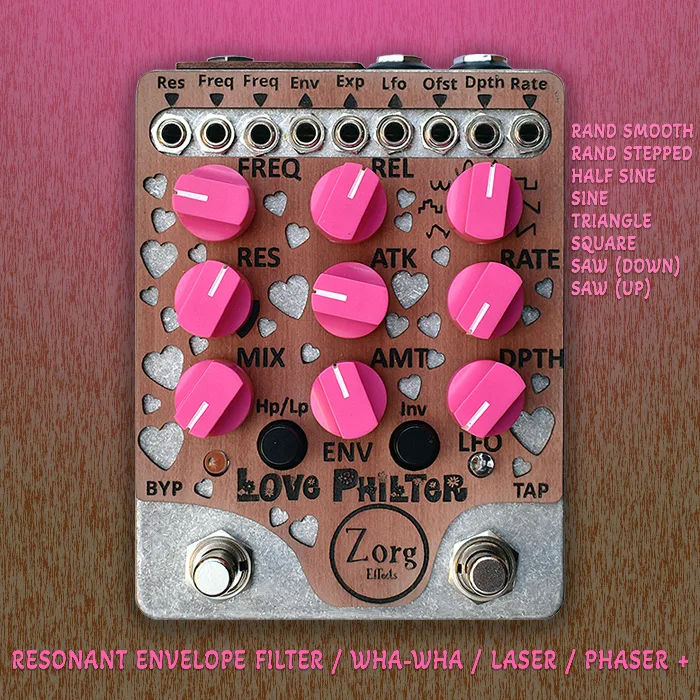
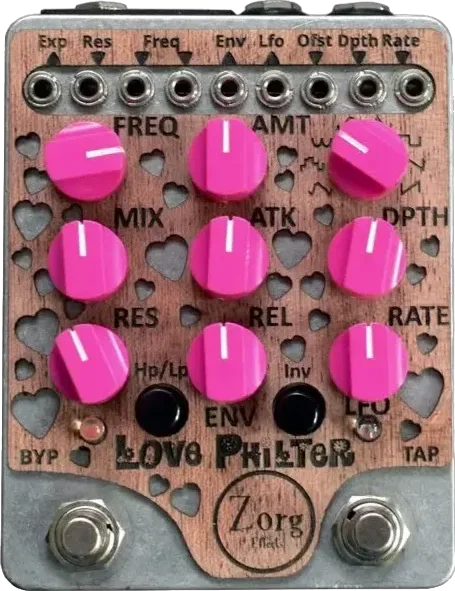
A filter pedal changes your tone by controlling which frequencies of your instrument's signal get through and which get cut. Where an overdrive adds grit or a delay repeats what you played, a filter reshapes the frequency spectrum itself: roll off the highs and a bright guitar turns dark and muffled, sweep a narrow band up and down and you get the vocal "wah" sound every player recognizes, let the sweep follow your picking dynamics and you get the squelchy, funky envelope filter sound heard on countless funk and bass records.
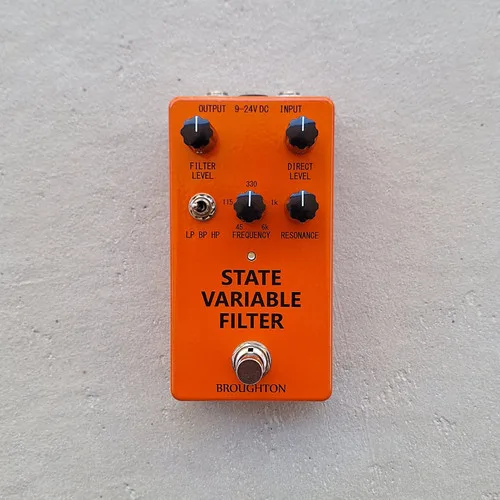
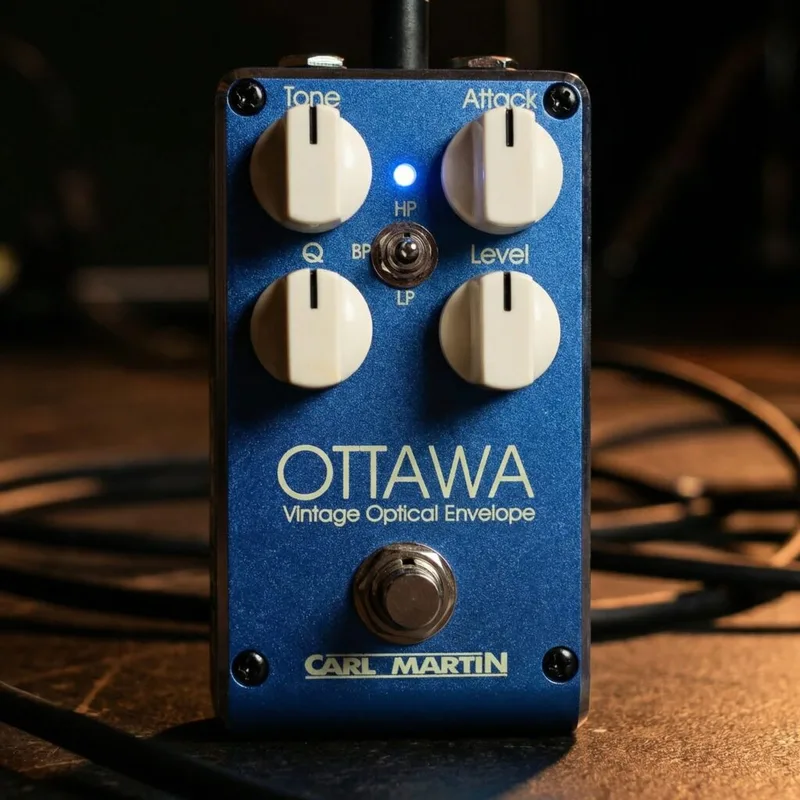
The filter family is wide. At one end sit utility pedals that quietly trim harsh highs or muddy lows, like the Broughton Audio Low Pass Filter. At the other end are envelope filters that make your instrument quack, sweep and talk, like the Maestro Agena Envelope Filter and the Carl Martin Ottawa, and ring modulators that turn your signal metallic and otherworldly. This page explains what each kind does, how the circuits behave, what the knobs mean, and where a filter belongs in your signal chain.
What a filter pedal does to your sound
Every filter pedal is built around one idea: a cutoff point in the frequency spectrum. Frequencies on one side of that point pass; frequencies on the other side are reduced. Move the cutoff and the character of your tone moves with it. That single principle produces very different results depending on which direction the filter works and how the cutoff is moved.
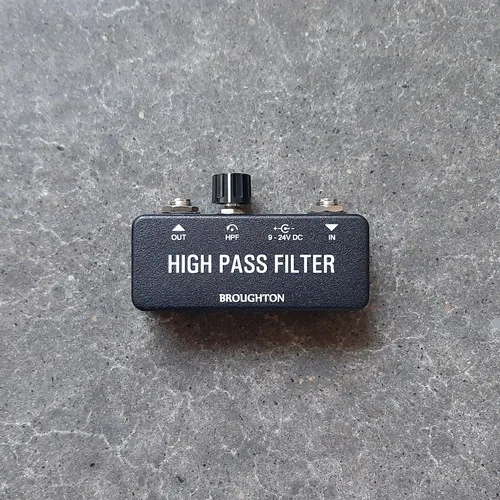
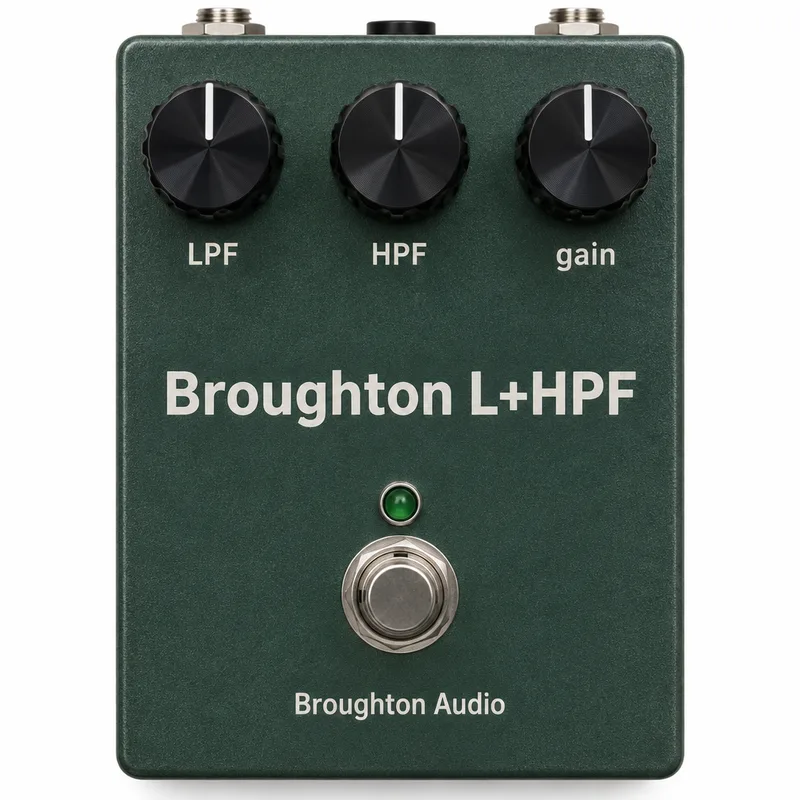
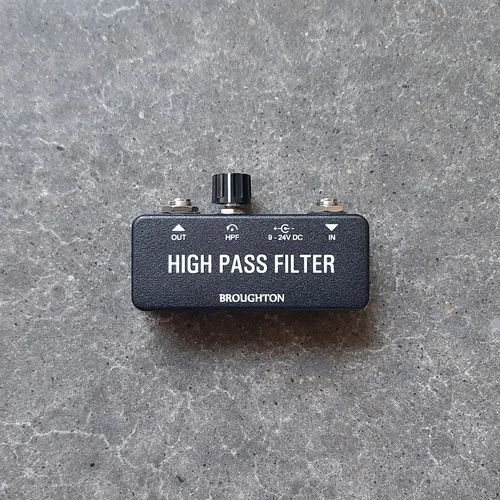
A static filter, set once and left alone, works like a tone control with a sharper edge. Broughton Audio describes its Low Pass Filter pedal as a tool "for taming harsh high end such as fret buzz, string noise, and artifacts from other pedals," which is a practical use many players never associate with the word filter1. Its High Pass Filter does the opposite job, which the maker calls "the perfect utility pedal for cleaning up the low end"2.
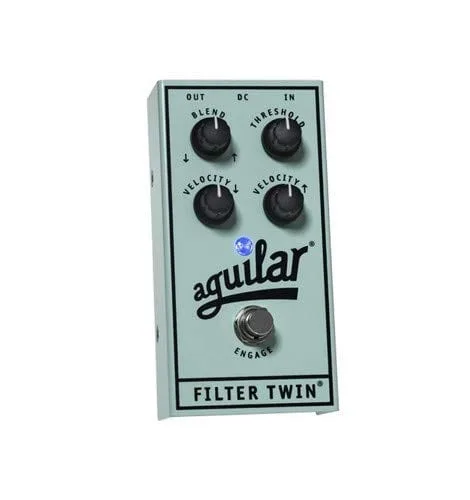
A moving filter is where the effect becomes expressive. Sweep the cutoff and you hear the familiar wah motion. Let your own playing move it and it becomes an envelope filter. Aguilar describes the appeal of its Filter Twin, a dual-filter bass pedal, in terms of the sound two simultaneous sweeps produce:
"Two filters sweeping at the same time give you a more organic, vocal quality and allows you to get expressive new sounds that you can't get from other pedals."3
Aguilar, maker product page3
Filters also show up inside other effects. Anasounds builds a "hum and noise filter inside the pedal" on its Savage and Utopia units, a power-supply cleanup measure rather than a tonal effect, which shows how broadly the word is used in pedal marketing4. On this page, a filter pedal means an effect whose main job is frequency shaping.
How a filter pedal works
Under the hood, a filter pedal is an amplifier circuit whose gain changes with frequency. The three building blocks that matter to a player are the cutoff, the slope and the resonance.
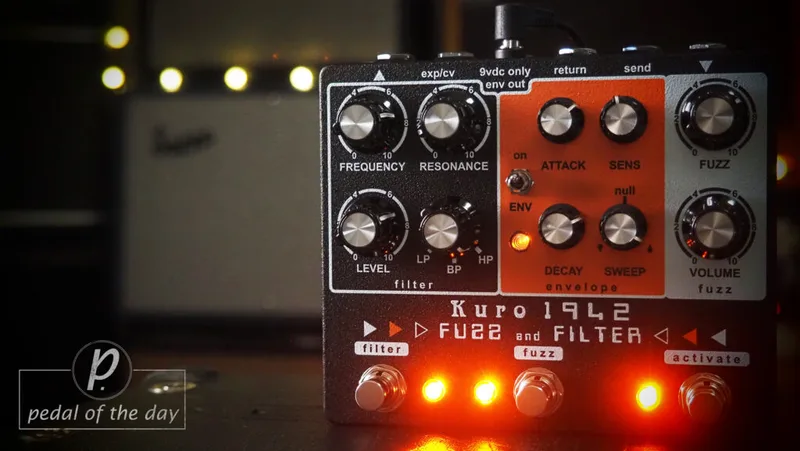
- Cutoff: the frequency where the filter starts working. Below or above it, depending on filter type, the signal passes largely untouched.
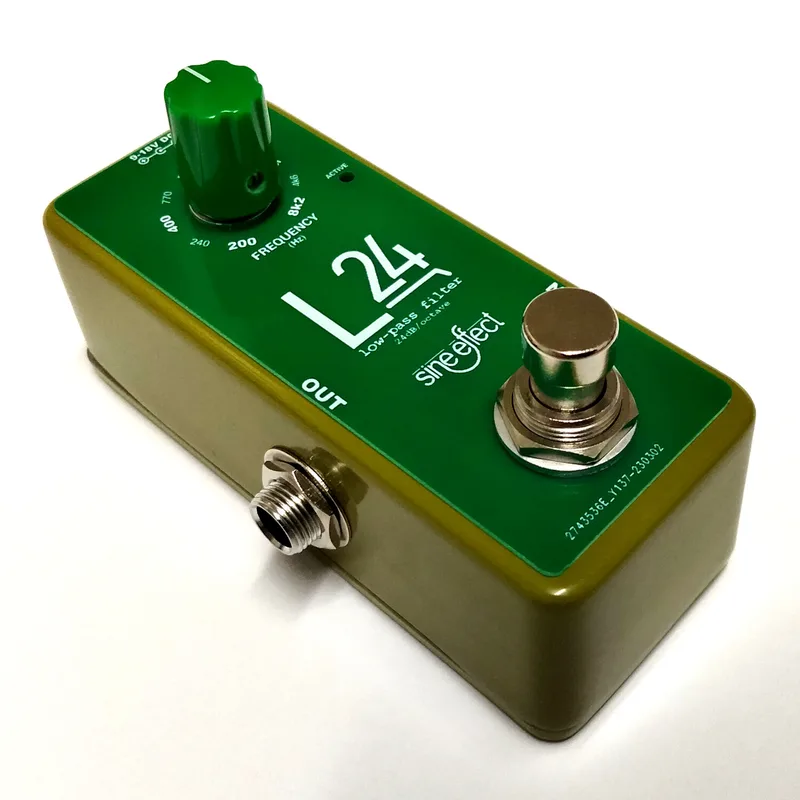
- Slope: how steeply frequencies beyond the cutoff are reduced. Sine Effect describes its L24 as "a steep low-pass filter pedal," meaning the highs drop off quickly rather than gradually5.
- Resonance (or peak): a boost at the cutoff point itself. High resonance makes the filter "ring" at its cutoff, which is what gives synth-style filters, such as the Manecolabs Saurus with its "analog resonant lowpass and bandpass synth filter," their vocal, honking character6.
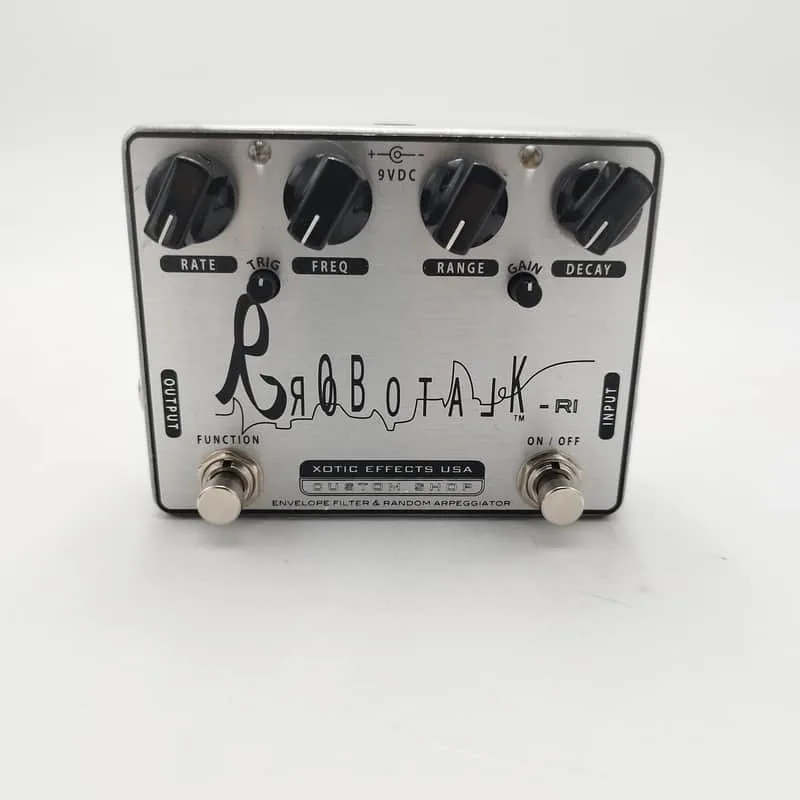
What moves the cutoff separates one filter pedal from another. In a wah pedal you move it with your foot. In an envelope filter, a circuit called an envelope follower measures the level of your signal and translates it into control voltage: play harder, the filter opens. In an LFO-driven auto-filter, a low-frequency oscillator sweeps the cutoff up and down on a repeating cycle, like a slow, automatic wah. In a ring modulator, your signal is multiplied against an oscillator's frequency, which creates entirely new sum and difference frequencies rather than simply cutting existing ones.
For comparison, a chorus works nothing like this. As Lehle's Joki Schaller explains, "a chorus pedal basically works like a delay: it doubles the signal, but delays the copy for a few milliseconds, pitches it up and down a few cents and merges them back together"7. Chorus thickens; a filter subtracts and emphasizes.
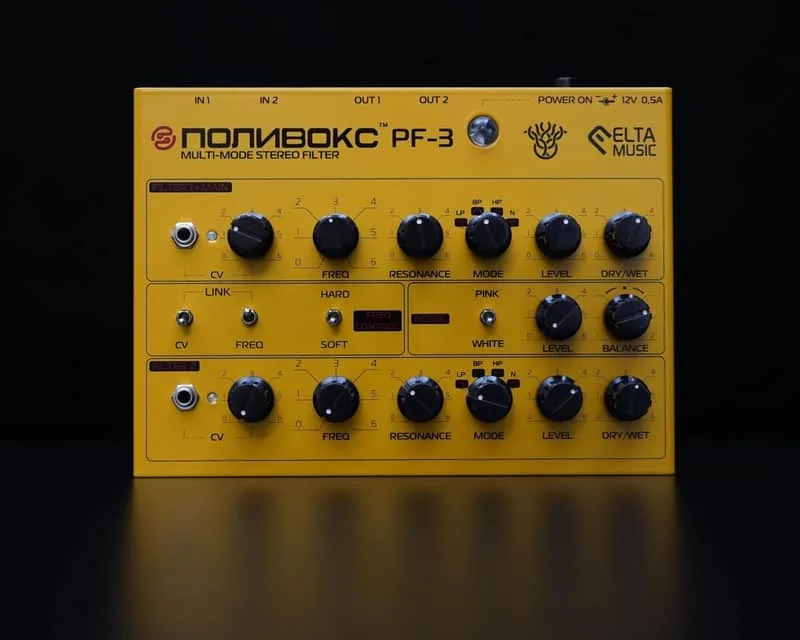
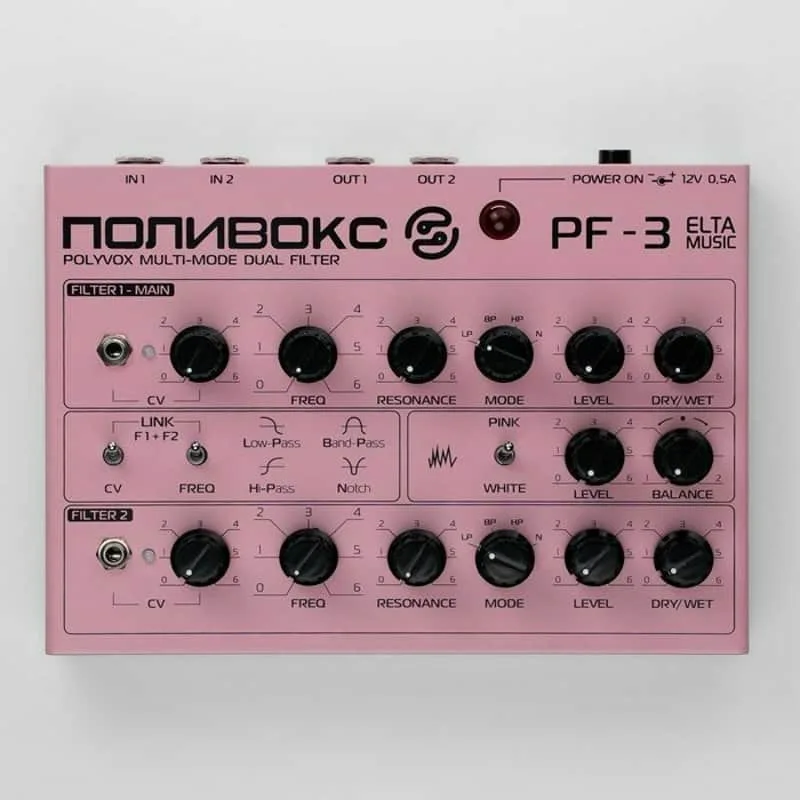
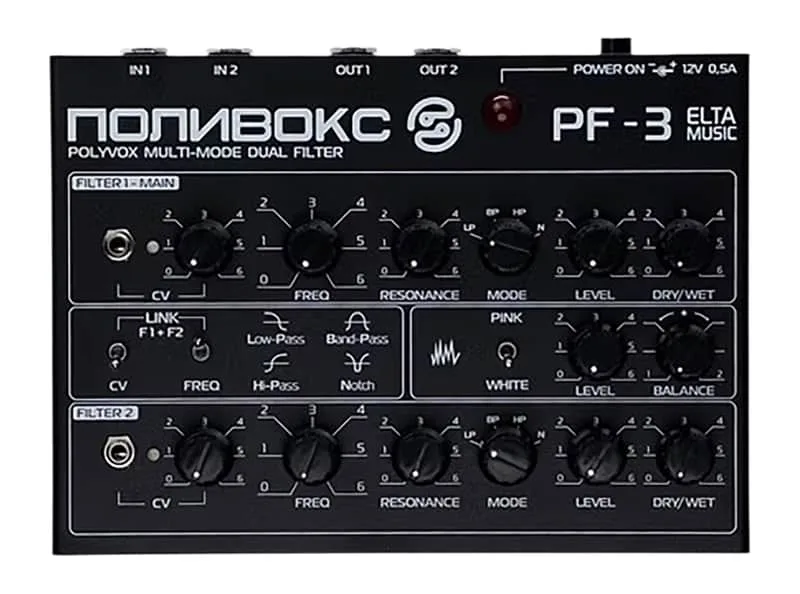
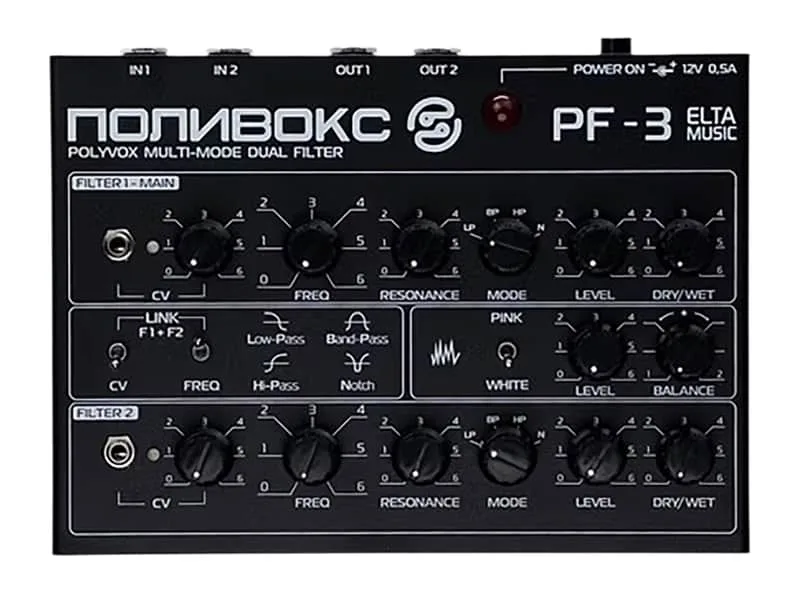
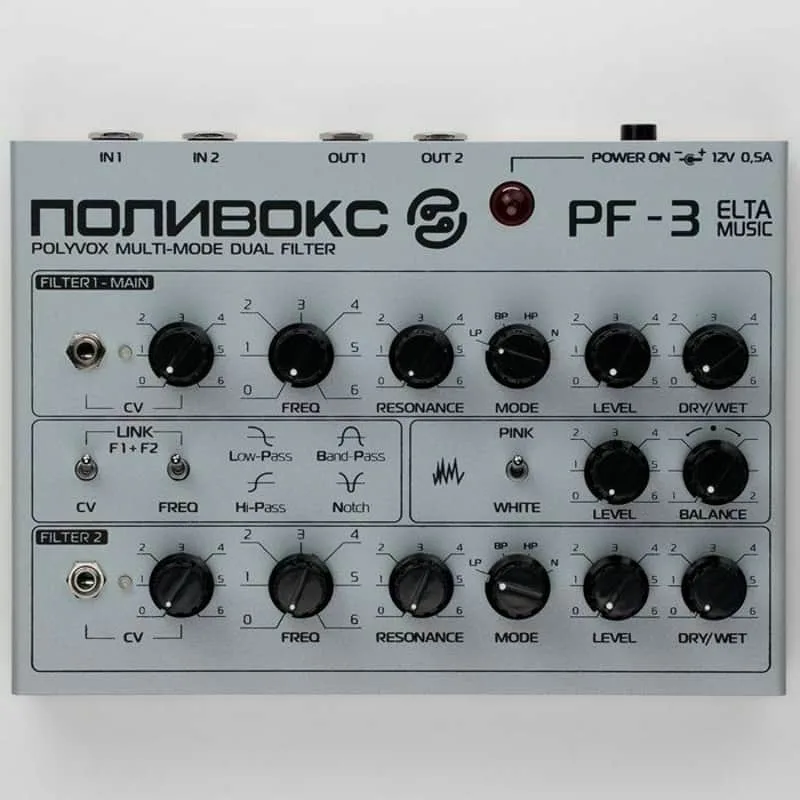
Some designs let you drive the cutoff by hand. Behringer's flanger pedal includes a "manual mode to ride the integrated foot pedal directly across the filter," the same direct control a wah gives you8. And not every filter is a floor stompbox at all: Elta Music builds its Polivoks Filter and Polivoks Filter 2 for desktop use, "switched on with a switch, rather than a stomp button," aimed at players and synth users who tweak by hand rather than tap with a foot910.
Envelope filters, auto-filters and ring modulators
These three categories cover most of what players mean by "filter pedal," and the boundaries between them are blurrier than the names suggest.
Envelope filters
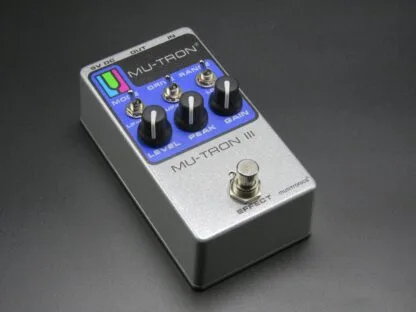
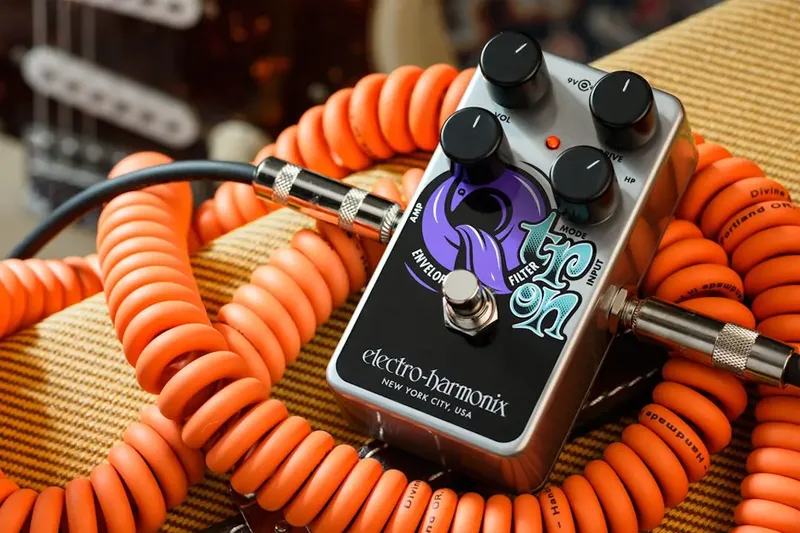
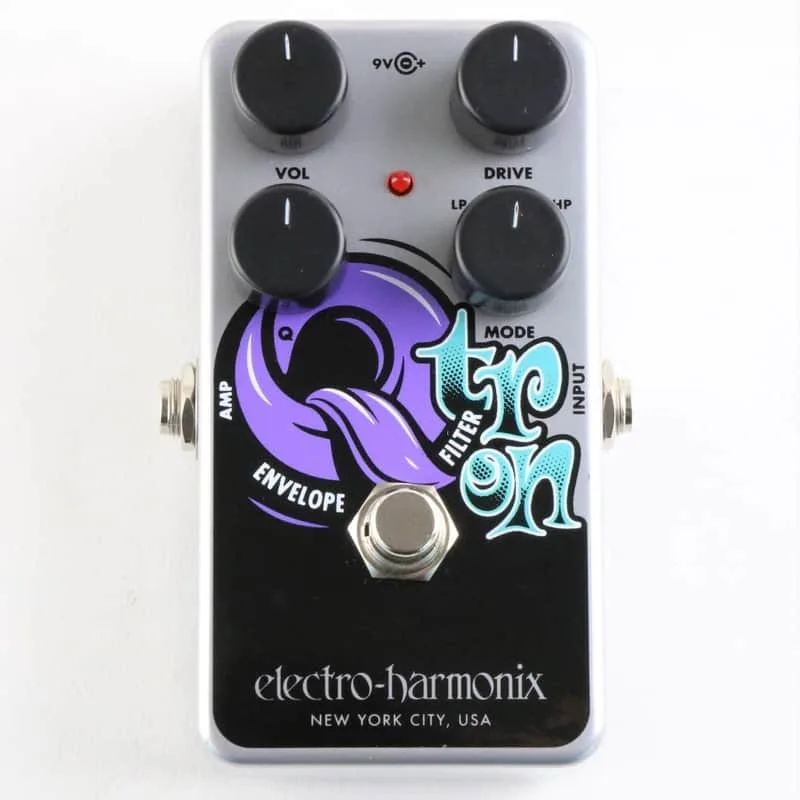
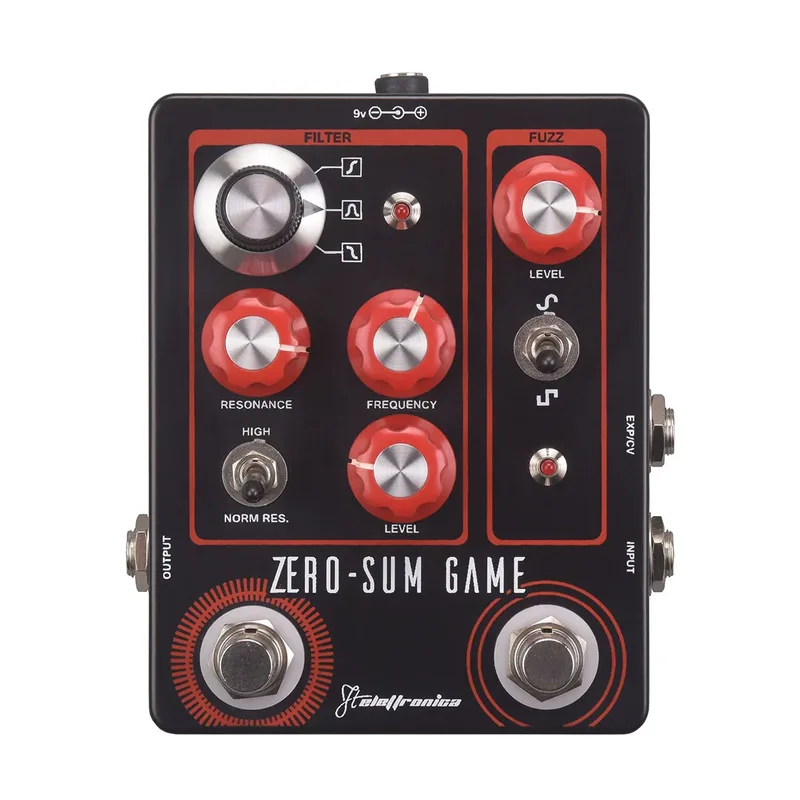
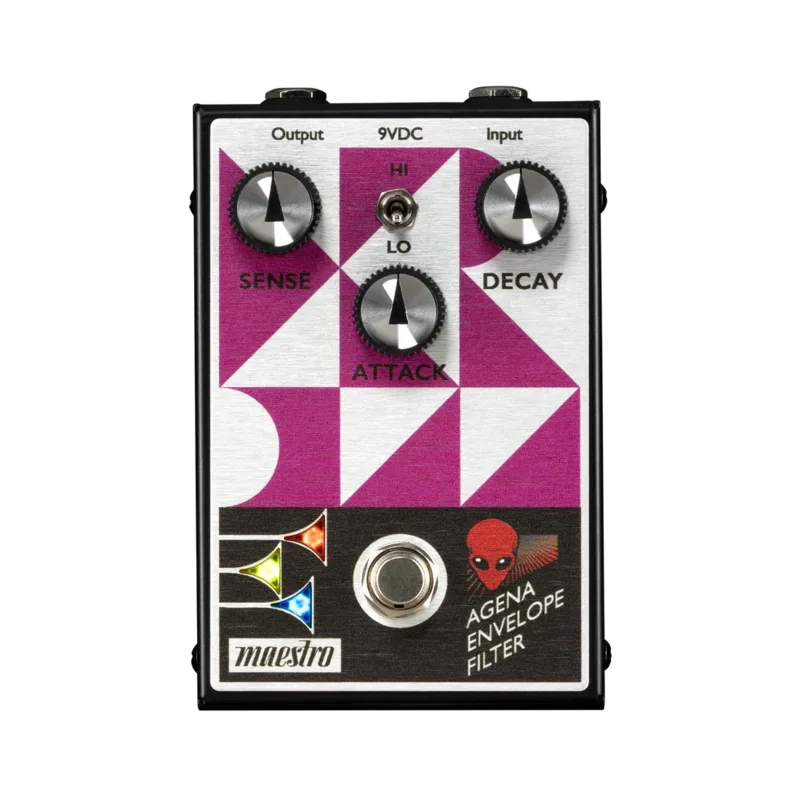
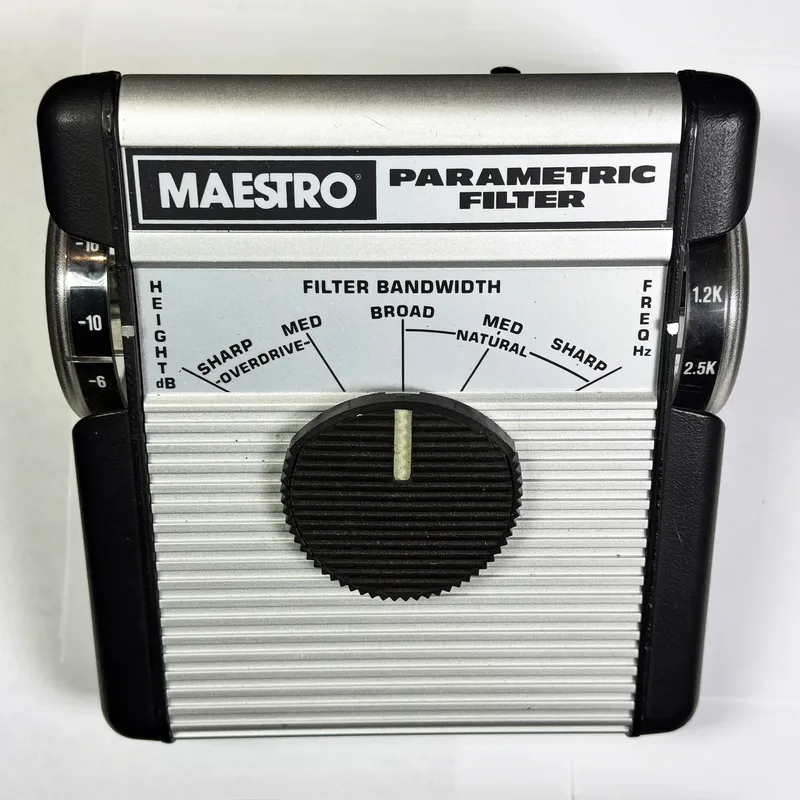
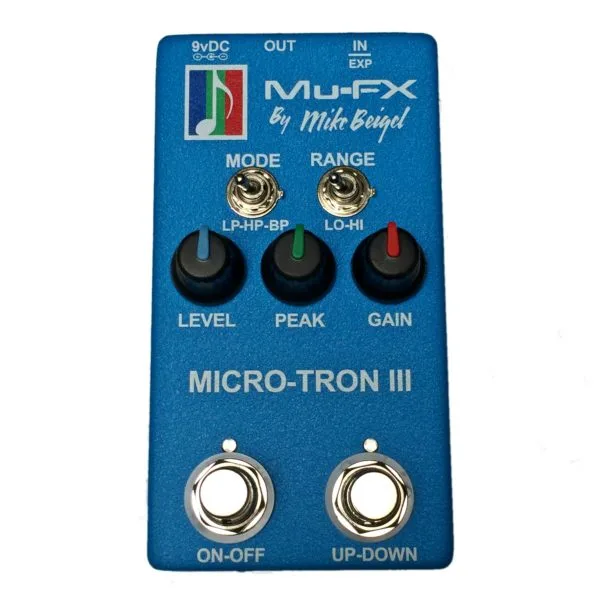
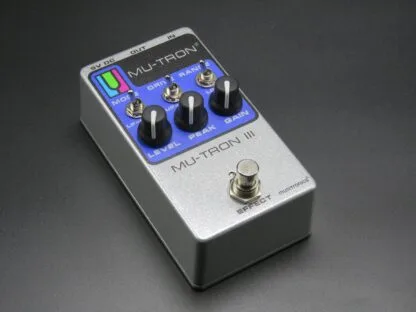
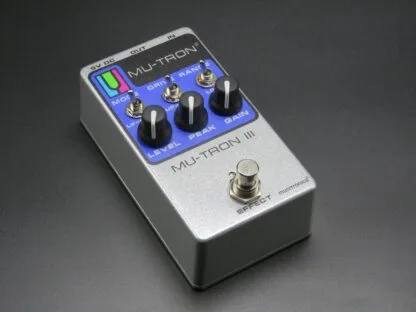
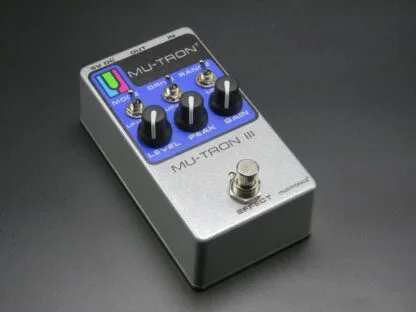
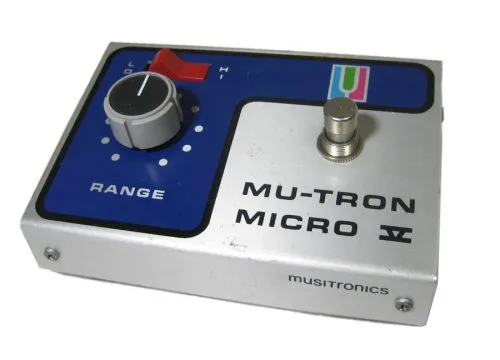
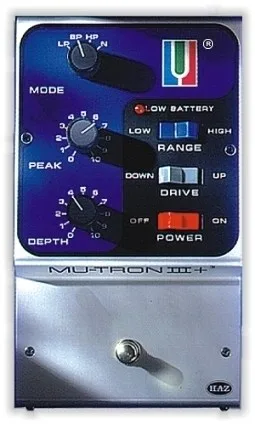
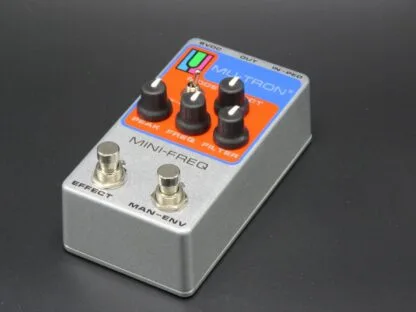
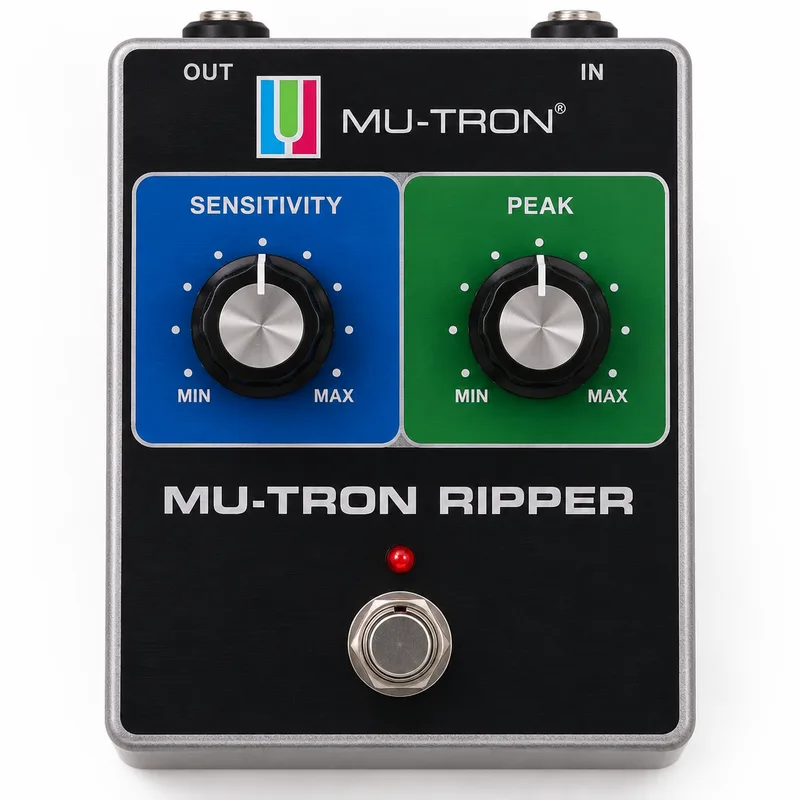
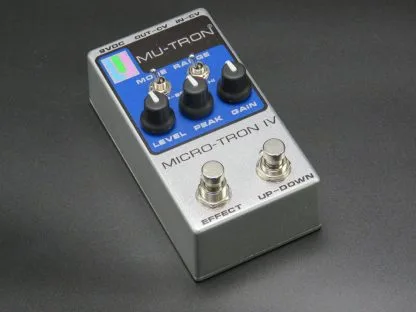
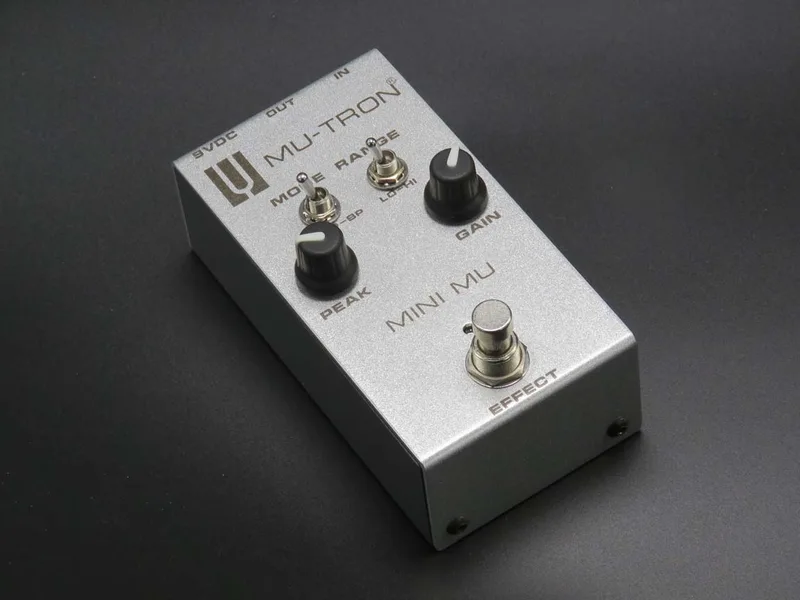
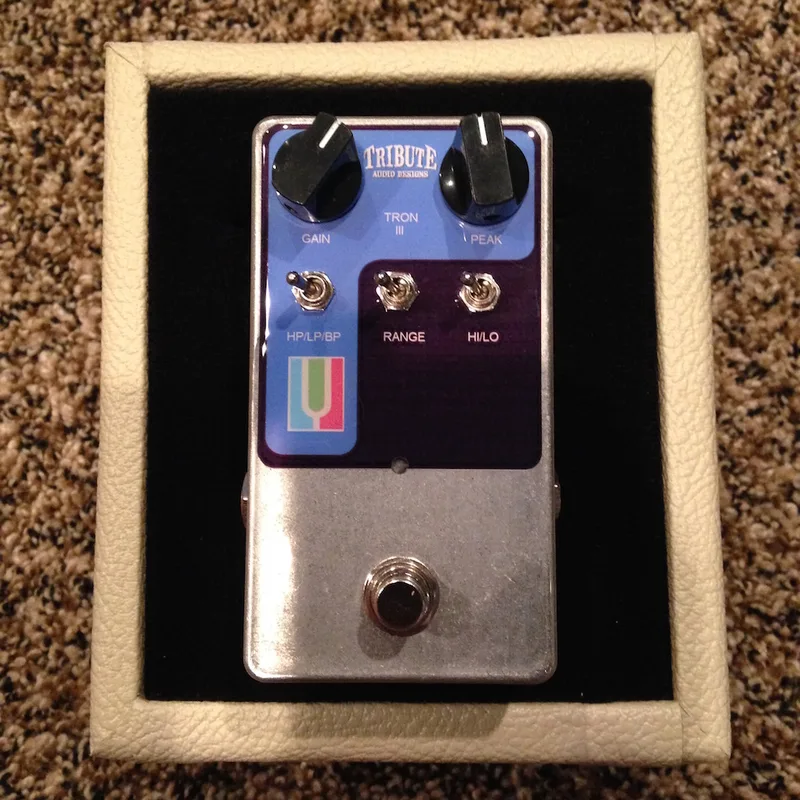
An envelope filter reads your dynamics. The classic reference point is the Musitronics Mu-Tron III, and the design idea lives on in a long line of pedals. The FTelettronica Envelope Follower/Triggered Filter combines "envelope filter and triggered filter with static filter options" in one unit, meaning it can follow your attack, fire a one-shot sweep on a trigger, or hold a fixed setting11. The Maestro Agena Envelope Filter is, in Gibson's words, "designed for ease of use," with a Sense knob setting the envelope's response to your picking12. MOOER's Envelope packs the effect into what the maker calls "a pocket sized 'envelope filter'/'dynamic auto wah' pedal"13.
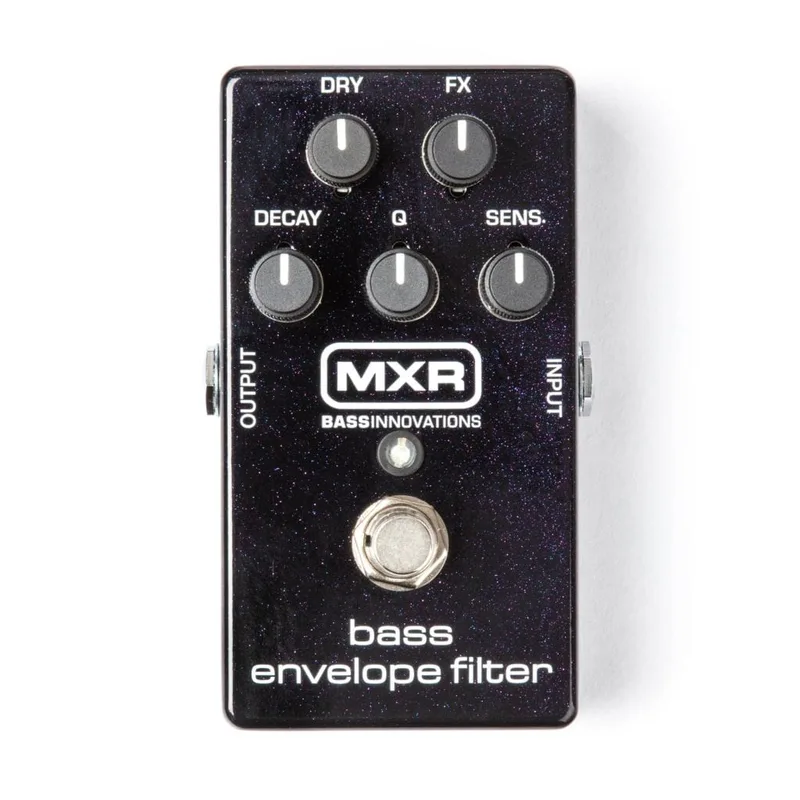
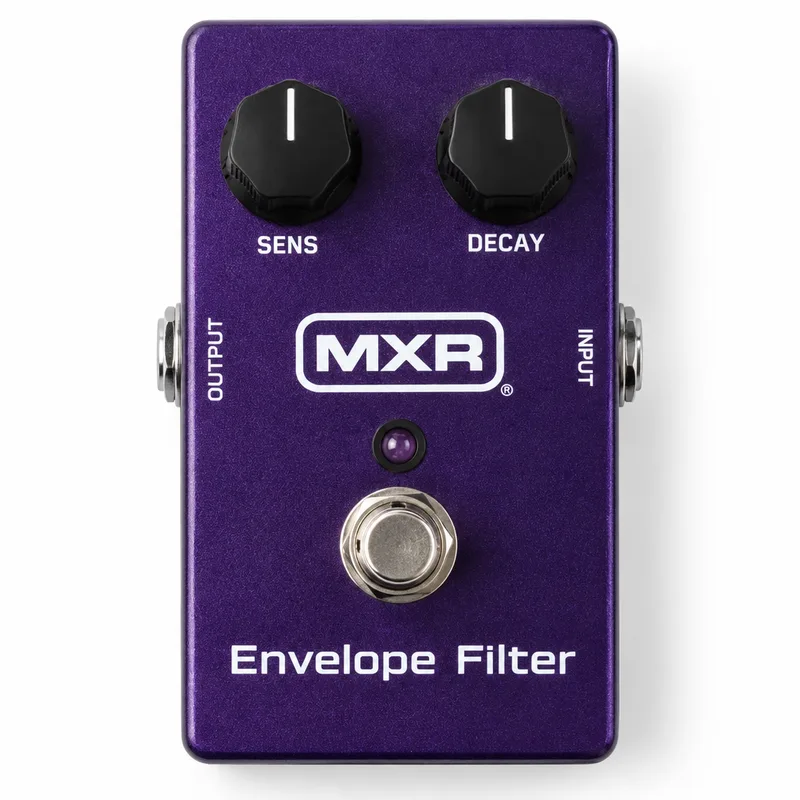
Envelope filters are a major category on bass. The MXR Bass Envelope Filter "delivers classic analog envelope filter sounds with separate Dry and Effect level controls," so the untouched low end can be blended back in alongside the filtered signal14. Aguilar's Filter Twin takes a different route, running two filter sweeps simultaneously for a more organic result3. Dreadbox describes its KINEMATIC as "an Envelope Filter effect pedal suitable for fretted instruments and synthesizers," a reminder that these circuits cross over into synth territory15.
Auto-filters and auto-wahs
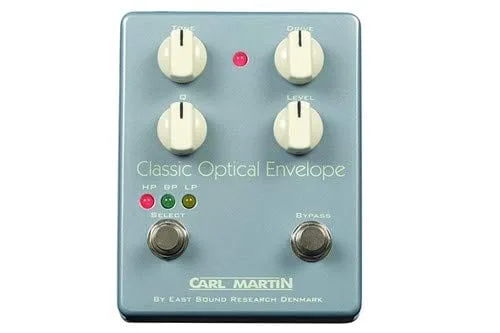
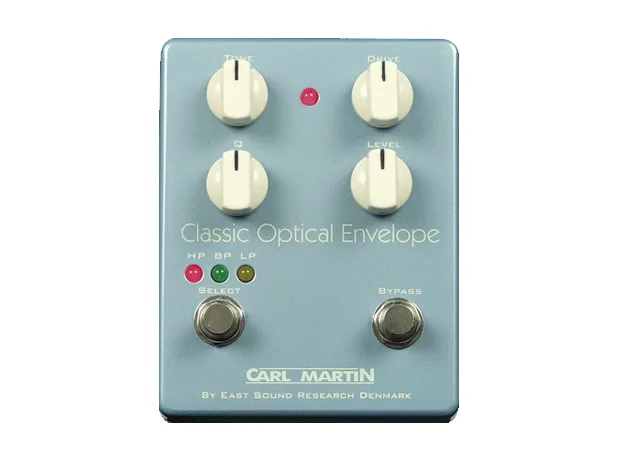
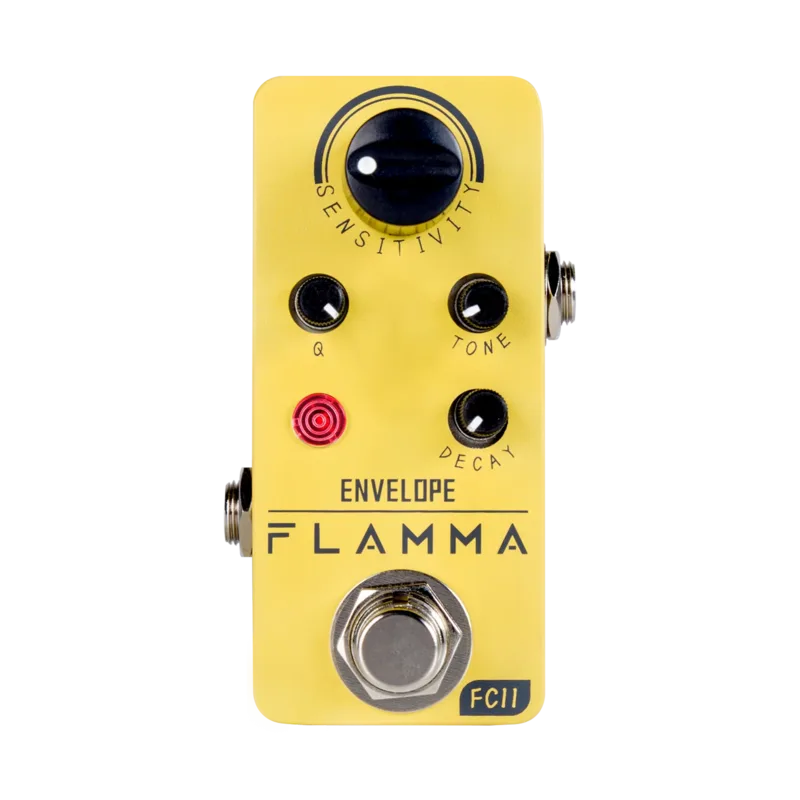
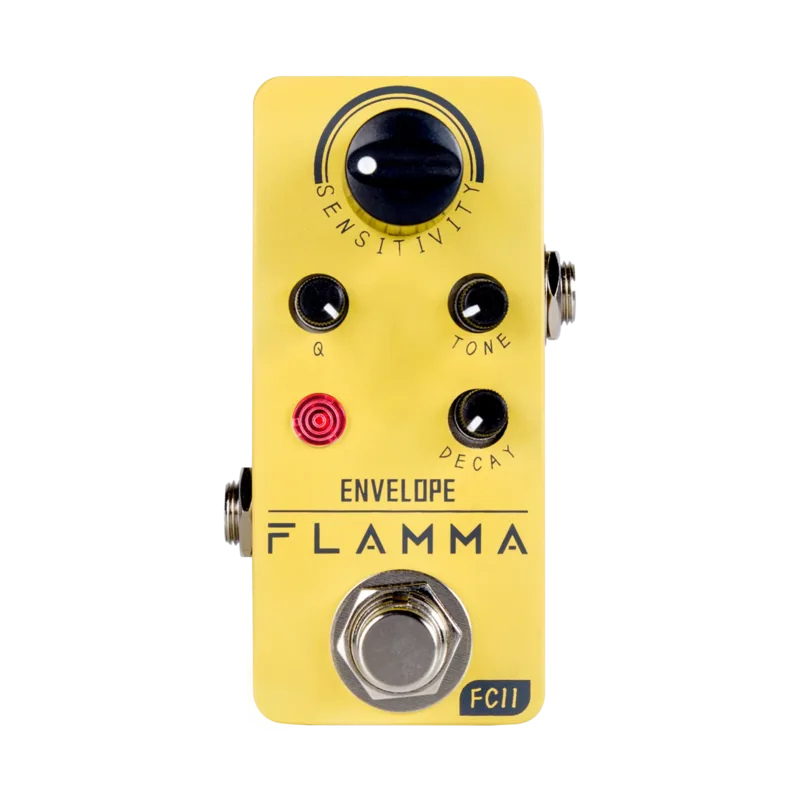
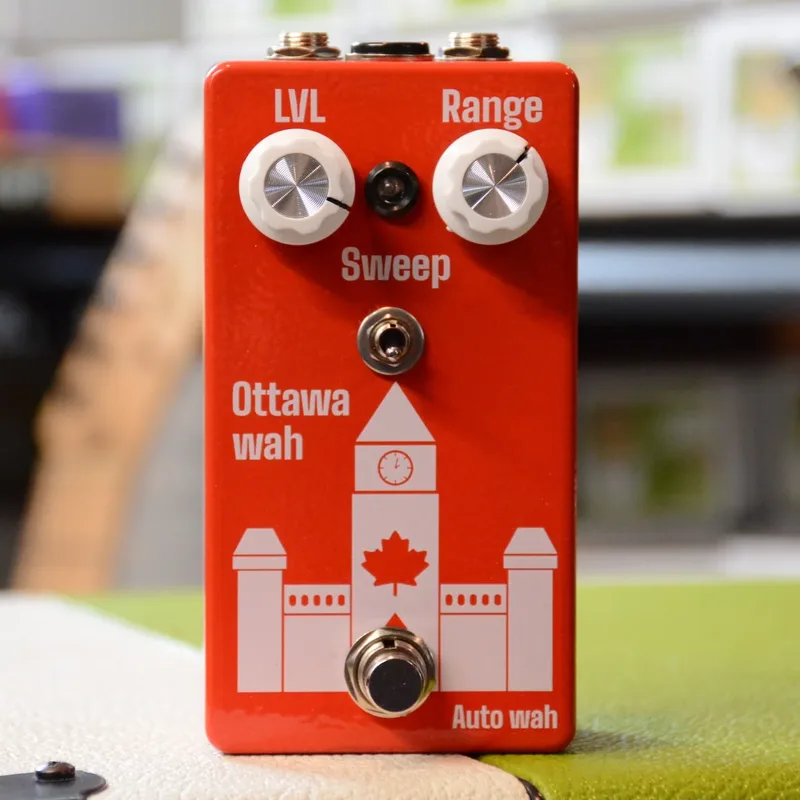
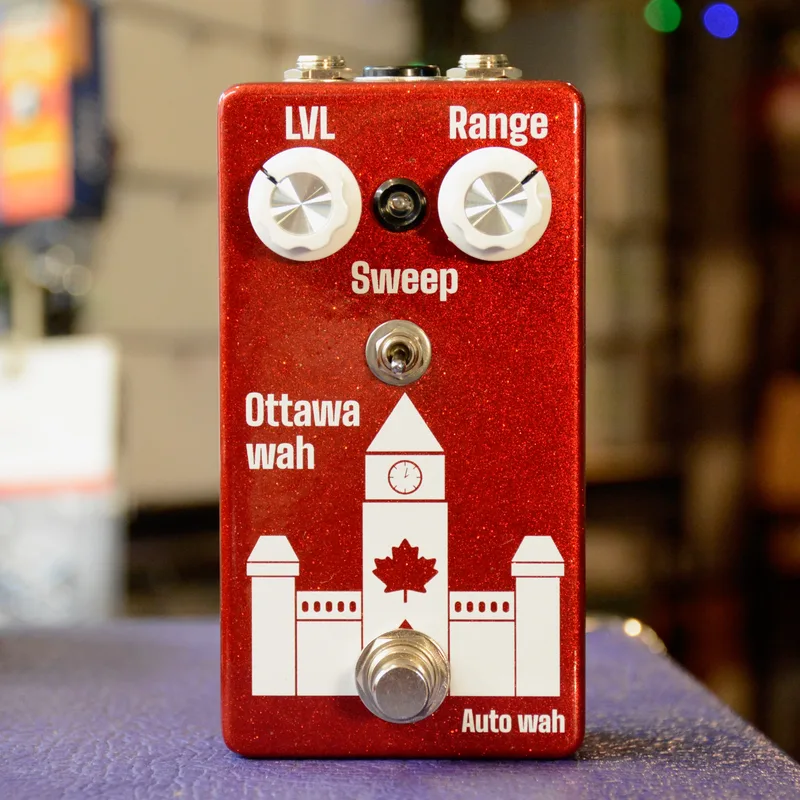
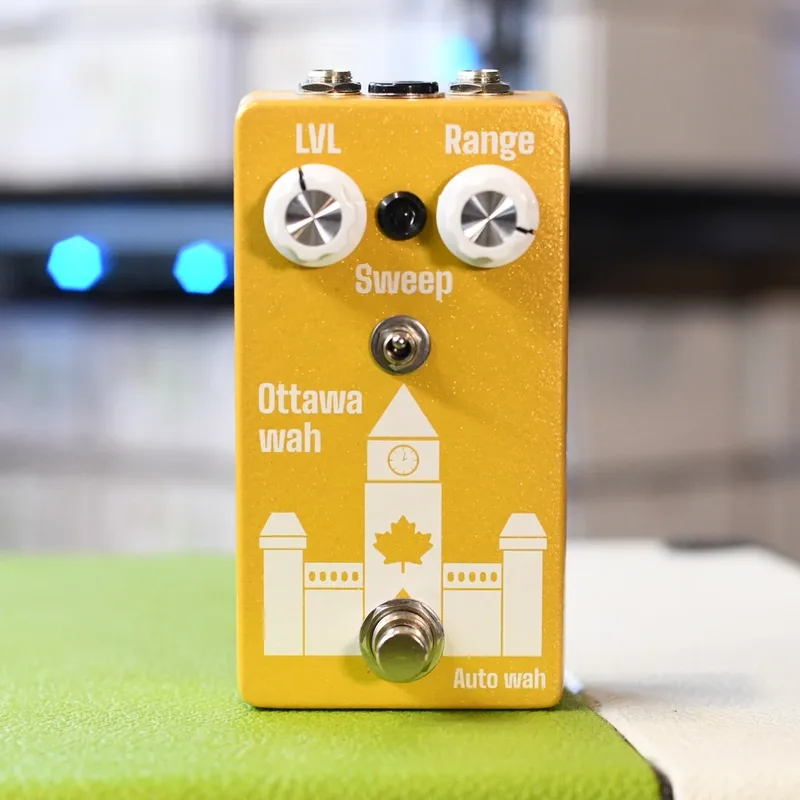
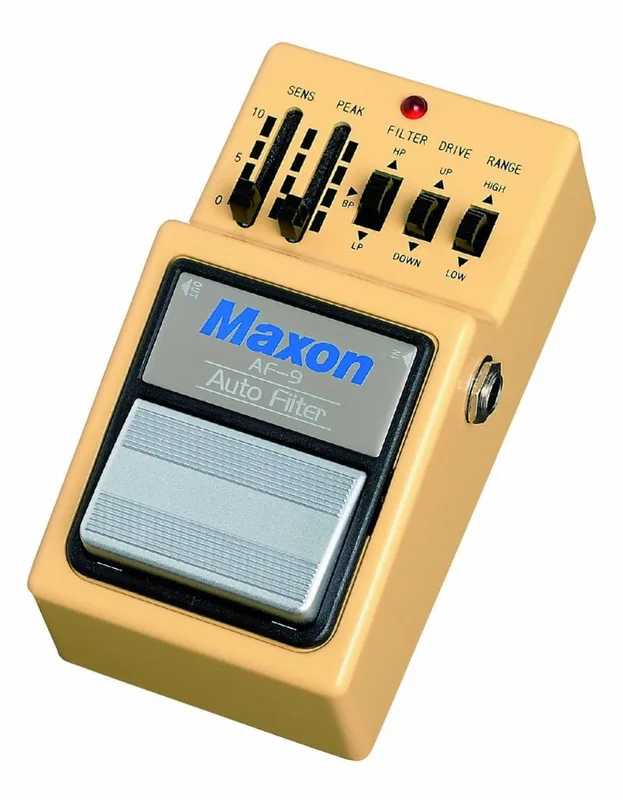
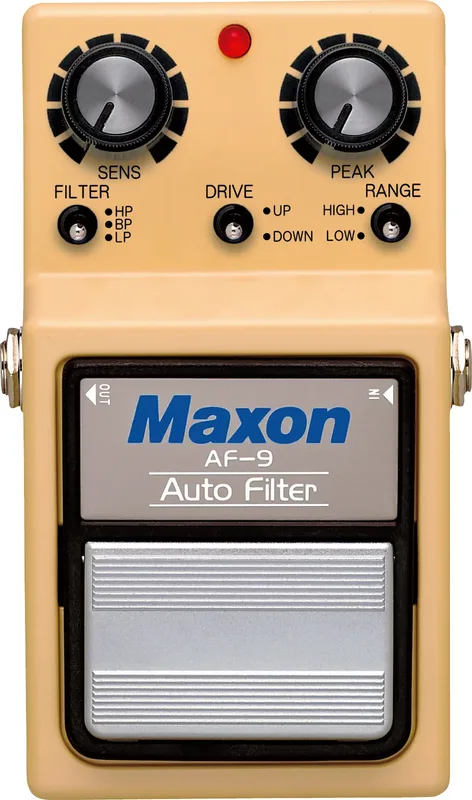
An auto-wah produces the wah sound without your foot. Carl Martin describes the Ottawa plainly: "The Ottawa is an auto-wah / envelope filter pedal, essentially it gives you that funky wah-wah sound that follows your" playing16. Flamma's FC11 is likewise a "Pocket-sized envelope filter/dynamic auto wah pedal"17. The terms auto-wah and envelope filter are used almost interchangeably by makers, though some auto-filters, like the Maxon AF-9 Auto Filter, sweep on their own internal timing rather than your attack181920.
Ring modulators
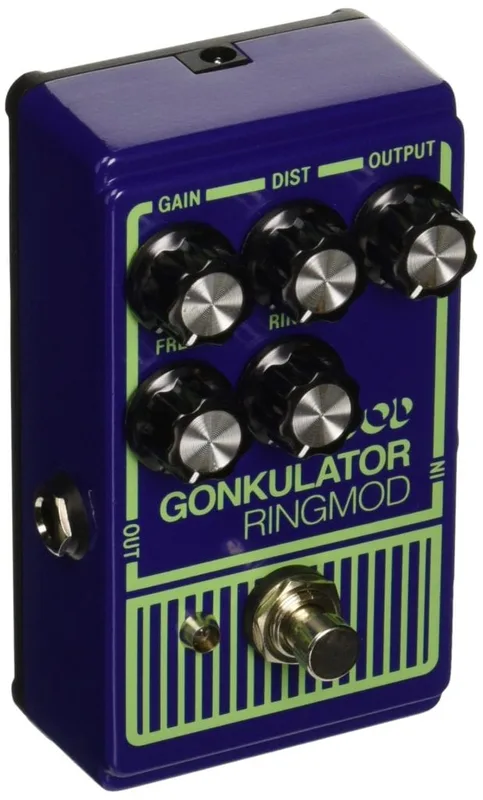
A ring modulator is the extreme end of the family. Intensive Care Audio's VENA CAVA FILTER is "a distortion pedal with an auto-filter and ring modulation," stacking the metallic, atonal ring-mod sound on top of filtering and gain21. Champion Leccy's the Kilter V2 was designed as a utility modulation pedal but "also functions as a tremolo, a clean blend, parallel mixer or" ring modulator, showing how often ring modulation appears as one mode among several22.
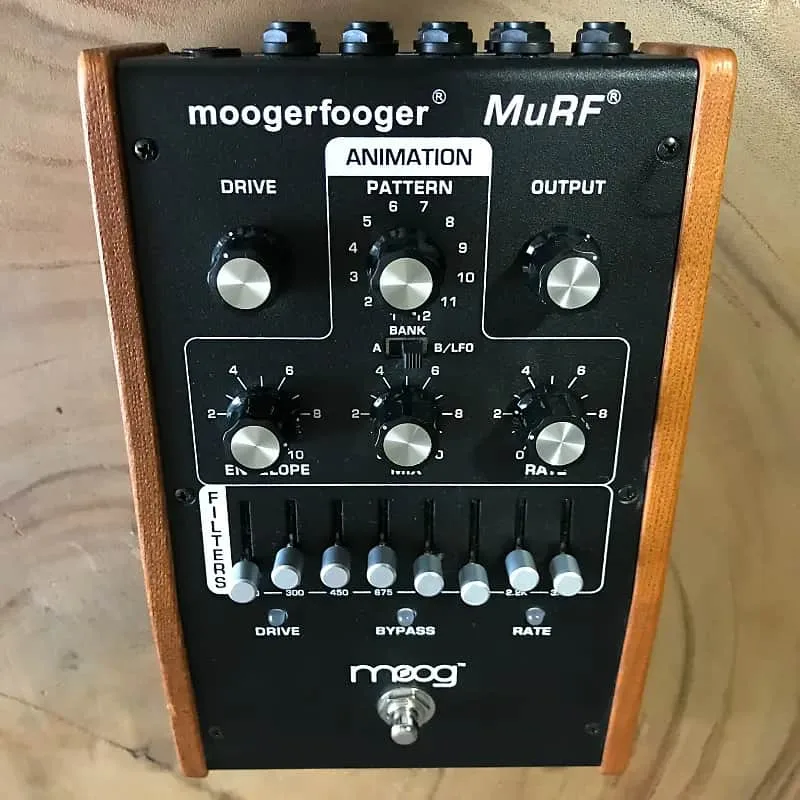
Low-pass, high-pass and band-pass filters
Filter pedals are named for which frequencies they cut, and three types cover nearly everything.
| Filter type | What it does | Typical player use |
|---|---|---|
| Low-pass | Cuts highs, passes lows | Darkening a bright rig, taming fret buzz and string noise1 |
| High-pass | Cuts lows, passes highs | Cleaning up muddy low end2 |
| Band-pass | Passes only a narrow band | Vocal, honking, synth-like sweeps6 |
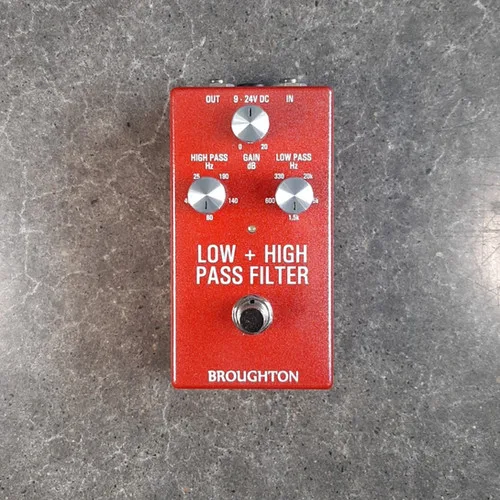
Many pedals combine types. Alexander Pedals' Now We Are Ghosts includes a "resonant filter with low pass, high pass, band pass options," letting one pedal cover all three behaviors23. Sine Effect's C24 "combines the two," high-pass and low-pass, "and also allows a clean boost of up to +20dB," with hand-matched components for consistency between the two filter stages24. AMT Electronics builds Hi/Low pass filters plus a Presence control into its pedal preamps, applying fixed filtering as part of a bigger signal-shaping chain25.
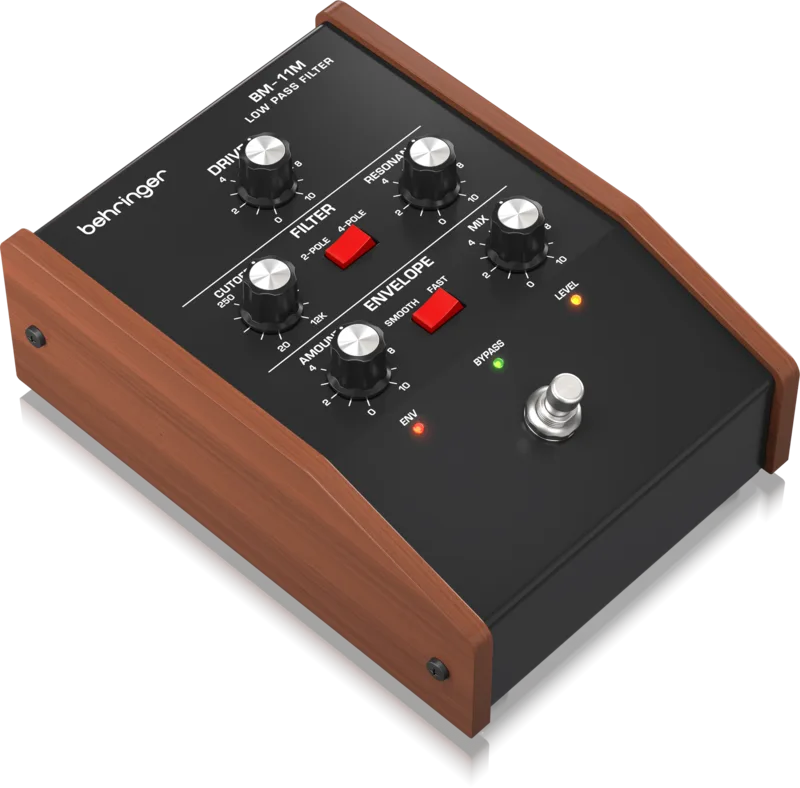
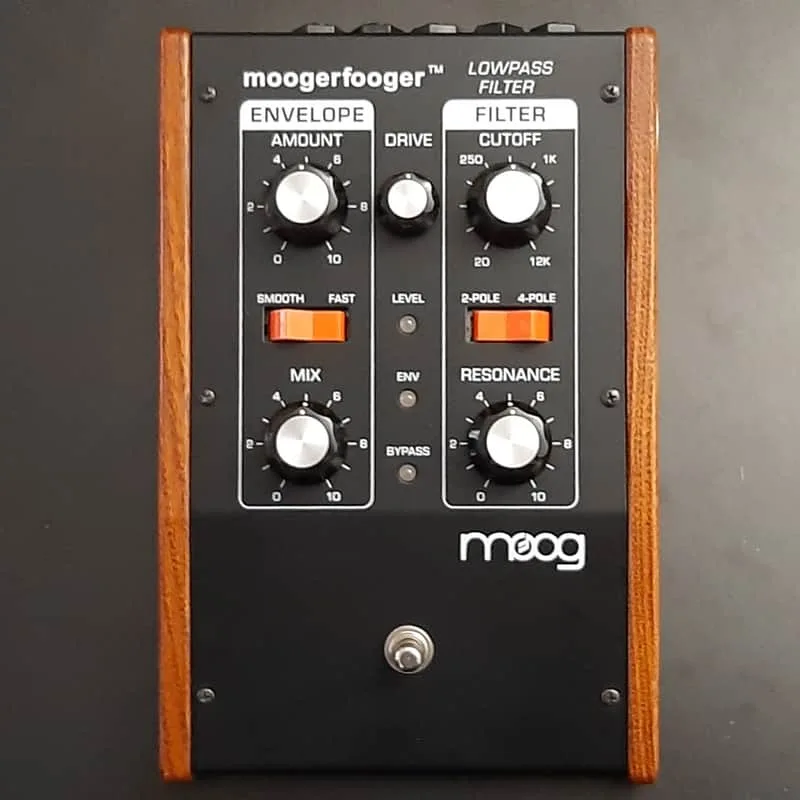
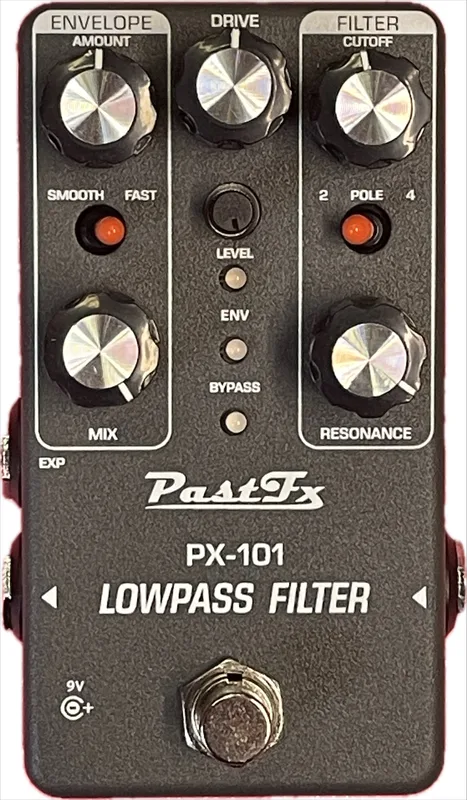
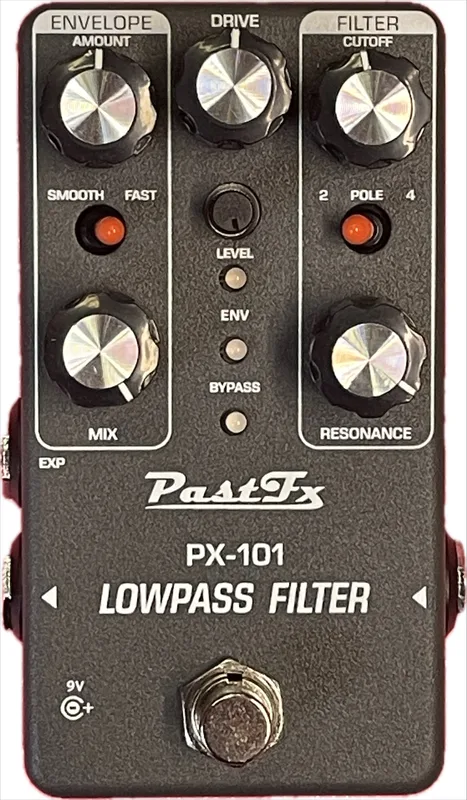
The synth-filter tradition is its own strand. The Moog MF-101 is a filter pedal in the Moog lineage26, and Behringer's BM-11M is a "vintage-style analog low-pass filter pedal that delivers warm, resonant filtering" in the same lineage27. PastFX's PX-101 Lowpass Filter continues the approach as a lowpass filter pedal28, and Manecolabs' Saurus pedal pairs an analog resonant lowpass and bandpass synth filter in one unit286.
The usual controls: peak, sensitivity, range and volume
Filter pedals share a small set of knobs, and knowing what each does covers most of what you will meet.
| Control | What it does | Example |
|---|---|---|
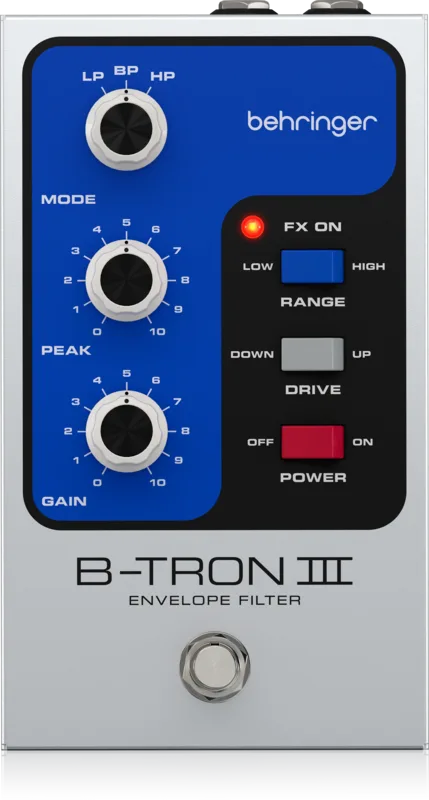
| Sensitivity / Sense | Sets how easily the envelope reacts to your attack | MOOER Envelope: clockwise is more responsive to pick attack, counterclockwise less; 12 o'clock is the recommended start13 |
| Peak / Resonance | Boosts the cutoff frequency for a sharper, more vocal sweep | Saurus "analog resonant lowpass and bandpass synth filter"6 |
| Range | Sets where in the spectrum the filter operates | FTelettronica's "wide range of static filter options"11 |
| Dry / Effect level | Blends unfiltered and filtered signal | MXR Bass Envelope Filter's separate Dry and Effect controls14 |
| Frequency | Manually positions a static or semi-static cutoff | September Sound modded Wah's Frequency control29 |
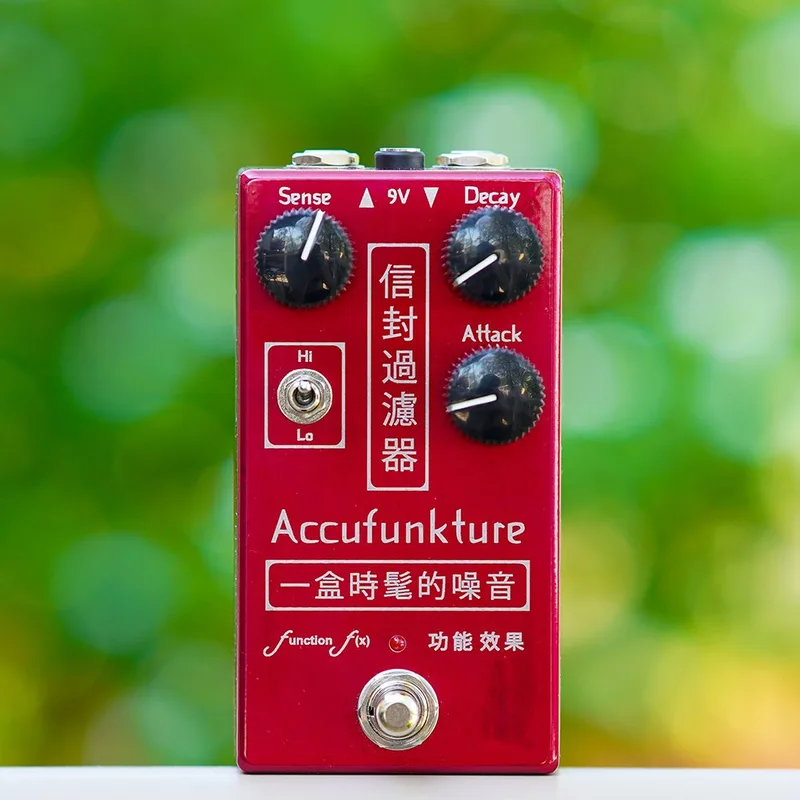
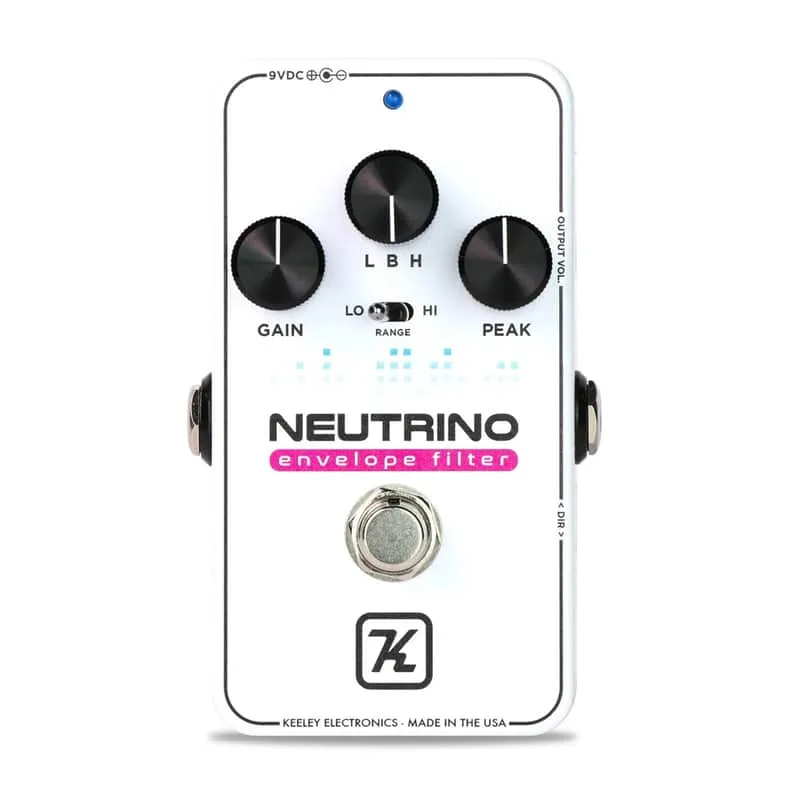
Sensitivity deserves special attention because it is the control that makes an envelope filter track well or badly. MXR says "a simple twist of the Sensitivity knob can tailor the pedal for your attack, as well as adjust for passive or active basses," since active electronics deliver a hotter signal to the envelope detector14. Maestro's Agena puts the same function on its Sense knob, "the envelope's sensitivity and response to your picking attack"12. The September Sound modded wah shows how far control sets can grow on filter-based pedals, adding high and low gain, clean blend, sensitivity and threshold, and frequency controls to a wah circuit29.
Where a filter goes in the signal chain
Placement matters more with filters than with most effects, because a filter's behavior depends on the level and cleanliness of what feeds it.
BOSS's signal chain guidance puts wah and filter effects in a specific spot: "placing this filter effect directly after the tuner and before the drive section will optimize signal frequency before" the drive pedals shape it30. The same guide puts the tuner first in the chain, before everything else30.
The reasoning extends to any effect that tracks your signal. EBS, writing about analog octave pedals, makes the point directly:
"Place the additional pedals after the octave pedal to feed it with as clean a signal as possible31."
EBS Sweden, support article31
An envelope filter is the same kind of circuit: it measures your signal, so distortion, compression and heavy gain in front of it give the envelope follower a flattened, less varied input, which can make the sweep sluggish or uneven. A compressor placed before a tracking effect can help, as EBS notes, "it helps with the control of the overtones"31, but the general rule is filters early, drives later.
For contrast, effects that do not track your playing are more flexible in where they sit. Reverb pedals are typically placed at the end of the signal chain or in the amp's effects loop, which prevents the reverb from becoming distorted32. Amp and cabinet simulator pedals most commonly go at the very end of the chain, feeding a PA system, audio interface or headphones30. Loopers also belong at the end, so that every possible signal and effect triggered gets looped33.
Power and connections
Filter pedals follow the same power conventions as most modern pedals, and the category spans a wide range of formats:
- Standard stompbox formats with footswitches, like the MXR, Maestro Agena and Carl Martin Ottawa12341621.
- Desktop units switched by hand rather than stomped, like both Elta Music Polivoks filters910.
- Compact mini formats, like MOOER's pocket-sized Envelope13 and Flamma's FC1117.
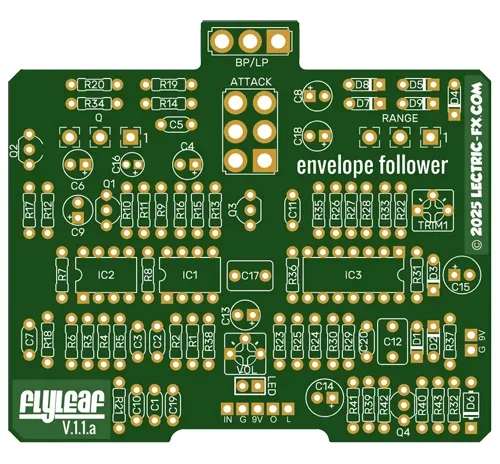
- DIY builds: PedalPCB's Lowballer Twin Envelope Filter is a printed circuit board for players who solder their own35, and Lectric-fx's FAT32 Dynamic Filter is sold as a PCB set for a dynamic filter pedal36.
Because a filter pedal's response depends on input level, matching your instrument to the pedal's expectations matters. Passive and active basses deliver different signal strengths, which is exactly why MXR builds the compensation into the Sensitivity knob14.
Questions to ask when choosing a filter pedal
Before settling on a filter pedal, it helps to work through what you actually want the effect to do.
- What should move the filter? Your foot (wah-style control, as on Behringer's manual mode8), your pick attack (envelope filters like the Agena12), an internal cycle (auto-filters like the AF-981220), or nothing at all (static utility filters like Broughton's812202).
- Which frequencies? Low-pass for darkening, high-pass for cleanup, band-pass for vocal sweeps, or a pedal like Alexander's that offers all three23.
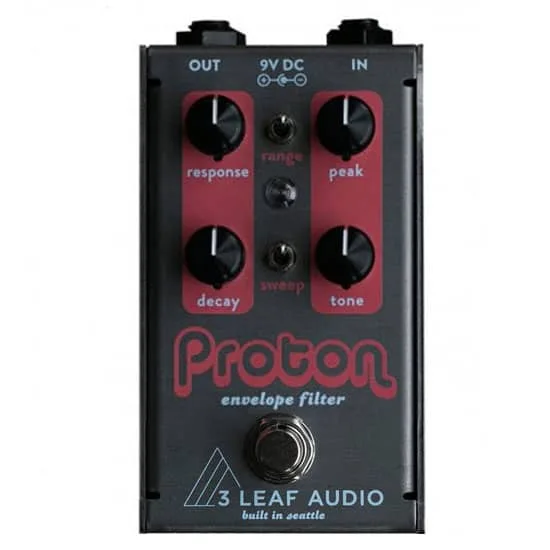
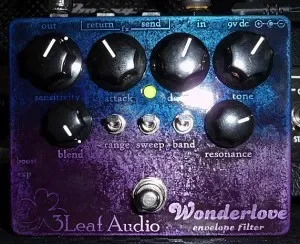
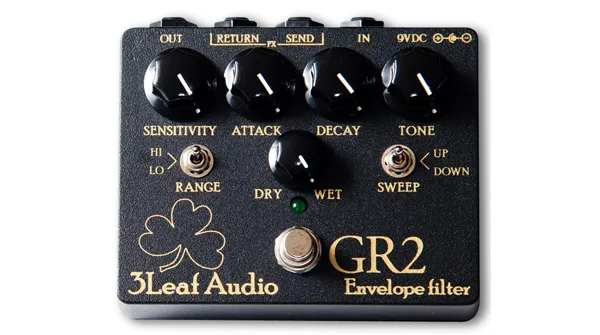
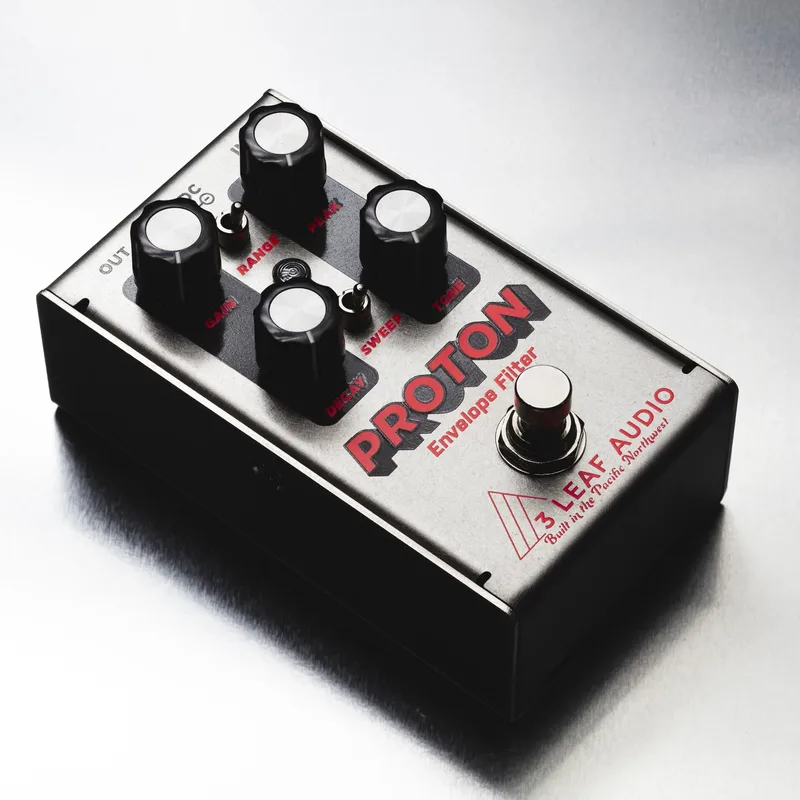
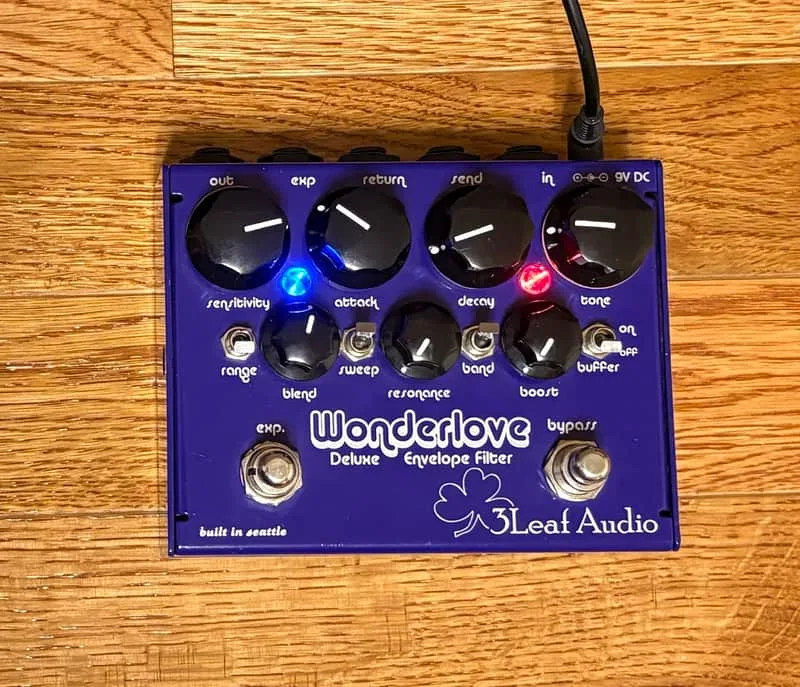
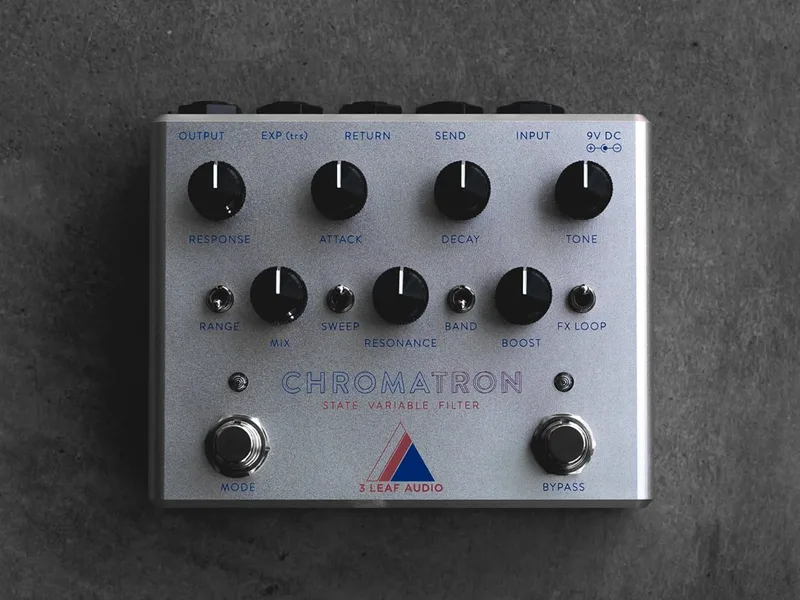
- Guitar or bass? Bass benefits from Dry/Effect blending, as on the MXR14, and dual-filter designs like the Aguilar Filter Twin3 or the 3 Leaf Audio Chromatron.
- How much control? A simple Sense knob suits plug-and-play players12; control sets like the September Sound modded wah's sensitivity, threshold, frequency and blend suit tinkerers29.
- Do you want filtering alone or bundled? Pedals like the VENA CAVA FILTER (distortion, auto-filter, ring mod)21 or the Kilter V2 (modulation, tremolo, ring mod, clean blend)22 fold filtering into bigger machines.
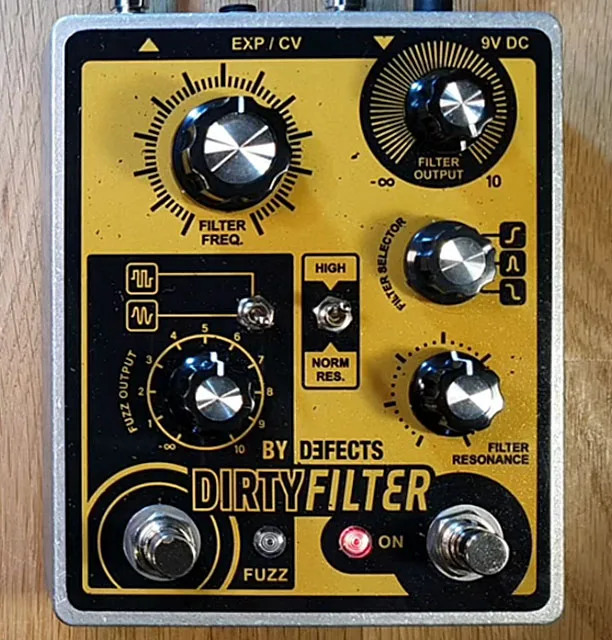
New pedals show the category is still moving. The Maxon AF-9 Auto Filter remains a go-to filter pedal for players, a favorite among reviewers37. The Defects FX Dirty Filter "looks and sounds like a cool creative pedal," and was added to a roundup of the best filter pedals overall38. All-Pedal, whose previous pedals include the Macrodose Envelope Filter and the Love Machine Octave Fuzz, continues to build in the envelope-filter space39.
Questions
What is the difference between an envelope filter and a wah pedal?
A wah pedal moves its filter when you rock the footswitch with your foot, so the sweep follows your body. An envelope filter moves the same kind of filter automatically, driven by the volume of your playing: play harder and the filter opens up, play softer and it closes. Makers often describe envelope filters as dynamic auto-wahs because the wah-like sound responds to your pick attack instead of your foot.
Do filter pedals work on bass?
Yes. Several envelope filters are built specifically for bass, and the MXR Bass Envelope Filter is one example, with separate Dry and Effect level controls so your low end stays present. Its Sensitivity knob also adjusts for passive or active basses, since active electronics hit the envelope detector harder. Filters that cut low frequencies, such as high-pass filters, are also common utility pedals on bass boards14402.
Should an envelope filter go before or after distortion?
Most guidance puts filter effects early in the chain, after the tuner and before the drive section, so the filter tracks a clean signal. Distorted or compressed signals give an envelope detector a less varied input, which can make the sweep sluggish or uneven. EBS makes the same point about octave pedals: feed tracking-based effects as clean a signal as possible and place additional pedals after them.
What does the sensitivity knob do on an envelope filter?
It sets how easily the filter reacts to your playing. On the MOOER Envelope, turning Sensitivity clockwise makes the pedal more sensitive and responsive to pick attack and counterclockwise less sensitive, with 12 o'clock a recommended starting point. On the MXR Bass Envelope Filter the same knob tailors the pedal for your attack and adjusts for passive or active basses1314.
Is an auto-wah the same as an envelope filter?
The two terms overlap heavily. Carl Martin describes its Ottawa as an auto-wah and envelope filter pedal in one, giving a funky wah-wah sound that follows your playing, and MOOER calls its Envelope a dynamic auto-wah. In practice, auto-wah usually means a filter driven by your dynamics, while some auto-filters also sweep on an internal timer or trigger rather than your attack181941.
What does a ring modulator sound like?
A ring modulator multiplies your signal against an internal oscillator, producing metallic, bell-like and atonal tones that sit far outside normal guitar vocabulary. On pedals that combine it with other effects, such as the Intensive Care Audio VENA CAVA FILTER, it adds clanging, robotic textures on top of distortion and filtering. It is the most extreme end of the filter family.
Sources (41)
- Low Pass Filter, Broughton Audio
- High Pass Filter, Broughton Audio
- Filter Twin Dual Bass Envelope Filter Pedal, Aguilar Shop (aguilaramp.com)
- Savage - Anasounds | Warm and powerful overdrive, Anasounds, 2026-09-16
- L24 - low-pass filter (24dB/octave), Sine Effect Electronics
- Saurus Pedal, Manecolabs
- Dual Amping, Stereo, Phasing and its challenges, blog.lehle.com, 2017-08-18
- PEDALFLANGER, Behringer
- POLIVOKS filter, eltamusic
- POLIVOKS filter-2, Elta Music
- Envelope Follower/ Triggered Filter by FTelettronica, RockBoard PedalPedia, 2026
- Maestro Agena Envelope Filter, Gibson (www.gibson.com)
- Envelope_MOOER Audio, MOOER Audio
- MXR® BASS ENVELOPE FILTER, Jim Dunlop (jimdunlop.com)
- Kinematic: Processing External Audio, Dreadbox Synthesizers, 2021-06-03
- Ottawa - Carl Martin, Carl Martin, 2026
- FLAMMA FC11 Envelop Auto Wah Pedal, Flamma Innovation
- Pedal Review: Modtone Funk Filter Enveloper, Delicious Audio, 2012-12-12
- Favored by Frank Zappa and Jerry Garcia, the Musitronics Mu-Tron III Combined Wild Sonics and Creative Usability, GuitarPlayer (www.guitarplayer.com), 2023-03-03
- TONEHOME, TONEHOME
- VENA CAVA FILTER, Intensive Care Audio
- the Kilter V2, Champion Leccy, 2020-11-24
- Now We Are Ghosts by Alexander Pedals, Alexander Pedals
- C24 High+Low Pass filter pedal, Sine Effect Store
- Kairon Music TV, Test AMT Electronics Pedals parte 2 de 3, Media center of AMT Electronics
- MF-101 Low Pass Filter (Black) by Moog, RockBoard PedalPedia, 2026
- BM-11M by Behringer, RockBoard PedalPedia, 2026
- PX-101 LOWPASS FILTER, pastfx.com, 2026
- September Sound modded Wah Pedal (B-STOCK), Godlyke Distributing, Inc.
- The Ultimate Guide to Guitar Effects Pedal Order and Signal Chain, BOSS (articles.boss.info), 2023-03-01
- How to improve the performance of your analog octave pedal, EBS Sweden (ebssweden.com), 2021-06-03
- The Best Reverb Pedals for Electric Guitar: From Budget to High-End, www.gearnews.com, 2026-06-08
- The Complete Guide to Loop Pedals for Acoustic Guitarists, BOSS Articles (articles.boss.info), 2025-04-04
- Maestro Agena, Arcas, Mariner and Orbit review, Guitar World, 2023-02-08
- Lowballer Twin Envelope Filter, PedalPCB.com
- FAT32 Dynamic Filter, Lectric-fx
- EarthQuaker Devices' Towers is a reverb pedal like no other, musicradar.com, 2026-03-11
- Funk Machine, Seamoon
- Guitar Pedal X, Guitar Pedal X
- MXR® BLACKOUT™ SERIES BASS ENVELOPE FILTER, Jim Dunlop (jimdunlop.com)
- Support - Carl Martin, Carl Martin (carlmartin.com)